


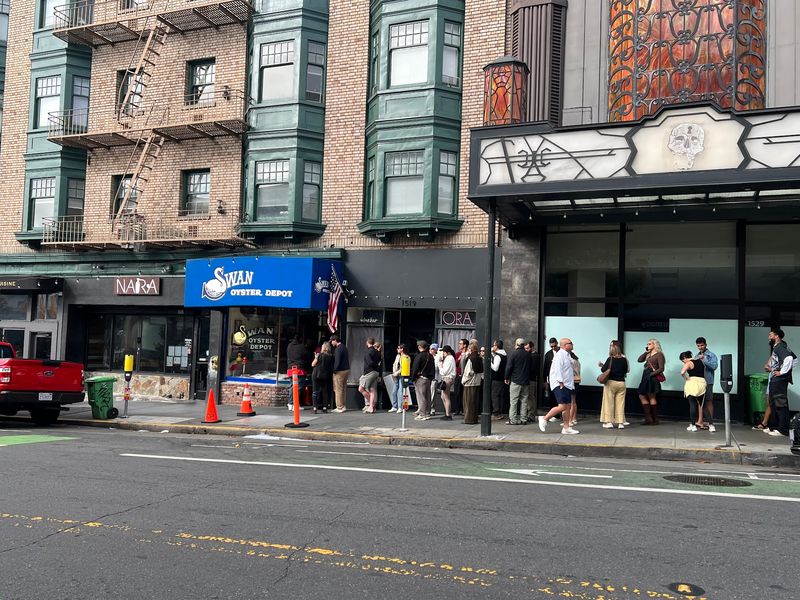
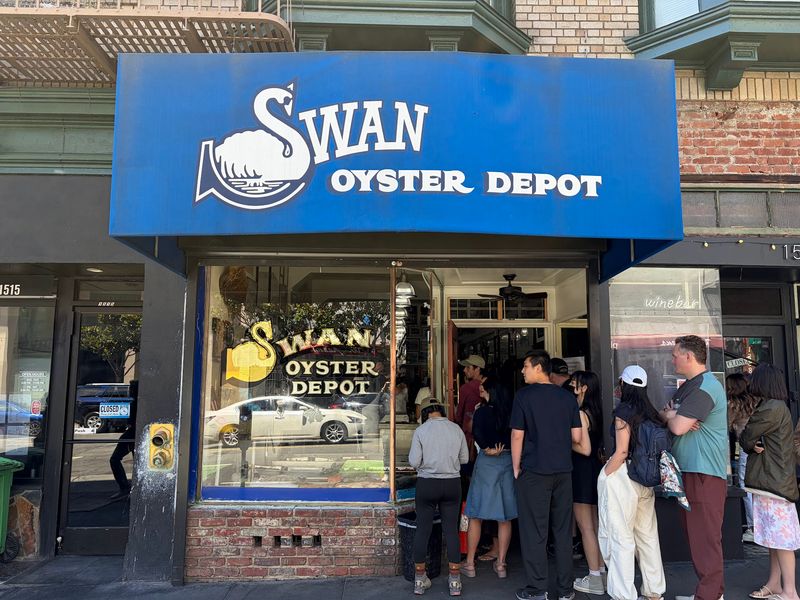
A line forms on a Polk Street sidewalk before 9 in the morning, and nobody in it seems annoyed. Some people wait 30 minutes, some wait two hours, and a few have waited three.
There are no reservations, no tables, and no card reader at the register. There is just a narrow marble counter with a short row of stools, a crew in white aprons, and seafood that has kept San Francisco coming back since 1912.
The oysters are shucked to order, the chowder arrives with sourdough, and the whole operation runs on cash and patience. So what makes a tiny fish market counter worth an entire morning of standing around?
The answer involves a century of history, a menu with a few insider secrets, and a set of practical tricks that can shorten the wait. Keep reading for the full story.
A Fish Market Counter on Polk Street
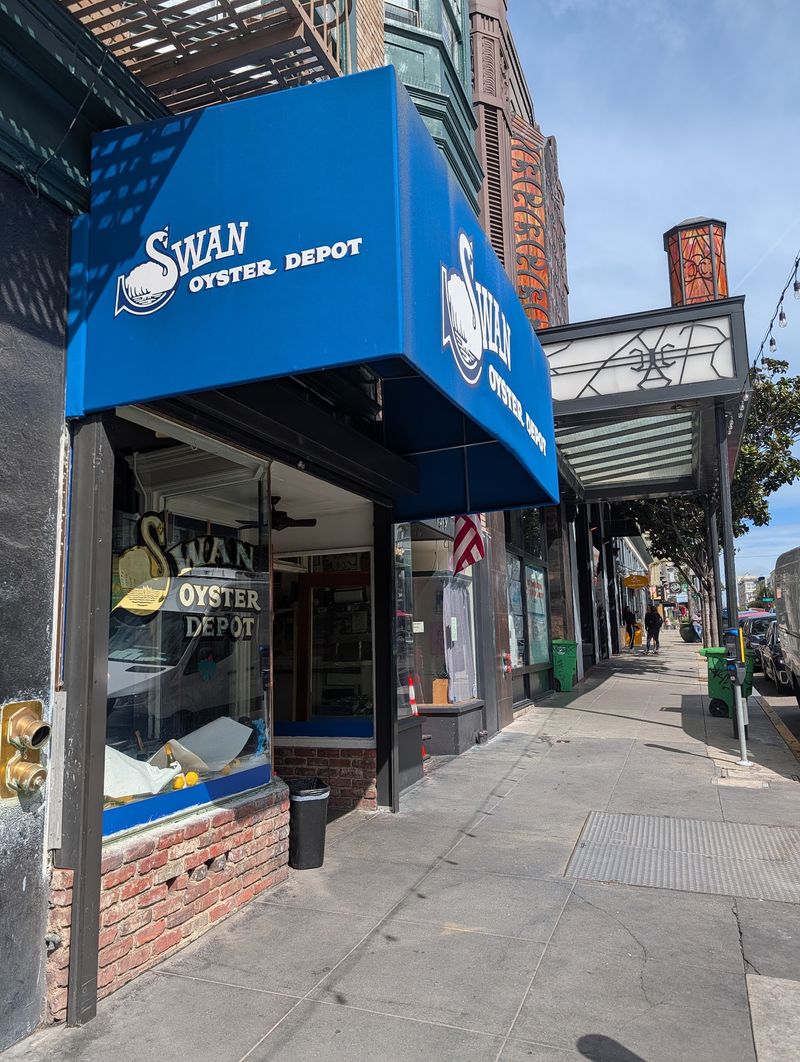
The address is 1517 Polk St, San Francisco, CA 94109, United States, and it sits in the Nob Hill area of the city.
From the outside, it does not look like a famous restaurant at all. It is a fish market first, with a no-frills counter nook tucked inside.
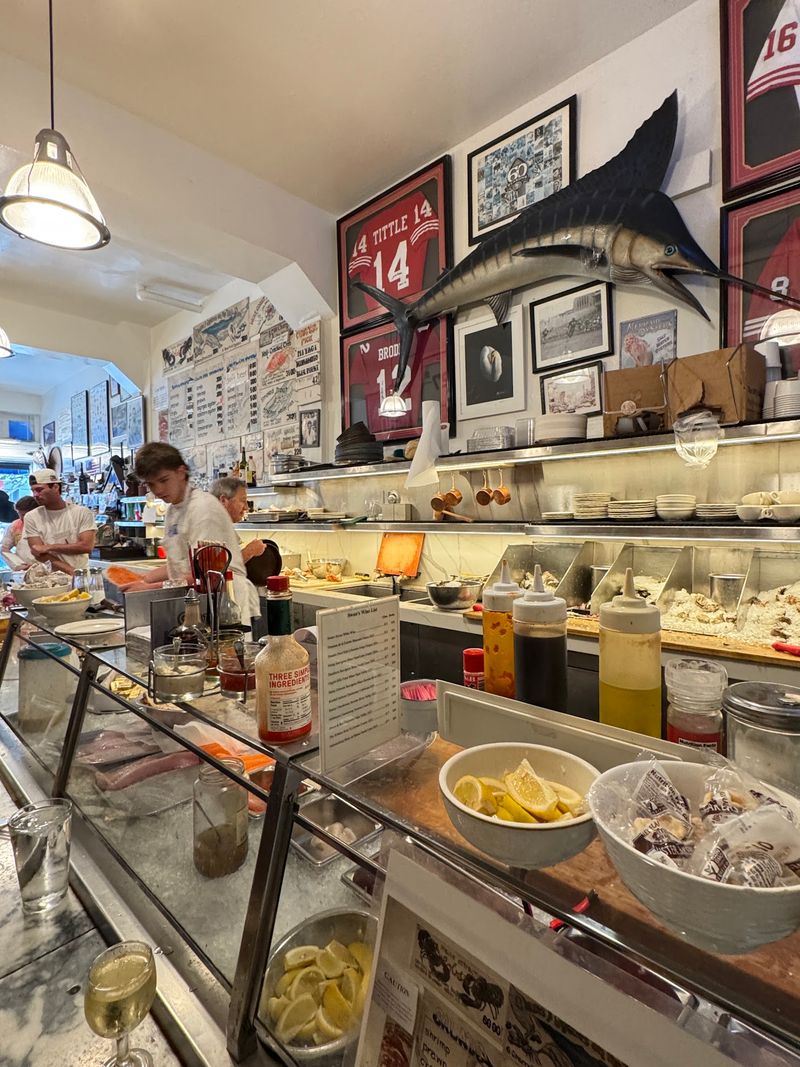
That counter is where the magic happens. Swan Oyster Depot is known as a venerable seafood bar and a bustling landmark for raw-bar fare and casual seafood.
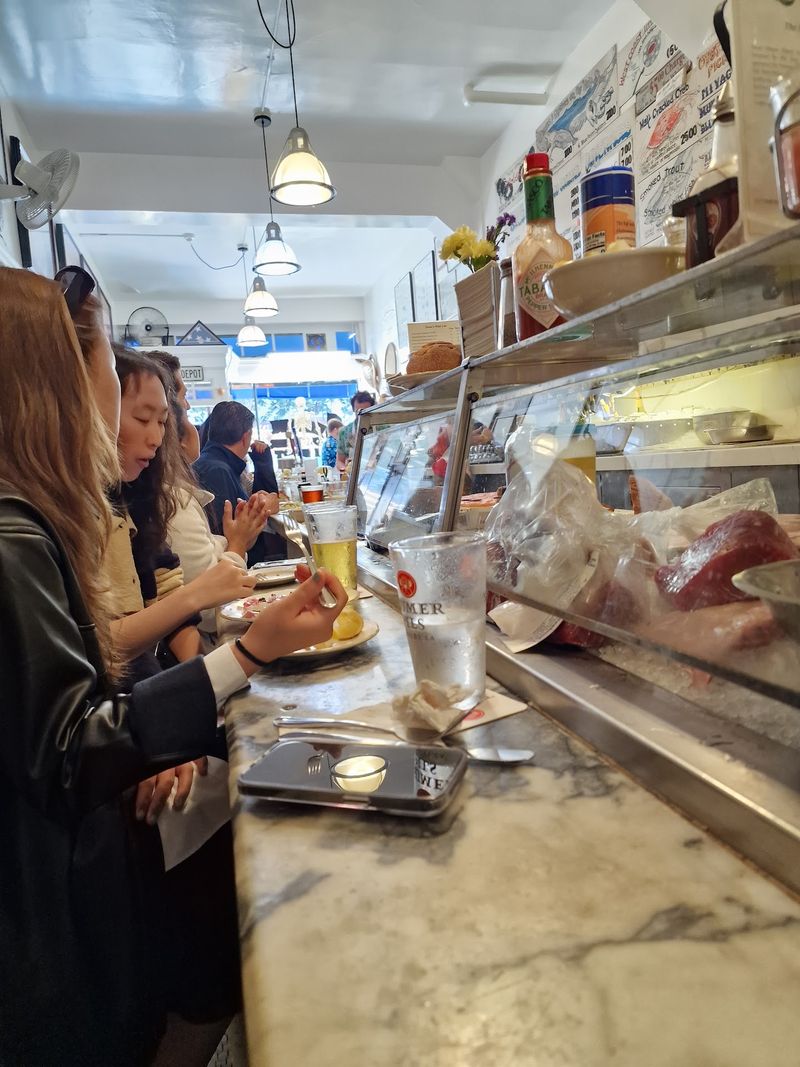
Seating is the headline here, and not in a good-news way for anyone in a hurry. The counter holds only a couple dozen people, and most of them sit shoulder to shoulder on stools.
There is also a bit of outdoor seating, though the counter is the main event. Most people come for the full experience of watching the crew work right in front of them.
The place is small, simple, and very focused on what it does. It does not try to be a fancy dining room or a trendy hotspot.
Instead, it offers straightforward seafood served without big presentation. That simple formula has earned it a 4.6-star standing from more than 2,300 diners on Google.
Not bad for a counter that could fit inside many restaurant lobbies.
More Than a Century of Shucking
Back in 1912, when San Francisco was still rebuilding and reshaping itself, this counter started serving seafood. It has been doing it ever since.
That makes it more than a century old, which is a rare feat for any restaurant in any city.
Plenty of places claim to be classics. Few can point to over a hundred years of doing the same thing in the same simple way.
The long run shows in how the place feels today. It comes across as a spot that has kept its routine because people keep coming back for it.
Many diners describe it as a living piece of culinary history rather than just a place to eat. Some had it on their personal list for years, and one group even traveled 3,000 miles to finally sit at the counter.
The longevity also explains the patience of the crowd. People are not just waiting for lunch.
They are waiting to take part in a tradition that has outlasted countless food trends. For a city that loves both innovation and nostalgia, that combination hits a sweet spot.
Some restaurants chase the moment, while this one simply outlasts it.
The Marble Counter and Its Few Stools
Every seat in the house faces the action. There are no booths, no corner tables, and no quiet back room.
The antique marble counter runs the length of the narrow space, and diners grab a stool wherever one opens up. That is the entire dining room.
Counter seating means everyone watches their meal being prepared. Oysters get shucked, crab gets cracked, and sashimi plates come together a few feet away.
Many diners say this view adds a lot to the meal. It turns a simple lunch into something closer to a live show.
The small setup also explains the long line. With only a couple dozen seats, every group that sits down takes a spot that someone else in line is waiting for.
Groups of two or three tend to do best. Large parties can have a harder time, since the counter layout makes it tricky to seat everyone together.
It is not the kind of place where people linger for hours. The crew keeps things moving without making anyone feel rushed, which keeps the line crawling forward.
A stool here is small, but it carries a lot of weight.
The Line Everyone Talks About
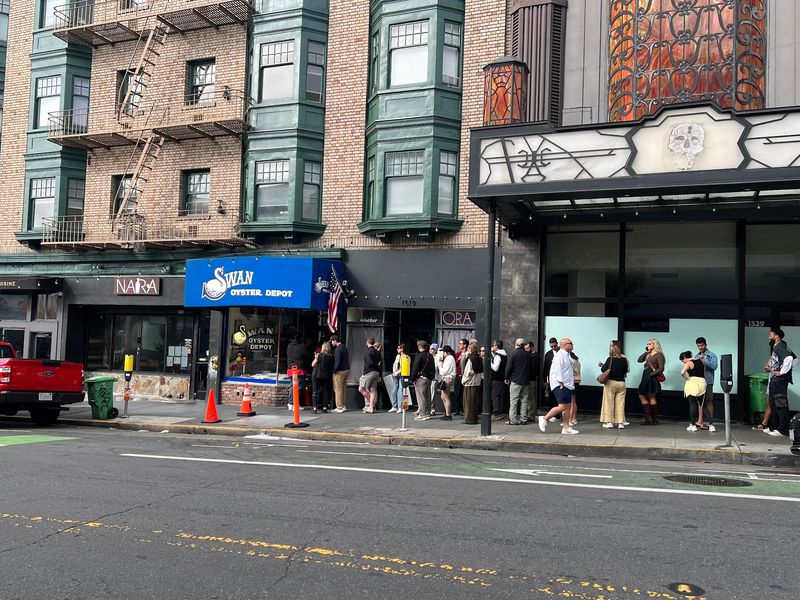
Two hours. That is a typical wait for someone who joins the line around 10 in the morning.
Some people report much longer stretches. One group arrived around 10 and waited about three hours to be seated, while another showed up at 10:40 and did not sit down until nearly 1.
Even Mondays offer no escape. A group that arrived at noon on a Monday still waited 1 hour and 50 minutes.
Early afternoon can be a little kinder. Some diners have waited only 30 to 45 minutes after lunchtime.
So why do people put up with it? The general feeling is that the food makes the wait feel worth it once the first plate arrives.
The line moves slowly partly because nobody wants to leave their stool. The old-school style of service is part of the reason too, and regulars accept it as simply part of the place.
There is also a small perk for those waiting. Drinks can sometimes be ordered while standing in line, which helps pass the time.
Patience, it turns out, is the unofficial first course.
Oysters, Shucked While You Watch
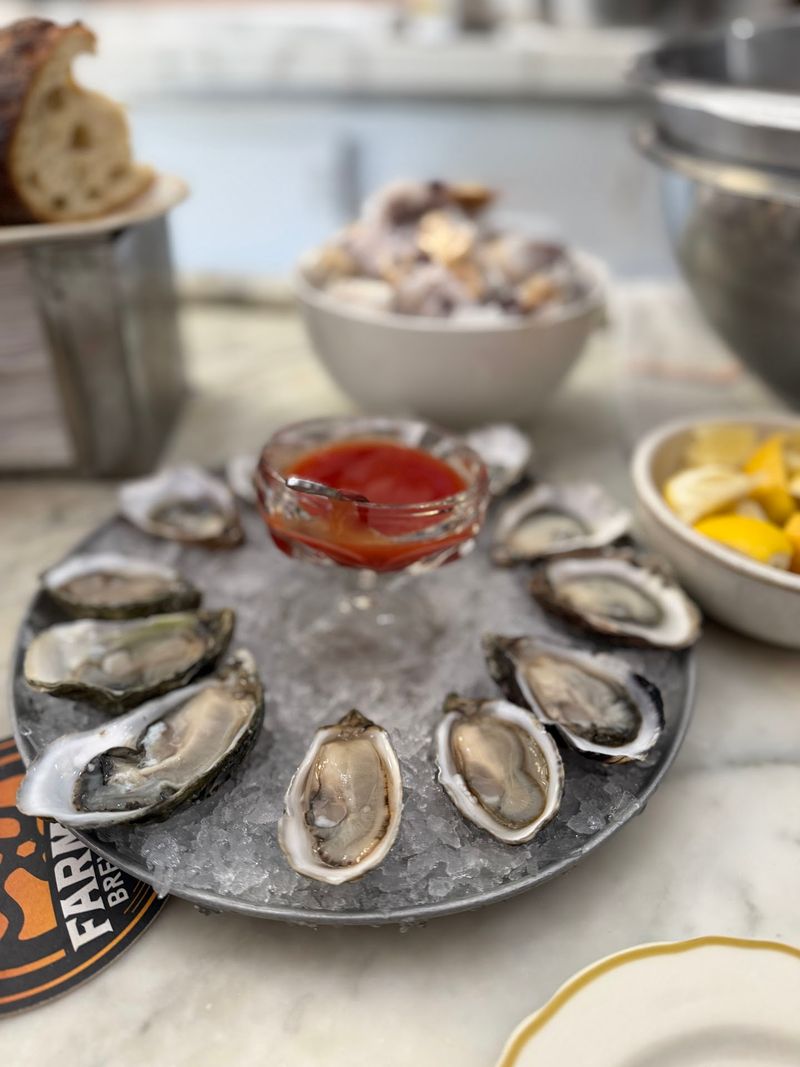
With a name like this, the oysters had better deliver. They are the most talked-about item on the menu.
Oysters arrive shucked to order and properly cold. They come with mignonette and lemon on the side.
The selection rotates, with both Pacific and Atlantic varieties appearing depending on the day. On one visit, the counter offered six different Pacific varieties.
A smart move is ordering a mixed half dozen. That way, each oyster is a different type and the table gets a small tour of what is available that day.
Freshness is the word that comes up again and again. Many diners say the oysters barely need anything added to them.
Some people even make them a morning meal. Breakfast oysters with a friend at 8 a.m. is a tradition for certain regulars and returning out-of-towners.
A full dozen makes a strong opening move for a group. From there, plenty of diners keep ordering more plates as the meal goes on.
The shells pile up, and so do the reasons to return.
Crab in Every Form
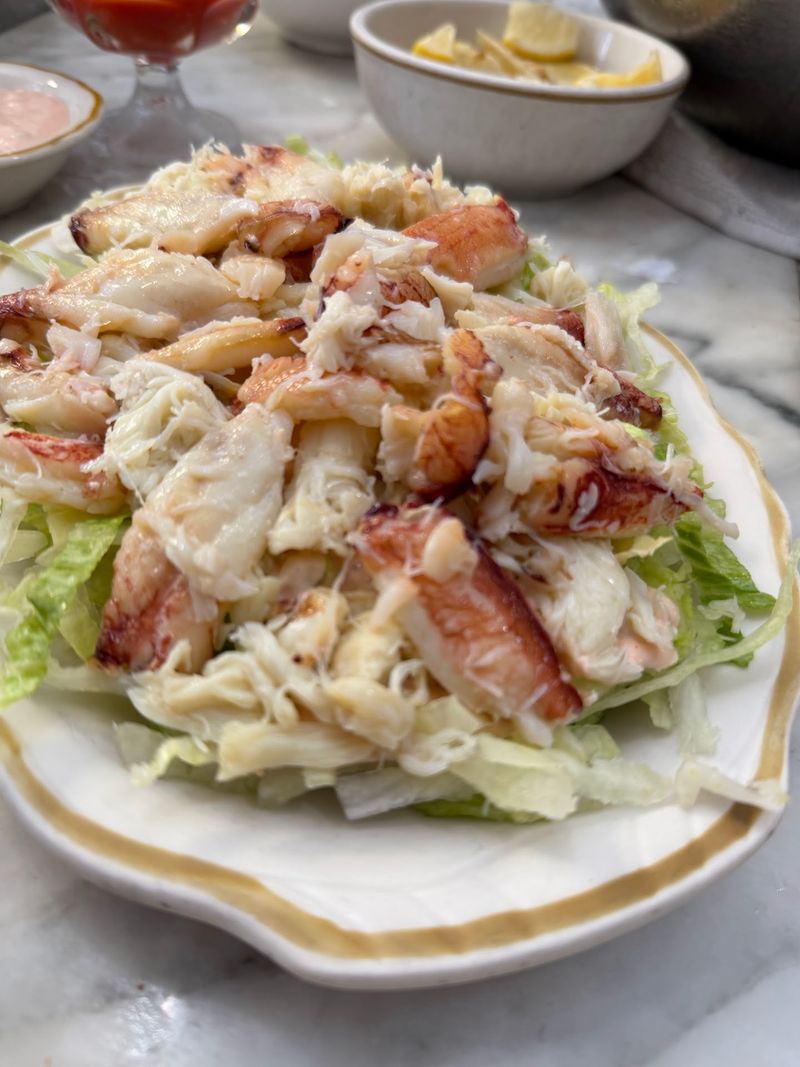
Dungeness crab is a San Francisco icon, and this counter treats it like royalty.
When it is in season, cracked crab arrives laid out on a tray. Sourdough and drawn butter come alongside it.
The crab salad might be the quiet star of the menu. It features generous mounds of Dungeness crab over lettuce, and many diners call it their favorite dish.
Some say it is worth every penny. Others love it because it is simple and lets the seafood stand out.
For something heartier, the combination seafood salad mixes crab with cooked shrimp and prawns on a bed of finely cut cabbage or lettuce. The house dressing comes on the side.
A seafood cocktail and a prawn cocktail are also on offer. One group used the prawn cocktail as a final plate after a long lineup of dishes.
The kitchen keeps preparation straightforward across all of these. No heavy sauces, no tall stacks, just crab doing its thing.
In a city full of crab options, this counter keeps things refreshingly uncomplicated.
The Crab Back Secret
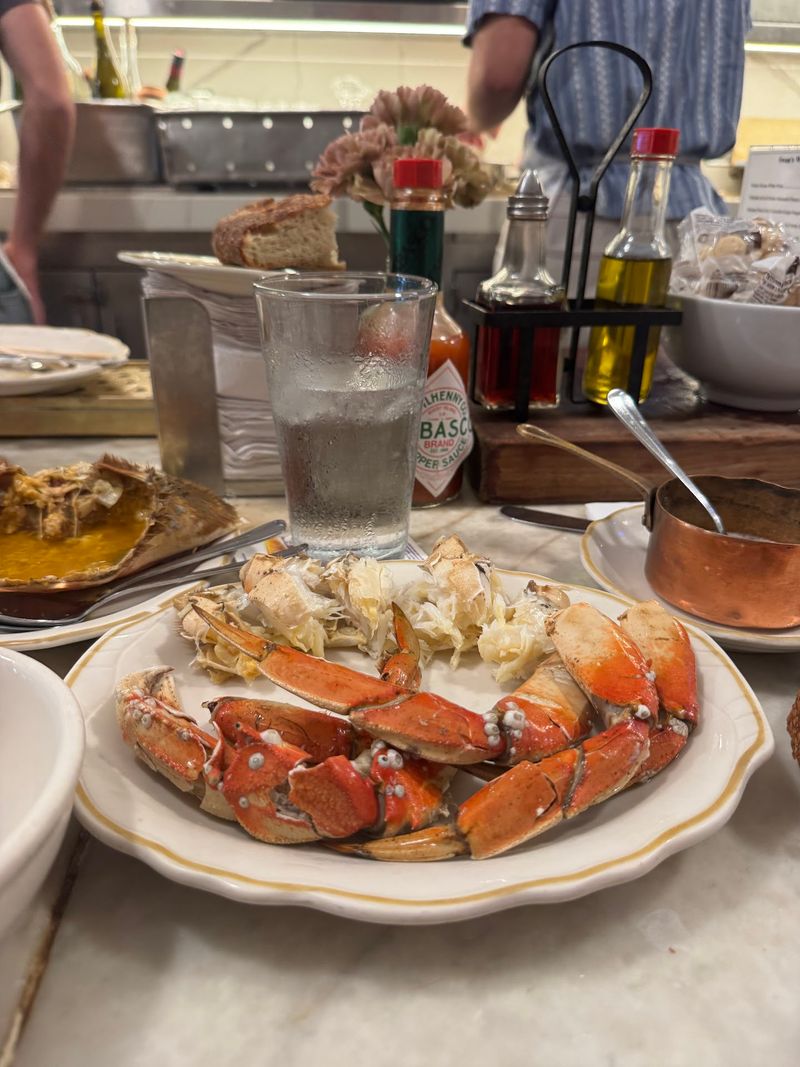
Every classic spot has an insider order, and here it is the crab back.
The dish features the rich crab fat, known as tomalley, served right in the shell. It comes paired with the house sourdough for dipping.
First-timers often skip it because it sounds unusual. Regulars tend to recommend it for exactly that reason.
It shows up in conversations often enough that it has become one of the signature items people mention. Some menus and diners also refer to related items like the crab bag or crab foot.
The appeal is partly about tradition. It is the kind of dish that feels tied to old San Francisco seafood culture rather than modern menus.
It also works well as a sharing plate. A group can pass it around alongside oysters and salads and each get a taste.
Not everyone will love it, and that is fine. Adventurous eaters, though, usually consider it a must.
Consider it the password that proves someone did their homework before getting in line.
Chowder, Smoked Salmon, and Sourdough
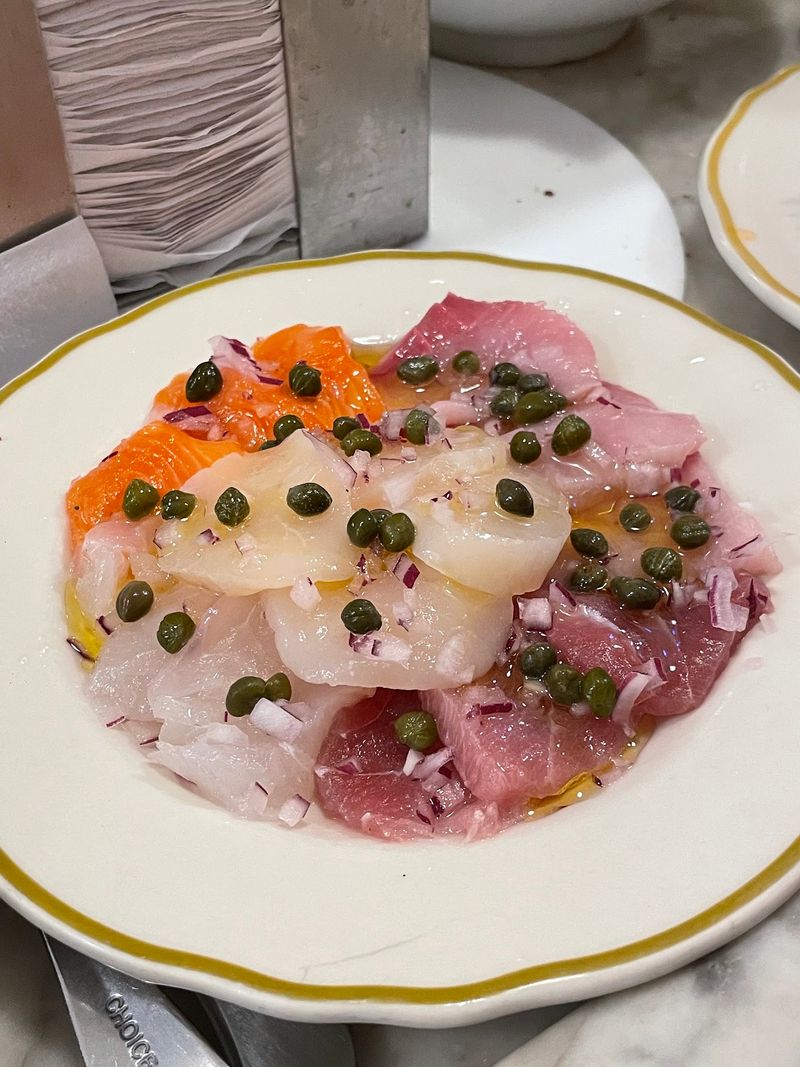
Not every order needs to come on ice. The warm side of the menu has a loyal following too.
New England clam chowder is one of the most mentioned dishes. It comes as a cup or a bowl, and it arrives with bread and butter.
Opinions vary a little here. Most diners call it thick and comforting, while a few find it average, and some note it has a very strong seafood character.
Smoked salmon is the other big favorite, with more mentions than almost anything besides the oysters. It comes on sourdough with capers and cream cheese.
Some people order a half portion of the salmon with a cup of chowder for breakfast. It makes a lighter start before the rest of the day.
The sourdough itself earns fans. Complimentary bread arrives early, and it plays a supporting role with many dishes.
For anyone nervous about raw seafood, these picks offer an easy way in. They still carry the same focus on quality ingredients.
Sometimes the humble bowl earns as much loyalty as the flashy platter.
Off-Menu Sashimi and Daily Specials
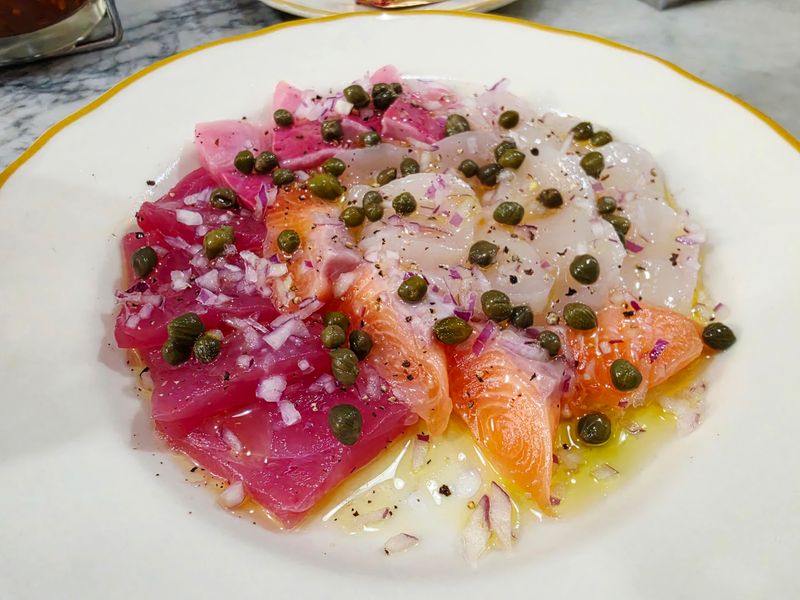
Here is a tip that separates first-timers from the seasoned crowd: ask about the Sicilian sashimi.
It is an off-menu item that has become one of the most requested plates. The fish comes dressed with capers, onions, and olive oil, often with sourdough and butter.
A regular sashimi platter is available as well. It can include scallops, tuna, and salmon, and diners can watch it being sliced right in front of them.
Not everyone considers it life-changing. One diner felt it matched a nice sushi spot rather than surpassing it.
Daily specials add another layer of curiosity. Sea urchin, or uni, has appeared as a special, sometimes served live.
Scallops also earn strong praise, with some people naming them as a highlight alongside the oysters.
Because specials change, it pays to ask what is available before ordering. The crew is used to guiding people through the options.
A little curiosity at the counter can turn a good meal into a memorable one.
Walls Covered in a Century of Stories
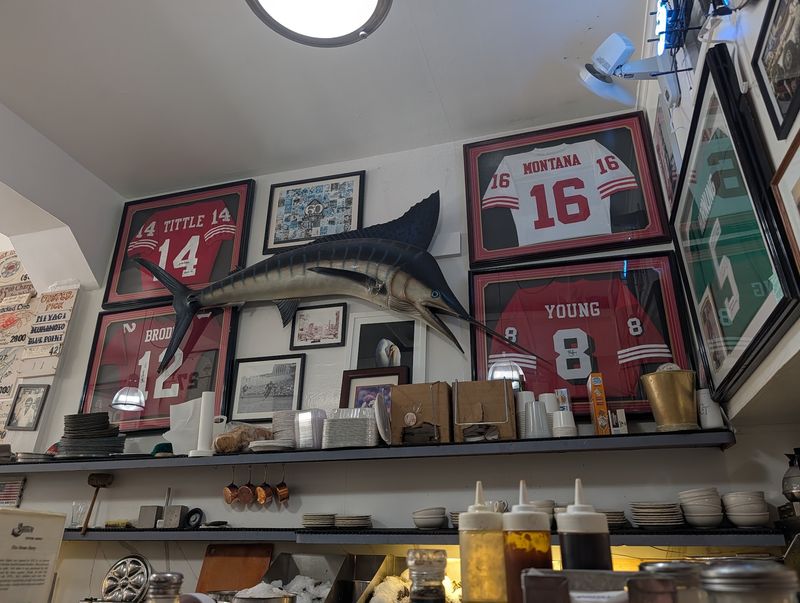
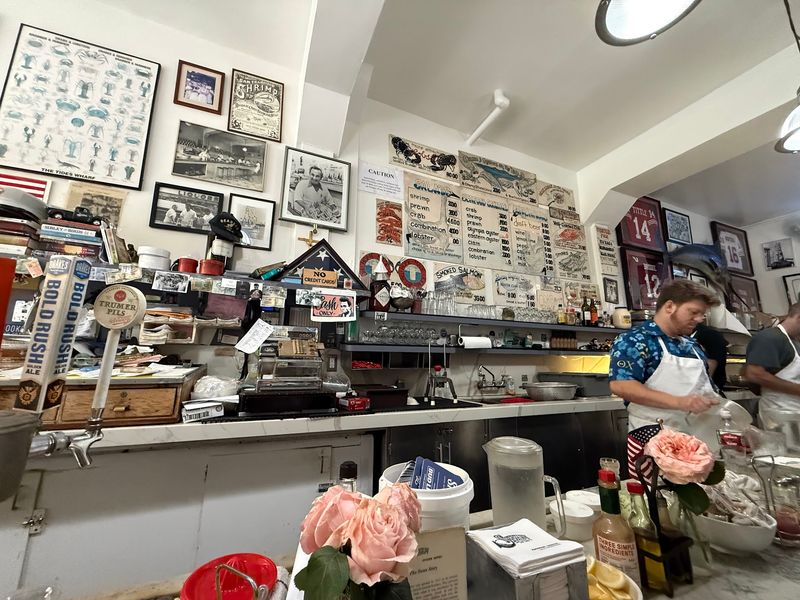
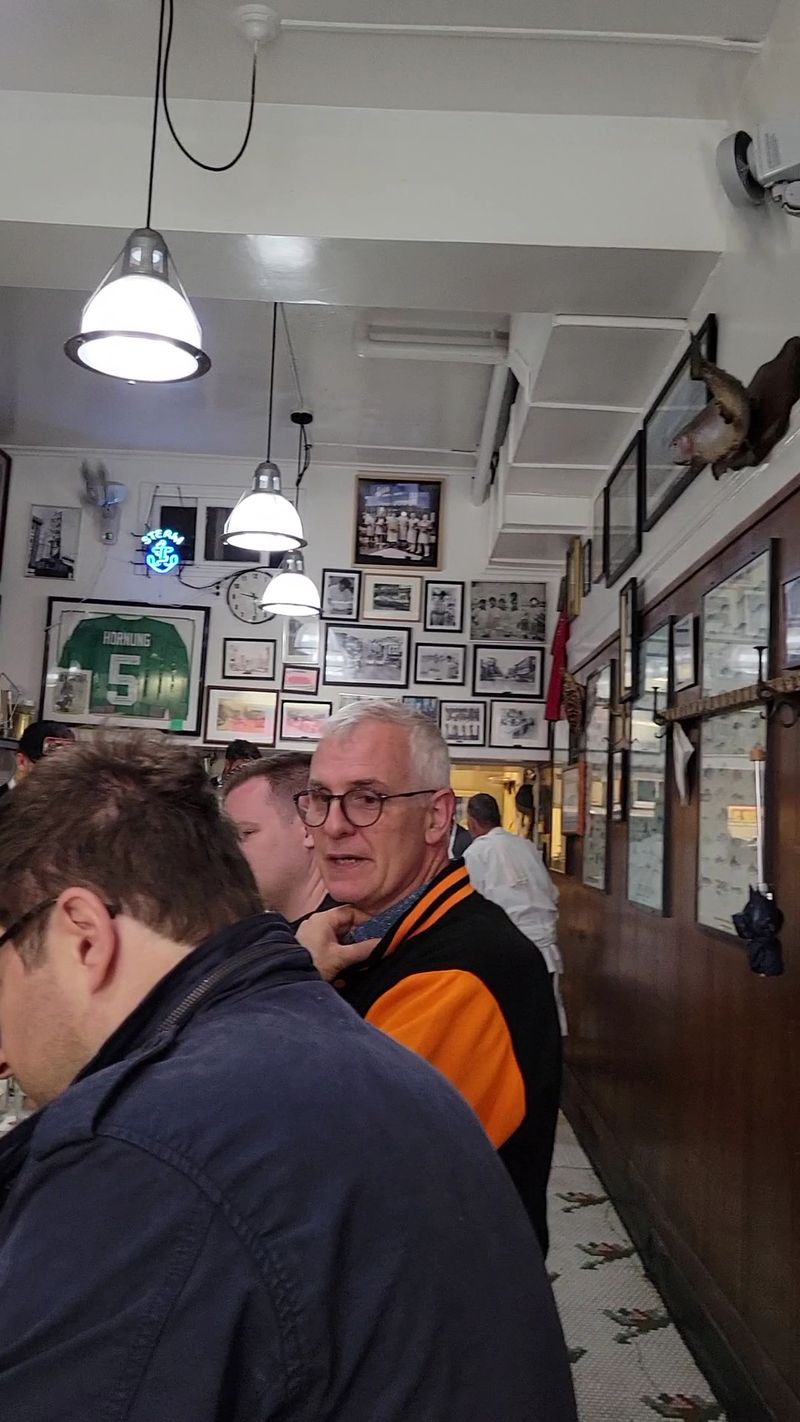
While waiting for a plate, it is worth looking up. The walls tell their own story.
The interior is decorated with a huge collection of awards, news clippings, literature, and signs. Foreign currency and nautical knickknacks fill in the gaps.
Every item feels like a badge earned over the decades. Together, they give the room its old-school character.
Nothing here looks designed by a decorator. The space seems to have gathered its decor slowly, one clipping and one keepsake at a time.
That lived-in feel is a big part of why so many people describe the place as charming. It feels rich with community and history rather than staged.
The room is also tight, so the collection is always close at hand. Diners on stools can spend a good few minutes just reading the walls.
For history fans, it is almost a small museum of San Francisco dining. It is free to browse, as long as there is a seat.
The walls may be crowded, but that is exactly how the place likes it.
White Aprons and Counter Banter
The crew behind the counter might be the real reason people stay loyal.
Staff wear white aprons and work in a tight space with calm efficiency. Many diners describe the kitchen as running like clockwork, with everyone knowing their job without much talking.
The atmosphere often feels like a close-knit family business. The team treats guests warmly, and many people say they felt welcomed like old friends.
Banter is part of the package. The friendly back-and-forth adds personality that fancier dining rooms rarely manage.
Staff are often described as kind and relaxed. Good music plays, and the mood stays easygoing even with a line out the door.
There is one courtesy that helps everyone. Having an idea of what to order before sitting down keeps things flowing for the whole room.
The service style is simple, but it is not cold. Diners get attention, conversation, and a sense of being part of something.
In a spot this small, personality fills every inch that seafood does not.
Cash, Hours, and Beating the Crowd
Rule number one: bring cash. The counter is cash only, and it is one of the most repeated pieces of advice about the place.
Prices run about $50 to $100 per person. One group of three spent around $220 including a few drinks and tip, so budgeting ahead is wise.
Many people call it pricey, though most feel the freshness justifies the cost. Some even say the meal costs less than comparable dinners elsewhere in the city.
Hours are 8 a.m. to 2:30 p.m., Monday through Saturday. The counter is closed on Sundays.
Timing is everything. Arriving 30 to 45 minutes before opening is a popular strategy for landing a first-round seat.
Luck plays a role too. Some early risers have walked in at 8 or 9 a.m. on a weekday and found seats right away.
Takeout is another option for those who do not want to wait for a stool. Smaller groups also have an easier time than large parties.
A full wallet and an early alarm are the two best tools in the playbook.
Worth Every Minute on the Sidewalk
So, is it worth the wait? For most people who have stood in that line, the answer is a steady yes.
The appeal is not flashy. It comes from quality seafood, simple preparation, and more than a century of doing things the same way.
Swan Oyster Depot rewards planning. Bring cash, arrive early, and come with a short list of must-try dishes.
Groups of two or three get the most out of the visit. Ordering different plates and sharing lets everyone taste more of the menu.
It suits seafood lovers, history fans, and anyone curious about old San Francisco. It is less ideal for large groups or anyone on a tight schedule.
A few people find it touristy or feel certain dishes are simply good rather than great. Even so, the overwhelming feeling is that the experience stands apart.
Many first-timers leave already planning a return trip. That says a lot about a counter with so few stools.
Some places are worth a detour, and this one is worth a whole morning.
Enjoyed this story?
Add Fast Food Club as a preferred source to see more of our reporting on Google.