


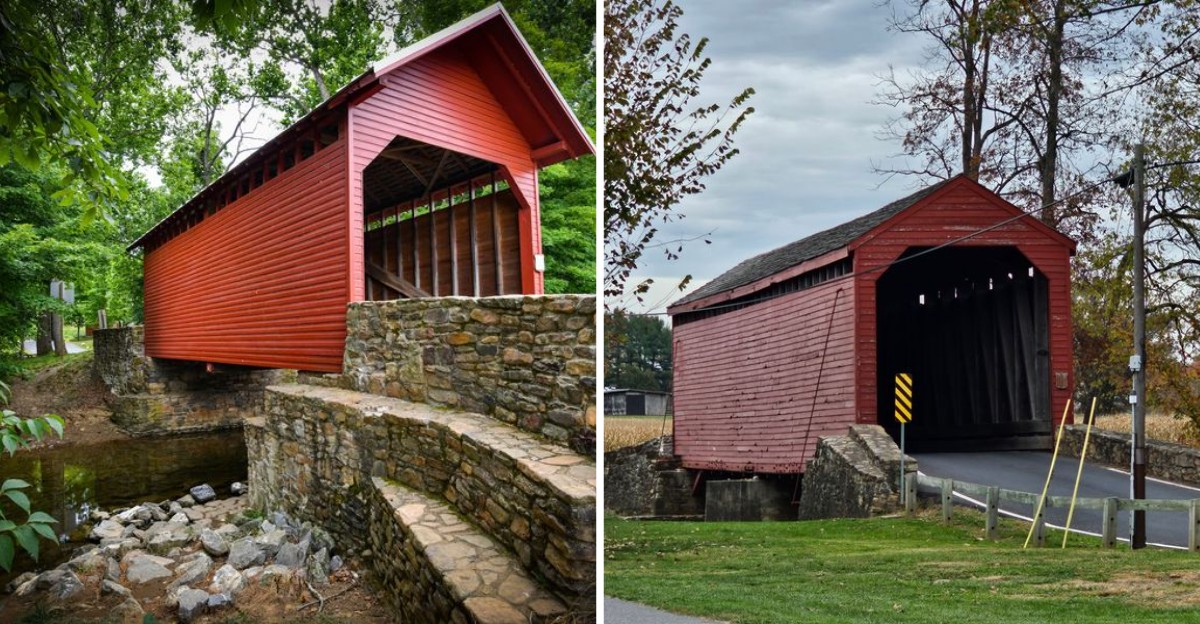
Maryland only has a handful of historic covered bridges left, and every one of them tells a story about how people crossed streams and creeks long before modern roads showed up. Most sit on quiet back roads, surrounded by farmland, woods, and water, which makes them a fun reason to slow down and take the long way home.
Some you can still drive through, while others are set aside for walkers and photographers. If you have ever wanted a low-key Sunday drive with plenty of places to stop and take a picture, these eight spots are a great place to start.
Grab a map, pick a direction, and let the wooden bridges guide the route.
1. Roddy Road Covered Bridge, Thurmont, Frederick County
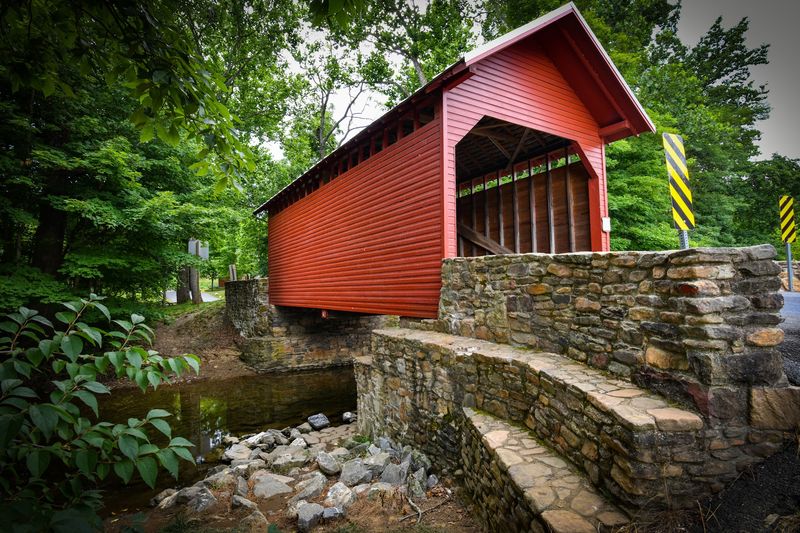
Small but mighty, this little red bridge near Thurmont is one of the shortest covered bridges in the state. It stretches only about 40 feet across Owens Creek, which makes it feel almost like a wooden tunnel you can cross in seconds.
The current bridge is a faithful rebuild after a truck damaged the older one, so what you see today is sturdy and well cared for. There is a small park right next to it with picnic tables and creek access, which turns a quick photo stop into a proper little outing.
Families like this one because kids can wade near the water on warm days and there is space to spread out a blanket. It sits just off Roddy Road, close to Catoctin Mountain Park, so it pairs nicely with a bigger day in the mountains.
I would save this stop for a warm afternoon when you want an easy place to stretch your legs.
2. Loys Station Covered Bridge, Thurmont, Frederick County
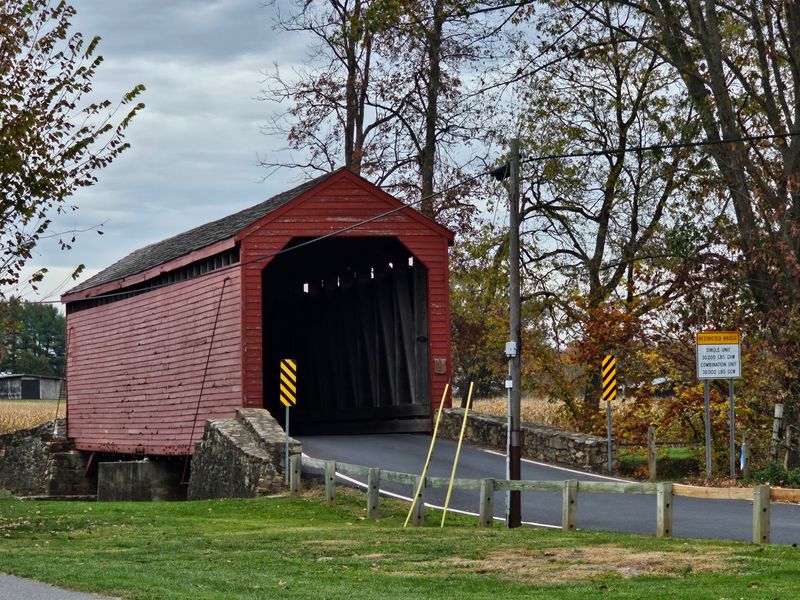
Another Frederick County gem sits just a few miles from Roddy Road, which means you can knock out two bridges on one loop. Loys Station crosses Owens Creek and still carries actual vehicle traffic, so you can drive right through it.
The original structure dates back to the 1800s, and it remains one of the older multiple kingpost truss bridges in Maryland. A fire damaged it years ago, but it was carefully restored and reopened for use.
Next to the bridge is a county park with picnic tables, open grass, and easy parking, making it a comfortable spot for a midday break. The creek here is shallow and pleasant, and the setting stays quiet most of the week.
I like this stop because you get the fun of driving through history and a shady place to eat lunch in the same visit.
3. Utica Mills Covered Bridge, Frederick County
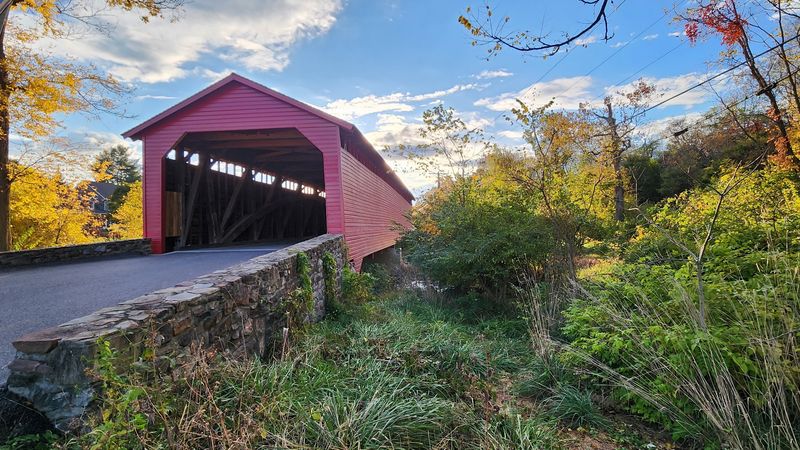
History travelers get a two-for-one story here, since parts of this bridge once belonged to a larger crossing over the Monocacy River. After flooding destroyed that original span, sections were reused to build the smaller bridge you can visit today.
Now it carries traffic over Fishing Creek along Utica Road, tucked into rolling farmland north of Frederick. The red exterior and wooden truss design make it a favorite for photographers who want that classic countryside look.
The setting is peaceful and rural, with fields and trees framing the bridge from almost every angle. It rounds out the trio of Frederick County covered bridges, so many visitors do all three in a single afternoon loop.
Bring a camera and take your time, because the light through the trees changes the whole scene depending on when you arrive.
4. Gilpin’s Falls Covered Bridge, North East, Cecil County
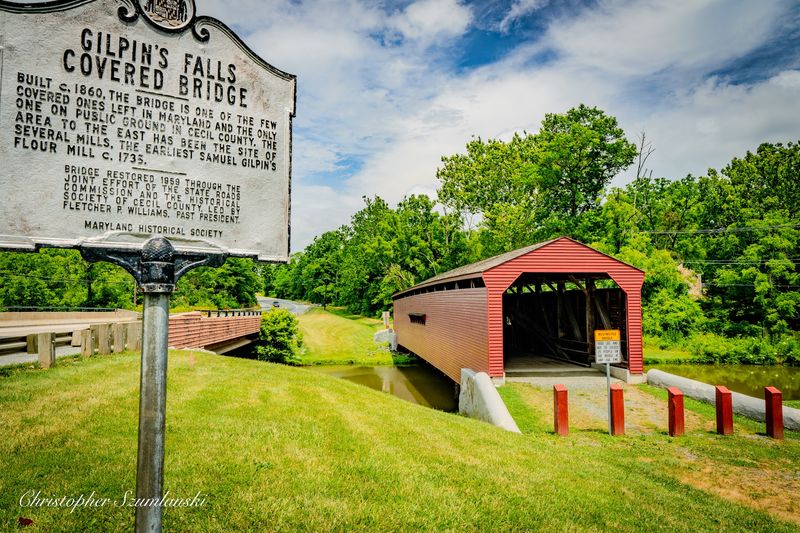
Up in the northeast corner of the state, Cecil County holds one of Maryland’s longest surviving covered bridges. Gilpin’s Falls stretches well over 100 feet and stands as the last historic covered bridge in the county.
The bridge no longer carries cars, so it is set aside for walking and taking photos, which lets you really look at the old timber work up close. It sits near a small waterfall on Northeast Creek, adding a scenic touch to the wooded surroundings.
Preservation efforts have gone into keeping the structure standing, and there is roadside parking nearby for easy access off Route 272. The setting feels remote even though it is a short drive from the town of North East.
Photographers tend to linger here, especially when the water is running high and the surrounding trees turn color in fall.
5. Jericho Covered Bridge, Kingsville, Harford and Baltimore Counties
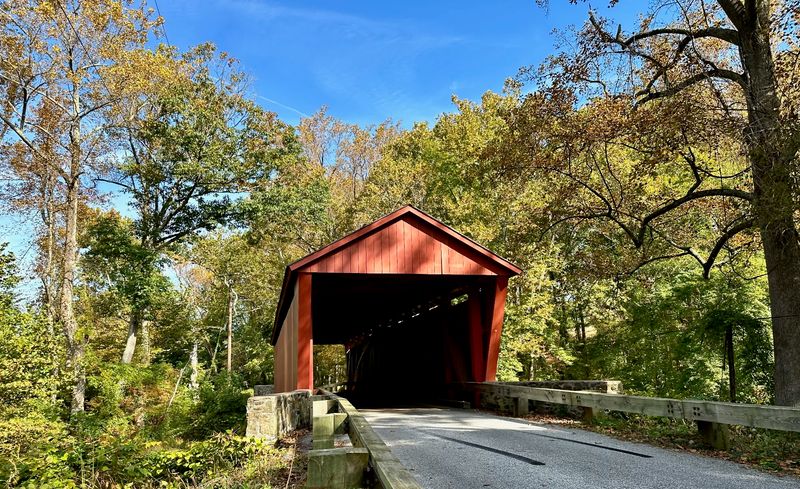
Straddling the line between Harford and Baltimore counties, Jericho Covered Bridge crosses the Little Gunpowder Falls in a heavily wooded stretch of parkland. It is one of the busier bridges on this list because it still carries daily traffic.
Built in the 1860s, it uses a Burr arch truss design and remains a working part of the local road network. The bridge sits inside Gunpowder Falls State Park, so it is surrounded by trails, water, and plenty of greenery.
Hikers and paddlers often pass through the area, which makes it a natural stop if you are already exploring the park. The narrow single-lane crossing means you take turns with oncoming cars, so patience pays off.
I would visit this one when you want to mix a covered bridge with a longer walk in the woods.
6. Gunpowder Falls Covered Bridge, Baltimore County
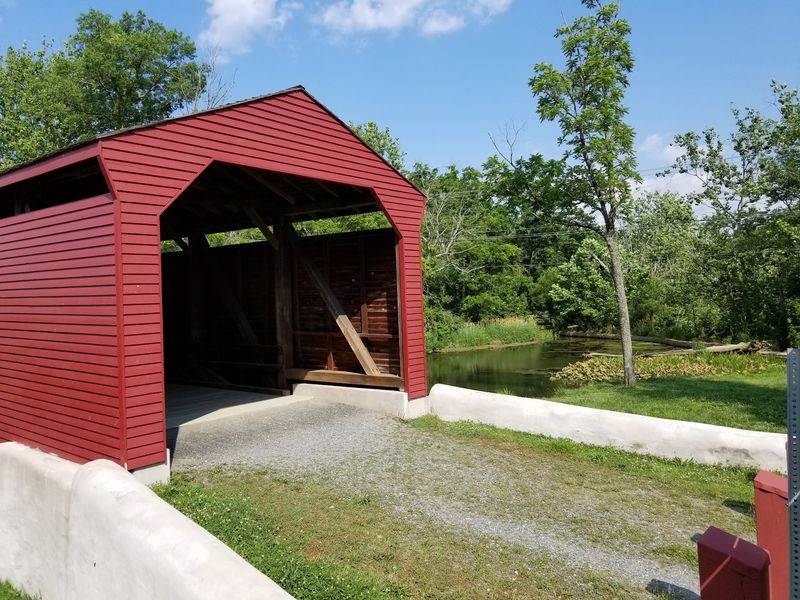
Not far from Jericho, another historic crossing carries traffic over the Little Gunpowder Falls in northern Baltimore County. Often called the Jerusalem Mill area bridge, it sits in one of the region’s most preserved historic districts.
The surrounding village includes an old mill and other early structures, which gives the whole area a step-back-in-time feel. The bridge itself is a single-lane wooden span still used by cars today.
Because it is close to Jericho, many drivers pair the two on the same route through Gunpowder Falls State Park. The historic village nearby adds context, so you understand why crossings like this mattered so much to early communities.
Come on a weekend when the historic buildings are open and you can turn a quick drive into a fuller history stop.
7. Foxcatcher Farm Covered Bridge, Elkton, Cecil County
Hidden inside Fair Hill Natural Resources Management Area, this bridge rewards visitors who like to combine a walk with their history. Foxcatcher Farm Covered Bridge crosses Big Elk Creek in a large park known for its trails and open space.
The bridge is set aside for foot traffic, so you approach it along paths rather than by driving through. Fair Hill covers thousands of acres, giving you room to hike, ride, and explore well beyond the bridge itself.
The rustic wooden structure fits the natural setting, making it a quiet reward at the end of a trail. Because the park is so large, this stop feels more like a discovery than a roadside pull-off.
Wear comfortable shoes and plan a little extra time, since the walk is part of the fun here.
8. Jerusalem Mill Village and Bridge Area, Kingsville, Baltimore County
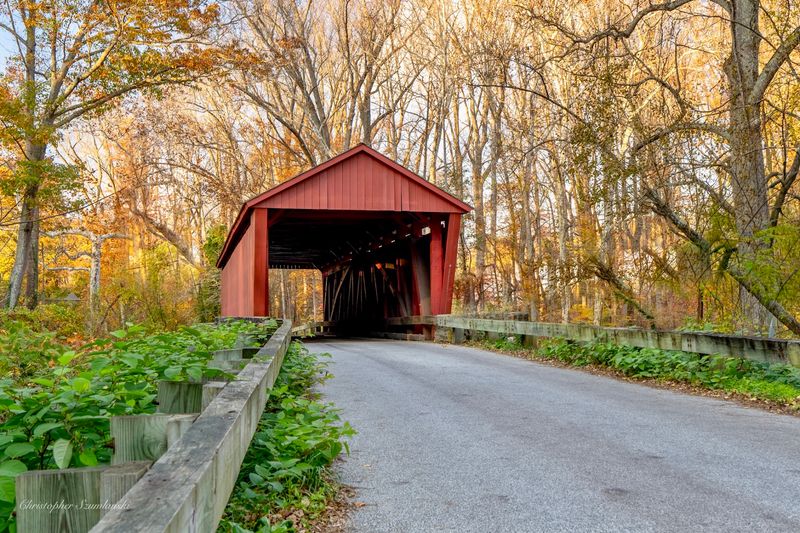
For travelers who want more than just a bridge, the Jerusalem Mill Village ties a covered crossing to a full historic settlement. The restored village centers on an old grist mill and includes several preserved early buildings.
Volunteers help keep the site running, and the visitor areas offer a look at how a working mill community operated long ago. The nearby covered bridge over the Little Gunpowder Falls makes the whole area a natural finish to a countryside loop.
Since it sits within Gunpowder Falls State Park, you can combine the village with trails and water access in one trip. The layout is compact and walkable, so it is easy to explore even with a short amount of time.
End your covered bridge tour here, where the bridge and the village together explain why these crossings still matter to Maryland today.
Enjoyed this story?
Add Fast Food Club as a preferred source to see more of our reporting on Google.