


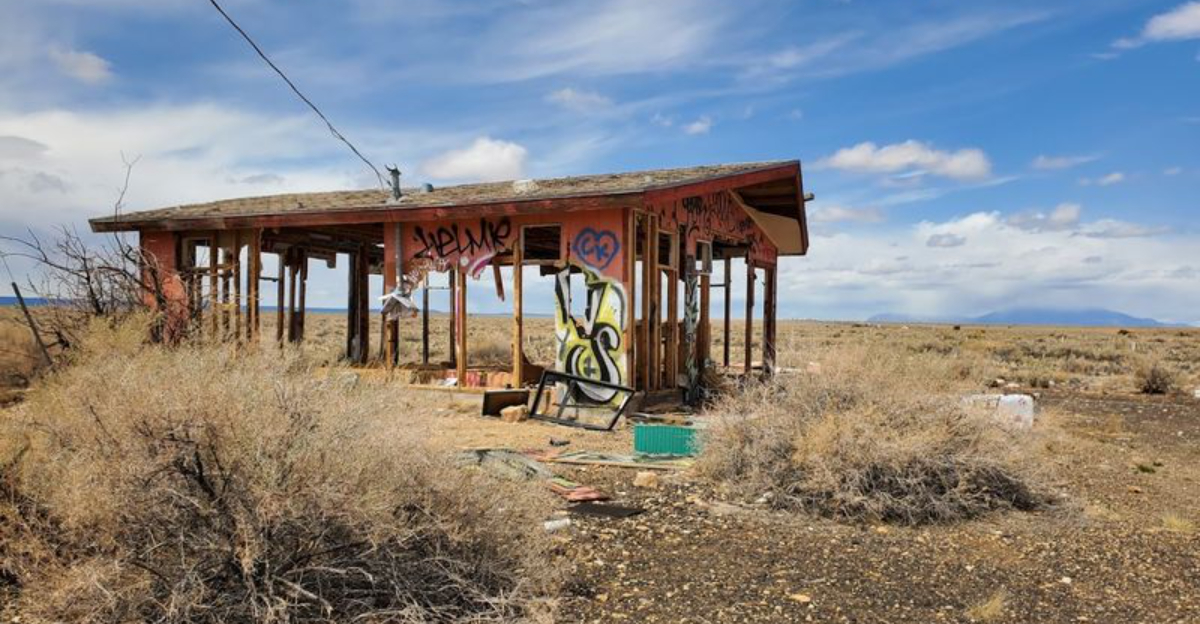
Tucked along old Route 66 in northern Arizona, Two Guns is a ghost town that seems frozen in time, wrapped in mystery and eerie silence. Once a bizarre roadside attraction, it drew curious travelers with its zoo, canyon tours, and wild tales of murder and betrayal.
Today, crumbling ruins, rusted cages, and the shadows of a violent past make it feel like something straight out of a horror novel. If you love history with a dark edge, Two Guns is one place you absolutely need to know about.
The Bloody History Behind Two Guns
Few places carry as much blood-soaked history as Two Guns. The land near Canyon Diablo was the site of a brutal massacre in the late 1800s, where a group of Apache warriors allegedly killed a party of Navajo people inside a cave.
The cave became known as the Death Cave, and its dark reputation followed the land for decades.
A man named Harry Miller, who called himself Two Gun Miller, later claimed ownership of the site and turned it into a morbid tourist attraction. He charged visitors to see the cave and the bones inside.
His presence alone added layers of violence and controversy to an already troubled place.
Miller eventually shot and killed the man he was in a land dispute with, deepening the town’s reputation for bloodshed. That history still clings to every crumbling wall standing today.
Canyon Diablo and Its Chilling Connection
Canyon Diablo cuts through the Arizona desert like a scar, and it played a central role in shaping the dark identity of Two Guns. The canyon was a natural barrier for early settlers and a dangerous crossing point along old Route 66.
Its rugged beauty hides a history full of conflict, death, and desperate survival.
The canyon gave the nearby town of Canyon Diablo its name, a lawless outpost in the 1880s that was known as one of the roughest places in the American West. Murder, robbery, and chaos were everyday events there.
That rough spirit seemed to seep into the ground around Two Guns.
Standing at the canyon’s edge today, you can almost feel the weight of everything that happened here. The wind whistles through the rocks in a way that feels less like nature and more like a warning.
Harry Miller – The Man Who Built a Legend on Lies
Harry Miller was the kind of character who seemed to step right out of a pulp fiction novel. He arrived near Canyon Diablo in the early 1920s and immediately began spinning wild stories about himself and the land.
He claimed Native American heritage, gave himself the nickname Two Gun Miller, and positioned himself as the authority on the canyon’s dark history.
Miller built a tourist operation around the Death Cave, charging people to peek at bones and hear gruesome tales. His showmanship was undeniable, but so was his dishonesty.
He fabricated much of what he told visitors, blending real history with pure invention.
His story ended in violence when he shot and killed Harry Brooks in 1926 during a bitter dispute over land rights. Miller walked away claiming self-defense, but the town never recovered from the scandal.
His ghost, in many ways, still haunts Two Guns.
The Death Cave Nobody Talks About Enough
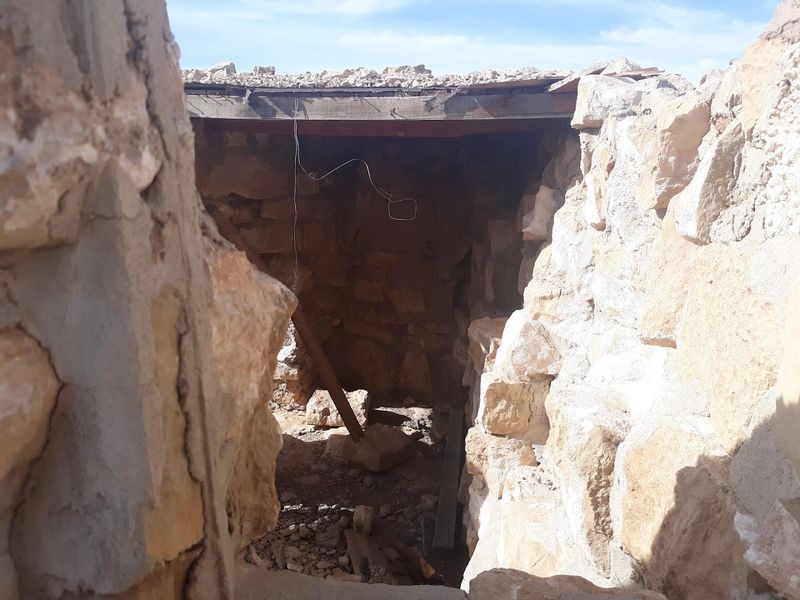
Hidden within the walls of Canyon Diablo lies a cave that earned one of the most unsettling names in Arizona history. The Death Cave, sometimes called the Apache Death Cave, is said to be where a group of Navajo people trapped and suffocated a band of Apache raiders who had attacked their village.
The story is harrowing, and the cave itself feels heavy with that weight.
Harry Miller later used the cave as a centerpiece for his tourist attraction, displaying bones and charging admission. Whether the bones were authentic or staged became a debate that nobody fully resolved.
Visitors in the 1920s and 1930s paid to stand at the entrance and absorb the grim atmosphere.
Today the cave sits largely undisturbed, though curious hikers still find their way to it. Most who visit describe a strange stillness inside, the kind that makes you want to leave quickly.
Route 66 and the Rise of Two Guns as a Tourist Trap
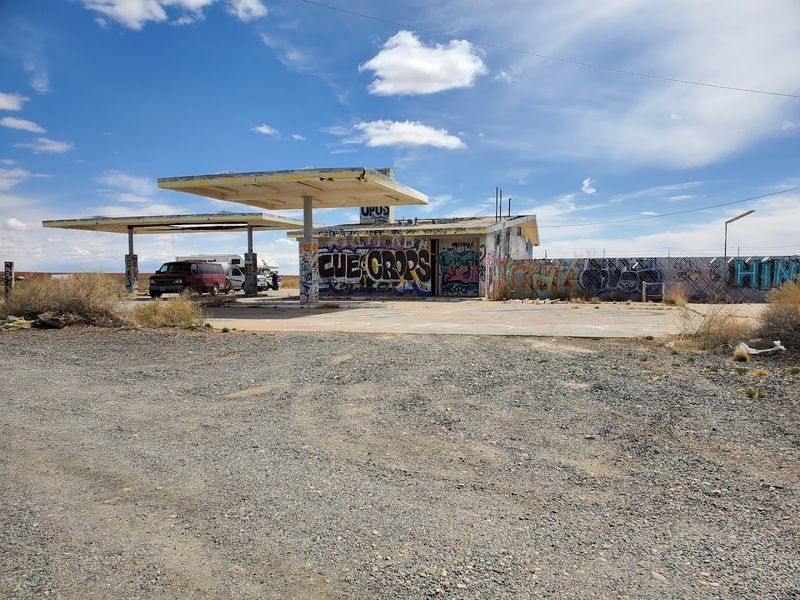
Before it became a ruin, Two Guns was a thriving roadside stop along the famous Route 66. When the Mother Road was booming in the 1920s and 1930s, travelers were hungry for strange and memorable pit stops.
Two Guns delivered exactly that, offering a zoo, a trading post, a gas station, and the morbid appeal of the Death Cave.
Harry Miller knew how to market the macabre. Signs along the highway lured drivers with promises of wild animals and frontier history.
For a few coins, you could see mountain lions, bobcats, and other creatures kept in stone cages carved right into the canyon walls. It was bizarre, thrilling, and completely unforgettable.
At its peak, Two Guns attracted thousands of visitors a year. The whole setup felt like a carnival run by someone with a very dark sense of humor, which, honestly, is exactly what it was.
The Ruins That Still Stand Against the Desert Sky
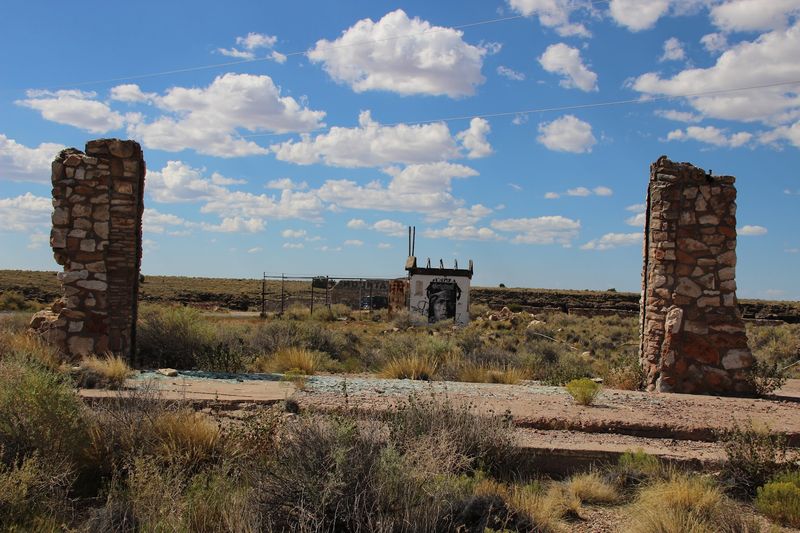
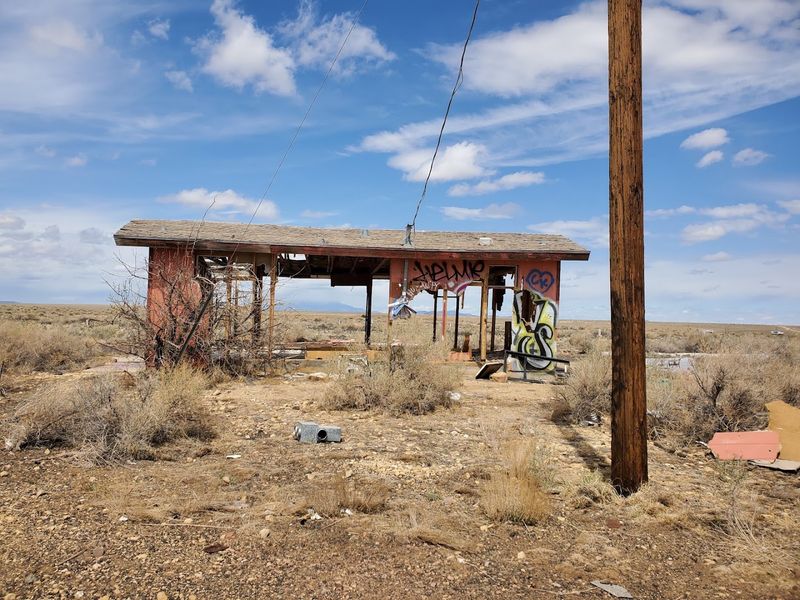
Walk through Two Guns today and you will find walls that refuse to fully fall. Stone structures built in the 1920s still rise from the desert floor, their doorways opening onto nothing but empty sky and silence.
There is something almost defiant about the way these ruins stand, like they are daring the desert to finish the job.
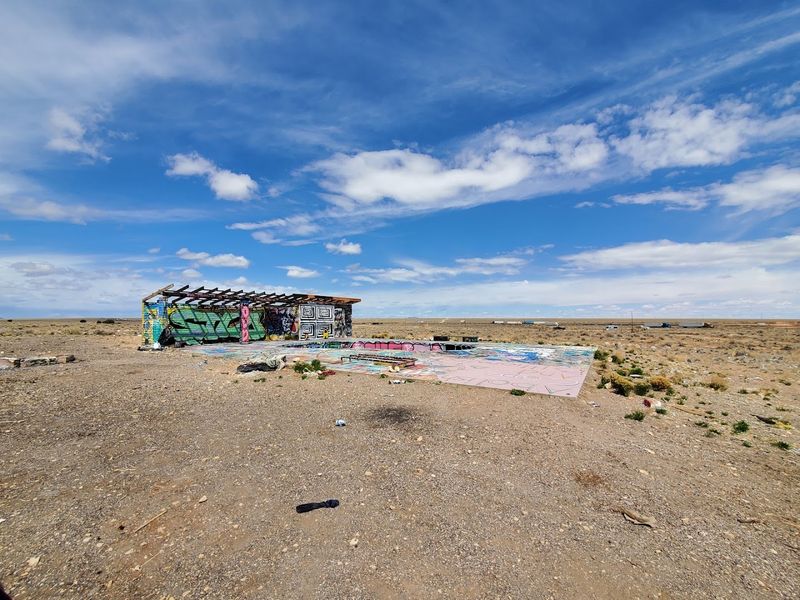
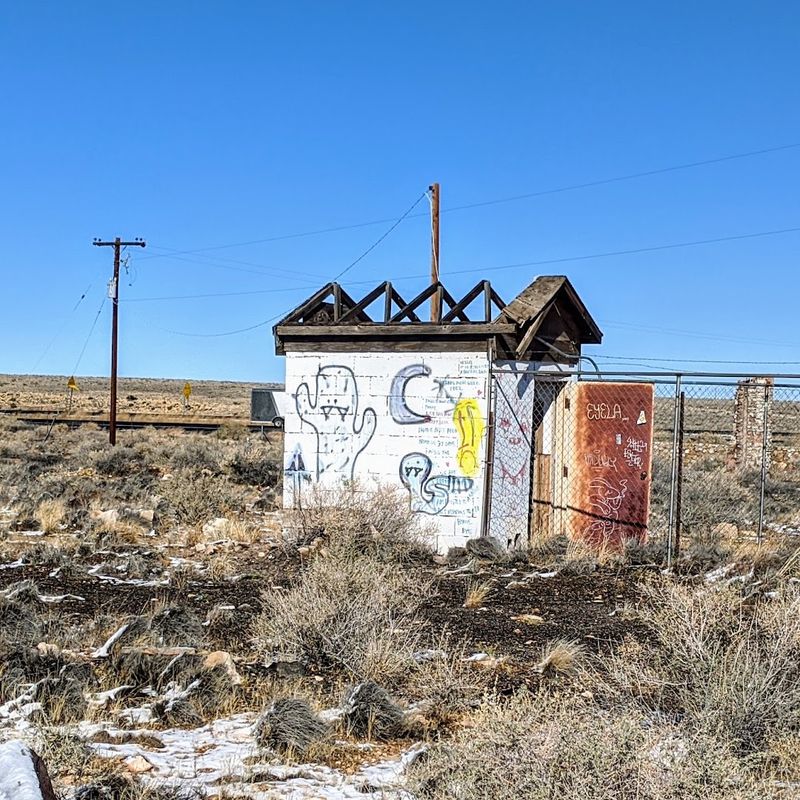
The old trading post, the crumbled zoo cages, and the remnants of buildings that once buzzed with visitors are all still visible. Graffiti covers some surfaces, left behind by modern explorers who could not resist leaving their mark.
But even the graffiti feels swallowed by the vastness of the place.
Photographers and urban explorers are drawn here constantly, chasing that perfect shot of decay meeting landscape. Every angle tells a story, and every crumbling wall seems to hold a secret that the Arizona wind is slowly, patiently erasing.
The Creepy Zoo That Once Kept Wild Animals in Canyon Walls
One of the strangest features of Two Guns was its zoo, and calling it a zoo might be generous. Animals including mountain lions, bobcats, and other desert creatures were kept in cages built directly into the rocky walls of Canyon Diablo.
It was a rough and unsettling setup, even by the standards of the 1920s.
Tourists pulled off Route 66 to gawk at the animals while Harry Miller wove his tales nearby. The whole experience was designed to feel thrilling and slightly dangerous, like you were peeking into something you probably should not be seeing.
That feeling was not entirely wrong.
Today, the stone cages remain, their bars long gone but their shape still clear. Standing inside one of them, surrounded by canyon walls, you get an odd feeling of being both the visitor and the exhibit.
It is one of the most unsettling spots in all of Arizona.
A Murder That Sealed the Town’s Dark Fate
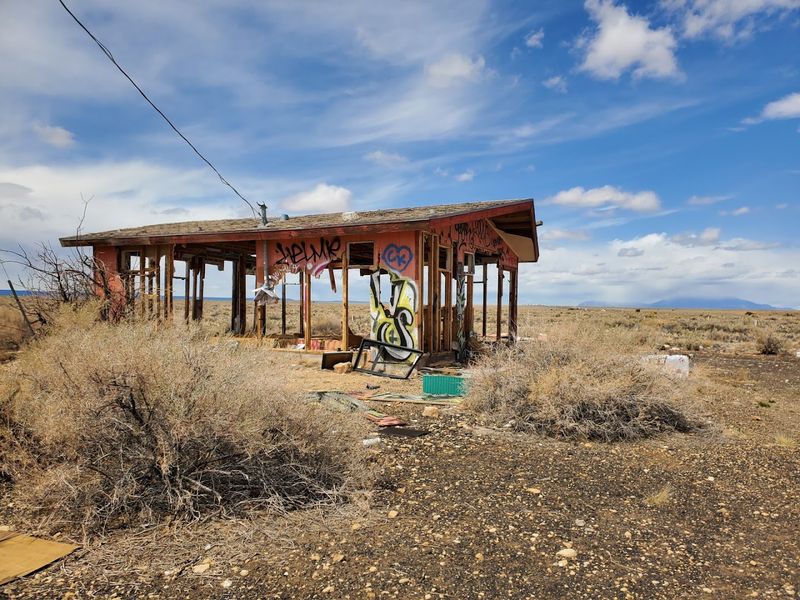
In 1926, Harry Miller shot and killed Harry Brooks during a dispute over who actually owned the Two Guns property. The argument had been building for months, fueled by greed, jealousy, and the kind of stubborn pride that frontier life seemed to breed.
When it finally exploded, it left one man dead and another facing a legal battle.
Miller claimed self-defense and was never convicted, but the shooting cast a long shadow over Two Guns. Visitors became fewer, the reputation of the place shifted from thrilling to genuinely dangerous, and the business never fully recovered.
The town began its slow slide toward abandonment not long after.
That single act of violence became part of the town’s identity, a dark thread woven into everything else that happened there. Some say the place has felt cursed ever since, and walking through the ruins, it is easy to understand why people believe that.
Fires, Floods, and the Forces That Finished Two Guns Off
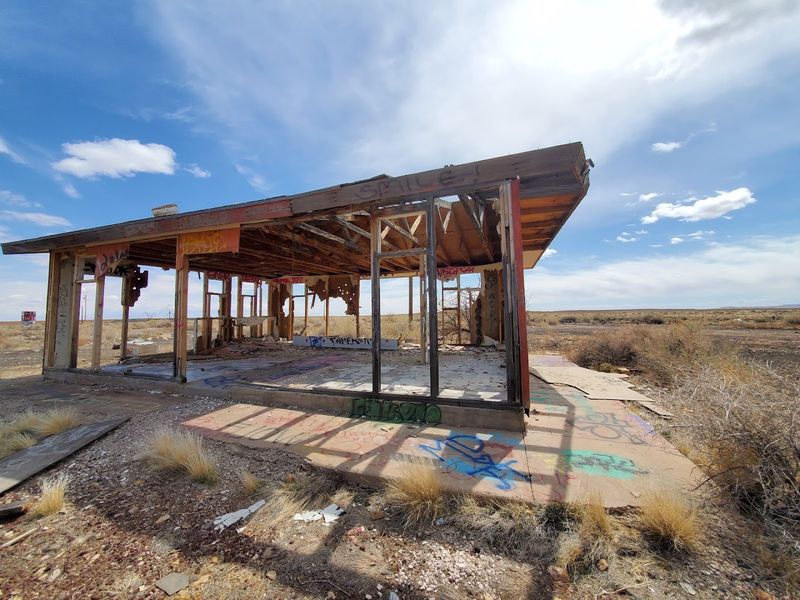
Violence was not the only force that brought Two Guns to its knees. Fires swept through the property more than once, destroying wooden structures and scattering whatever remained of the tourist trade.
The desert itself seemed determined to reclaim the land, sending flash floods through the canyon and eroding the foundations of buildings that had survived everything else.
After Miller’s era, the property changed hands several times. New owners tried to revive the attraction with varying degrees of success, but nothing ever stuck.
Each attempt to rebuild was met with some new disaster, either financial, natural, or man-made.
By the time Interstate 40 bypassed the old Route 66 corridor in the 1970s and 1980s, Two Guns was essentially finished. The traffic that had kept it alive disappeared overnight.
Without travelers stopping by, there was nothing left to sustain the place, and the desert moved in to finish what the fires had started.
What Explorers Find When They Visit Today
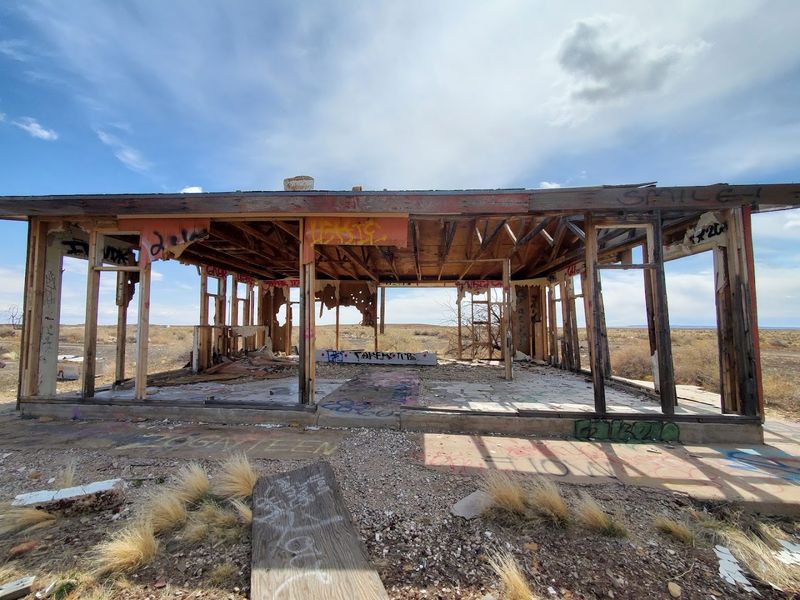
Modern visitors to Two Guns describe the experience as genuinely surreal. You park along a dusty pullout off Interstate 40, walk past a rusted gate, and suddenly find yourself surrounded by ruins that feel like they belong in another century.
The silence is the first thing most people notice. It is the kind of quiet that feels thick and intentional.
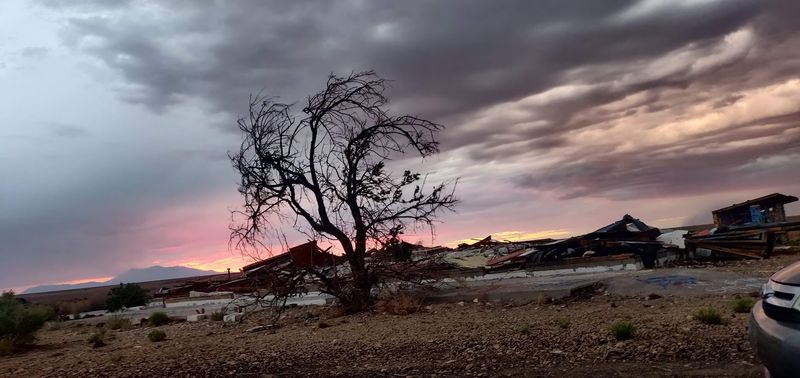
Stone walls, collapsed rooftops, and the faint outlines of what used to be the trading post and zoo are all still visible. The canyon drops away just beyond the ruins, adding a dramatic natural backdrop to the already cinematic scene.
On windy days, the sound of air moving through broken walls creates a low, moaning hum that stops people in their tracks.
Most explorers leave feeling like they witnessed something rare. Two Guns is not polished or curated.
It is raw, strange, and completely unlike anything else along the old Route 66 corridor.
The Native American Battle That Started It All
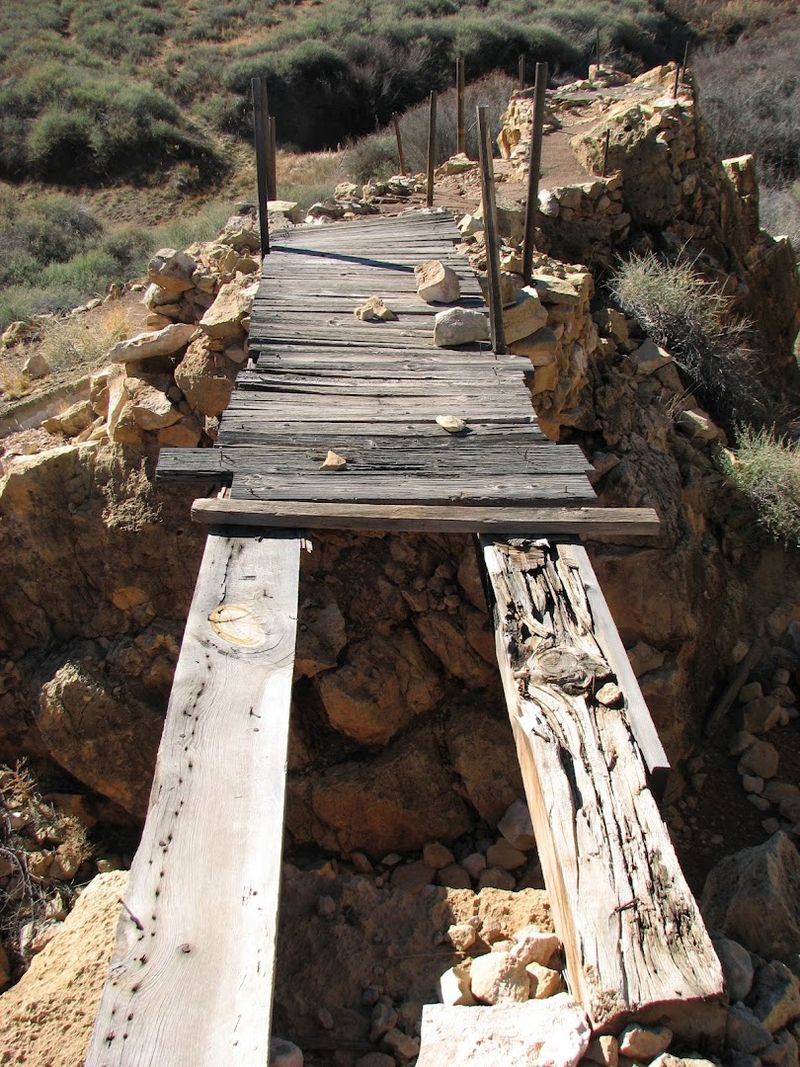
Long before Harry Miller arrived with his showman’s instincts and violent temper, the land around Canyon Diablo was already marked by tragedy. The story most often told is that a group of Apache warriors raided a Navajo settlement, killing several people and escaping into the canyon.
The Navajo tracked them to a cave and sealed the entrance, trapping the raiders inside and letting them suffocate.
The historical accuracy of this account has been debated by scholars for years. Some believe it is largely true, others think it was embellished over time.
What is certain is that the cave was known as a place of death long before tourists ever paid to peer into it.
That original conflict gave the land its grim starting point. Everything that came after, the tourist attraction, the murder, the abandonment, seems to flow naturally from that first act of terrible violence in the canyon’s shadows.
Why Two Guns Feels Like a Movie Set
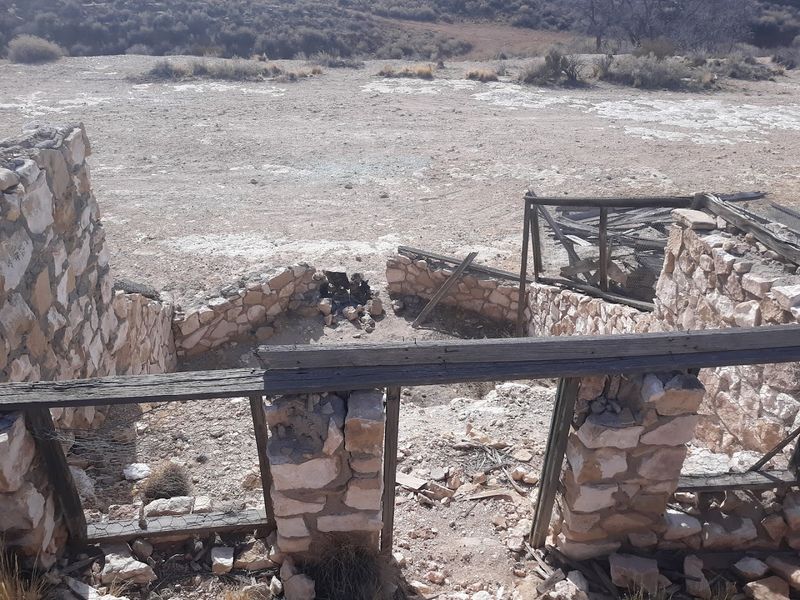
There is a reason filmmakers and photographers are drawn to Two Guns. The place has an almost theatrical quality, as if someone designed it specifically to look haunted and forgotten.
The stone ruins catch the light in ways that feel dramatic even in the middle of an ordinary afternoon. Shadows fall at strange angles, and the canyon behind the buildings adds depth that most locations simply cannot offer.
The combination of violent history, physical decay, and natural desert beauty creates an atmosphere that is hard to manufacture artificially. Horror writers and thriller novelists would struggle to invent a setting more convincingly eerie than Two Guns already is in real life.
Every detail, from the rusted cage bars to the carved stone doorways, adds to the effect.
Standing there as the sun drops low and the temperature cools, it feels less like visiting a historical site and more like walking into the opening scene of a very unsettling story.
How to Visit Two Guns Safely and Respectfully
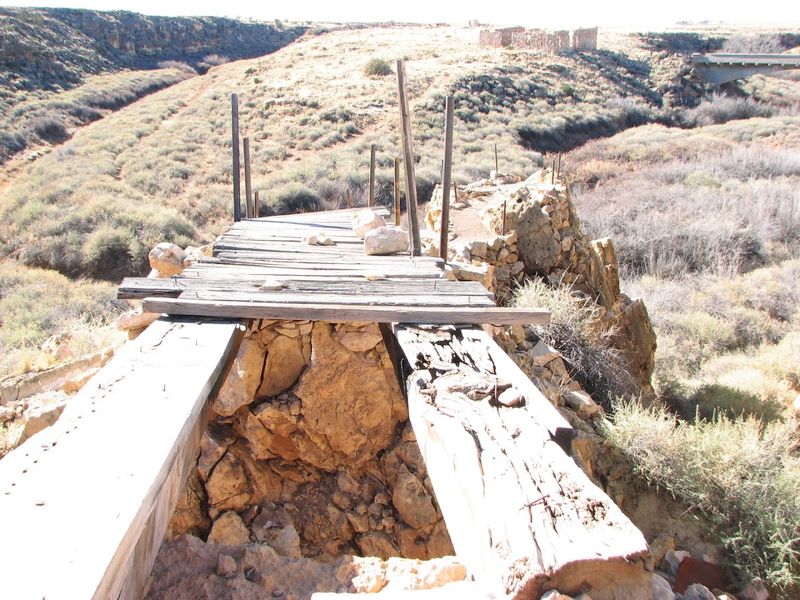
Getting to Two Guns is straightforward. Take Exit 230 off Interstate 40 in northern Arizona and look for the unmarked turnoff near the old bridge over Canyon Diablo.
There are no official signs, no visitor center, and no admission fee. You are essentially on your own once you step past the gate.
Wear sturdy shoes because the ground is uneven and the ruins have unstable sections. Bring water, especially in summer when temperatures regularly climb past 100 degrees.
Cell service is spotty, so download offline maps before you go. Going with a friend is always smarter than exploring alone.
Respect the site by not removing anything and avoiding climbing on the weakest walls. This is a place with real history and real cultural significance, especially for Native communities connected to the land.
Treat it the way you would want someone to treat a place that mattered to your own family.
Enjoyed this story?
Add Fast Food Club as a preferred source to see more of our reporting on Google.