


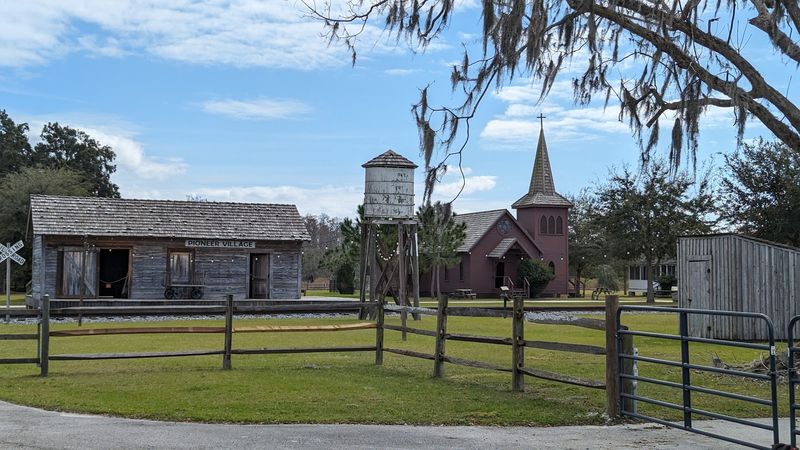
Just off the buzz of Highway 192 in Kissimmee, where theme parks pull most of the crowds, sits a quiet little town that quietly rewinds the clock about two hundred years. Weathered wooden homes, a one-room schoolhouse, a small church with colorful windows, and a friendly goat named Buster wait for anyone curious enough to wander off the main road.
Admission runs about the price of a fast lunch, the whole place can be explored in an easy afternoon, and kids get plenty of open space to roam. What follows is a full look at where it is, what stands inside its gates, and why it might be the most relaxing stop on your Central Florida trip.
Keep reading, because this old town has a name worth remembering.
Where This Old Town Hides in Kissimmee
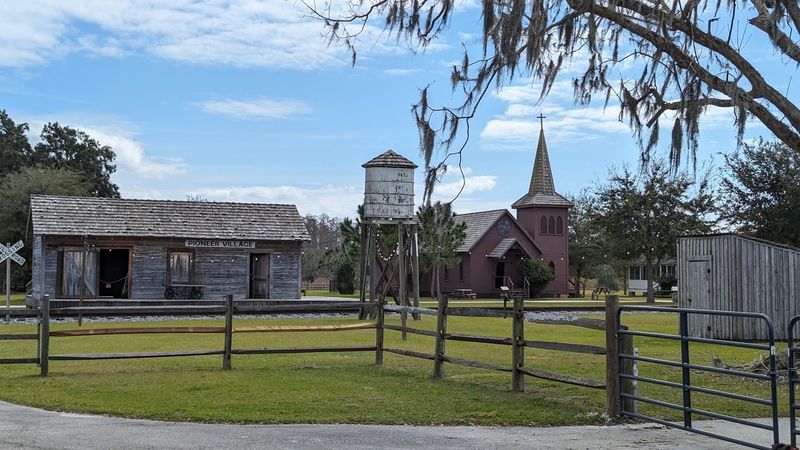
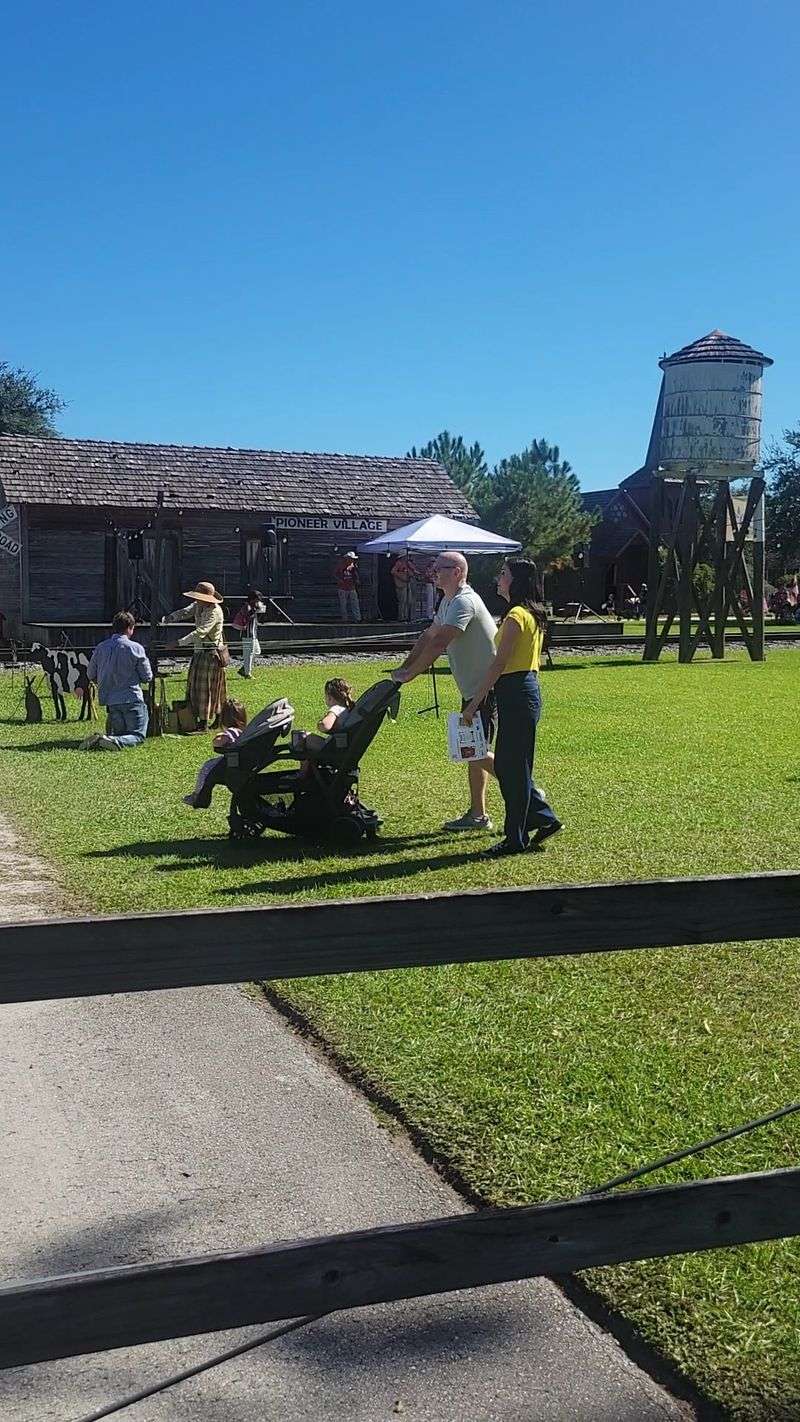
Tucked at 2491 Babb Rd in Kissimmee, Florida, sits Pioneer Village at Shingle Creek, an outdoor history museum that many people pass without ever knowing it exists.
The address puts it surprisingly close to the tourist strip along Highway 192, with its rows of restaurants and attractions. Yet the moment you turn onto the property, the pace slows way down.
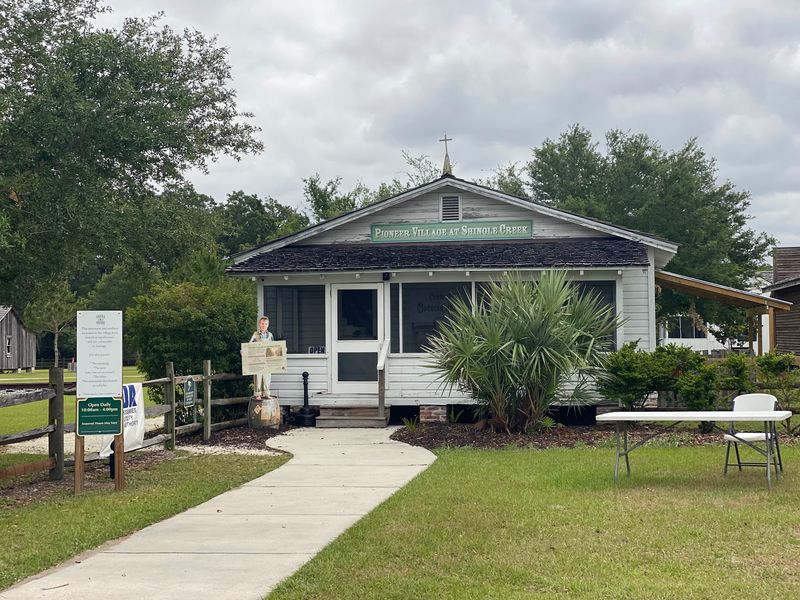
Parking is easy, and there is plenty of it, so the arrival never turns into a hassle. The entrance can be a little tricky the first time, so look for the house flying a green flag with a small open sign on the door.
Run by the Osceola County Historical Society, the site collects original and rebuilt structures from the region and arranges them like a small settlement. A helpful person at the front desk hands over a map and points you toward the different areas.
Regulars mention how strange and wonderful it feels to be minutes from the theme parks yet standing in a quiet 1800s neighborhood. That contrast is exactly what makes the location worth seeking out.
A Settlement Rescued and Rebuilt
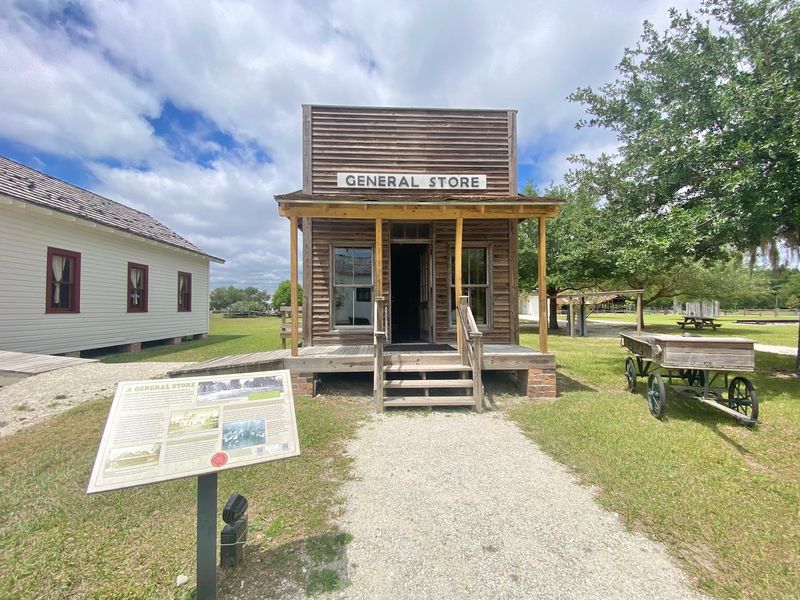
Most of the buildings here did not start on this land. They were donated, carefully moved, and reassembled to form the village you walk through today.
Original ranch homes from the 1800s stand alongside faithful reconstructions of community structures, giving a full sense of how an early Osceola County settlement fit together. Some pieces came from real sites scattered across the county.
Dedicated volunteers keep the whole property in good shape, and their knowledge turns a simple walk into a genuine history lesson. Notice boards fill in the gaps with just enough detail to explain each spot without overwhelming you.
The homes are furnished with period pieces, from simple tools to everyday accessories that suited life in that era. Walking through them makes it easier to understand how families organized their days back then.
There is something quietly impressive about a place built entirely from saved history. Every structure represents a small act of preservation that keeps Old Florida from slipping away.
The Little Church With Colorful Windows
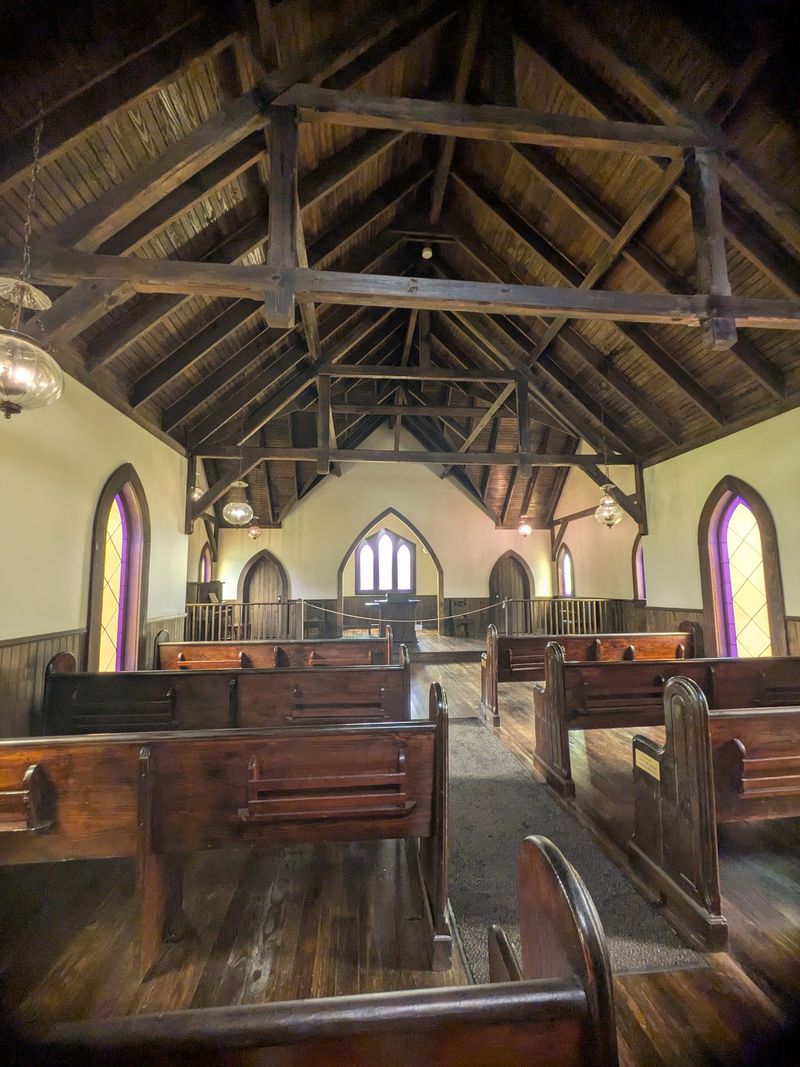
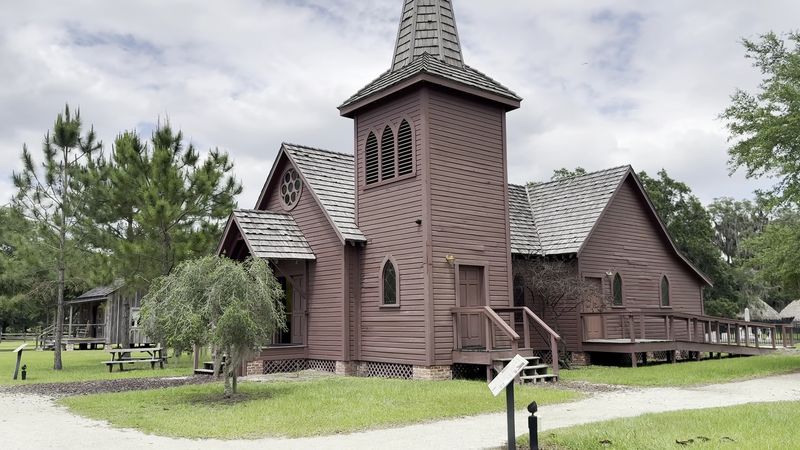
Among all the structures, the small church tends to win people over the fastest. Its stained glass catches the light and turns an otherwise plain wooden building into something memorable.
The chapel is more than a display piece too. Real ceremonies happen here, including weddings, which gives the space a warm and living purpose beyond history.
One family celebrated a son’s wedding right in the chapel and got to enjoy the exhibits at the same time, a nice reminder that this village still hosts genuine milestones. That mix of past and present sets it apart from a static museum.
Inside, the simple pews and modest details reflect how early settlers built their gathering places with limited materials. Nothing feels fancy, and that is part of the appeal.
Peaceful and quiet, the church makes an easy favorite for anyone drawn to old architecture. It is the kind of spot where people naturally slow down and linger a moment longer.
Buster the Goat and His Feathered Neighbors
Not every history lesson comes with a friendly goat, but this one does. Buster, the resident goat, greets guests near the Lanier House and happily accepts a good scratch.
He shares the space with a small flock of chickens that wander around and add a bit of barnyard charm to the settlement. The animals often end up being the highlight for younger guests.
Families with little ones find the animal area especially handy, since kids can meet the goat and watch the chickens while the grown-ups read the history boards. Everyone leaves happy that way.
The critters give the village a lived-in feeling, as if the town never fully emptied out. It is a smart touch that keeps the mood playful instead of stuffy.
People consistently point to the goat and chickens as a standout part of the visit. Who knew a goat could be such a reliable tour guide.
Inside the One-Room Schoolhouse
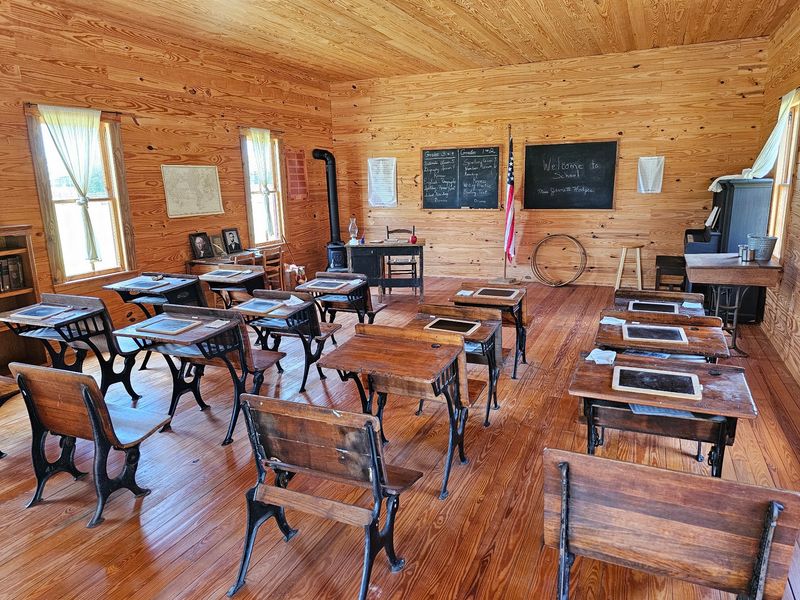
Long before smartboards and bus routes, kids learned everything in a single room. The village keeps that idea alive with a charming one-room schoolhouse that draws plenty of attention.
Rows of simple desks and modest furnishings show how education worked when one teacher handled every grade at once. Standing inside makes the whole concept click in a way textbooks rarely manage.
The schoolhouse pairs nicely with the nearby general store, another glimpse into how a small community met its daily needs. Together they sketch out the everyday rhythm of early settlers.
Guests often describe the school as one of the cutest stops on the property. It hits a sweet spot between educational and genuinely fun.
Because the details are furnished and clearly explained, even short visits leave people understanding a bit more about frontier learning. A classroom this small carries a surprisingly big story.
Railroad Tracks, a Blacksmith, and Working Details
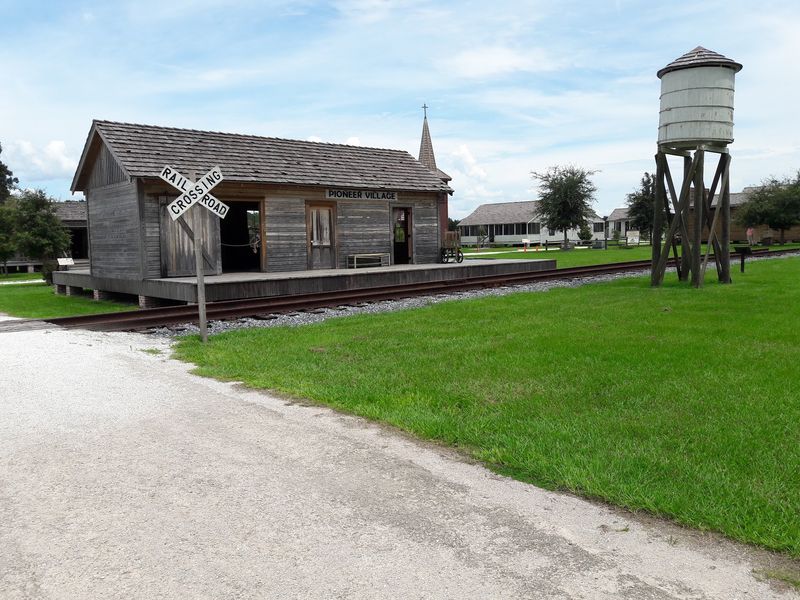
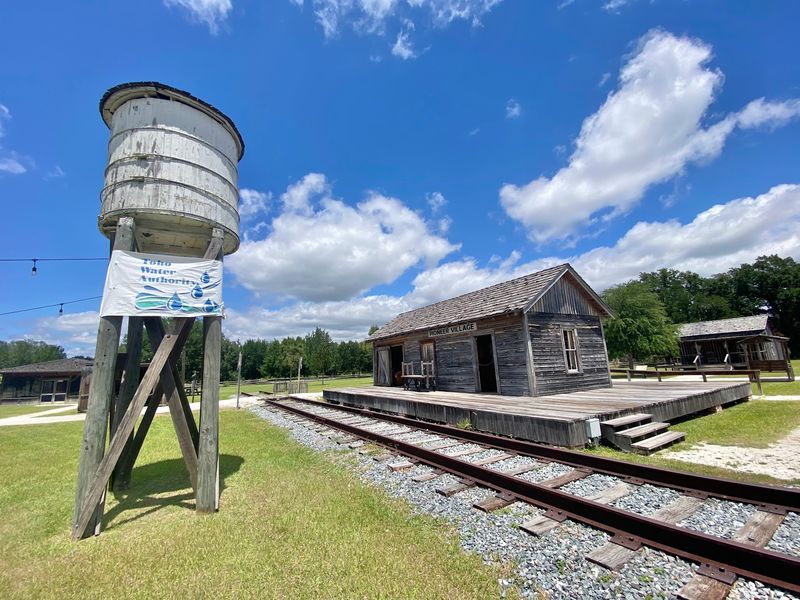
Hands-on touches are scattered all over the grounds, and they turn passive looking into active exploring. Partial railroad tracks and a small railroad office hint at how goods and people once moved through the region.
A blacksmith shop rounds out the working side of the settlement, showing the trades that kept a frontier town running. Barns and various utility buildings fill in the rest of the practical picture.
Little details invite interaction, especially for kids. Young guests love balancing along the railway line and working the old hand pump on the well.
Ramps lead up to several buildings, which doubles as easy climbing fun for toddlers and as a practical accessibility feature. It is thoughtful design that serves more than one purpose.
All these moving pieces keep the visit from feeling like a quiet gallery stroll. There is always one more thing to poke at, pump, or peek inside.
The Seminole Settlement
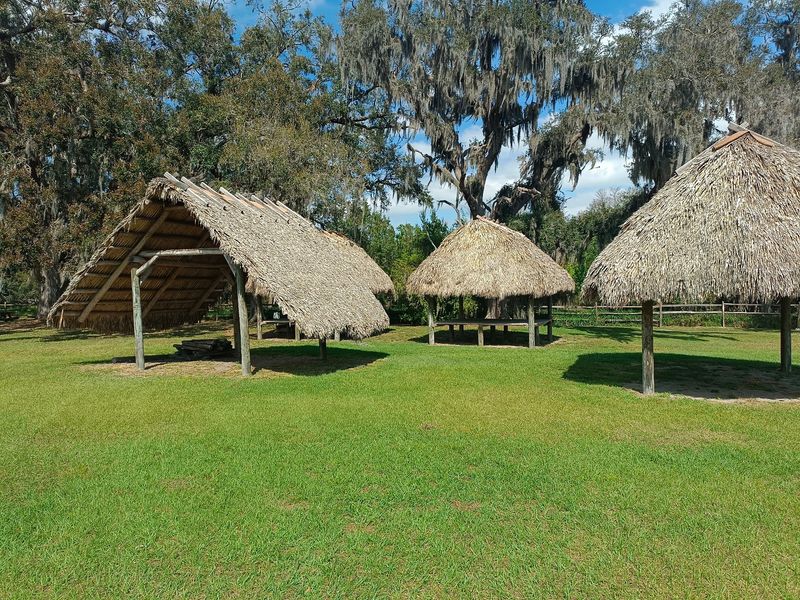
Beyond the settler homes, the village makes room for a Seminole settlement that broadens the story of the land. Native structures stand as part of the larger picture of who lived here first.
Including this area helps the museum tell a fuller history rather than just the rancher perspective. It is an important layer that many small history sites skip entirely.
The buildings are arranged with the same care given to the rest of the property, complete with information that explains their purpose. Guests walk away with a better grasp of the region’s early cultures.
Set among the trees and open ground, the settlement fits naturally into the flow of the visit. Nothing feels tacked on or out of place.
For anyone curious about the deeper roots of Central Florida, this stop adds real depth. History, after all, always has more than one chapter.
Trails and a Quiet Nature Escape
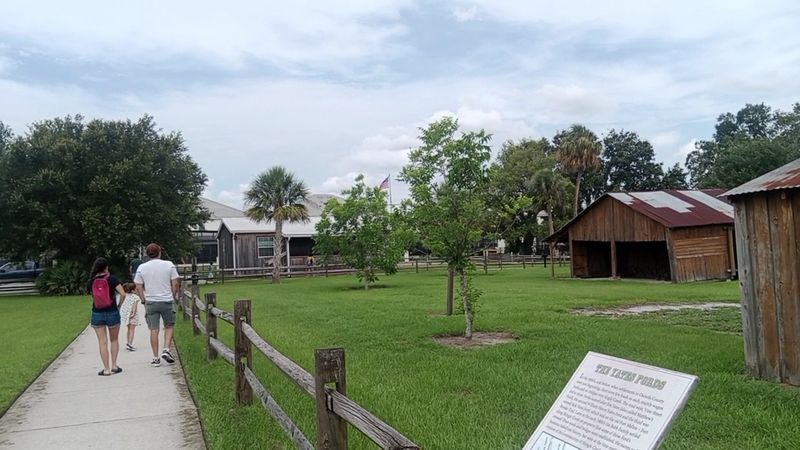
History is only half the draw. The property connects to trails that give the whole visit a peaceful, outdoorsy dimension well away from the highway noise.
Local runners and walkers have folded these paths into their routines, treating the area as a favorite spot for morning exercise. Some have been coming back for years just for the fresh air.
The trail runs along Shingle Creek and stays well maintained, making it friendly for a relaxed stroll or a brisk jog. It is an easy way to stretch a short museum visit into a longer, calmer outing.
Trails came up more than any other single topic among guests, which says a lot about how much people value the green space. The peaceful atmosphere is a big part of the charm.
Blending pioneer history with a nature walk is a rare combo. You get your steps and your history lesson in the same trip.
Guided Tours, Audio Tours, and the Welcome Center
Newcomers get plenty of help making sense of the place. A friendly person at the front desk offers a map and is happy to chat about what the shop sells and where to start.
Guided tours dig deeper into the buildings and the families who once lived in them, led by staff and volunteers who clearly know their stuff. The history simply lands better when someone walks you through it.
Prefer to explore at your own pace? An audio tour lets you wander freely while still catching the stories behind each structure.
The welcome center holds a museum of its own, so the learning starts before you even reach the village proper. It is a smart place to get oriented.
Between the maps, the tours, and the eager staff, first-timers rarely feel lost. Help is always close, and it always comes with a smile.
A Calm Day Out for Families and Slow Wanderers
Some places wear you out. This one does the opposite, offering a relaxed atmosphere that suits nearly everyone who shows up.
Families lead the pack, thanks to wide open areas where children can run, climb ramps, and meet the animals without much fuss. Parents get to slow down while the kids burn energy.
Solo explorers enjoy it too, sometimes finding themselves nearly alone on the grounds and free to take their time. Photographers in particular love the quiet, uncluttered scenes.
The site has hosted gatherings like baby showers on its attractive grounds, proving it works for more than just casual drop-ins. It flexes between a quick stop and a full event space.
Wheelchair users are considered as well, with ramps built into many of the buildings. That thoughtful access widens the welcome to just about anyone looking for a gentle outing.
Hours, Admission, and Money-Saving Tips
Planning a visit is refreshingly simple. The village keeps steady hours, open daily from 10 AM to 4 PM every day of the week.
Admission is easy on the wallet at only eight dollars per person, which is hard to beat for a full afternoon of history and grounds. You do not need to buy a ticket ahead of time.
Bargain hunters have options too. Coupons circulate around town, and stopping by the Osceola History Museum on Highway 192 first can score a two dollar discount on the village.
The gift shop stocks affordable souvenirs, so you can bring home a small keepsake without spending much. It is a nice cap to the visit.
Most guests spend somewhere between twenty minutes and an hour and a half, though some happily stretch it into a half day. Bringing a packed lunch to enjoy at the adjacent public park is a popular move.
Why This Village Deserves a Spot on Your Itinerary
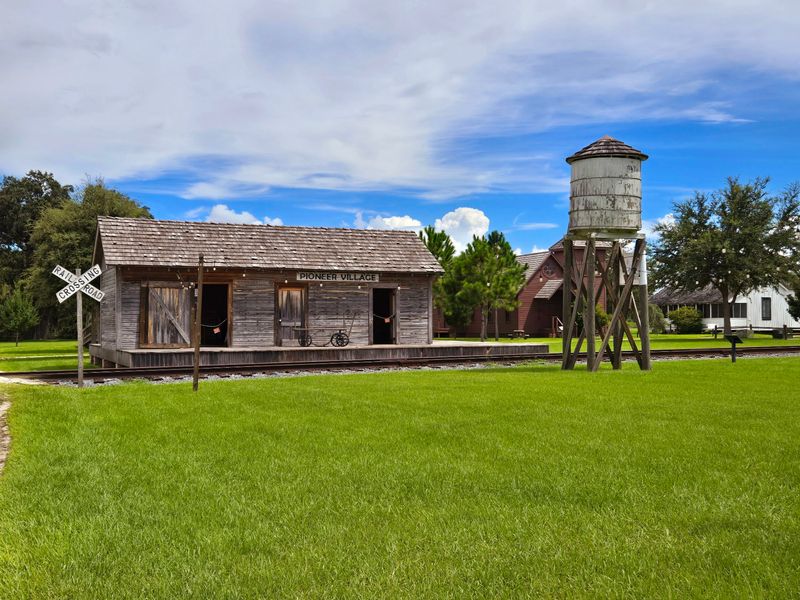
Central Florida overflows with big, loud attractions, so a calm history stop like this one feels like a genuine change of pace. It holds a strong 4.6 star average across more than seven hundred write-ups, and that consistency speaks for itself.
People frequently describe it as a well-kept, educational, and surprisingly memorable outing that exceeded their expectations. Many arrive with no plan at all and leave recommending it to everyone.
The mix is what makes it stick. Historic buildings, a Seminole settlement, friendly animals, quiet trails, and a wallet-friendly price all live on the same easy-to-reach property.
Return guests are common, with some coming back multiple times and planning yet another trip. That kind of loyalty is a good sign for any small museum.
Slip away from the highway for an afternoon, grab a map, say hello to Buster, and let Old Florida do the rest. Pioneer Village at Shingle Creek proves a day trip does not need thrill rides to leave a lasting impression.
Enjoyed this story?
Add Fast Food Club as a preferred source to see more of our reporting on Google.