


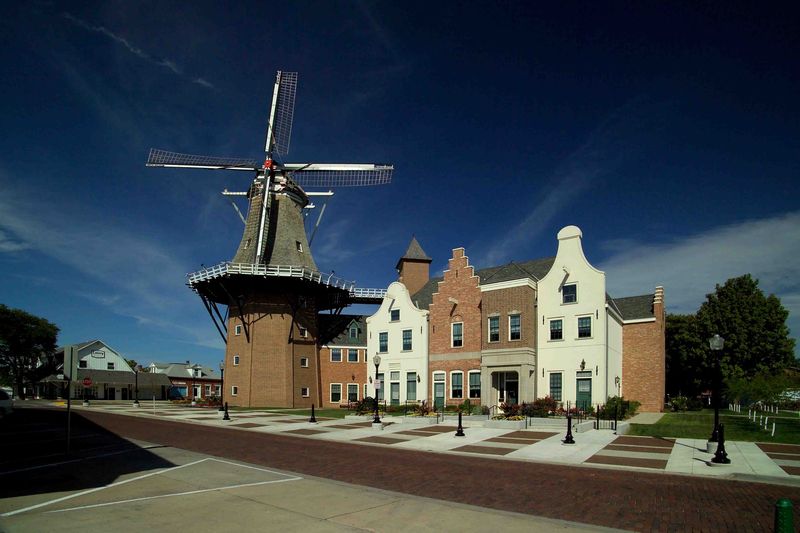
A working windmill grinds grain in the middle of Iowa, and yes, you can climb inside it. Tucked into a small town settled by Dutch immigrants in 1847, there is a cluster of 22 historic buildings, a miniature 1840s Netherlands village, and even the boyhood home of a famous frontier lawman.
Add tulips blooming by the thousands each spring, cozy shops, and old-world bakeries lining a walkable downtown, and you have a place that surprises people who expected a quick stop. Some spend four hours here and still run out of time before they run out of things to see.
What makes this corner of the Midwest feel so different from everywhere around it? Keep reading, because the answer starts with a spinning set of windmill blades and only gets more interesting from there.
Where Dutch Iowa Comes to Life
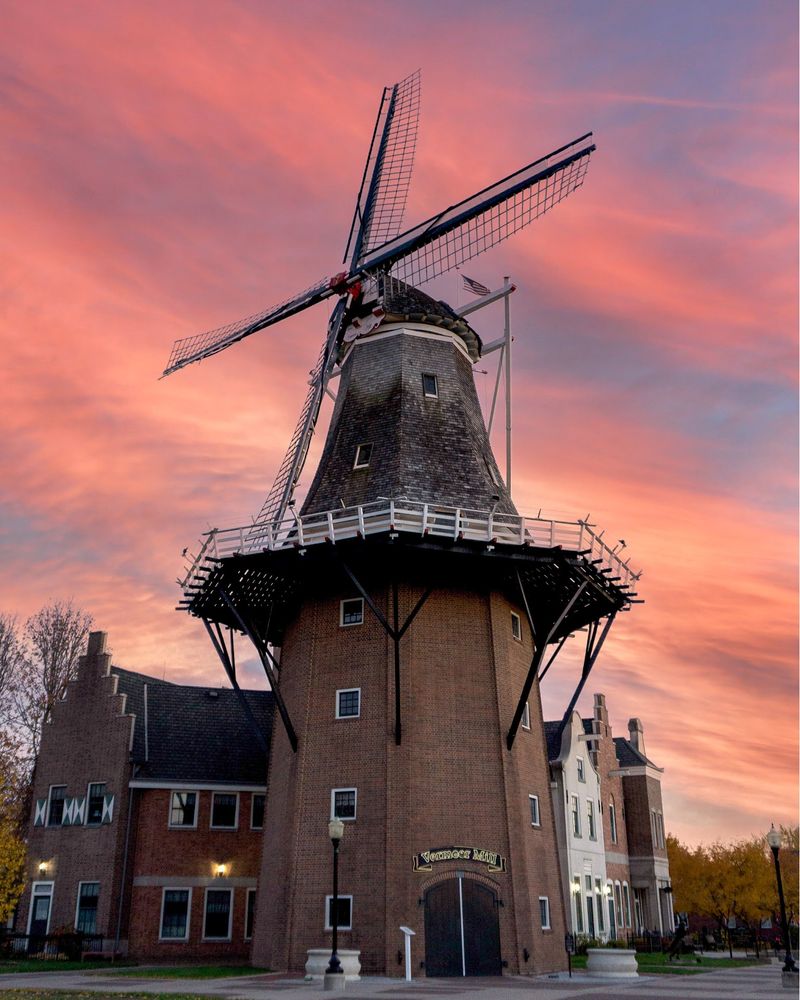
Right at 507 Franklin St in Pella, Iowa, the Pella Historical Village and Vermeer Windmill anchors a town that leans fully into its Dutch roots. The complex gathers 22 buildings from the 1800s into one museum campus, all tied together by gardens, walkways, and a towering windmill you can spot from blocks away.
Pella traces its beginnings to Dutch immigrants who arrived in 1847. That heritage shows up everywhere here, from the architecture to the tulip beds to the volunteers dressed in traditional clothing.
The village earns a 4.7-star rating across more than 700 reviews, which is high praise for a small-town museum. People who wander through tend to leave impressed by how much there is to explore.
What sets it apart is that it never feels like a single stop. The windmill, the miniature village, the historic homes, and the exhibits each stand on their own, so a visit builds momentum instead of winding down.
Consider it the beating heart of a town that has turned preservation into an art form.
A Real Windmill That Still Grinds Grain
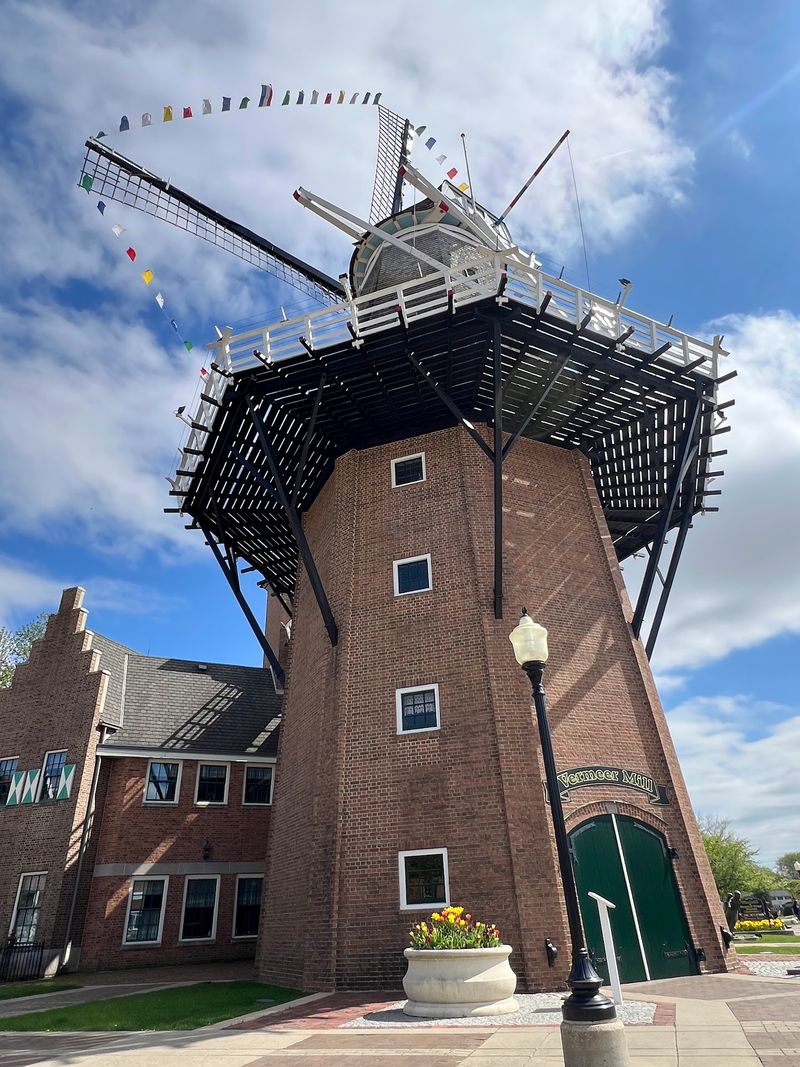
Grain still gets milled inside the Vermeer Windmill, and that alone puts it in rare company. It is a big one, and it actually works, with the blades turning and the inner machinery doing its old job just as it was designed to do.
Volunteer millers in uniform run the show. They explain how a grain mill operates from the inside out, point to the labeled mechanisms on each level, and even offer an interactive moment or two along the way.
Climbing to the top rewards the effort with the best view in town. From up there you can see part of Pella and get close to the blades, though the height is not for everyone.
Once you have taken it all in, an elevator carries you back down.
Several stairs stand between the ground and the summit, but each level gives you something to look at, so the climb doubles as a series of small discoveries. Regulars often name the windmill their favorite part of the whole visit, and it is easy to understand why.
The Miniature Netherlands You Could Study for Hours
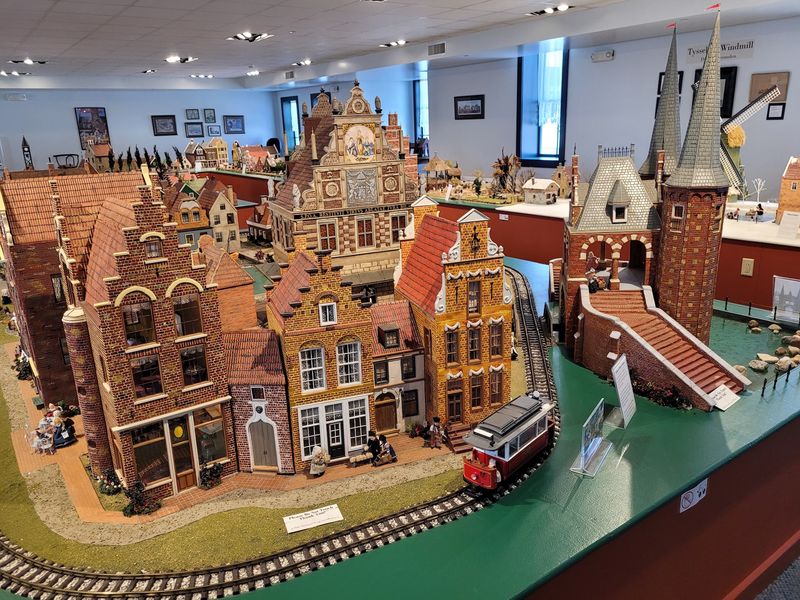
Tiny drama unfolds in the museum’s 1840s Netherlands miniature village, where a whole world sits in careful detail. Each season gets its own scene, complete with figures, animals, and vehicles that actually move.
Half the fun is spotting the small stories. Look closely and you might catch a goat tangled up in someone’s drying laundry, one of those little touches that reward a slow, curious eye.
Little signs scattered throughout explain why things are set up the way they are. A volunteer usually stands nearby for questions, so the exhibit becomes as informative as it is charming.
People who did not expect to care about miniatures often walk away surprised at how much they enjoyed it. The level of craft turns a casual glance into a lingering study.
Some wish the guided tour allowed a bit more time to explore this section, which says plenty about how absorbing it is. Skipping it would be a genuine loss, so plan to give it the attention it deserves.
Wyatt Earp’s Boyhood Home and Its New Story
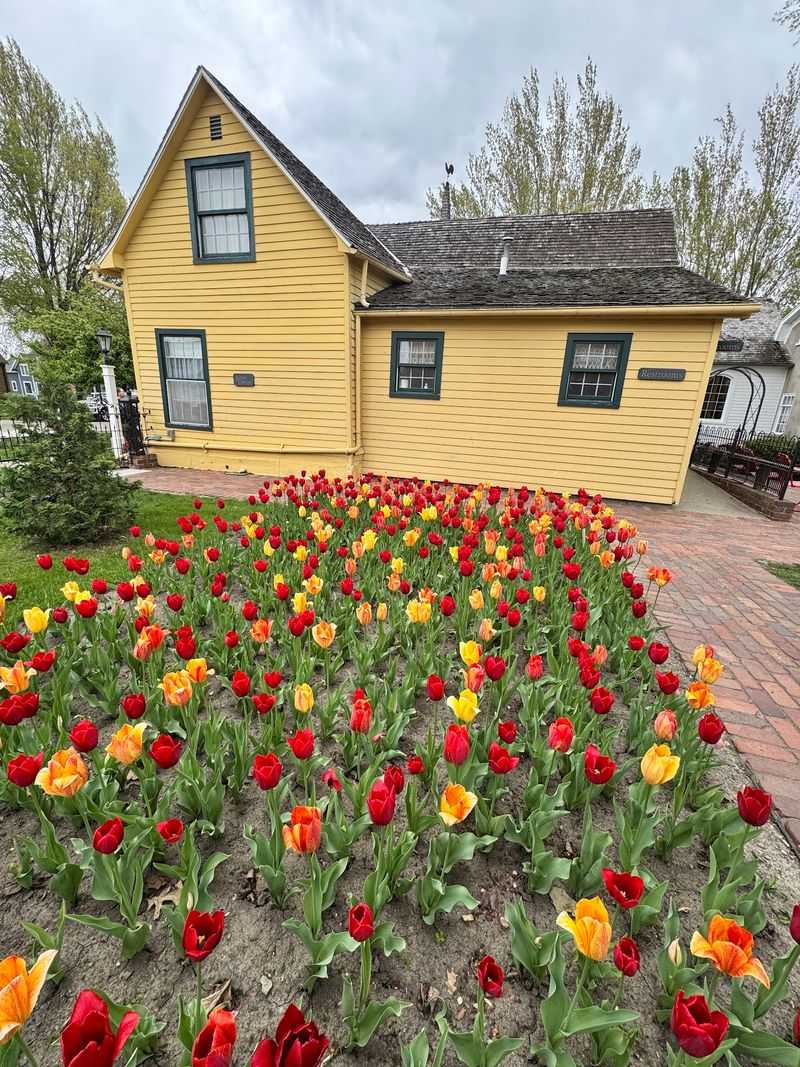
A frontier legend once lived on this very ground. Among the 22 buildings sits the boyhood home of Wyatt Earp, who spent his early teenage years, roughly ages 13 to 16, in Pella.
The experience has recently changed. The site moved away from the old house-museum style, since the interpretation now leans on the broader history rather than original artifacts tied to the Earp family.
Some longtime fans miss the older version, feeling the update softened the connection to the man himself. Others new to the story find plenty to learn about his life and the era he grew up in.
An audio tour is available for those who want the full narrative. That said, plenty of people enjoy simply walking through the rooms, each carrying brief text to read at your own pace.
Earp’s early years were far from easy, and the exhibit does not shy away from that. Whether you arrive as a devoted history buff or a curious first-timer, the home adds an unexpected chapter to a decidedly Dutch village.
Twenty-Two Buildings Worth Wandering
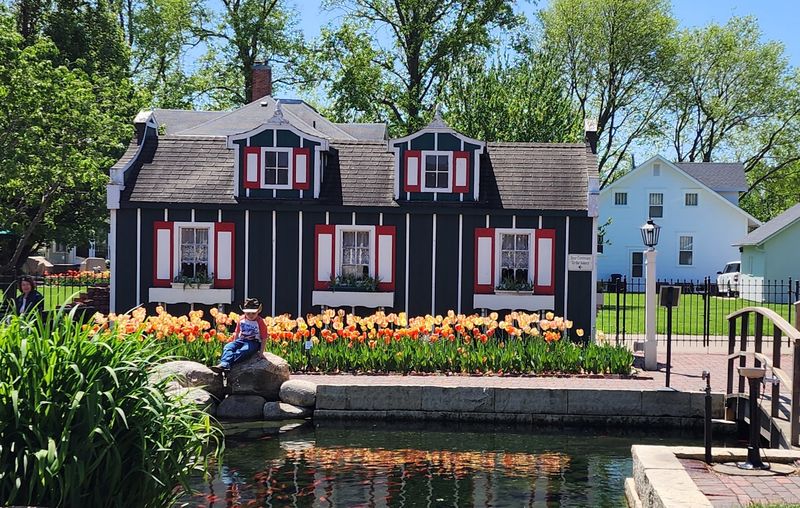
Beyond the windmill, the historic village spreads out into a self-guided maze of period buildings that keep surprising you. There is a blacksmith shop with a running machine and volunteers at work, an old grain mill, and displays showing how wooden shoes were once made.
Inside the buildings you will find fully decked-out rooms, regional Dutch clothing arranged by province, and exhibits on architecture, culture, and the immigrants who settled here. The Heritage House alone holds two levels of Pella history, including a section music lovers will appreciate.
Families get their own corner too. A dedicated kids’ room offers puppet shows, coloring, and space to burn off energy, which makes the whole place easier with children in tow.
The buildings connect in ways that occasionally leave people unsure which direction to go next, but that meandering quality is part of the charm. One exhibit flows into another and the discoveries just keep coming.
Set aside a few hours if you want to see it all. More than one person has admitted their legs gave out before they finished, which tells you exactly how much ground there is to cover.
Tulips, Tulips, and More Tulips
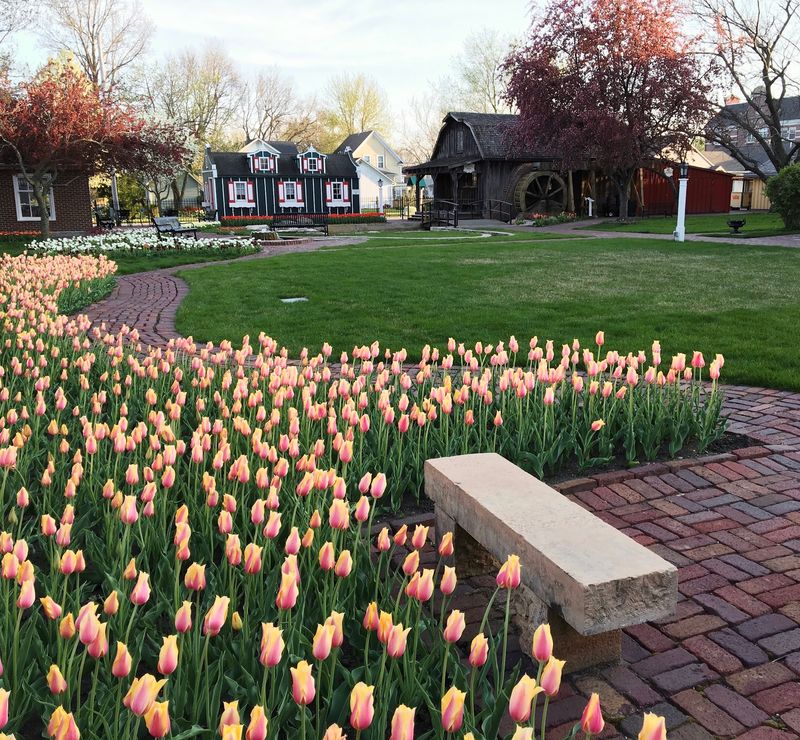
Color takes over this town every spring, and the village grounds put on one of the best displays around. Tulips bloom by the thousands in and out of the buildings, creating photo opportunity after photo opportunity.
Gardeners here work year-round to make it happen. Visit in autumn and you can watch them preparing the tulip beds for next season, a quiet behind-the-scenes look at the effort behind the springtime spectacle.
The blooms tie directly to Pella’s annual Tulip Time Festival, held in early May, when the town fills with parades, traditional dances, and celebrations of Dutch culture. It draws crowds from across the country and leaves a strong impression.
Even after the festival ends, the flowers keep going. People who roll through town the following weekend often find the beds still gorgeous and the square still worth a slow walk.
If you fall for the blooms, you can order bulbs on site or online, sold 50 to a package. Few places make it so easy to take a little piece of the color home with you.
A Downtown Built for Strolling
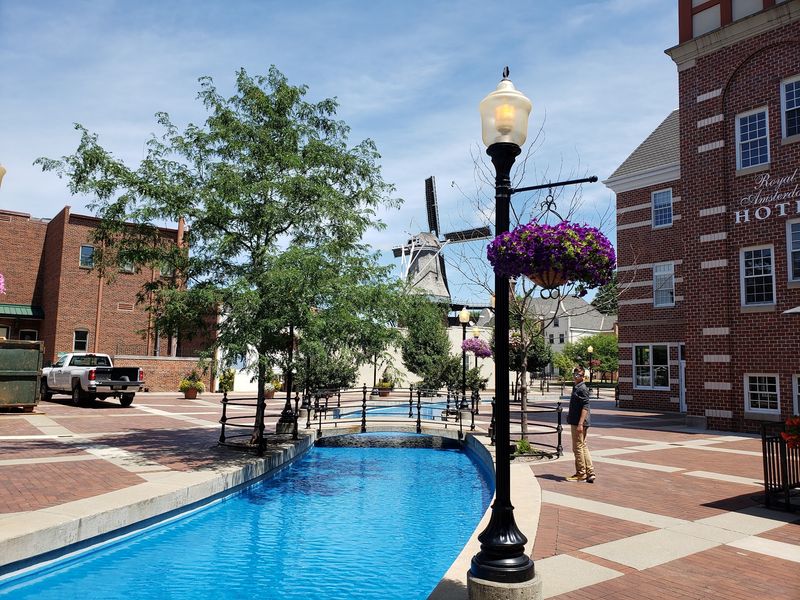
Step past the village and the whole town keeps the theme going. Pella’s historic downtown wraps around a central square where boutique shops, cozy cafes, and old-world bakeries invite a relaxed, unhurried walk.
Every building must pass the town’s Dutch architectural style, so the look stays consistent from block to block. A canal and a town square add a picturesque touch that makes leisurely walks and photos especially rewarding.
Shops here draw people back for return trips. There are meat markets stocked with cheeses and specialty items, coffee shops, and local businesses where the prices tend to feel fair rather than steep.
Cleanliness comes up again and again as one of the town’s standout traits. Most attractions sit close together, which means you can drift from one spot to the next without much effort.
The village and the downtown feed off each other beautifully. Spend the morning among the historic buildings, then wander the square in the afternoon, and you have the makings of one genuinely scenic day.
Who Will Love It Most
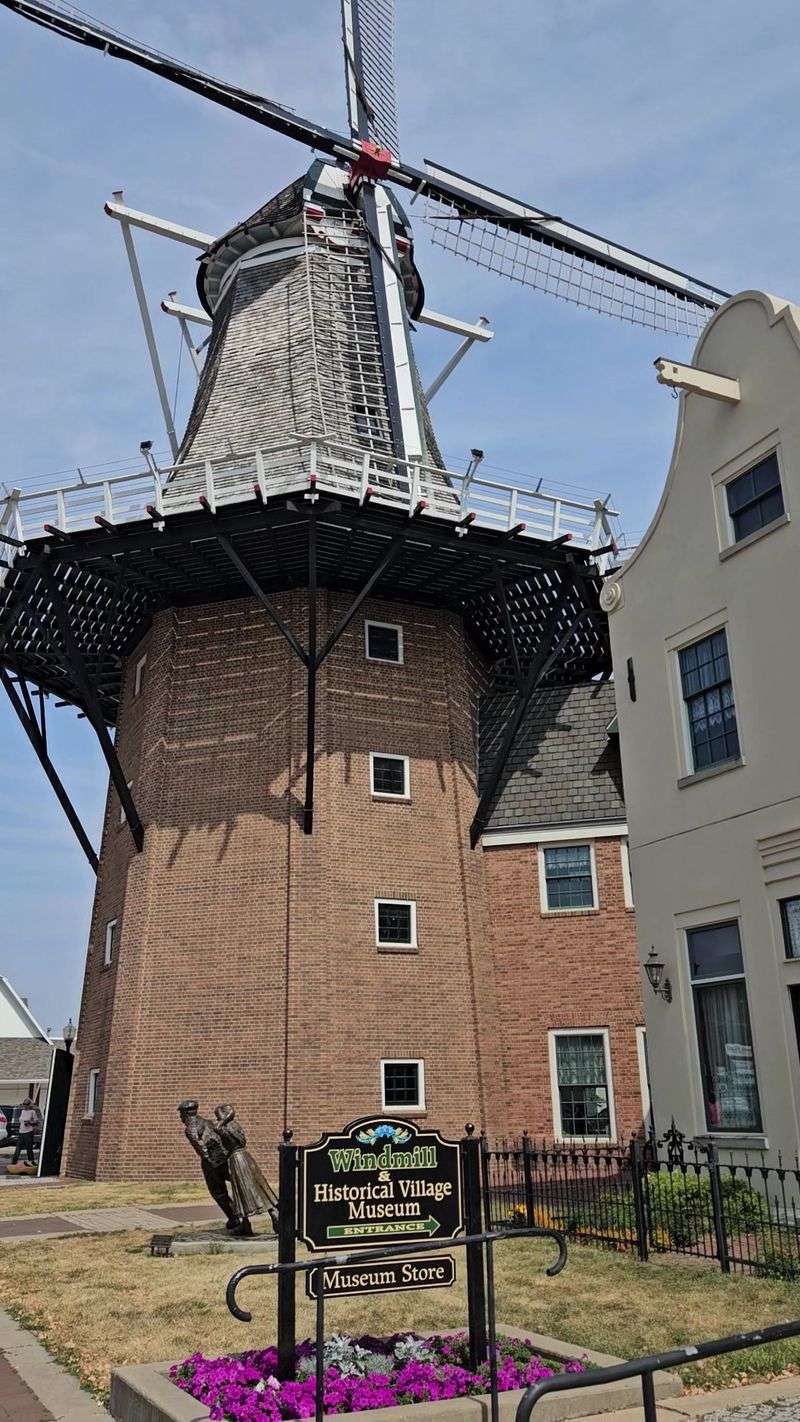
Curiosity is the main requirement for a great time here. History buffs, garden lovers, and anyone drawn to old-world culture will find plenty to fill an afternoon, and the mix suits couples and families alike.
The pace bends to your mood. During the off-season the grounds turn quiet and calm, with only a handful of other people around, which suits those who prefer room to roam.
Festival time brings energy, crowds, and traditional events instead.
Staff and volunteers earn steady praise for being informative and kind. The windmill guides in particular tend to leave a lasting impression, turning a walk-through into a real lesson.
One practical heads-up: many areas are not fully accessible, a limitation that comes with preserving genuine historic buildings. Dogs are not welcome inside, and that policy holds across much of Pella as well.
Whether you come as a solo explorer soaking up Dutch immigration history or a family looking to keep kids entertained, the village adapts. It manages to feel both educational and genuinely fun, a balance many museums chase but few land.
Hours, Tickets, and Getting There
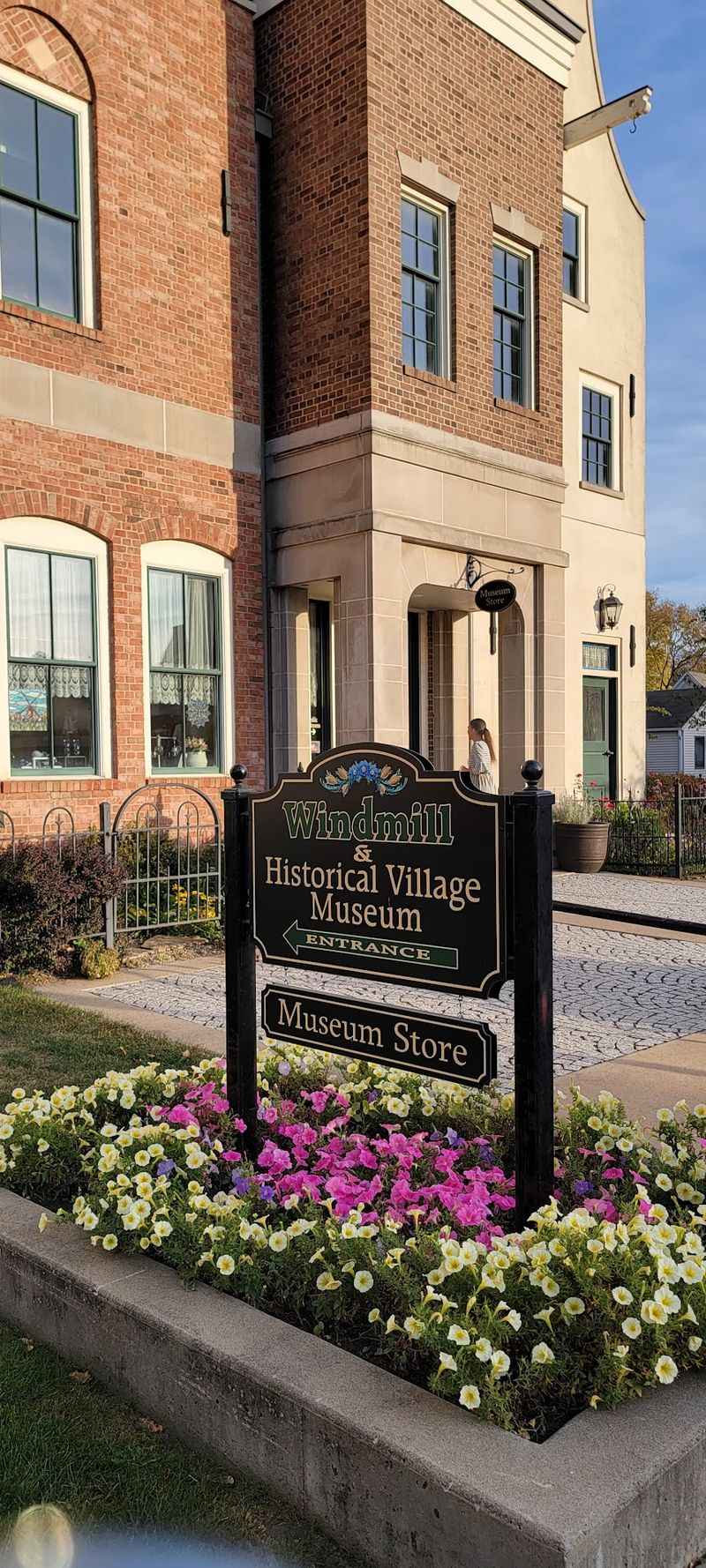
Planning a stop is refreshingly simple. The museum sits at 507 Franklin St in Pella, Iowa, and you can reach the team at +1 641-620-9463 or through pellahistorical.org for the latest details.
Hours run 10 AM to 5 PM Monday through Friday, 10 AM to 4 PM on Saturday, and the village is closed on Sunday. That schedule leaves plenty of daytime to explore at a comfortable pace.
Adult admission runs around $20, and the wristband lets you come and go all day, which is handy if you want to break for a walk downtown. Prices climb during the Tulip Time festival, and one family reported paying $68 for two adults and a child during that peak week.
The Scholte House can be added on at the ticket counter, and a reservation at the Marie Tea Room includes a home tour. A quick tip worth remembering: bring quarters if you want to feed the fish.
Give yourself a few hours, since this is the museum that just keeps going. Arriving early during festival season also helps you beat the long windmill line.
Enjoyed this story?
Add Fast Food Club as a preferred source to see more of our reporting on Google.