


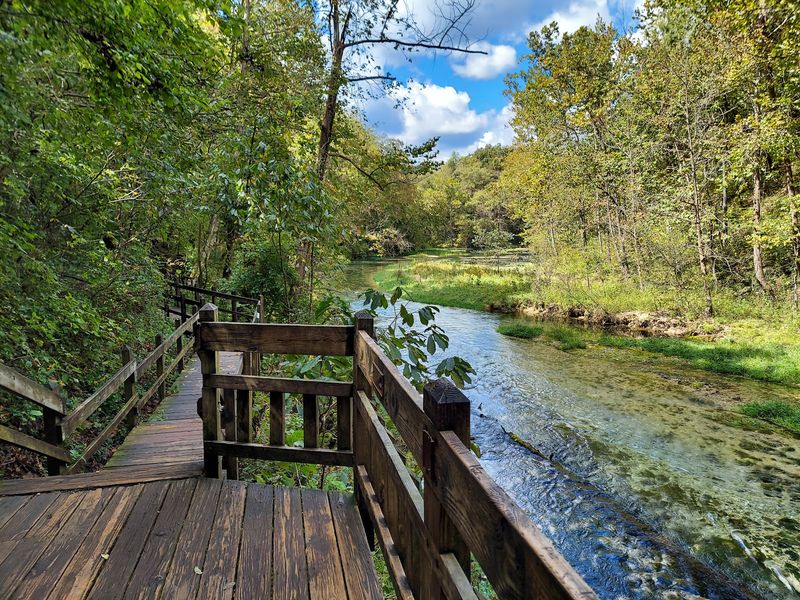
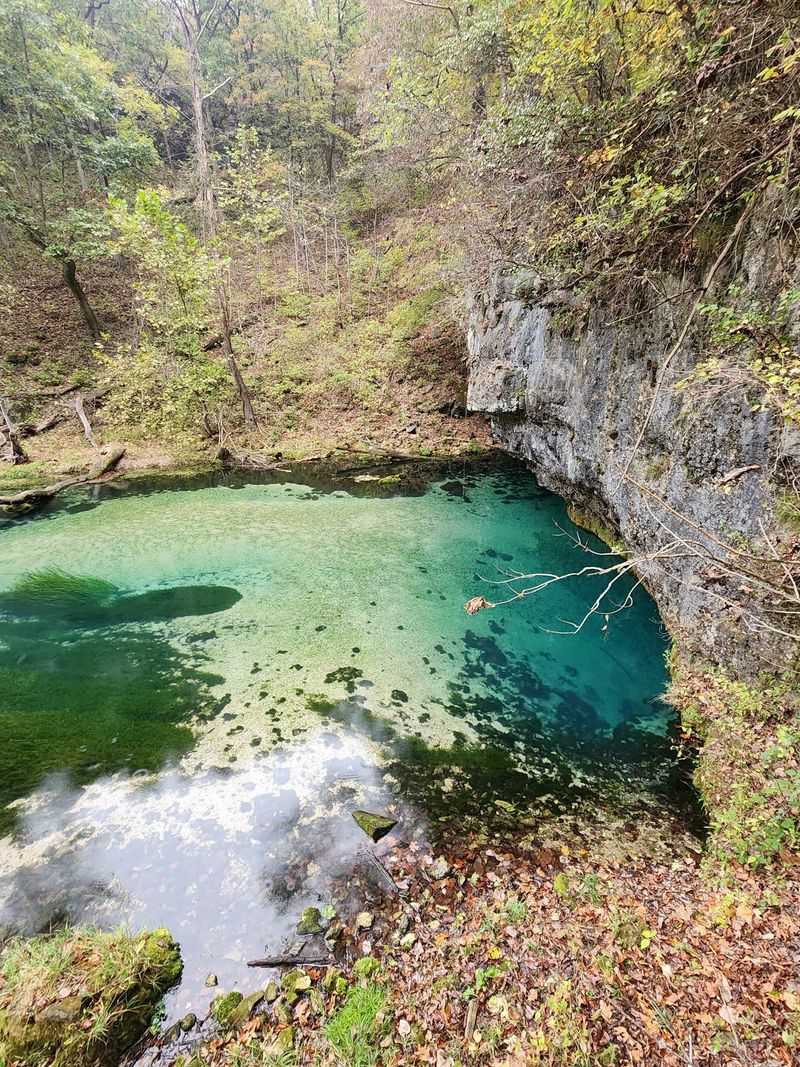
Some places pack a full day of scenery into a walk short enough for restless kids and tired knees alike. A wooden boardwalk winds toward the 12th largest natural spring in Missouri, with green water so still it looks painted.
Above it all sit the stone remains of a castle that never got its happy ending, plus caves, sinkholes, and a natural bridge you can actually stand under. The whole park squeezes more karst wonders into a single square mile than anywhere else in the state.
Best of all, admission costs nothing, and the highlights sit close to the parking lots. Read on to find out where this Ozark spot hides, what makes it worth the drive, and how to plan a visit that leaves everyone smiling instead of complaining about sore feet.
Where The Castle Meets The Lake
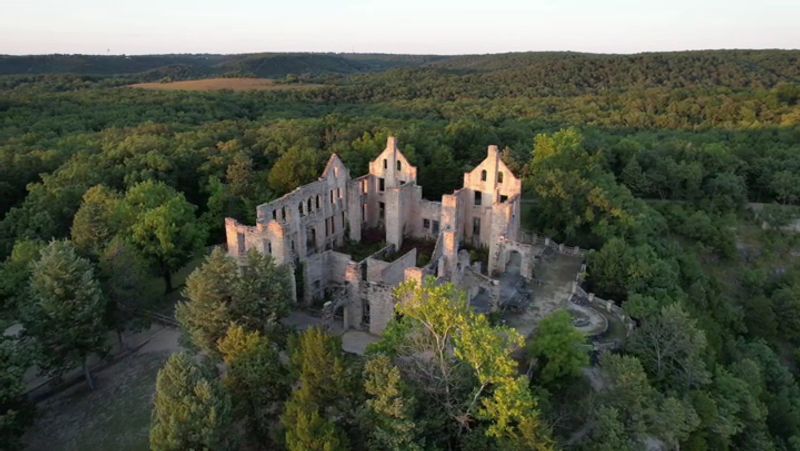
Tucked near the western edge of the Lake of the Ozarks, this Missouri state park sits at 1491 Missouri D, Camdenton, MO 65020. The address points to a place that feels far bigger than its footprint.
The park earns a 4.8-star rating across more than 5,800 pieces of feedback, which is no small feat for any outdoor spot. That number tells you the scenery and history keep drawing people back.
What makes the location special is the mix. Ruins of an early 20th-century stone castle perch atop a steep cliff, while trails, caves, and a spring spread out below.
Panoramic views over the lake come standard, and the whole thing sits close enough to town that a visit does not require a full expedition. Camdenton makes an easy base for the day.
Free admission sweetens the deal further. Few places offer this much geology and history without asking for a single coin at the gate.
A Castle Story Without A Fairytale Ending
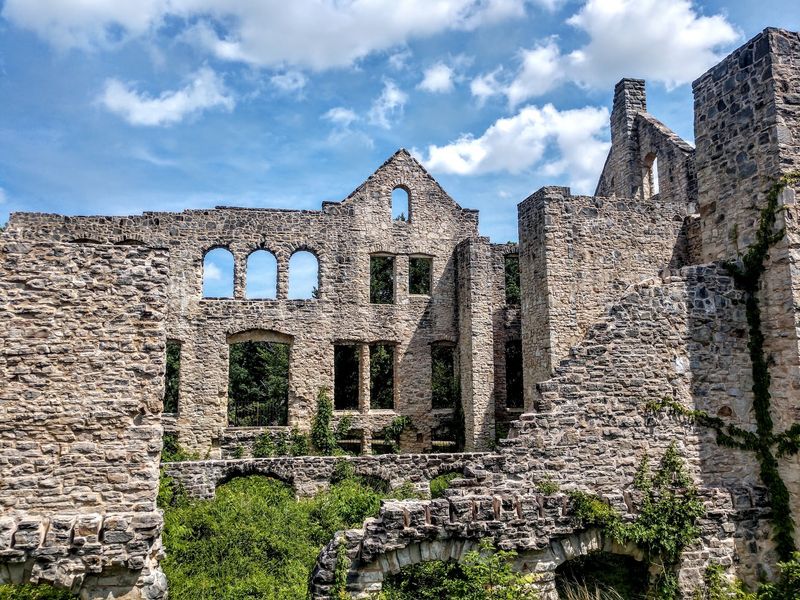
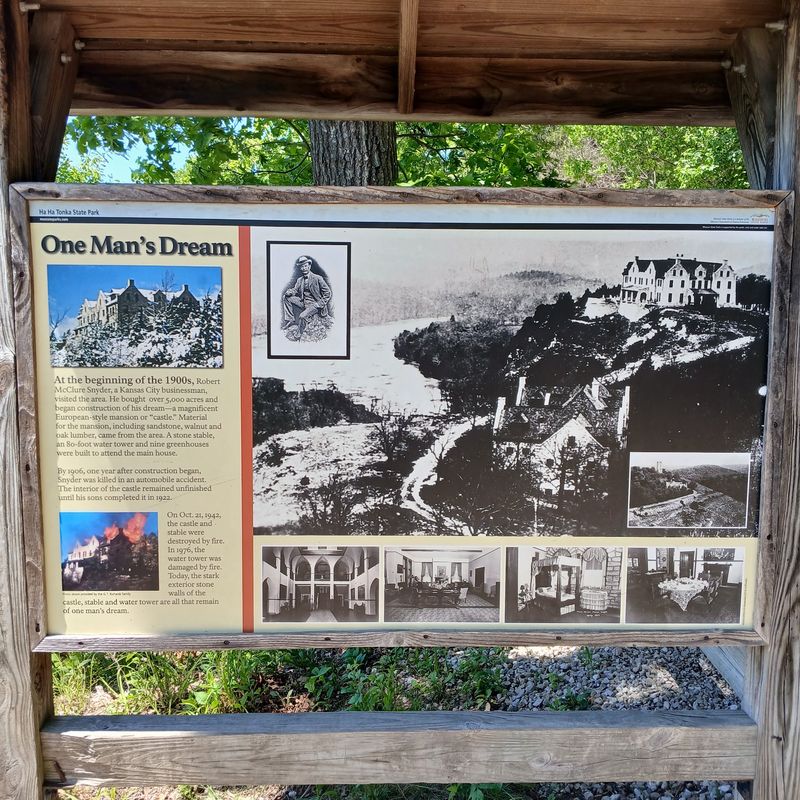
Behind those stone walls sits a tale that reads like caution more than celebration. A wealthy businessman from Kansas City set out to build an elaborate European-style castle here in the early 1900s.
He never saw it finished. Construction dragged on, and his sons completed the project around 15 years later.
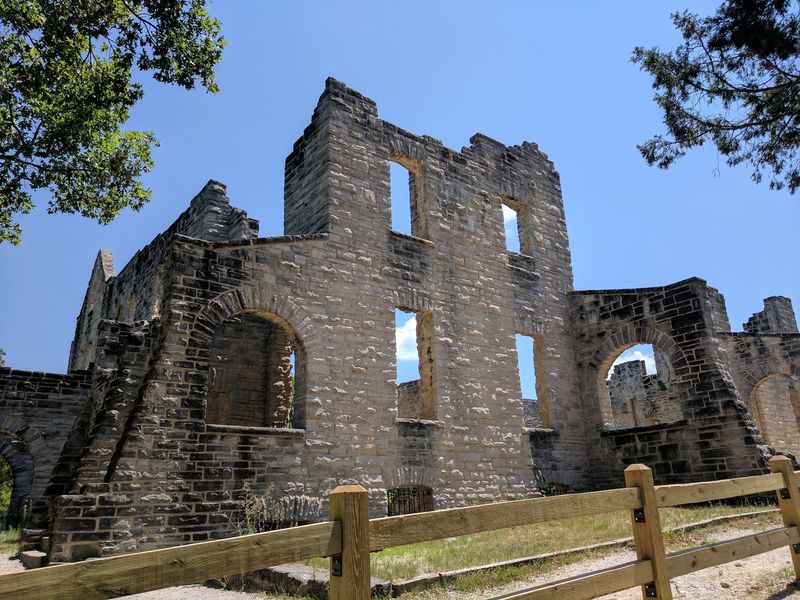
The happy ending never arrived. The finished castle later succumbed to flames, leaving only the stone shell that stands today.
Roughly 50 years after that, the water tower overlooking the spring and property met a similar fate at the hands of vandals. Two structures, two hard-luck chapters.
What remains now is oddly beautiful. The ruins are technically the shell of a 1905 house designed to look like a castle, not a medieval fortress, but that detail does nothing to dim its appeal.
History placards near the site fill in the gaps for anyone curious about the family and their unfinished dream. Reading them turns a quick photo stop into a genuine lesson in ambition and loss of fortune.
The Boardwalk To Missouri’s 12th Largest Spring
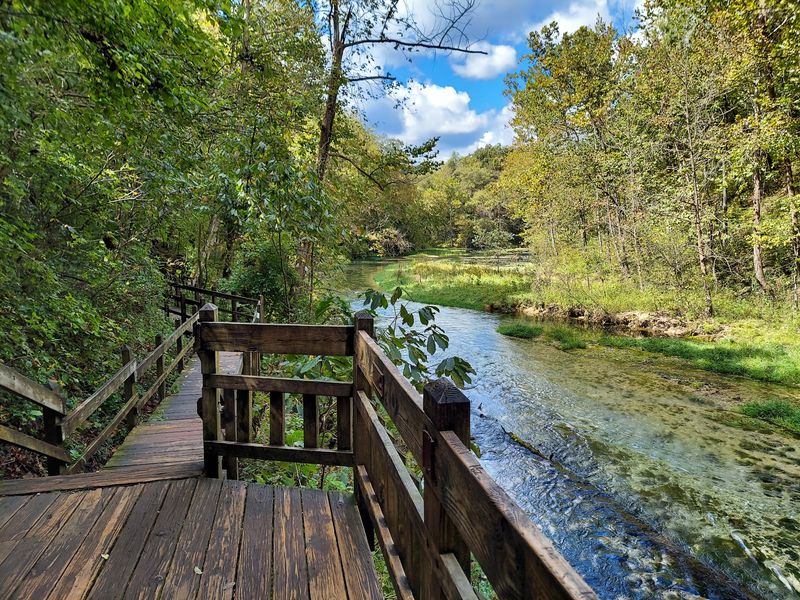
Here sits the star of the show for anyone who wants big payoff with little effort. The Ha Ha Tonka Spring ranks as the 12th largest natural spring in the entire state.
A boardwalk carries walkers toward the water, and the spring area is regularly described as peaceful and refreshing. The green water reflects the surroundings so cleanly that people compare it to an oil painting.
Getting there does not demand marathon legs. The boardwalk and spring sit at an accessible level, making this one of the gentler ways to enjoy the park.
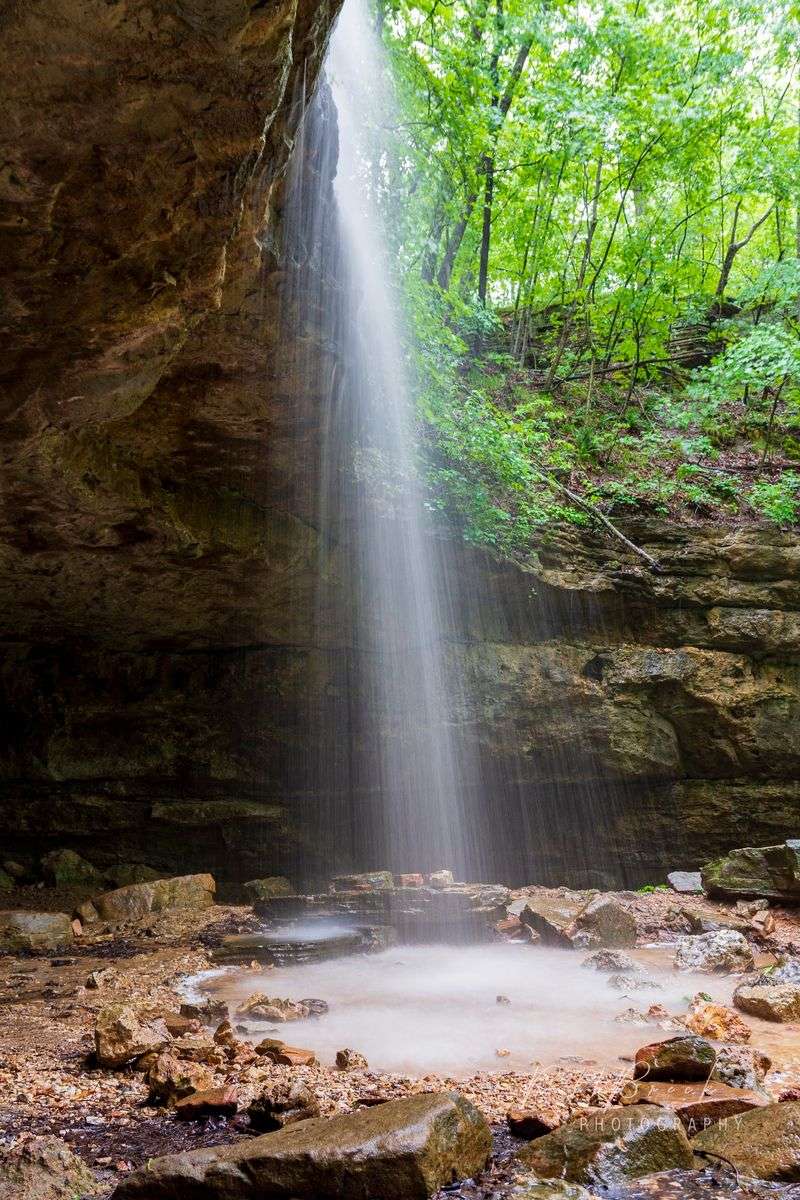
Right at the beginning of the Spring Trail, a short deviation leads to a view of a small waterfall. It is an easy bonus for barely any extra steps.
The spring feeds into the larger karst system that defines the park, connecting caves, sinkholes, and underground streams. Standing near the water, the scale of the natural forces at work becomes clear.
For travelers short on time, the spring alone justifies the trip. It delivers the kind of Ozark scenery that usually requires a much longer trek.
A Natural Bridge Bigger Than The Photos
Photos do this feature a disservice, and that surprises nearly everyone who arrives expecting something modest. The Ha Ha Tonka Natural Bridge turns out far larger in person than any picture suggests.
People who assume they cannot walk beneath it quickly learn otherwise. The underside easily accommodates multiple people at once, with room to spare.
Two ways exist to experience it. Walkers can pass underneath for the dramatic angle, or follow a trail that crosses over the top.
The view from above ranks as less impressive, so the underside remains the main event. Most people find the walk beneath it the more memorable choice.
The bridge is one of many karst formations packed into the park, and it consistently ranks as a must-see alongside the castle ruins. Skipping it would be a genuine mistake.
Getting close reveals scale that changes expectations entirely. It is the kind of formation that rewards seeing over scrolling.
Caves, Sinkholes, And Karst Wonders
Geology fans hit the jackpot in a way few Missouri parks can match. Within a single square mile, the park contains more classic karst features than any other place in the state.
The list runs long: caves, springs, chasms, sinkholes, underground streams, and natural bridges. All of it crammed into one compact area.
The amount of geological action here has been called mind-blowing, and it is easy to see why. Crazy formations appear around many bends in the trails.
One collapsed section, known as the devil’s kitchen, has entertained generations of families who explored its rocky nooks. Kids have clambered around it for decades.
Not every cave is open to enter, so this is a place to observe rather than spelunk in most spots. A small cave along the Island Trail, for instance, stays closed off.
Even without going underground, the sheer density of formations makes the park a living lesson in Ozark geology. Bring curiosity, and the landscape does the teaching.
Short Trails With Big Rewards
Distance-averse travelers can relax, because the headline trails stay refreshingly short. The two most popular routes, the Castle Trail and the Ha Ha Tonka Spring Trail, total less than three miles combined.
Trail conditions vary widely, so it pays to know before you go. The main paths near the ruins and spring are paved or well maintained, while some backcountry trails run primitive, closer to game trails.
One adventurous stretch even features a narrow ledge with metal rings anchored into the rock and a small gap to step across. That kind of route suits the bold, not the stroller crowd.
The Island Trail offers a short loop with plenty of steps, a small cave you cannot enter, and a brief glimpse of the river rapids. It is quick, though not the park’s most scenic option.
Choosing to walk from the spring up to the castle adds some real elevation gain. The stairs climb steadily, and the descent afterward feels quick.
Trails come well maintained where it matters most, and trailhead parking is generally easy to find. Match the route to your energy, and the payoff follows.
Views That Rank Among Missouri’s Best
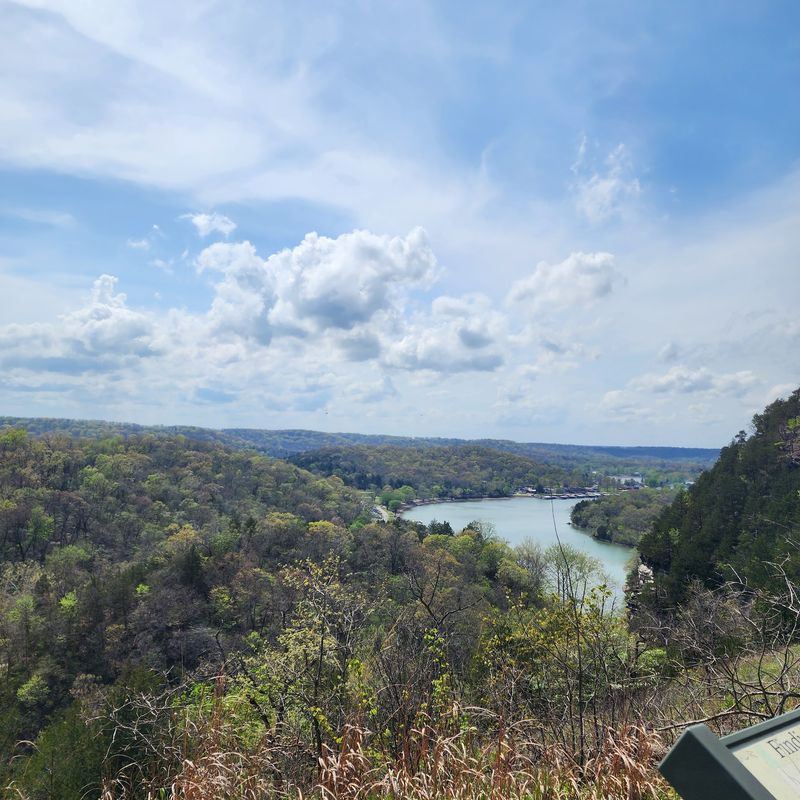
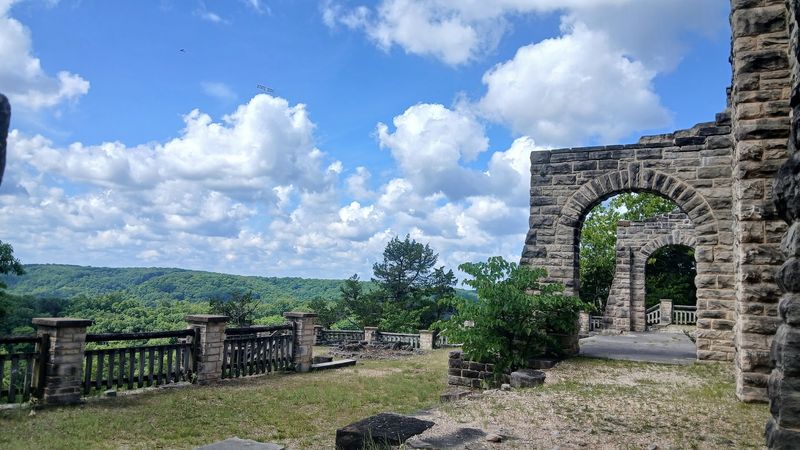
Some overlooks stick in memory long after the trip ends, and the castle lookout belongs in that category. The view from the ruins ranks among the finest in the state.
From the clifftop, the panorama stretches over the Lake of the Ozarks below. The castle’s high perch turns an already scenic spot into something unforgettable.
The landing at the top of the Island Trail steps also delivers a solid vantage point. Even the parking lot near the old post office offers a decent look back toward the ruins.
Great photos come easy here, and access to the best angles is simpler than expected. The lookout consistently earns praise as a standout Missouri view.
Spring adds its own flair to the scene. Redbuds and dogwoods bloom before the leaves fully fill in, so hikers on the staircases stay visible through the open trees.
Whether the goal is photography or simply standing still to take it in, the elevated views reward the short climb many times over. This is the payoff moment of the whole visit.
Three Ruins Spread Across The Park
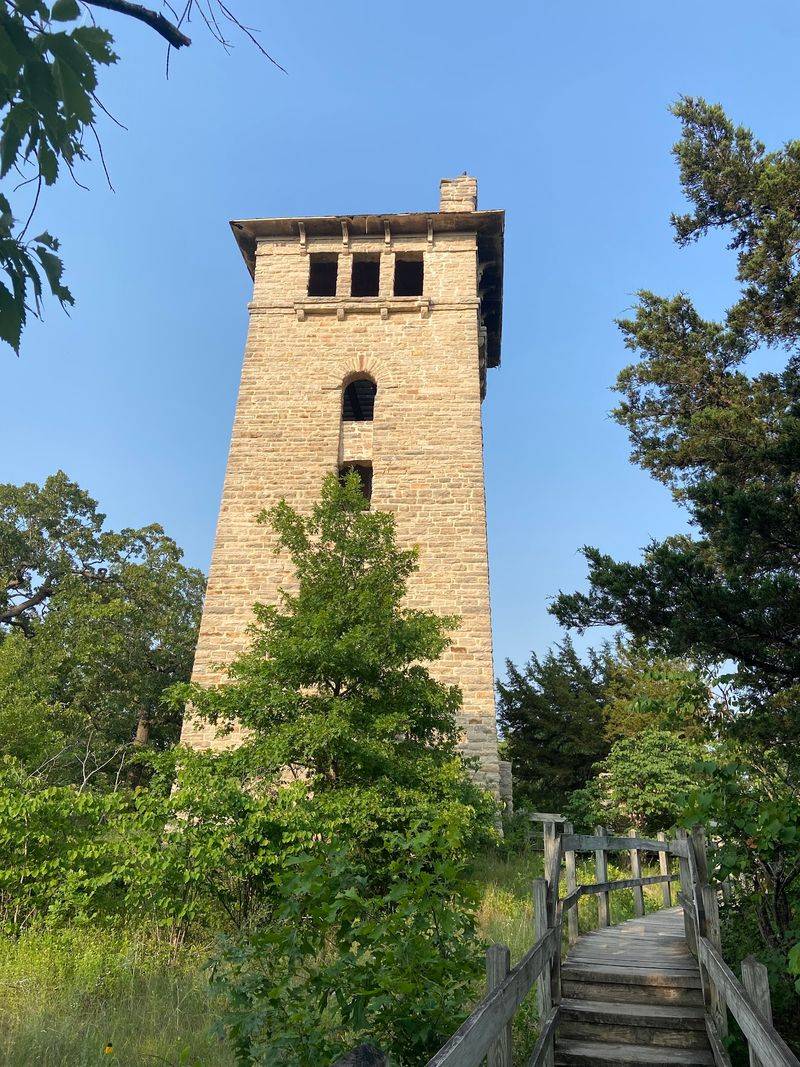
Many people assume the castle is the only relic here, then discover there are actually three. The ruins include the main house, the carriage house, and the water tower.
Each sits in its own spot, spread out rather than clustered together. Exploring all three turns a single stop into a small self-guided tour.
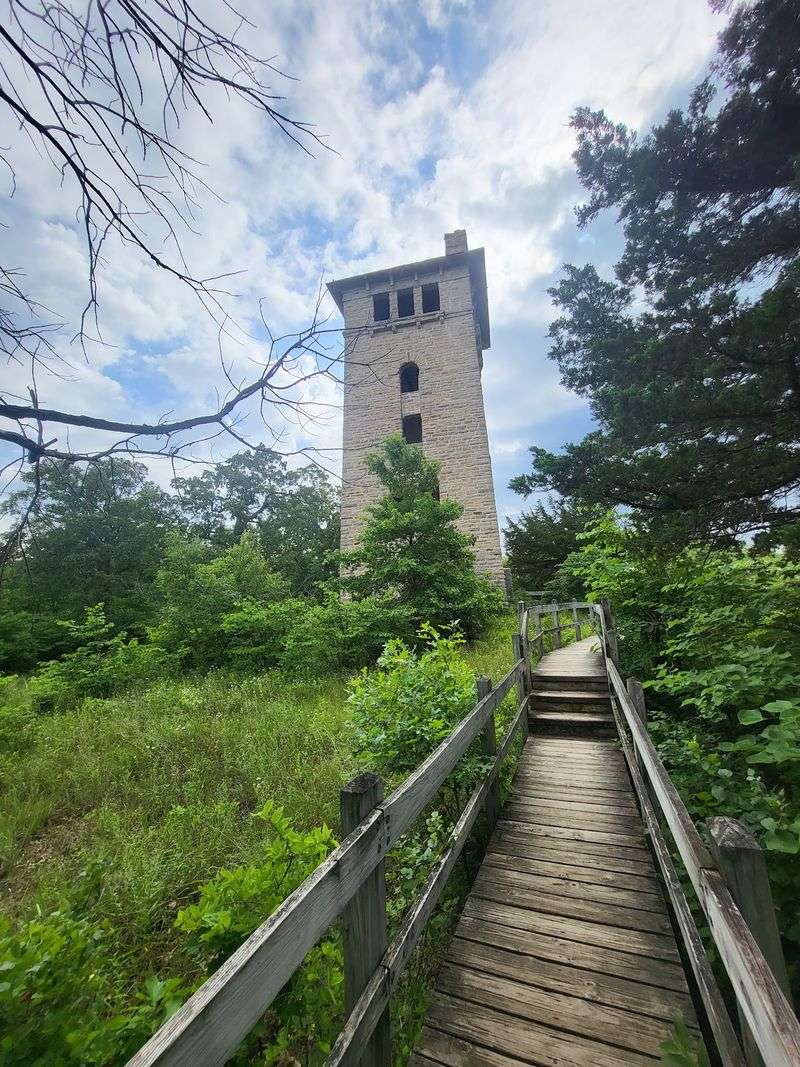
The water tower deserves special mention. Reached by boardwalk in the opposite direction from the castle, it looks more like a medieval lookout or prison than a simple tank.
The old post office nearby adds another photogenic layer. Its plain block design sits at a bend in the road, making it a favorite for quick pictures.
A fence keeps people outside the main castle walls now, so walking directly inside is not allowed. The history placards along the way more than make up for the barrier.
Seeing all three structures reveals the ambition behind the original estate. Together they sketch out a vision that was grander than most people realize on a first pass.
A Park Built For Family Memories
Generations return to this park for reasons that go well beyond scenery. Families have hiked these trails for decades, passing down stories that begin with phrases like “imagine 40 years ago.”
Parents who once heard those tales as children now bring their own kids, then their grandkids, repeating the tradition. The place becomes a thread connecting one generation to the next.
The park is dog-friendly, which makes it a welcome stop for travelers who never leave a pet behind. Four-legged companions are part of the fun here.
Beyond hiking, the area supports fishing spots along the lake, picnic tables for family meals, and space to simply relax outdoors. It suits a slow day as much as an active one.
Kids find plenty to explore among the rock bluffs and collapsed formations, though summer heat can wear out little legs. Cooler days keep the small ones happier on the climbs.
People often wish they had allowed more time, dreaming of a full weekend instead of a rushed afternoon. It is the sort of spot that plants roots in a family’s shared history.
Free Admission And Getting There
Budget travelers, take note, because the price of entry is the best kind: nothing. Admission to the park is free, a rare perk for a destination with this much to offer.
The park sits at 1491 Missouri D in Camdenton, near the Lake of the Ozarks. It makes a convenient stop for anyone already exploring the region.
Several parking lots serve the ruins and trailheads. The lot up by the ruins is small and tricky to turn around in for larger vehicles, so a bigger rig may prefer the lower lot.
Even parking in the lower lot means only a short walk through the woods on a paved trail to reach the castle area. Those who would rather skip the hike entirely can drive close to the ruins.
A visitor center offers trail maps, free brochures, and helpful staff during open seasons. It closes for the winter, so a March visit may find it shut, though maps remain available.
Restrooms include pit toilets at some trailheads and cleaner facilities near the visitor center. Planning restroom stops around that center is a smart move.
Timing Your Visit For The Best Day
Choosing the right day can make a good visit a great one. Spring brings redbuds and dogwoods into bloom before the leaves fill in, opening up views through the trees.
Fall tempts many people back for the foliage, and it lands high on the wish list for return trips. Both shoulder seasons dodge the worst of the summer heat.
Crowds are worth planning around. The park can grow busy, especially during summer and spring break, with mornings quieter and midday around noon getting packed.
Arriving early rewards you with easier parking and calmer trails. Some people who visited on hot, crowded days say they would skip peak summer next time.
Time budgeting matters too. A rushed stop of two to three hours covers the highlights, while a leisurely day can stretch to six hours of hiking and exploring.
Free entry, unforgettable views, a storybook set of ruins, and one of Missouri’s largest springs make this Camdenton park a rare kind of destination. Pick a mild morning, lace up comfortable shoes, and this short boardwalk trail hands over big Ozark scenery without the long haul.
Enjoyed this story?
Add Fast Food Club as a preferred source to see more of our reporting on Google.