


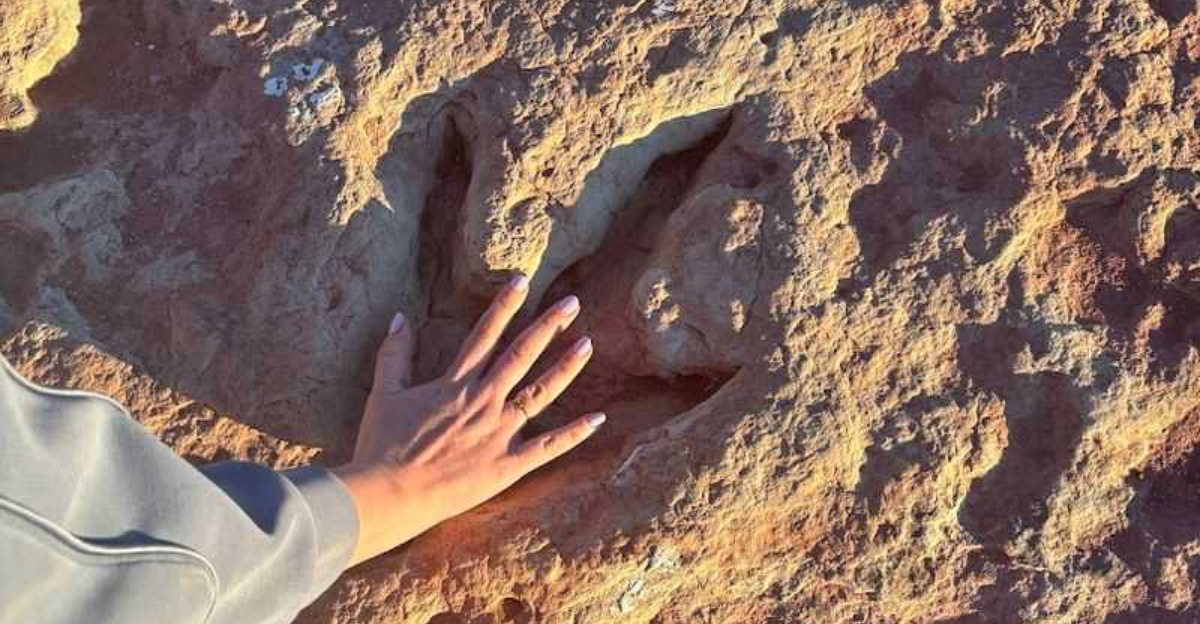
Hidden along US-160 near Tuba City, Arizona, the Navajo Moenave Dinosaur Tracks site is one of the most jaw-dropping roadside stops in the entire Southwest. Around 200 million years ago, real dinosaurs walked across muddy ground here, and those footprints were preserved in rock for us to see today.
Whether you are a dinosaur fan, a history lover, or just someone looking for an unforgettable adventure, this open-air site on Navajo Nation land delivers something truly rare and remarkable.
Real Dinosaur Footprints You Can Actually Touch
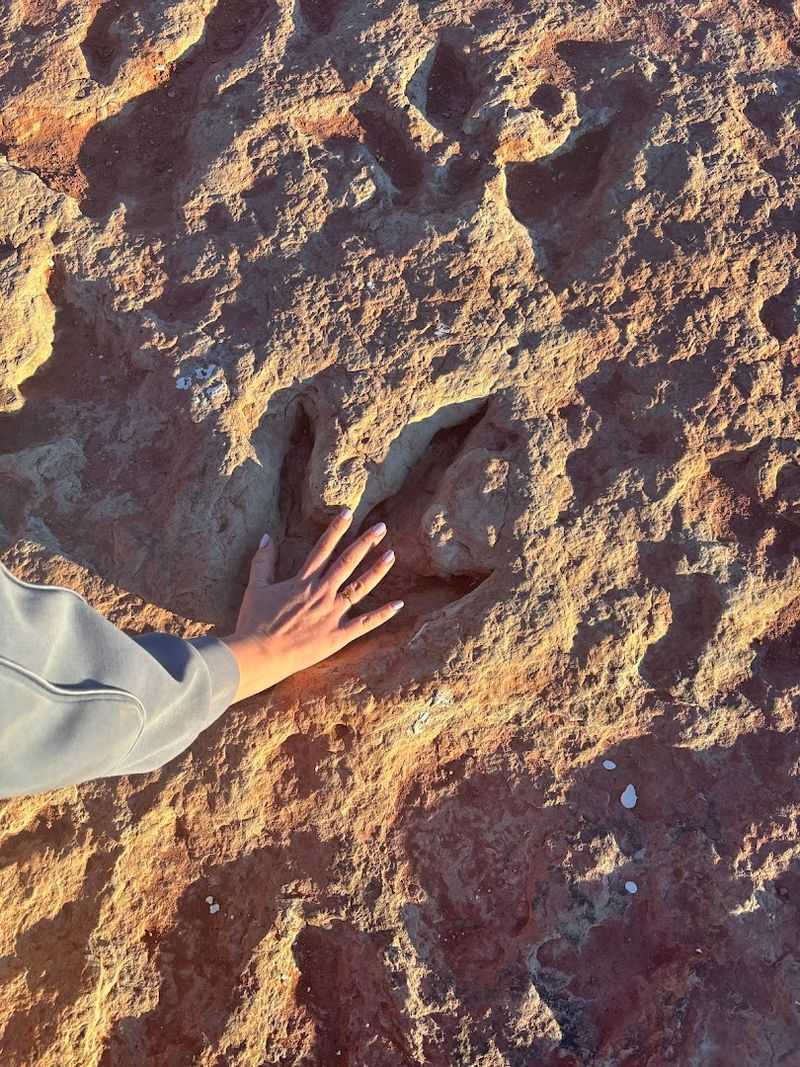
Most museum exhibits put fossils behind glass, but here the rules are completely different. At the Navajo Moenave Dinosaur Tracks site, you can kneel down, reach out, and run your fingers along footprints that are roughly 200 million years old.
That kind of hands-on connection with prehistoric life is almost impossible to find anywhere else on Earth.
The tracks are primarily attributed to early Jurassic theropods like Dilophosaurus, Eubrontes, and Grallator. Many show clear three-toed impressions pressed deep into red sandstone.
Some prints even reveal tail drag marks and signs that dinosaurs may have been moving through shallow water.
Guides sometimes pour water into the tracks to make them more visible in bright sunlight, which makes photographing them even easier. Seeing the outline sharpen before your eyes feels like the dinosaur just walked through moments ago.
Free Entry With a Tip-Based Tour System
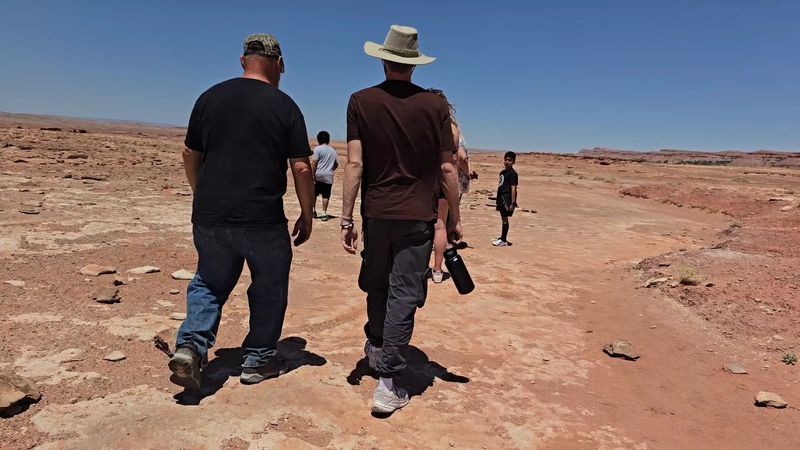
Forget overpriced theme park tickets. Visiting the Navajo Moenave Dinosaur Tracks costs absolutely nothing to enter.
The site is open 24 hours a day, seven days a week, meaning you can stop by whenever your road trip schedule allows without worrying about closing times or booking ahead.
Local Navajo community members volunteer as guides and work entirely on tips and donations. A suggested range of $10 to $20 per person is commonly mentioned by visitors, though any amount is appreciated.
These guides know exactly where the best-preserved tracks are and can save you a lot of wandering time.
Choosing to tip generously matters more than you might think. These guides stand outside in desert heat all day, sharing their land and cultural knowledge with strangers.
Respecting their time with a fair tip is one of the best ways to honor the experience.
Knowledgeable Navajo Guides Who Bring the Site to Life
One reviewer summed it up perfectly: standing among these tracks makes time collapse. A huge part of that feeling comes from the guides themselves.
Names like Bertha, Wanda, Sophia, Helen, Orlando, and Jennifer appear repeatedly in visitor reviews, each praised for their warmth, enthusiasm, and deep knowledge of the land.
These are not scripted tour operators reading from a pamphlet. They are members of the Navajo Nation who grew up near this site and carry genuine stories about the land, the fossils, and their community.
One guide even gifted a visitor and his son pieces of Jasper stone as a personal gesture of connection.
A good guide will point out not just the main tracks but also fossilized eggs, ancient riverbeds, and petrified objects that most visitors would walk right past. Accepting a guided tour transforms a quick roadside stop into a memory that sticks for years.
Ancient Jurassic Landscape Preserved in Open Desert
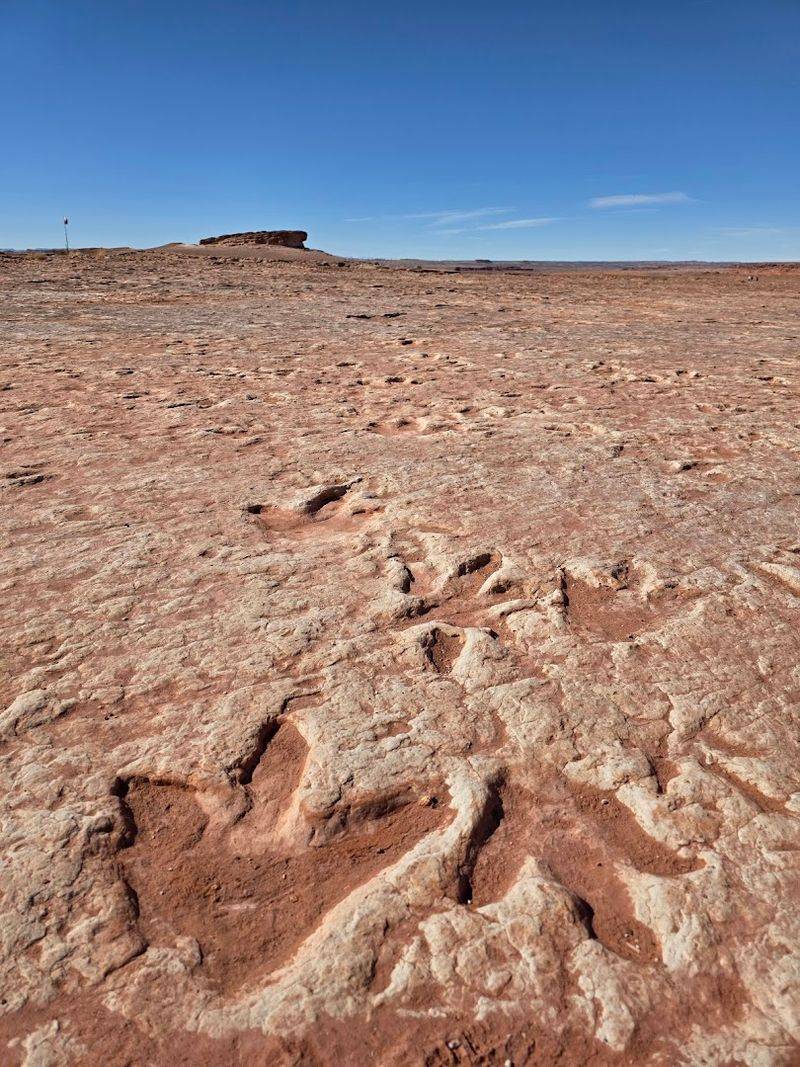
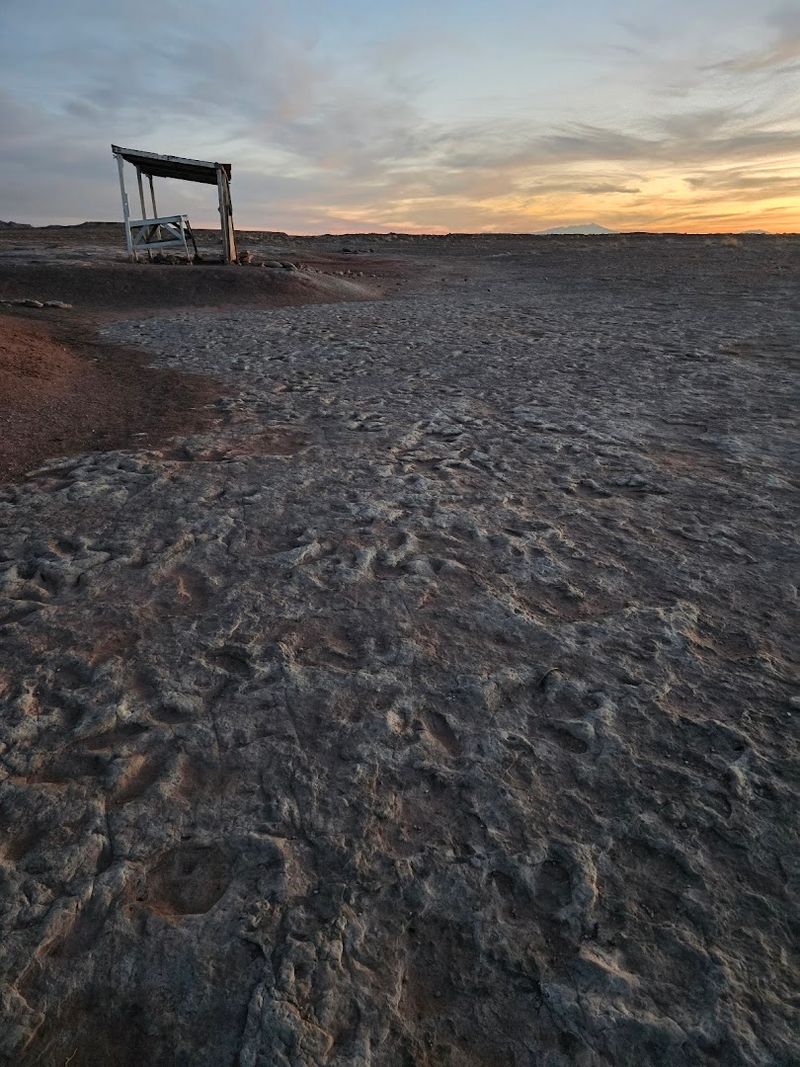
About 200 million years ago, the land around Tuba City looked nothing like the dry desert you see today. Scientists believe this region was a marshy riverbed or shallow floodplain where dinosaurs roamed freely, leaving footprints in soft mud that slowly hardened into stone over millions of years.
What makes this site genuinely special is how unpolished and raw it feels. There are no fences, no ticket booths, no glass cases, and no crowd control barriers.
The tracks sit right on the open desert floor under the wide Arizona sky, exactly as erosion revealed them.
Paleontologists have confirmed the site contains authentic trace fossils, which are records of animal behavior rather than bones. Trace fossils are actually rarer and more scientifically interesting in some ways because they tell us how animals moved and lived, not just what they looked like.
Petrified Dung, Fossilized Eggs, and Hidden Surprises
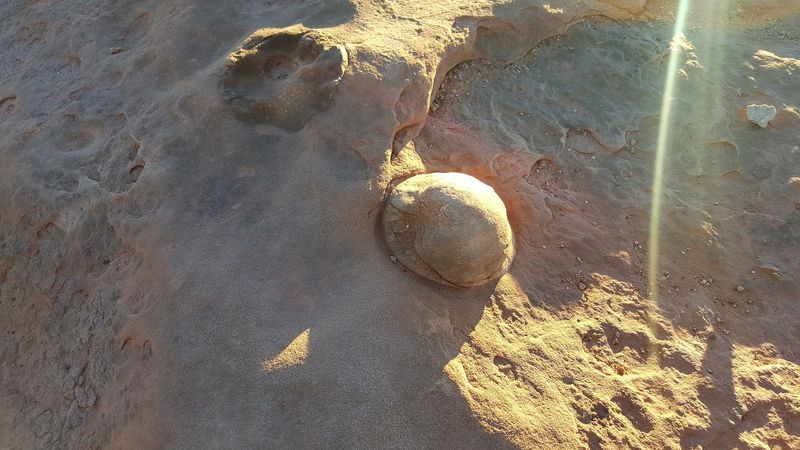
Most people arrive expecting footprints and leave shocked by everything else scattered across the site. Visitors have reported spotting what appear to be petrified dinosaur dung, called coprolites, which look almost like large fossilized shells.
Others have found what guides identify as fossilized eggs embedded in the rock surface.
One reviewer described being completely caught off guard by the sheer variety of preserved materials visible at the site. Ancient riverbeds are also traceable across the landscape if you know what to look for, and a knowledgeable guide will usually point these out as part of the tour.
Even fragments of bone poke through the ground in certain spots. One guide reportedly encouraged visitors to touch and stand near the bones, an experience virtually unheard of at any formal archaeological site.
The whole place feels more like a treasure hunt than a traditional tourist attraction.
A Perfect Roadside Stop Along US-160
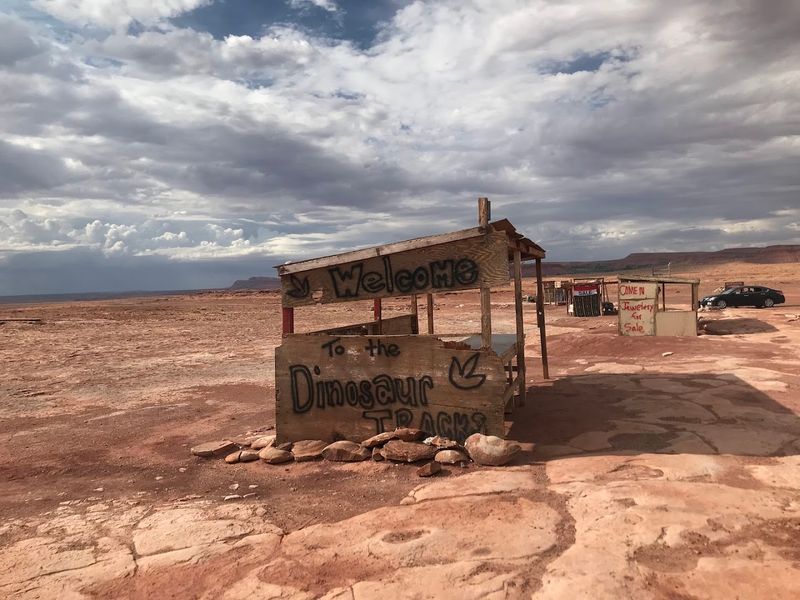
Convenience is a big part of what makes this site so appealing. The Navajo Moenave Dinosaur Tracks are located directly off US-160, one of the main routes travelers use when driving through the Four Corners region or heading toward the Grand Canyon and Monument Valley.
You do not need a hiking permit, a reservation, or even a plan. Simply pull off the highway when you see the sign, park near the vendor area, and you are already at the site.
Most visitors spend between 20 minutes and an hour exploring, making it an easy addition to any road trip itinerary.
Arriving on weekends is recommended if you want a guide available, since weekday visits can sometimes find the area quiet with no one around. That said, even without a guide, the main tracks near the road entrance are easy to spot on your own.
Handmade Navajo Jewelry and Souvenirs on Site
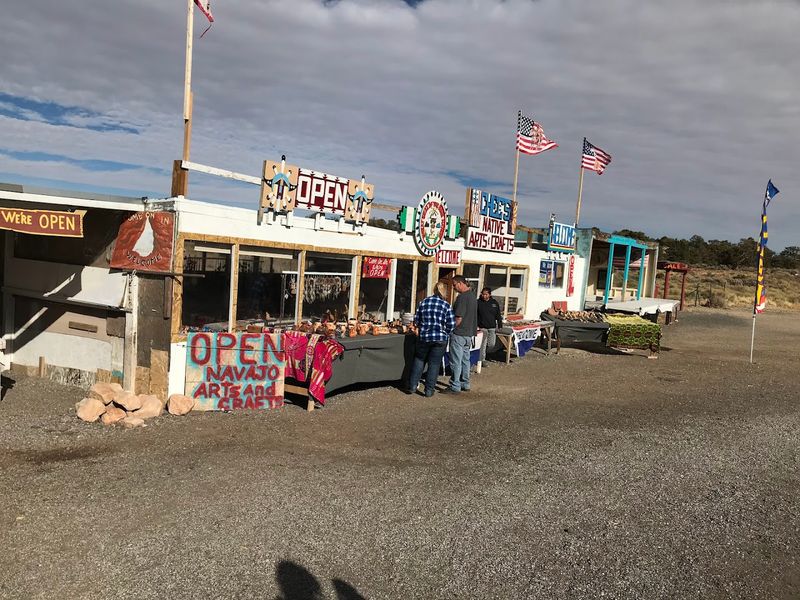
Beyond the fossils, the site also functions as a small open-air marketplace where local Navajo artisans sell their handcrafted work. Visitors frequently mention purchasing beautiful bracelets, rings, and other jewelry made by the very guides who walked them through the tracks.
One reviewer bought matching bracelets from her guide Wanda, who had crafted them herself. Another family picked up genuine Navajo artifacts and locally made souvenirs as keepsakes.
Buying directly from the artisans means your money goes straight to the community rather than a corporate retailer.
The jewelry quality consistently earns praise in visitor reviews, with several people noting that the pieces felt like authentic, meaningful mementos rather than generic tourist trinkets. If you are looking for a Southwest souvenir that carries real cultural significance, this is one of the best places along the entire Arizona highway corridor to find one.
A Science Lesson Kids Will Never Forget
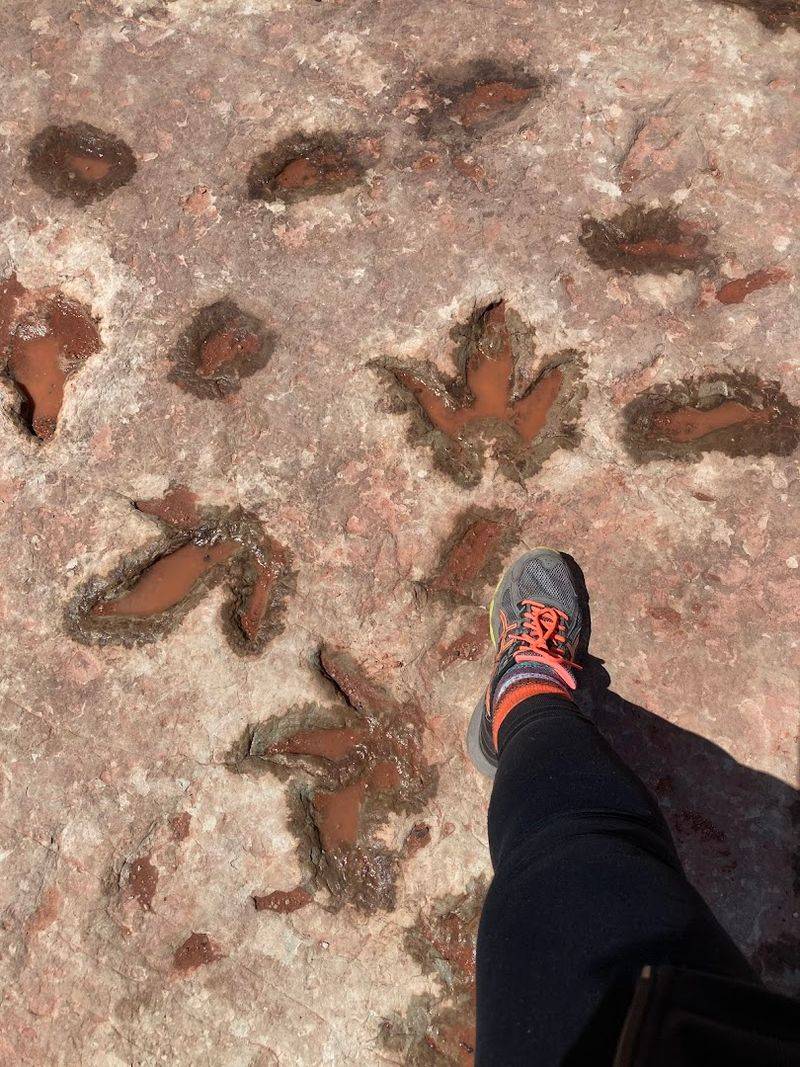
Forget worksheets and textbook diagrams. Watching a child realize they are standing next to a footprint left by a real dinosaur 200 million years ago is the kind of learning moment that no classroom can replicate.
Multiple reviewers with kids described their children completely geeking out from the moment they arrived.
The open, touchable nature of the site makes it especially engaging for young visitors who learn best through hands-on experiences. Kids can crouch beside the prints, compare their own foot size to the tracks, and ask questions freely without a museum attendant telling them to step back.
Guides are generally patient and enthusiastic with younger visitors, tailoring their explanations to be fun and accessible. One reviewer noted that her daughter was fascinated the entire time.
For families road-tripping through Arizona, this stop delivers genuine educational value wrapped in pure adventure.
What Science Actually Says About the Tracks
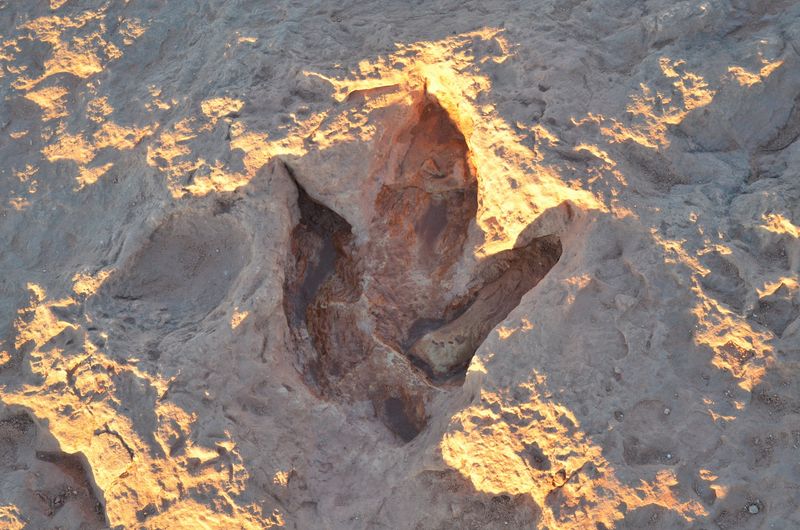
One of the most thoughtful reviews left for this site came from a visitor who wanted to separate fact from storytelling. The large three-toed tracks at Moenave are scientifically consistent with Dilophosaurus, a real early Jurassic theropod that roamed this region approximately 190 million years ago.
Paleontologists have verified this connection through rock layer analysis and fossil records found nearby.
Some guides have been known to mention T. rex or Velociraptor footprints, which is not scientifically accurate. Those dinosaurs lived over 100 million years later in completely different geological periods and could not have left tracks in these rock layers.
The honest recommendation from knowledgeable visitors is to enjoy the site for what it genuinely is, which is already extraordinary, and look up the science afterward if you want the full picture. Authentic Dilophosaurus-era tracks in open desert air are remarkable enough without embellishment.
The Spiritual and Cultural Significance of Navajo Land
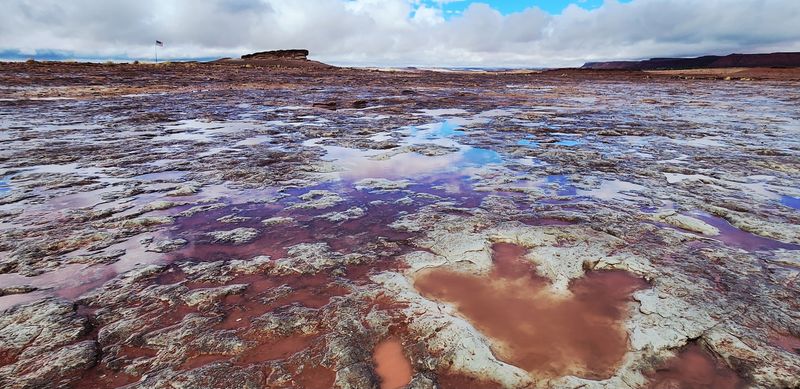
Walking through the Navajo Moenave Dinosaur Tracks site means walking on land that belongs to the Navajo Nation, and that context deserves real respect. The Navajo people have chosen to share this extraordinary natural treasure with visitors, and that generosity should not be taken lightly.
One reviewer wrote something that resonated with many: this is a treasure they are sharing with you. Do not take bones or stones.
Leave everything exactly as you found it. Listen to the stories and learn.
That simple etiquette captures the spirit of what visiting this place should feel like.
The guides who work here are not just employees of a tourist business. They are members of a living community with deep ancestral ties to this land.
Approaching the experience with humility, curiosity, and gratitude transforms a sightseeing stop into something far more meaningful and genuinely human.
Tips for Getting the Most Out of Your Visit
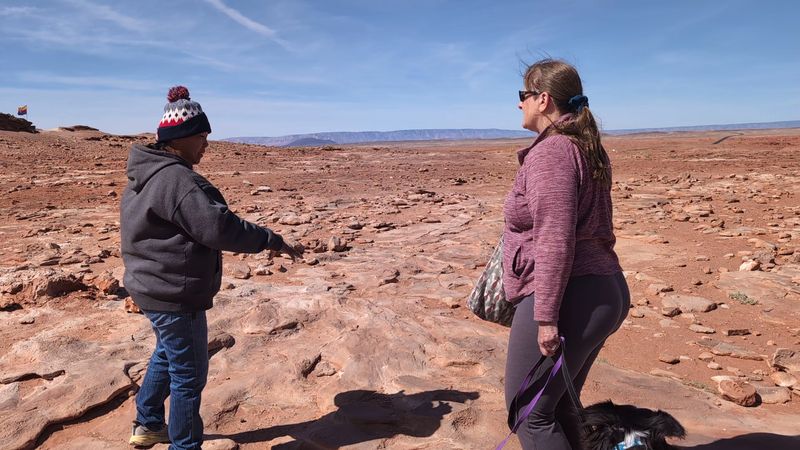
A little planning goes a long way at this site. Weekends tend to bring more guides and vendors, making the experience richer and more interactive.
Weekday visits can still be worthwhile, but you may need to navigate the tracks independently, so look for marked trails and keep your eyes scanning the rock surface carefully.
Bring water, sunscreen, and a hat no matter what time of year you visit. The desert sun is relentless, and there is no shade infrastructure at the site.
Comfortable walking shoes are also a must since the terrain is uneven rock and sandy ground.
Carrying small bills for tipping makes the whole process smoother. A $10 to $20 tip per group is widely considered appropriate for a guided walk.
Arriving with a generous mindset and a genuine curiosity about what you are seeing will make your experience significantly more rewarding.
How the Tracks Were Formed and Survived Millions of Years
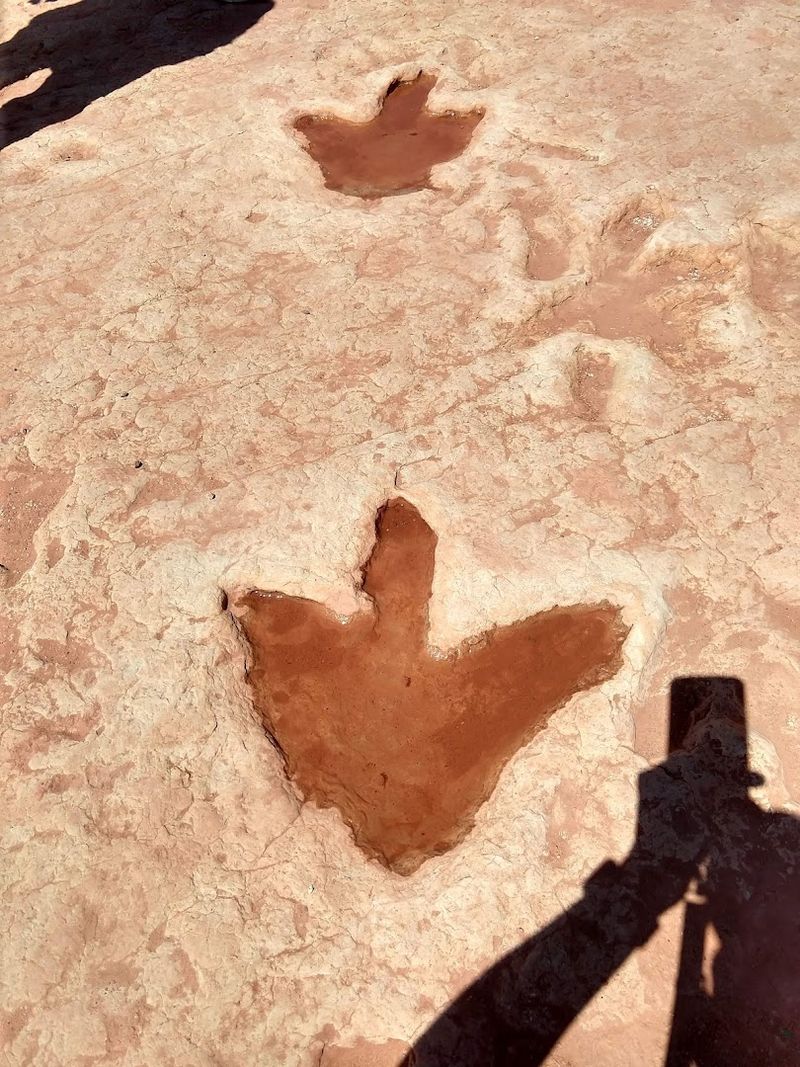
The story of how these tracks survived is almost as fascinating as the tracks themselves. Around 200 million years ago, dinosaurs walked across soft mud and wet sand near ancient waterways.
Their weight pressed deep impressions into the ground, which then dried and hardened in the sun before being buried under layers of sediment.
Over tens of millions of years, those sediment layers turned to rock through a process called lithification. Then, millions of years of wind and water erosion slowly stripped away the upper layers, gradually exposing the preserved surface below.
The tracks essentially waited in stone until the desert revealed them.
This process is why trace fossils like footprints are considered scientifically valuable. They capture a moment of living behavior rather than just the structure of a body.
Every print at Moenave represents a single step taken by a real animal in a world that no longer exists.
Why This Stop Beats Any Polished Tourist Attraction
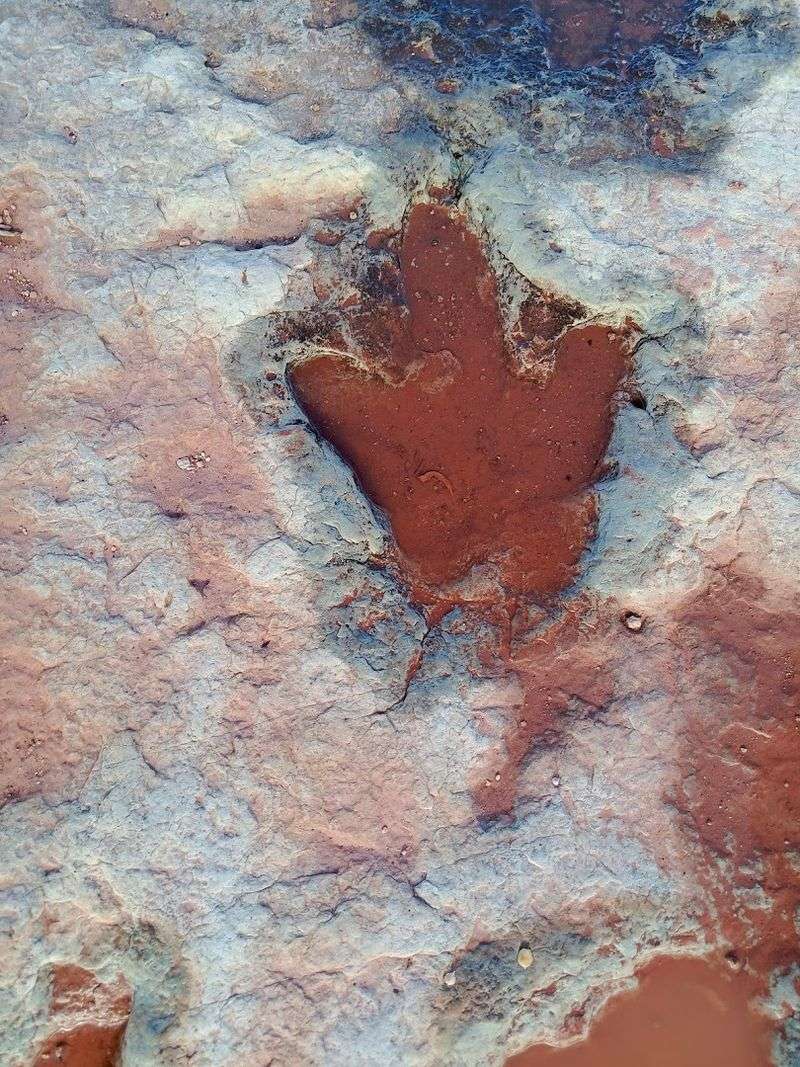
There is something deeply refreshing about a place that has not been wrapped in corporate packaging. No gift shop full of plastic dinosaur toys, no overpriced food court, no timed entry tickets.
Just ancient rock, open sky, and footprints that have outlasted everything humans have ever built.
Visitors consistently describe the raw, unpolished nature of the site as one of its greatest strengths. One reviewer put it plainly: if a company bought this and turned it into an attraction, you would be paying a lot.
The fact that it remains in its natural state, managed by the local Navajo community, is what makes it feel genuinely special rather than manufactured.
Rated 4.4 stars across more than 1,600 reviews, the site earns its reputation not through fancy infrastructure but through authenticity. Sometimes the most powerful experiences come in the simplest packages, and the Navajo Moenave Dinosaur Tracks prove that beautifully.
Enjoyed this story?
Add Fast Food Club as a preferred source to see more of our reporting on Google.