


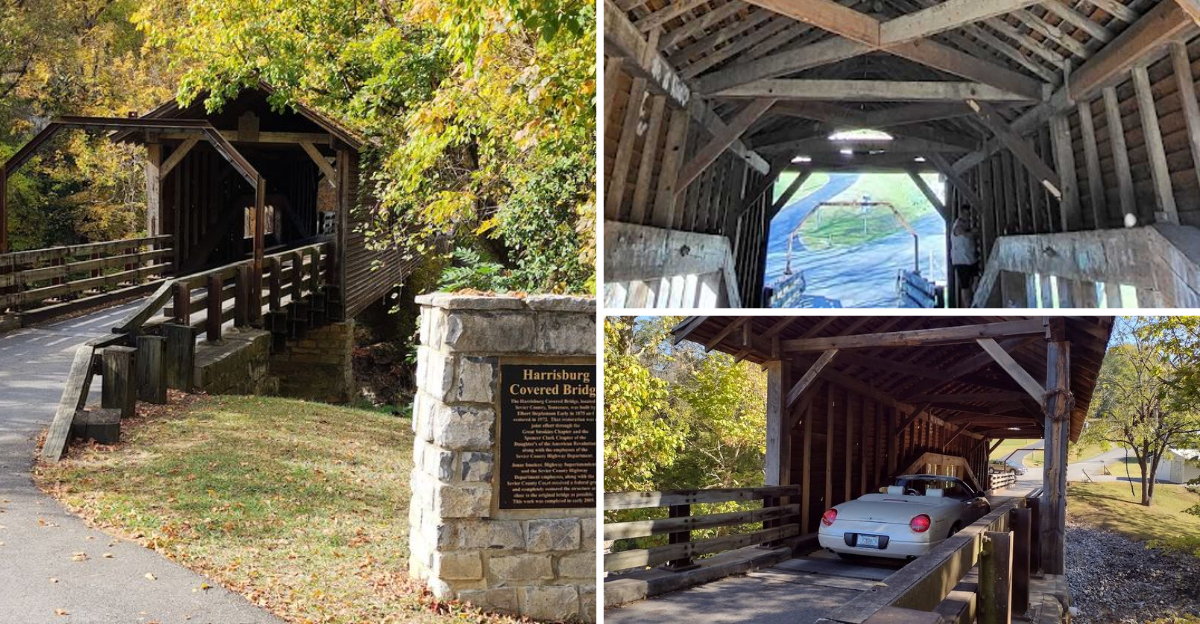
Tucked away in Sevierville, Tennessee, the Historic Harrisburg Covered Bridge is one of those hidden gems that stops you in your tracks. Built in 1875, this charming wooden structure has survived floods, time, and the modern world to remain a living piece of American history.
Whether you are a history buff, a photography lover, or just someone passing through the Smoky Mountains, this bridge is absolutely worth a visit. Get ready to discover everything that makes this breathtaking landmark so special.
A Bridge Born in 1875 That Still Stands Strong
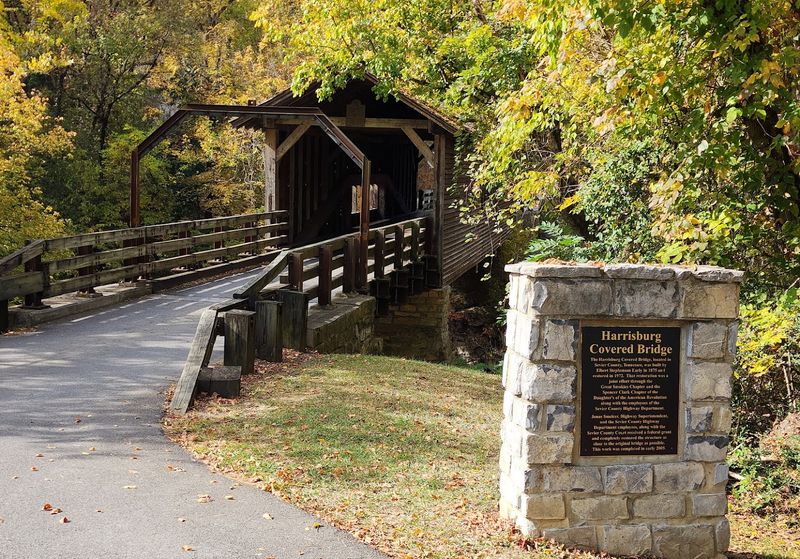
Back in 1875, a craftsman named Elbert Stephenson built something that would outlast generations. The Harrisburg Covered Bridge was constructed using a king post truss design, a classic and sturdy method that has kept this structure standing for nearly 150 years.
It replaced the earlier McNutts Bridge, which was washed away during a powerful flood. The bridge spans 64 feet across the East Fork of the Little Pigeon River, making it a compact but mighty piece of engineering history.
Over the decades, it received full restorations in 1972 and again in 2005, with strengthened piers to help protect it from future flooding. Visitors consistently say it feels like stepping into another era.
Seeing something this old still holding up so well is genuinely awe-inspiring for anyone who appreciates craftsmanship and history.
King Post Truss Design: Old-School Engineering at Its Finest
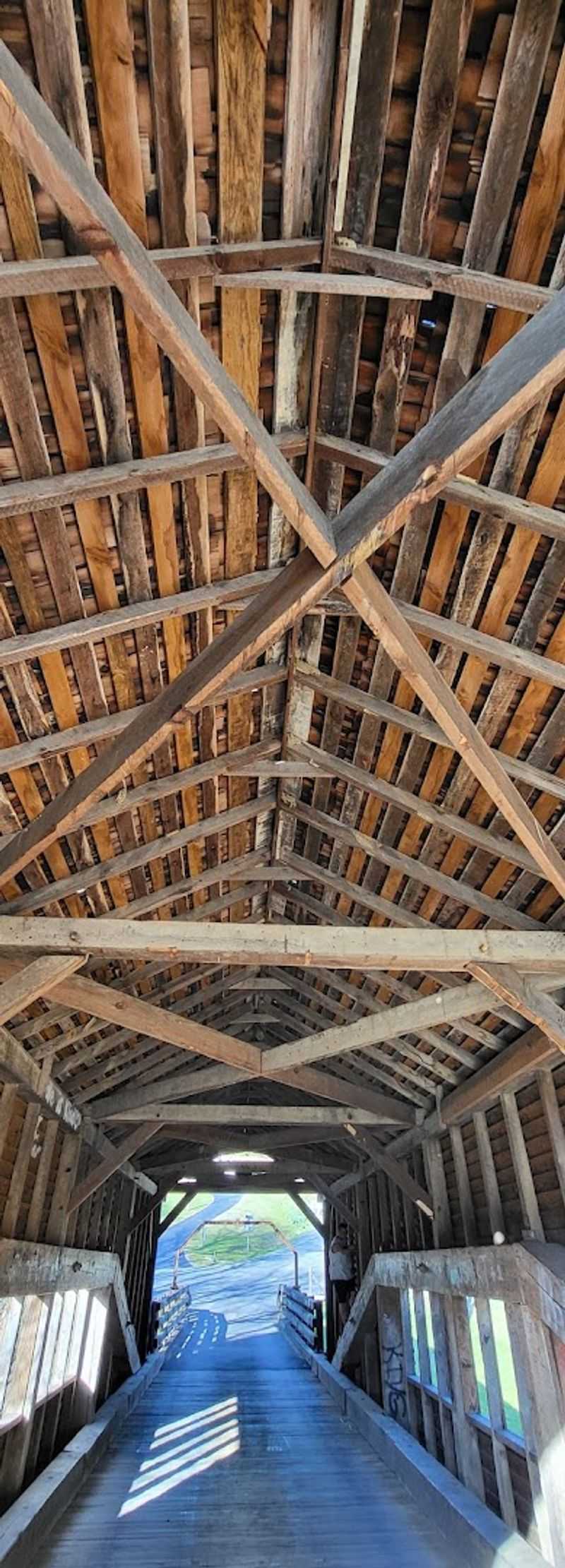
Not every bridge gets to show off its bones, but the Harrisburg Covered Bridge does exactly that. Step inside and look up — the king post truss design is right there above you, a triangle-shaped framework of heavy wooden beams that has been holding this bridge together since the 1800s.
This type of truss is one of the oldest and simplest structural designs in woodworking history, and seeing it in person is like flipping through a real engineering textbook. The aged wood has a warmth and texture that no modern material can replicate.
Many visitors are surprised by how solid the bridge feels underfoot, even after all these years. The wooden slats click and creak under car tires as vehicles cross, adding a sensory experience you simply cannot get anywhere else.
It is old-school engineering doing exactly what it was always meant to do.
Still a Working Bridge in the Heart of a Neighborhood
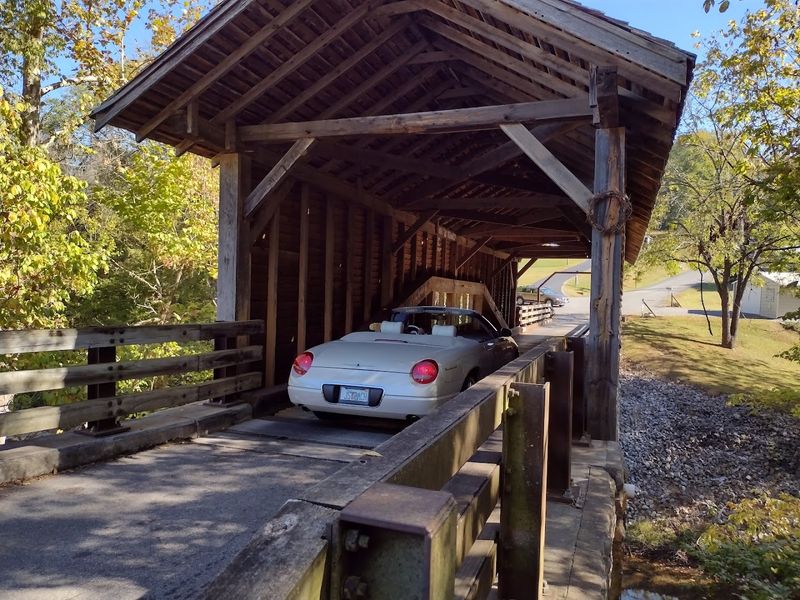
Here is something that surprises most first-time visitors — this bridge is not just a pretty relic. Cars actually drive through it every single day.
The Harrisburg Covered Bridge remains a functioning one-lane road, and locals use it as part of their regular route.
That single-lane setup means drivers need to take turns, which adds a fun, old-fashioned feel to the whole experience. The clearance height is only 9 feet 6 inches, so tall vehicles like large vans or trucks should skip the crossing and admire from the outside instead.
Hearing the wooden planks clatter beneath your tires as you roll through is a memory that sticks with you long after you leave. Visitors often describe the moment as unexpectedly magical.
It is rare to find a 150-year-old structure still pulling its weight as working infrastructure in the modern world.
Photography Heaven: Why Every Shot Looks Like a Painting
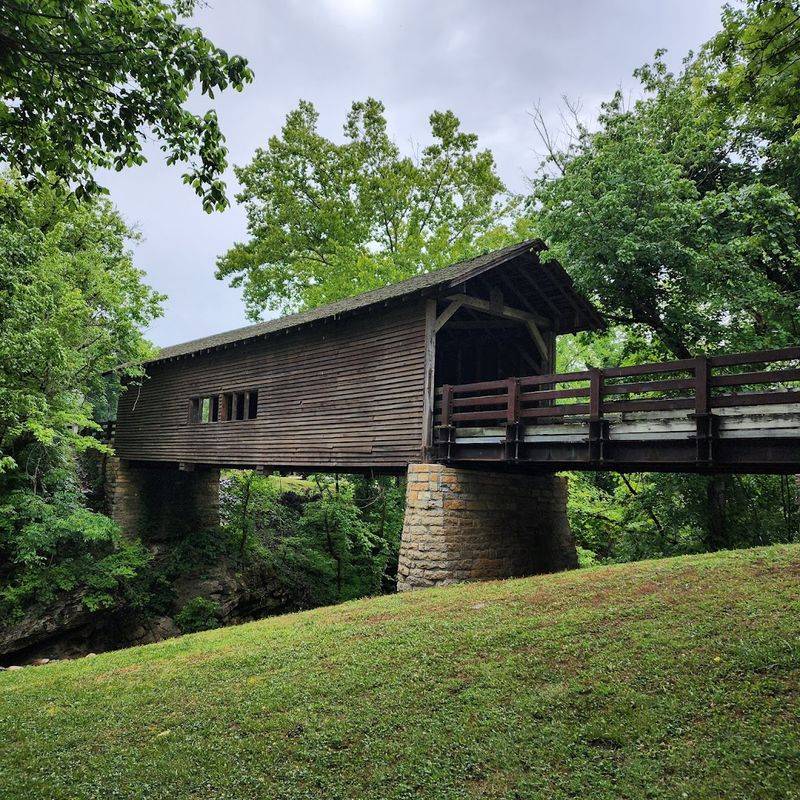
Photographers absolutely love this place. The Harrisburg Covered Bridge sits in a setting so naturally beautiful that even a snapshot taken on a phone looks like a professional landscape painting.
Lush trees, mountain backdrops, and the gentle river below all combine to create a scene that feels almost too perfect to be real.
Golden hour light filtering through the wooden slats inside the bridge creates a warm, dreamy atmosphere that photographers chase for hours. The exterior views are equally stunning, with the red-toned wood contrasting beautifully against the green Tennessee hills.
One important heads-up for photographers: the most dramatic side-angle shots are taken from areas marked as private property, so be respectful of the posted signs and neighboring residents. Plenty of gorgeous images can still be captured from the road and bridge entrance without crossing any boundaries.
The bridge practically photographs itself.
The East Fork of the Little Pigeon River Adds Pure Magic
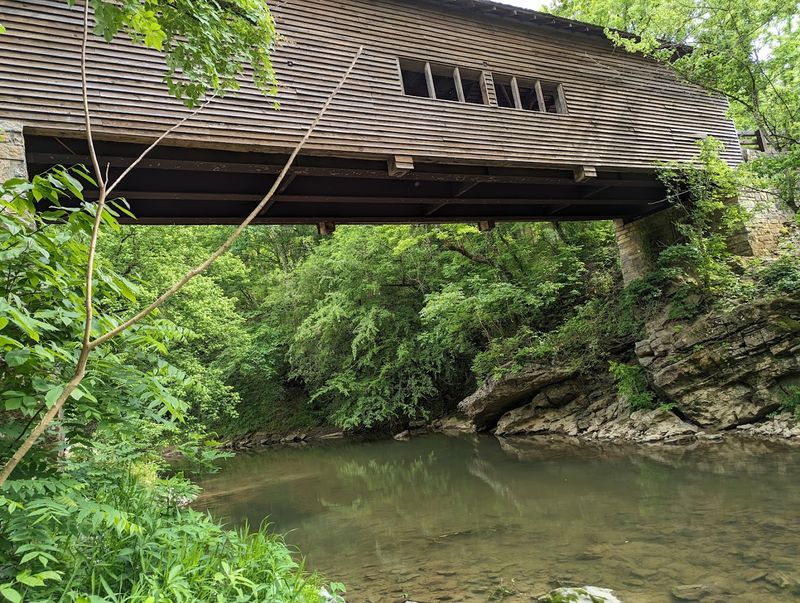
Running beneath the bridge is the East Fork of the Little Pigeon River, and it is every bit as beautiful as it sounds. The water is clear and sparkly, flowing over smooth rocks with that peaceful rushing sound that immediately melts away any stress you brought with you.
Families visiting the bridge often spend extra time just hanging around near the riverbank, soaking in the scenery. Kids especially love watching the water from the bridge’s cutout windows, which frame the river like little nature portraits.
The river also tells part of the bridge’s story — it was a flood on this very waterway that destroyed the original McNutts Bridge back before 1875, prompting the construction of the Harrisburg Covered Bridge we know today. Knowing that history while standing above the water gives the whole experience a deeper, more meaningful layer that you will carry with you long after leaving.
Open 24 Hours: Perfect for Sunrise and Sunset Visits
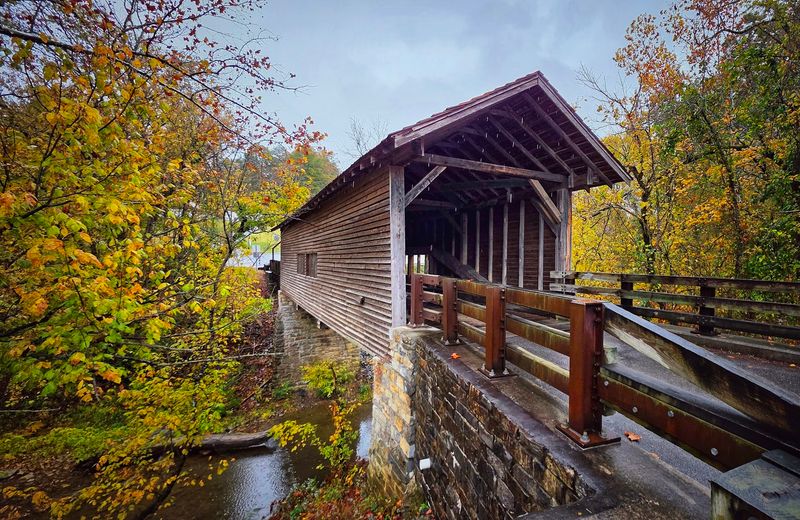
One of the best-kept secrets about this spot is that it never closes. The Harrisburg Covered Bridge is open 24 hours a day, seven days a week, which means you can visit at the most magical times of day without worrying about a gate shutting behind you.
Sunrise visits offer a quiet, misty atmosphere with soft light creeping over the Smoky Mountains, turning the whole scene into something ethereal. Sunset visits bring warm golden tones that make the aged wood glow like amber.
Both are absolutely worth setting an alarm for.
Since the bridge sits in a residential neighborhood, nighttime visits should be kept brief and respectful of the people who live nearby. But catching this landmark in early morning light, with fog drifting off the river and mountains framing the background, is a Tennessee experience that belongs at the very top of any travel list.
A Quiet Detour From Pigeon Forge and the Smoky Mountains
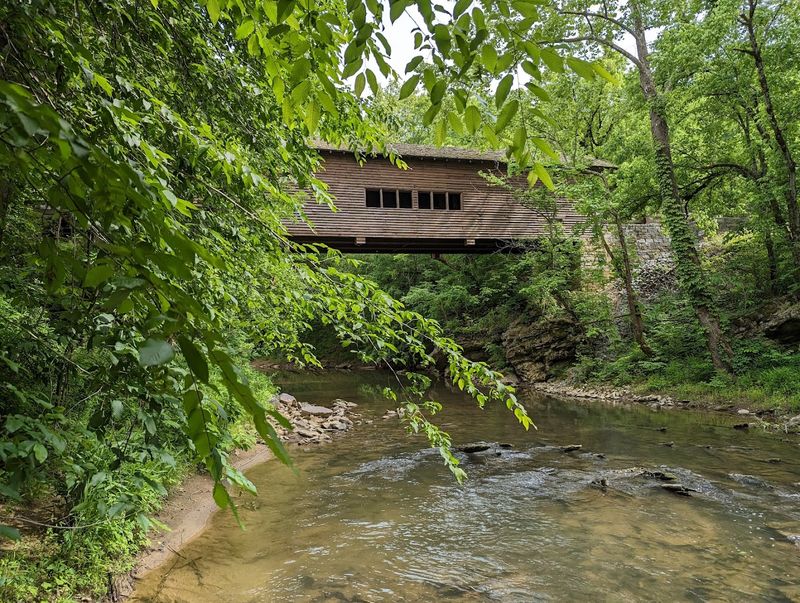
Most people visiting the Sevierville area are headed to Pigeon Forge, Gatlinburg, or Great Smoky Mountains National Park. But a quick detour to the Harrisburg Covered Bridge adds something completely different to the trip — a calm, unhurried moment of pure historic beauty.
Several visitors have noted that they stopped here on the way to Bush’s Beans Museum or while exploring back roads between Pigeon Forge and the surrounding countryside. The drive itself is lovely, with mountain views and winding roads that feel worlds away from the busy tourist strips.
The stop typically takes around 20 to 30 minutes, making it an easy addition without eating up your whole day. Sometimes the best travel memories come from these unplanned, low-key moments rather than the big-ticket attractions.
The Harrisburg Covered Bridge is exactly that kind of hidden-gem detour that turns a good trip into a great one.
Parking Tips and Practical Info Every Visitor Should Know
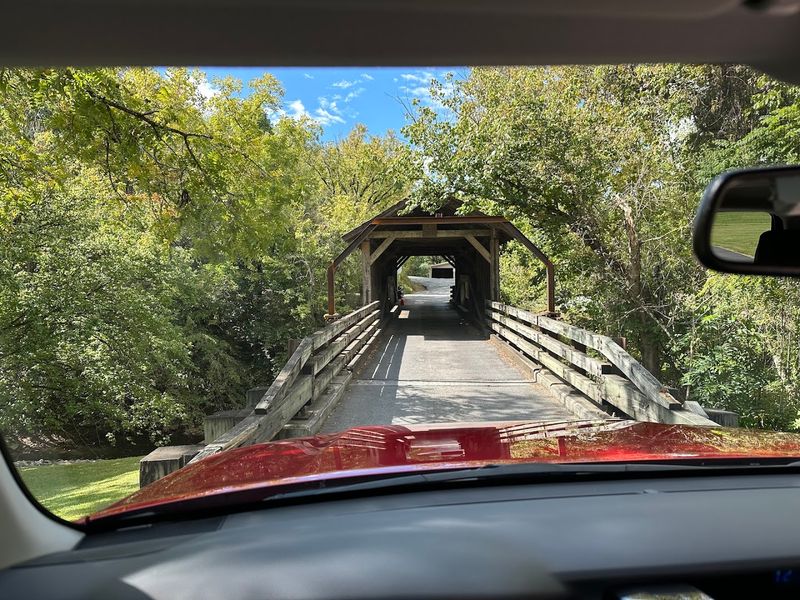
Parking at the Harrisburg Covered Bridge is limited, so a little planning goes a long way. There is a small turnaround area on the west side of the bridge where a few cars can pull off briefly.
Most visitors say it works fine during quieter times of day, but arriving early is always the smarter move.
There is no dedicated pedestrian walkway inside the bridge, so if you want to walk through it, stay alert for passing vehicles. Raised spars on each side of the interior allow pedestrians to step aside while cars pass, which is helpful but requires some awareness.
Tall vehicles with a clearance over 9 feet 6 inches should not attempt to drive through — admiring from outside is the safer choice. No entrance fee, no souvenir stand, and no hype.
Just a genuine historic landmark waiting quietly for curious travelers to discover it on their own terms.
Respecting Private Property Around the Bridge
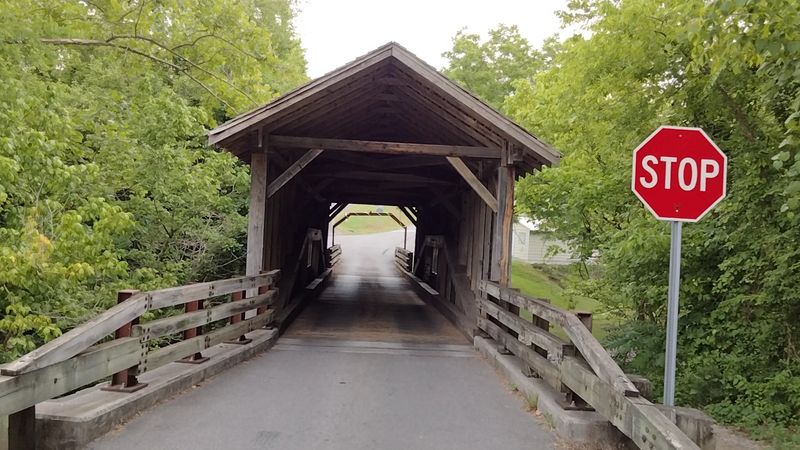
The Harrisburg Covered Bridge sits within a real residential neighborhood, and that is something every visitor should keep in mind from the moment they arrive. The homes and properties surrounding the bridge belong to actual residents who live there year-round, and their privacy deserves genuine respect.
Some of the most stunning side-angle photos of the bridge are taken from areas clearly marked with Private Property and No Trespassing signs. While the temptation to grab that perfect shot is understandable, crossing into someone’s yard without permission is never the right call.
Plenty of beautiful images can be captured from the public road and bridge entrance without stepping onto private land. Visitors who are respectful and quick about their stop tend to have a much more pleasant experience overall.
Being a considerate traveler means the bridge stays accessible and enjoyable for everyone who comes after you.
Writing on the Walls: A Quirky Tradition Visitors Love
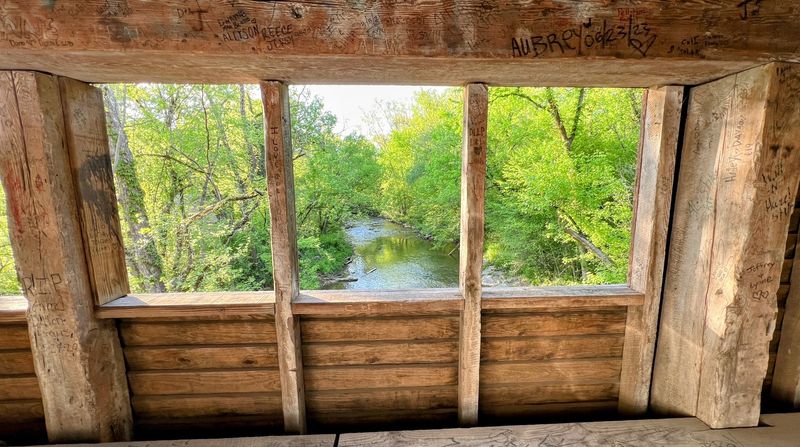
Walk inside the Harrisburg Covered Bridge and you will quickly notice something unexpected — the walls are covered in handwritten names, dates, and messages left by visitors over many years. This quirky tradition gives the interior a layered, living quality that feels completely unique to this bridge.
Some reviewers have even suggested bringing a marker so you can add your own name to the collection. Whether you participate or just read through the scrawled messages from strangers, it adds a deeply human element to the visit that photography alone cannot capture.
There is something oddly touching about seeing the names of families, couples, and solo travelers who stood in this exact same wooden tunnel across decades. The bridge becomes not just a piece of architecture but a community scrapbook of sorts.
It is one of those small, unexpected details that makes the Harrisburg Covered Bridge feel truly alive and personal.
History of Floods, Rebuilds, and Survival Against the Odds
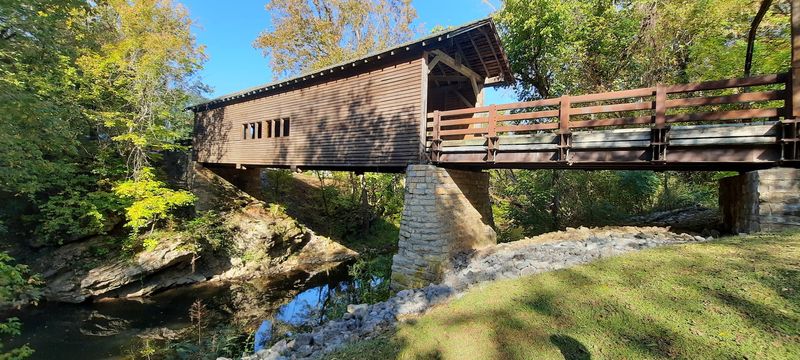
Long before the Harrisburg Covered Bridge existed, there was another bridge on this spot called the McNutts Bridge. That earlier structure did not survive a powerful flood, and its destruction is exactly what led to the construction of the covered bridge we admire today.
When Elbert Stephenson built the replacement in 1875, the covered design was partly chosen to protect the wooden structure from the elements. A covered bridge can last three to five times longer than an uncovered wooden bridge simply because the roof shields the main timbers from rain and sun damage.
The most recent restoration in 2005 went a step further by reinforcing the piers to better withstand future flooding events. That thoughtful upgrade means this bridge has a fighting chance of lasting another 150 years.
Every plank and beam carries the story of survival, adaptation, and the quiet determination of a small Tennessee community to preserve something worth keeping.
Why Covered Bridge Fans Say This One Is Among the Best
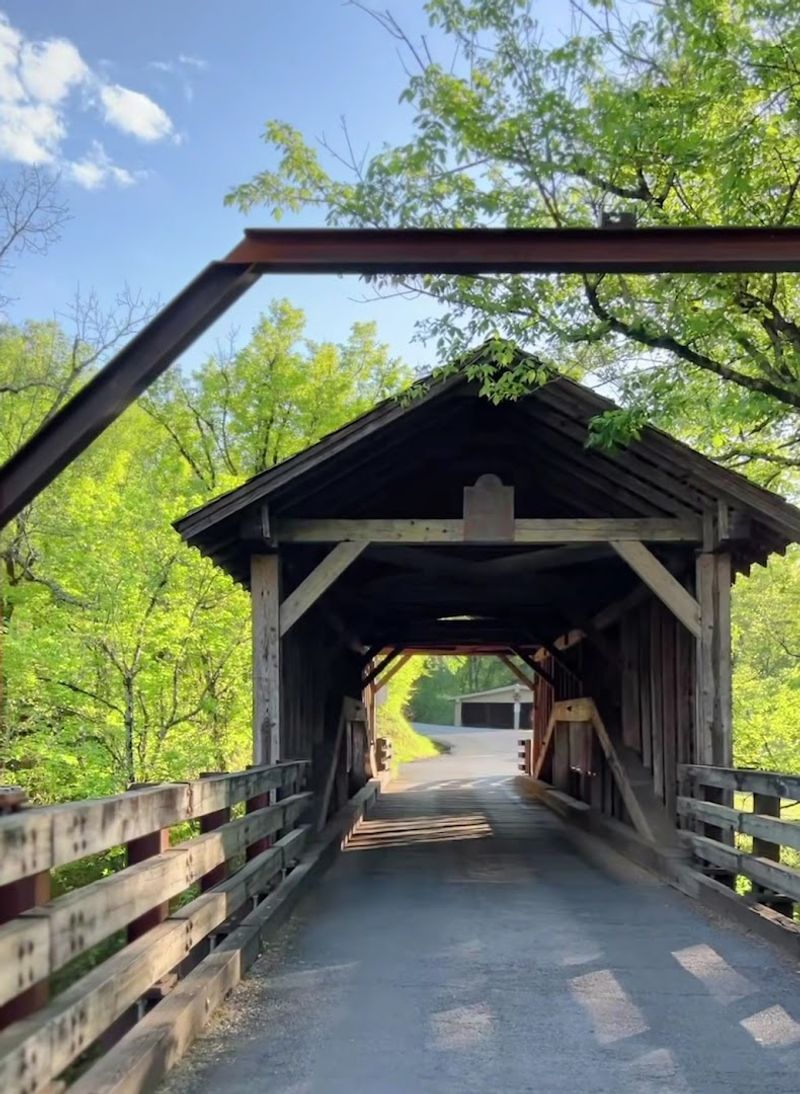
Covered bridge enthusiasts are a passionate group, and many of them have visited dozens of these historic structures across the country. The ones who have stopped at the Harrisburg Covered Bridge consistently rank it among their favorites, and it is easy to understand why.
One reviewer from Indiana — home to over 40 covered bridges — called this little Tennessee gem sturdy and adorable, high praise from someone who has plenty of bridges to compare it against. The combination of authentic age, working functionality, scenic surroundings, and accessible location makes it stand out even among more famous examples.
Unlike some preserved bridges that sit behind fences or in museum settings, the Harrisburg Covered Bridge is right there in the real world, carrying real traffic over a real river. That living, breathing quality is what separates it from a museum piece and turns it into something genuinely memorable for every visitor who experiences it.
Nostalgia, Romance, and the Timeless Charm of Covered Bridges
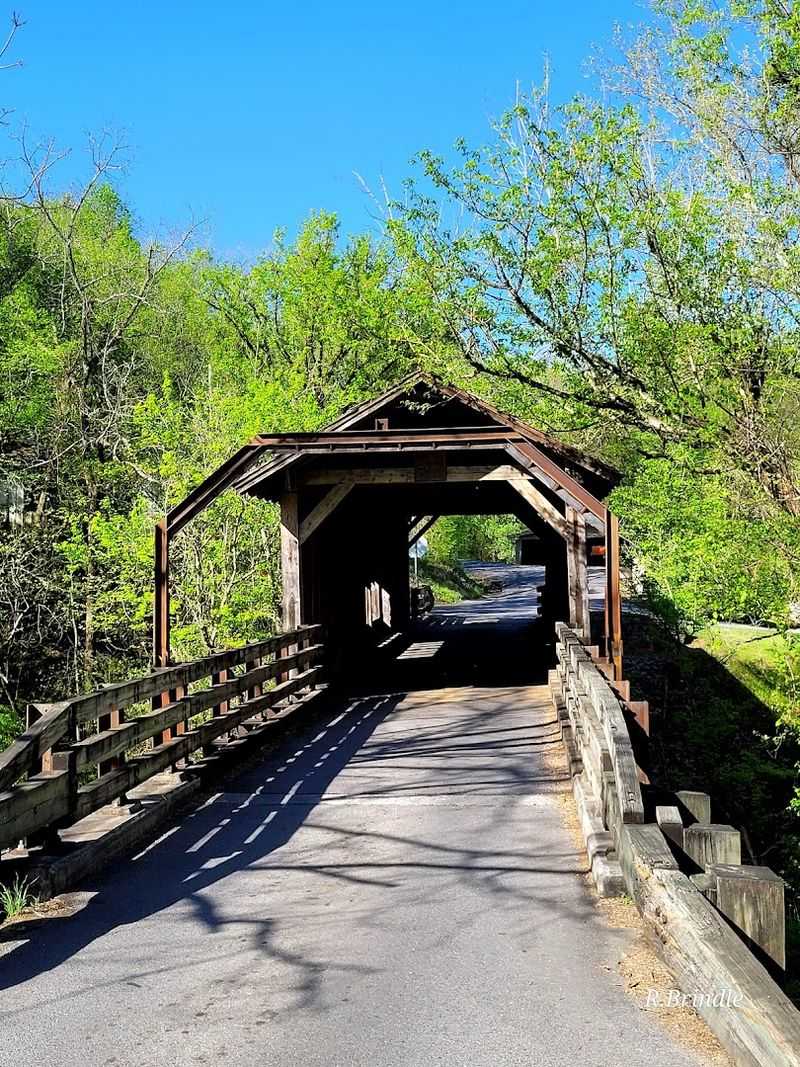
There is a reason covered bridges have inspired countless paintings, poems, and love stories over the centuries. Something about stepping inside one immediately wraps you in a feeling of warmth and nostalgia that is hard to explain but impossible to ignore.
The Harrisburg Covered Bridge captures that feeling beautifully. The soft light filtering through the wooden slats, the sound of the river below, and the smell of aged timber all combine into a sensory experience that transports you somewhere quieter and slower than the modern world usually allows.
Couples, families, and solo travelers alike have described visits here as unexpectedly emotional and deeply satisfying. One reviewer summed it up perfectly by saying there is always something very nostalgic and romantic about covered bridges, and this one delivers that feeling without any tourist fuss attached.
Pure, simple, and absolutely beautiful — the Harrisburg Covered Bridge is Tennessee history at its most charming.
Enjoyed this story?
Add Fast Food Club as a preferred source to see more of our reporting on Google.