


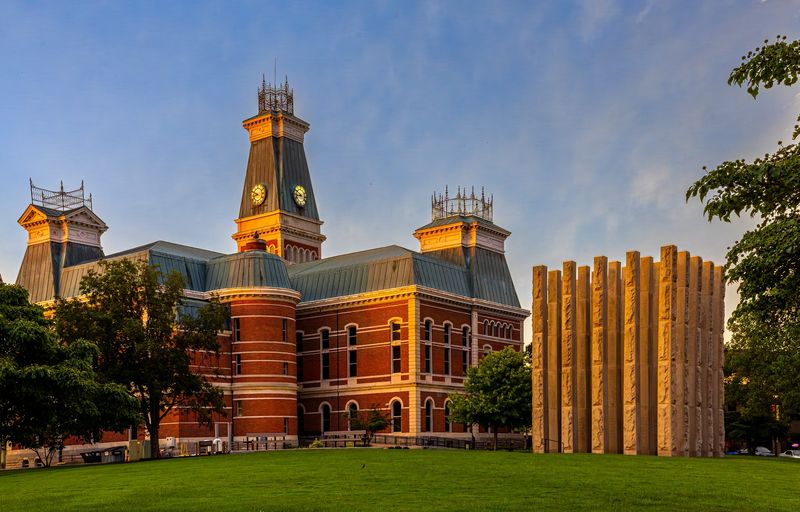
Some buildings refuse to fade into the background, and this one has commanded attention for well over a century. A towering clock keeps watch over a quiet Indiana square, wrapped in red brick and pale limestone that has weathered the decades without losing its dignity.
Built in the 1870s, it still serves the same purpose it always has, while also drawing curious travelers who simply want to admire the craftsmanship. There is real history stitched into its walls, from the senator who donated the land to the architect who dreamed up its shape.
Stick around and you will learn who built it, what makes it stand out, when to visit, and where to park before you walk the grounds. Consider this your friendly guide to one of the most striking landmarks in a town famous for its architecture.
A Landmark Anchored in Downtown Columbus
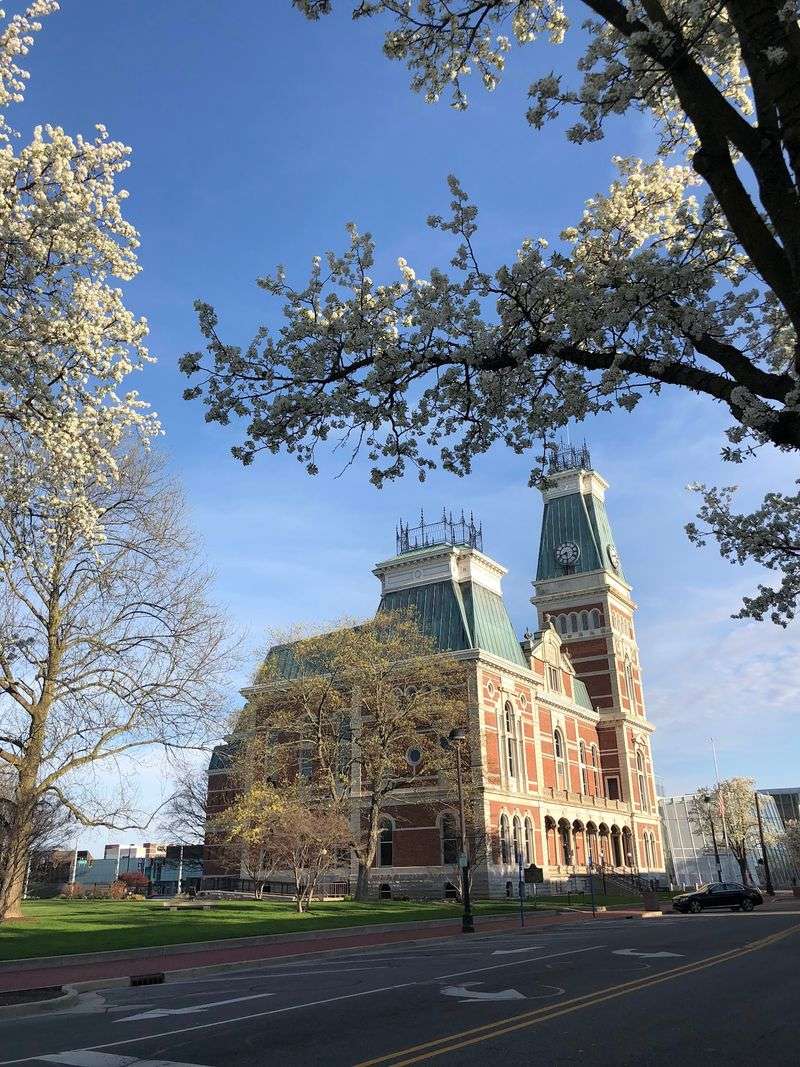
Right in the heart of downtown, the Bartholomew County Courthouse holds down the corner at 234 Washington St in Columbus, Indiana. The address alone puts you steps from the walkable core of a town that takes its buildings seriously.
The structure works as an active county courthouse, so it hums with real business on weekdays. Marriage licenses, court hearings, and clerk paperwork all pass through its doors.
Beyond the official duties, plenty of people show up just to admire it. The grounds are open for a slow walk around the exterior, and that alone is worth the trip.
Regulars mention that the location is central and easy to spot, thanks to a clock tower that rises above nearly everything nearby. Once you find the square, you cannot miss it.
The building carries the weight of a landmark that has watched over the same patch of ground for generations. It is both a working office and a piece of living history.
For anyone touring the famous architecture of the city, this stop belongs near the top of the list. It offers a genuine sense of place before you even step inside.
The Story Behind Its Founding
Long before the clock tower rose, Bartholomew County came into being in 1821. The county seat of Columbus started out under a different name entirely.
It was originally called Tiptona, a nod to John Tipton, who donated thirty acres of land for the county building. That gift set the stage for everything that followed.
Tipton went on to build a notable career of his own. He served as a state representative, an Indian agent, and eventually a United States senator.
The courthouse standing today is actually the county’s fourth. Earlier buildings served their time before this grander version took their place.
Completion arrived in the 1870s, giving the county a headquarters built to impress and to last. More than a century later, it still fills that role.
Knowing the backstory adds a layer to the visit. What looks like a beautiful old building becomes a chapter in the larger tale of how the town found its footing.
Details like these turn a simple photo stop into something richer. The land, the name, and the men behind it all connect to the walls you see today.
Isaac Hodgson and the Second Empire Design
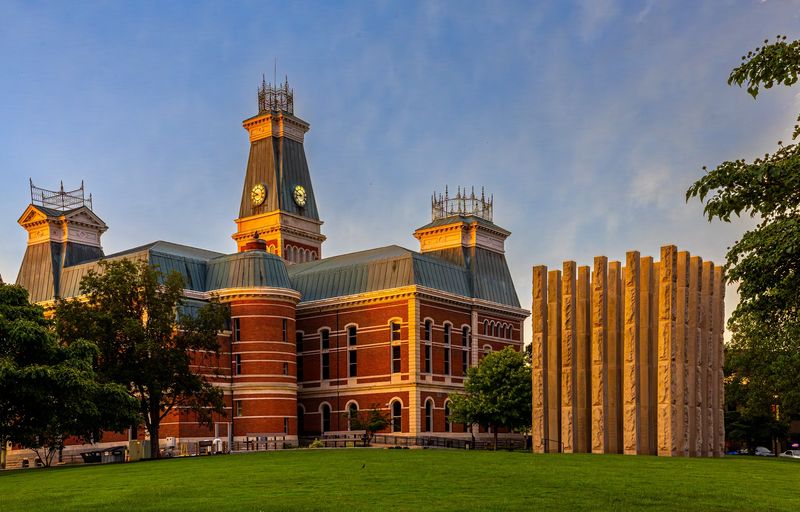
Credit for the design goes to architect Isaac Hodgson, who gave the building its distinctive shape. His vision leaned into the Second Empire style, a look that was fashionable and grand in its day.
The style shows up in the tall proportions, the ornate roofline, and the overall sense of formality. It signals importance the moment you approach.
Construction wrapped up in 1874, marking the arrival of a courthouse built to command respect. The design choices were meant to reflect the county’s ambitions.
Second Empire architecture was often reserved for prominent public buildings. Choosing it here made a clear statement about civic pride.
People often note how well the structure fits into a town celebrated for its architectural treasures. It holds its own among newer, modern landmarks.
Hodgson’s work has aged into a source of local pride. The building remains a favorite subject for anyone drawn to classic public design.
Standing before it, the craftsmanship speaks for itself. Every proportion was chosen with purpose, and that intention still comes through today.
Red Brick, Limestone, and Solid Foundations
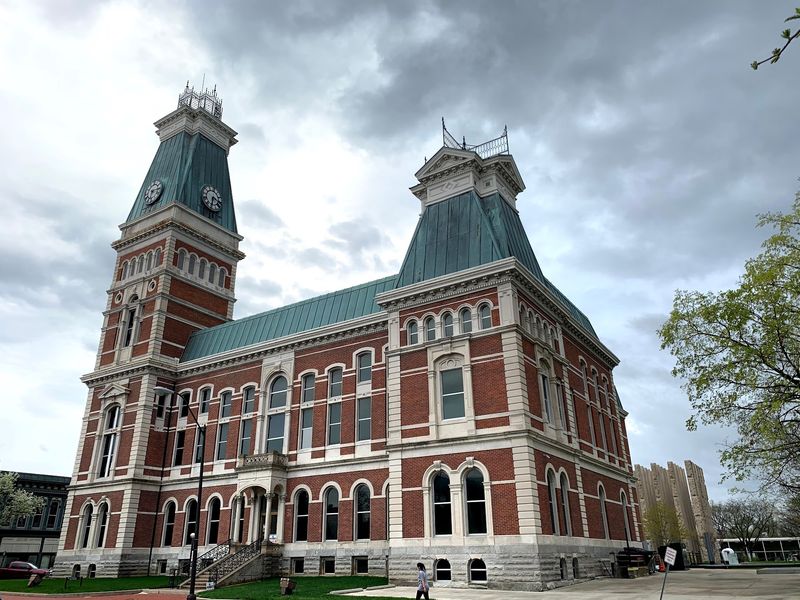
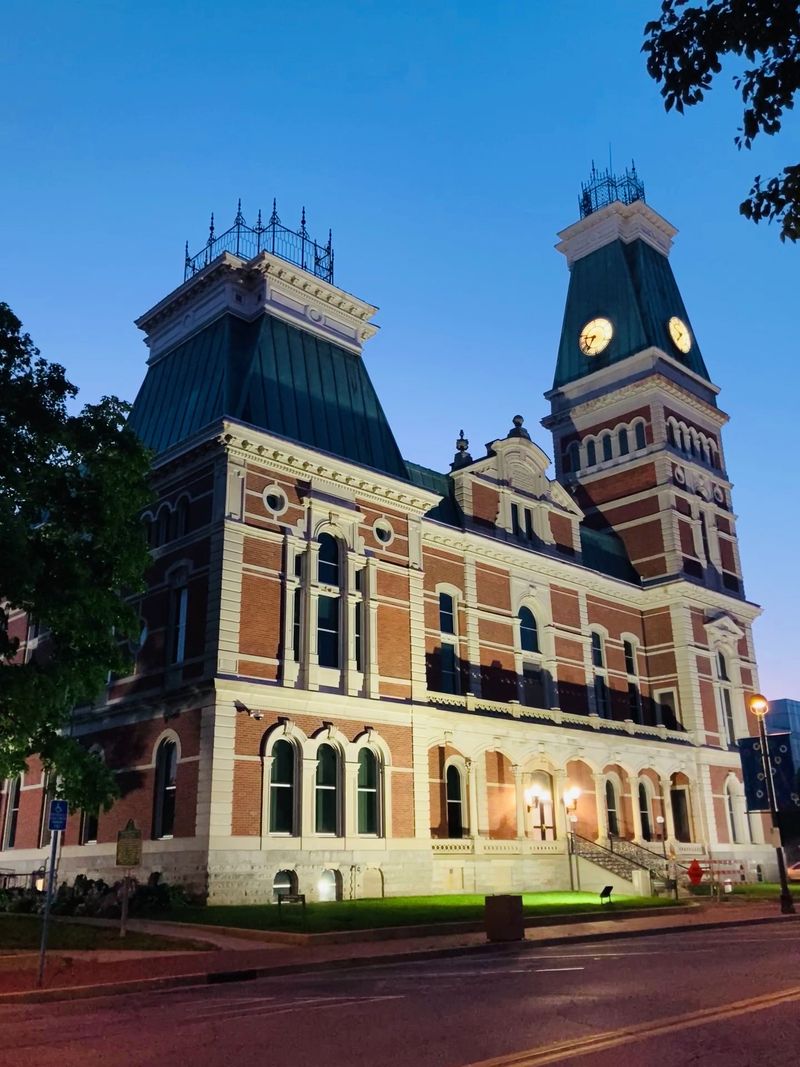
Materials tell part of the story here, and this courthouse wears them well. The main walls are built from red brick, giving the whole structure a warm, sturdy character.
White limestone trim outlines the edges and details, adding contrast against the brick. That combination is a big part of why the building reads as so refined.
The foundation goes a step further with rusticated blue limestone. Rough textured and solid, it grounds the entire design.
These choices were not just about looks. They gave the courthouse the durability to survive well past its hundredth year.
Careful upkeep has kept the exterior in strong shape. Observers frequently point out how clean and well maintained it appears.
The clock tower crowns the whole composition, and it too has been kept in good order. Together, the elements create a landmark that still looks the part.
Building materials rarely get much attention, yet here they are central to the charm. The brick, the trim, and the stone base all work as a team.
The Clock Tower That Rules the Square
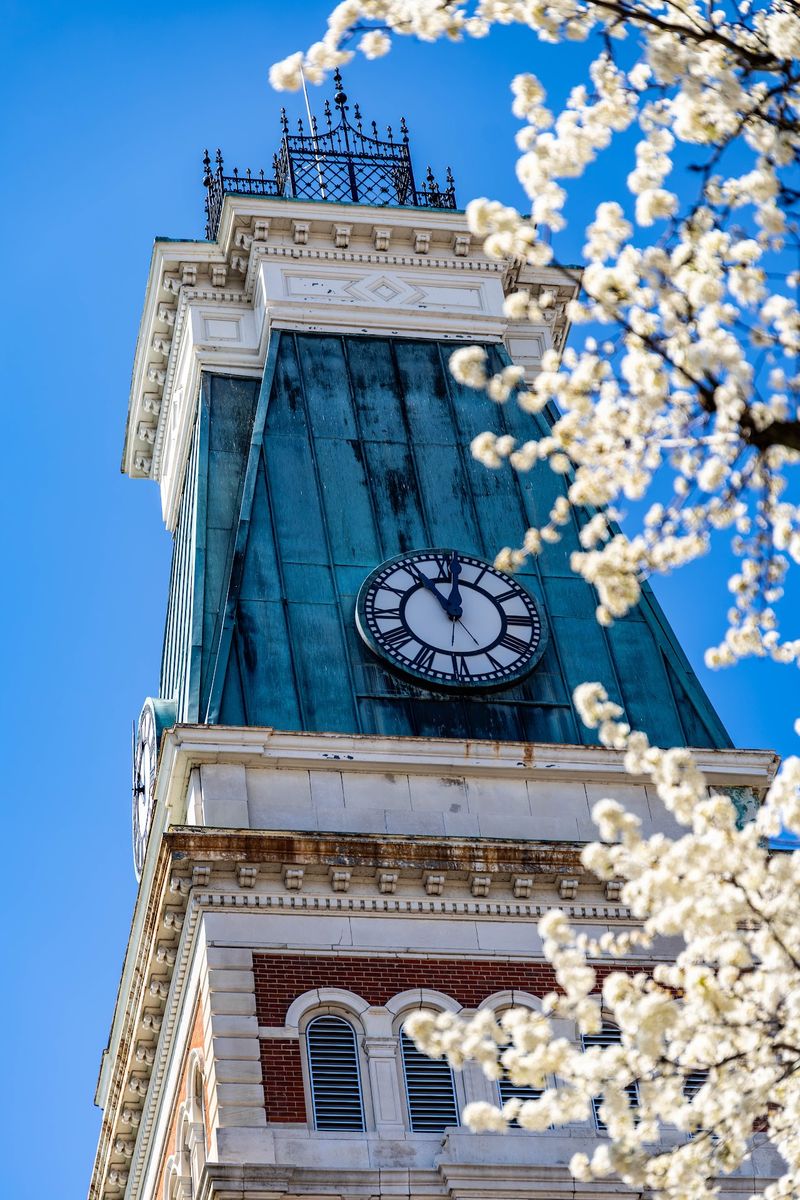
Rising high above the rooftops, the clock tower is the feature people remember most. It gives the courthouse its unmistakable silhouette on the town square.
The tower is often praised for being well kept and clean. Small details like that make a big difference on a building this old.
From various points around downtown, the tower serves as a natural landmark. It helps orient you the moment you arrive in the area.
Its presence lends the whole square a certain grandeur. The vertical reach pulls the eye upward and sets the mood for the entire block.
Many describe the courthouse simply as a beautiful historic building, and the tower is a huge reason why. It anchors that reputation.
Photographers gravitate toward it for good reason. Framed against an open sky, the tower makes for a memorable shot.
More than a timekeeper, it stands as the crown of the whole design. The courthouse would be striking without it, but the tower is what makes it soar.
Walking the Grounds and Soaking In the Setting
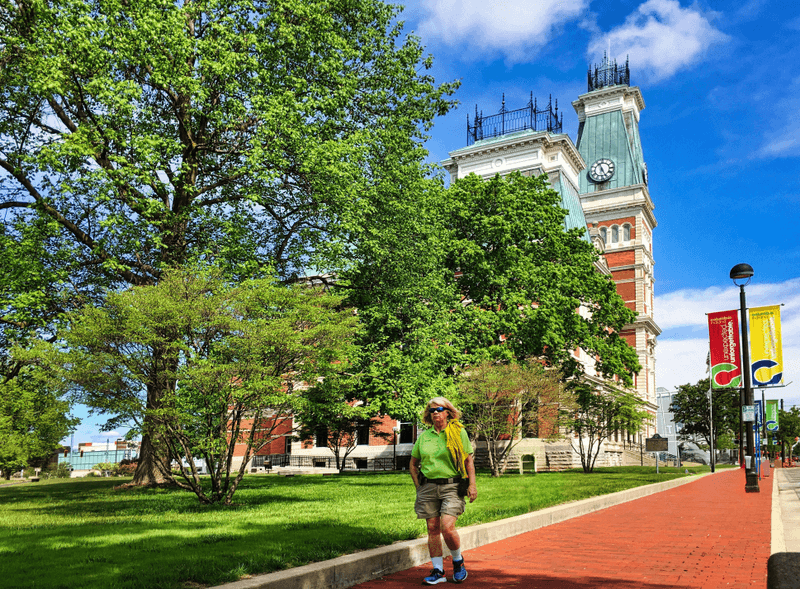
Not every landmark invites you to linger, but this one does. The grounds are open for a leisurely walk around the exterior, and that access is part of the appeal.
You can circle the building at your own pace, taking in the details from every angle. There is no rush and no pressure to head inside.
The downtown setting places you in the middle of a town filled with fantastic buildings. The courthouse fits right into that lineup.
People often describe the surrounding area as a small town with an outsized collection of architecture. Strolling the square lets you appreciate that firsthand.
A slow loop around the grounds works well for families and casual explorers alike. The open space makes it easy to bring the kids along.
Because the walk is free and unhurried, it suits travelers who prefer to wander. You set the tempo entirely.
Time spent here rewards the patient observer. Every side of the building offers a slightly different view worth pausing for.
Hours, Parking, and Practical Tips
Planning your visit around the schedule saves a lot of frustration. The courthouse operates Monday through Friday, from 8 AM to 4 PM, and closes on Saturday and Sunday.
If you have official business, aim to arrive with time to spare. The doors follow the posted hours closely, so cutting it fine is not the move.
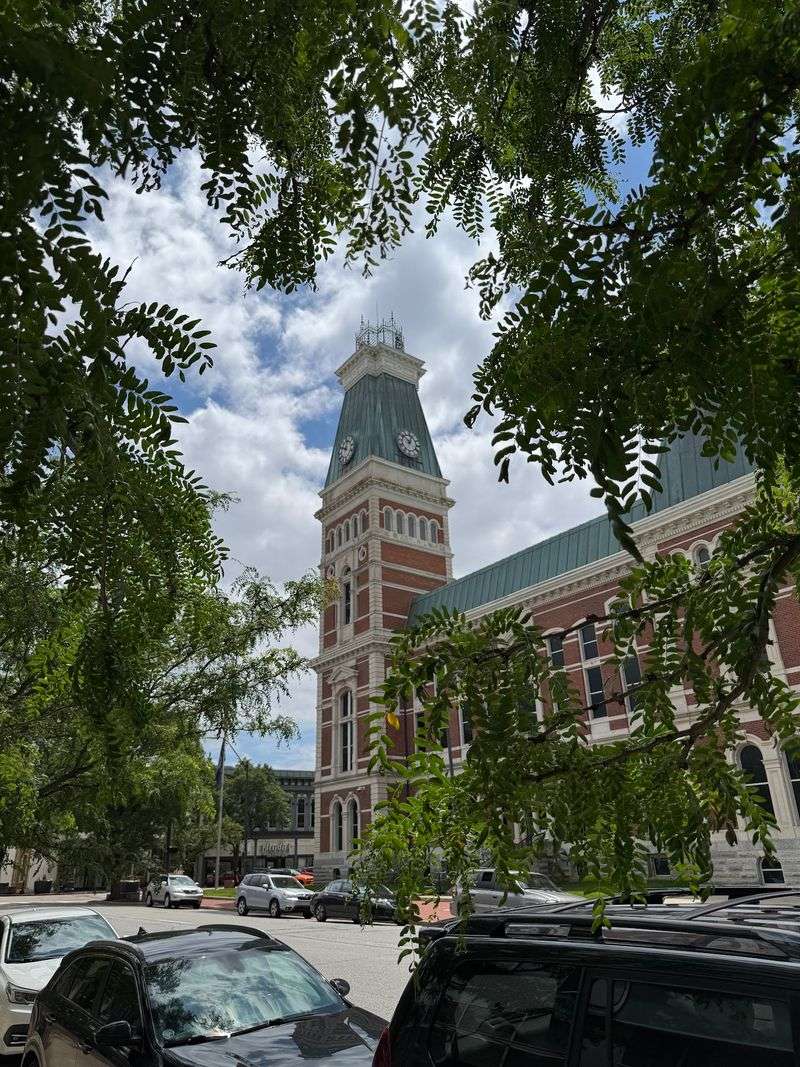
Parking is the biggest heads up here. Finding a close or even semi close spot can be genuinely tricky near the square.
Give yourself a buffer to circle for a space or walk a short distance. A little patience goes a long way downtown.
For those handling paperwork, the clerk’s office manages things like marriage licenses. Fees for residents start around twenty five dollars, with certified certificates at a dollar each.
Staff are frequently described as friendly and quick to move things along when the office is not crowded. That helps keep short errands short.
Come during weekday hours, plan for parking, and the visit tends to go smoothly. A bit of preparation makes all the difference.
Why This Courthouse Earns a Spot on Your Trip
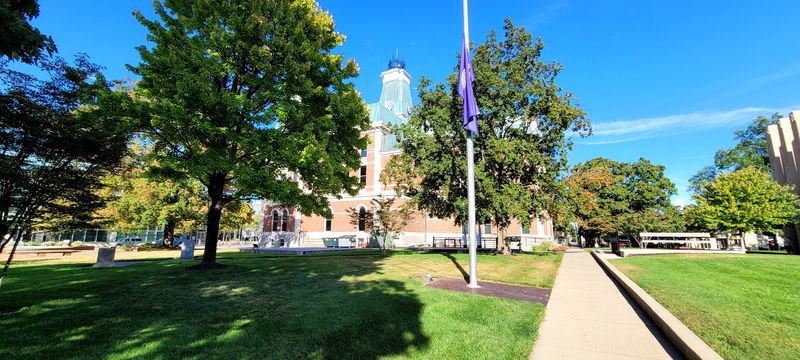
Some stops surprise you with how much they offer, and this landmark is one of them. Added to the National Register of Historic Places in 1979, it carries official recognition to match its looks.
The building rewards travelers who appreciate craftsmanship and backstory. Between the founding tale and the architecture, there is plenty to take in.
Its central downtown spot makes it easy to fold into a larger tour of the town. You can see it on the way to other local sights.
People consistently call it a beautiful, well maintained structure worth a look even without court business. That says a lot about its pull.
Families, history buffs, and casual sightseers all find something here. The open grounds welcome a wide range of visitors.
Weekday timing and a parking plan are really the only prep you need. Handle those, and the rest is easy.
A grand old courthouse still standing tall over its square is a rare thing to catch. This one has kept its charm intact, and it makes for a memorable stop in Columbus.
Enjoyed this story?
Add Fast Food Club as a preferred source to see more of our reporting on Google.