


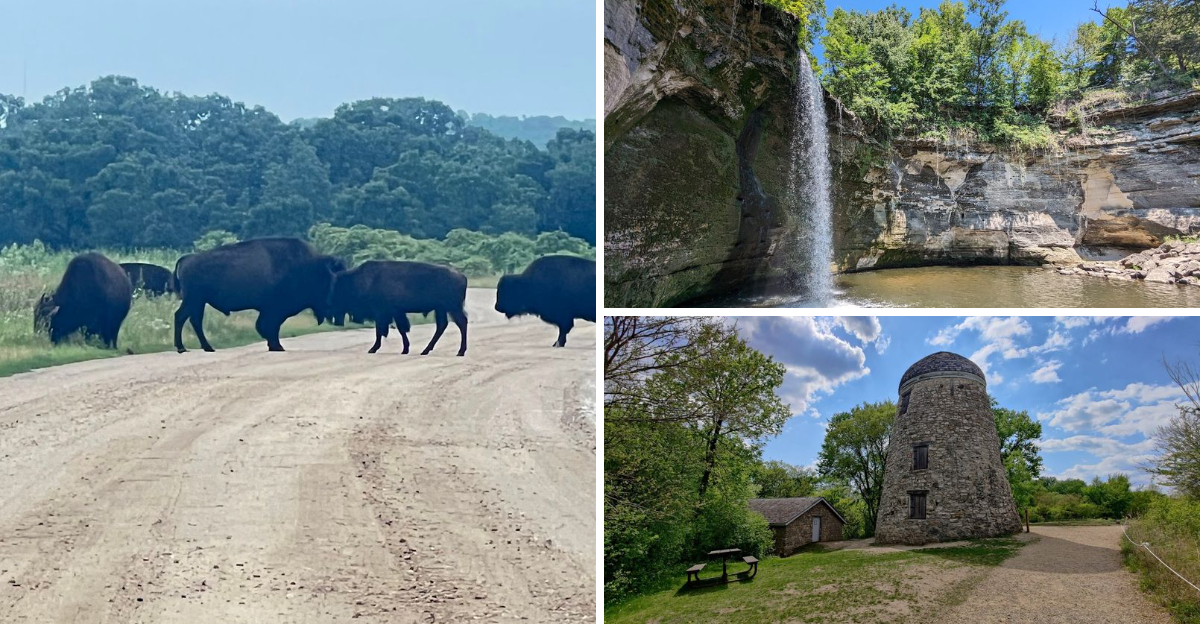
Tucked away near Mankato, Minnesota, Minneopa State Park is one of those rare places that feels like a secret worth sharing. Most people drive right past it without realizing that a living, breathing herd of bison roams freely inside its borders.
Along with the thundering wildlife, the park also features a stunning double waterfall, scenic hiking trails, and peaceful picnic spots perfect for families. Whether you are a nature lover, a wildlife enthusiast, or just looking for a weekend escape, Minneopa has something genuinely special waiting for you.
The Bison Drive: A One-of-a-Kind Auto Tour
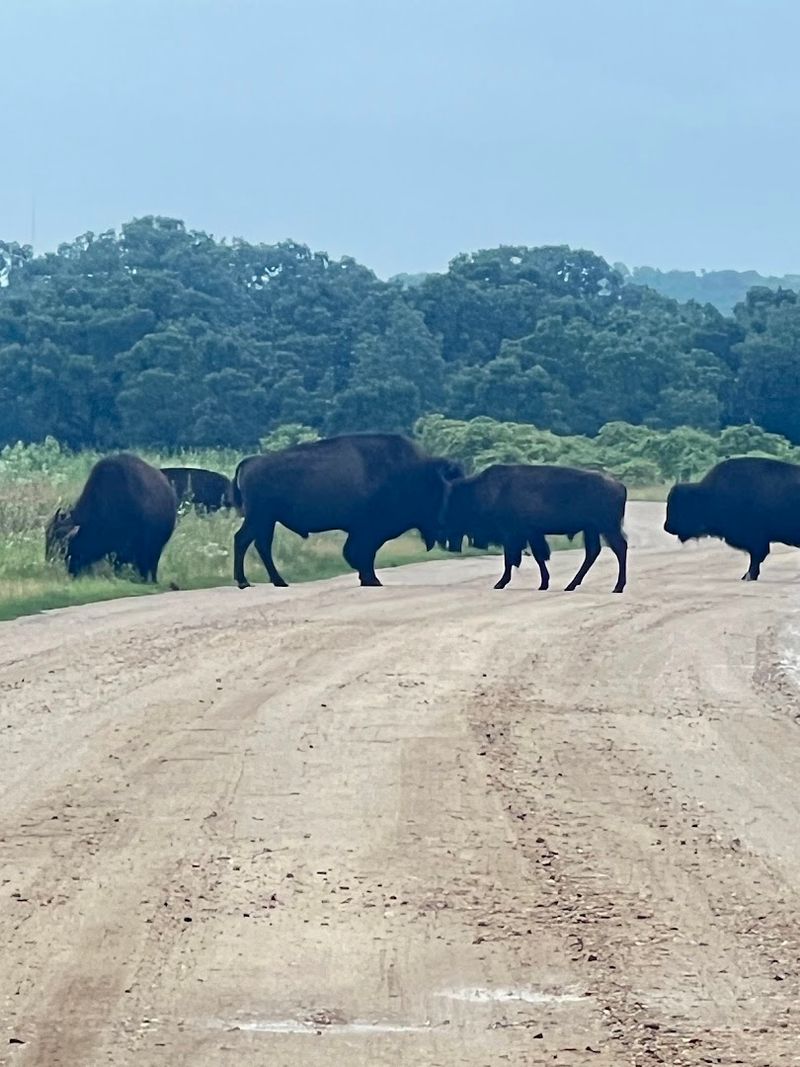
Imagine pulling your car to a slow crawl while a massive bison crosses the road just feet in front of your bumper. That is the kind of heart-pounding moment the Bison Drive at Minneopa State Park delivers on a regular basis.
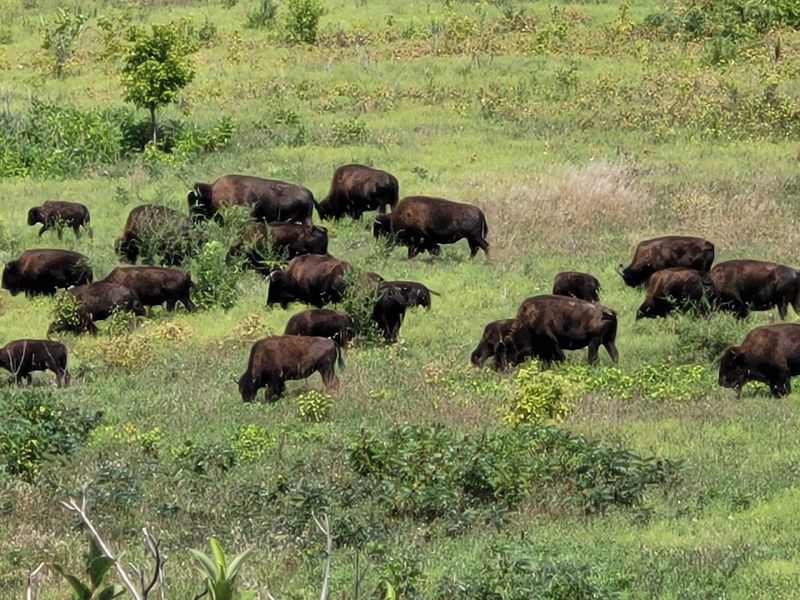
This self-guided auto tour winds through the park’s dedicated bison range, giving visitors a front-row seat to one of North America’s most iconic animals in a surprisingly intimate setting.
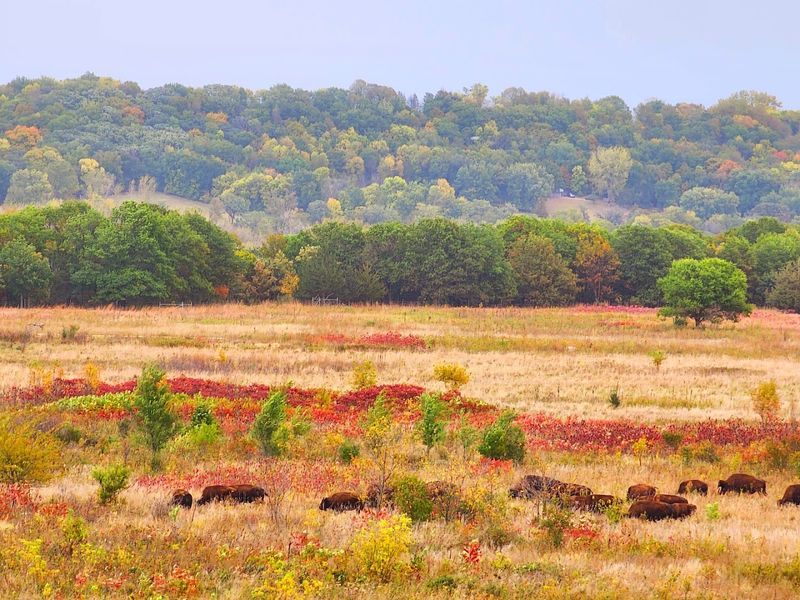
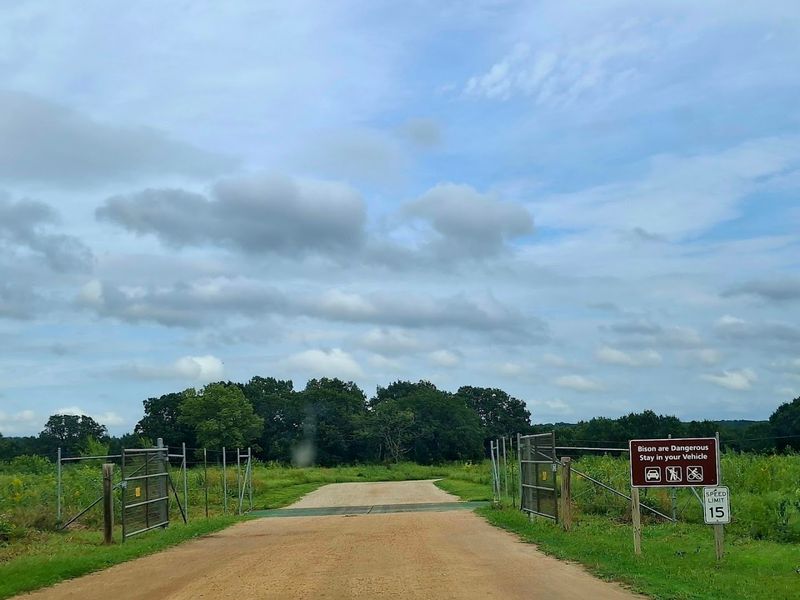
The herd at Minneopa currently numbers around 32 animals, including calves born each spring. Visitors are encouraged to stay inside their vehicles at all times for safety, since bison are wild and unpredictable despite how calm they may appear.
Early morning and late afternoon tend to be the best times to spot the herd near the road.
Pack your camera, roll down the window carefully, and enjoy every slow, magical second of this unforgettable drive.
Minneopa Falls: A Double Waterfall Worth Every Step
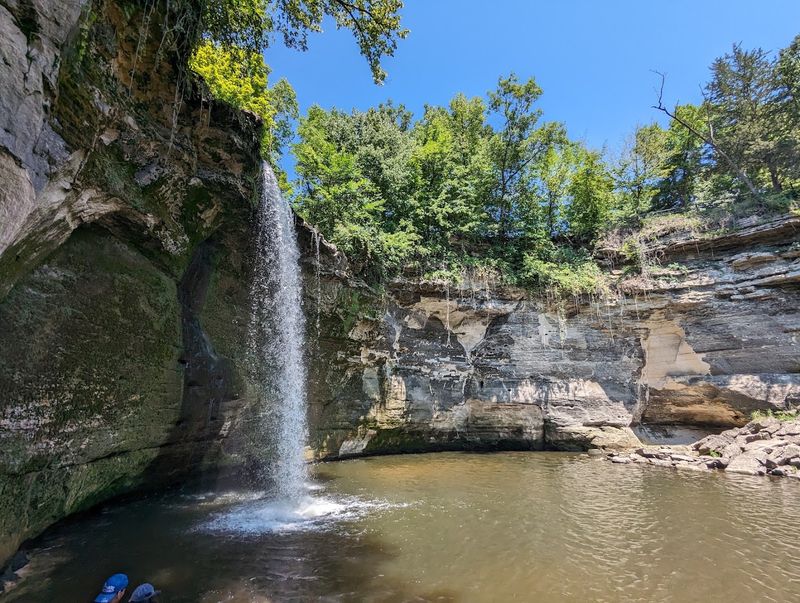
Not every state park can claim a waterfall, let alone two that cascade side by side in a dramatic rocky gorge. Minneopa Falls is easily one of the most photographed natural landmarks in southern Minnesota, and once you see it in person, the reason is obvious.
The two tiers of falling water create a soothing roar that echoes through the valley below, making it feel like a completely different world from the flat prairie surrounding it.
The walk from the parking lot to the falls overlook is short, paved, and accessible for most visitors, including families with young children. A lower trail that once allowed hikers to get closer to the base has been closed for safety reasons, but the views from above are still absolutely breathtaking.
Visiting after a rainy spring guarantees a powerful, full-flowing falls that will leave you speechless.
Bison Ambassador Docents: Meet the Experts on Sundays
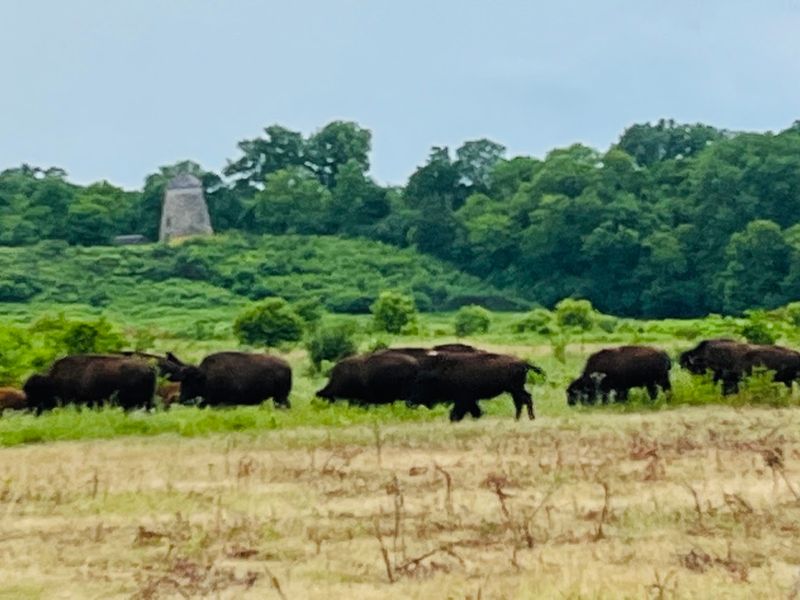
Here is something you will not find at most state parks: volunteer Bison Ambassadors who show up every Sunday near the mill overlook just to help you understand the animals roaming below. These passionate docents, like the beloved Teri and her daughter mentioned by multiple park visitors, bring the bison to life with fascinating stories, behavioral insights, and safety tips that make the experience far more meaningful than just watching from a distance.
Talking with a Bison Ambassador turns a casual visit into an educational adventure. They can tell you how to read bison body language, share the history of the herd, and point out individual animals you might otherwise overlook.
Kids especially love the interaction, often walking away with a brand-new appreciation for these ancient, powerful creatures.
Plan your visit on a Sunday to catch these knowledgeable guides in action near the Seppmann Mill area.
Seppmann Mill: A Glimpse Into Pioneer History
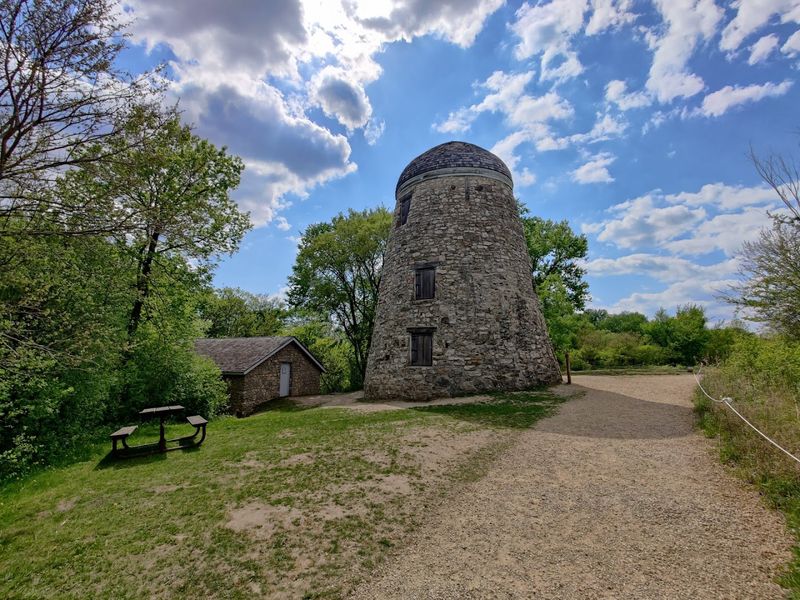
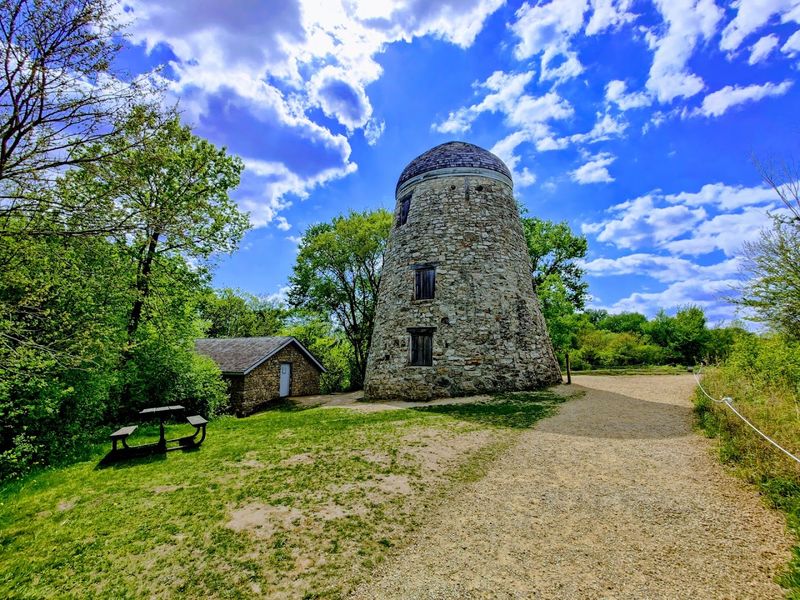
Standing on a windswept ridge overlooking the bison range, the ruins of Seppmann Mill feel like something out of a storybook. Built in the 1860s by German immigrant Friedrich Seppmann, this stone windmill was once used to grind grain for local settlers.
Today, only the sturdy limestone walls remain, but they tell a powerful story about the people who once carved a life out of the Minnesota prairie.
The mill site doubles as one of the best viewing spots in the entire park. From this elevated position, you can scan the rolling grasslands below and often catch the bison herd grazing in the distance.
It is the kind of view that makes you stop, breathe deeply, and feel grateful for wide-open spaces.
History and nature combine here in a way that feels completely effortless, making Seppmann Mill a must-see stop during any visit to Minneopa.
Hiking Trails: Explore Prairie, Forest, and River All at Once
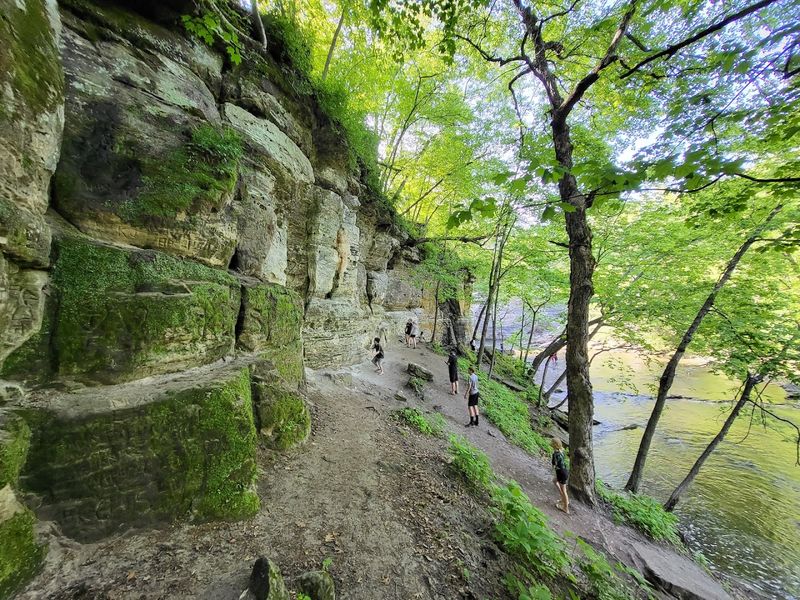
Few parks pack this much landscape variety into such a compact space. At Minneopa, you can walk through shaded river forest in one moment and then step out into sweeping open prairie just minutes later.
The trail system covers several miles and winds past the Minneopa Creek, offering peaceful views of water, wildlife, and wildflowers depending on the season you visit.
One popular route runs along the outside perimeter of the bison enclosure, stretching roughly five miles on relatively flat terrain. Families with older kids report completing this walk comfortably, though bringing plenty of water is strongly recommended on warm days.
Trails are generally well-maintained and easy to follow, though some sections near the highway lose their tree cover and become more exposed.
Late winter visits reward those who enjoy solitude, since the trails tend to be nearly empty and the landscape takes on a quiet, breathtaking beauty all its own.
Camping at Minneopa: Sleep Under the Stars in Southern Minnesota
Spending a night at Minneopa State Park turns a day trip into a full-on adventure. The campground offers a range of sites, and seasoned campers suggest that the even-numbered B sites provide the most privacy, nestled among trees with a good buffer between neighbors.
Waking up to birdsong with the knowledge that bison are roaming just across the park is a genuinely thrilling feeling that city life rarely offers.
A few practical things to keep in mind before you book: firewood is available for purchase on-site, but there is no ice sold at the park. The ranger office closes at 4 p.m. on weekdays and 6 p.m. on weekends, so plan your arrival accordingly.
Mosquitoes are a reality during warmer months, so pack repellent.
For families who have been looking for a camping spot that offers both wildlife and waterfalls, Minneopa checks every single box.
Park Entry and Annual Pass: Getting the Best Value
At just $7 per vehicle for a daily pass, Minneopa State Park is already one of the most affordable outdoor experiences in Minnesota. However, if you plan to visit more than a handful of times throughout the year, the annual Minnesota State Parks permit at $35 is an absolute no-brainer.
That single sticker unlocks access to every state park across Minnesota for an entire year, making it one of the best outdoor recreation deals in the Midwest.
Families living in or around Mankato especially benefit from the annual pass, since Minneopa is close enough for spontaneous weekend visits whenever the mood strikes. Multiple visitors in online reviews have called the yearly pass well worth every penny, particularly for those who love mixing up their outdoor adventures across different parks and seasons.
Grab your pass at the park office or online through the Minnesota DNR website before your first visit.
Wildlife Beyond Bison: Birds, Deer, and More
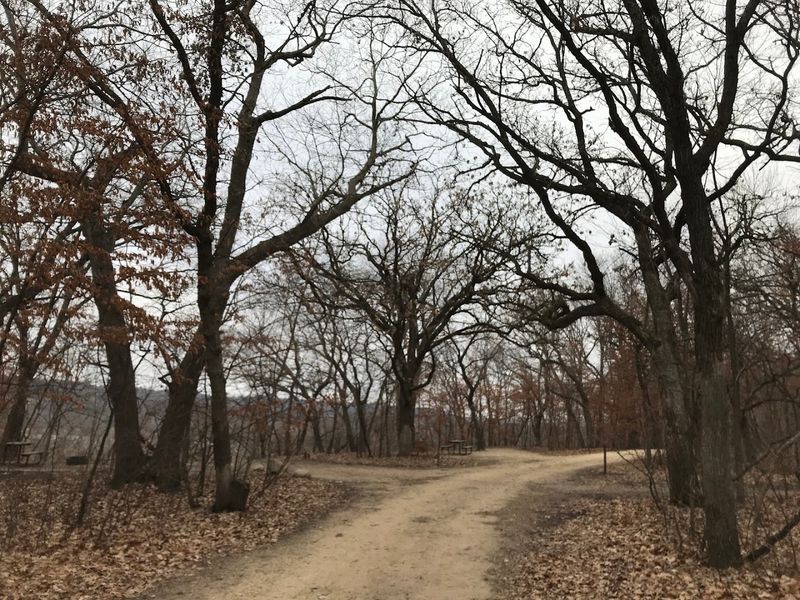
Bison get most of the attention at Minneopa, and honestly, they deserve it. But the park is also home to a surprisingly rich variety of other wildlife that rewards patient and observant visitors.
Birders have a field day here, spotting species that thrive in the unique mix of prairie, woodland, and riparian habitat that Minneopa offers in one convenient location.
White-tailed deer are commonly seen along the forest trails, especially during early morning and evening hours when they feel most comfortable venturing out. Waterfowl gather near the creek and river areas, while songbirds fill the tree canopy with sound throughout spring and summer.
The park’s name itself comes from a Dakota word meaning “water with many falls,” reflecting the deep natural heritage woven into every corner of this landscape.
Bring binoculars and take your time on the trails, because the wildlife here goes far beyond what you can spot from inside a car.
Picnic Areas: The Perfect Outdoor Lunch Spot
Sometimes the best part of a park visit is simply sitting still long enough to enjoy a sandwich with a view. Minneopa State Park has well-placed picnic areas that make it easy to slow down and soak in the surroundings after a hike or a bison drive.
Tables are positioned near the falls area, offering the soothing background sound of rushing water while you eat.
The facilities near the waterfall section are consistently praised by visitors for being clean and well-maintained, including the restrooms. Families with young children appreciate how close the picnic spots are to the parking area, making it easy to unload gear without a long haul.
Benches along the trail provide additional resting spots for those who want to take breaks without committing to a full picnic setup.
Packing your own snacks and drinks is highly recommended, since there are no food vendors inside the park.
Seasonal Beauty: What to Expect Every Time of Year
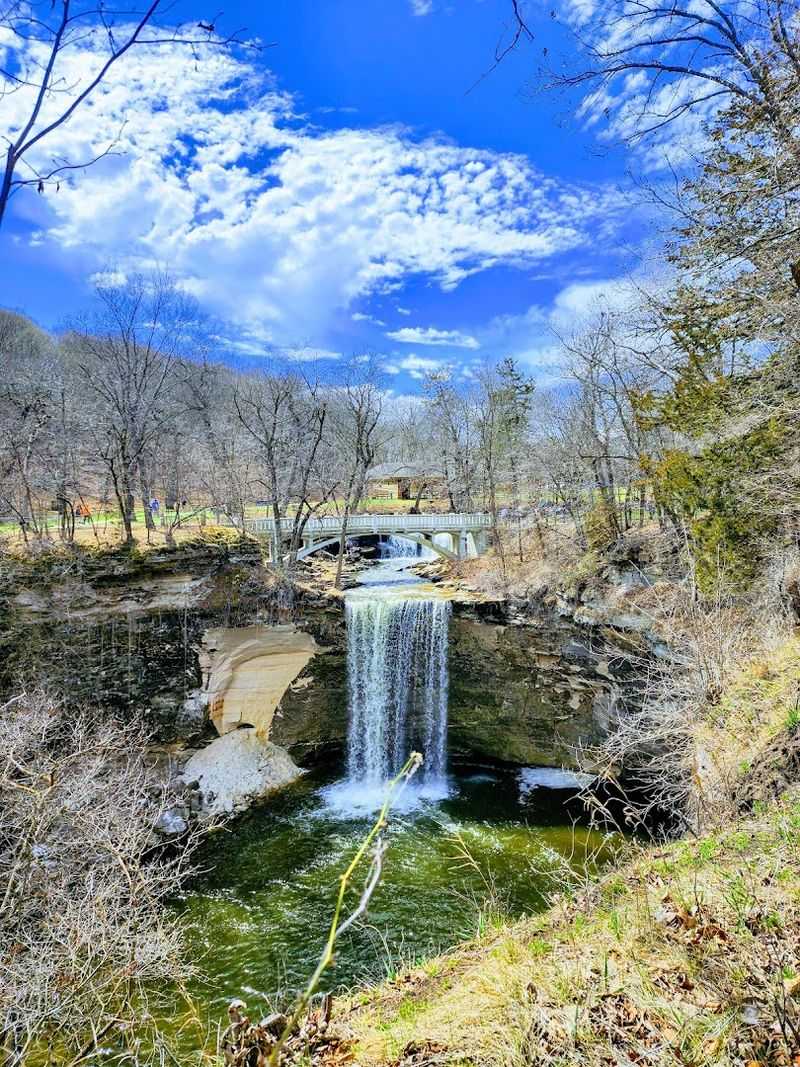
One of the most underrated things about Minneopa State Park is how dramatically different it looks depending on when you visit. Spring brings rushing waterfalls swollen with snowmelt and newborn bison calves taking their first wobbly steps on the prairie.
Summer fills the trails with wildflowers, birdsong, and the warm hum of a park at full life.
Fall might be the most visually stunning season of all, with the surrounding trees exploding into shades of orange, red, and gold that frame the waterfall in a way that looks almost too beautiful to be real. Even winter has its own quiet charm, with icy formations near the falls and nearly empty trails that give solo hikers a rare sense of solitude and peace.
No matter when you plan your trip, Minneopa rewards visitors with something genuinely worth seeing, making repeat visits feel completely fresh and worthwhile every single time.
Accessibility: A Park That Welcomes Everyone
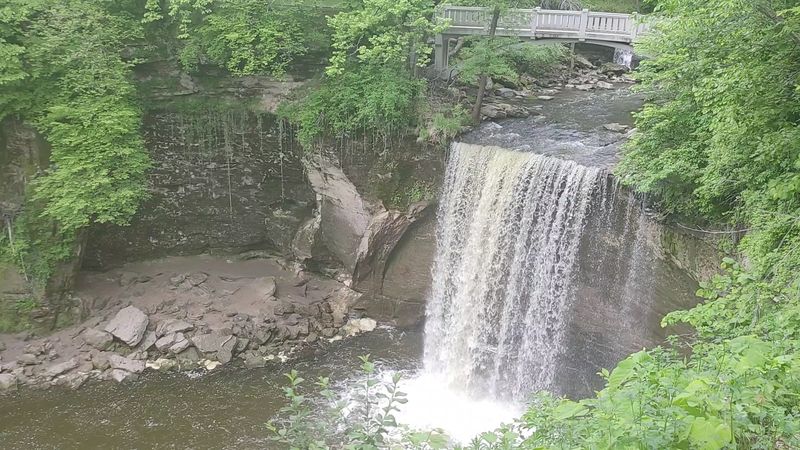
Not every natural wonder requires a grueling hike to reach, and Minneopa State Park proves that point beautifully. The path from the parking lot to the waterfall overlook is paved and relatively flat, making it manageable for visitors using wheelchairs, strollers, or mobility aids.
Multiple reviewers have specifically highlighted the accessibility of the falls area as one of the park’s standout qualities.
The Bison Drive is another feature that works wonderfully for visitors who may not be able to walk long distances, since the entire experience is done from the comfort of your own vehicle. You do not need to be an experienced hiker or outdoors enthusiast to have an incredible time at Minneopa.
The park genuinely welcomes visitors of all ages and ability levels without making anyone feel like they are missing out.
This inclusive design makes Minneopa an easy recommendation for multigenerational family trips where different members have different physical needs.
Location and Getting There: Closer Than You Think
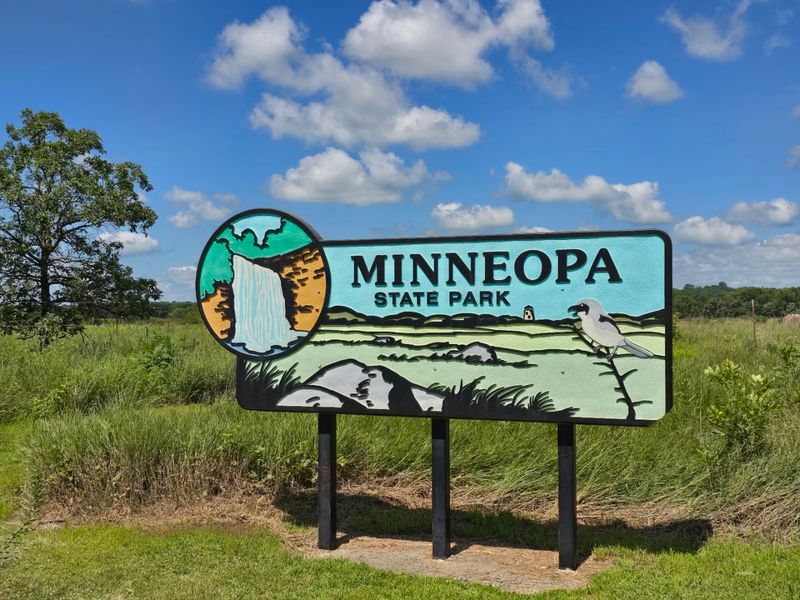
Minneopa State Park sits at 54497 Gadwall Road in Mankato, Minnesota, making it one of the most conveniently located state parks in the southern part of the state. For visitors coming from Minneapolis, the drive runs roughly 90 minutes each way, which is very manageable for a day trip.
The park’s location along the Minnesota River corridor puts it within easy reach of several other nearby attractions in the Mankato and St. Peter areas.
Following the signs carefully once you arrive is important, because the park is actually divided into two separate sections: one for the waterfall area and one for the bison range. Heading to the park office first is strongly recommended so you can pick up a map and get oriented before exploring.
The park phone number is 507-386-3910 if you need directions or have questions before your visit.
GPS coordinates 44.1695562, -94.1122274 will get you right to the entrance without any confusion.
Tips for First-Time Visitors: Make the Most of Your Trip
First visits to Minneopa go smoothest with a little planning ahead of time. Arriving early in the morning gives you the best chance of spotting bison near the road and enjoying the waterfall before crowds pick up later in the day.
Weekday visits tend to be quieter overall, which means more peaceful trail time and better photo opportunities without other visitors in the frame.
Always stay inside your vehicle during the Bison Drive, no matter how tempting it is to step out for a closer look. Bison are wild animals and can move with surprising speed despite their size.
The park gates for the bison area close around 8:30 p.m., so plan your timing carefully if you arrive late in the afternoon.
Bringing water, sunscreen, bug spray, and a good camera will cover almost everything you need for a fantastic first visit to this remarkable hidden gem of a park.
Enjoyed this story?
Add Fast Food Club as a preferred source to see more of our reporting on Google.