


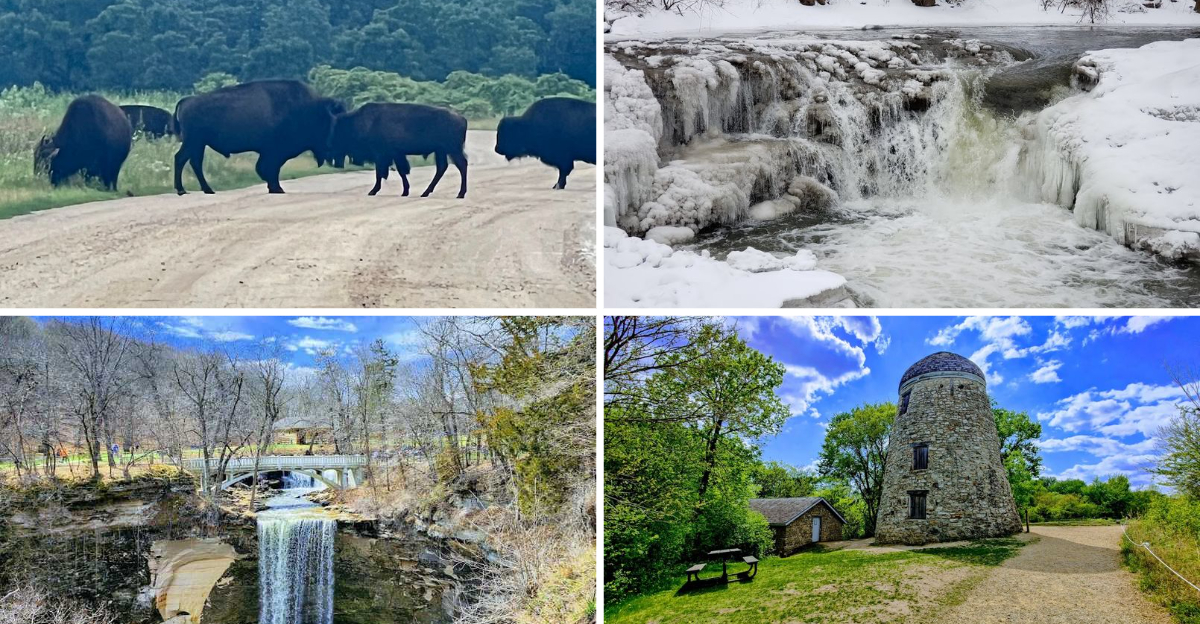
Tucked away near Mankato, Minnesota, Minneopa State Park is one of those rare places that feels like a well-kept secret. Most people drive right past it without realizing they could be watching a real herd of wild bison roam across an open prairie.
From a stunning double waterfall to peaceful hiking trails, this park packs a surprising amount of adventure into a small footprint. Whether you are a nature lover, a family looking for a fun day trip, or just someone who wants to see bison up close, Minneopa State Park deserves a spot on your must-visit list.
The Bison Drive: A One-of-a-Kind Auto Tour
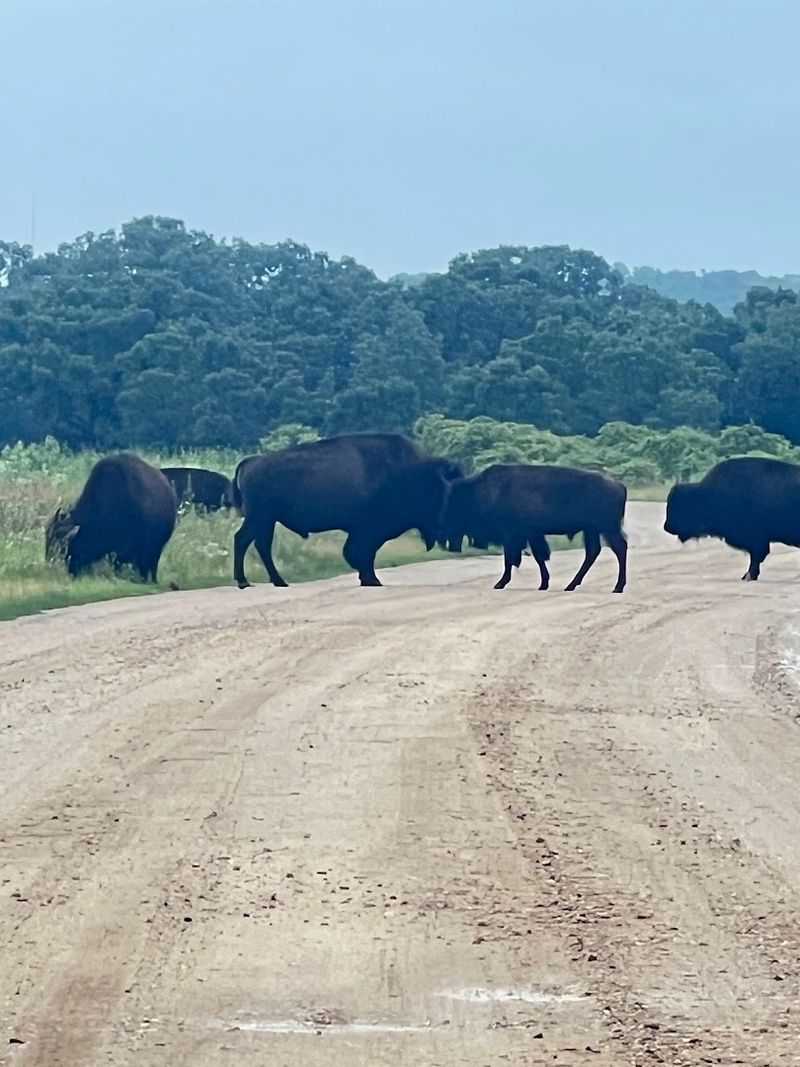
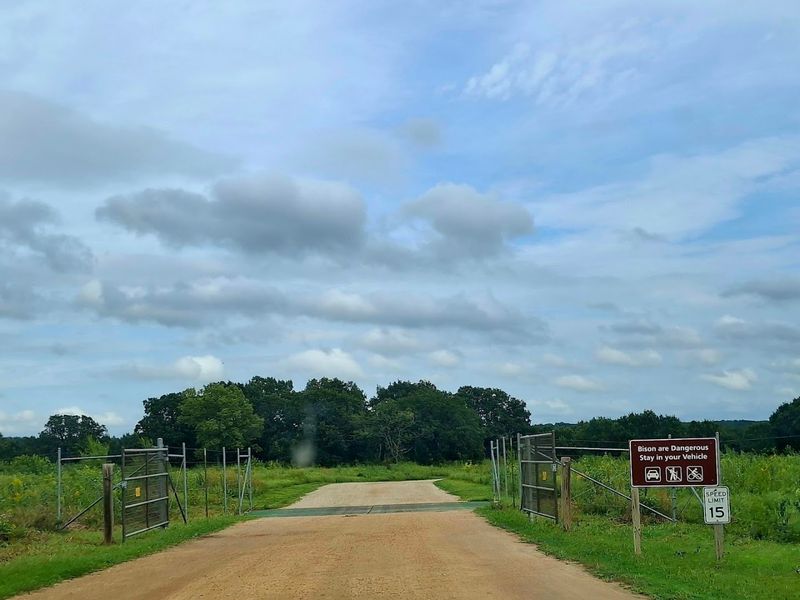
Pulling slowly through the bison enclosure at Minneopa State Park feels a little like stepping into another century. The Bison Drive is a self-guided auto tour that takes you right through the heart of the prairie where the herd roams freely.
You stay in your vehicle for safety, but that does not stop the experience from feeling incredibly close and personal.
Some visitors have reported bison walking directly in front of their parked cars, which is both thrilling and humbling. The herd currently numbers around 32 animals, including calves born in spring.
Gates close around 8:30 p.m., so plan to arrive with enough daylight to enjoy the full loop.
Bring a camera with a good zoom lens and keep your windows up. This is genuinely one of the most unique wildlife experiences available anywhere in Minnesota, and it is completely free with park admission.
Minneopa Falls: A Double Waterfall Worth Every Step
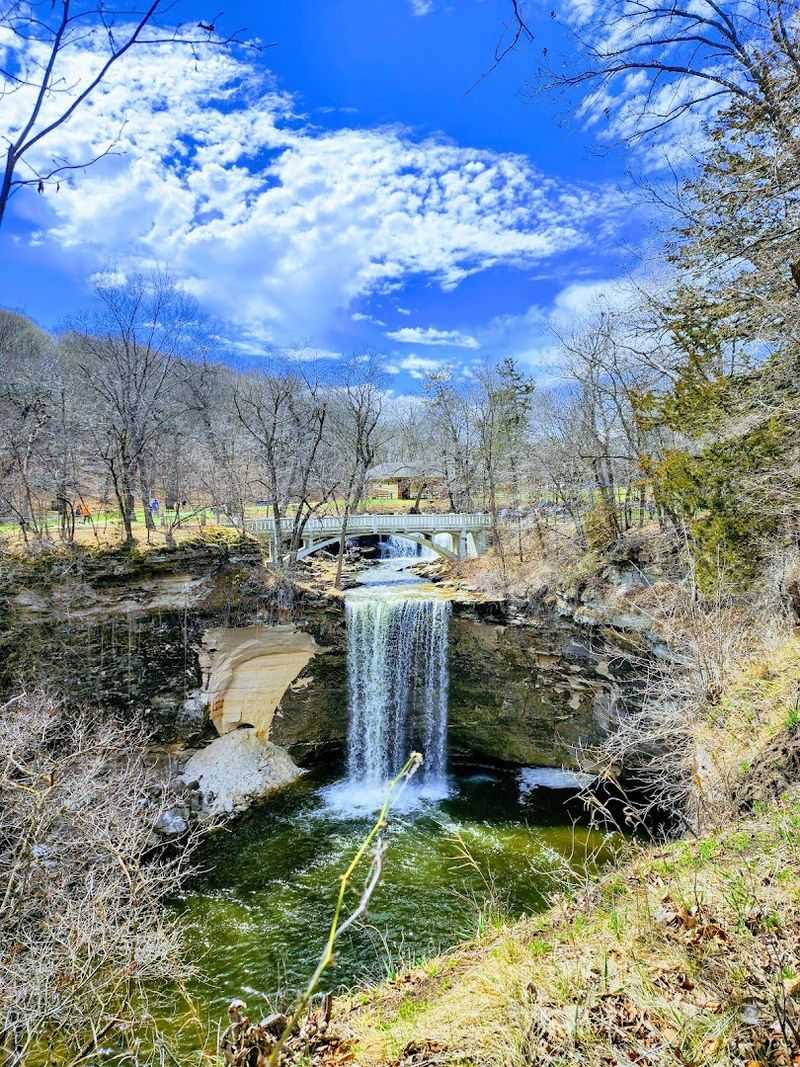
Not many state parks in Minnesota can boast a double waterfall, but Minneopa has exactly that. Minneopa Falls is a gorgeous two-tiered cascade that tumbles over ancient rock formations, and it is honestly one of the most photogenic spots in the entire state.
The name “Minneopa” is a Dakota word meaning “water falling twice,” which is a perfect description.
The hike to reach the falls is short and manageable for most ages, making it a great choice for families with younger kids. Viewing platforms above the falls offer sweeping, dramatic angles that make for stunning photos at any time of year.
Spring visits are especially rewarding because snowmelt sends a powerful rush of water over the falls. Even during drier months, the rocky gorge and surrounding forest create a peaceful, almost magical atmosphere that keeps visitors coming back season after season.
Bison Ambassador Docents: Meet the Experts on Sundays
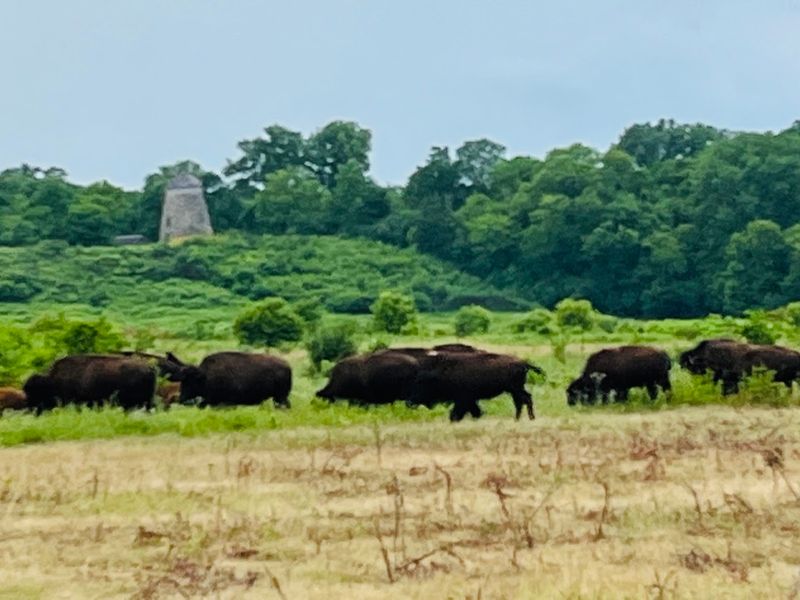
Every Sunday near the Seppmann Mill overlook, you can meet the Bison Ambassador Docents, a group of passionate volunteers who know everything about the park’s bison herd. These dedicated folks bring artifacts, answer questions, and share stories that turn a simple wildlife sighting into a genuinely educational experience.
Visitors consistently rave about these volunteers, describing them as friendly, knowledgeable, and enthusiastic. One reviewer specifically called out Teri and her daughter as standout ambassadors who made their visit unforgettable.
Chatting with them for even ten minutes gives you a much deeper appreciation for the conservation work happening at the park.
If you are planning a visit and want to learn more than just what you can see from a car window, scheduling your trip for a Sunday is a smart move. The docents are there to make your experience richer and more meaningful.
Seppmann Mill: A Piece of Prairie History
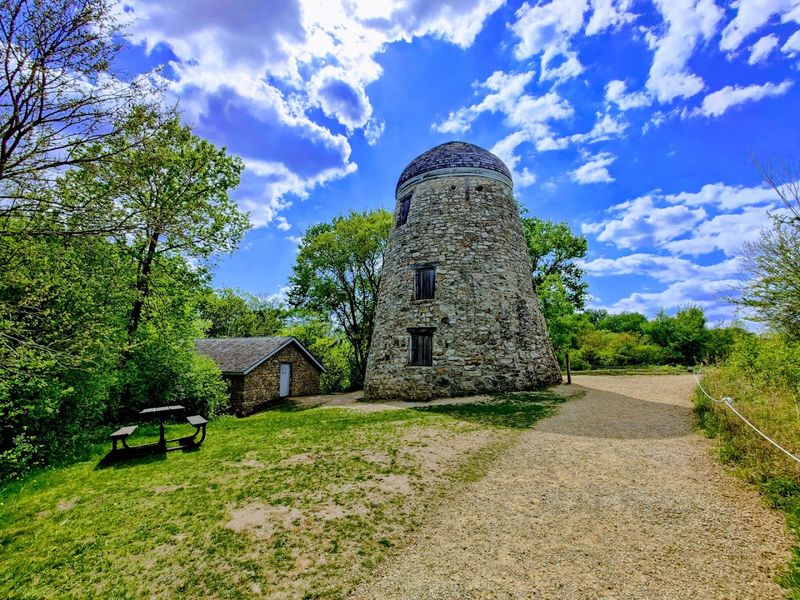
Standing at the edge of the prairie, the Seppmann Mill looks like something out of a history book. Built in the 1860s by a German immigrant, this stone windmill is one of the oldest surviving structures of its kind in Minnesota.
It was used to grind grain for early settlers in the region, and its thick limestone walls have weathered more than 150 years of Minnesota winters.
Today, the mill serves as a scenic overlook point where visitors can scan the prairie for bison in the distance. The combination of crumbling pioneer architecture and grazing bison creates a scene that feels almost cinematic.
Interpretive signs nearby explain the mill’s history and its connection to the broader story of Minnesota settlement.
Kids and adults alike tend to find the mill fascinating, especially when a volunteer is on hand to share extra details about how it once operated.
Hiking Trails for Every Fitness Level
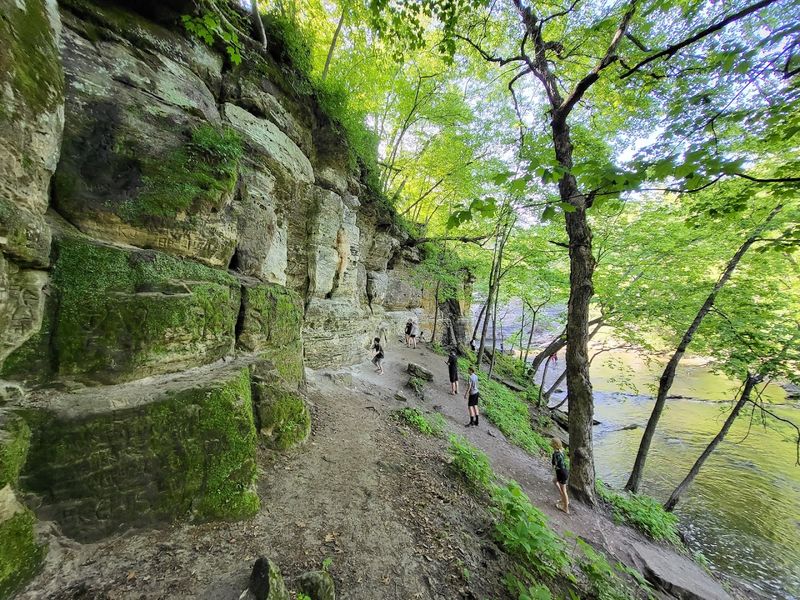
Minneopa State Park may be on the smaller side, but it offers a satisfying variety of trails that work for almost everyone. The paths near the waterfall are short and relatively easy, while the trail looping around the bison enclosure stretches to about five miles of mostly flat terrain.
That longer loop is a great option for people who want a solid walk without a punishing elevation gain.
Families with young children have found the trails manageable, even on warmer days. The flat, open sections near the prairie provide plenty of natural rest spots along the way, and benches are scattered throughout for anyone who needs a break.
Late winter and early spring visits tend to mean fewer crowds on the trails, which makes for a more peaceful experience. No matter the season, wearing sturdy shoes and carrying water will help you get the most out of your time on the trails.
Camping Under the Stars at Minneopa
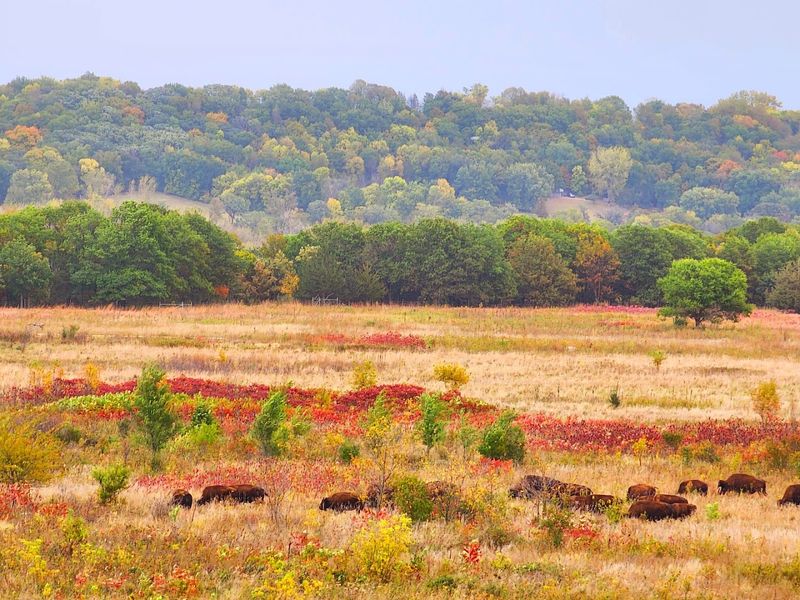
Spending the night at Minneopa State Park is a completely different experience from a quick day visit. The campground is widely praised for offering each site a generous amount of privacy, thanks to natural buffers of trees and brush between spots.
Even-numbered B sites are especially popular with campers who value a little extra seclusion.
Park rangers are known for being friendly and approachable, and chatting with them around the campground often leads to helpful tips about the best times to spot bison. Firewood is available for purchase at the park, though it is worth checking in advance since supplies can run low on busy weekends.
A few things to know before you go: the ranger office closes at 4 p.m. on weekdays and 6 p.m. on weekends, and the park is split into two sections, so follow the signs carefully when you first arrive.
Spring Bison Calves: The Cutest Wildlife Moment of the Year
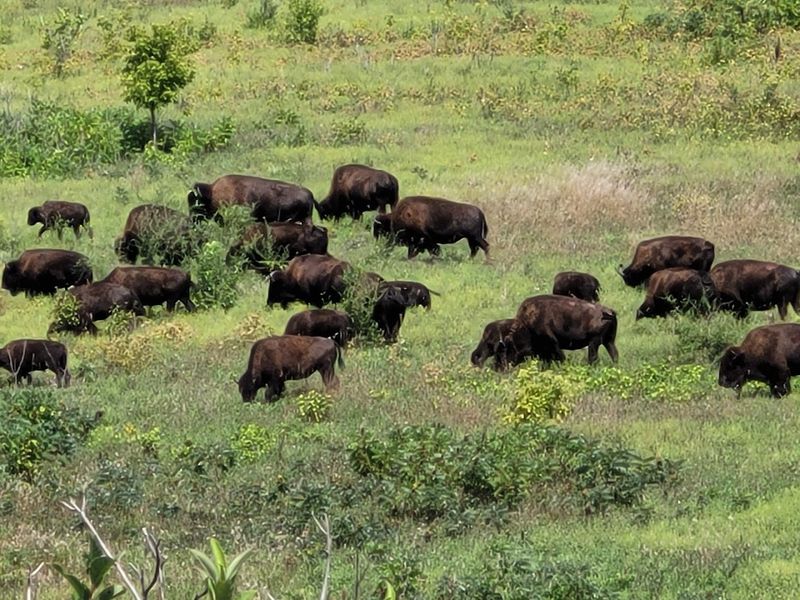
If you want to witness one of nature’s most heartwarming sights, plan a visit to Minneopa State Park in May. That is when the bison calves are born, and seeing these tiny, reddish-brown babies wobbling around on the prairie next to their massive mothers is genuinely unforgettable.
Visitors who have caught this seasonal event consistently describe it as the highlight of their entire trip.
The calves, often called “red dogs” because of their rusty coloring, blend surprisingly well with the dry prairie grass. Spotting them from your car requires a sharp eye and a bit of patience, but the reward is absolutely worth it.
Bison are protective animals, so staying inside your vehicle during the drive is not just a rule, it is a real safety measure. Respect the animals’ space, and they will often come surprisingly close all on their own.
Picnic Areas: Relax and Soak in the Scenery
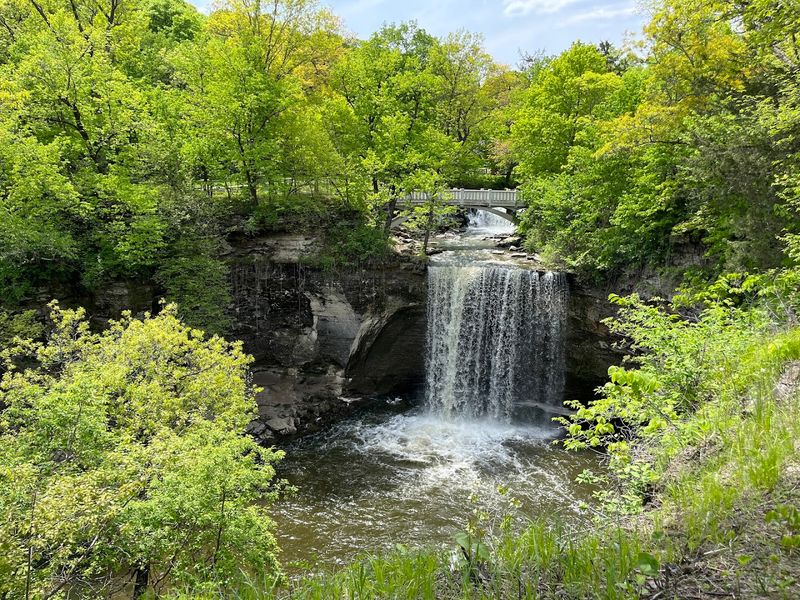
After a morning of bison spotting and waterfall gazing, Minneopa State Park gives you a perfect place to slow down and enjoy a meal outdoors. The picnic areas near the falls are shaded, well-maintained, and equipped with tables and benches that make it easy to settle in and stay awhile.
Restrooms in the area are kept clean, which visitors consistently appreciate.
Packing a lunch and eating near the waterfall is one of those simple pleasures that turns a good day trip into a great one. The sound of rushing water in the background adds a natural soundtrack that no restaurant can replicate.
Families with young children especially love having a safe, open space to spread out after a hike.
Mosquitoes can be present, particularly in summer, so bringing bug spray is a smart move. A little preparation goes a long way toward making your picnic experience genuinely relaxing and enjoyable.
Park Entry Fees and the Annual Pass: Is It Worth It?
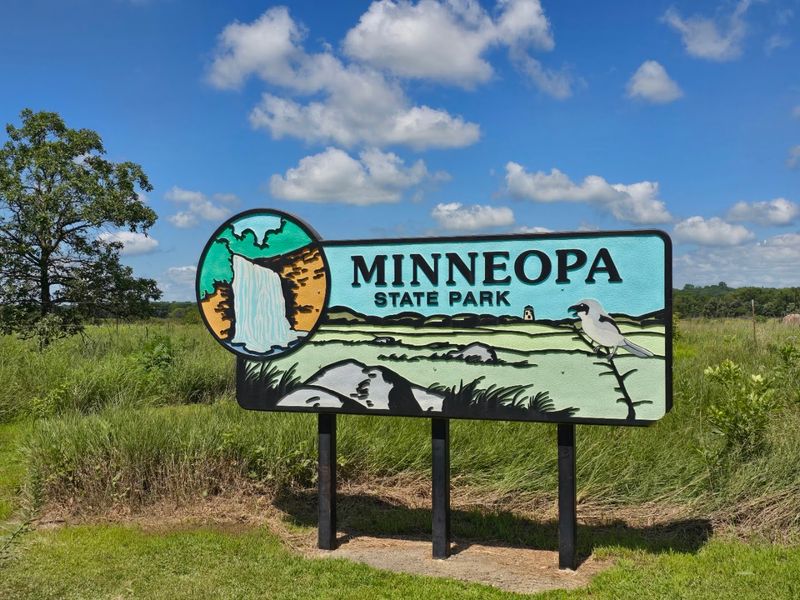
Getting into Minneopa State Park costs $7 per vehicle for a daily pass, which is honestly a bargain considering everything the park offers. However, if you plan on visiting more than a handful of times throughout the year, the annual Minnesota State Parks permit at $35 is an even smarter investment.
It covers all state parks across Minnesota, so the value adds up quickly.
For anyone living in or around Mankato, the annual pass practically pays for itself after just five visits. Frequent visitors, campers, and families who like to explore different parks throughout the seasons find it especially worthwhile.
Purchasing the pass is straightforward and can be done online through the Minnesota DNR website or at the park office. If you are new to Minnesota state parks and unsure whether the annual pass makes sense for you, Minneopa is a great place to start your exploration and find out.
Wildlife Beyond Bison: Birds, Deer, and More
Bison get most of the attention at Minneopa State Park, and rightfully so, but the park is home to a surprisingly rich variety of other wildlife as well. Birdwatchers will find plenty to get excited about, from great blue herons wading along the river to songbirds filling the treetops with noise on spring mornings.
The mix of prairie, forest, and river habitats creates ideal conditions for a wide range of species.
White-tailed deer are commonly spotted along the wooded trails, especially during early morning and evening hours. Smaller critters like squirrels, wild turkeys, and various reptiles also make appearances throughout the warmer months.
Bringing a pair of binoculars is a great idea if wildlife watching is your thing. The prairie sections near the bison enclosure are particularly productive for spotting birds of prey, including red-tailed hawks that circle overhead looking for a meal in the open grassland below.
Fall Foliage: When the Park Turns Into a Painting
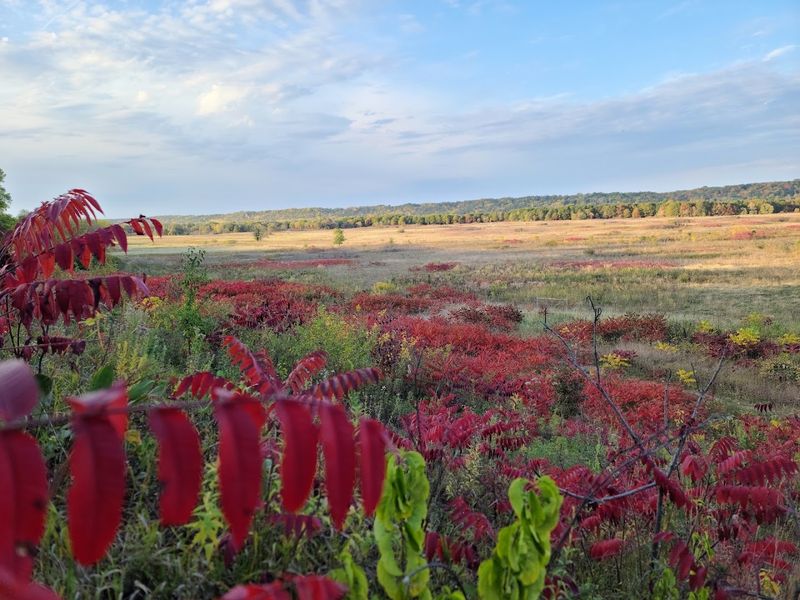
Autumn at Minneopa State Park is something special. As the leaves begin to shift from green to gold, orange, and crimson, the park transforms into a landscape that looks almost too beautiful to be real.
The contrast between the colorful canopy and the wide-open brown prairie creates a visual experience that photographers absolutely love.
Visiting in October gives you the best chance of catching peak color, though the exact timing shifts slightly from year to year depending on temperatures. Even when the waterfall runs low during dry autumns, the surrounding foliage more than compensates for the reduced flow.
Crowds are generally lighter in fall compared to summer, which means more peaceful trails and better chances of spotting bison without a line of cars ahead of you. Layering your clothing is smart since morning temperatures near the river can feel noticeably cooler than the afternoon highs on the prairie.
Winter Visits: A Serene and Crowd-Free Experience
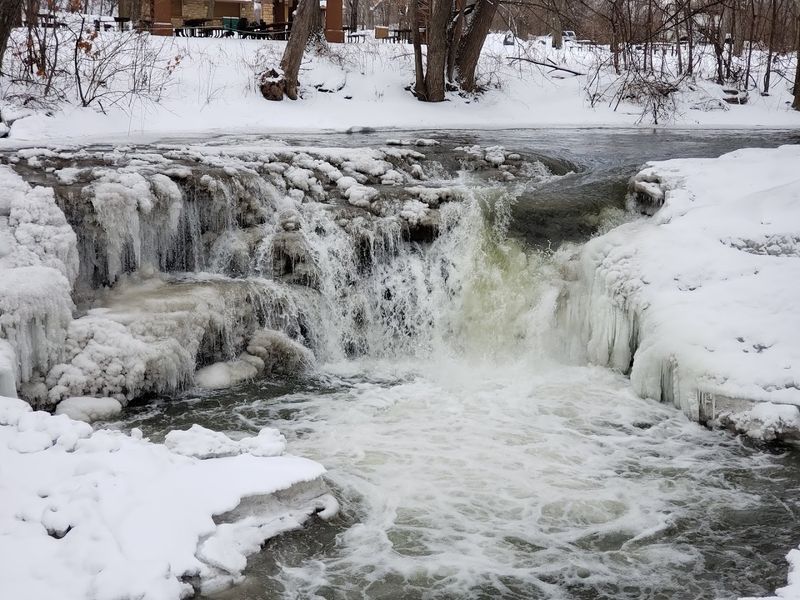
Most people assume state parks are best visited in summer, but Minneopa in winter has its own quiet magic. Visitor numbers drop dramatically after the first frost, which means you can often walk the trails and drive through the bison enclosure with almost no one else around.
The stillness of a snow-covered prairie dotted with massive bison is genuinely breathtaking.
The waterfall in late winter is a stunning sight as well. Partial ice formations cling to the rock faces while a thin ribbon of water continues to flow beneath, creating an icy sculpture that changes week by week.
One reviewer described visiting in late winter and finding the falls still thawing, calling it beautiful in a completely different way from the summer experience.
Dress in warm, waterproof layers and wear boots with good grip since icy patches on the trails are common. The solitude alone makes a winter trip worth the extra preparation.
Getting There and Planning Your Visit
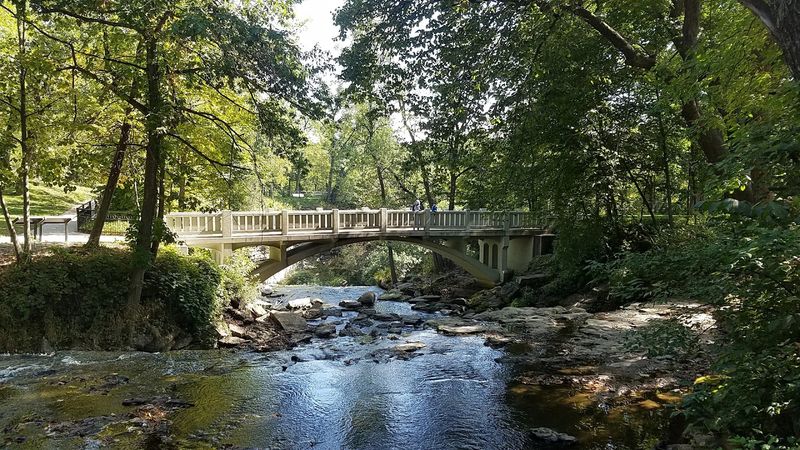
Minneopa State Park sits at 54497 Gadwall Road in Mankato, Minnesota, making it an easy destination for anyone in the Twin Cities area looking for a half-day or full-day escape. The drive from Minneapolis takes roughly 90 minutes, which is manageable even for families with younger kids.
Google Maps handles the directions well, but following the park’s own signage once you arrive is important since the park is divided into two separate sections.
The park is open year-round, and the DNR website at dnr.state.mn.us is the best place to check trail conditions, gate hours, and any seasonal closures before you head out. The bison drive gates close around 8:30 p.m., so arriving by mid-afternoon gives you comfortable time to explore both the falls and the prairie.
Call ahead at 507-386-3910 if you have specific questions about accessibility or current conditions. A little planning makes the whole visit run much more smoothly.
Enjoyed this story?
Add Fast Food Club as a preferred source to see more of our reporting on Google.