


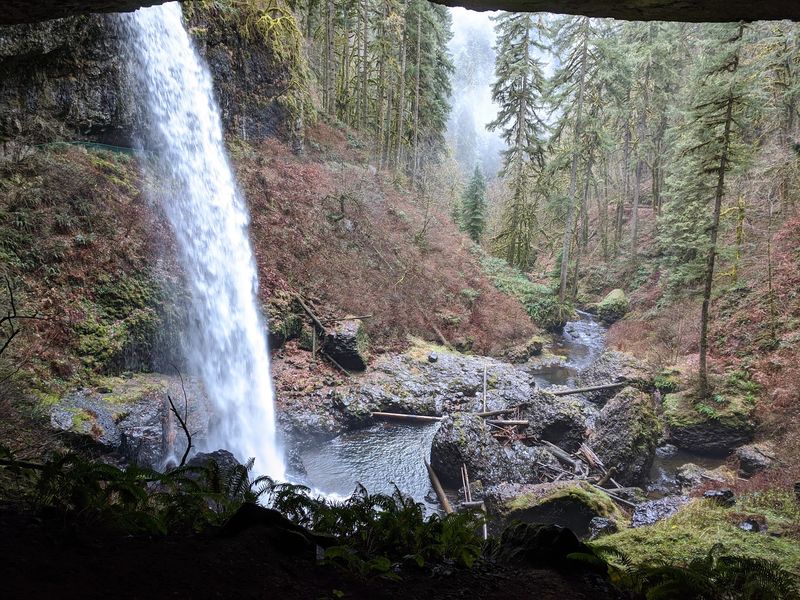
Ten waterfalls sit along a single loop trail, and at several of them you can actually stroll along the path that ducks behind the rushing curtain of water. A canyon carpeted with ferns and towering Douglas firs holds trails that stay peaceful even on busy weekends.
Full spring flow, wide shaded paths, and campsites tucked among giant trees make this one of the most rewarding outdoor stops in the state. There are cabins, a small store, clean restrooms, and hikes short enough for beginners or long enough for a full day of adventure.
Keep reading to find out where this remarkable park sits, what makes each waterfall worth the walk, and the practical tips that turn a good visit into a great one.
Where Oregon Hides Its Crown Jewel
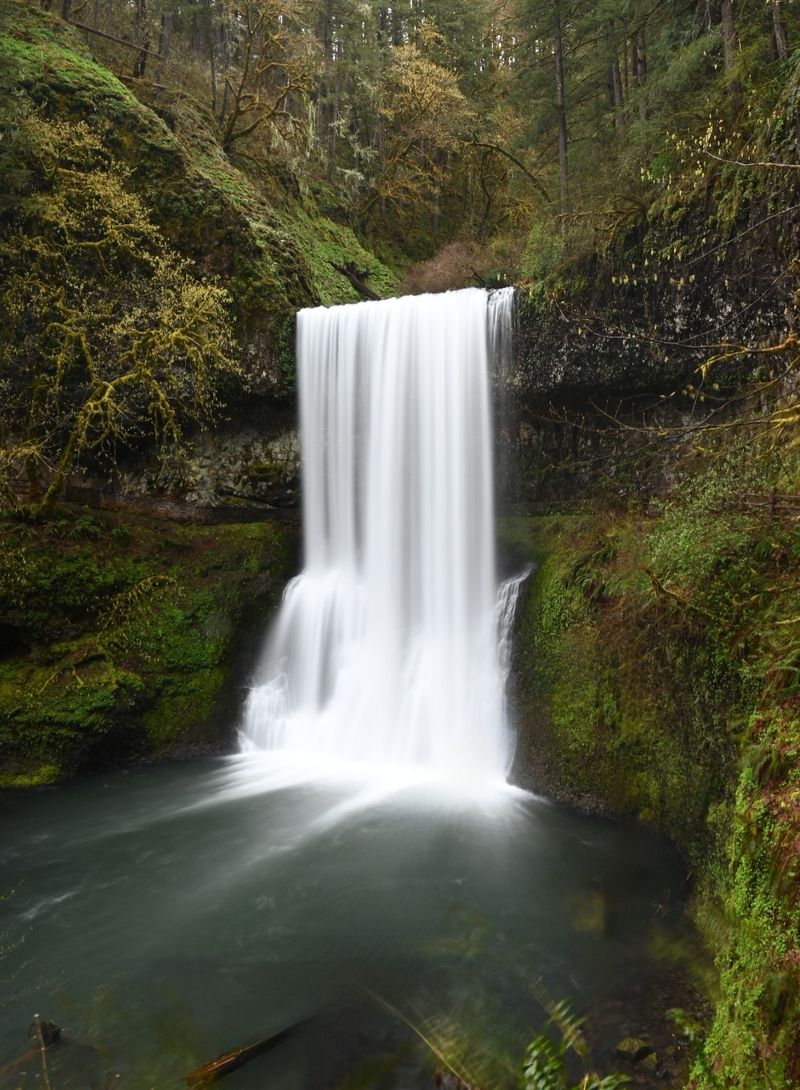
Tucked into the forested hills of Oregon, this park carries the address simply listed as Oregon, with its main entrance near the town of Silverton. Park signage proudly calls it the crown jewel of the Oregon State Park system, and that claim holds up once you reach the canyon rim.
The park is best known as a State Park built around camping, hiking trails, and a remarkable set of ten waterfalls. Its centerpiece is the 7.2-mile loop trail that links all of them together.
With a rating of 4.9 stars from more than 10,000 people, it has earned a spot near the top of the list for outdoor destinations in the region. That kind of consistency is rare for any public space.
Getting oriented is easy once you arrive, since the South Falls area serves as the main hub with parking, restrooms, and access to the trail. Many people begin their day right here before heading deeper into the canyon.
What sets it apart is the combination of accessibility and grandeur. You do not need to be an expert to reach genuinely impressive scenery, and that balance keeps drawing people back season after season.
The Trail Of Ten Falls
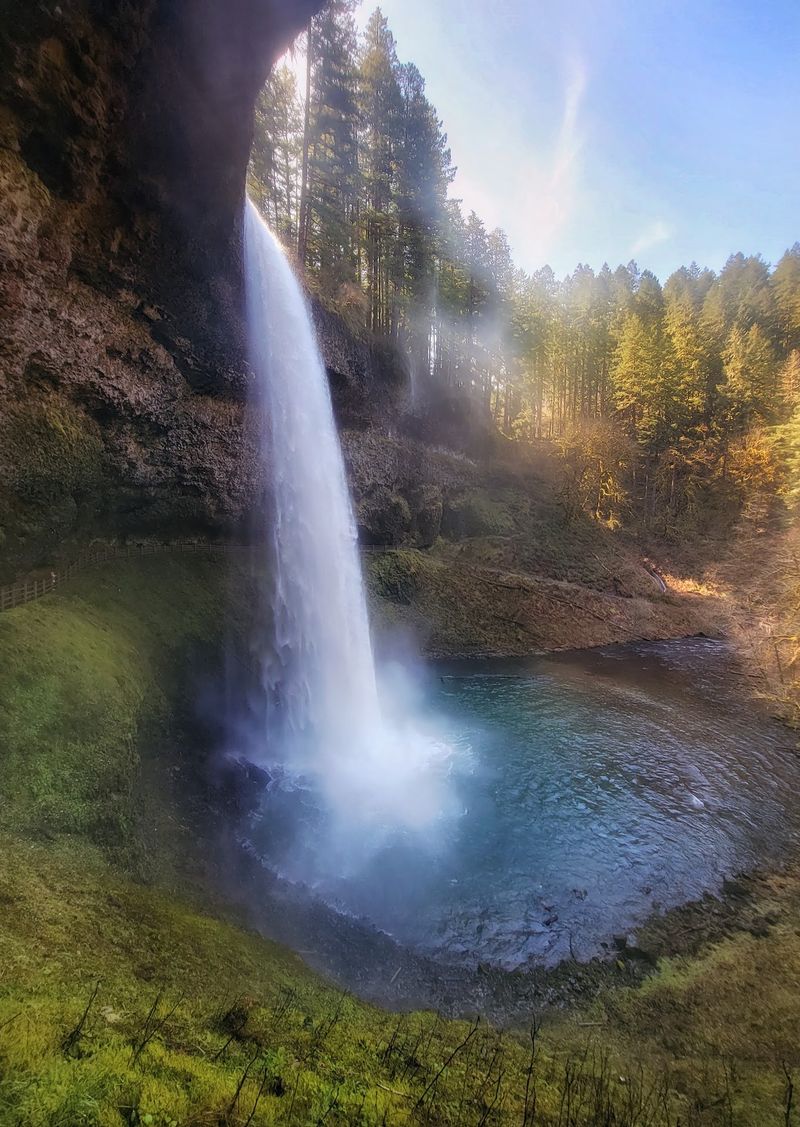
Few hikes pack as much payoff into a single loop as the famous Trail of Ten Falls. Stretching roughly 7 to 8 miles depending on how you count the spurs, it strings together waterfall after waterfall along the canyon floor and rim.
Part of the magic is the anticipation. Knowing another cascade waits within a mile keeps the miles ticking by, and the steady rhythm of arriving at each new drop makes the distance feel shorter than it really is.
People routinely finish the full loop in around four hours, including a lunch break on the trail. That pace leaves plenty of time to pause, take photos, and simply enjoy standing near the water.
The route blends the Canyon, Winter, and Rim trails, offering a mix of shaded forest and open viewpoints. Each segment has its own character, so the scenery rarely feels repetitive.
Regulars often name it among the best hikes in Oregon, and the combination of variety and reward explains why. Ten waterfalls on one loop is a hard offer to beat.
Walking Behind The Waterfalls
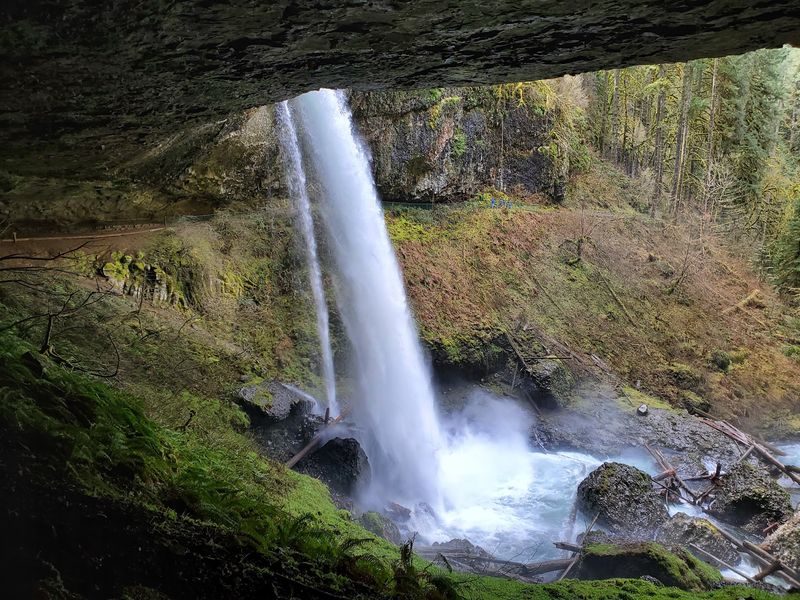
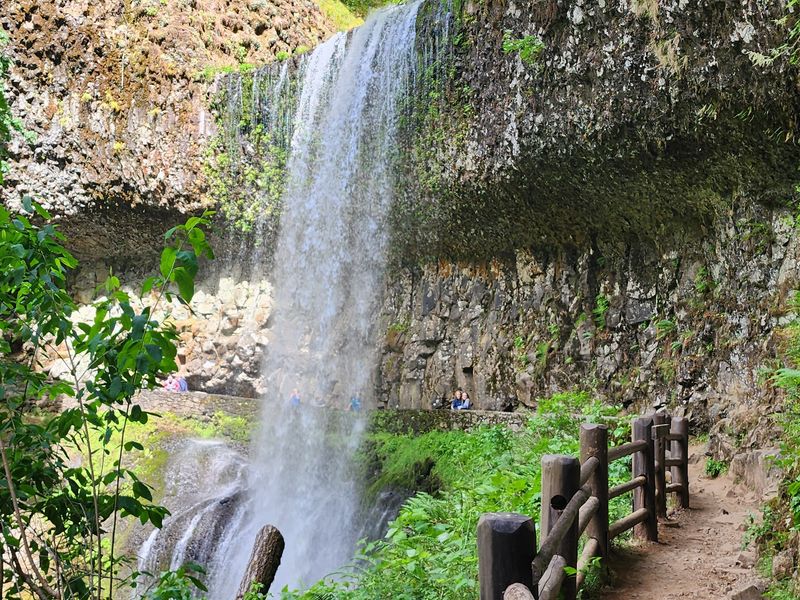
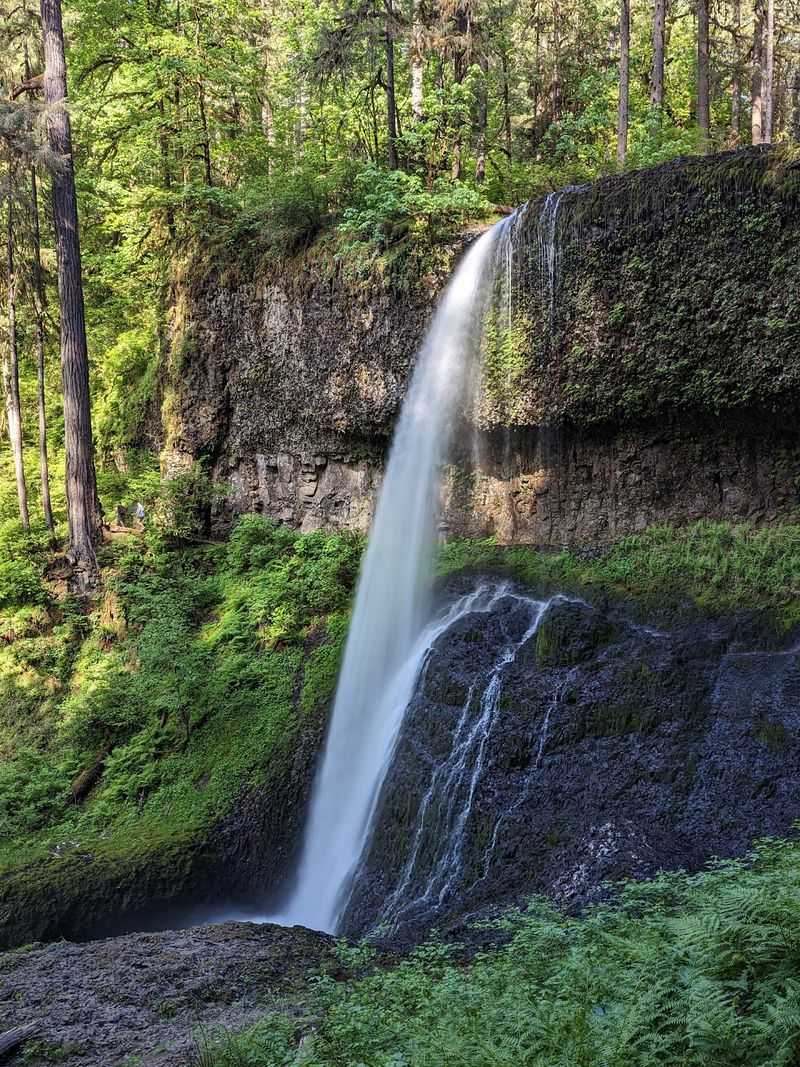
Very few trails let you slip behind a waterfall, but here you get to do it more than once. Several of the falls have paths that curve behind the falling water, turning a simple hike into something genuinely unusual.
Guests consistently point to this as the highlight of the whole park. The experience of standing on solid ground while water pours in front of you is the kind of thing people remember long after the trip ends.
The short loop that takes you behind the falls near South Falls runs about 1.2 miles with a drop of roughly 300 feet. That makes it approachable even for people who would not call themselves hikers.
During periods of strong flow, expect a bit of spray as you pass through, so a light raincoat is a smart addition. It is a small trade for such a memorable stretch of trail.
Whether you tackle the full loop or just the behind-the-falls section, this feature alone is worth the drive. It is the signature moment that defines a visit here.
South Falls, The Main Event
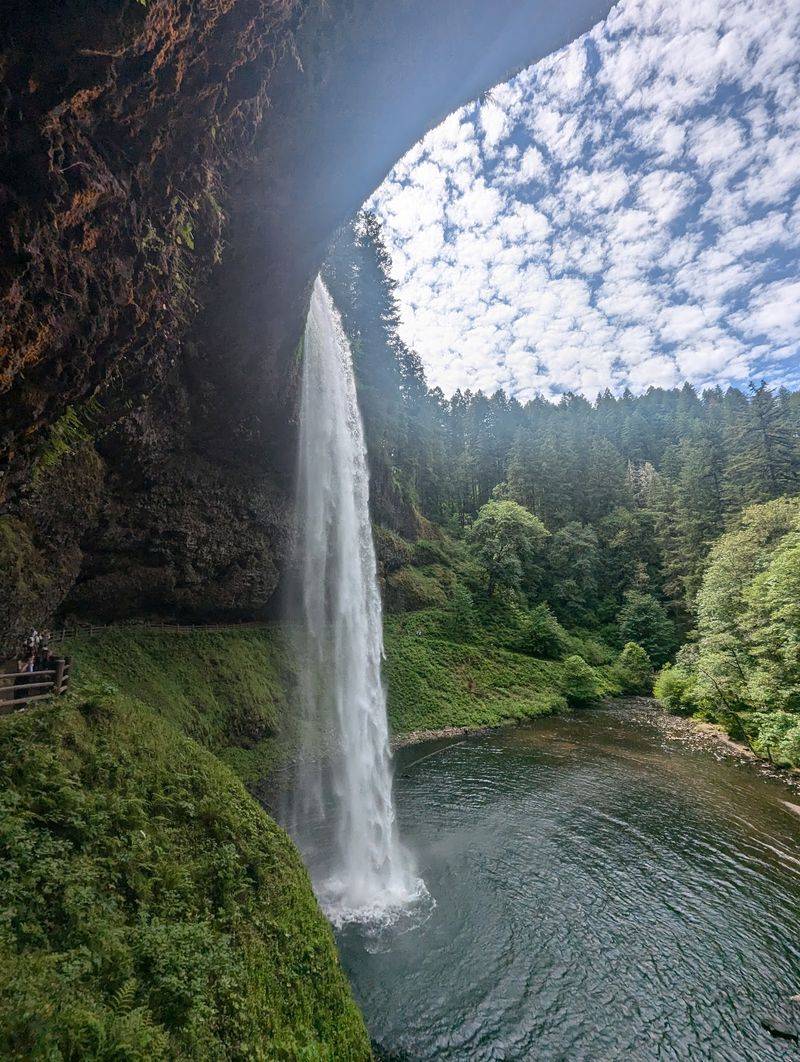
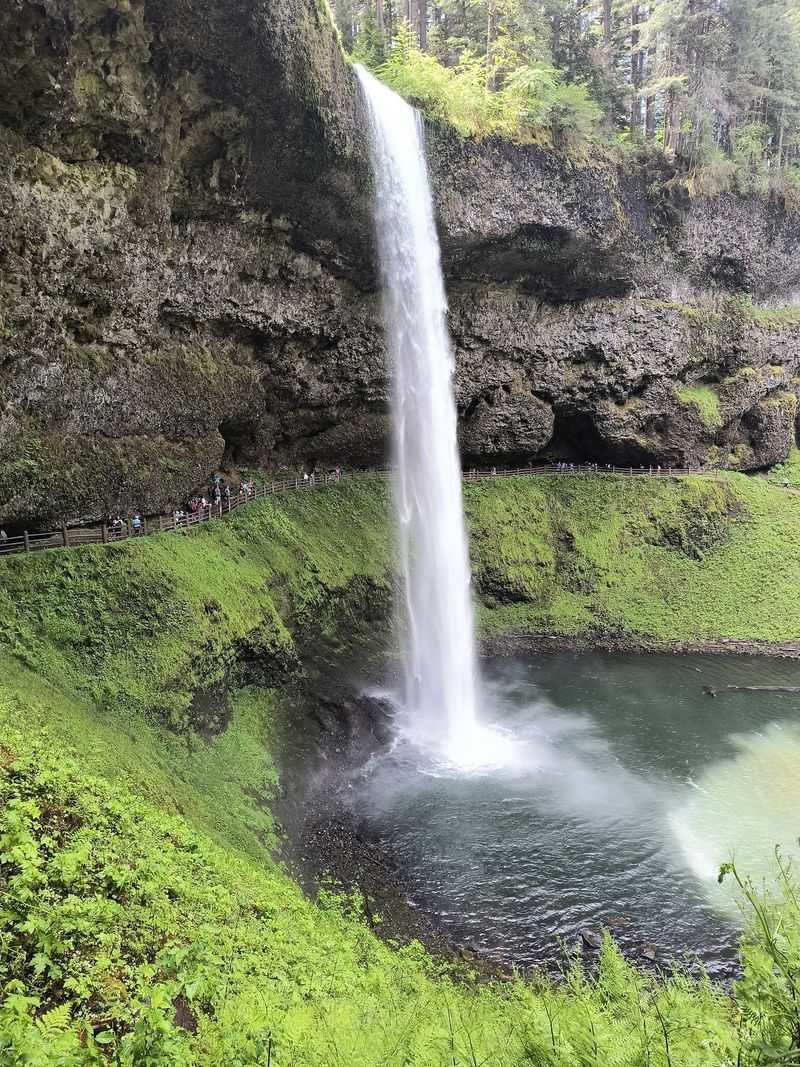
If there is one waterfall that defines the park, it is South Falls. Sitting close to the main parking area, it greets most guests within minutes of leaving their cars.
Its accessibility is part of the appeal. You can reach a viewpoint quickly, then decide whether to continue down into the canyon or loop behind the falls for a closer look.
People frequently recommend starting the hike from South Falls, since it eases you into the canyon and builds momentum for the rest of the loop. The nearby Middle South Falls adds a second impressive drop just a short distance away.
During spring, when the water runs full, South Falls puts on its strongest show. Timing your visit for May can mean thundering flow rather than a thin trickle.
For families and first-timers, this is the natural anchor point. It offers the biggest reward for the least effort while still setting the tone for a bigger adventure.
A Canyon Draped In Ferns And Firs
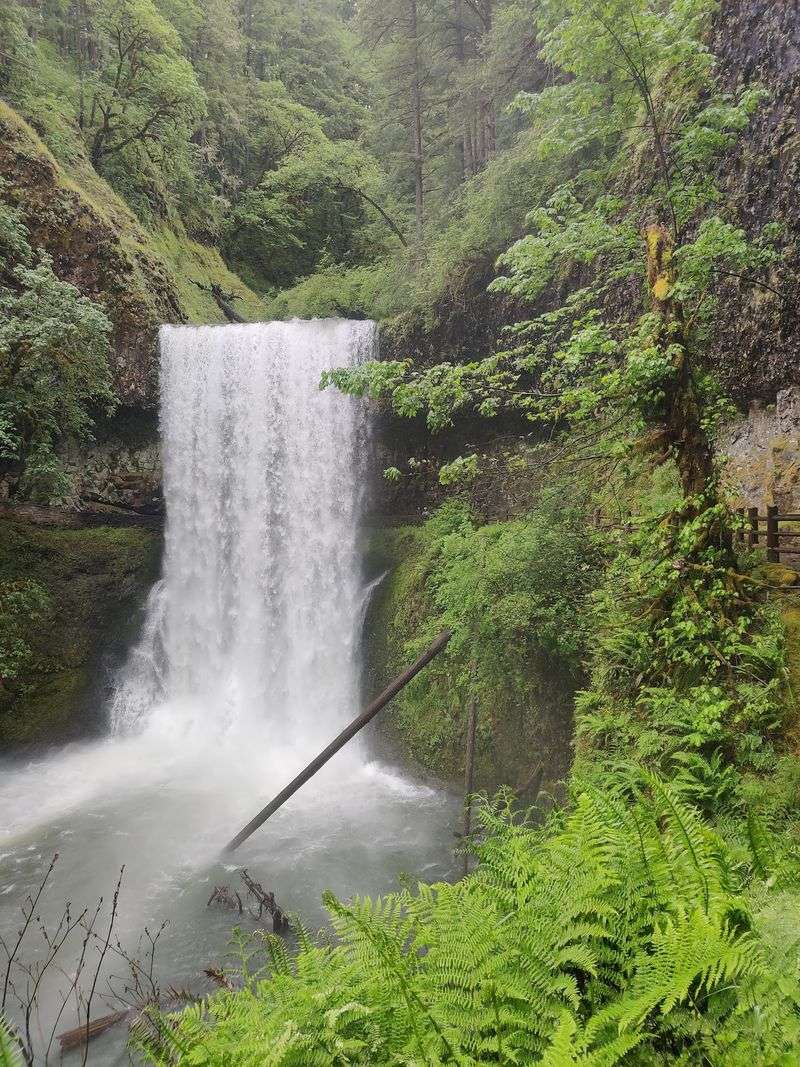
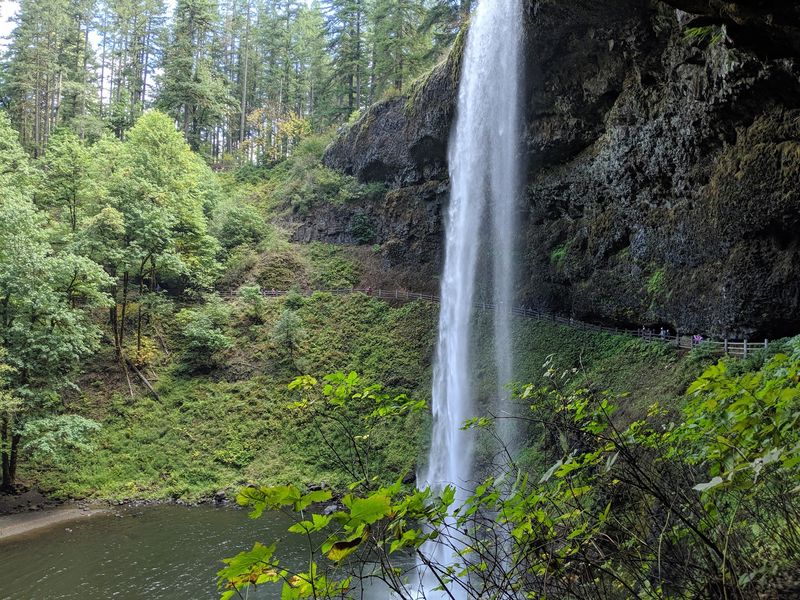
Beyond the waterfalls themselves, the forest setting does a lot of the heavy lifting. Lush green trees and thick ferns line the trail, wrapping the canyon in deep shades of green.
The old-growth character shows in the towering Douglas firs that shade the paths and campsites. These giants give the park a sense of age and calm that smaller forests cannot match.
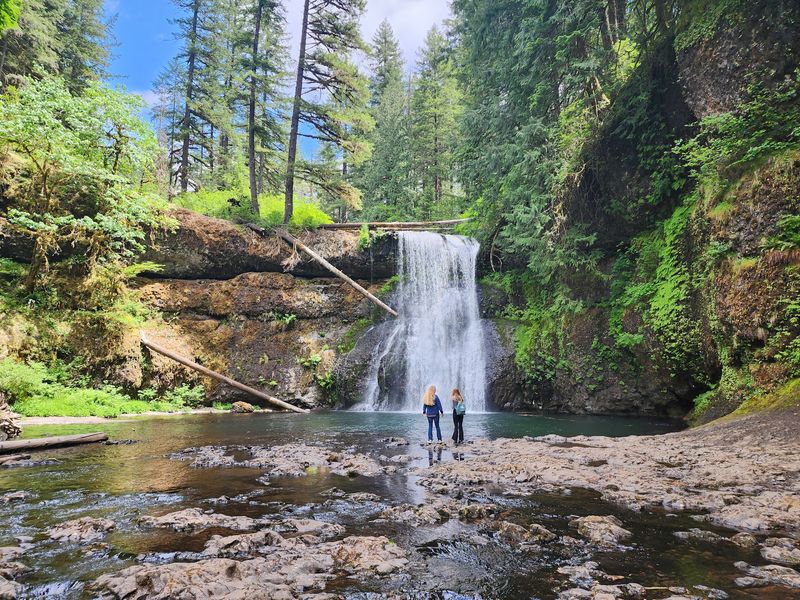
Peaceful streams thread through the canyon floor, connecting one waterfall to the next. The water is never far away, and the sound of it follows you along much of the route.
This scenery holds up across seasons. Spring brings full flow, while other times of year offer their own quieter charm, and the greenery stays generous throughout.
Photographers find no shortage of subjects here, from sweeping canyon views to intimate fern-covered corners. Every turn seems to offer another frame worth keeping.
Camping Among The Giants
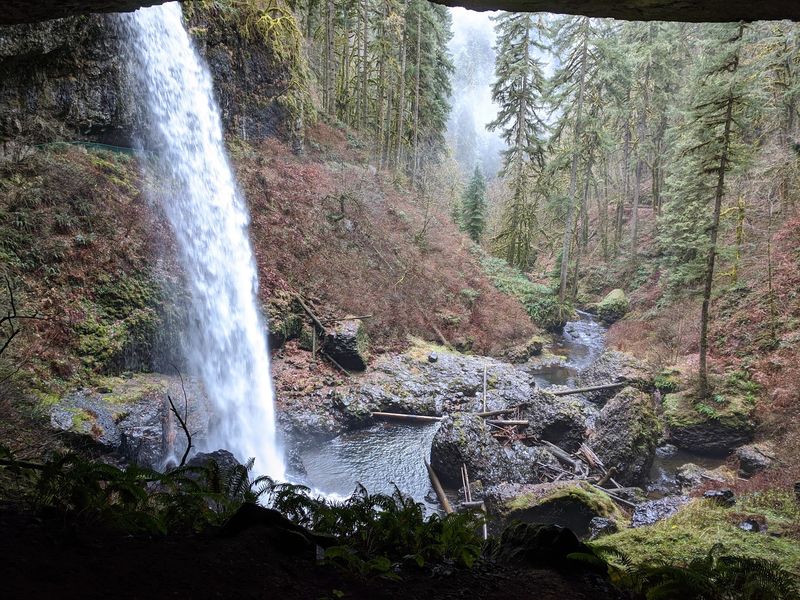
Staying overnight turns a day hike into a full weekend escape. The campground here earns steady praise for being clean, quiet, and friendly, which is exactly what most campers hope to find.
One practical perk stands out: from the campsite, you can start the hike straight to South Falls without needing to drive first. That kind of trailhead access saves time and hassle in the morning.
Restrooms and shower rooms stay clean and well maintained, adding a bit of comfort to the outdoor experience. Clean facilities can make or break a camping trip, and this park delivers.
The quiet setting under the trees gives the campground a restful feel after a long day on the trail. It is the kind of place where the evenings wind down naturally.
For anyone wanting to see the falls in early morning light before crowds arrive, camping on site is the smart play. You are already there when the park opens.
Cabins Tucked Into Smith Creek
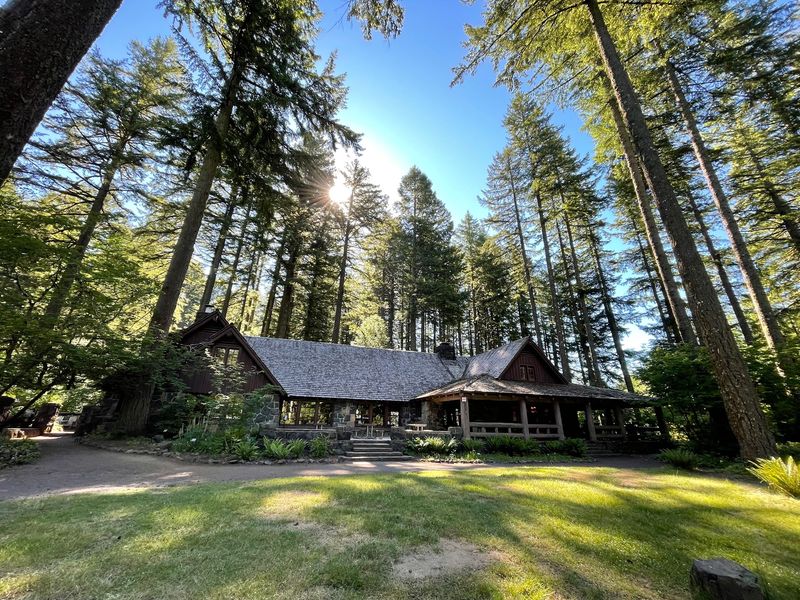
Not everyone wants to sleep in a tent, and the park has that covered with cabins. The Smith Creek area holds several small cabins in a peaceful setting surrounded by big Douglas firs.
From this part of the park, South Falls sits about a ten-minute drive away. That puts you close to the action while keeping your lodging in a calm, tree-shaded pocket of the canyon.
Accessibility matters too, and the park offers handicap-accessible cabin options. Certain cabins also sit closer to the bathrooms and showers, which can be a real convenience during an overnight stay.
Guests note that cabins can run a little warm on summer nights, so spring visits in April or May may feel more comfortable. It is a minor consideration rather than a dealbreaker.
One local tip worth remembering: raccoons roam the area, so lock up food and anything scented. A little caution keeps your cabin trip smooth and worry-free.
A Hike That Suits Almost Everyone
One of the quiet strengths of this park is how welcoming the trails are. People who do not consider themselves hikers regularly finish the route and come away thrilled they tried.
The full loop features only mild to moderate elevation gain, with a few stairs and steeper stretches as you climb in and out of the canyon. Well-maintained paths keep the footing manageable throughout.
For those who want a lighter outing, a shorter hike near South Falls delivers big scenery with far less effort. You can always turn around if the trail feels like too much.
Families find plenty to love here, especially on the more manageable South side. Kids stay engaged when a new waterfall keeps appearing around the bend.
The difficulty is genuinely subjective, and that flexibility is part of the charm. Beginners and seasoned walkers alike can shape a route that fits their energy for the day.
The Best Seasons To Catch Full Flow
Timing changes the entire experience here, and the difference is dramatic. Summer visits can mean thinner waterfalls and bigger crowds, while spring brings the falls to full, powerful flow.
May stands out as a sweet spot, offering strong water and comfortable conditions before peak summer traffic. April earns similar praise for cooler, greener days.
Late winter and early spring bring a bonus. Extra waterfalls sometimes appear when the water runs high, pushing the count beyond the usual ten.
Winter hiking is possible and beautiful, but it comes with muddy trails and large puddles, so sturdy footwear becomes essential. A raincoat helps too, since the falls can splash more when swollen.
Summer has its own appeal, with warmer days and people occasionally wading into shallow pools. Choosing your season simply comes down to whether you prioritize full flow, warmth, or solitude.
Amenities, Cafe, And Gift Shops
Nature is the star, but the small comforts make a difference. Near the South Falls entrance you will find a small store, a cafe, gift shops, and clean, well-supplied restrooms.
The cafe offers refreshing drinks that hit the spot after a walk, and the gift shops carry easy souvenirs like stickers. It is a handy place to regroup before or after the trail.
Restrooms throughout the park stay clean and stocked, which regulars appreciate on a long day out. The main South Falls facilities are the go-to stop for most people.
Having food and supplies on site adds peace of mind, though many guests still pack their own water and snacks. Bringing water is a repeated piece of advice worth following.
A picnic makes a great add-on, since the park has designated picnic areas. Pairing a hike with a relaxed lunch stretches the visit into a full, satisfying outing.
Hours, Parking, And Getting There
Planning ahead pays off, starting with the schedule. The park operates daily from 8 AM to 6 PM, so early arrivals get the most out of a full day.
Parking is generous, with large lots that hold plenty of cars, though nice-weather days fill those lots quickly in the morning. Arriving early is the simplest way to beat the crush.
For details and current conditions, the park website and phone line at 1-800-551-6949 are the reliable sources. Checking before you go is smart, since storm damage can lead to temporary trail closures.
Some sections have been closed at times due to fallen trees or landslide risk, which can trim the number of falls you see. Even a partial loop with seven falls still delivers a memorable day.
A couple of trail signs could be clearer for first-timers, so keep an eye on junctions. One important note to remember: pets are not allowed on the main loop trail, though some trails are pet friendly.
Why This Park Keeps Calling People Back
Some places earn loyalty, and this one clearly has. Longtime guests describe returning year after year, some since childhood, drawn back by scenery that never seems to lose its shine.
The blend of easy access and genuine grandeur is hard to match. You get towering old-growth trees, a canyon full of waterfalls, and the rare thrill of walking behind falling water, all on one well-kept loop.
It works for nearly everyone. Families, first-time hikers, photographers, and campers all find a version of the park that fits their pace and interests.
Practical touches seal the deal, from clean restrooms and a small cafe to cabins and roomy parking. Comfort and wilderness rarely sit this close together.
Bring good shoes, water, and a plan to arrive early, and the reward is a day among ferns, firs, and cascades that lives up to its crown jewel reputation. It is the kind of Oregon outing that leaves you already planning the next trip.
Enjoyed this story?
Add Fast Food Club as a preferred source to see more of our reporting on Google.