


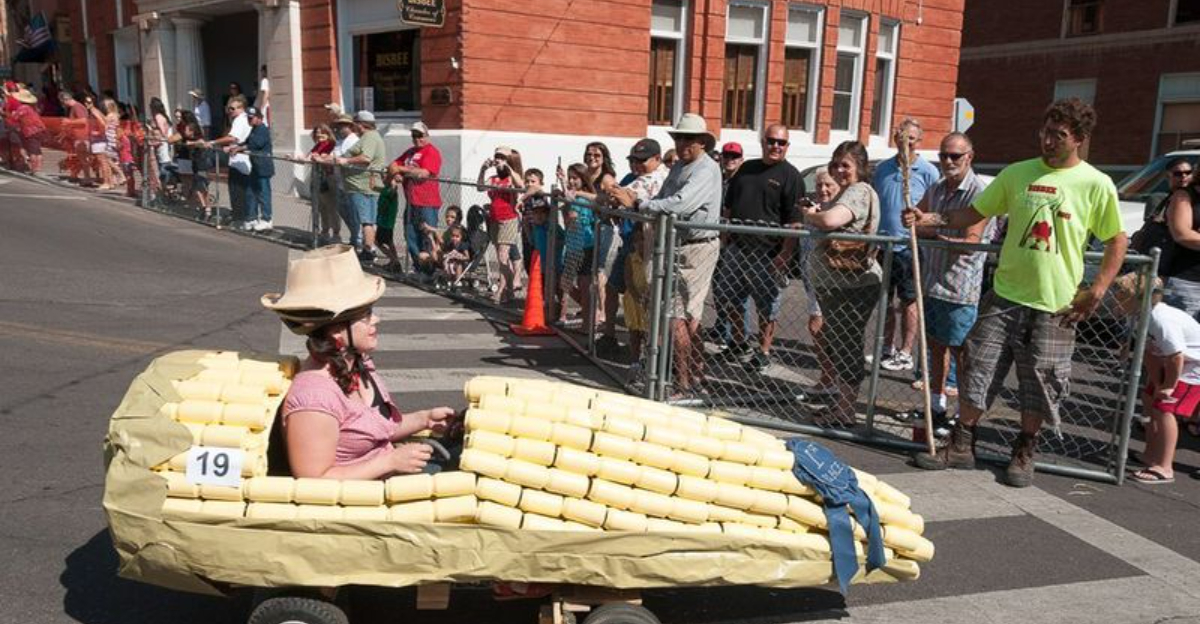
Tucked into the rugged Mule Mountains of southeastern Arizona, Bisbee is a one-of-a-kind town that blends rich copper-mining history with unexpected bursts of quirky fun. Every year, thousands of visitors flock here to watch one of the most unusual events in the Southwest: the Bisbee 1000 Stair Climb and the legendary Brewery Gulch Daze coaster races, where homemade carts barrel downhill through the town’s winding streets.
Beyond the races, Bisbee is packed with fascinating museums, colorful Victorian homes, underground mine tours, and a creative arts scene that makes it unlike any other small town in America. Whether you’re a history buff, an adventure seeker, or just looking for something truly different, Bisbee delivers an experience you won’t soon forget.
The Bisbee Downhill Coaster Races
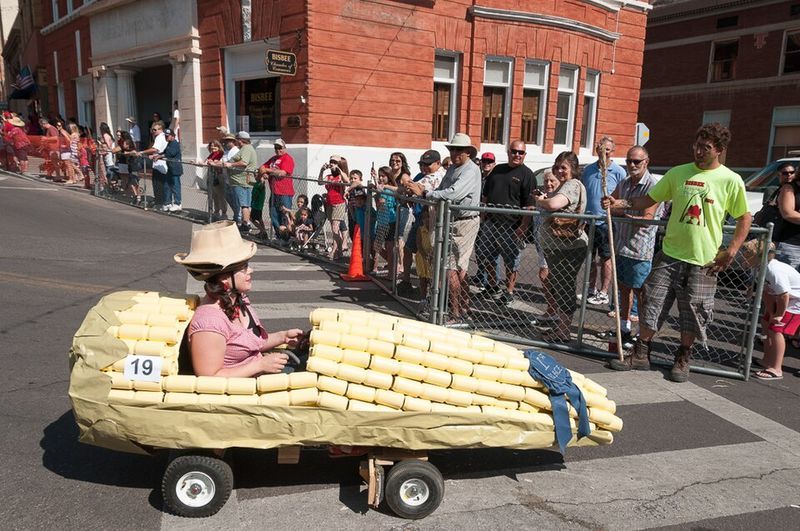
Picture a crowd of cheering locals lining a steep, sun-baked street while wild homemade carts zoom downhill at surprising speeds. That’s exactly what happens during Bisbee’s famous downhill coaster races, one of the quirkiest and most beloved traditions in all of Arizona.
Teams spend weeks — sometimes months — designing and building their own gravity-powered carts from scratch. There are no engines, no motors, just pure speed, creativity, and a whole lot of nerve.
Some carts look like rockets, while others resemble giant rubber ducks or old mining cars.
The race route winds through Bisbee’s historic streets, adding a thrilling twist to every run. Spectators of all ages pack the sidewalks, cheering loudly and snapping photos.
For anyone who loves fun, competition, and a good dose of small-town spirit, this event is an absolute must-see on your Arizona bucket list.
Old Bisbee Historic District
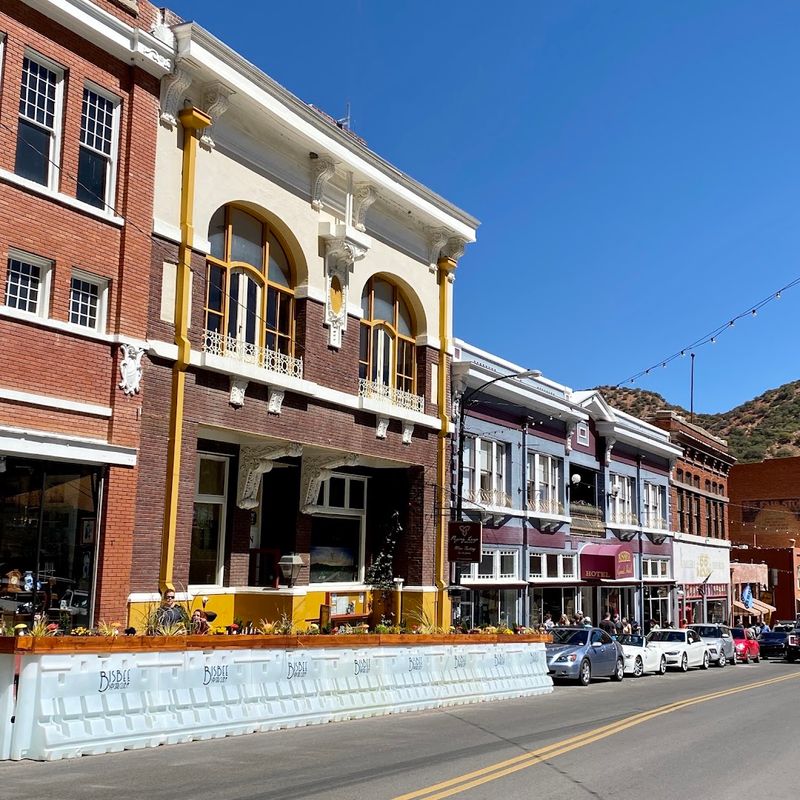
Walking through Old Bisbee feels like stepping into a living history book. The streets are narrow, the buildings are colorful, and nearly every corner tells a story from the town’s copper-boom days in the late 1800s and early 1900s.
Old Bisbee is the heart of the city, packed with art galleries, quirky boutiques, cozy cafes, and restaurants housed inside beautifully preserved historic buildings. It’s the kind of place where you can spend an entire afternoon just wandering and discovering something new around every bend.
Tombstone Canyon Road winds uphill from the center of Old Bisbee, lined with charming miner’s cottages that cling to the hillside. Many of these homes have been lovingly restored and are now private residences or vacation rentals.
History lovers, architecture fans, and casual explorers alike will find Old Bisbee endlessly rewarding and full of character.
Queen Mine Underground Tour
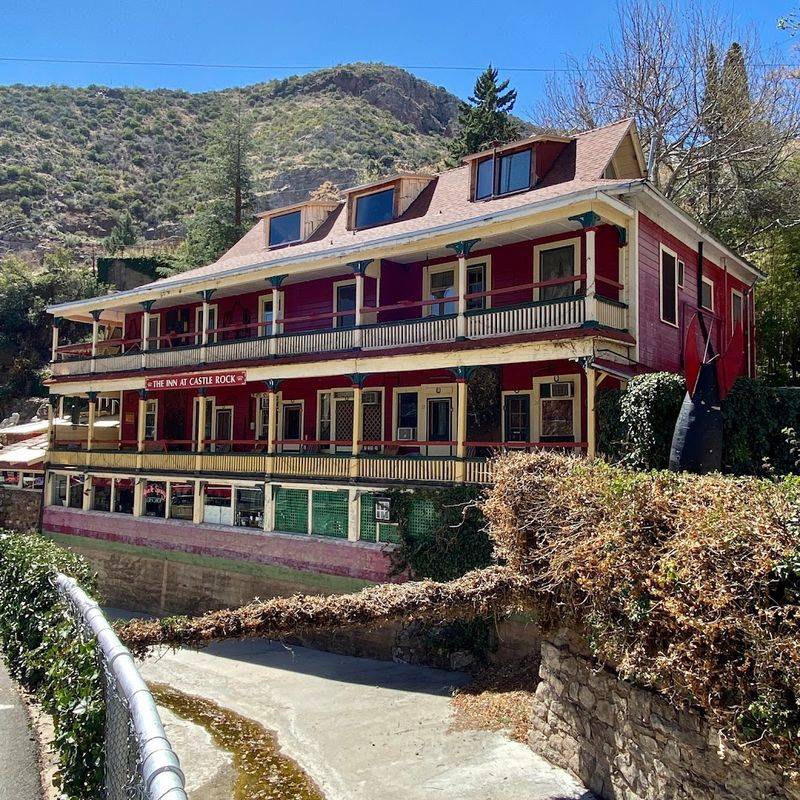
Not many towns can offer you a ride on an underground mine train, but Bisbee is not most towns. The Queen Mine Tour takes you deep into the earth, following the same tunnels that real copper miners carved out more than a century ago.
Before heading underground, you’ll suit up in a yellow slicker, hard hat, and lamp — just like the miners did. Retired miners lead the tours themselves, sharing firsthand stories and insider knowledge that no textbook could ever match.
Their passion for the history is contagious and makes the experience feel deeply personal.
The air inside the mine is cool and damp, a refreshing escape from Arizona’s famous heat. You’ll learn how copper was blasted, drilled, and hauled out of the mountain, and you’ll gain a whole new respect for the workers who built this town from the ground up.
Bisbee Mining and Historical Museum
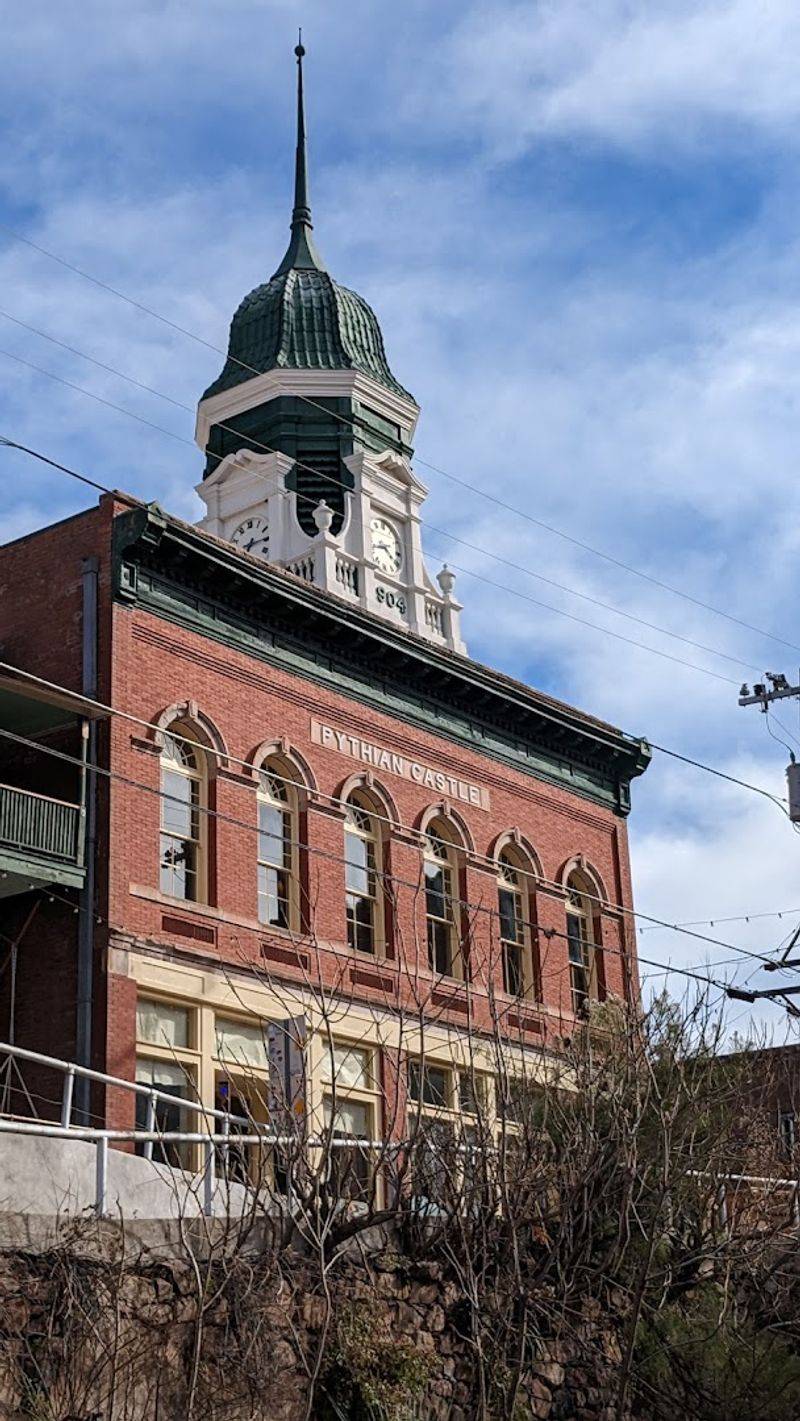
History has a way of feeling distant until you see the real thing up close. At the Bisbee Mining and Historical Museum, the story of this remarkable copper-mining city comes alive through photographs, artifacts, and interactive exhibits that span more than a century of local history.
The museum is housed in the former Phelps Dodge General Office building, which is itself a historic landmark. Exhibits cover everything from the lives of immigrant miners to the mechanics of large-scale copper extraction, painting a vivid picture of what daily life in Bisbee once looked like.
One of the most fascinating sections explores the labor strikes and social changes that shaped the town’s identity. The museum is an affiliate of the Smithsonian Institution, which speaks to the quality and depth of its collections.
A visit here is the perfect starting point for understanding why Bisbee matters so much to Arizona’s heritage.
Brewery Gulch
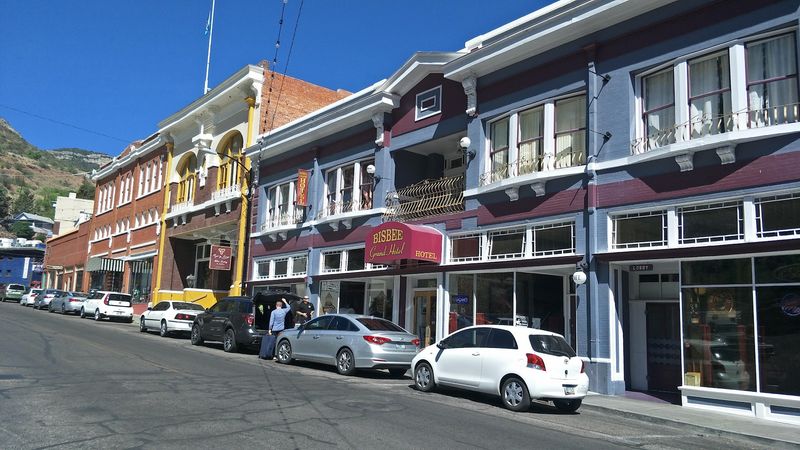
Back in Bisbee’s mining heyday, Brewery Gulch was one of the wildest streets in the entire American West. Saloons, gambling dens, and boarding houses packed this narrow canyon road, catering to thousands of hard-working miners who wanted to blow off steam after long shifts underground.
Today, Brewery Gulch has traded its rough-and-tumble past for a more laid-back vibe, but it still buzzes with energy. Bars, live music venues, and eclectic shops fill the historic storefronts, and on weekend nights the street comes alive with locals and visitors alike.
The St. Elmo Bar, one of the oldest continuously operating bars in Arizona, still pours drinks here.
During the annual Brewery Gulch Daze festival, the street transforms into the finish line for the famous coaster races. Watching a homemade cart screech to a stop right in the middle of this legendary road is a moment you won’t quickly forget.
Muheim Heritage House Museum
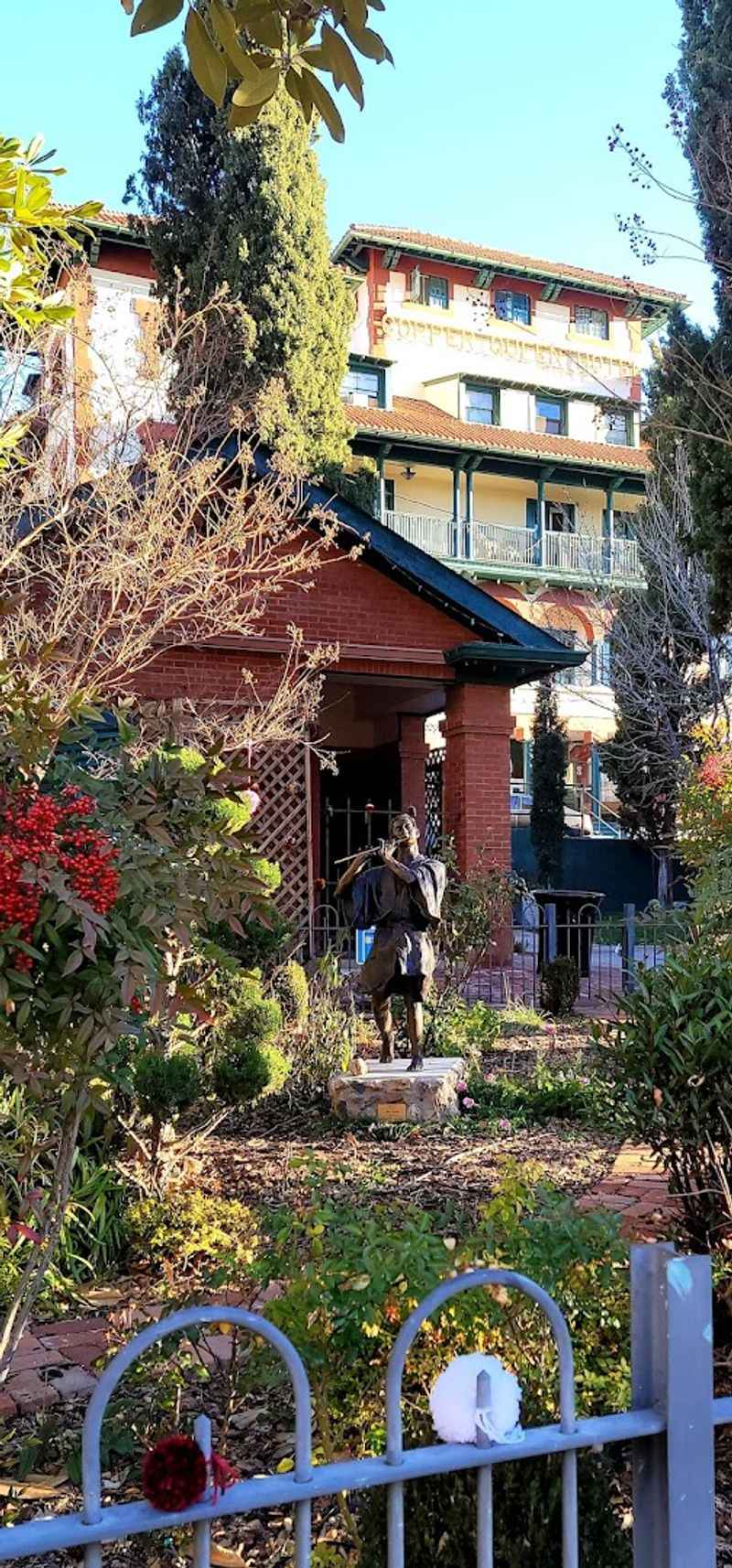
Some houses hold their stories quietly, waiting for curious visitors to come and listen. The Muheim Heritage House is one of those places — a beautifully preserved Victorian-era home that offers a rare, intimate glimpse into the domestic life of Bisbee’s prosperous early residents.
Built in 1915 by Joseph Muheim, a Swiss immigrant who made his fortune in the saloon business, the house is filled with original 19th and early 20th-century furniture, decorative pieces, and personal belongings. Every room feels like a carefully curated time capsule, frozen somewhere between ambition and elegance.
The surrounding gardens are peaceful and well-maintained, offering lovely views of the surrounding Mule Mountains. Guided tours bring the Muheim family’s story to life with warmth and detail.
For anyone interested in how Bisbee’s wealthier citizens actually lived, this heritage house is a genuinely moving and informative stop on your visit.
Bisbee Restoration Museum
Smaller museums sometimes pack the biggest surprises, and the Bisbee Restoration Museum is a perfect example. Tucked into a historic building on Main Street, this community-run museum is a treasure trove of photographs, documents, and artifacts that paint a deeply personal portrait of Bisbee’s past.
Unlike larger institutions, the Restoration Museum has a grassroots feel that makes it especially charming. Many of the items on display were donated by longtime Bisbee families, giving the collection an authentic, lived-in quality that you simply can’t manufacture.
Old postcards, vintage tools, and faded photographs tell stories of real people who built their lives in this mountain town.
Volunteers who staff the museum are often longtime residents with their own connections to the history on display. Their personal anecdotes and local knowledge add a layer of richness that goes well beyond any exhibit label.
It’s a heartfelt reminder of how much one small town can hold.
The Bisbee 1000 Stair Climb
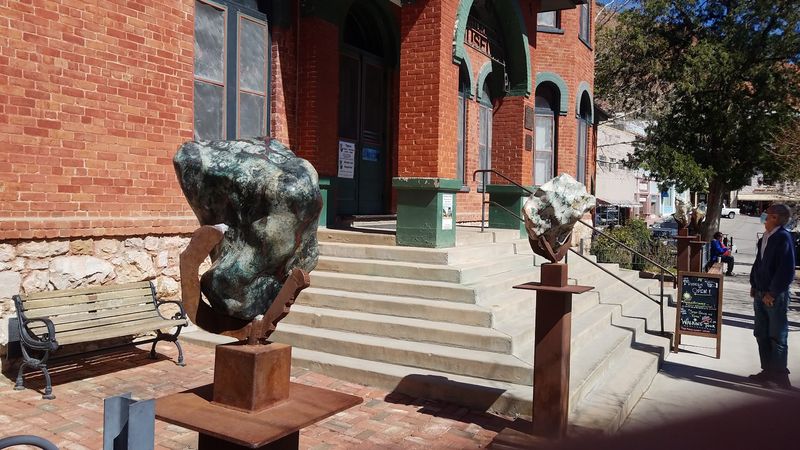
Bisbee is not a flat town — not even close. Built into the steep slopes of the Mule Mountains, the city is connected by a network of outdoor staircases that wind between homes, streets, and neighborhoods in ways that would make a mountain goat think twice.
The Bisbee 1000 turns those stairs into a celebrated athletic challenge.
Held each October, the event asks participants to climb more than 1,000 stairs spread across nine different staircases throughout the city. Runners, walkers, and everyone in between takes part, making it as much a community celebration as a fitness event.
Costumes are highly encouraged, adding a festive and slightly ridiculous flair to the whole affair.
Even if you’re not competing, watching costumed climbers huffing up Bisbee’s legendary stairs is pure entertainment. The event perfectly captures the town’s spirit: a little bit athletic, a little bit weird, and completely unforgettable.
Tombstone Canyon Road
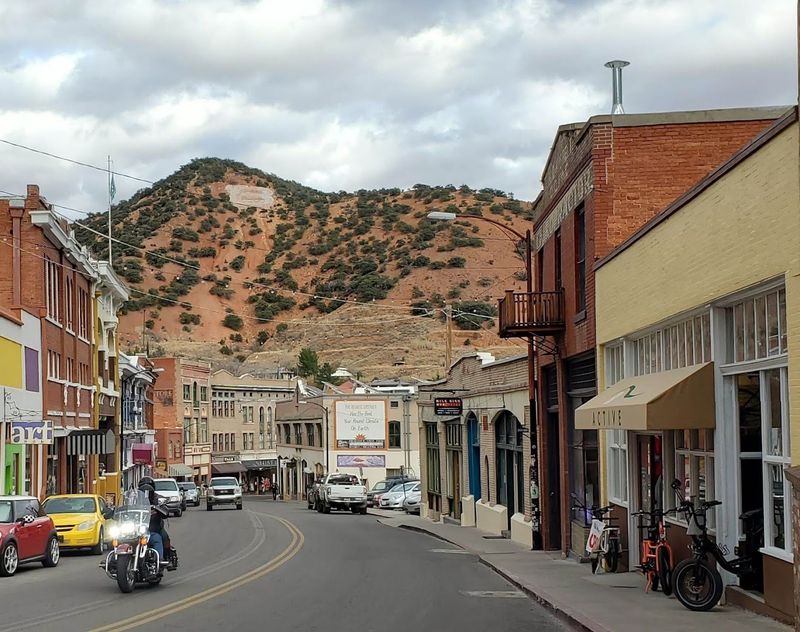
Tombstone Canyon Road is the kind of street that makes you slow down and look around. Winding uphill from the center of Old Bisbee, this scenic road is lined with some of the most charming and historically significant homes in all of southern Arizona.
Many of the cottages here were originally built for copper miners and their families in the early 1900s. Perched on steep hillsides and connected by narrow footpaths, they reflect a time when Bisbee’s population was booming and space was tight.
Today, they’ve been lovingly restored and give the canyon a storybook quality that photographers absolutely adore.
Walking or driving Tombstone Canyon at sunset is a particularly magical experience, as the warm Arizona light catches the colorful facades and casts long shadows across the hillside. It’s one of those quiet, unhurried moments that reminds you why Bisbee is so special among small American towns.
Bisbee’s Colorful Art Scene
When the copper mines closed in the 1970s, Bisbee could have become a ghost town. Instead, artists, musicians, and free spirits discovered its affordable Victorian buildings and stunning mountain setting, and a creative renaissance quietly took hold.
Today, art is woven into the fabric of everything Bisbee does.
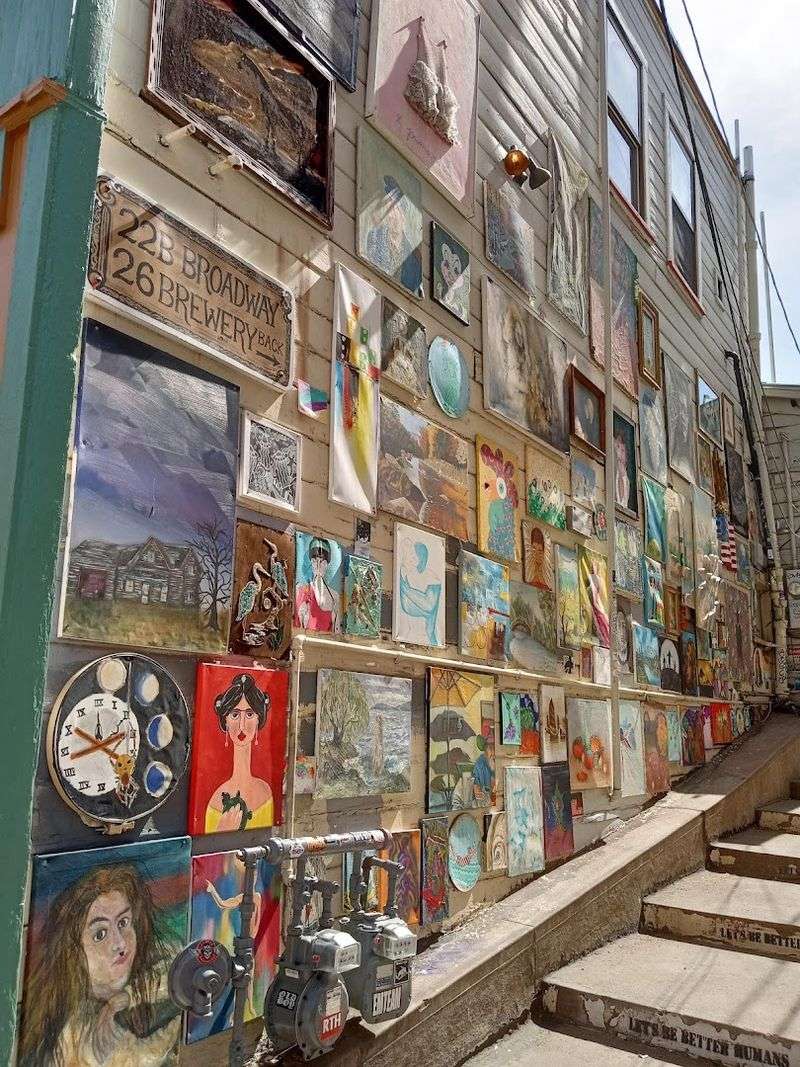
Galleries, studios, and public murals are scattered throughout Old Bisbee and Brewery Gulch, showcasing everything from traditional paintings to bold, experimental installations. The town hosts regular art walks, open studio events, and festivals that draw creative types from across the Southwest.
You don’t have to be an art expert to appreciate what’s on display here — the energy is welcoming and accessible to everyone.
Local artists often work in their front windows or on outdoor patios, giving visitors a chance to watch the creative process in real time. Bisbee’s art scene is vibrant, unpretentious, and genuinely one of the most exciting things about visiting this mountain town.
The Mule Mountains Setting
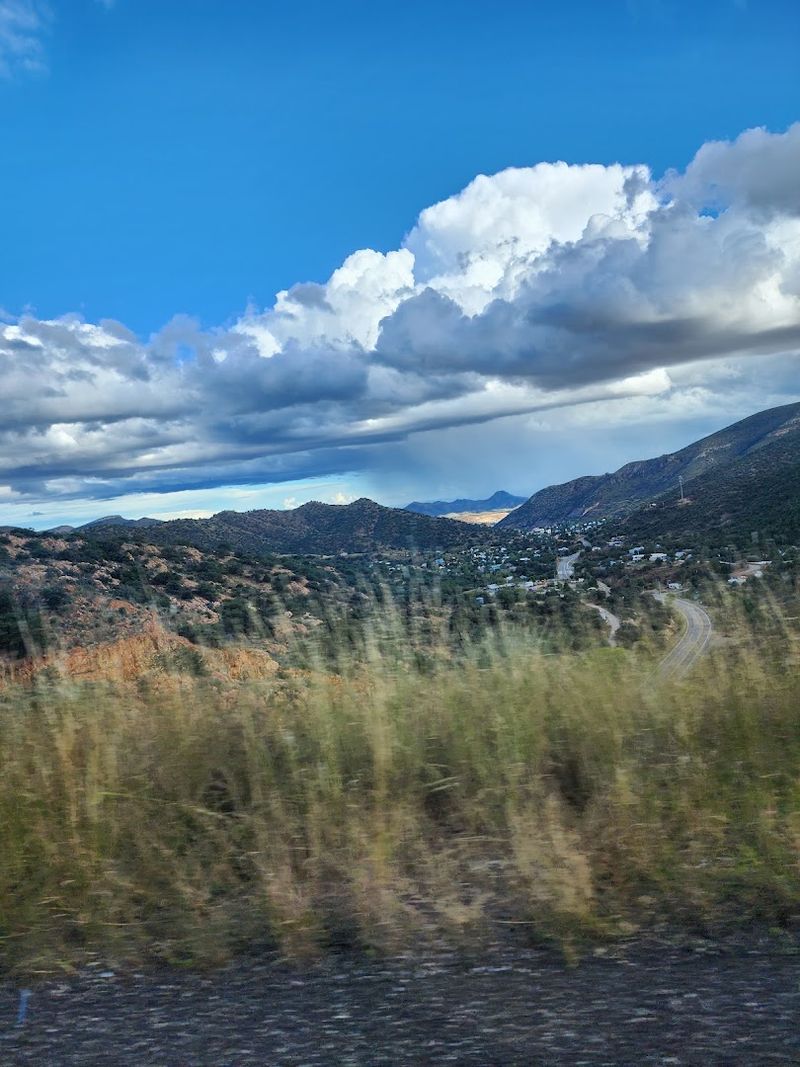
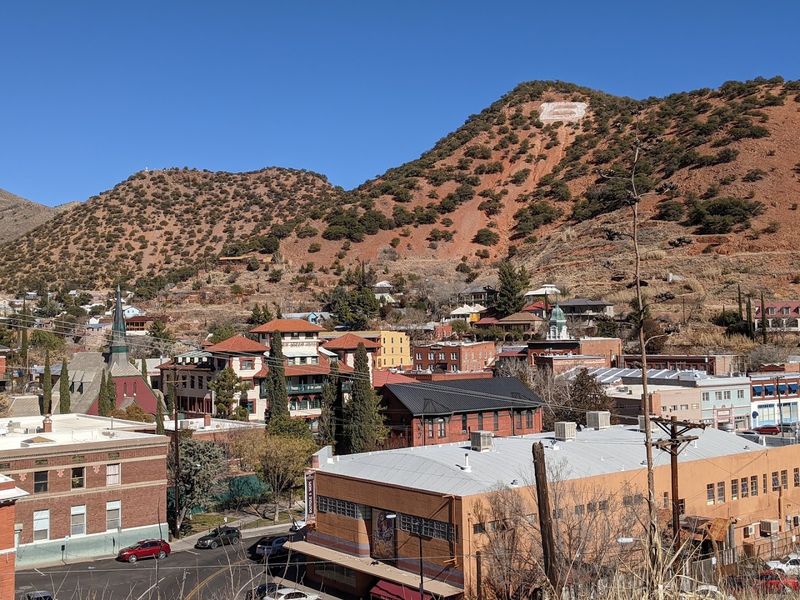
Few American towns have a more dramatic backdrop than Bisbee. Sitting at an elevation of roughly 5,300 feet, the city is cradled inside the folds of the Mule Mountains, a rugged range in the southeastern corner of Arizona near the Mexican border.
The scenery here is genuinely breathtaking.
The mountains aren’t just pretty — they’re the reason Bisbee exists at all. Rich copper deposits hidden beneath these rocky peaks attracted miners from around the world starting in the 1880s, turning a remote canyon into one of the most productive mining operations in American history.
The landscape shaped everything: the town’s layout, its architecture, its culture, and its character.
Hiking trails wind through the surrounding hills, offering sweeping views of the town below and the high desert beyond. Whether you’re a serious hiker or just someone who appreciates a stunning view, the Mule Mountains provide a spectacular and unforgettable natural frame for everything Bisbee has to offer.
Lavender Pit Overlook
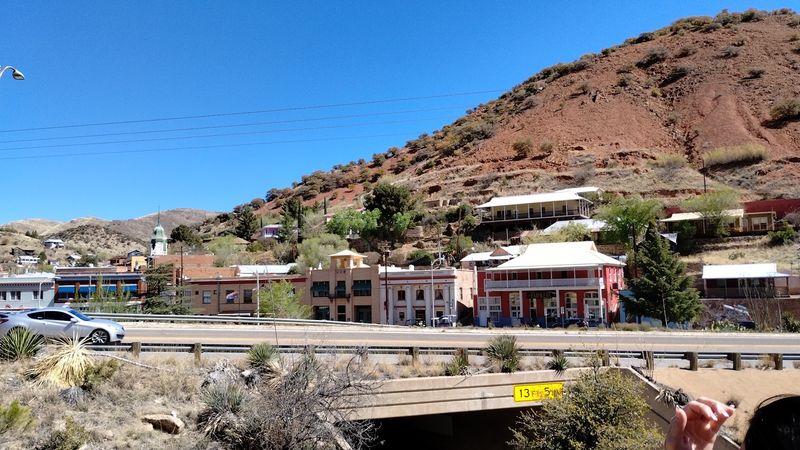
Standing at the edge of the Lavender Pit is one of those moments where your brain struggles to process the scale of what you’re seeing. This enormous open-pit copper mine stretches nearly 900 feet deep and almost a mile across, carved out of the earth over decades of industrial mining activity.
Named after Harrison Lavender, a Phelps Dodge mining manager, the pit operated from 1950 until 1974 and produced millions of tons of copper ore. Today it stands as a silent, colorful monument to Bisbee’s industrial past, its terraced walls glowing in shades of rust, purple, green, and brown depending on the light.
A free viewing area right off the main highway lets visitors take in the full scope of the pit without any cost or hiking required. Informational signs explain the history and geology of the site.
It’s an unexpectedly moving and humbling place that gives you a real sense of the human effort behind Bisbee’s copper legacy.
Staying and Eating in Bisbee
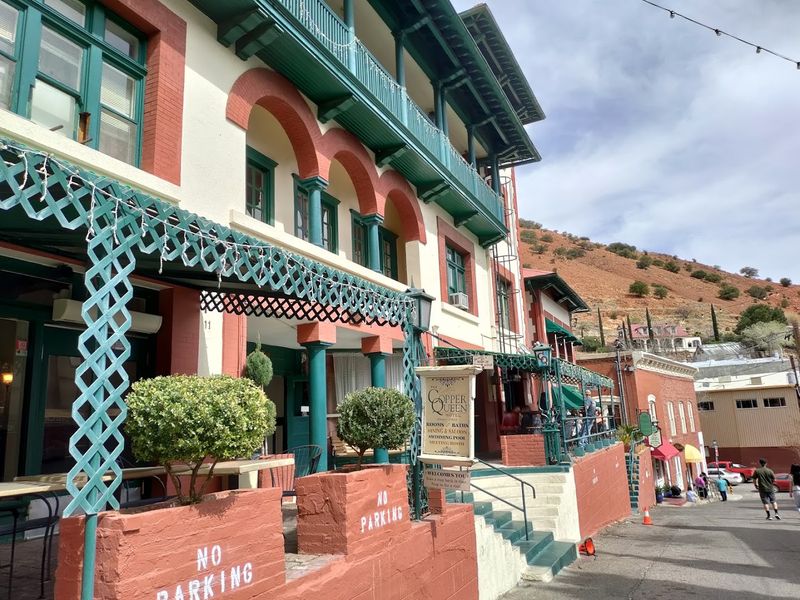
Bisbee may be small, but it punches well above its weight when it comes to food and lodging. The town is dotted with charming bed-and-breakfasts, boutique hotels, and vacation rentals, many of them housed inside beautifully restored Victorian buildings with original details still intact.
The Copper Queen Hotel, built in 1902, is the grand dame of Bisbee accommodations. With its ornate lobby, classic bar, and rumored resident ghosts, it’s as much an attraction as a place to sleep.
Guests who stay here often say the hotel itself is one of the highlights of their entire trip.
On the restaurant front, Bisbee delivers surprising variety for a town its size. Farm-to-table cafes, Mexican food joints, craft cocktail bars, and cozy breakfast spots are all within easy walking distance in Old Bisbee.
After a day of exploring staircases, mine tours, and coaster races, a good meal here feels like a well-earned reward.
Enjoyed this story?
Add Fast Food Club as a preferred source to see more of our reporting on Google.