


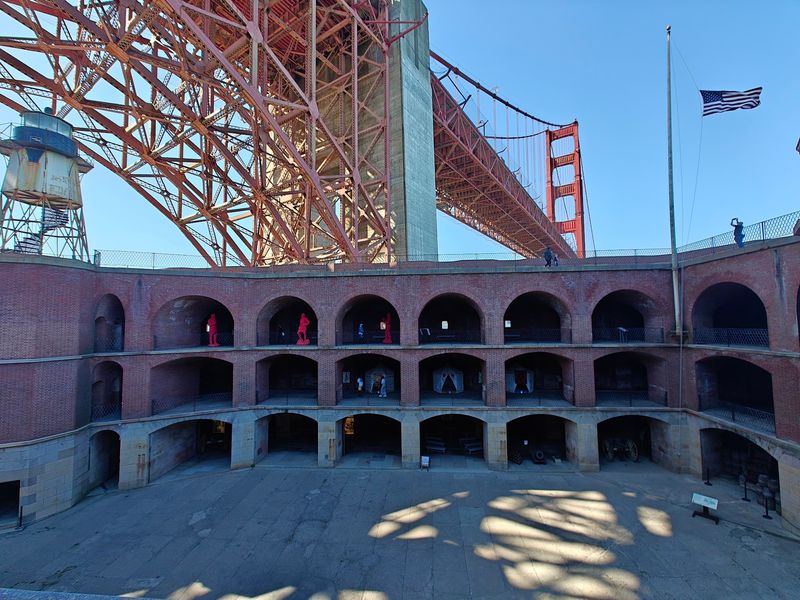
Beneath one of the most photographed bridges on the planet sits a brick fortress that most travelers walk right past without a second glance. Built in the 1850s to guard San Francisco Bay, it holds cannons, spiral staircases, and a rooftop that puts you closer to the Golden Gate Bridge than almost anywhere else in the city.
Best of all, wandering through its old corridors costs nothing, and an afternoon here mixes real history with some of the finest water views in California. Crowds tend to gather up top near the bridge overlook, leaving this quieter spot below feeling like a secret hiding in plain sight.
Keep reading to learn where it is, what waits inside, and how to plan a smooth, scenic visit.
A Brick Fortress Tucked Under the Golden Gate
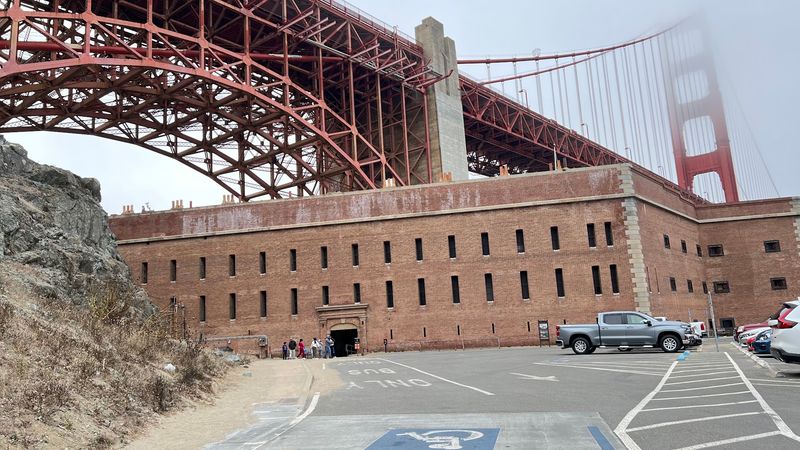
Right at the water’s edge, where the bay meets the Pacific, stands Fort Point National Historic Site at 201 Marine Dr, San Francisco, CA 94129. The address alone hints at its unusual setting, since the fort sits directly beneath the southern end of the Golden Gate Bridge.
Many people never realize it exists. Travelers often crowd the bridge overlook up top and drive off toward Union Square or Fisherman’s Wharf, missing the fortress below entirely.
Officially, the place is a Civil War era fortress, now protected as a national historic site. The National Park Service manages it, and the setting could hardly be more dramatic with brick walls framed by the bridge’s steel and the open water beyond.
With a 4.8 star rating across more than four thousand accounts, the fort clearly leaves a strong impression on those who make the trip. Part of the appeal is how easy it is to reach and how much waits inside once you step through the gate.
For a single afternoon of exploring, few spots in San Francisco pack in this much history and scenery in one compact location.
Guarding the Bay Since the 1850s
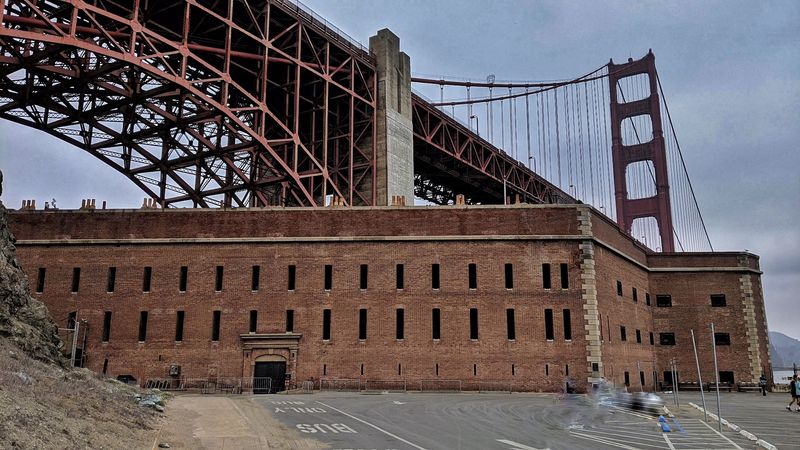
Long before tourists arrived with cameras, this fort had a serious job to do. Construction began in the 1850s, and the goal was to defend San Francisco Bay from foreign powers and, later, from the Confederacy during the Civil War.
Soldiers once lived and worked inside these walls, standing watch over the narrow entrance to the bay. Wandering the brick corridors today gives a real sense of how those early defenders spent their days.
One remarkable twist involves the Golden Gate Bridge itself. When plans were drawn up for the bridge in the 1930s, the fort could easily have been cleared away, yet the bridge’s designer recognized it as a significant piece of architecture and history worth saving.
Because of that decision, the bridge was engineered with a special arch to arch over the fort rather than replace it. The result is the rare sight of a Civil War fortress and a modern engineering marvel sharing the same patch of shoreline.
History buffs tend to appreciate that the structure survived at all. Standing here, the layers of the past feel unusually close together.
Rooms and Corridors Made for Wandering
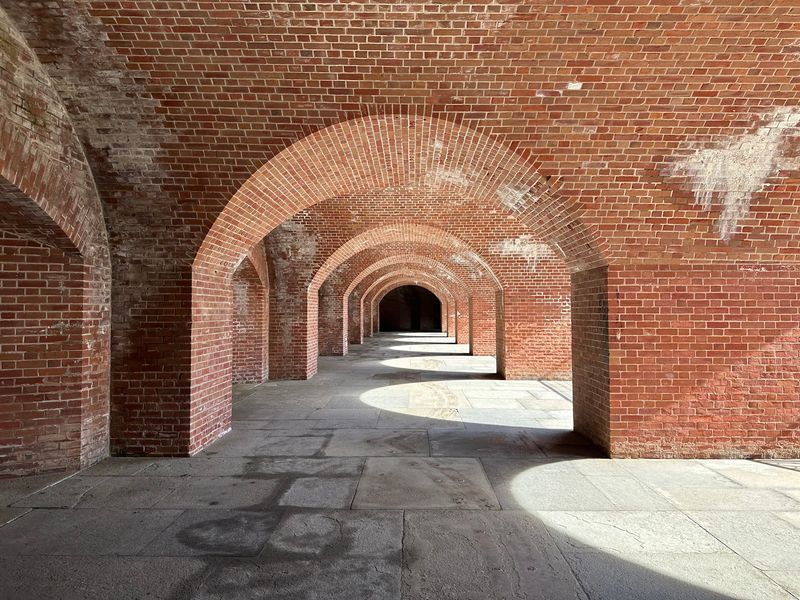
Explorers who love poking around old buildings will find plenty to keep them busy here. The fort spans multiple floors, and nearly every room holds something to look at, from exhibits to preserved details of daily military life.
Self guided exploration is the name of the game. You are free to meander through the brick hallways, climb the staircases, and set your own pace without a fixed route.
Educational material is spread thoughtfully throughout the structure. Displays, props, and activities help explain how the fort was built and how soldiers of that era lived and worked.
Depending on how deeply you read, the time you spend can vary a lot. A quick loop through the fort and its displays takes about an hour, while anyone reading every panel could easily fill half a day or more.
The layered design rewards curiosity, with exhibits tucked into corners you might not expect. Every turn seems to offer a new detail, which is part of why the place feels so easy to lose track of time inside.
Cannons, Drills, and Living History
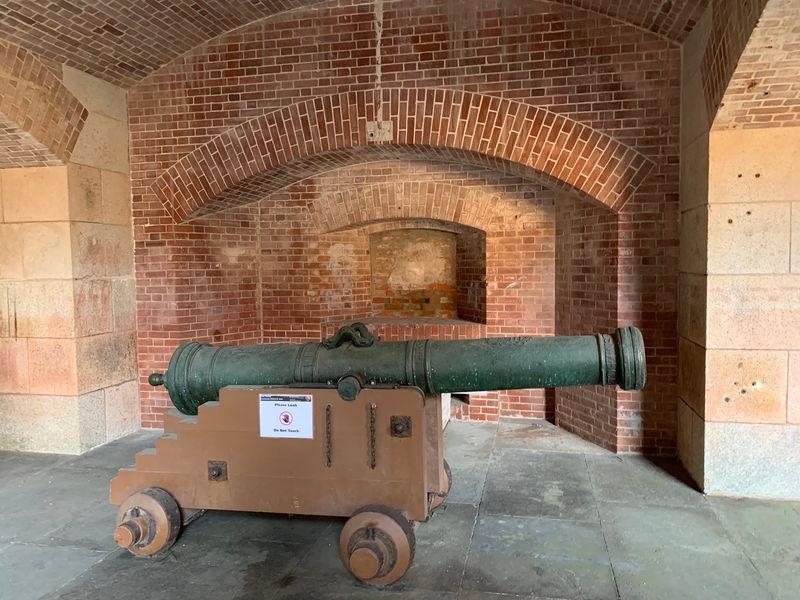
Nothing says old fortress quite like a row of cannons, and this site has them on display. Preserved cannons stand as reminders of the firepower once aimed toward the bay’s entrance.
Beyond the static displays, the fort is known for cannon drills and tours that bring the military past to life. These demonstrations show how crews would have operated the heavy artillery during the fort’s active years.
Seeing the equipment up close gives real weight to the fort’s original purpose. It is one thing to read about coastal defense and another to stand beside the actual hardware built for it.
The combination of exhibits and demonstrations makes the history feel active rather than frozen behind glass. Families and curious travelers alike tend to find the cannons a highlight of the visit.
Pairing the artillery with the surrounding architecture helps visitors picture the fort as a working outpost. It transforms a simple walk into something closer to a step back into another century.
A Rooftop With Front Row Bridge Views
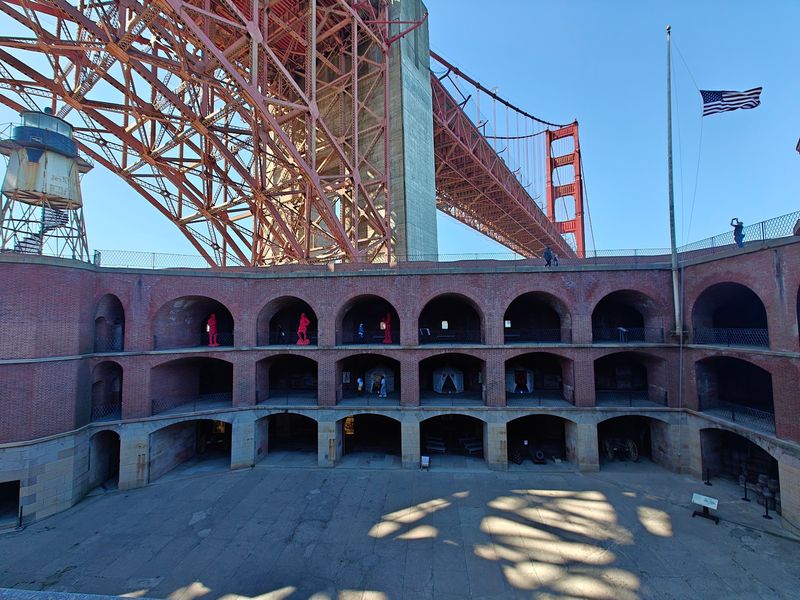
Climb to the top and the reward is immediate. The rooftop of the fort delivers some of the closest views of the Golden Gate Bridge you will find anywhere, with the massive steel span towering directly overhead.
From this vantage point, the bay opens wide in every direction. The city skyline, the open water, and the bridge all line up for a view that feels genuinely one of a kind.
Roof access is a favorite feature, and getting there is part of the fun. The path winds up through the fort before spilling out onto the open top level.
On the right day, the scene comes with bonus sightings. Waves roll in below, and lucky guests have spotted the occasional whale gliding through the bay.
Photographers especially treasure this spot for its unusual angles on the bridge. Few places let you stand so near the underside of the Golden Gate while a whole panorama unfolds around you.
Where History Meets Striking Architecture
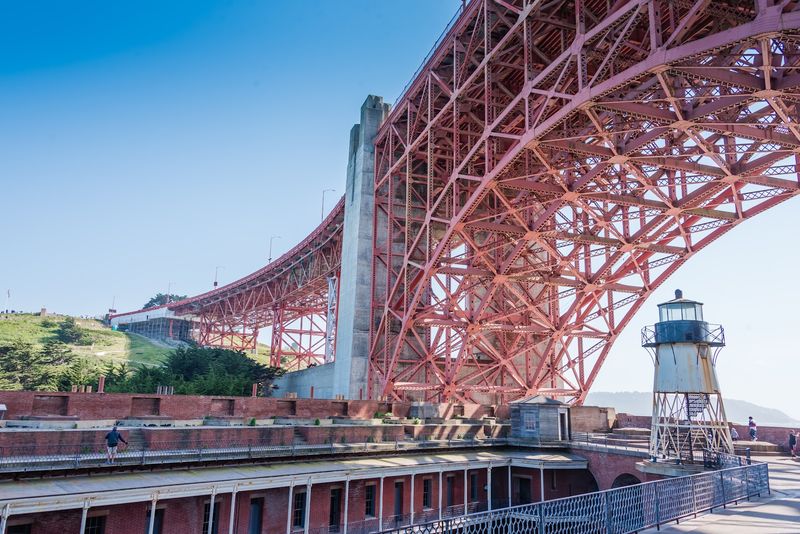
Design lovers have plenty to admire here beyond the views. The fort’s brick construction stands as a fine example of how coastal fortresses were built in the mid nineteenth century.
What sets the architecture apart is its neighbor above. Having the Golden Gate Bridge arching directly over the historic brickwork creates a contrast you simply cannot see anywhere else.
The interplay of old and new gives the whole site its signature look. Weathered brick arches sit beneath sweeping steel, and the two styles somehow complement each other.
Every corridor and archway seems built for slow appreciation. The repeating shapes of the brickwork draw the eye deeper into the structure.
Preservation efforts have kept the details intact, so the fort still reads clearly as a piece of engineering history. For anyone drawn to buildings with a story, the architecture alone justifies the trip.
The Quiet Hideaway Most Tourists Skip
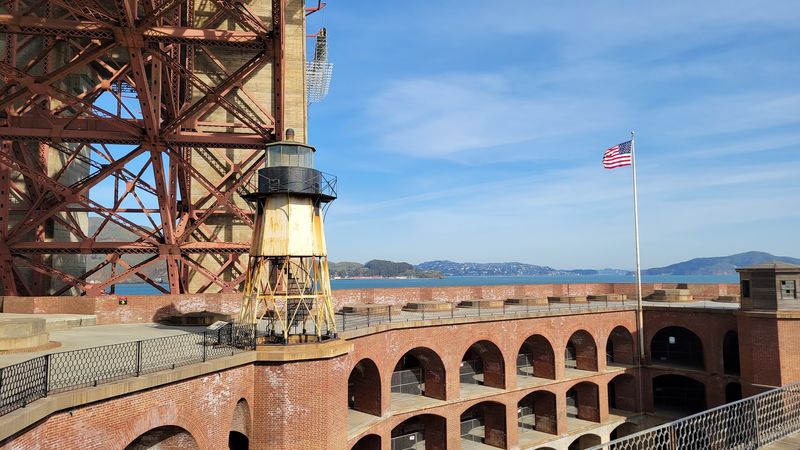
Big crowds gather at the bridge overlook up on the hill, and that turns out to be good news for the fort below. Many travelers never come down here, which keeps the atmosphere calm even during busy stretches.
Regulars often describe the fort as a peaceful, low key place to walk around. The relative quiet is part of what makes it feel like a hidden find in a city full of famous stops.
Because so many visitors head straight to the top and overlook the fort, those who do venture inside tend to have room to breathe. It is a chill spot compared with the packed nearby attractions.
The calm setting suits both slow explorers and quick sightseers. You can linger over exhibits or simply enjoy the open water without jostling through a throng.
For travelers craving a break from the busiest corners of San Francisco, this fortress offers a rare pocket of stillness. That mellow mood is a big reason people leave so charmed.
A Photographer’s Playground by the Water
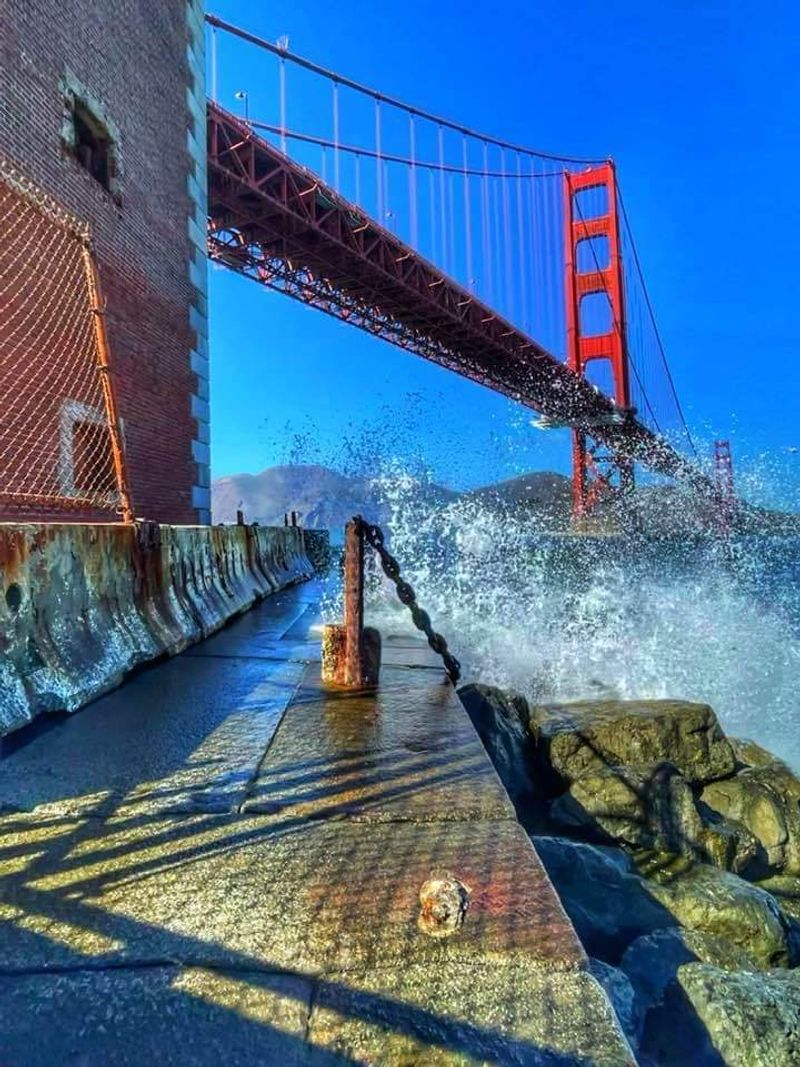
Camera in hand, you could spend an entire afternoon here without running out of angles. The fort has earned a reputation as a photographer’s playground, thanks to its dramatic setting and endless compositions.
Up close shots of the Golden Gate Bridge are the obvious draw. Add the San Francisco skyline, the brick corridors, and the crashing waves below, and the options multiply fast.
Light plays a big role in the appeal. Sunset in particular tends to catch the bridge just right, making the golden hour a prized time for pictures.
Beyond the grand views, small details reward a closer look. Arched doorways, weathered brick, and preserved equipment all make for striking frames.
There is even a quirky photo favorite known as Hopper’s Hands nearby, adding a fun stop for those in the know. Between the sweeping scenery and the little surprises, the fort keeps shutterbuggers happily busy.
Free Admission and a Family Friendly Afternoon
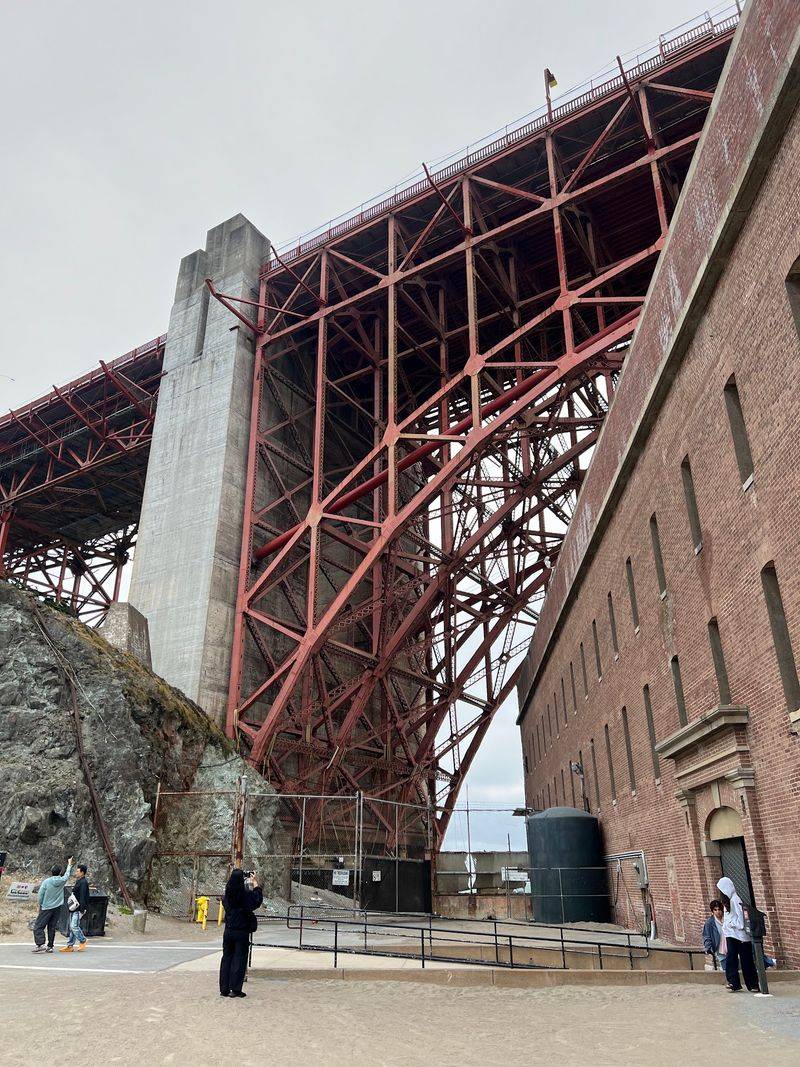
Here is a rare treat in a pricey city. There is no entrance fee to explore Fort Point, and free admission comes up again and again as one of its best qualities.
The lack of a ticket price makes it an easy addition to any San Francisco itinerary. You can stop by for an hour or stay all afternoon without spending a dime on entry.
Families find plenty to enjoy across the multiple floors of exhibits and open spaces. Educational videos, props, and activities help keep younger explorers engaged while parents soak in the history.
The mix of learning and scenery suits groups of all kinds. It works just as well for a family outing, a trip with friends, or a relaxed visit with someone you care about.
Combining zero cost with genuine substance is a hard bargain to beat. That value is a big reason the fort earns such warm words from those who make the effort to visit.
Getting There and Handling the Parking
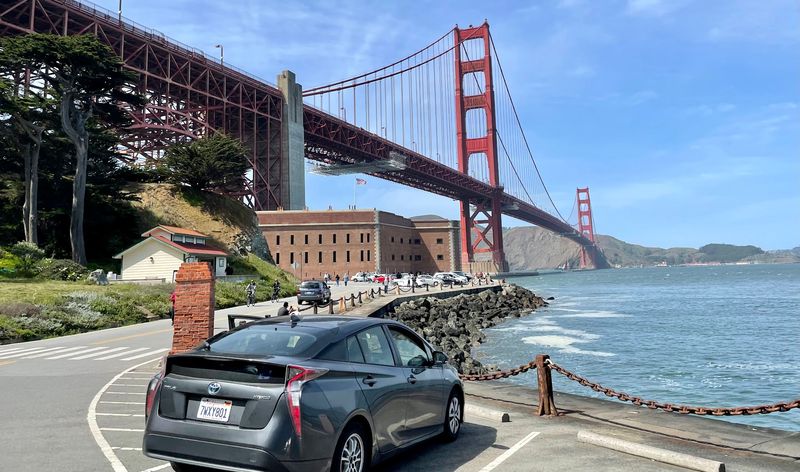
Reaching the fort is straightforward, though parking takes a little strategy. The site sits at the south end of the Golden Gate Bridge along Marine Drive, and public transit riders report an easy time getting on and off nearby.
Drivers should plan ahead. The Visitor Center lot up by the bridge fills with huge crowds, but the area down by the fort often has parking available, and some have found plenty of free spaces on a quiet Sunday morning.
Timing makes a real difference. Arriving before noon, especially on weekends, gives you a much better shot at a spot before the lots fill up.
Comfort matters too, since the fort involves lots of stairs and the coastal air runs cold. Bringing a jacket and comfortable shoes is a smart move for the climb and the breeze.
One playful warning worth remembering is that the ocean can splash you near the water’s edge. A little planning keeps the logistics smooth so you can focus on the experience.
Planning Your Visit and Why It Earns a Stop
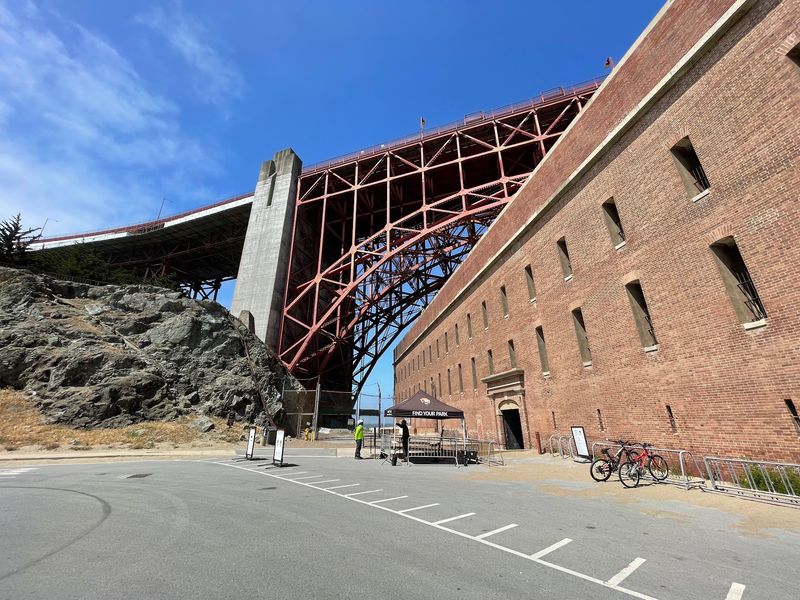
A few practical notes round out the trip. The fort is open from 10 AM to 5 PM on Thursday through Monday, while it stays closed on Tuesday and Wednesday, so plan your day accordingly.
With free admission and generous hours across most of the week, fitting a visit into a packed San Francisco schedule is refreshingly simple. Even travelers with only a few days in the city can carve out time for it.
What keeps people so enthusiastic is the blend of everything in one place. History, striking architecture, close up bridge views, and a peaceful setting all come together beside the water.
Longtime Bay Area residents and first time travelers alike walk away impressed, and many call it a must see before leaving town. Some even admit they nearly skipped it and ended up thrilled they did not.
For a scenic afternoon that mixes learning with unbeatable scenery, this historic fortress by the sea more than earns its spot on the list. It is the kind of place that rewards curiosity and leaves you glad you wandered off the usual path.
Enjoyed this story?
Add Fast Food Club as a preferred source to see more of our reporting on Google.