


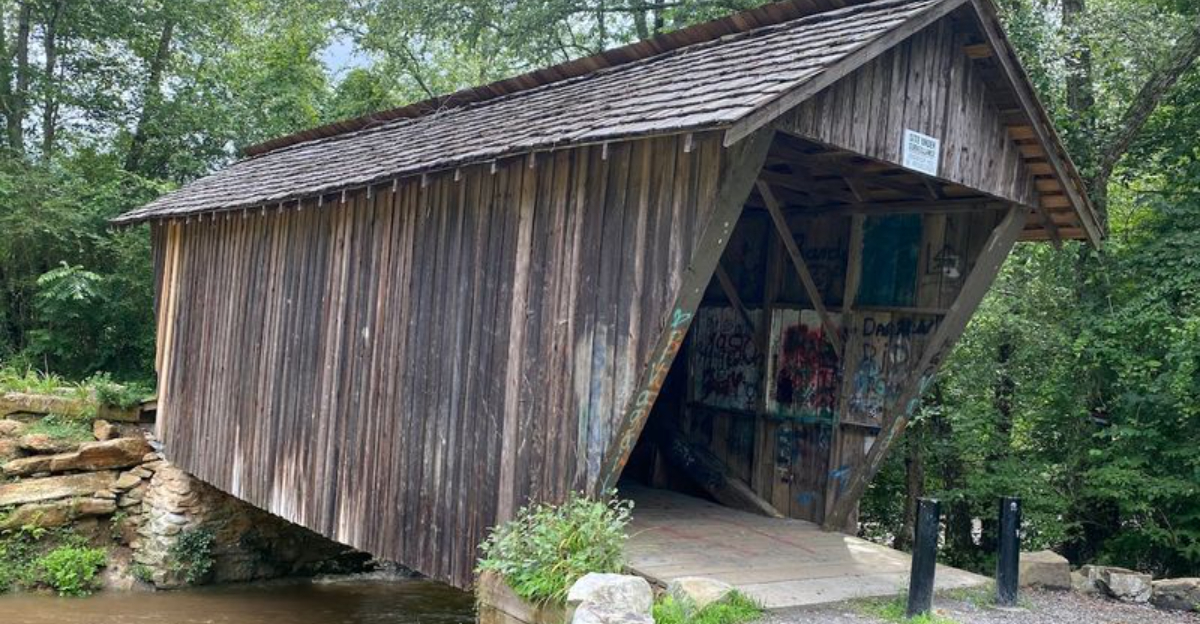
Tucked away along GA-255 in the quiet valley of Sautee Nacoochee, Georgia, the Historic Stovall Mill Covered Bridge has been whispering stories for well over a century. Built in 1895, this charming little structure holds the title of the smallest covered bridge in Georgia, yet its history feels anything but small.
From ghostly legends to a surprise Hollywood cameo, this bridge has captured the hearts and imaginations of everyone who crosses it. Whether you are a history lover, a curious traveler, or just someone who enjoys a good mystery, this bridge has something to offer you.
The Origins of Stovall Mill Covered Bridge
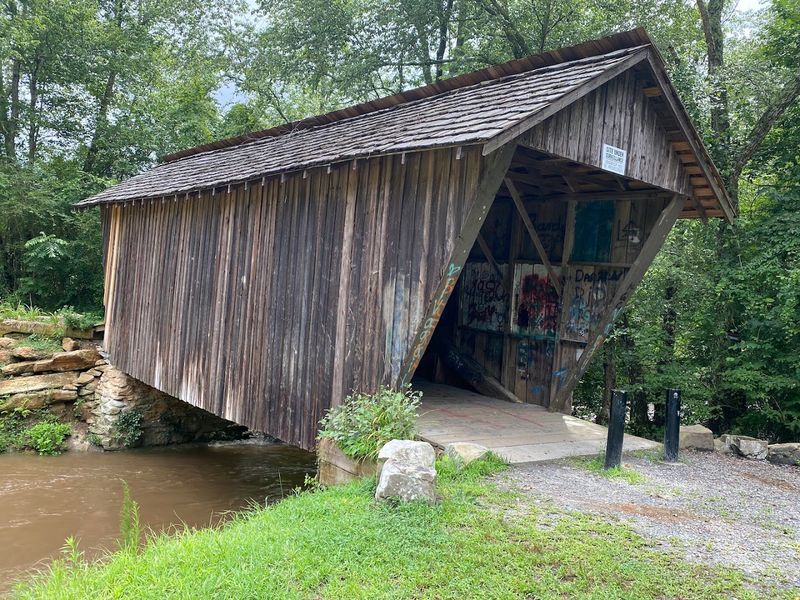
Back in 1895, a simple but sturdy wooden bridge was built over Chickamauga Creek in the rolling hills of Sautee Nacoochee, Georgia. It was constructed using the queen post truss design, a classic method that relied on two vertical posts to support the weight of the structure.
For its time, this kind of engineering was both practical and reliable.
The bridge served the local community as a crossing point for wagons, horses, and everyday foot traffic. Mill workers and farmers depended on it to get from one side of the valley to the other.
Without it, daily life in the area would have been much harder.
What makes this origin story so fascinating is how well the bridge has held up over time. More than 125 years later, visitors still walk across the same wooden planks that workers once crossed on their way to the mill.
Georgia’s Smallest Covered Bridge
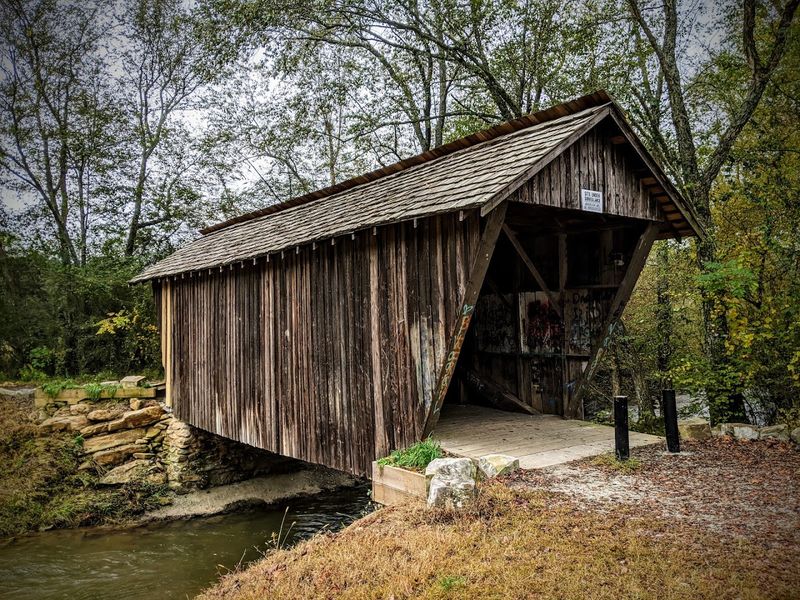
Size does not always determine greatness, and the Stovall Mill Covered Bridge proves that perfectly. Measuring only about 33 feet in length, it proudly holds the title of the smallest covered bridge in the entire state of Georgia.
That may not sound impressive on paper, but standing next to it tells a completely different story.
Despite being small, the bridge carries an enormous amount of character. Every weathered plank and aged beam feels like it has a story to tell.
Visitors often say the bridge feels cozy and personal, like stepping into a photograph from another era.
For covered bridge enthusiasts, this little gem is a must-see stop in North Georgia. Most people are surprised by just how compact it is when they arrive.
But once you walk through it and hear the creek gurgling below your feet, the experience feels anything but tiny.
The Ghost Stories That Never Faded
Ever since the bridge was rebuilt in 1895, locals have passed down spine-tingling tales about strange happenings near the crossing. Some say that on foggy nights, the sound of horse hooves can be heard echoing inside the tunnel even when no one is there.
Others claim to have seen shadowy figures standing at the entrance before vanishing into thin air.
Whether these stories are rooted in real events or simply grew from the bridge’s age and isolation, they have stuck around for generations. The surrounding valley, draped in mist during the cooler months, certainly sets the perfect stage for a ghost story or two.
Local historians believe some legends may trace back to Civil War-era activity in the region. The mountains of North Georgia witnessed plenty of conflict and loss, and many believe that emotional history has left an invisible mark on places like this bridge.
Its Surprise Hollywood Moment
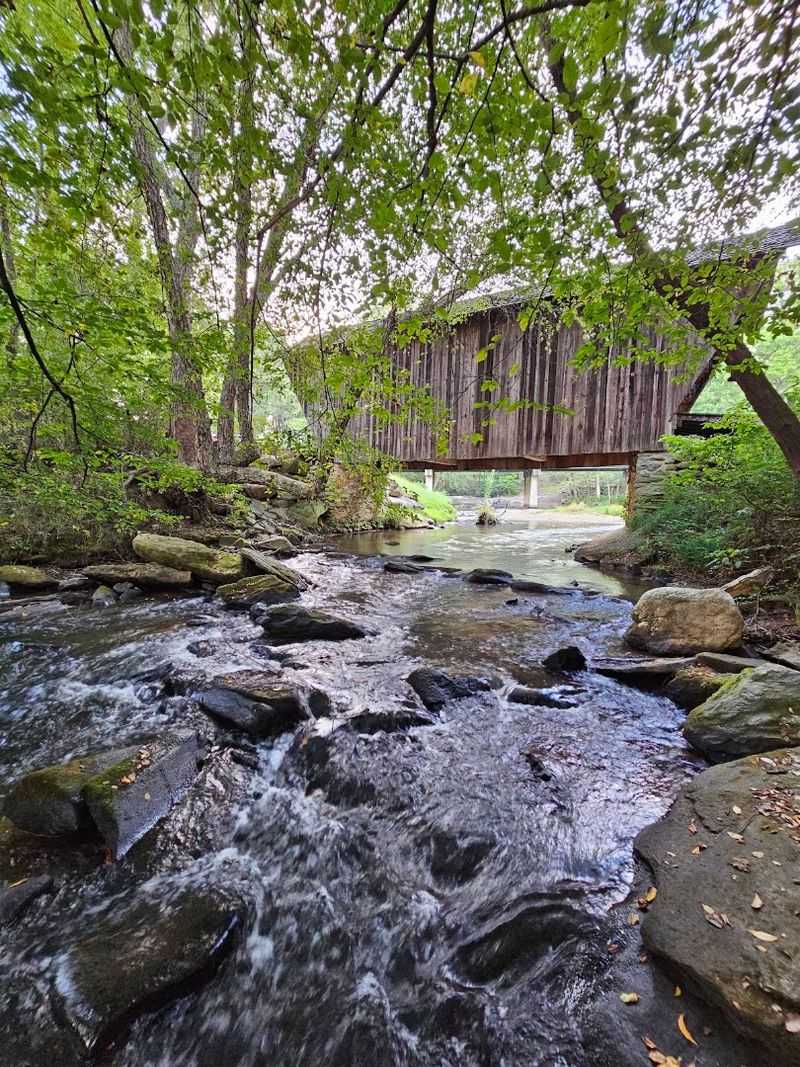
Not many small-town bridges can say they have appeared on the silver screen, but the Stovall Mill Covered Bridge can. In 1951, the bridge was featured in the movie “I’d Climb the Highest Mountain,” a beloved film starring Susan Hayward.
The production team chose the scenic North Georgia mountains as their backdrop, and this charming bridge made the perfect shot.
The film told the story of a Methodist minister and his city-born wife adjusting to rural life in the Georgia hills. The bridge fit naturally into the story’s warm, rustic setting.
Seeing it on screen gave the local community a proud moment they still talk about today.
A historical sign near the bridge actually mentions this film appearance, which surprises many visitors who did not expect a roadside stop to have such a glamorous past. It is one of those fun details that makes the whole trip feel worthwhile.
The Queen Post Truss Construction
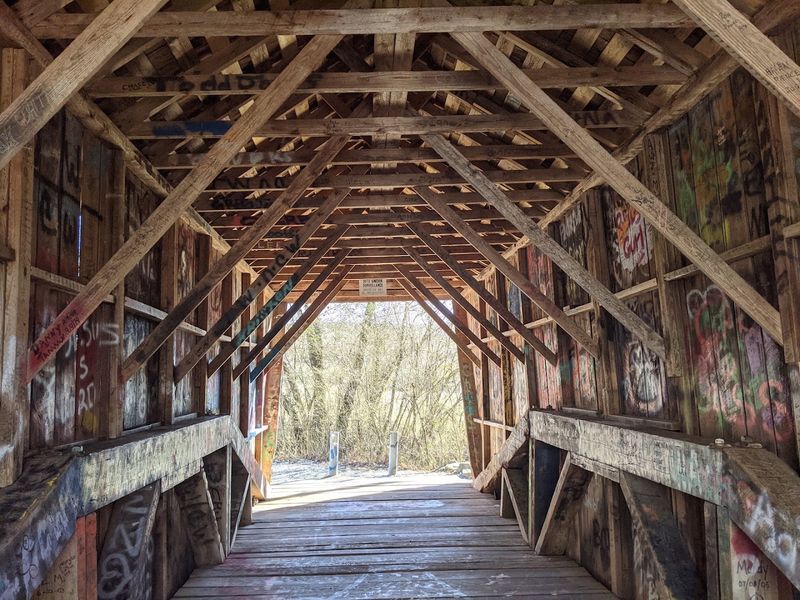
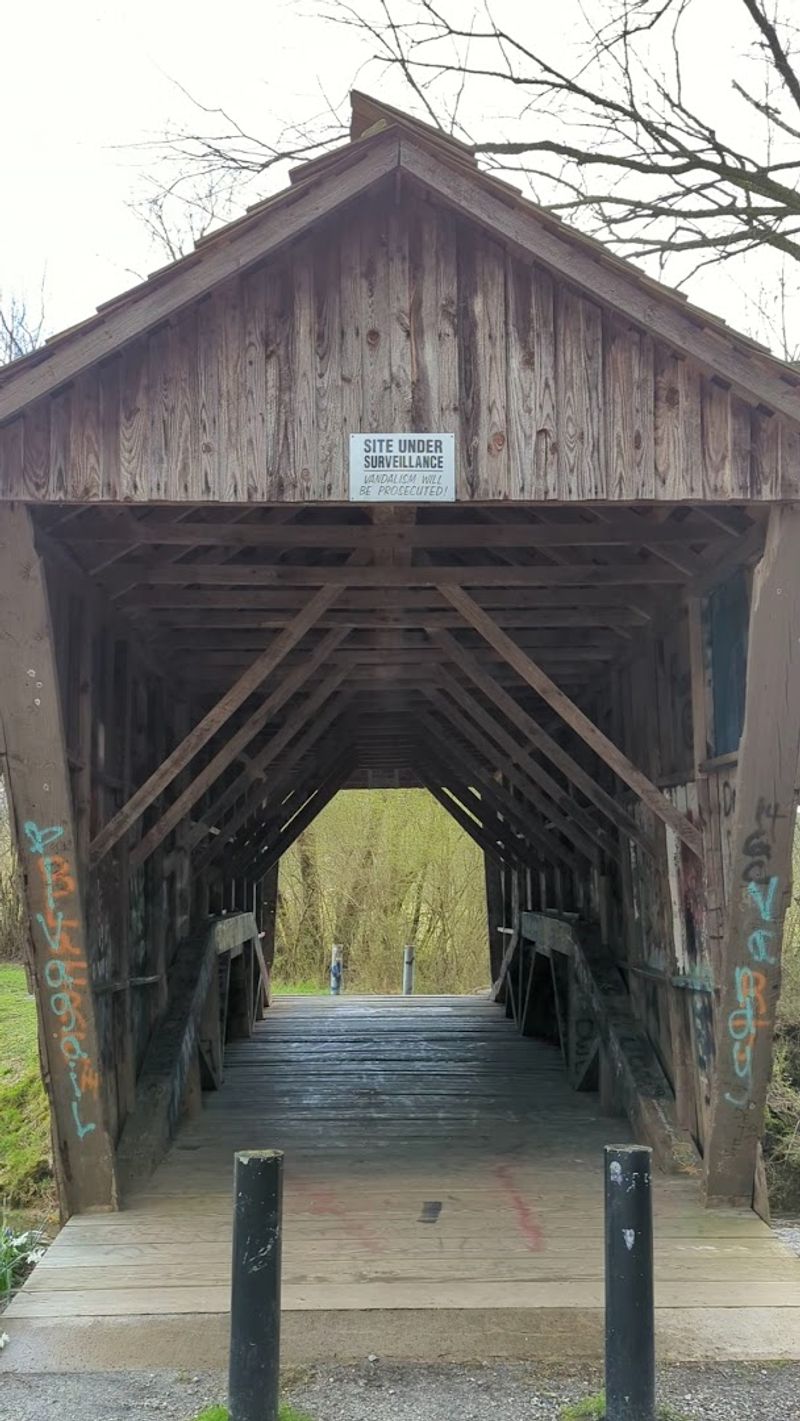
Walk inside the Stovall Mill Covered Bridge and look up. What you will see is a prime example of queen post truss construction, one of the oldest and most trusted bridge-building techniques in American history.
Two vertical posts rise from a horizontal beam to support the roof and walls of the structure, creating a simple but effective framework.
This design was popular in the 1800s because it required fewer materials than more complex systems but still offered excellent strength. Skilled craftsmen of the era knew exactly how to balance the weight so the bridge could handle heavy loads like loaded farm wagons.
Today, engineers and history buffs alike appreciate the craftsmanship that went into building a structure this durable without modern tools or technology. The fact that visitors can still safely walk across it more than a century later is a real testament to the skill of those original builders.
Chickamauga Creek Running Below
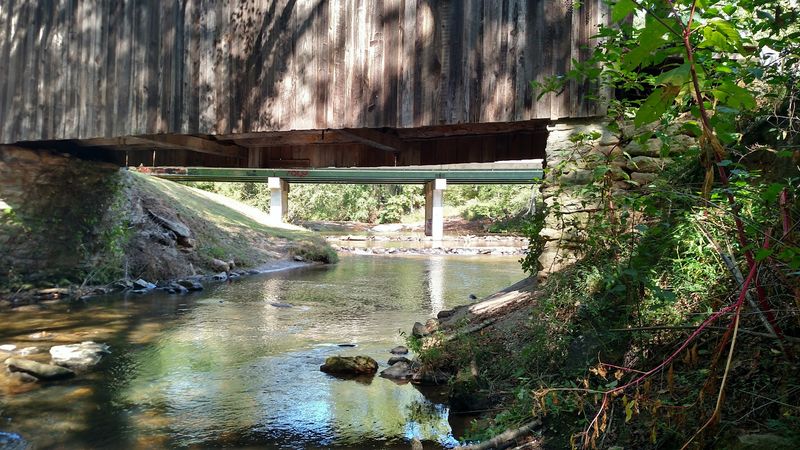
One of the most peaceful parts of visiting the Stovall Mill Covered Bridge is the sound of Chickamauga Creek flowing gently beneath it. The water is clear and cool, moving over smooth rocks and pebbles in a way that instantly slows your heart rate.
On a warm day, you can hear it before you even see the bridge.
Many visitors make their way down the hillside to wade in the creek or simply sit on the rocks and enjoy the scenery. Some reviewers have even mentioned rope swings and sliding rocks nearby, making it a surprisingly fun outdoor spot for families.
The creek also adds to the bridge’s mysterious atmosphere. When the morning mist rises off the water and drifts through the wooden tunnel, the whole scene looks like something out of a storybook.
It is the kind of natural beauty that makes you want to stay just a little bit longer.
A Free and Open Landmark
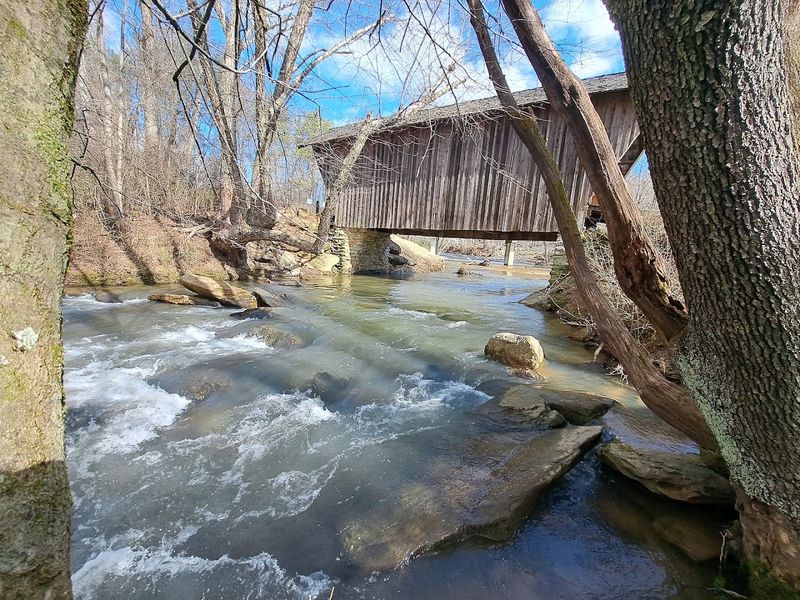
One of the best things about visiting the Stovall Mill Covered Bridge is that it costs absolutely nothing. The site is open 24 hours a day, seven days a week, making it easy to stop by whenever your schedule allows.
Whether you are passing through on a road trip or making a special detour, the bridge welcomes everyone for free.
Parking is available on both sides of the bridge, and the area includes stone picnic tables and bear-proof trash cans. A couple of charcoal grills are also on site, making it a surprisingly complete little picnic destination.
You can pack a lunch and spend a relaxing hour listening to the creek.
The informational sign near the entrance gives visitors a quick overview of the bridge’s history without overwhelming them. It is the kind of roadside stop that feels like a genuine gift, no admission fee, no crowds, just history and fresh mountain air.
The Graffiti Problem Visitors Keep Talking About
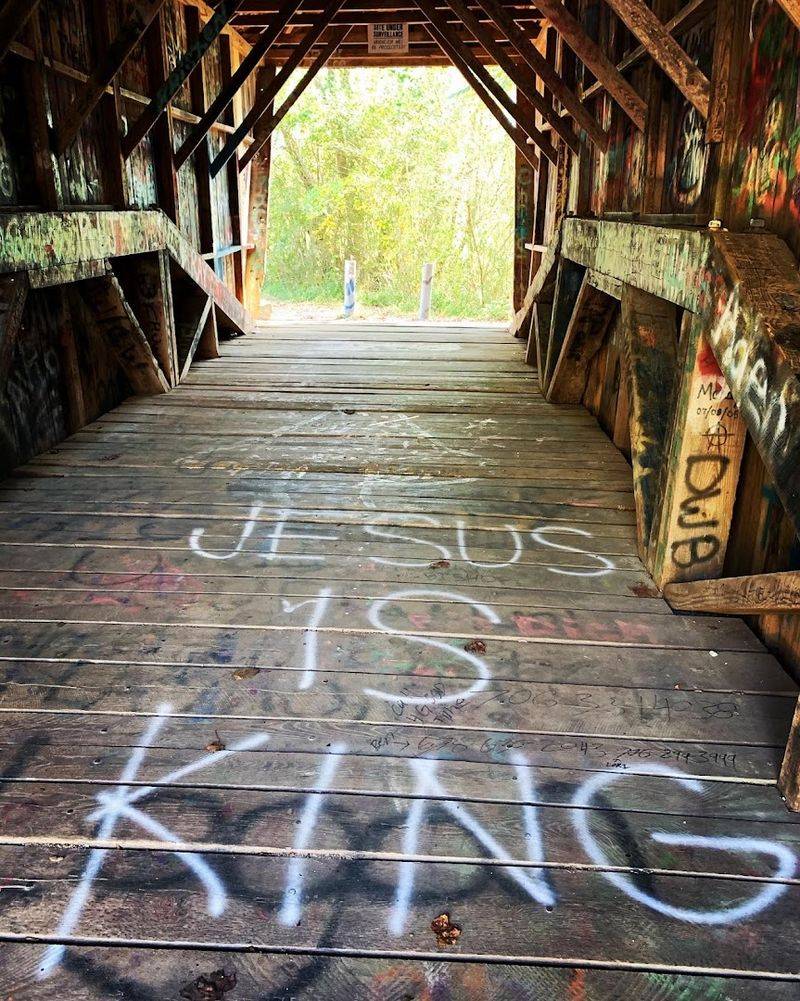
Ask almost any recent visitor about the Stovall Mill Covered Bridge and one topic comes up again and again: the graffiti. The inside walls of this historic structure have been heavily tagged over the years, with names, initials, and drawings scrawled across the aged wood.
For many people, it is a sad sight.
Reviewers consistently express frustration and disappointment about the vandalism, calling it disrespectful to such a meaningful piece of Georgia history. One visitor put it plainly: it is a shame that people feel the need to leave their mark on something that belongs to everyone.
Despite the graffiti, many visitors still rate the experience highly and encourage others to come. The beauty of the surrounding area, the sound of the creek, and the weight of the history make the visit worthwhile.
Hopefully, increased awareness and community care will help preserve this treasure for future generations to enjoy without the clutter.
North Georgia’s Hidden Roadside Gem
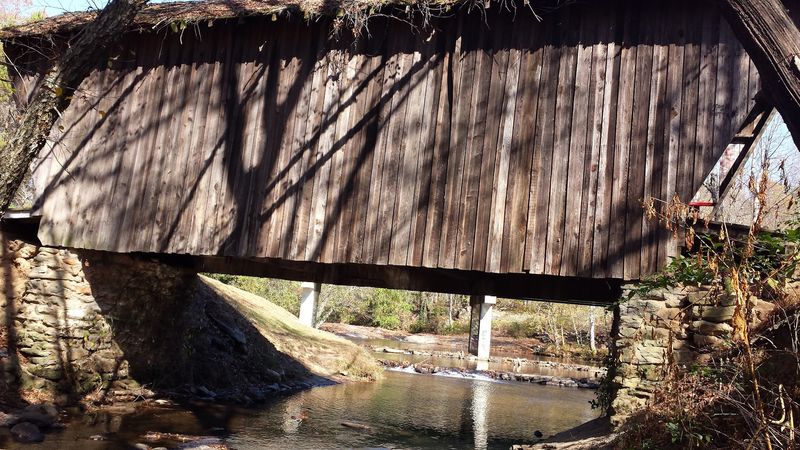
Driving along GA-255 near the town of Helen, Georgia, most people would zoom right past the Stovall Mill Covered Bridge without a second glance. It sits quietly off the main road, partially hidden by trees and easy to miss if you are not actively looking for it.
But those who do pull over are usually glad they did.
Several reviewers describe it as a hidden gem, the kind of place that surprises you with how much it offers once you step out of your car. The combination of history, natural scenery, and peaceful atmosphere creates an experience that feels genuinely special despite its small footprint.
For travelers exploring the Helen area or heading into the North Georgia mountains, this stop fits perfectly into a day of sightseeing. It pairs well with nearby waterfalls and hiking trails, making it a natural addition to any outdoor adventure itinerary in the region.
What the Historical Sign Reveals
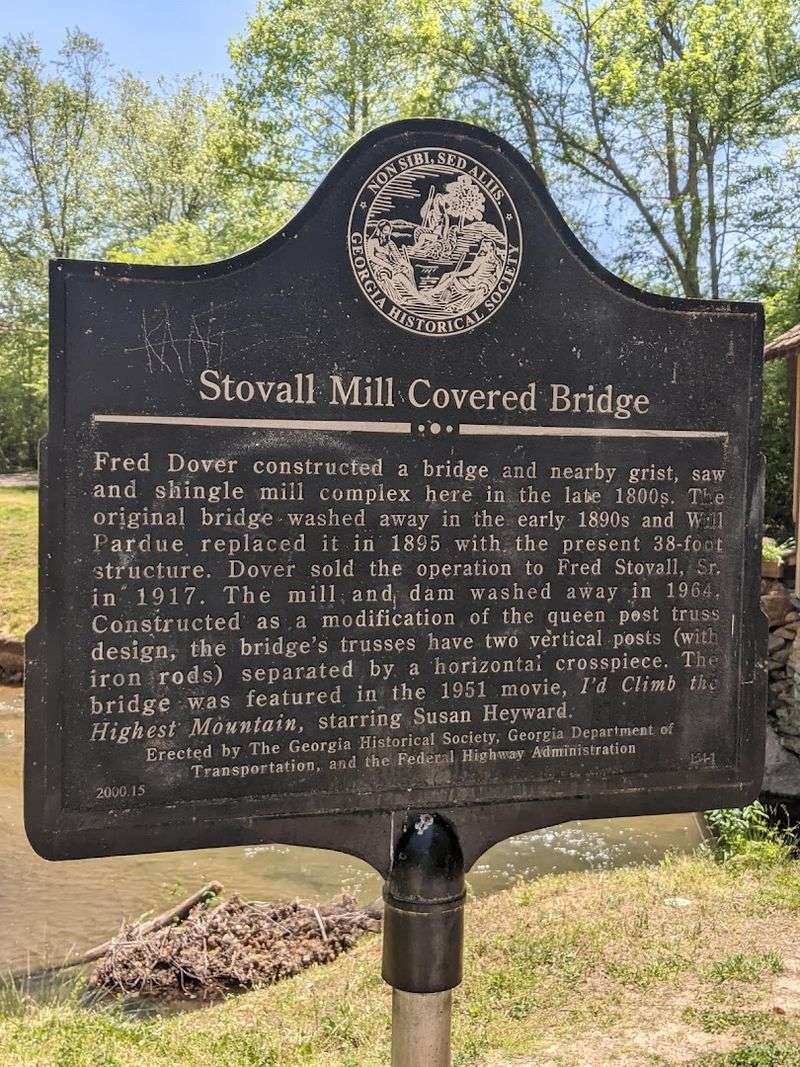
Planted near the western entrance of the bridge, a wooden informational sign gives visitors a quick but meaningful history lesson. It covers the bridge’s construction date, its queen post truss design, and its notable appearance in the 1951 film.
For first-time visitors, reading the sign adds important context to what might otherwise seem like just an old wooden bridge.
The sign also helps explain why the bridge was built in the first place and how it served the local community. Understanding that history changes the way you look at every plank and beam.
Suddenly, the structure feels less like a curiosity and more like a living piece of the past.
Visitors with children especially appreciate having something educational to read together before exploring. It turns the stop into a mini outdoor classroom.
History does not always need to be taught inside four walls, and this little sign does a wonderful job of proving that point.
Best Times to Visit and What to Expect
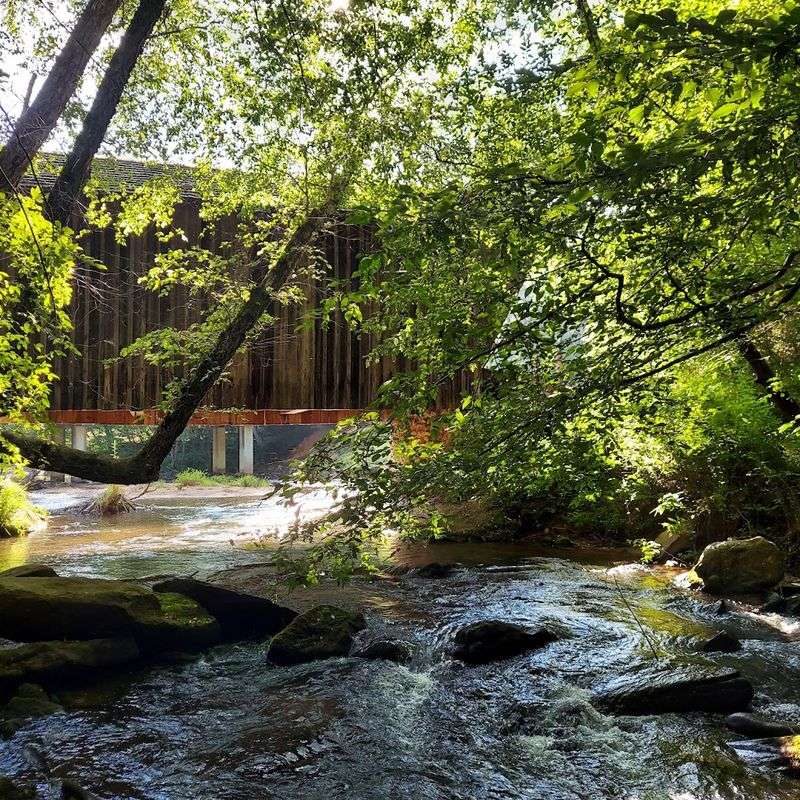
Timing your visit to the Stovall Mill Covered Bridge can make a big difference in the experience. Weekends tend to draw more visitors, especially during summer and fall when the North Georgia mountains are popular with tourists.
If you prefer a quieter atmosphere, a weekday morning visit is your best bet.
Fall is arguably the most stunning time to visit. The surrounding trees explode into shades of red, orange, and gold, framing the bridge like a painting.
The cooler temperatures also make creek wading more refreshing and the air feels crisp and clean coming down from the mountains.
Spring and summer bring lush green scenery and warmer creek water, which is perfect for families who want to let kids splash around. Just come prepared: there are no restrooms on site, and cell service can be spotty.
Bring snacks, wear comfortable shoes, and plan to linger longer than you think you will.
The Bridge’s Connection to the Stovall Mill
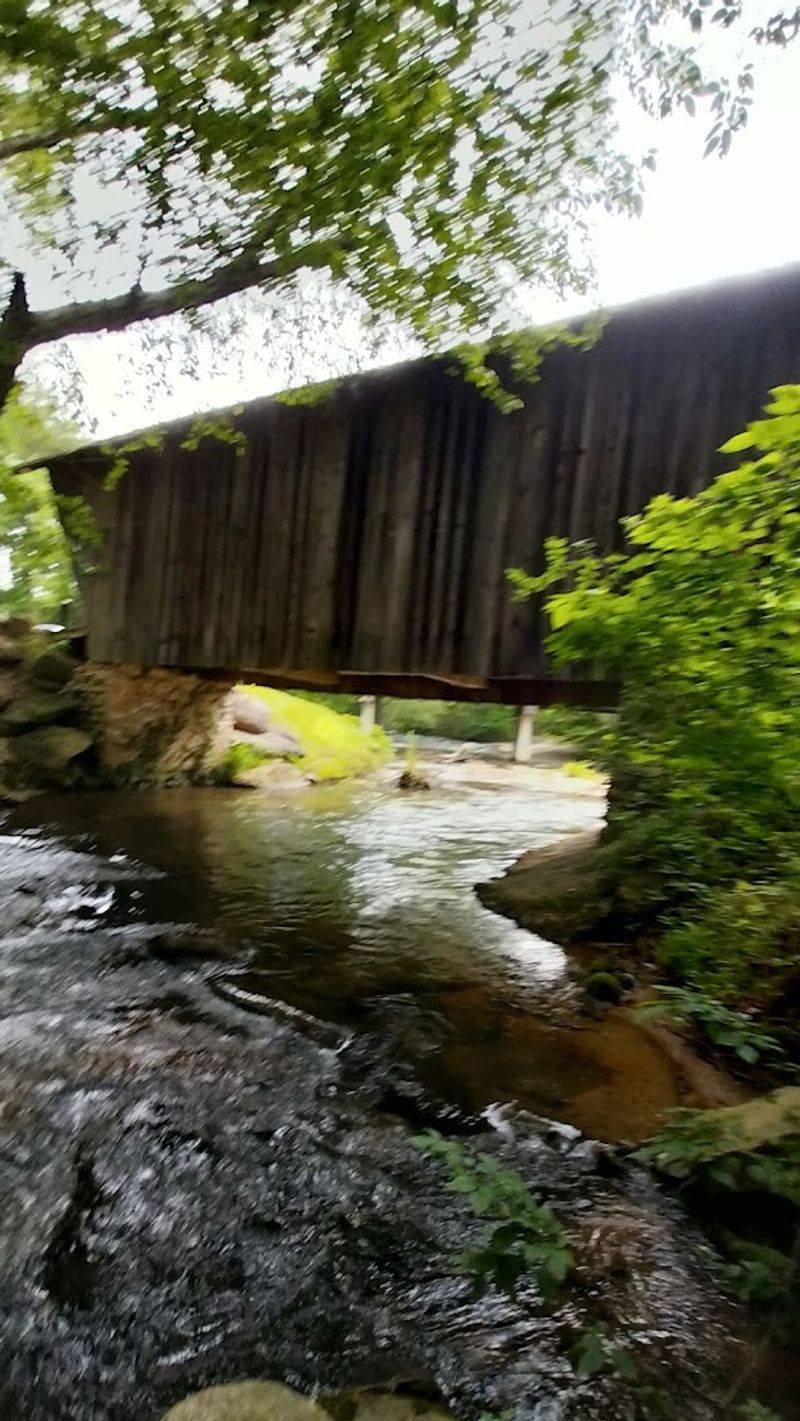
The bridge did not get its name by accident. It was built to serve the Stovall Mill, a grist mill that once operated in the Sautee Nacoochee valley.
Grist mills were essential to rural communities in the 1800s because they ground grain into flour and cornmeal, staple foods that families depended on to survive.
Workers and farmers needed a reliable way to cross Chickamauga Creek to reach the mill, and the covered bridge solved that problem. Covering the bridge protected the wooden structure from rain and weather, extending its lifespan significantly.
Without that roof, the bridge would likely have rotted away within a few decades.
The mill itself is no longer standing, but the bridge remains as a quiet reminder of the community that once thrived here. It is a small but powerful link to a way of life that has long since faded, preserved in wood and history just off a Georgia country road.
Why This Bridge Still Matters Today
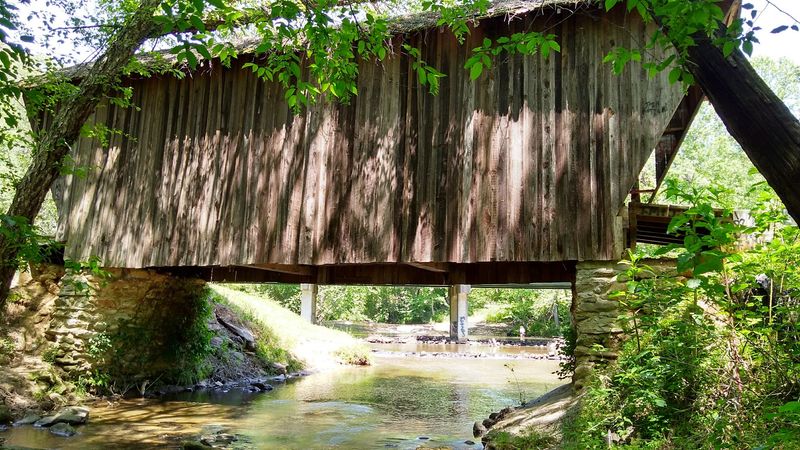
Some people might wonder why a tiny wooden bridge in the Georgia mountains deserves so much attention. The answer is simpler than you might think.
Places like the Stovall Mill Covered Bridge connect us to the everyday lives of people who came before us, people who worked hard, built things with their hands, and left behind something real.
With a 4.4-star rating and hundreds of reviews, it is clear that modern visitors still find meaning and joy in this little landmark. Families bring their kids, history lovers make special trips, and road trippers stumble upon it and leave feeling like they found something rare.
That kind of impact does not fade easily.
Preserving places like this matters because once they are gone, they are gone forever. Every visit, every shared photo, and every conversation about the bridge helps keep its story alive.
Sometimes the smallest places carry the biggest pieces of our shared history.
Enjoyed this story?
Add Fast Food Club as a preferred source to see more of our reporting on Google.