


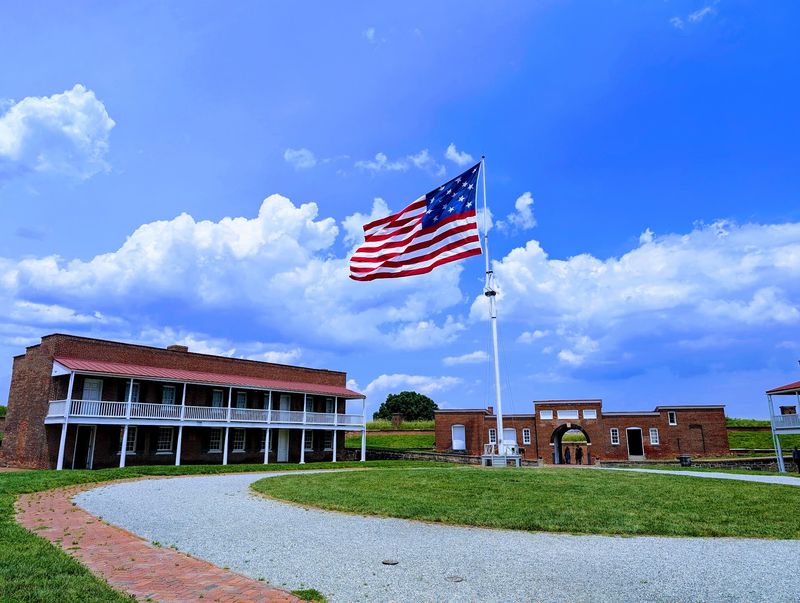
There is a spot in Baltimore where a mile-long paved loop wraps around the water, flat enough for strollers and wheelchairs, yet it happens to sit on the exact ground that gave America its national anthem. Most people show up expecting a heavy history lesson and leave surprised that they also got one of the easiest, prettiest walks in Maryland.
The trail is free, the views stretch across the Patapsco River, and a star-shaped fort waits at the center for anyone curious enough to step inside. Families, runners, and history fans all find a reason to slow down here.
What makes this place work as both a landmark and a low-effort outing is a mix of smart layout, wide-open scenery, and a story that still feels alive. Keep reading to find out exactly where it is and why it earns a top spot.
Where the Star-Shaped Fort Sits
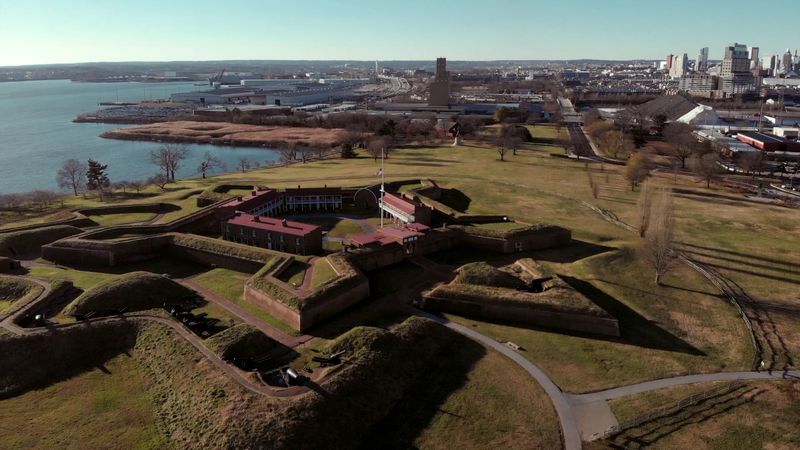
Tucked at the tip of a small peninsula in Baltimore, Maryland, this landmark carries the full name Fort McHenry National Monument and Historic Shrine. You will find it at 2400 E Fort Ave, Baltimore, MD 21230, just a short drive off Interstate 95 and only minutes from the bustle of the Inner Harbor.
The location does a lot of the heavy lifting. Water surrounds three sides of the grounds, giving you long, open views of the Patapsco River without any effort at all.
What sets it apart from a plain city park is the pairing of scenery and story. The star-shaped fort anchors the center, while flat paths circle the outer edge for those who just want to stretch their legs.
Getting here is refreshingly simple. The turnoff leads straight to a dedicated lot near the visitor center, and the whole area is laid out so you never have to guess where to go next.
That easy access is a big reason the fort works so well as a casual outing. You can arrive with no plan, wander the grounds, and still walk away feeling like you saw something that mattered.
The Battle That Wrote a Song
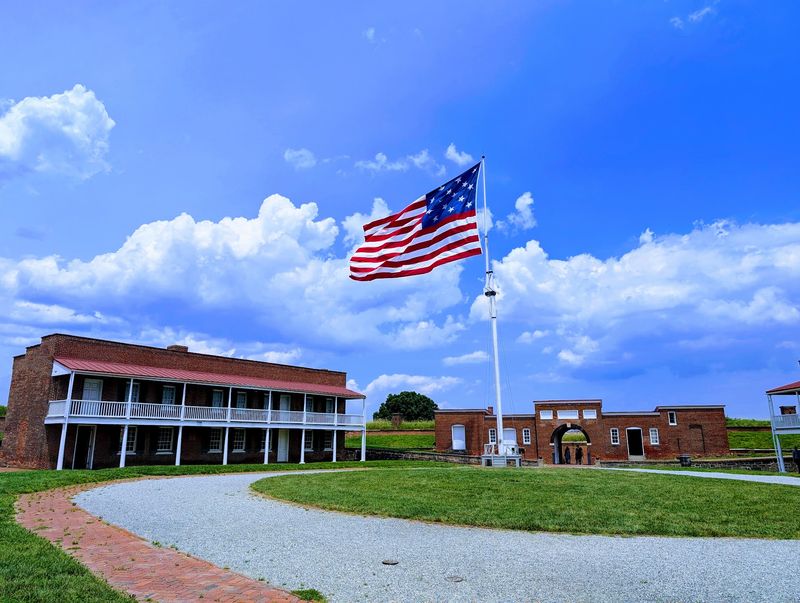
Back in September 1814, during the War of 1812, this fort became the last thing standing between the British fleet and the city of Baltimore. American defenders held their ground through the bombardment on September 13 and 14, and the outcome shaped the young nation in ways nobody expected.
Francis Scott Key watched the fight from a distance and saw the large American flag still flying afterward. That single image moved him to write the poem that eventually became The Star-Spangled Banner, adopted as the national anthem in the 1930s.
Standing on the actual ground where that happened changes how the story lands. It is one thing to read about the battle in a book and another to walk the same grass where it played out.
The park does not shy away from the fuller picture either. Interpretive exhibits acknowledge the complex history of the country and the fort’s evolving role across the years that followed.
For anyone who ever mumbled through the anthem at a ballgame, this is the place where those words were born. That connection alone gives the visit a weight that sticks with you long after you leave.
The Sea Wall Trail That Steals the Show

Ask around and plenty of folks will tell you the real hidden treasure here is not the fort at all but the Sea Wall Trail. It is a flat, paved loop roughly a mile long that hugs the edge of the peninsula.
The path serves up steady views of the Patapsco River and even the Francis Scott Key Bridge along the way. Because it stays level the whole time, it welcomes runners, families with strollers, and anyone who wants a walk without a workout.
Best of all, this loop costs nothing. The park is free to enter if you only plan to walk the trail, and you pay only when you decide to head inside the historic fort itself.
Even on a brisk January morning the loop stays calm and peaceful. Regulars come back again and again simply to log an easy mile with scenery that never gets old.
That blend of free access, flat ground, and open water is exactly why this earns a spot among the state’s best easy hikes. You get the reward of a great view without the sweat of a climb.
Walking Inside the Ramparts
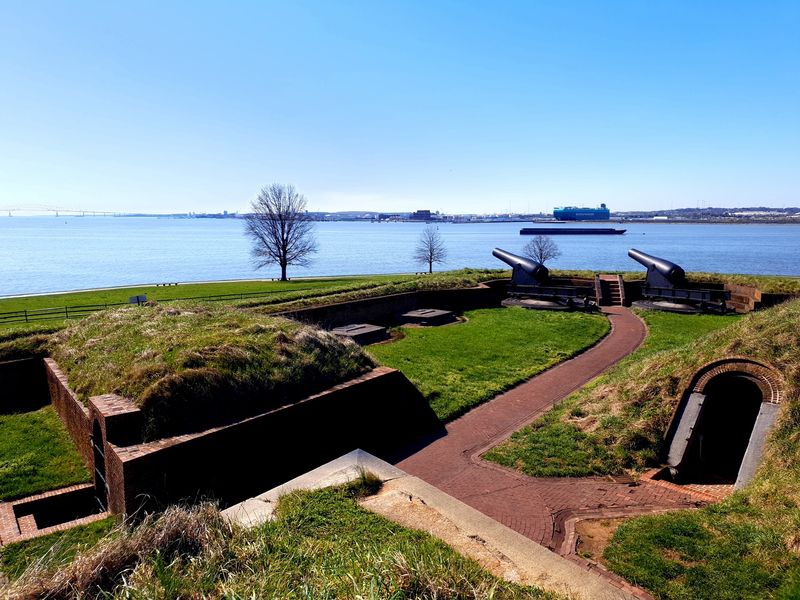
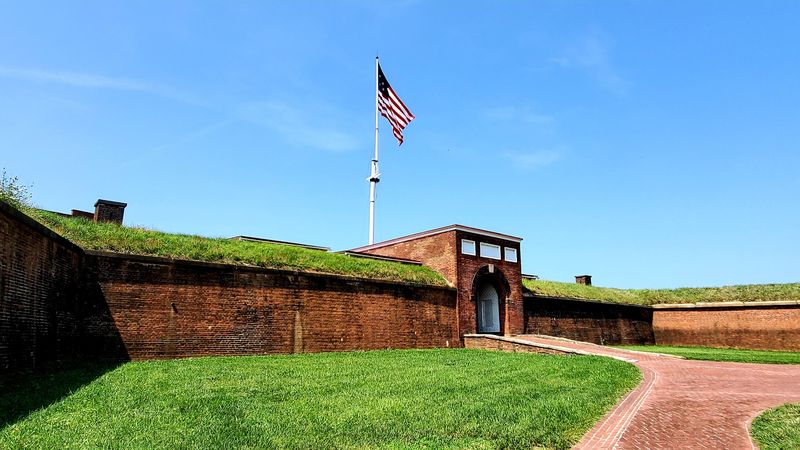
Stepping through the gate of the star fort feels like trading the modern harbor for the early 19th century. The layout follows a five-pointed star, and you can walk the parapet along the top for a full loop around the perimeter.
Rows of cannons line the walls, aimed out toward the water just as they were during the defense of Baltimore. Getting up close to them makes for some of the most popular photos on the grounds.
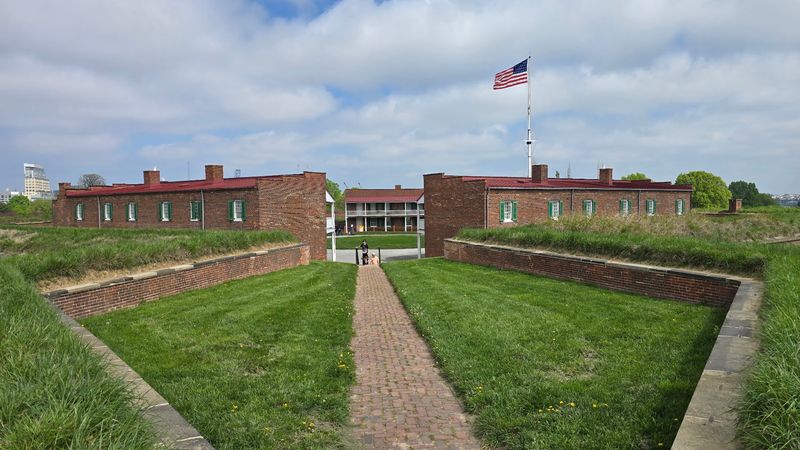
Inside the walls you can duck into the restored barracks where soldiers once lived. The quarters, along with the former sites of the hospital and other buildings, help fill in what daily life looked like here.
There is a surprising amount of room to roam. The open central area gives kids space to move while grown-ups take their time reading the markers scattered around.
Walking the ramparts turns the history from an abstract idea into something you can actually trace with your own feet. It is the part of the visit that most people remember first when they head home.
The Visitor Center Film Worth Sitting For
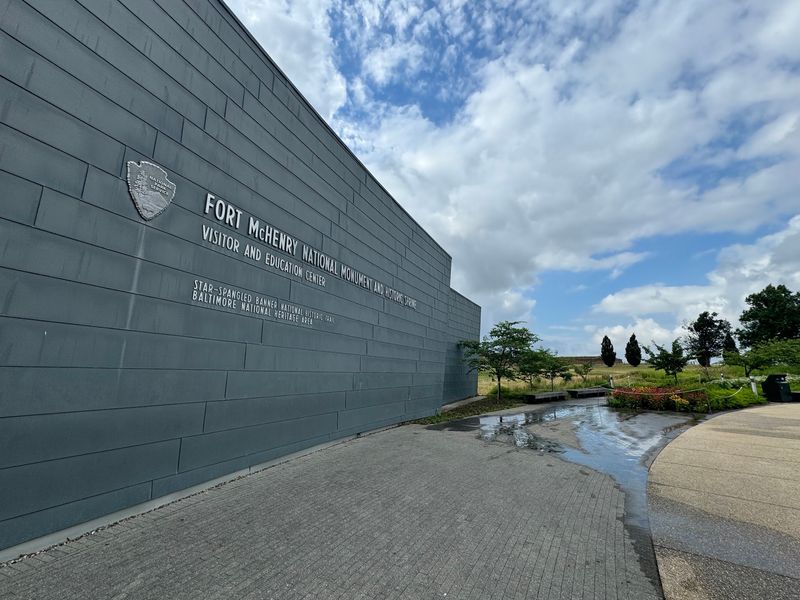
Before heading out to the grounds, a lot of people start at the visitor center, and there is a good reason for that. The center houses a museum packed with artifacts and plaques that lay out the War of 1812 and the origins of the anthem in clear detail.
The real standout is the feature film about the battle for Baltimore. It runs through the events of September 13 and 14, 1814, and Francis Scott Key’s drafting of the words that became the national anthem.
What makes the movie special is the ending, which comes with effects built into the room around you. The finale lands well even on a day with no wind, and it has a way of catching people off guard emotionally.
For a smaller museum, it packs in more than expected. The exhibits are well kept and thoughtfully arranged, so you never feel buried under too much information at once.
Starting your visit here sets the stage for everything else. By the time you walk out to the fort, the story already has a hold on you.
That Giant Flag Overhead
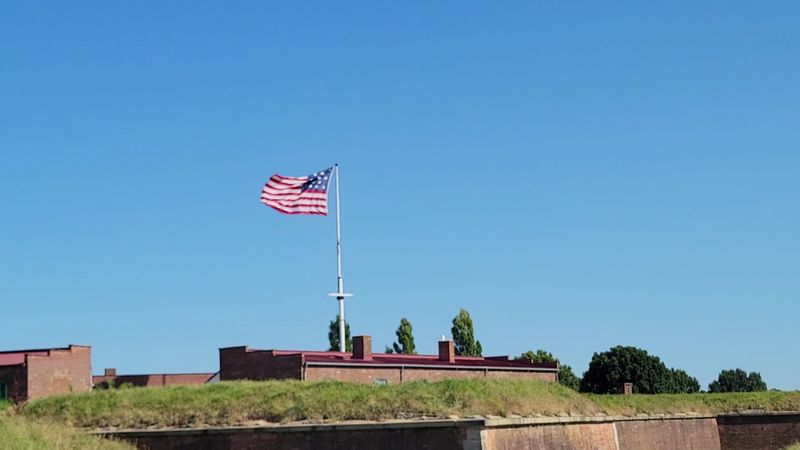
Look up almost anywhere on the grounds and the oversized American flag dominates the view. It is a nod to the very banner that kept flying after the bombardment, the one that inspired Key’s famous words.
The flag is not just decoration. It stands as the living symbol of what happened here, connecting the modern grounds to that morning in 1814.
Timing your visit around the flag activities adds another layer to the trip. On certain days there are flag-changing ceremonies, and checking the schedule ahead helps you catch one.
These moments turned into a highlight for many families. Watching the banner come down or go up carries a quiet significance that photos never quite capture.
The site even hosted a memorable raising of the Star-Spangled Banner on July 4th, 2025, marking the 250th birthday of the country. Events like that show how the flag keeps this place feeling current rather than frozen in the past.
If you can plan around the schedule, the flag ceremony is one small effort that pays off big.
Rangers Who Bring It to Life

Half the charm of the place comes from the people in the ranger hats. Time and again, the park rangers here earn praise for being friendly, sharp, and genuinely knowledgeable about every corner of the story.
They do more than point you toward the restrooms. A ranger might explain the deeper context of the battle or answer the questions you did not even know you had.
Volunteers pitch in too. Guided walks led by staff and volunteers turn a simple stroll into a richer experience, filling in the details you would otherwise miss.
One ranger reportedly explained why Fort McHenry became a historic shrine rather than just a national park, a small piece of trivia that added real value to the visit. That kind of insight is hard to get from a plaque alone.
The pride these staffers show tends to rub off on guests. Their enthusiasm makes even the youngest members of the group lean in and listen.
If you spot a ranger giving a talk, it is worth pausing whatever you were doing to join in.
Views Across the Patapsco
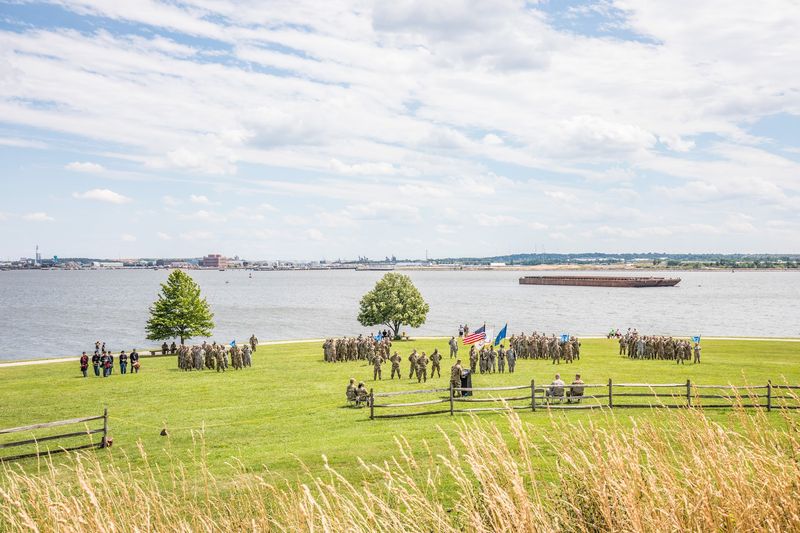
The scenery ranks right up there with the history as a reason to make the trip. Sitting on the water, the grounds open onto wide views of the Patapsco River and the Baltimore skyline beyond.
Those waterfront angles let you picture the British fleet lined up during the bombardment. The setting is peaceful now, which somehow makes the story behind it hit even harder.
The vistas shift with the seasons too. In spring, cherry blossom trees add bursts of color across the grounds, giving photographers a whole new reason to visit.
Because the paths sit right along the shoreline, you rarely lose sight of the water. Every bend of the loop offers a slightly different frame of the harbor and the bridge.
Calm, open, and easy to reach, the views turn a quick history stop into a place people linger. You come for the fort and end up staying for the scenery.
It is the kind of backdrop that makes a simple walk feel like an occasion.
A Stop Built for All Ages
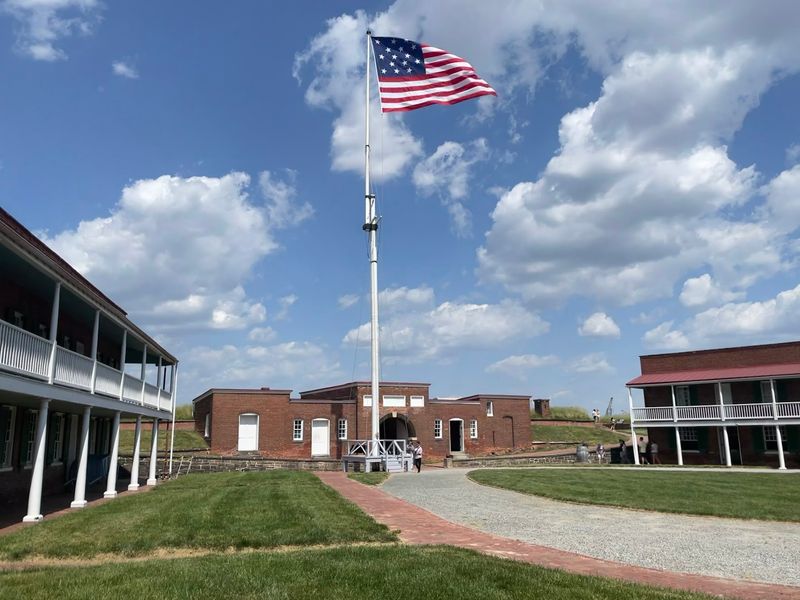
Few historic sites juggle so many different types of guests this smoothly. The flat, paved paths make the whole outing accessible, and the grounds are described as wheelchair friendly from the parking lot onward.
Families find plenty to keep everyone happy. Kids get open space to move around inside the fort, while parents can take their time with the exhibits and markers.
Runners treat the mile loop as a reliable training route. History buffs, meanwhile, get enough depth in the museum to satisfy a serious curiosity.
There is even room for a relaxed midday meal. You are welcome to picnic on the grounds, though there are no restaurants on site, so packing your own is the way to go.
Because you can cover both the trails and the fort exhibits in under two hours, it fits neatly into a busy day. That flexibility is a big part of why it works for grandparents and grade-schoolers alike.
Whatever pace your group prefers, the layout bends to fit it. Everybody leaves having found their own version of a good time.
Hours, Fees, and What You Pay For
Planning the timing is easy because the schedule stays consistent. The park keeps the same hours every day of the week, opening at 9 AM and closing at 5 PM.
The pricing splits into two clear parts. Walking the grounds and trails costs nothing, and the museum and visitor center are free, but stepping inside the historic star fort itself runs $15 per adult.
There are ways to trim that cost. An Annual National Park Pass covers your entry, and one family reported paying just $45 for a full year of access for four people.
Military members and veterans get an even better deal. Active-duty service members, retirees, and veterans can enter free with proper ID, and eligible passes offer lifetime access to national parks nationwide.
Some feel the $15 fort fee is steep since so much of the park is already free. Still, most agree the visitor center film and the fort exhibits justify the price for a first-time trip.
Knowing the breakdown ahead of time lets you decide exactly how much of the experience you want to unlock.
Parking and How to Get Here
Reaching the fort by car is straightforward, sitting just off Interstate 95 in Baltimore. A dedicated lot near the visitor center makes arrival simple, and on quieter days parking is a breeze.
Winter visits proved especially smooth. Even with several inches of snow on the ground, the paths and parking lot were cleared and easy to navigate.
The catch shows up in warmer months. When the main lot fills, your backup options thin out to a gravel area or spots outside the gate that require a walk in.
For that reason, summer travelers may want to consider public transit or walking in from nearby. It saves the stress of circling for a space during peak crowds.
Those without a car should know the site sits a bit out of the way from the city center. The trip takes a little planning, but the payoff makes the extra effort worthwhile.
Restrooms are available on site, and a gift shop rounds out the practical amenities. A quick check of the crowd forecast before you go can make the whole arrival far smoother.
Ceremonies, Concerts, and Special Days

Beyond the everyday walking and touring, the calendar here fills up with events worth planning around. Certain days feature flag-changing ceremonies, reenactments, and even concerts on the grounds.
Catching one of these turns a routine visit into something memorable. The reenactments in particular bring the War of 1812 story to life in a way the exhibits alone cannot.
There is also a chance to take part rather than just watch. Time your trip right and you can join the color guard, stepping directly into the flag ritual.
The daily flag change at 4 PM comes with a short lesson that draws a crowd. It is a small ceremony, but people make a point of sticking around for it.
Anniversary events add extra shine on big occasions. The site marked both the country’s 250th anniversary and a July 4th, 2025 flag raising with special significance.
Checking the schedule before you head out is the single best tip for getting more out of the day. A little timing turns a good visit into a great one.
Why This Fort Belongs on Your List
Pulling all of it together, few places in Maryland manage to be this rewarding for so little effort. You get a flat, free mile-long loop, wide water views, and a fort that shaped the national anthem, all in one easy outing.
The praise runs deep, with a 4.8-star average across nearly seven thousand accounts. That kind of consistency says a lot about how well the site delivers for such a wide range of guests.
Plan for a couple of hours if you want the full experience, though the trail alone rewards even a short stop. Between the ranger talks, the film, the ramparts, and the scenery, there is always a reason to slow down.
Some call it one of the most underappreciated historic sites in the country, and that reputation feels earned. It combines learning, walking, and beautiful surroundings without asking much in return.
Anyone spending time near Baltimore would do well to carve out an afternoon here. As easy hikes with a story go, this star-shaped landmark is tough to beat.
Enjoyed this story?
Add Fast Food Club as a preferred source to see more of our reporting on Google.