


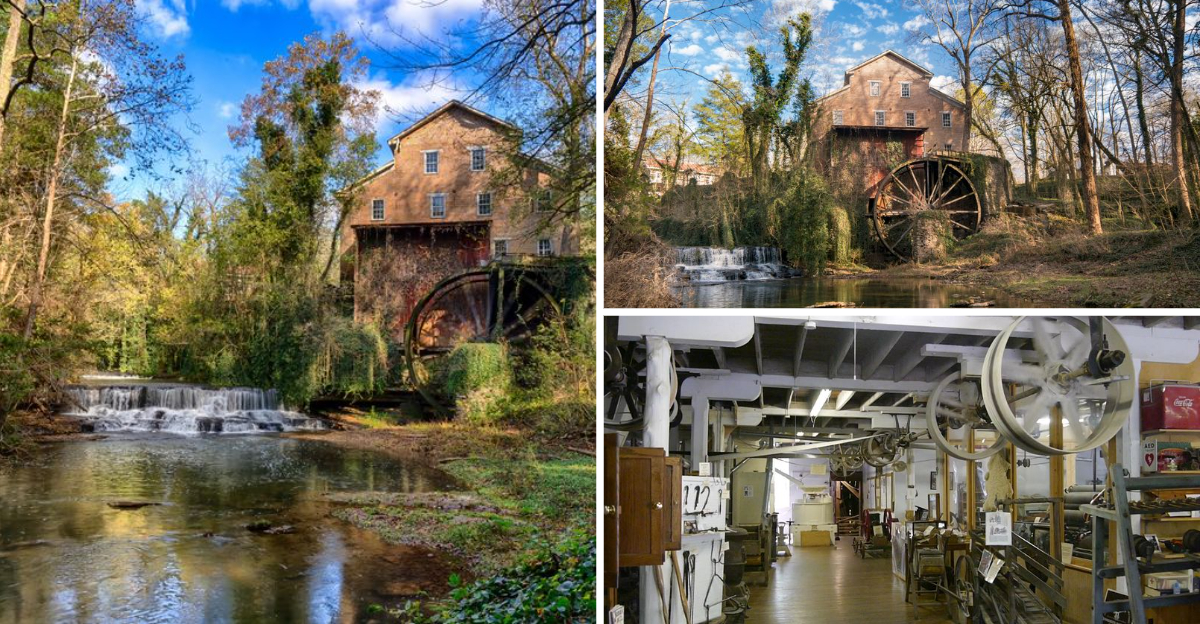
Tucked into the quiet hills of southern Tennessee sits a 32-foot waterwheel that still spins and still works, powering a mill that has been grinding grain the old-fashioned way for well over a century. The couple who own the place have kept it running for decades, greeting families and answering every question with genuine enthusiasm.
Three floors of antique machinery, a creek you can wade in, a one-room school house, and freshly ground cornmeal you can carry home all wait at the end of a short country road. This is a slow, unhurried spot where you can spend an entire afternoon and still feel like you have more to see.
Keep reading to learn where it is, what makes it special, and how to plan your own visit.
A Working Mill at the End of a Country Road

Down a quiet lane in Belvidere, Tennessee, you will find Falls Mill and Museum at 134 Falls Mill Rd, Belvidere, TN 37306. The address sounds simple, and the drive out is easy, which is part of the charm.
What sits at the end of that road is far more than a photo stop. A genuine working mill still turns its wheel and grinds grain, just as mills did generations ago.
The property carries a rating of 4.9 stars across more than 230 write-ups, which is about as close to universal praise as a place can get. Folks who live only minutes away often admit they waited years to visit and wished they had come sooner.
The setting pulls double duty as both a museum and an outdoor spot. You can tour the historic building, then wander the grounds down toward the creek and falls.
Regulars mention that you get nearly free rein of the grounds and the huge historic mill, which makes it feel more like an adventure than a guided march. Plan on staying longer than you first expect, because this is the sort of place that quietly steals your whole afternoon.
The Story Behind the Wheel

History runs deep here, and the people telling it know every chapter. The mill preserves a slice of life from roughly 100 to 150 years ago, when water power drove industry across the countryside.
The current owners have cared for the place for well over 37 years, and the enthusiasm they bring has not faded a bit. They walk guests through how the machines work, why they were built the way they were, and what daily labor looked like back then.
Many who stop by say the depth of knowledge about the mill’s engineering and the area’s past is unlike anything they have found at other mills. The history of the mill itself comes up again and again as a favorite topic.
Part of what makes the story land is that it is a living one. This is not a roped-off relic gathering dust.
The caretakers frame their work as historical preservation and education, and many note the place might have been forgotten entirely without their dedication. You leave with a real sense of how much thought and care keeps the whole operation turning.
Three Floors of Antique Machinery

Climb inside and you meet three full floors packed with the tools of another era. The collection spans grain grinding, textile weaving, printing presses, and more, all gathered under one roof.
Families with kids often find the machinery a highlight, since there is so much variety to take in. Old looms sit alongside industrial equipment that once did serious work.
Guests who love history describe the preserved industrial machines as better than any other mill they have toured. That is high praise, and it comes up more than once.
A quirky favorite lives upstairs too. A coin-operated player piano waits for a quarter, so bring some spare change and let it play a tune while you explore.
Little touches like that turn a simple walk-through into something memorable. Kids especially love feeding the fish and hearing the piano spring to life.
The owners happily adjust the pace to match curious young explorers, which keeps the whole tour welcoming for every age. There is genuinely a lot to see, and rushing would be a mistake.
Freshly Ground Cornmeal to Take Home

Here is the part that makes this mill more than a museum: the grinding is real, and you can buy the results. Fresh cornmeal comes right off the working stones, along with a lineup of other pantry goods.
The little shop stocks flour, pancake mix, grits, jams, and other goodies worth carrying home. People often plan a return trip just to restock.
Cornmeal fans come specifically for the meal, and some cannot resist grabbing grits on the way out too. Cheddar-loaded grits and spoon bread recipes are exactly the kind of thing this cornmeal was made for.
Souvenirs and small gifts round out the shelves, so there is something for folks who want a keepsake rather than an ingredient. It is an easy way to support a place that has kept its wheel turning for decades.
Many guests make a habit of circling back into the mill before they leave to grab a few things. Buying a bag also means you are taking a little piece of that waterwheel history straight into your own kitchen.
The Falls, the Creek, and the Grounds

Beyond the building, the outdoors does plenty of heavy lifting. A waterfall and spillway sit near the towering wheel, tucked into a small glen that feels quiet and green.
The creek is a big draw, and it is one families keep coming back for. Kids wade right in, and the falls give the whole spot a relaxed, unhurried mood.
Walking paths wind through the grounds toward the water, the falls, and the mill wheel. The trails stay well kept and easy to follow, so exploring never feels like a chore.
A tip that comes up often: walk all the way around the property and head down to the creek to see the wheel from above. The view from that angle is worth the short stroll.
Some guests spend hours just sitting near the water, and honestly that is a fine way to pass the time. The 32-foot wheel powers the working mill while the falls tumble nearby, giving you a real sense of how water and machinery worked together.
It is the kind of setting that rewards you for slowing down.
More Than a Mill: Cabin, School House, and Blacksmith Shed

The mill is the star, but it shares the property with a small cast of historic structures. Wander the grounds and you will find several log buildings that each tell their own story.
A one-room school house is a favorite with kids, offering a look at how classrooms once operated. The old blacksmith shed adds another layer of hands-on history to the visit.
There is also a log cabin bed and breakfast right on the grounds that guests can rent. Folks who have stayed rave about waking up surrounded by the peaceful setting.
Overnight guests mention that the cabin comes stocked with baked goods and breakfast foods for the stay, courtesy of the owner. That homey touch turns a night away into something special.
Several people say they hope to book the bed and breakfast on a future trip after touring the day version first. Between the school house, the cabin, and the blacksmith shed, the property gives you far more to explore than a single building ever could.
It all adds up to a proper little historic village worth a full day.
Picnic Tables, Pups, and a Family-Friendly Pace

Bring a basket, because this is a picnic kind of place. Plenty of tables sit near the water, and the setup practically begs you to pack a lunch.
The recommendation to grab a spot at the tables on the waterwheel side comes up over and over. Eating beside the falls is part of what makes the day feel like a small getaway.
Families fit right in here. School field trips have counted this among their best outings, and the owners are known for meeting kids at their own energetic speed.
Four-legged friends are welcome too. The grounds are dog friendly, so leashed pups can join the adventure and wander the paths with the rest of the crew.
The overall vibe leans calm and restful, which suits couples, grandparents, and wound-up youngsters alike. You can let kids splash in the creek while grown-ups settle in near the water.
It is a rare spot that keeps every age content at the same time. Pack the picnic, leash the dog, and give yourself permission to linger.
Planning Your Visit

A little planning goes a long way here, mostly because the mill keeps a short weekly schedule. Doors are open Thursday, Friday, and Saturday from 9 AM to 4 PM, and the site is closed Sunday through Wednesday.
The entry fee sits at a very friendly level, with adult admission noted at around 5 dollars. Guests routinely say the price feels almost too low for how much you get, given that many spend several hours on-site.
Getting there is straightforward, and the mill is easy to reach in Belvidere. One thing to keep in mind is that the parking area is fairly small, so arriving earlier in the day helps.
Family memberships are available for folks who plan to return, which several repeat guests choose. If you want the full experience, block out a good chunk of the day rather than a quick stop.
Between the museum, the shop, the grounds, and the creek, this quiet corner of Tennessee gives back far more than the modest ticket suggests. Come with time to spare, a picnic in hand, and a quarter for the piano, and Falls Mill will happily fill the hours.
Enjoyed this story?
Add Fast Food Club as a preferred source to see more of our reporting on Google.