


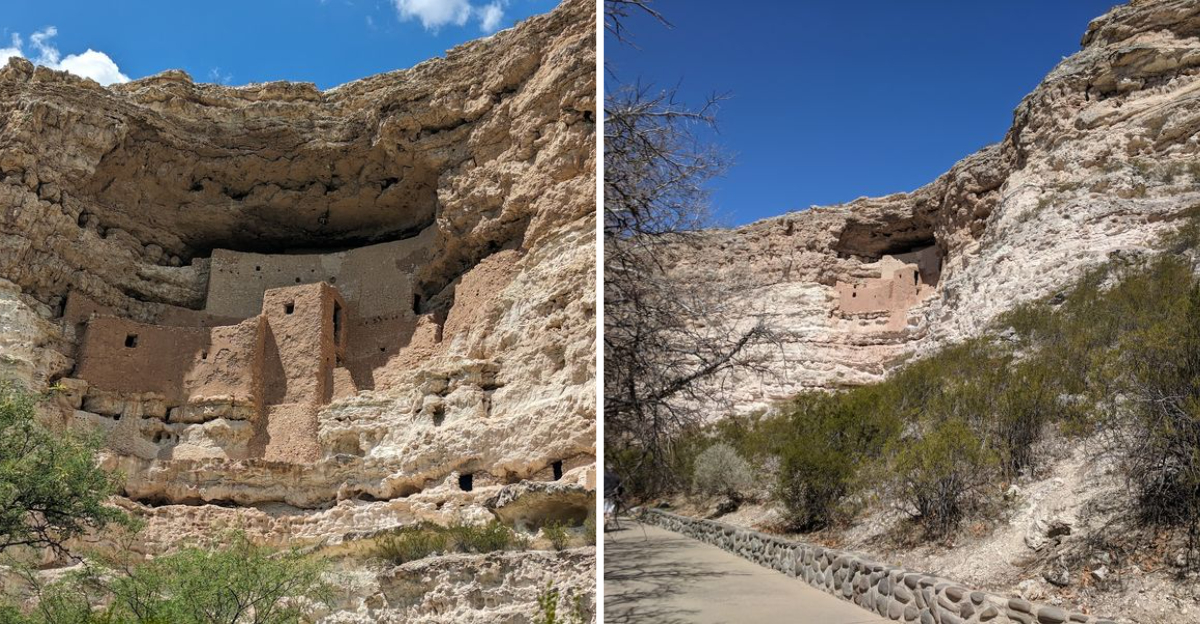
A short walk in central Arizona ends with a jaw-dropping surprise built into a limestone cliff. High above a quiet creek sits a five-story stone home carved by people who lived here more than 800 years ago, and the trees part to reveal it almost like a secret.
The path is paved, flat, and shorter than most grocery runs, yet it packs a full history lesson into every step. Families, curious road trippers, and even leashed pups all find something to love here.
What follows is a closer look at why this small trail keeps drawing crowds who leave grinning, and how you can make the most of a stop that fits neatly between Sedona and Phoenix.
Where The Cliff Dwelling Hides In Camp Verde
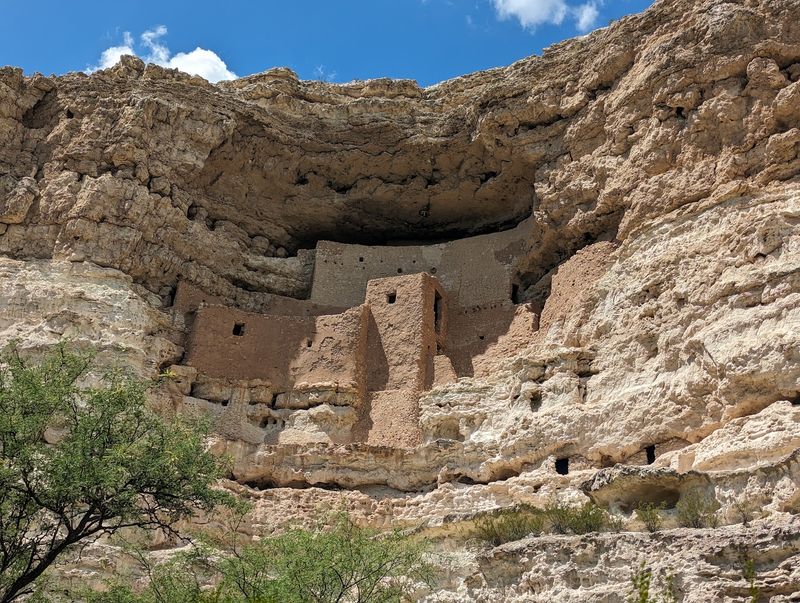
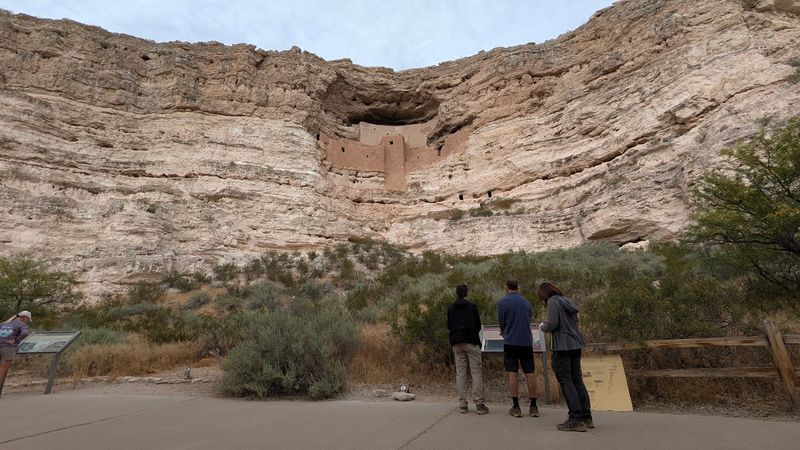
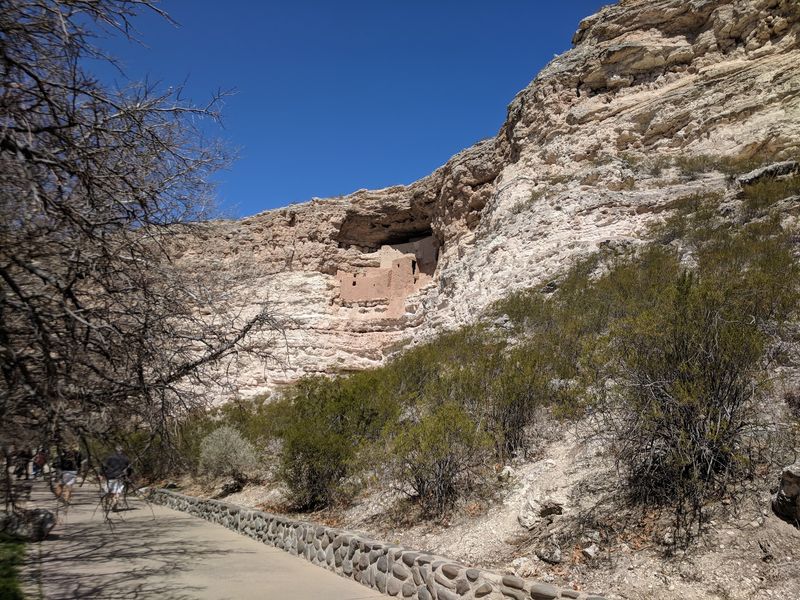
Tucked along Montezuma Castle Rd in Camp Verde, Arizona, this national monument guards one of the best preserved cliff dwellings in the American Southwest. The structure sits high inside a natural limestone alcove, watching over Beaver Creek below.
Built by the Sinagua people, the five-story dwelling dates back to the 12th century. Some sources place parts of the surrounding history even further back, which gives the whole area a deep sense of time.
The name itself is a bit of a historical mix-up. Early settlers assumed it was connected to the Aztec ruler Montezuma, though the Sinagua were the true builders and had no link to him at all.
Run by the National Park Service, the site pairs a walkable trail with a visitor center and small museum. That combination makes it easy to see the dwelling up close while still learning the story behind it.
Reaching the entrance is simple, and the location works perfectly as a break during the drive between Sedona and Phoenix. Few roadside stops reward a quick detour quite this generously.
The Sinagua Story Carved In Stone
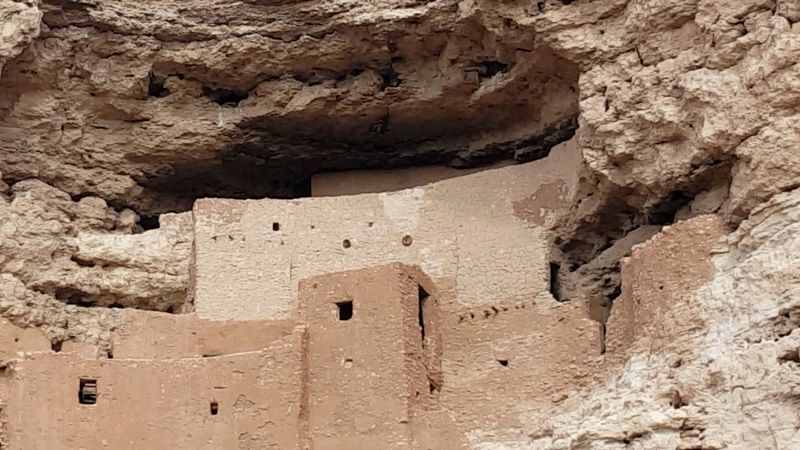
Long before highways cut through the valley, the Sinagua people shaped this alcove into a thriving home. They stacked stone and mortar into rooms that climbed five stories up the cliff face.
The engineering behind it still turns heads today. Individual rooms, windows, and architectural details remain clearly visible, standing as a testament to the ingenuity of the region’s earliest residents.
Guests often describe the site as a real feat of pre-Columbian construction. Seeing the layered rooms tucked into the rock puts both the history and the skill into sharp focus.
The dwelling served as more than shelter. Its position near the creek gave the Sinagua reliable water and fertile ground, while the high perch offered protection from the elements.
Because the structure has weathered centuries so well, it offers a rare window into daily life around the 1400s. That kind of preservation is exactly why the site earned national monument status and continues to fascinate anyone who wanders in.
A Paved Loop Almost Anyone Can Walk
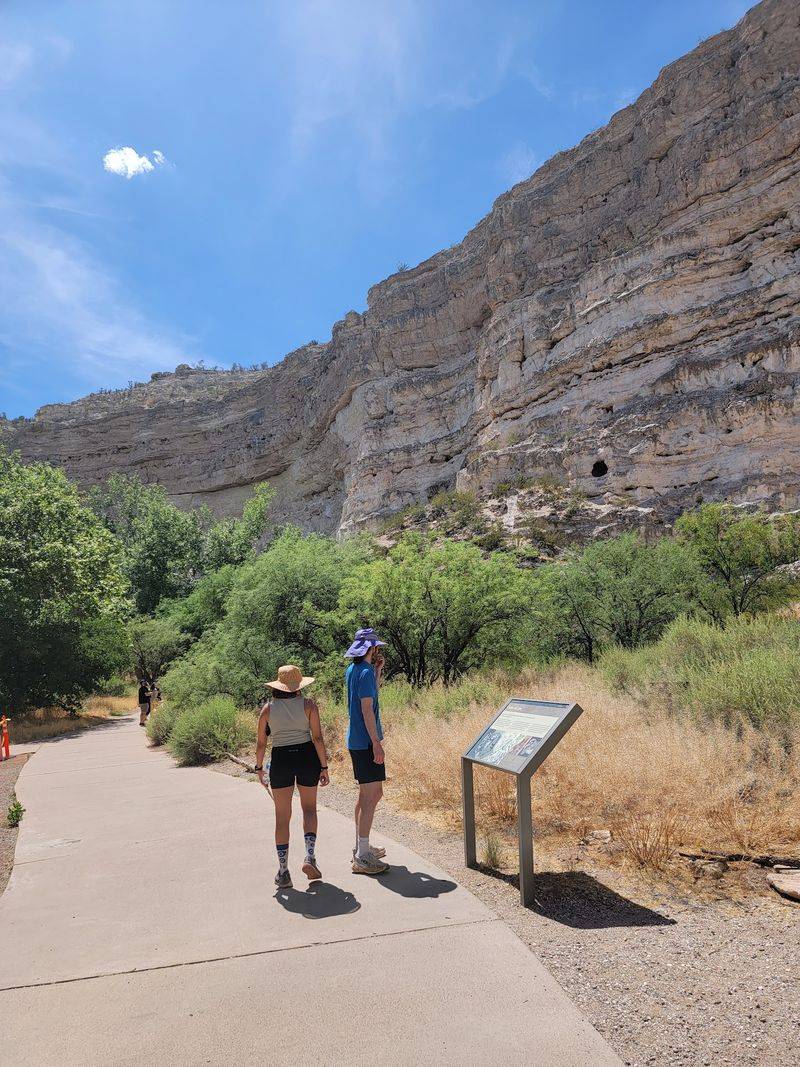
The trail here rarely intimidates anyone. Measuring roughly a third of a mile, the paved loop stays flat, smooth, and easy from start to finish.
Accessibility is one of its biggest draws. The even surface works well for wheelchairs and strollers, and folks of all ages manage the walk without breaking a sweat.
Guests frequently point out how manageable the outing feels. Most agree the whole thing takes well under an hour, sometimes closer to 45 minutes if you pause at every sign.
The path loops back to the parking area, so there is no backtracking or guessing which way to go. Tree cover shades much of the route, which is a welcome bonus on warmer days.
One thing worth noting is that certain lower trails have been closed at times for safety, usually due to concerns about falling rocks. Even with those closures, the main loop still delivers a clear and satisfying view of the dwelling.
The Diorama That Steals The Show
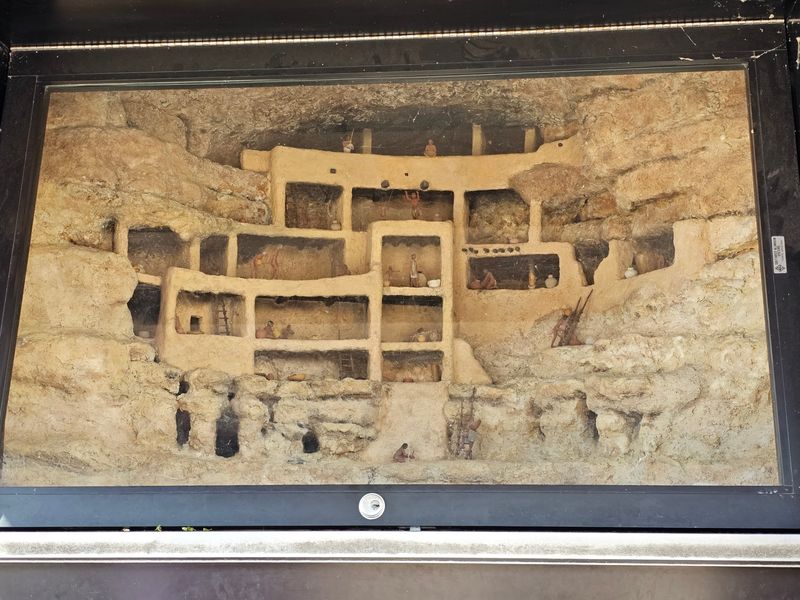
Right at the center of the paths sits a small feature that quietly becomes many guests’ favorite. A miniature cross-section of the housing shows exactly how the castle’s levels stacked together.
The little model does something photos of the cliff cannot. It reveals the interior layout and hints at how the Sinagua might have moved between floors and rooms.
A narrated audio component accompanies the display, walking listeners through what daily life may have looked like. Standing there and then glancing up at the real dwelling connects the two in a memorable way.
For younger travelers especially, the diorama turns abstract history into something they can actually grasp. It answers the questions kids naturally ask about how people once lived up there.
Small in size but big in impact, this detail proves that the best part of a visit is not always the grandest one. It is easy to see why it lingers in so many memories after the trip home.
Inside The Visitor Center And Gift Shop
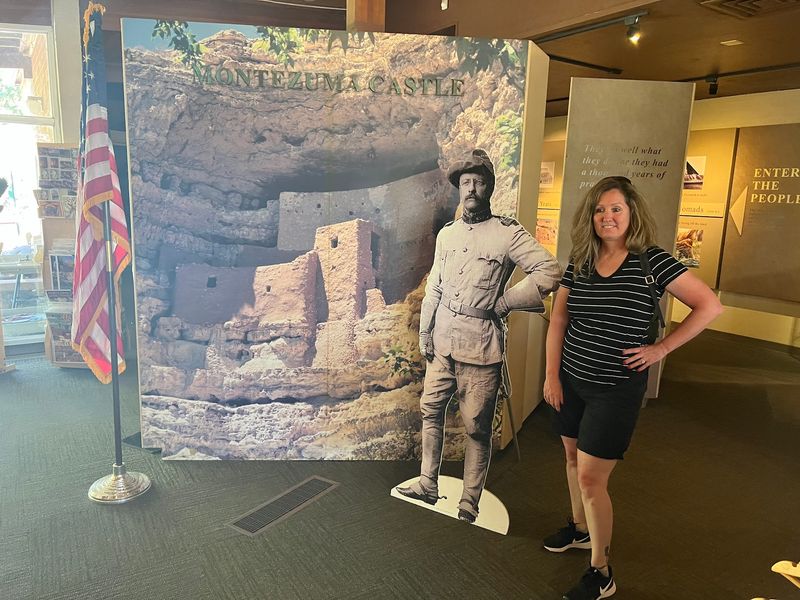
Before the trail even begins, the visitor center sets the stage. A small museum near the entrance displays artifacts, tools, and everyday items used by the people who once called this land home.
The exhibits do a careful job of explaining the site without piling on too much text. They cover history, geology, and daily life in a way that adds real context to what you see outside.
The gift shop keeps things lively too. It comes well stocked with souvenirs, and there is a stamping station that delights anyone collecting park stamps or chasing Junior Ranger badges.
Families with young explorers get a kick out of the Junior Ranger setup. Kids can earn a badge while learning, which turns a quick stop into a small adventure of its own.
Rangers and volunteers on hand tend to be genuinely helpful, happily answering questions and pointing out details you might otherwise miss. That personal touch makes the indoor portion just as worthwhile as the walk.
Rangers, Talks, And The BARK Ranger Program
The people running this monument add a lot to the experience. Rangers give presentations about the site and its history, and they have a talent for making the details genuinely interesting.
Guests who catch one of these talks often mention how much it deepened their visit. A knowledgeable ranger can turn a row of stone rooms into a full story about the community that built them.
Dog owners get a special reason to smile here. The site welcomes leashed pups on the short walk, which is not something every historic spot allows.
Even better, there is a BARK Ranger program available. Four-legged guests can earn their very own badge, and plenty of owners proudly collect it as their pup’s first honor.
Between the friendly staff, the informative signs, and the dog-friendly policy, the human touch really shines. It is the kind of place where questions get answered and everyone in the family, tails included, feels included.
Hours, Prices, And Getting There
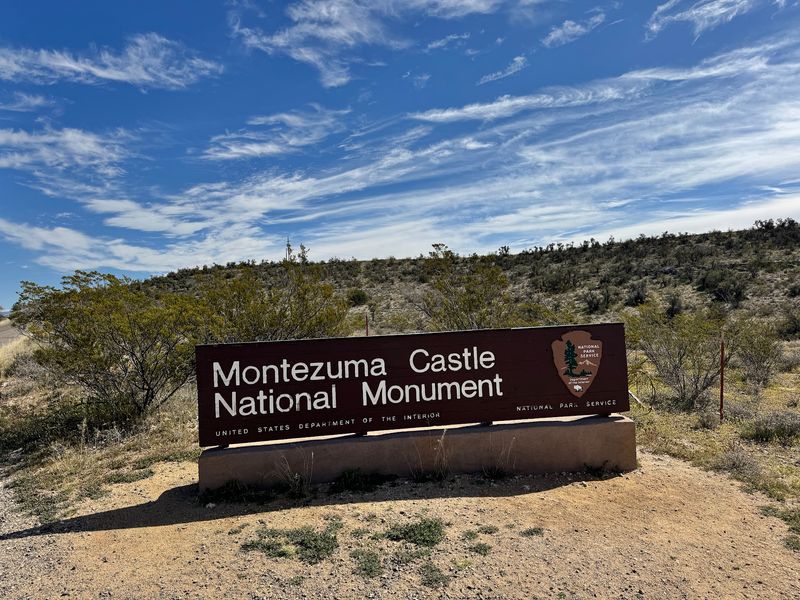
Planning a visit takes very little effort. The monument opens daily at 9 AM and closes at 4:45 PM, giving you a full window to swing by any day of the week.
Admission runs as a per-person charge, listed around 10 dollars for guests age 16 and up. Younger children can get in free, which makes it an easy call for families.
Parking is free, and picnic tables sit near the lot for anyone who wants to bring a meal along. Outside food is allowed, so a packed lunch pairs nicely with the loop.
Arriving early pays off. Coming about 15 minutes after opening helps you snag a good parking spot and enjoy the walk before the day heats up.
The address is simple to find on Montezuma Castle Rd in Camp Verde, and the same entrance pass also covers nearby Tuzigoot National Monument. For questions before you go, the park can be reached at 928-567-3322 or through the National Park Service website.
Why This Quick Stop Is Worth It
Some places overwhelm you with size, while this one wins with impact packed into a small footprint. In under an hour, you get history, scenery, and a genuine sense of wonder.
The setting deserves its own mention. A nearby creek, cottonwood trees, and desert plants surround the trail, creating a calm and peaceful pocket that balances the drama of the towering cliff.
Guests describe it as less crowded than many bigger-name attractions in the region. That quieter pace lets you actually take in the site rather than jostle through crowds.
Families rate it highly for teaching kids about early history in a way that sticks. The combination of the paved path, the diorama, and the friendly staff keeps young minds engaged.
Anyone traveling near Sedona, Camp Verde, or Cottonwood would do well to carve out time for this stop. It is educational, easy, and the kind of place that leaves you glad you pulled off the road to see what those cliffs were hiding.
Enjoyed this story?
Add Fast Food Club as a preferred source to see more of our reporting on Google.