


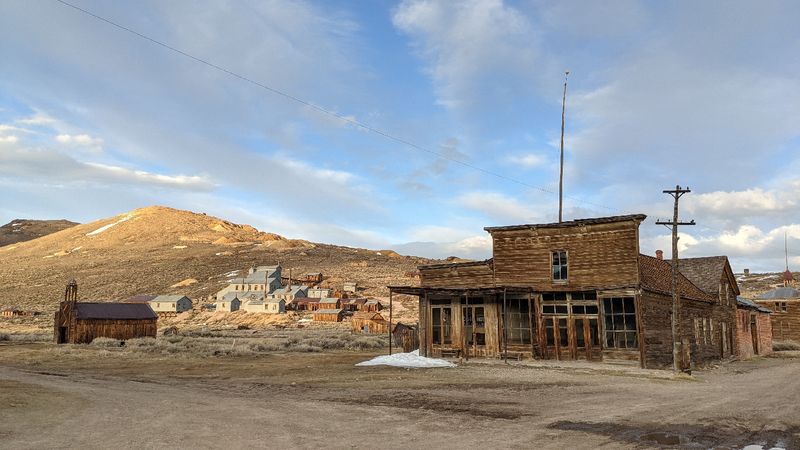
High in the eastern Sierra, past a winding road that turns to dirt for its final stretch, sits a town that never got tidied up after its people packed up and left. Furniture still rests inside old homes, dust settles on shop shelves, and the wind pushes through streets that once buzzed with gold rush energy.
This is a place kept in a state of controlled aging, where nothing gets rebuilt or polished, so what you see is close to what was abandoned over a century ago. Sitting at nearly 8,375 feet, it draws history lovers, photographers, and anyone curious about California’s mining past.
The story behind this preserved town is stranger and richer than most people expect, and the details ahead explain exactly why it keeps pulling people back for repeat trips.
Where This Frozen Town Actually Sits
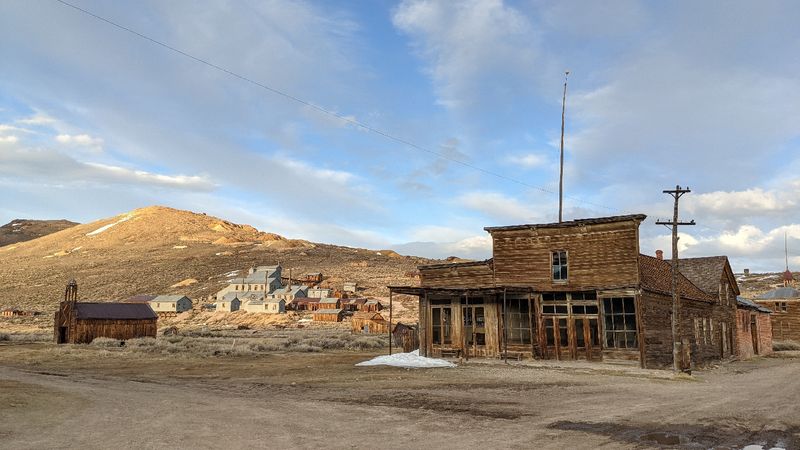
Tucked along CA-270 near Bridgeport, California, Bodie State Historic Park is a genuine gold-mining ghost town, not a movie set or a rebuilt attraction. The address is simply CA-270, Bridgeport, CA 93517, and the drive out there is part of the whole adventure.
Getting to it means covering the final 3 to 3.5 miles on an unpaved dirt road. Most regular vehicles handle it fine as long as you slow down, and even a sedan can make the trip in the warmer months.
The town sits at almost 8,375 feet above sea level, which explains the wide-open surroundings and the brisk mountain air. It also happens to fall inside a cellular dead zone, so plan your route before the phone signal fades.
Run as a California state park, the site is described as a former gold-mining community that now houses a ghost town with daily tours, a stamp mill, and a museum. What makes it special is how little has changed, since the town was left largely as it was when residents moved on.
That first glimpse of weathered buildings standing against the open landscape tends to stick with people long after they head home.
The Gold Rush Story Behind The Silence
Long before the quiet set in, this was one of the biggest boomtowns in the state. At its peak, it ranked as the 6th largest town in California, which is hard to believe when you see the scattered buildings today.
The scale of life here was enormous. The school once had as many as 625 students enrolled at a single time, and for every 5 homes still standing now, there were roughly 80 to 90 more back in the day.
Gold was the whole reason people came, and the town grew fast around that promise. When the gold played out, the story simply stalled, and the community drifted away rather than rebuilding.
Fire also reshaped the place. Over 75 percent of the original town burned down at one point, yet plenty of history survived the flames and remains standing today.
Walking the streets now, you get a real sense of a town that lived hard, thrived quickly, and then paused. The gold rush chapter here reads less like a legend and more like a record left out in the open for anyone willing to make the trip.
Arrested Decay And Why Nothing Gets Fixed
One phrase comes up again and again about this park, and that is arrested decay. Rather than restoring buildings to look new, the staff maintain them exactly in their worn condition, which keeps everything authentic without feeling staged.
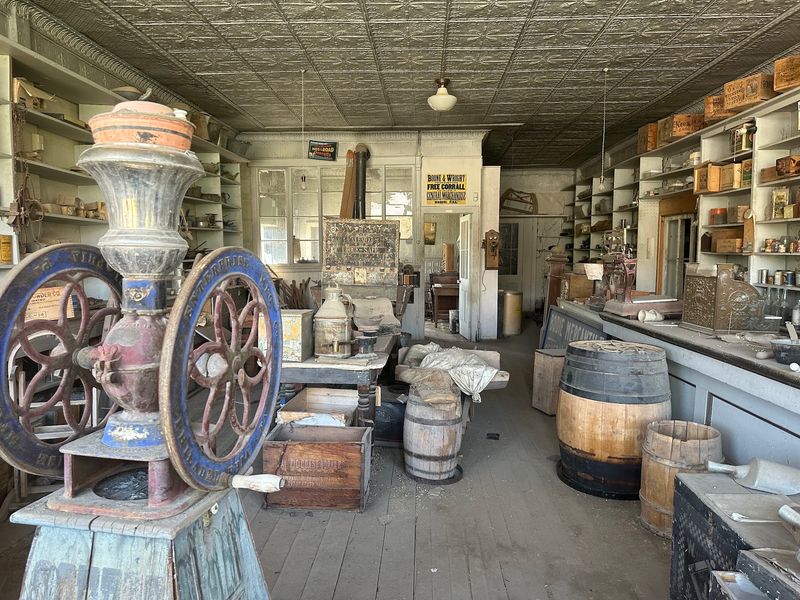
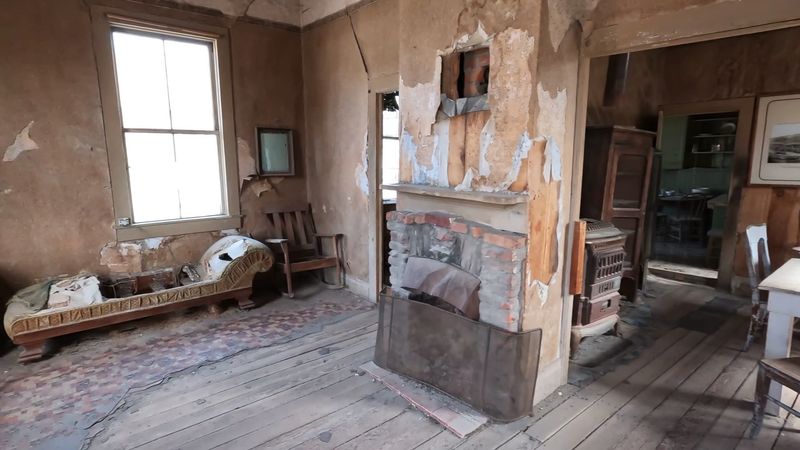
The result is a town where you see layers of dust, peeling wallpaper, ragged curtains, sagging ceilings, and missing chunks of rock foundation. Despite the age and the weathered wood, these buildings still stand.
Homes and businesses were left with furniture and goods inside, and nothing has been polished up for show. It genuinely looks like the residents packed a bag and walked away.
The maintenance crews clearly take this approach seriously, and their dedication shows in how carefully the structures are held together in their aged state. Entrance fees actually go toward the repairs that keep these fragile buildings upright.
Preserving raw over restored is a bold choice, and it pays off. You are not looking at a reconstruction of the past here, you are looking at the past itself, gently propped up so it can keep telling its story a little longer.
Peeking Through The Windows Of Left-Behind Homes
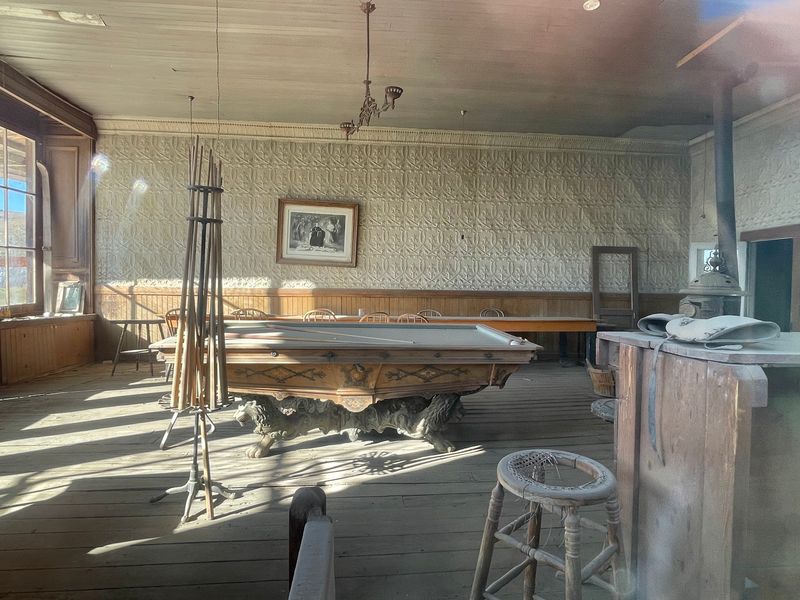
Much of the fun here happens at the glass. Since you cannot enter most buildings, the trick is to walk up and look through any clear window, where a surprising amount of old belongings still sit inside.
Businesses and residences alike kept their furniture and everyday goods, so each window offers a small frozen scene of ordinary life. Regulars mention that even after five or more trips, they still spot new details every time.
Knowing which windows to skip helps too. Some buildings serve as residences for park rangers and staff, and those are clearly marked with signs, plus their windows have curtains drawn to block the view.
Reading the signs pays off in another way, since they explain what each building used to be and sometimes who lived there. That context turns a simple stroll into a proper walk through the town’s daily history.
Rather than roped-off exhibits, you get to roam freely and let curiosity guide you from one window to the next. It is a low-key kind of treasure hunt, and it rewards the patient wanderer with plenty of quiet discoveries.
Inside The Stamp Mill Tour
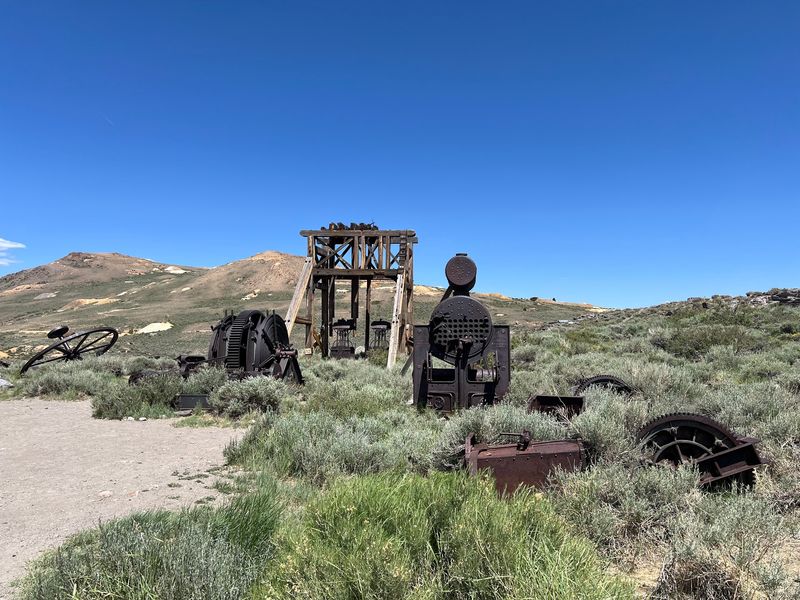
Want to actually step inside a building? The stamp mill tour is your best shot, since it is one of the very few structures you can enter, and only while accompanied by a guide.
Groups walk through the mill and get to see everything from the electrical room to the stamping equipment and the shaker tables. Guides share factual details about each area and take questions along the way, and the tours can sell out.
People who take it tend to rate it as a real highlight of the visit. The guides come across as knowledgeable and generous with information, which helps the mechanical side of gold processing make sense.
Timing matters more than you might think. Tickets are sold at the museum, and they stop selling them roughly 10 minutes before the tour departs, so arriving too close to start time can cost you a spot.
Staffing affects availability as well, since tours run only when park staff are present. Calling ahead to confirm the tour is running on your chosen day is smart, especially earlier in the season before the full crew arrives.
The Museum And That Three Dollar Guidebook
Before heading into the streets, most people stop at the museum, which doubles as the ticket counter for the stamp mill tour. Inside you will find display cases and items from the town’s active years, plus a small gift shop section.
The museum also stocks the tour books and pamphlets that make the rest of the day easier to follow. There is even a theater with a short film about the site, though opinions on it lean toward it feeling a bit dated.
Serious explorers point to one budget-friendly item as the real star here. For just $3, the guidebook offers a self-guided tour and tells you a little something about nearly every building in town.
Grabbing a map at the information center is another smart move, since the layout can be tricky without one. Together, the map and booklet turn a wander into an informed walk.
Since the museum can close briefly during shorthanded days, it is worth stopping in early if there is a specific building or purchase you care about. Getting your tickets and reading material sorted first sets up a smoother visit overall.
Roaming A Town With No Sidewalks
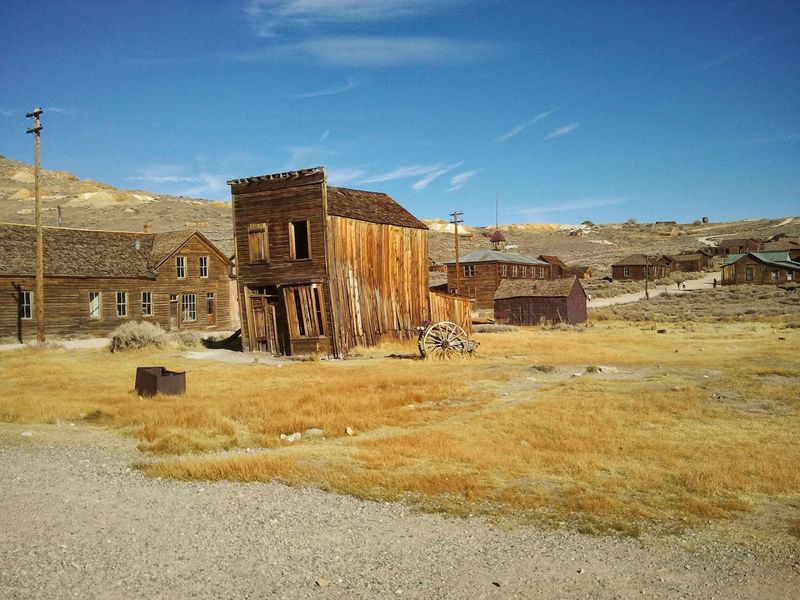
Freedom is a big part of the appeal here. There are no roped-off areas and no tidy sidewalks, so you genuinely roam through a town sitting out in the middle of an open field.
That openness is exactly what makes it feel real, since it never comes across as touristy or over-managed. You set your own pace and pick your own path between the buildings.
With that freedom comes a bit of responsibility. Broken glass, old machine parts, and other rough remnants are scattered around, so careful footing matters, and families with young children should keep a close watch.
The raw condition is intentional, kept that way so the town stays as untouched as possible. Comfortable shoes or hiking boots make the uneven ground far easier to handle.
Plan for a proper visit rather than a quick lap, since seeing it all comfortably takes at least a few hours, and many people budget most of a day. Wandering without a set route is honestly the best way to soak in a place that has been quietly waiting for over a century.
Abandoned Trucks And Field Finds
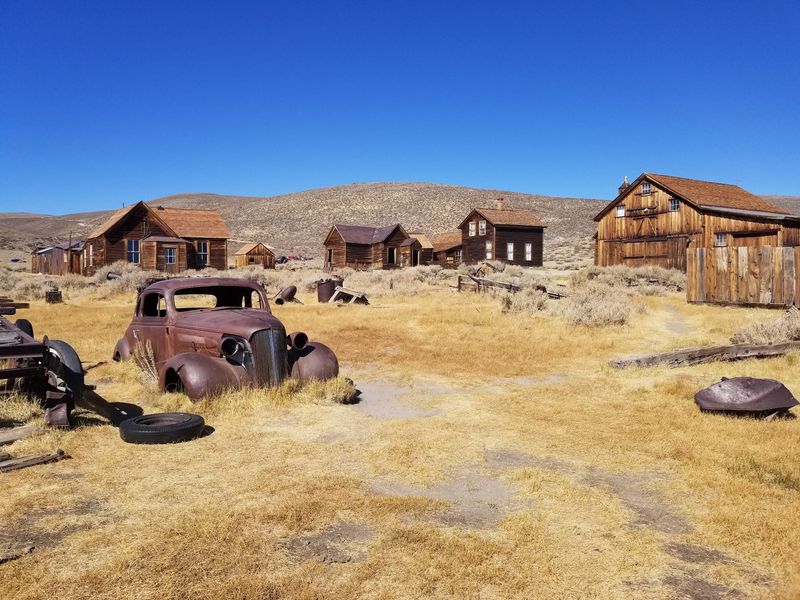
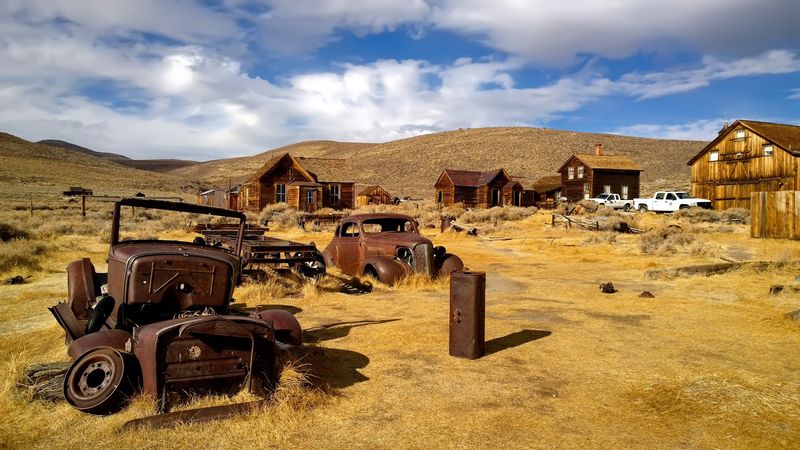
Beyond the buildings themselves, the fields around town hold their own surprises. Old abandoned trucks sit out in the open, adding another layer to the frozen-in-time feeling.
These relics turn the walk up toward the stamp mill into a mini scavenger route. People often pause to check out the rusted vehicles and scattered equipment before continuing on to the main structures.
Everything out here reinforces the same odd truth about the place. When the town wound down, folks left their belongings behind, and that includes machinery and vehicles that simply stayed put.
Because nothing is staged, these finds appear right where they were left, half swallowed by the landscape. It gives the whole area a lived-in quality that a curated exhibit could never fake.
Kids and adults alike tend to get drawn into spotting these details, and there is a real sense of discovery in coming across each one. The open fields quietly prove that the ghost town extends well past its front doors, rewarding anyone willing to wander a little farther out.
The Dusty Road And High-Altitude Warnings
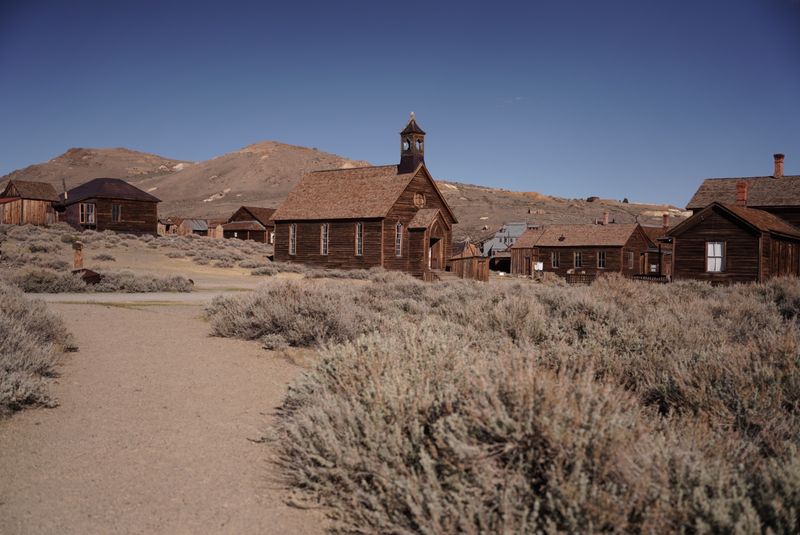
Reaching this town is a small mission, and knowing what to expect makes it far smoother. The final stretch runs about 3 to 3.5 miles on unpaved washboard dirt that gets very dusty, so switching your car’s air to recirculate helps a lot.
Slow and steady is the rule on that road. Nearly any regular vehicle can manage it in the warmer months, though the surface can turn slippery in wet or snowy conditions.
Altitude deserves respect here too. At roughly 8,375 feet, the thin air and strong sun can catch people off guard, and there have been cases of visitors feeling faint from the elevation.
Sun exposure adds another challenge, since there is direct sunlight and essentially no shade across the open town. Wind can also stir up the dirt on breezier days, so eye protection and sun cover are wise.
Since the area is a cellular dead zone, calling ahead for road and park conditions before you leave is a genuinely helpful step. A ranger will often return a message and confirm whether the drive is in good shape.
Hours, The Eight Dollar Fee, And What To Pack
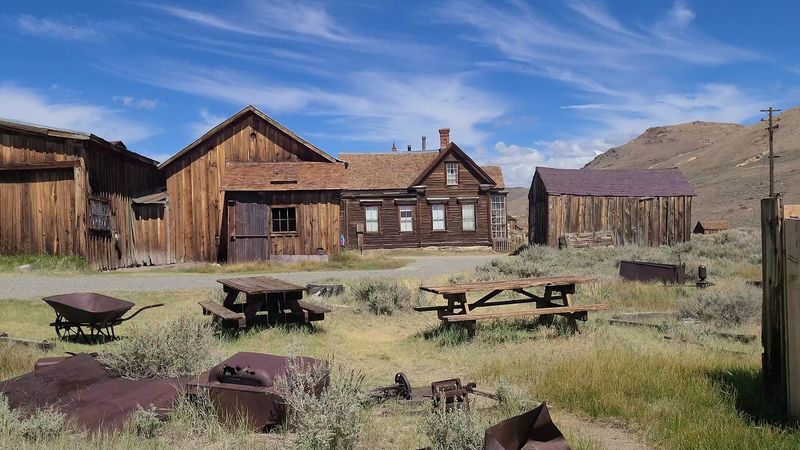
Planning the practical side keeps the day stress-free. The park opens at 9 AM and runs until 6 PM every day of the week, giving plenty of daylight for a full walkthrough.
Admission is $8 per adult, and that fee goes toward keeping the fragile buildings standing. Payment is accepted by both card and cash, though some parts of the site are noted as cash only, so carrying small bills is a safe bet.
One heads-up on passes: a standard state park pass is not accepted here because this is a historic park, so budget for the entry fee regardless. It remains widely considered well worth the cost.
There is no food service anywhere on site, so bring your own lunch and snacks. Water is essential too, since the museum only sometimes sells it, though there is a water fountain by the parking lot.
Facilities are minimal but present. Clean bathrooms sit near the parking area, and a picnic spot lies roughly a mile north of the town, making a nice place to pause and refuel.
Is The Journey Worth It
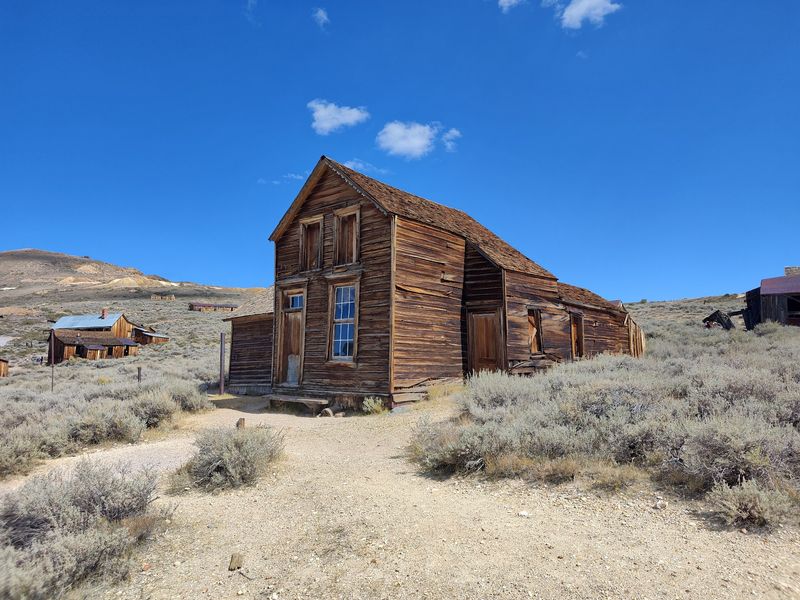
After weighing the long drive, the dust, and the thin mountain air, the verdict leans strongly toward yes. With a 4.7-star average across more than 3,600 pieces of feedback, this ranks among the most beloved ghost towns in the country.
People with a love of history, photography, or unusual outdoor outings tend to walk away thrilled. Many describe it as a once-in-a-lifetime stop and a genuine piece of California gold-rush history.
Repeat trips are common, which says a lot. Folks return again and again and still notice fresh details, and plenty leave already planning their next visit.
It also earns points for being reachable from a wide region, with regional drives possible from places like Reno and Sacramento. That accessibility makes it easier to fit into a broader trip.
Come prepared with sun cover, water, a packed lunch, and comfortable shoes, and the payoff is a town that truly feels paused mid-story. Few places let you wander so freely through the past, and that rare freedom is exactly why this old mining camp stays on so many must-see lists.
Enjoyed this story?
Add Fast Food Club as a preferred source to see more of our reporting on Google.