


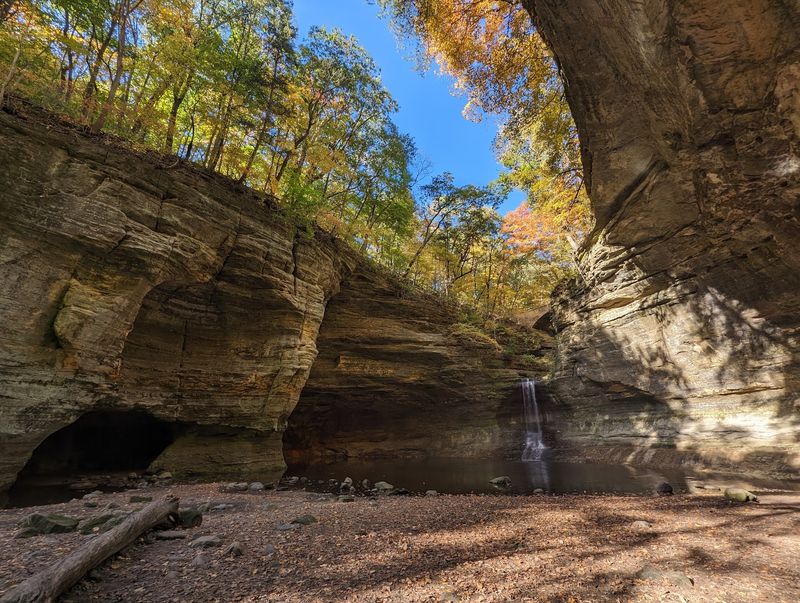
Everyone races to Starved Rock, but the smarter crowd slips down the road to a park where the trail dips into a canyon and the only way forward is to hop across stepping stones in ankle deep water. Waterfalls tumble at the ends of narrow gorges, small caves open into shady pockets, and old concrete staircases carry hikers from clifftops down to stream level.
It rewards curious feet and shoes that do not mind getting wet. This story walks through the history, the standout gorges, the practical stuff about stairs and parking, and who will have the best time here.
Stick around, because the quiet neighbor next door might be the one you brag about later.
The Overlooked Neighbor of Starved Rock
Tucked at 2500 IL-178 in Oglesby, Illinois, sits a forested park that most travelers drive right past on their way to its famous sibling.
The full name is Matthiessen State Park, and it shares a corner of LaSalle County with Starved Rock, just down the road.
Regulars who have hiked both often admit they prefer this one. It draws smaller crowds, and the waterfalls feel closer and more personal.
The park stretches across roughly 1,938 acres of forest, prairie, springs, and canyon. Wildlife moves through the trees, and creeks thread between layered rock walls.
People in the know call it the quieter choice, and that reputation has stuck. The parking lots fill slower, and the trails feel more like exploration than a guided march.
Being so near a household name means it is easy to add to a weekend already built around the region. Many travelers now stay overnight and hit both parks over a couple of days.
For anyone hunting canyons and falling water without shoulder to shoulder foot traffic, this is the address worth saving.
From Private Estate to Public Treasure
Long before hikers arrived with backpacks, this land carried a different name and a single owner.
It began as a private estate called Deer Park, held by Frederick Matthiessen, an industrialist and philanthropist from LaSalle.
He shaped the early trails and built structures across the property in the early 1900s, giving the grounds their first real layout.
After he was gone, his heirs handed the land to the State of Illinois in 1943. That gift turned a personal retreat into a park anyone could visit.
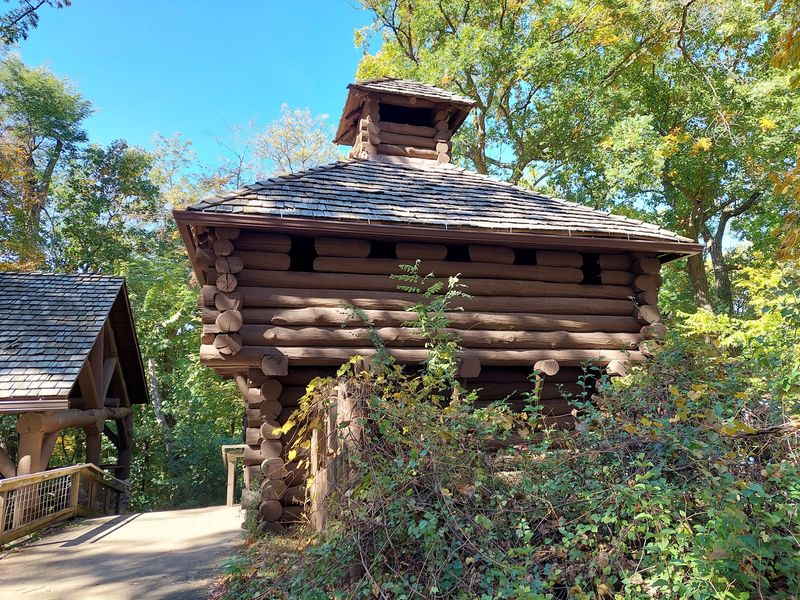
Scattered near the entrance stand reconstructed log cabins and a blockhouse, modeled on French colonial forts from the late 1600s and early 1700s.
These add a layer of history to a place already rich in scenery. Interpretive signs fill in the story for anyone who slows down to read them.
Over the decades the park expanded to about 1,938 acres. What started as one man’s grounds now belongs to every traveler who wanders in.
Knowing the backstory gives the stairs and stone bridges a little more meaning as you pass beneath them.
The Dells, Where the Real Adventure Begins
Head toward the section called the Dells and the park shows its true personality.
The Dells is the main event, a long narrow gorge where a clear stream flows between tall layered rock walls.
Most of the points of interest sit on the canyon floor rather than up on the bluffs, which gives the whole area a deeper, moodier character.
Crossing the water is part of the fun. Circular stepping stones sit strategically in the shallow current, and hopping from one to the next turns a walk into a small expedition.
Anyone comfortable balancing on rocks in ankle deep water can explore quite a lot down here.
The gorge feels immersive because the trails are less rigidly marked, leaving room to follow the stream and poke around the rock formations.
Because the action is on the floor and not the cliffs, hikers get up close to the walls and water in a way many parks never allow.
Spring rain and snowmelt keep the stream running strong, so this is where the wading truly earns its reputation.
Waterfalls Worth the Whole Trip
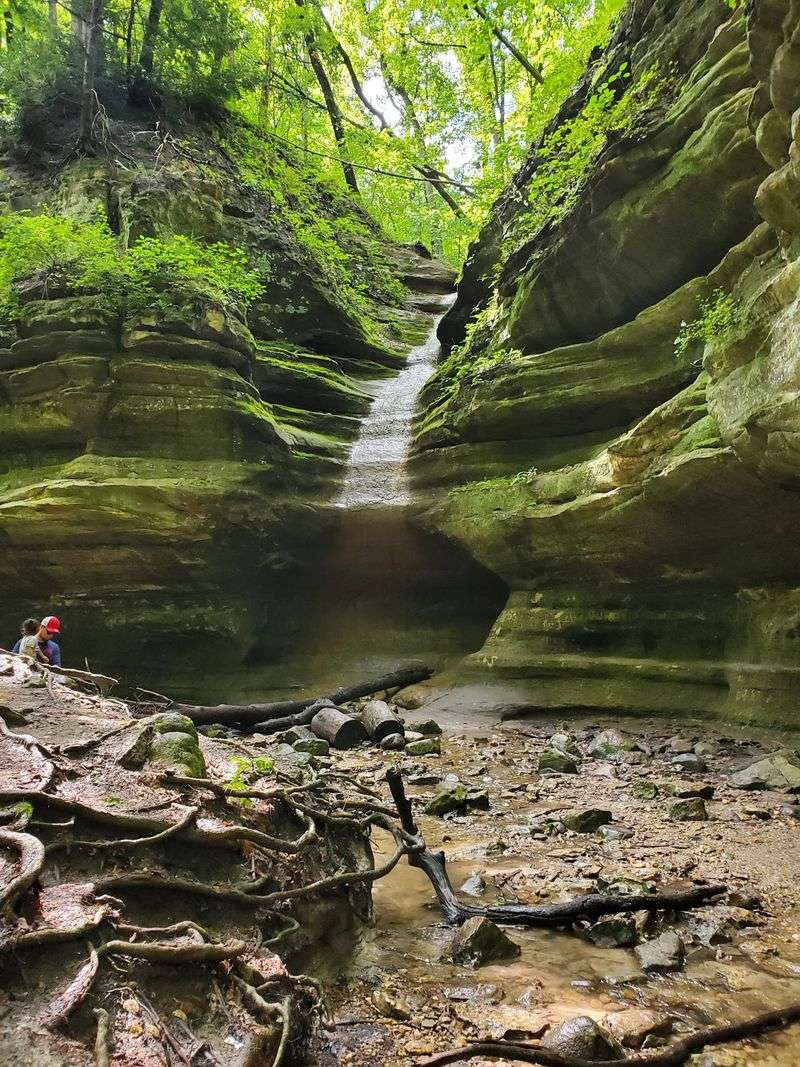
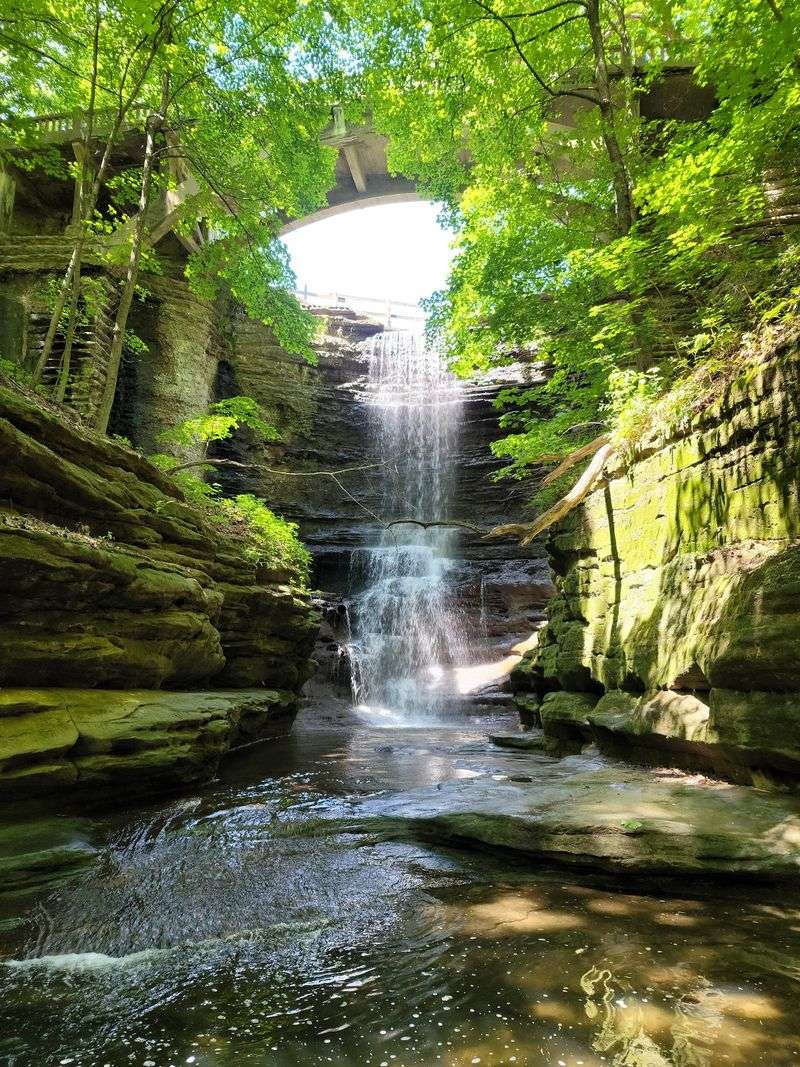
Falling water is the headline act, and this park delivers several curtains of it.
Some call these quite possibly the best waterfalls in Illinois, all packed into a compact valley you could walk through in about an hour if you hurried.
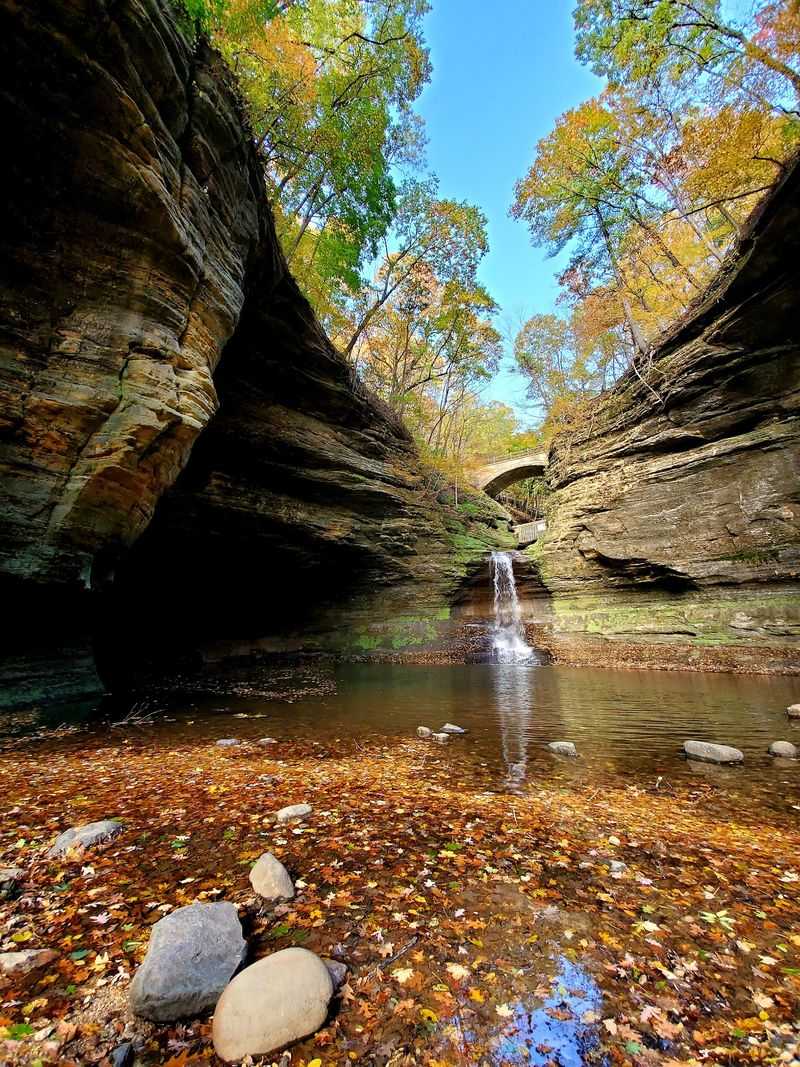
The main canyon runs to a massive waterfall at its far end, with a trail winding all the way to the base.
Cascade Falls and Matthiessen Falls give the park multiple destinations, and both the upper and lower dells routes carry hikers past several drops along the way.
One of the best tricks here is standing at the top of a waterfall and then descending into the canyon to reach its base for a completely different angle.
Timing matters. Go after heavy rain or snowmelt and the falls run full and loud.
Come in a dry spell and the flow thins considerably. Spring is the sweet spot for volume.
Two beautiful waterfalls up close and personal, without the wall of people, is exactly why so many hikers rank this park above its famous neighbor.
Small Caves and Hidden Pockets
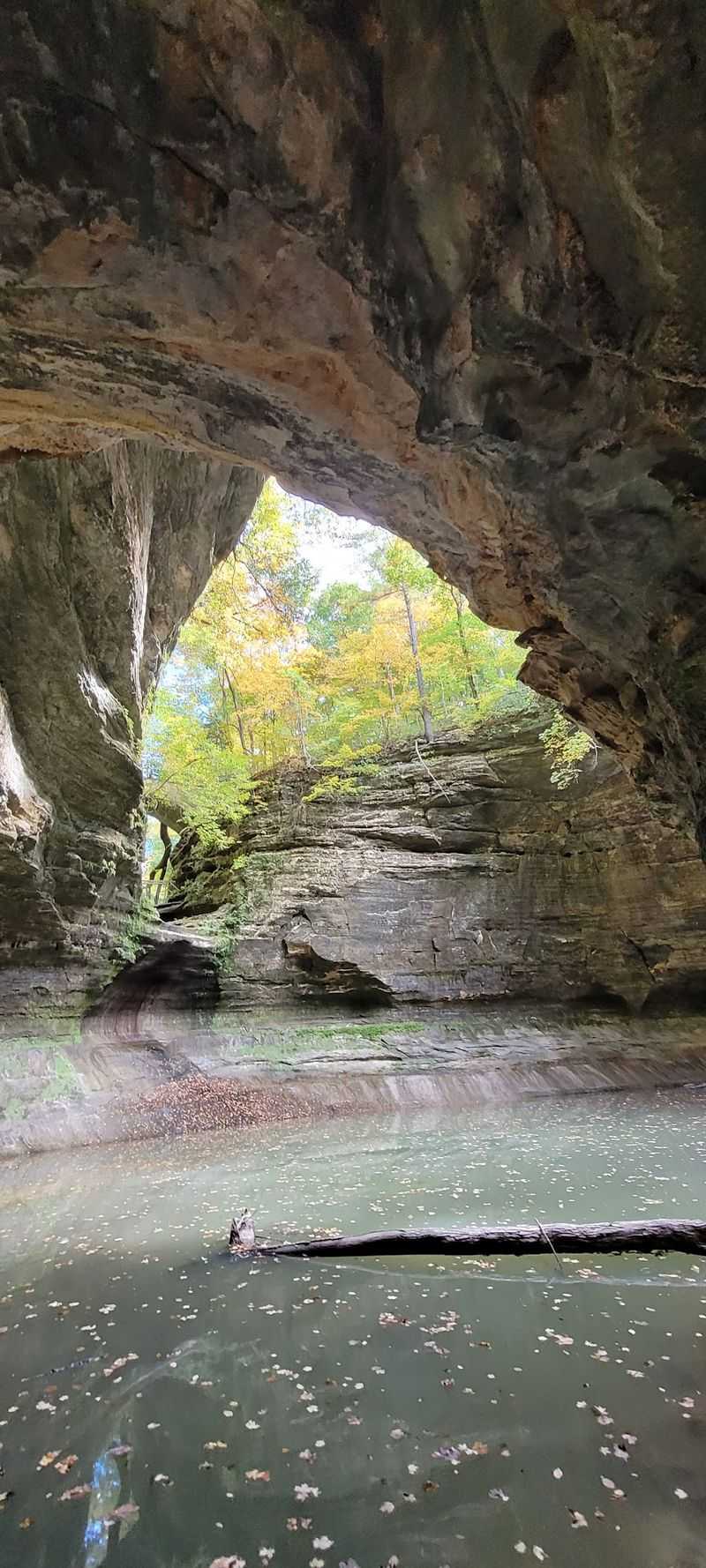
Not every surprise in the canyon comes from above.
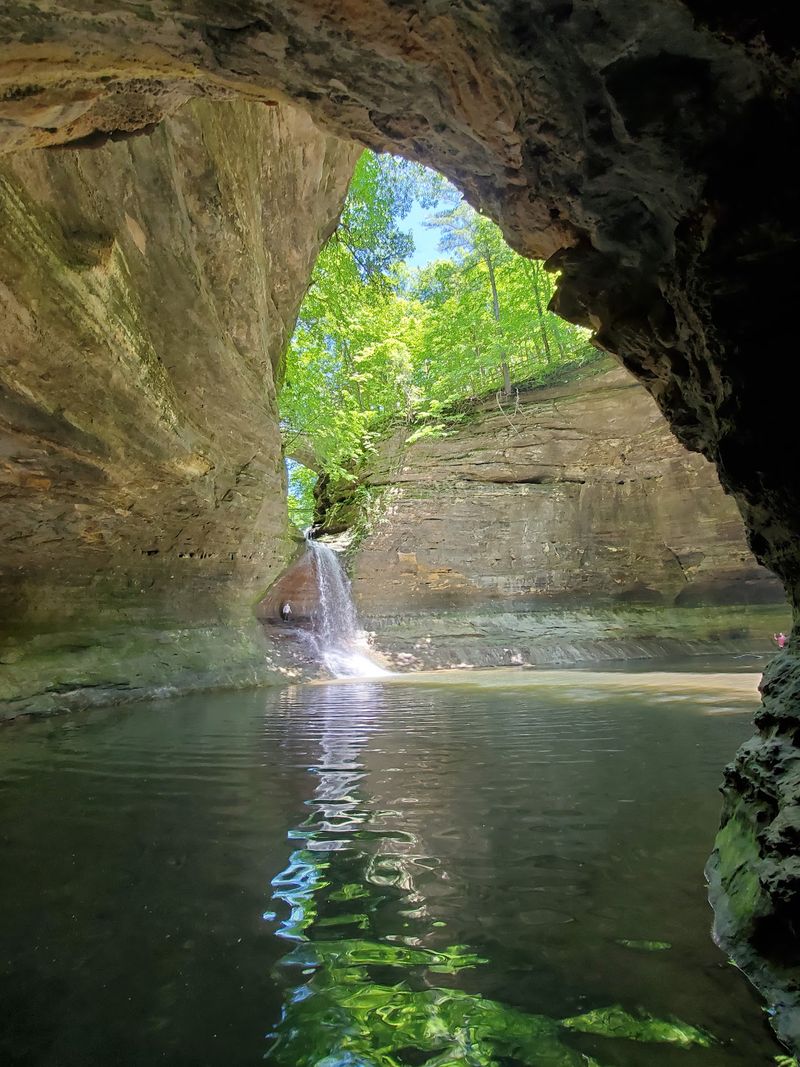
Along the main canyon, small caves tuck into the rock, and walking through them opens up fresh views of the waterfall you just admired from the trail.
These pockets in the stone give the Dells a sense of discovery that few parks in the region match.
Some of the hidden dells work like one way passages. Once you drop down into them, the only way through is to follow the water and climb back up another set of stairs.
That layout keeps the exploring interesting and rewards hikers who commit to the full loop.
The caves are shallow and more about the vantage point than deep spelunking, so they suit casual explorers rather than serious cavers.
Cliff swallows dart back and forth from nests along the walls, adding movement to the quiet stone.
Poking into these openings turns a straightforward hike into something closer to a treasure hunt, and the payoff is well worth the muddy shoes.
Stairs, Stones, and a Word of Warning
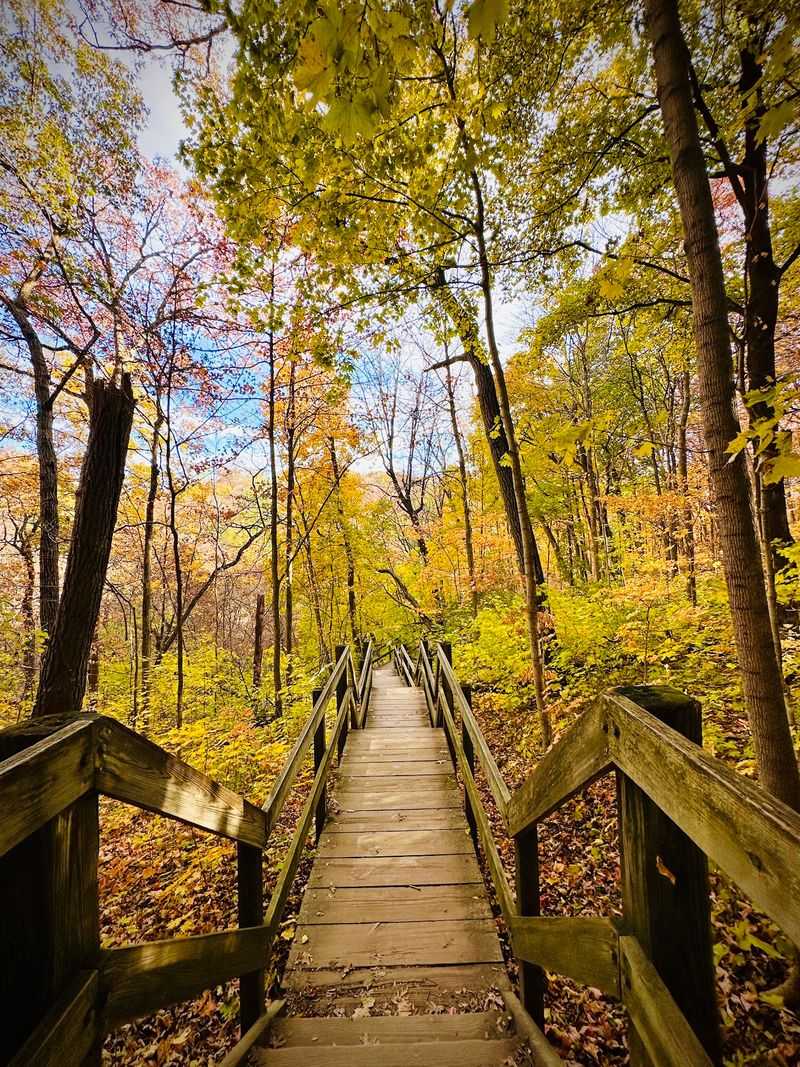
Let one thing be very clear before lacing up: there are stairs. Many, many stairs.
Both wooden and stone staircases carry hikers between the clifftops and the canyon floor, and some routes stack several flights in a row.
The concrete staircases in the Dells are old but impressively sturdy, built to handle Midwestern freeze and thaw for the long haul.
Beyond the steps, uneven surfaces and slick rock are common, especially after rain when the trails turn muddy.
This is not a spot for wheelchairs or strollers, and toddlers will struggle with the terrain.
Trail shoes with real traction are the right call, plus footwear you do not mind soaking during water crossings.
A hiking pole helps on the uneven stretches, and a change of clothes is smart in case you slip near the water.
The climbs are honest work, but they are the price of admission for the waterfalls and canyons. Anyone who can manage the steps tends to agree the payoff is more than fair.
Sunflowers, Prairie, and Roaming Wildlife

Beyond the shady gorges, the park opens into brighter country.
Prairie land and savanna trails spread across the River Area, bordering farmland and offering a flatter change of pace from the sandstone below.
Late summer brings sunflower fields, a favorite walk for anyone who times the bloom right.
Arrive too early, though, and the sunflowers may not be open yet. A mid July visit can land on native plants and wildflowers instead, since the peak shifts year to year.
The website does not post a live bloom status, so a little flexibility helps.
Wildlife is part of the package here. Snakes sometimes sun themselves right on the path, including harmless racers that eventually move along on their own.
Cliff swallows work the canyon walls, and the forest hides plenty more if you keep your eyes open.
The mix of open prairie and deep canyon means the park never feels like one single landscape. It shifts as you walk, which keeps every visit a little different from the last.
A Quiet Escape With Room to Breathe
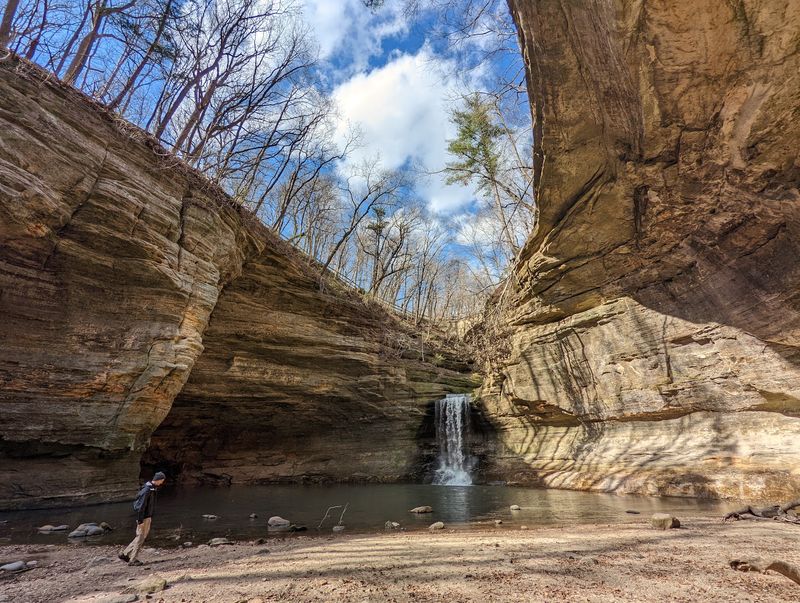
The best thing this park offers might be the thing you do not notice: elbow room.
It draws far fewer people than Starved Rock down the road, so weekday visits often mean the trails are practically yours.
That quiet is exactly why fans guard it like a personal secret.
The atmosphere leans wild and immersive. With fewer rigidly marked trails, the canyons invite exploration rather than a single file shuffle.
It suits adventurous hikers, curious families with older kids, and anyone who wants nature up close without a crowd.
Dogs are welcome and the park is very pet friendly, though owners are expected to clean up and keep leashes handy. Some pups even splash through the deeper creek stretches.
Picnicking works well in the parking areas, making it easy to pack a lunch and turn a hike into a half day outing.
People who value calm over convenience tend to fall for this place fast. It trades polish for a rugged, feral charm that keeps them coming back through every season.
Getting There and What to Pack
Reaching the park is refreshingly simple.
The address is 2500 IL-178, Oglesby, IL 61348, and it sits only about an hour and a half from Chicago, making it an easy day trip from the city.
Trails are easy to reach straight from the parking lot, so there is no long slog before the scenery begins.
Parking can be limited at the main lots, but plenty of overflow lots sit nearby to catch the spillover.
Restroom access has been spotty. The main bathrooms have been out of order at times, leaving portable toilets as the backup, so plan accordingly and do not count on supplies.
Bring plenty of water, since the stairs and heat can add up, especially in humid summer stretches.
Waterproof shoes, a hiking pole, and a spare set of clothes round out a smart packing list.
The official Illinois Department of Natural Resources website lists park details, and it is wise to check terms and access before heading out, since some areas can be temporarily restricted.
A Park for Every Season
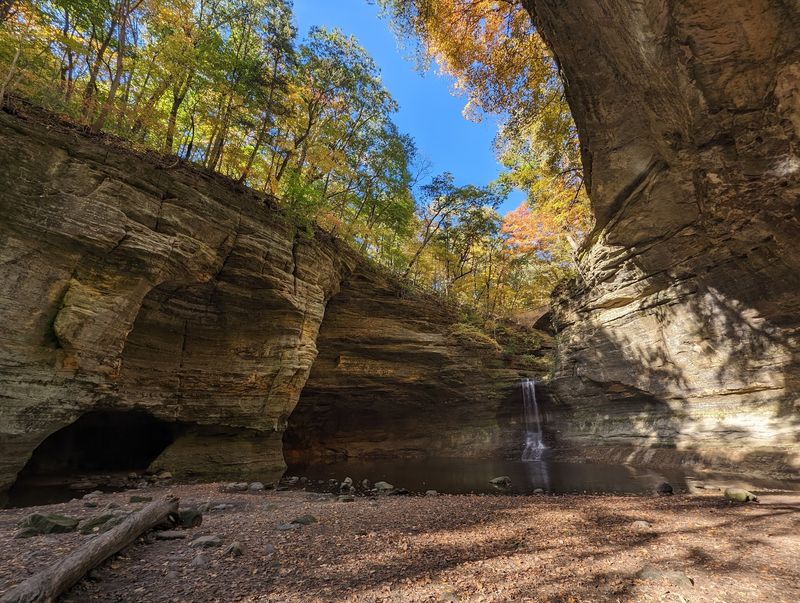
Few parks reward return visits quite like this one, because it changes so much through the year.
Spring floods the canyons with water from rain and snowmelt, sending the falls to full strength and guaranteeing wet feet on the crossings.
Summer turns the valley into a cool retreat under a dense green canopy, ideal for beating the heat.
Autumn drapes the rock walls in foliage that many hikers say is the best time to bring a camera.
Winter brings its own show, with frozen waterfalls that draw the boldest adventurers to climb them.
Because the whole valley is compact, you can experience a lot in a single trip without covering huge distances.
Holding a steady 4.8 star reputation across nearly six thousand impressions, the park clearly leaves people happy in every season.
Skip past it for the famous neighbor and you miss waterfalls, caves, and a canyon you wade right through. Save the address, pack the right shoes, and let the quiet park next door surprise you.
Enjoyed this story?
Add Fast Food Club as a preferred source to see more of our reporting on Google.