


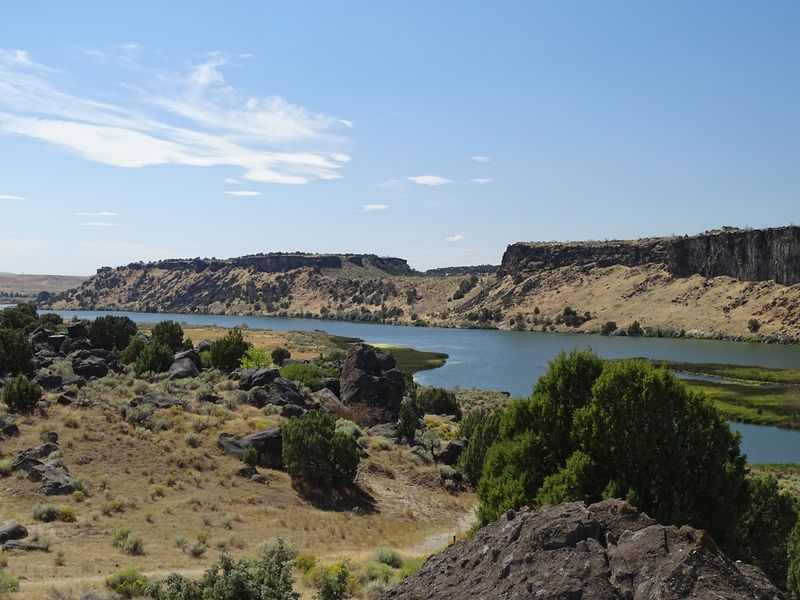
Some parks announce themselves with billboards and buzz, and then there is the quiet kind that surprises you once you actually turn off the highway. In southern Idaho, along a stretch of the Snake River where dark boulders pile up against turquoise water, a small state park keeps overdelivering on trails, camping, and history without asking for much attention.
Wagon ruts from pioneers still mark the ground, western grebes raise their families on a grassy island, and disc golf discs fly across two full courses. Campers keep coming back year after year, often calling it their favorite.
This article walks through the story, the setting, the standout features, and the practical details you need before you go. Stick around, because the best part of this place is how much it hides in plain sight.
A River Park Hiding Off the Interstate
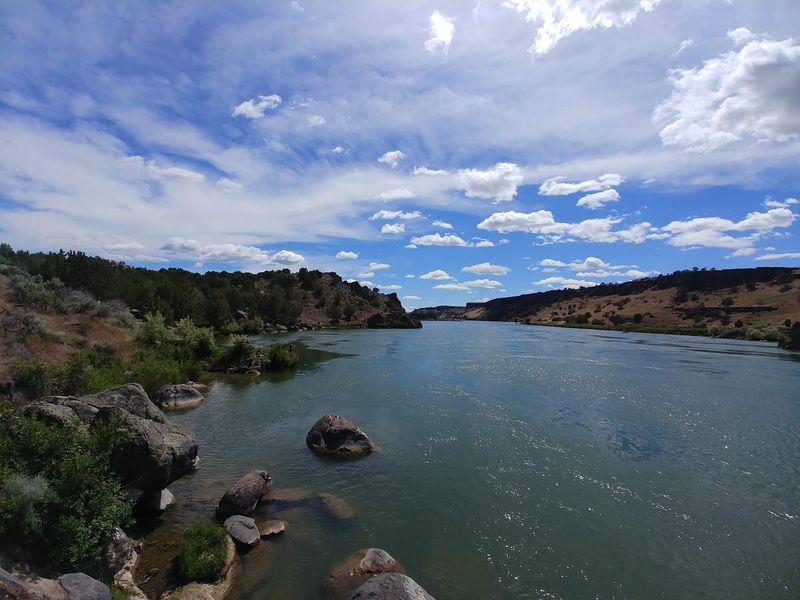
Just off the interstate near American Falls, Idaho, sits a park that most travelers zoom right past without a second glance. The full address is 3592 Park Ln, American Falls, ID 83211, and it hugs a bend of the Snake River where dark boulders and low sagebrush define the landscape.
Massacre Rocks State Park earns its reputation as a sleeper. It does not look flashy from the road, yet it holds trails, camping, fishing docks, and a pocket of pioneer history all in one compact space.
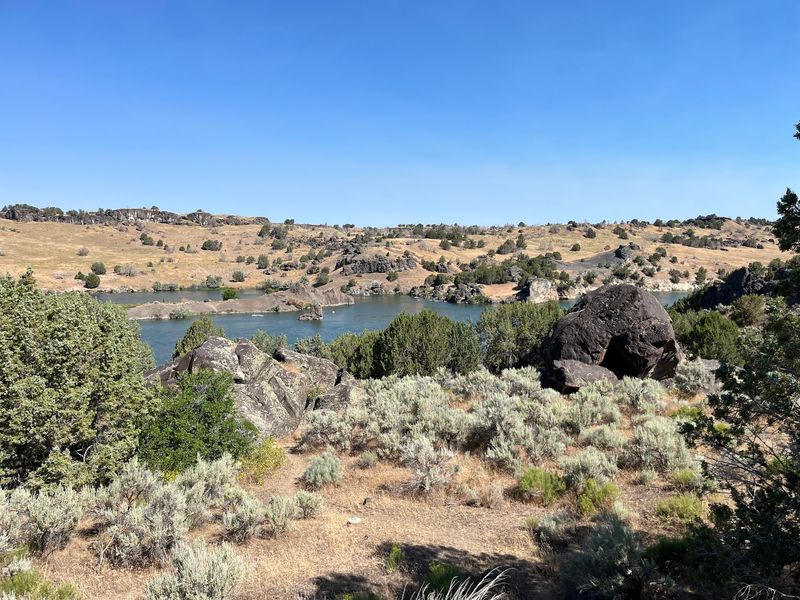
The park sits in high desert country, so the terrain leans dry and open with juniper trees scattered through the campsites. Rock formations rise along the riverbanks, giving the whole place a rugged, geologic character.
Regulars describe it as peaceful and clean, the kind of spot that rewards people who slow down. It carries a strong 4.6 star rating across hundreds of reviews, which is high praise for a park this size.
If you value quiet over crowds, this stretch of the Snake River delivers more than its modest footprint suggests.
Pioneer History Carved Into the Ground
Long before campers rolled in with trailers, wagons rolled through here on the California and Oregon Trail. That history is not just a plaque on a wall, it is pressed into the earth itself.
Take a walk of about 1.6 miles and you can find the actual ruts left by pioneer wagons. Seeing those grooves worn into the ground gives the park a weight that surprises many first-time visitors.
The small visitor center holds excellent information about the pioneers who camped along this route. Families with kids can grab a junior Ranger backpack, which turns a history lesson into a small adventure.
Nearby sits Register Rock, an interesting Oregon Trail site where travelers once left their marks. People consistently mention it as a worthwhile stop while exploring the area.
What makes the history here feel alive is how close it stays to the trails and campsites. You can hike past wagon ruts in the morning and settle back at your site by afternoon, connecting the past to the present in a single easy loop.
Trails That Punch Above Their Weight
Small park, big trail network. That contrast is exactly why people keep calling this place a sleeper that overdelivers.
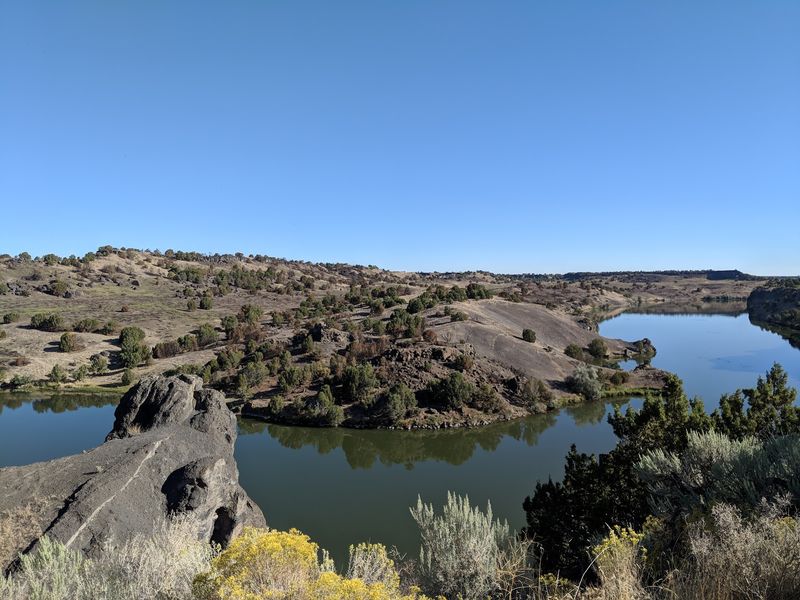
Groomed paths wind through rock formations, along the river, and across the high desert terrain. A beautiful trail follows the river, making it a favorite for a relaxed morning walk before the day heats up.
Dogs are welcome on the trails too, so the whole family, four legged members included, can stretch out and explore. The paths stay close to the campsites, which means less driving and more actual hiking.
Along the way, you get views of the Snake River, dramatic boulders, and diverse plant life. The plant walk gets singled out as a must-do, especially for anyone curious about the high desert ecosystem.
Because the terrain is varied, the trails showcase everything from grasslands to cliffs to riverbanks in a short distance. For a park this compact, the sheer number of routes to wander catches many people off guard in the best way.
The Snake River Front and Center
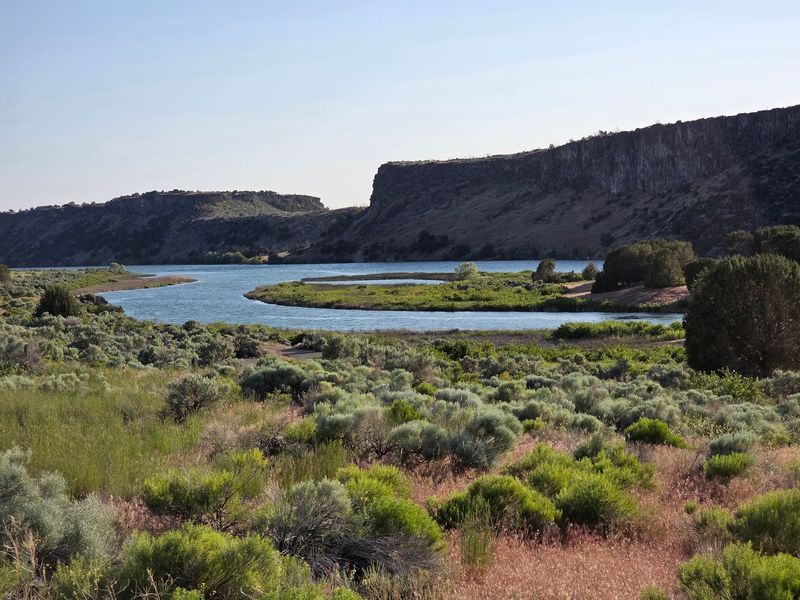
Water is the heart of this park, and the Snake River delivers views that keep people coming back. The turquoise color of the river stands out against the dark rock and dry surroundings.
Fishing access is scattered along the banks, with several docks and a boat ramp for those who want to get on the water. Kayakers and paddleboarders can slip in and glide past high cliffs and boulders rising along the shore.
The current tells two stories. Slow pooled areas offer calm spots, while the main channel can run swift, so swimming and rafting call for caution.
Some campsites sit close enough to see the river in both directions, a rare treat for anyone who loves waking up to water views. Birdwatchers do especially well here, spotting western grebes raising their young on a grassy island in front of the park.
Whether you cast a line, paddle a quiet stretch, or simply watch the water move, the river anchors the entire experience. It is the feature that turns a good park into a memorable one.
Two Disc Golf Courses and Room to Play
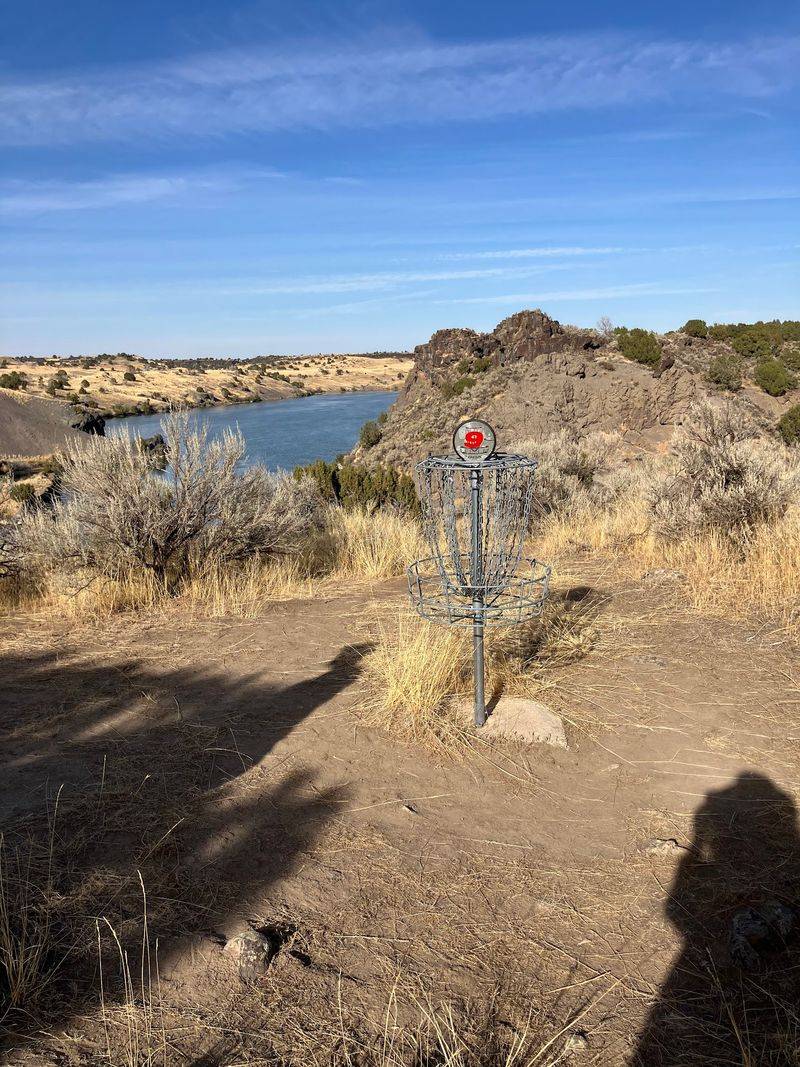
Here is a detail that surprises a lot of people: the park has two disc golf courses, including an 18 hole layout. For a compact state park, that is a serious offering.
Forgot your discs at home? The visitor center sells them, so you can grab gear and get playing without a special trip to town.
The courses weave through the natural terrain, mixing sagebrush, grasslands, and rock formations into the challenge. It gives active campers something to do beyond hiking and fishing.
Disc golf ranks among the most talked about features of the park, which says something about how well the courses are set up. Families and casual players seem to enjoy them just as much as dedicated disc golfers.
Add boating, fishing, kayaking, and paddleboarding to the mix, and this small park suddenly has a full slate of activities. The disc golf just happens to be the one that catches newcomers off guard most often, in the happiest way possible.
Campsites, Cabins, and Comfortable Nights
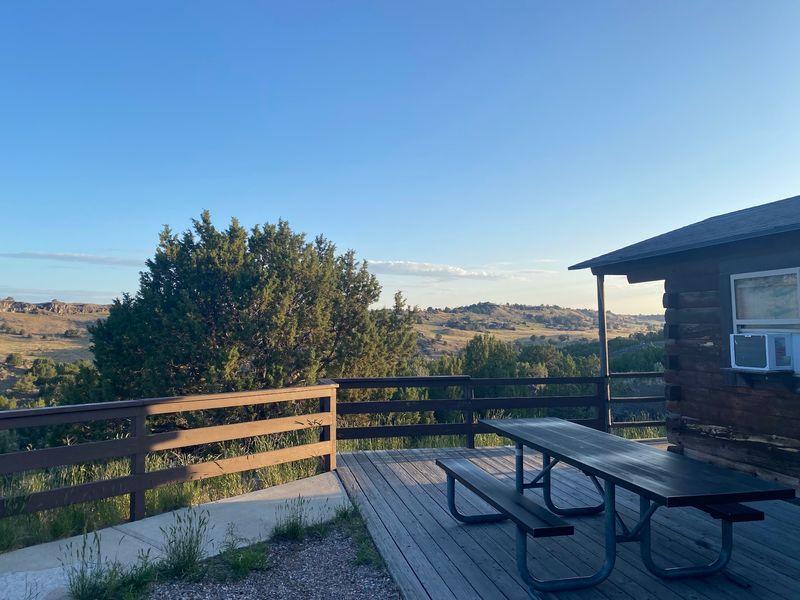
Spend a night and you understand why so many families make this an annual tradition. The campground earns steady praise for being clean, spacious, and well maintained.
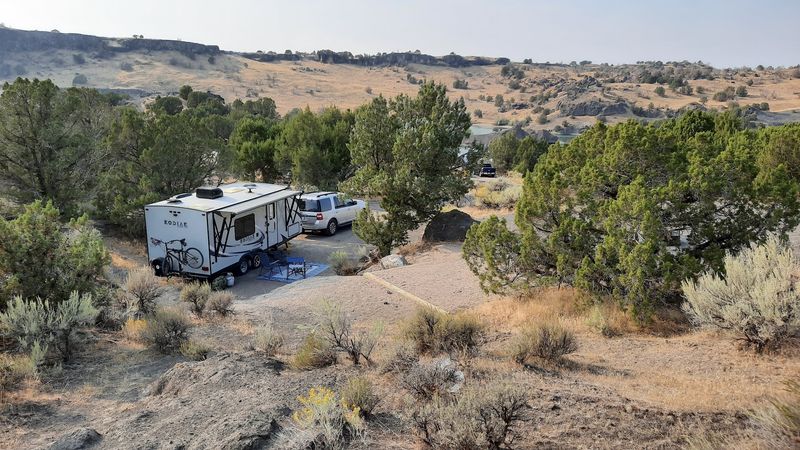
Every site comes with water and electricity, plus a fire pit and picnic table. RV hookups are available, though there is no sewer at the sites, so a dump station handles that duty.
Juniper trees and colorful boulders provide shade for part of the day, and sites sit far enough apart to give you real privacy. The soil is well worked, which makes putting down tent stakes easier for those pitching a tent.
Prefer four walls? Cabins are available for rent.
The Cottontail cabin, for example, comes with an air conditioner, a mini fridge, a table, chairs, bunk beds, and a couch that slides out into another bed.
Bathrooms and showers are scattered throughout the park and stay notably clean. Bring your own firewood, though, since gathering branches on-site is not allowed.
Wildlife, Rocks, and High Desert Scenery
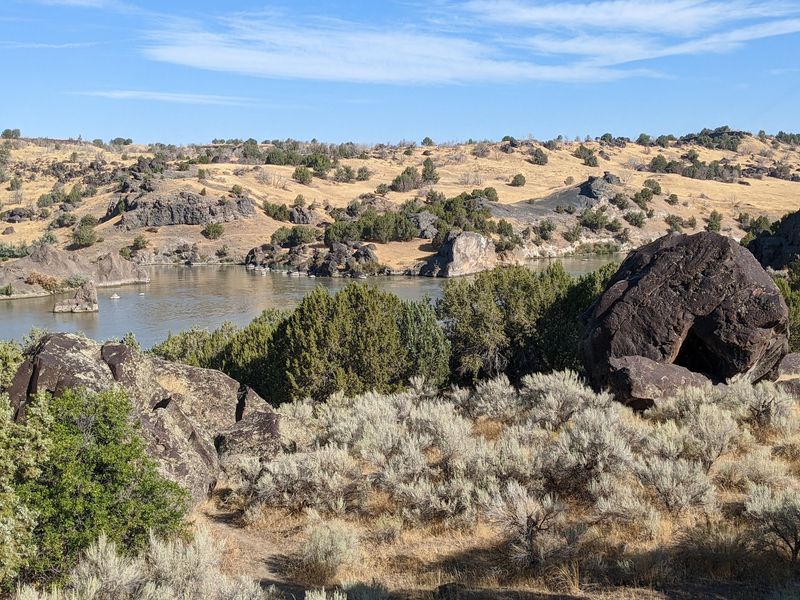
Keep your eyes open and the park rewards you with a surprising cast of critters. Birds, lizards, and even bats have all been spotted here, alongside the grebes that nest near the river.
The scenery leans dramatic thanks to the rock formations and massive, colorful boulders scattered across the landscape. Those geologic features give the park its rugged personality.
Plant life is diverse too. In June, wildflowers and berries fill in the terrain, adding color to the dry, sagebrush covered grasslands.
Because this is high desert country, a steady breeze often passes through, which many find pleasant during warmer months. It keeps the campsites comfortable even when summer turns up the heat.
Photographers do especially well here, with cliffs, water, and boulders all within easy reach. The mix of wildlife and geology makes every walk a little different, and that variety is a big part of why the park keeps its loyal following.
Nature does most of the entertaining, which suits the quiet crowd just fine.
Knowing Before You Go
A few practical notes make the visit smoother. Out-of-state visitors pay a 7 dollar entry fee, and using the dump station runs 10 dollars, which most agree is well worth it for how clean it is.
The visitor center is worth a stop for its exhibits and helpful staff, but note that its hours can be limited, with some periods open only Monday through Thursday. Rangers and camp hosts get high marks for being friendly and genuinely helpful.
The park sits close to the interstate, which is a blessing for road trippers but comes with a catch. Freeway noise reaches the upper campground more, so if you want quiet, aim for the lower campground, which sits more sheltered from the road.
One small heads-up: some bathrooms lack lighting at night, so a flashlight or headlamp is handy. During busy weekends before the lower loop opens, bathroom lines in the upper loop can build up.
The park sells ice, wood, and disc golf discs on-site at good prices. For the latest details, the official Idaho parks website is the place to check.
The Quiet Verdict on a Snake River Sleeper
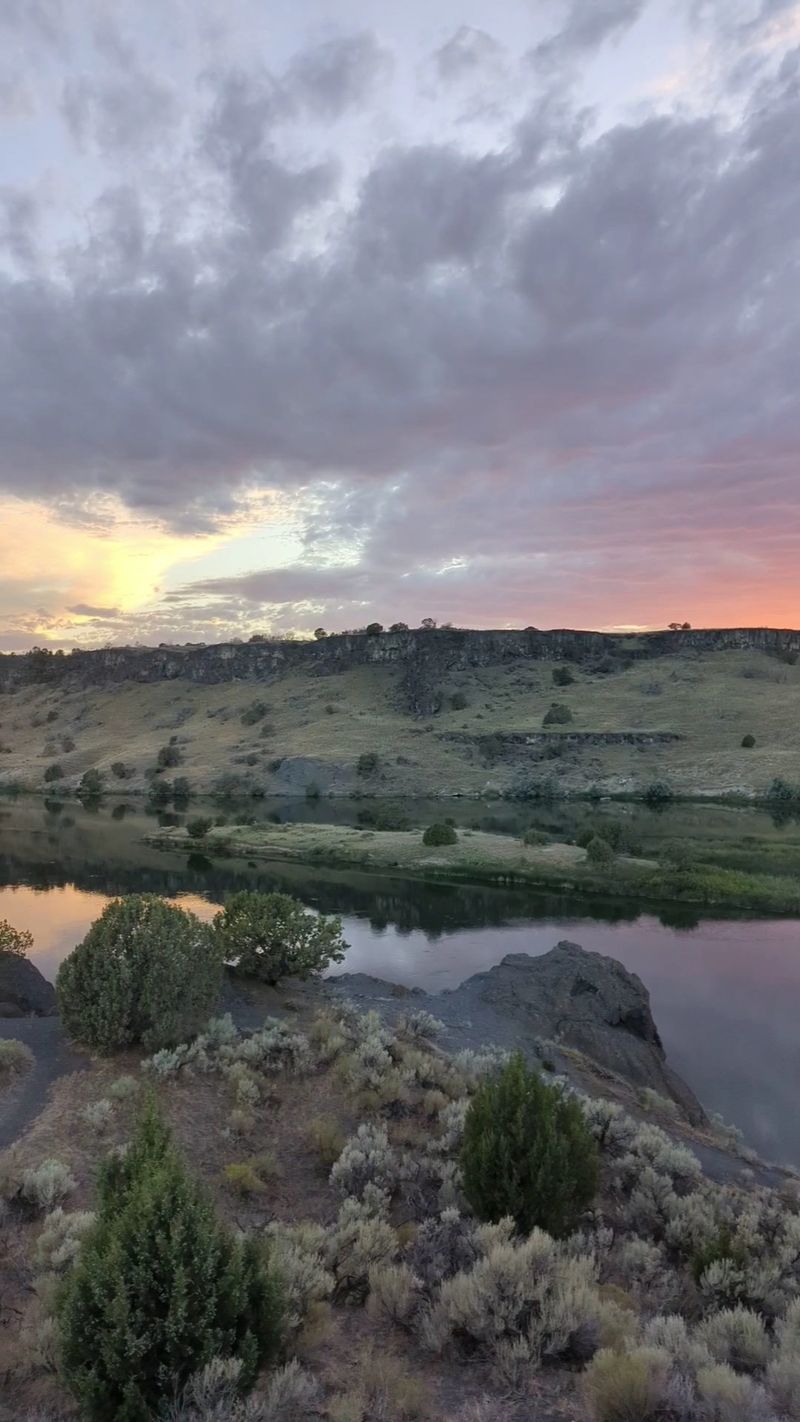
Some places win you over precisely because they do not try too hard. That is the charm of this small park along the Snake River, where peace comes standard and the crowds stay thin.
The regulars who return year after year say it plainly: this is their favorite spot for unwinding. It suits people who want nature to do the entertaining rather than a packed schedule of attractions.
Between the wagon ruts, the trail network, the disc golf, the fishing docks, and the clean campsites, the park quietly overdelivers on nearly every front. For a place this compact, that range is hard to beat.
Families, solo travelers, and dog owners all find something to love, whether it is history, water, or simply the calm. The strong ratings reflect just how well it lands with the people who find it.
If your idea of a great trip involves less noise and more room to breathe, this stretch of southern Idaho deserves a spot on your list. Slow down, turn off the highway, and let a sleeper surprise you.
Enjoyed this story?
Add Fast Food Club as a preferred source to see more of our reporting on Google.