


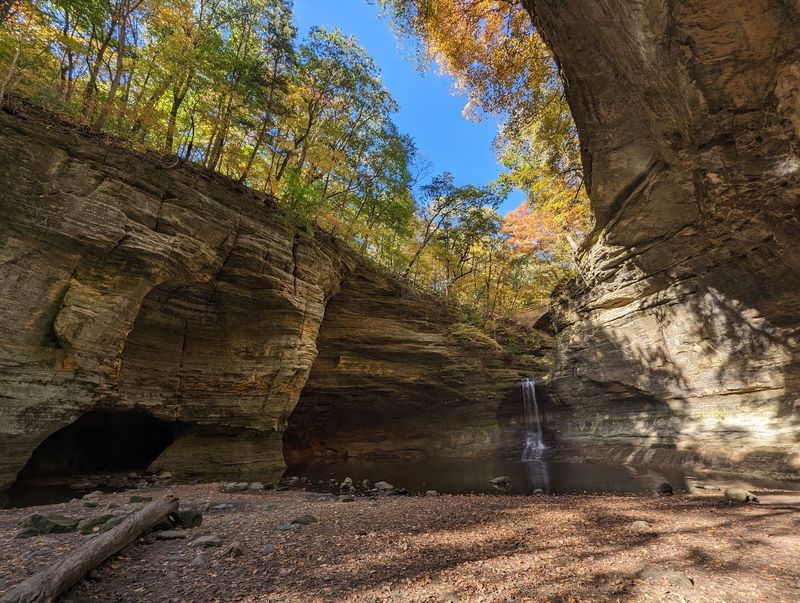
Most travelers heading to north-central Illinois aim straight for the famous canyons everyone talks about, then drive right past a quieter place next door that quietly outshines it. Tucked into the countryside near Oglesby, this compact park hides deep gorges, layered rock walls, stepping-stone creek crossings, and waterfalls you can walk beneath.
It rewards the curious with an arched stone bridge, hidden caves, and old French-fort reconstructions, all packed into a valley small enough to explore in a single afternoon. The trails run through prairie up top and moody, shaded canyon floors below, connected by staircases carved for adventurers who do not mind wet shoes.
Keep reading to learn where it sits, how it came to be, what makes each corner worth the climb, and the practical tips that turn a good visit into a great one.
Where the Canyon Country Begins
Tucked along the highway just south of the more famous crowds, this park sits at 2500 IL-178 in Oglesby, Illinois, roughly a mile below its celebrated neighbor. The address is easy to find, and the entrance opens onto parking lots that feed directly into the trail network.
The land here is officially a state park managed by the Illinois Department of Natural Resources. It spreads across about 1,938 acres of forest, prairie, springs, and stream-carved canyons.
What sets the location apart is how much it packs into a small footprint. The main draw is a compact valley you could walk through in about an hour, yet it holds waterfalls, caves, and towering rock walls the whole way.
Because it shares the same corner of Illinois as its well-known sibling, many people fold both into one trip. The two parks sit close enough that hikers often tackle them back to back in a weekend.
Regulars mention that the smaller size works in its favor. Instead of long approaches, the trails drop you into the scenery quickly, so the payoff arrives almost as soon as you start walking.
From Private Estate to Public Treasure
Long before hikers arrived, this valley was a private retreat called Deer Park, owned by Frederick Matthiessen, an industrialist and philanthropist from nearby LaSalle. He shaped the grounds into something meant to be explored.
In the early 1900s, Matthiessen developed the trails and built structures throughout the property. His work laid the groundwork for nearly every path visitors follow today.
His heirs donated the land to the State of Illinois in 1943, turning a personal estate into a place anyone could enjoy. Over the decades that followed, the park expanded to its current size of roughly 1,938 acres.
The history still shows up in physical form. Interpretive signage along the trails explains how the estate became a park and points out features tied to its origins.
Knowing the backstory adds a layer to the walk. What looks like a wild canyon was partly a labor of one man’s vision, carefully opened up so future generations could wander through it.
That blend of natural drama and deliberate design gives the place a character all its own, a piece of Illinois history hiding in plain sight beneath the tree canopy.
The Dells, the Park’s Main Event
Ask anyone who spends time here what to see first, and the answer lands on the Dells. This section is the heart of the park and the reason most people make the trip.
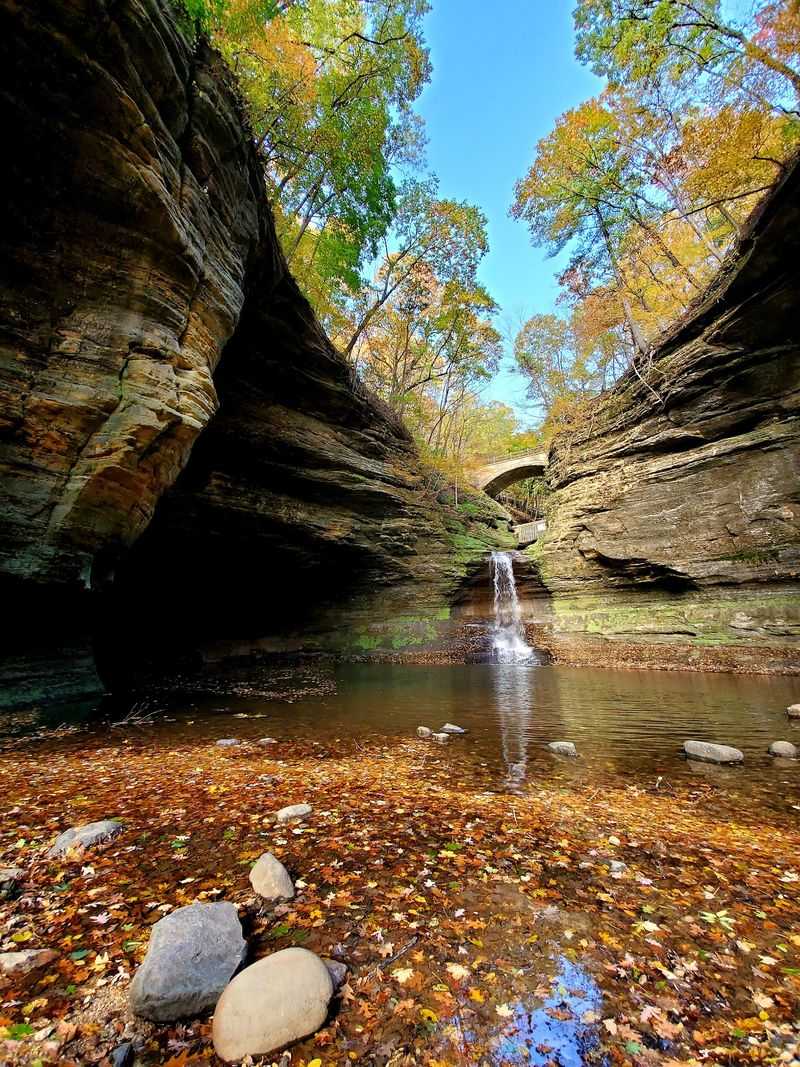
A long, narrow gorge runs through it, with a clear stream flowing between layered rock walls. The route winds all the way through the canyon toward a large waterfall waiting at the end.
Most of the points of interest sit on the canyon floor rather than up on the bluffs. That gives the Dells a deeper, moodier feel than the sunlit ridges above, with cool air lingering between the walls even in summer.
Two primary trails organize the experience, an upper route and a lower route, often called the upper and lower dells. Each one delivers several waterfalls, so you rarely walk far without reaching another one.
Regulars describe this stretch as immersive, with less-defined paths that invite exploration along the canyon. It feels more like wandering than following a marked line.
For newcomers deciding where to start, the Dells is the obvious pick. It concentrates the park’s best scenery into one memorable loop.
Waterfalls That Punch Above Their Size
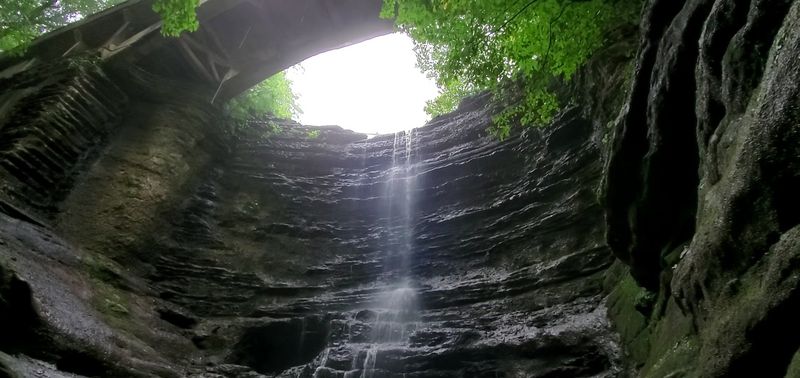
Small does not mean underwhelming when it comes to the water here. The canyon holds some of the finest waterfalls in Illinois, all packed into one compact valley.
They are not enormous like the giants people picture on postcards, and that is part of the charm. Instead, they arrive up close and personal, letting you stand near the base rather than viewing from a distant railing.
Two main falls anchor the Dells, including Cascade Falls, with several smaller ones scattered along the upper and lower routes. After heavy rain or snowmelt, the flow surges and the whole canyon comes alive with rushing water.
Spring is the prime season for volume, when runoff feeds the streams and the falls run their fullest. Even in early season, before the foliage returns, the water keeps moving strong.
Winter brings a different spectacle entirely, as the falls freeze into ice columns that draw a hardier crowd. Each season reshapes the view.
People who know the park well say the waterfalls alone justify the visit, especially given how quickly you reach them once you head down the stairs.
Stepping Stones and Creek Crossings
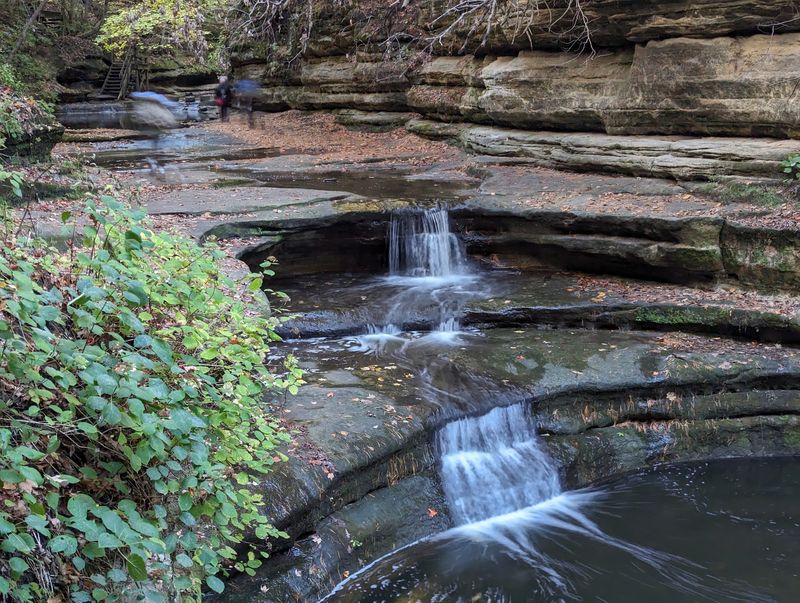
Getting through the canyon sometimes means getting a little wet, and honestly that is half the fun. Strategically placed stepping stones let you cross shallow water by hopping from one circular rock to the next.
These crossings turn an ordinary hike into a small adventure. Balancing across the creek adds a playful challenge that kids and grown-ups both seem to enjoy.
The water runs shallow in most spots, but footing matters. After rain, the stones and surrounding ground can turn slick, so careful steps keep the experience fun rather than frustrating.
In certain sections of the Dells, the only way through is along the creek itself, followed by a climb up another staircase. It commits you to the route, which regulars call completely worth it.
Because feet tend to get wet down here, seasoned hikers plan for it rather than fight it. Waterproof footwear helps, and a spare pair of shoes and socks waits happily in the car.
Crossing the water this way puts you right in the middle of the canyon rather than watching from the edge, and that closeness is exactly what people come back for.
The Arched Stone Bridge Overhead
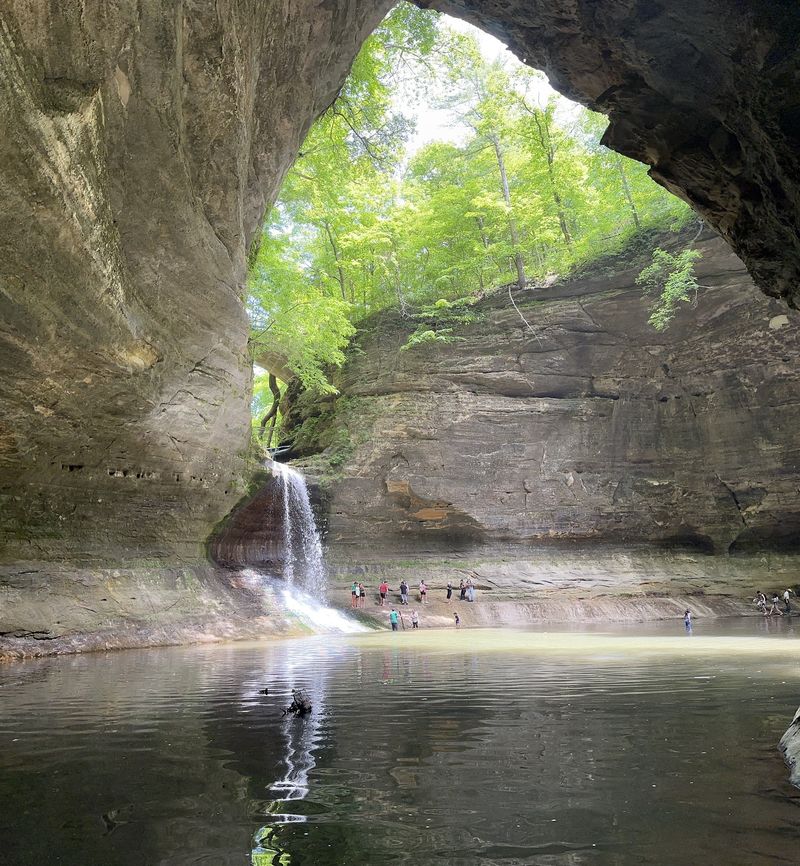
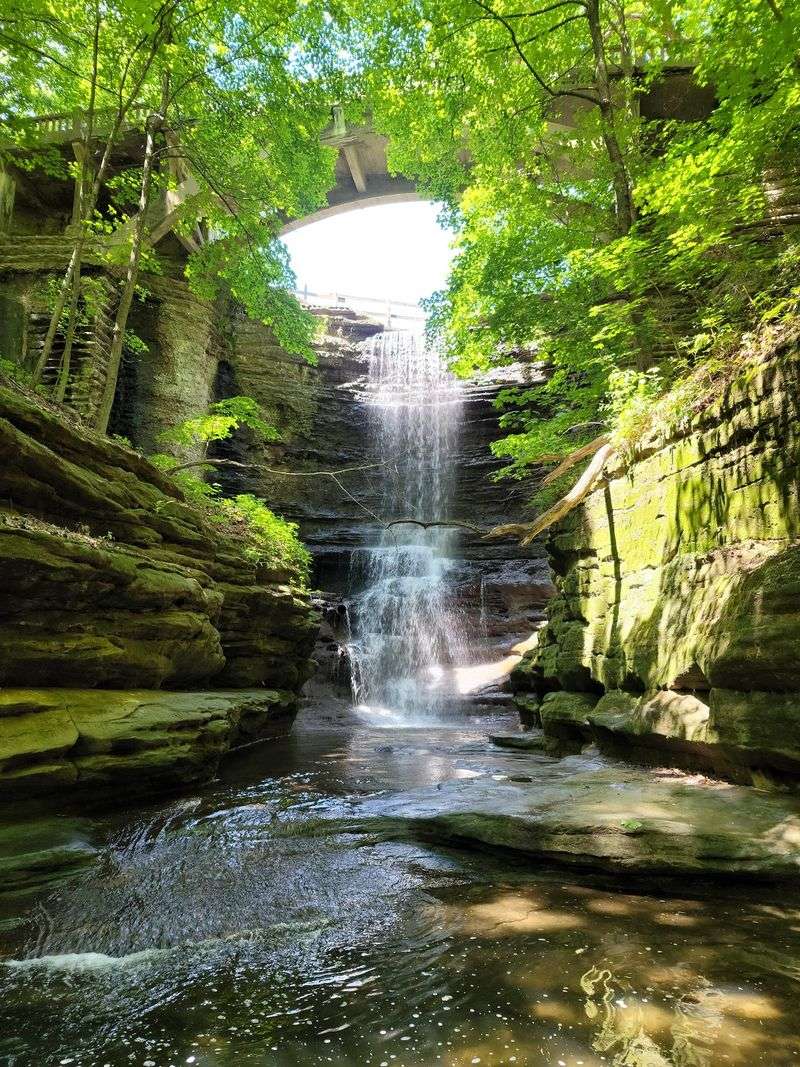
One of the most photographed features spans the canyon itself. A beautiful arched stone bridge stretches across the lush green gorge, and you can walk both over the top of it and underneath it.
From below, the arch frames the canyon and the greenery beyond, creating a natural photo spot. From above, it offers a vantage point over the stream and rock walls dropping away on either side.
The bridge ties the upper and lower experiences together, giving the park a sense of connection between its high prairie and its deep canyon floor. It is functional and scenic at once.
Sunlight filtering through the dense canopy tends to make the whole area glow around midday, which is why photographers linger here. The stonework pairs well with the surrounding foliage in every season.
Structures like this reflect the park’s estate origins, when trails and features were deliberately built into the landscape. The craftsmanship has held up remarkably well.
Stopping at the bridge, whether crossing it or standing beneath its arch, gives visitors one of the park’s signature images and a natural pause point on a busy loop.
Hidden Caves Along the Canyon Floor
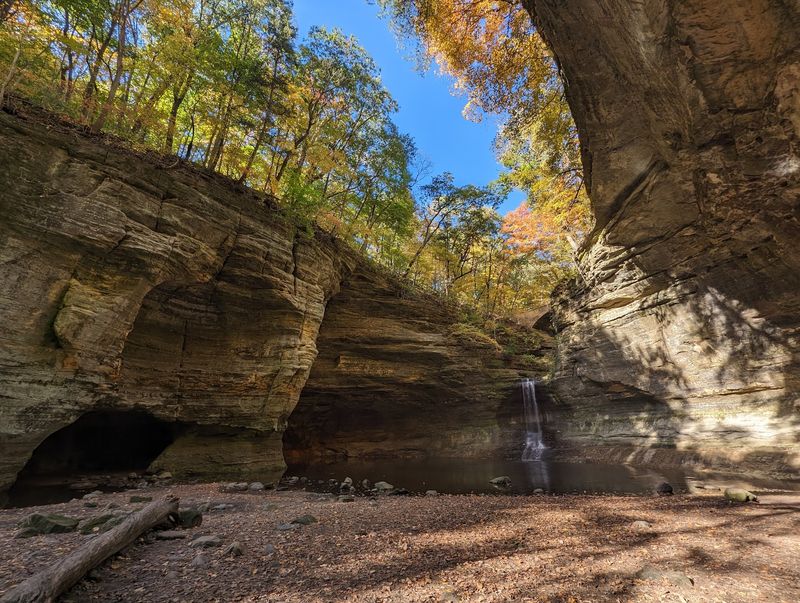
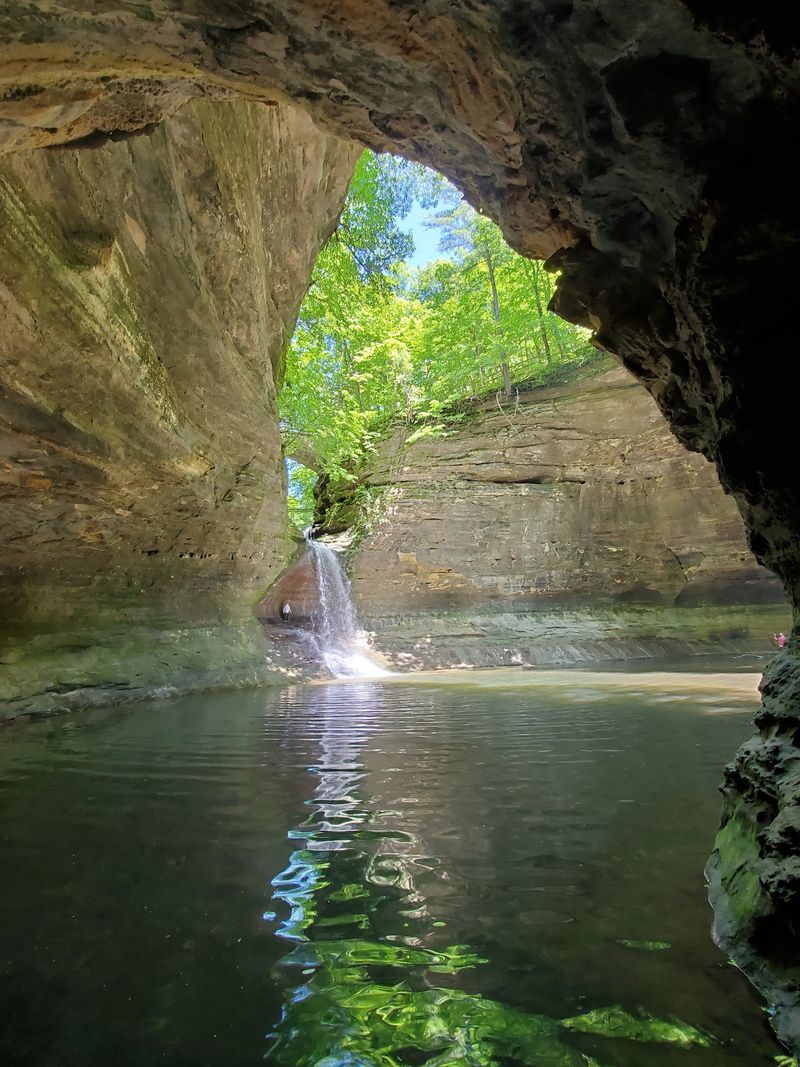
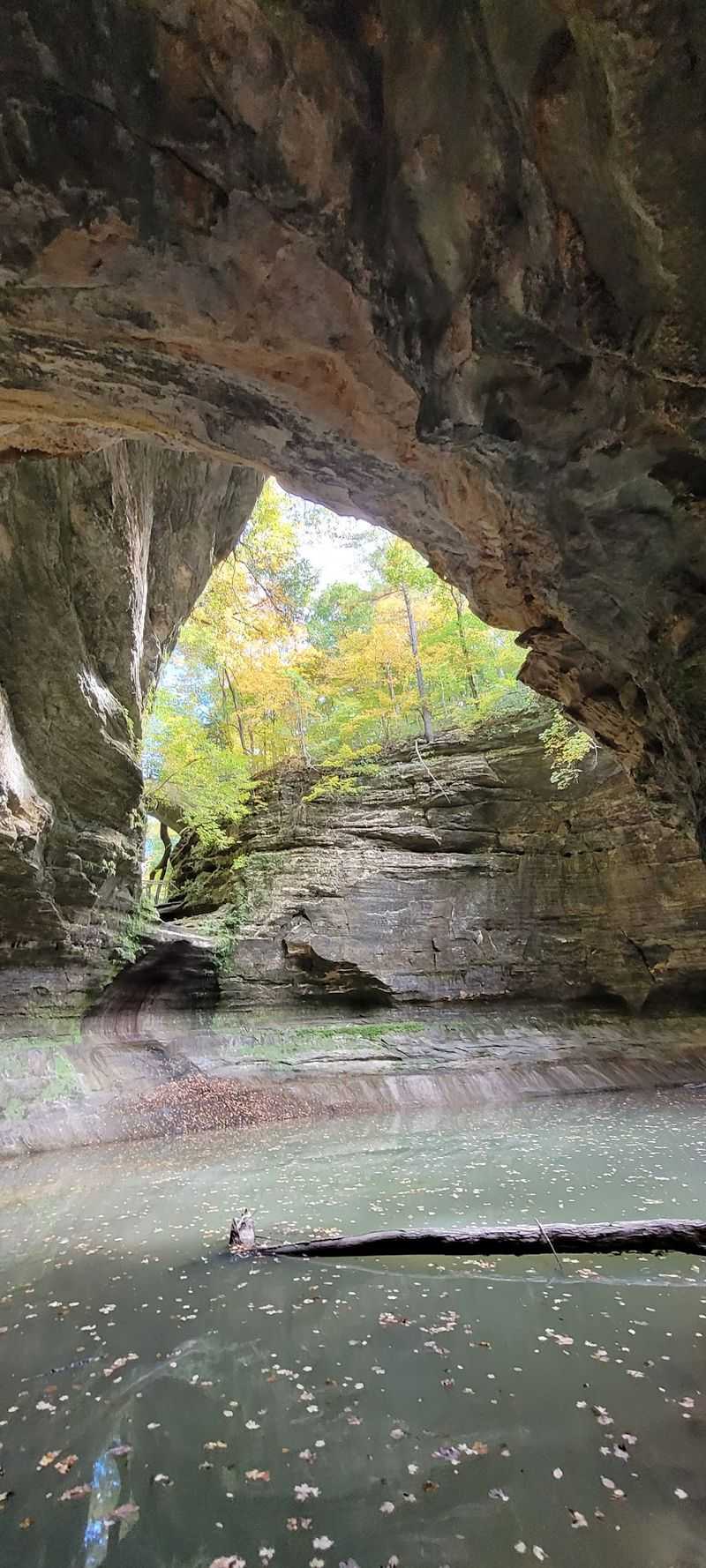
Down in the main canyon, the rock walls open into small caves that reward the adventurous. Walking through them gives you fresh angles on the waterfall at the end of the trail.
These pockets carved into the sandstone let you duck out of the open path and peek at the falls from tucked-away vantage points. Each one shifts the view just enough to feel like a discovery.
The caves rank among the park’s coolest surprises, literally and figuratively, since the shaded stone holds cooler air than the trail above. They break up the hike with a sense of exploration.
Because the canyon floor is where most of the action happens here, the caves fit right into the deeper, darker character of the Dells. They feel wild rather than manicured.
Reaching them takes a little scrambling and comfort with uneven ground, so sturdy footing helps. The effort is modest and the payoff is memorable.
Folks who explore beyond the obvious paths often name the caves as a highlight, a small feature that makes this compact park feel far bigger than its acreage suggests.
Reconstructed Forts and a Blockhouse
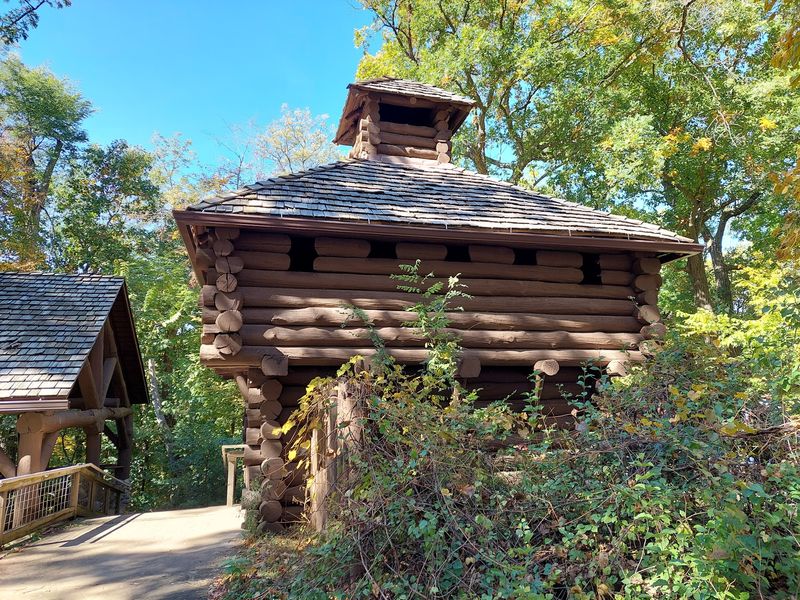
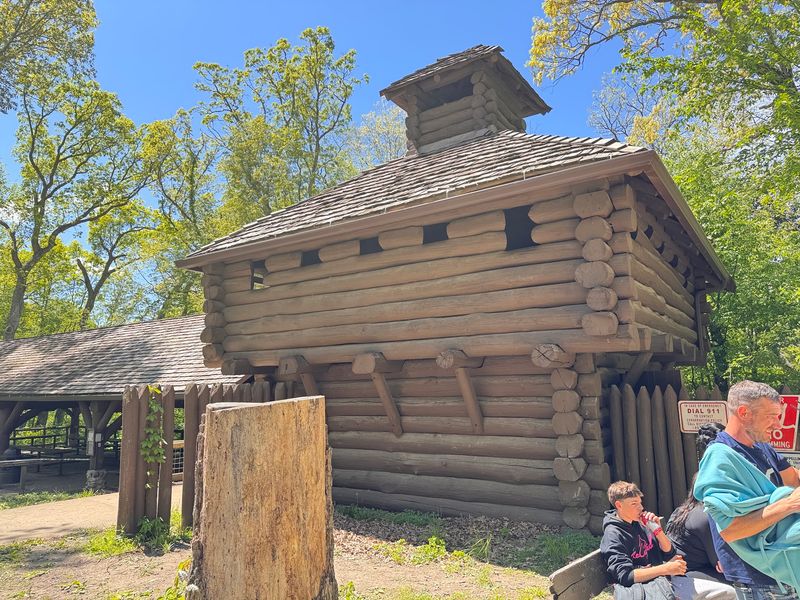
History buffs get an unexpected bonus here. Scattered near the park grounds stand several log cabins and a blockhouse, built as reconstructions of French colonial forts from the late 1600s and early 1700s.
These structures give the area a distinct historical atmosphere that most canyon parks lack. They connect the natural scenery to the broader story of early Illinois.
The reconstructions add variety to a visit centered on hiking and waterfalls. After a canyon walk, wandering among the timber walls offers a change of pace and a bit of a history lesson.
Interpretive details throughout the park help frame what you are looking at, so the forts do not feel out of place. They read as a deliberate feature rather than an afterthought.
For families, the cabins and blockhouse make a natural stop that appeals to younger explorers curious about the past. They anchor the human side of the park’s long timeline.
Pairing colonial-era reconstructions with dramatic canyon scenery is an unusual combination, and it gives this park a personality that stands apart from its more famous neighbor down the road.
Upper Trails Through Prairie and Forest
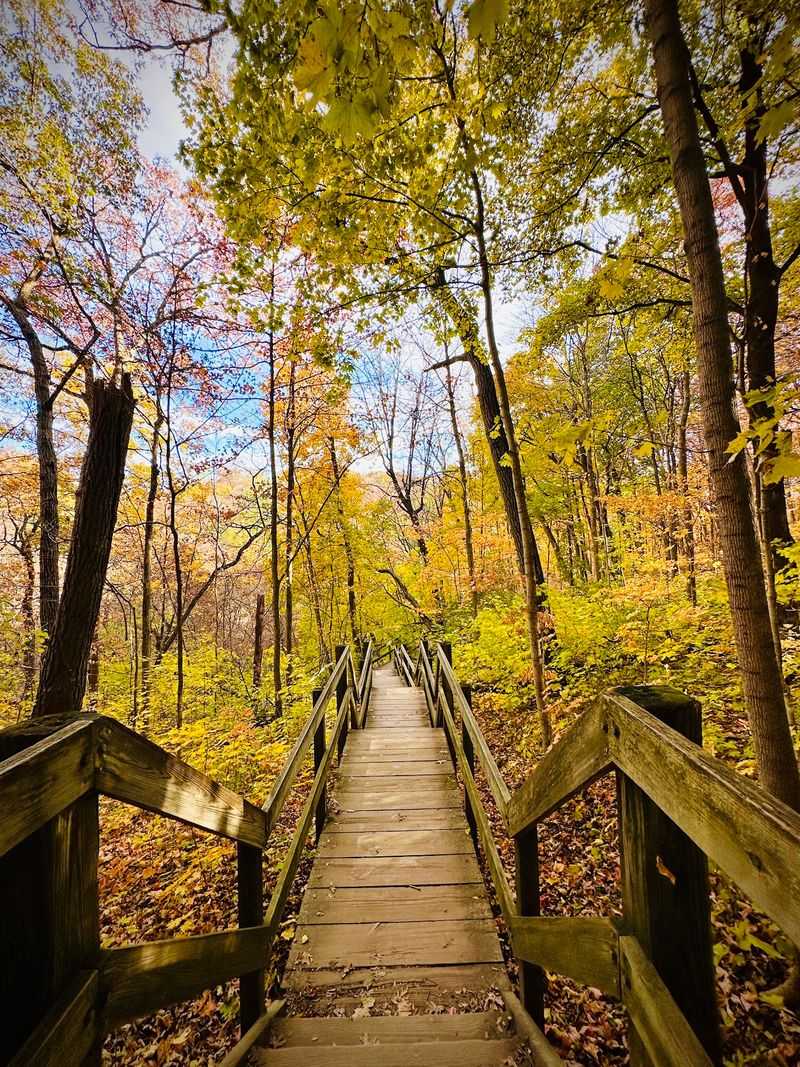
Above the canyon, the mood shifts completely. The upper trails wind through forests and wrap around the river, offering a gentler, well-groomed walk compared with the rugged floor below.
These paths stay flatter and easier to hike, making them friendly for casual walkers who prefer to keep their feet dry. They still deliver views, including looks down at the waterfalls from high above.
Beyond the wooded ridges, the park includes prairie land and savanna, especially over in the River Area. That section features flatter terrain bordering farmland, a contrast to the sandstone drama of the Dells.
The variety means one park can suit two very different moods. You can climb down for adventure or stroll the top for a quiet outdoor walk.
Wildlife shows up readily on these routes, from birds nesting in the cliffs to creatures moving through the brush. The forest cover keeps the upper trails shaded and pleasant.
People who want scenery without the steep descents often stick to the upper paths, proving the park welcomes everyone from serious hikers to those out for an easy ramble.
Wildlife, Cliff Swallows, and the Occasional Snake
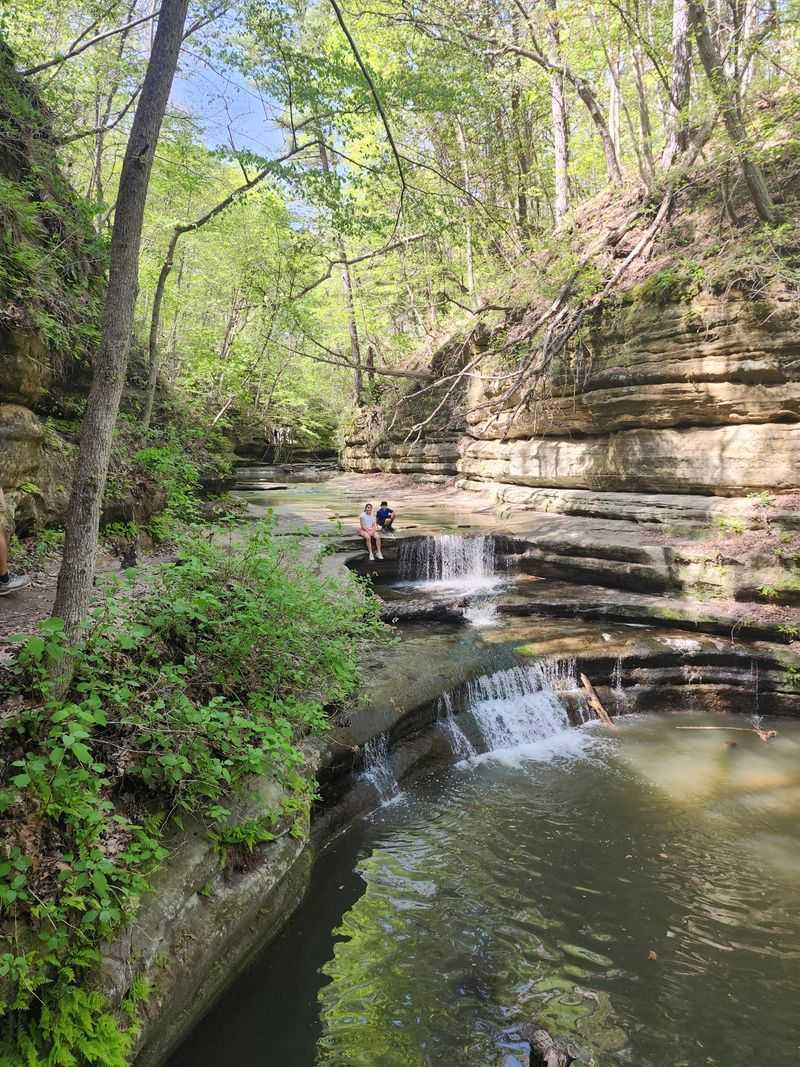
Nature keeps things lively throughout the park. Cliff swallows dart back and forth from their nests all day long, especially around the main canyon where they zip across the gorge.
Plenty of other wildlife shares the trails too. The forest and prairie mix supports a range of creatures, and the park’s description highlights the animals that make their home here.
Now and then the wildlife makes itself obvious in surprising ways. Hikers occasionally spot a black snake stretched across a trail, sometimes identified as an American Racer, which usually moves along on its own after a few minutes.
Encounters like that add a touch of unpredictability to the walk. Most creatures keep their distance, and giving them space keeps the experience smooth for everyone.
The park’s quieter foot traffic, compared with its famous neighbor, means wildlife tends to appear more freely. Fewer crowds translate to more chances to notice birds and animals going about their day.
For nature lovers and photographers, this liveliness is a real draw. The park feels genuinely wild, and the constant motion of swallows overhead is a memory that sticks.
Strawberry Rock and the Lake Area
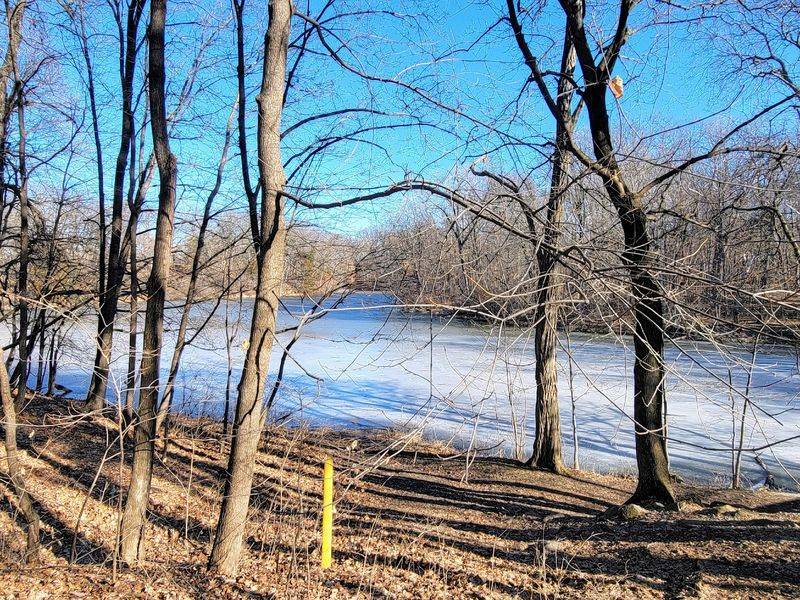
Wander toward the northern end and you reach the lake area, home to Matthiessen Lake and its own waterfall. This corner offers a calmer counterpoint to the busy Dells.
A trail near the lake leads to a curious feature called Strawberry Rock. It is easy to walk right past, since it blends into the scenery until you know to look for it.
Once found, the rock stands out as large and noticeably redder than everything around it. The color makes it both impressive and just a little bit amusing, a quirky landmark tucked into the woods.
Getting there involves following gravel trails that wind northeast through the park. Some routes eventually reach private property boundaries, so paying attention to signage keeps you on public ground.
The lake waterfall gives this section its own scenic anchor, separate from the canyon falls farther south. It rewards hikers willing to explore beyond the headline attractions.
Seeking out Strawberry Rock turns a straightforward hike into a small treasure hunt, and finding it feels like earning a secret that many visitors never bother to track down.
Stairs, Trail Difficulty, and Who It Suits
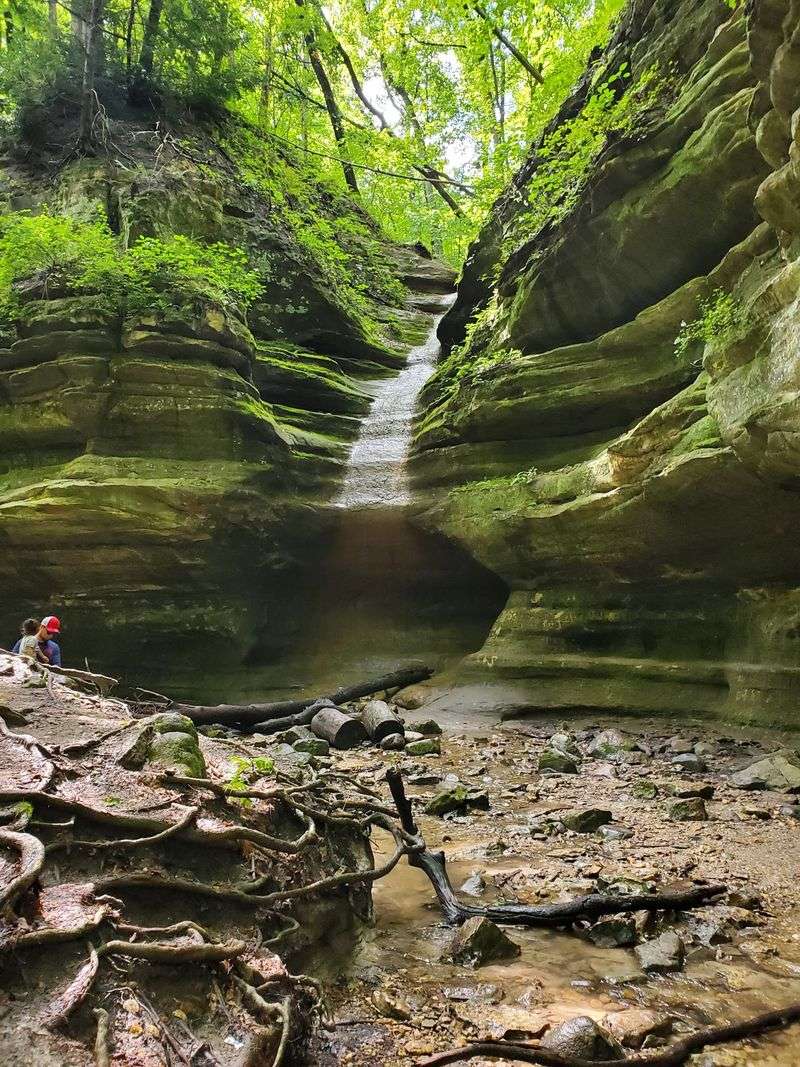
Be ready to climb, because the canyons come with a serious quota of stairs. Many flights connect the upper trails to the waterfalls and canyon floor, built from both concrete and stone, and some are old but impressively sturdy.
The overall hike is not long, but it ranks moderate to difficult thanks to the elevation changes and uneven ground. Reaching the best scenery means going down and back up more than once.
Because of all the steps and rough terrain, the park is not wheelchair accessible, and it is not ideal for anyone who cannot walk unassisted. Very young children may find it a handful.
Footing deserves respect too. After rain, surfaces turn muddy and slippery, so trail shoes and even a hiking pole make the climbs easier and safer.
Anyone comfortable on stairs and willing to get their feet wet will find the effort well rewarded. The two primary trails reach several waterfalls each, so the payoff comes fast.
Fit hikers, adventurous families with older kids, and photographers all fit right in. Those wanting a flat, easy stroll can stick to the groomed upper paths instead.
Planning Your Visit, Parking, and Practical Notes
A little preparation goes a long way at this park. Parking is available but limited, with numbered lots feeding the trails, and plenty of overflow lots sit nearby for busier days.
The park stays less crowded than its famous neighbor, which makes weekday visits especially peaceful. Fewer people means easier parking and more room to explore the canyons at your own pace.
Restroom facilities can be hit or miss. At times the main bathrooms have been out of order, leaving portable toilets and a single restroom near the lake, so plan accordingly and do not count on supplies.
Smart packing helps the day run smoothly. Bring plenty of water, wear waterproof or trail shoes, and toss a spare set of shoes and socks in the car for the wet canyon stretches.
The park is pet friendly, and dogs are welcome as long as owners clean up after them. Carrying out all trash keeps the trails clean for the next group.
A picnic in the parking area rounds out a visit nicely. For hours and current conditions, the Illinois DNR website is the reliable place to check before heading out.
Why This Little Park Wins People Over
Plenty of folks arrive expecting a lesser version of the park down the road and leave calling this one their favorite. Its rugged, feral character and quieter trails turn skeptics into regulars.
With a 4.8-star average across nearly 5,900 ratings, the enthusiasm runs deep and consistent. People in the know deliberately choose this park over its more polished sibling.
The appeal comes down to intimacy. Waterfalls sit close enough to reach quickly, caves and stepping stones invite hands-on exploration, and the compact valley delivers big scenery without long approaches.
Every season reshapes the experience, from surging spring water to autumn foliage and frozen winter falls. That variety keeps hikers coming back throughout the year.
Many pair it with the neighboring park for a full weekend, though a common piece of advice is to visit this one first so you appreciate its wild charm on its own terms.
Small in size but generous in beauty, this Oglesby park proves that acreage is not everything. For a canyon adventure that feels immersive and genuinely rewarding, it earns its place near the top of any Illinois hiking list.
Enjoyed this story?
Add Fast Food Club as a preferred source to see more of our reporting on Google.