


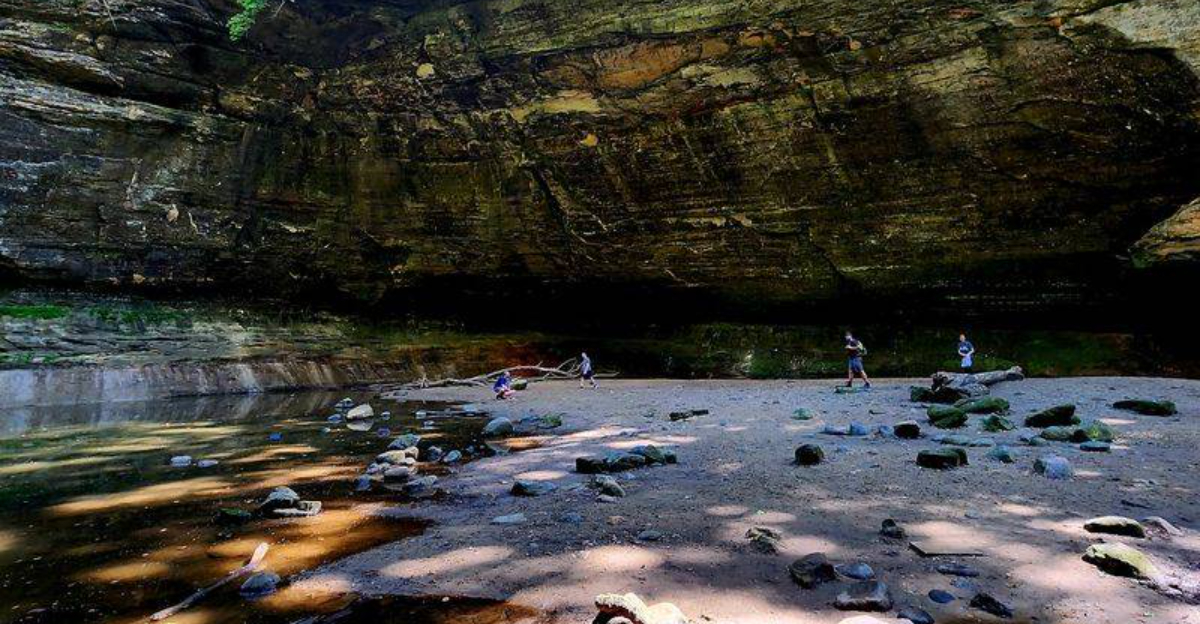
Most folks driving through north-central Illinois head straight for the famous sandstone cliffs everyone talks about, never realizing that a quieter canyon sits just down the road with waterfalls of its own. Fewer crowds, deeper gorges, and a stream you cross by hopping across stepping stones make this spot feel like a secret passed between friends.
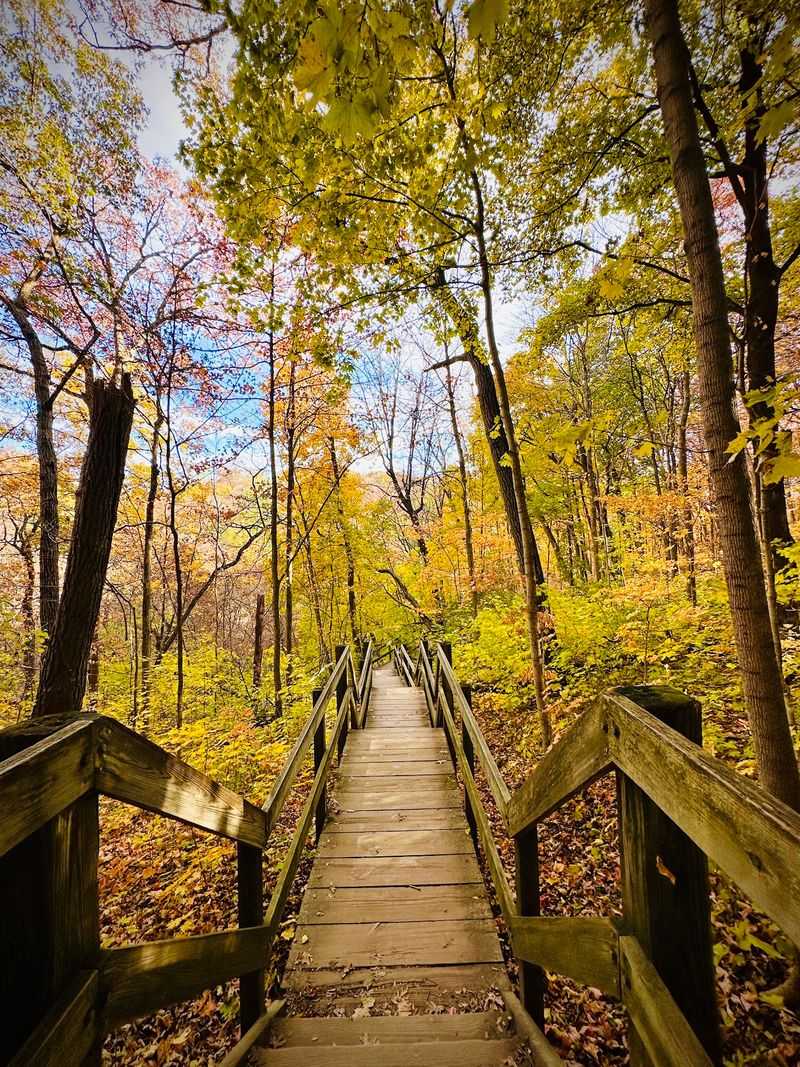
The trails dip below the ground into shaded dells where water tumbles over layered rock walls, then climb back up through forest that glows in every season. There are stairs, wet feet, and a little mud along the way, but that is part of the fun.
Keep reading to learn where this canyon hides, how it was built by a wealthy industrialist over a century ago, and the practical tips that will help you make the most of a visit.
Where This Canyon Country Begins
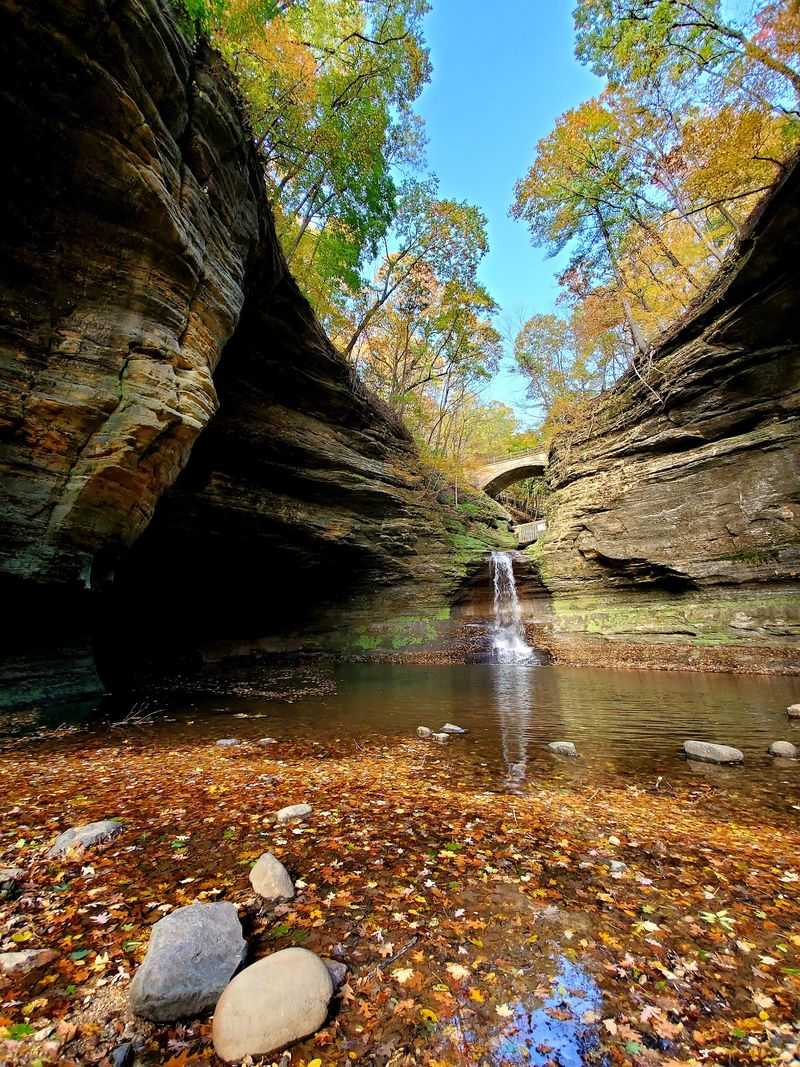
Tucked into the town of Oglesby, Illinois, this forested park sits at 2500 IL-178, only a short drive from the more famous cliffs of Starved Rock. The two parks are neighbors, yet the crowds tend to pile into one and skip the other entirely.
Spread across roughly 1,938 acres, the land mixes prairie, savanna, springs, and the deep rock canyons that draw hikers back season after season. A canyon-and-ridge layout gives the place a split personality, with flat upper trails and a moody world down below.
Regulars often describe it as the quieter sibling, less polished and a bit wilder than the well-known park just down the road. That rugged edge is exactly why people who know the area keep it on their list.
The main draw is a network of dells where a clear stream winds between towering rock walls. Waterfalls appear along both the upper and lower routes, and the whole valley can be walked in about an hour if you keep moving.
Slow down, though, and it easily fills a full afternoon.
A Private Estate Turned Public Treasure
Long before hikers arrived with waterproof shoes, this land was a private estate called Deer Park. It belonged to Frederick Matthiessen, an industrialist and philanthropist from nearby LaSalle who developed much of the property in the early 1900s.
Matthiessen laid out trails and built structures across the grounds, shaping the canyon into a place people could actually explore. His work gave the park its bones, and his name eventually gave it its title.
After his passing, the family kept the estate for a time. In 1943, his heirs donated the land to the State of Illinois, opening the canyons to the public and preserving them for generations to come.
Interpretive signs scattered along the trails fill in the story as you walk, turning a simple hike into a bit of a history lesson. Reading them adds context you would otherwise miss.
Over the decades the park expanded to its current size of around 1,938 acres. What started as one man’s private retreat now belongs to anyone willing to lace up and climb a few flights of stairs.
The Dells, Where the Real Adventure Lives
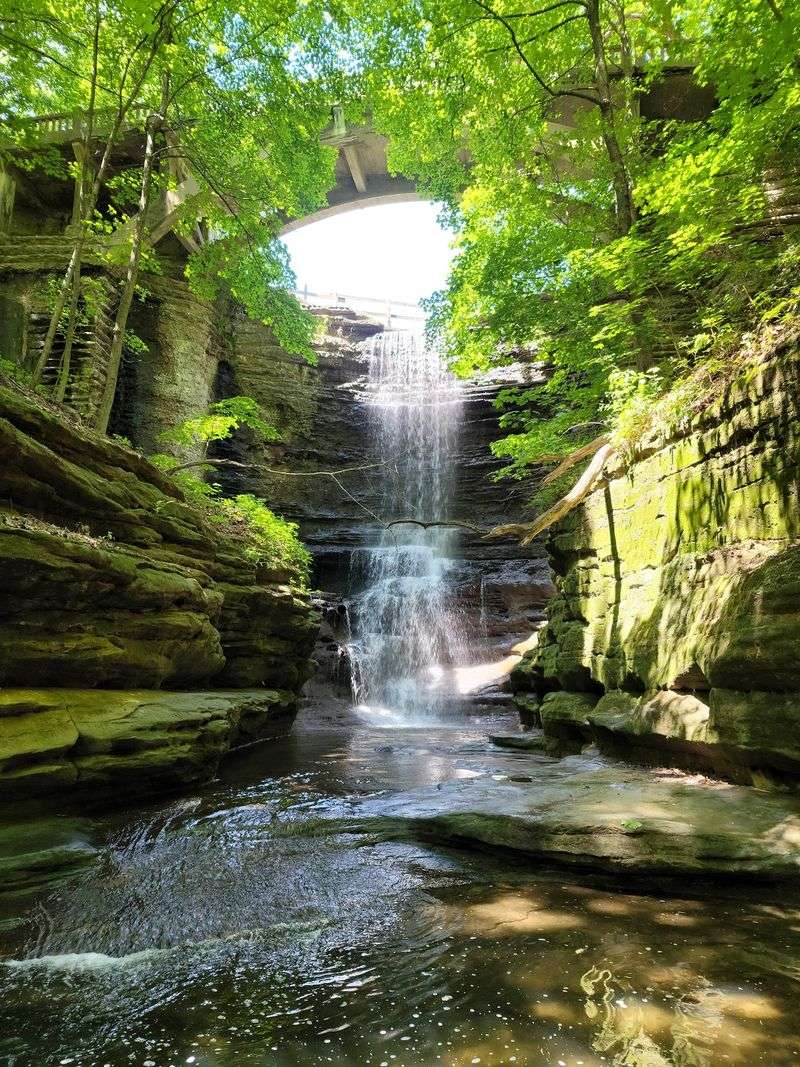
Anyone hunting for the heart of the park will find it in a section known as The Dells. Locals treat it as the main event, a long, narrow gorge where a stream flows between layered rock walls that rise high overhead.
Most of the points of interest sit on the canyon floor rather than up on the bluffs. That gives the place a deeper, shaded feel, since you are walking below the surrounding land instead of looking down from above.
The route splits into upper and lower dells, each threading past several waterfalls. Hikers often note that this layout means you reach the falling water quickly, without a long march to get there.
Down in the gorge, the trail becomes an exploration rather than a straight path. There are fewer marked lanes and more scrambling, which makes the whole thing feel immersive and a little bit untamed.
Word of caution from those who have gone before: once you drop into some of the dells, the only way through is the dell itself and back up another set of stairs. It is absolutely worth the effort, but plan on getting your feet wet.
Waterfalls That Punch Above Their Weight
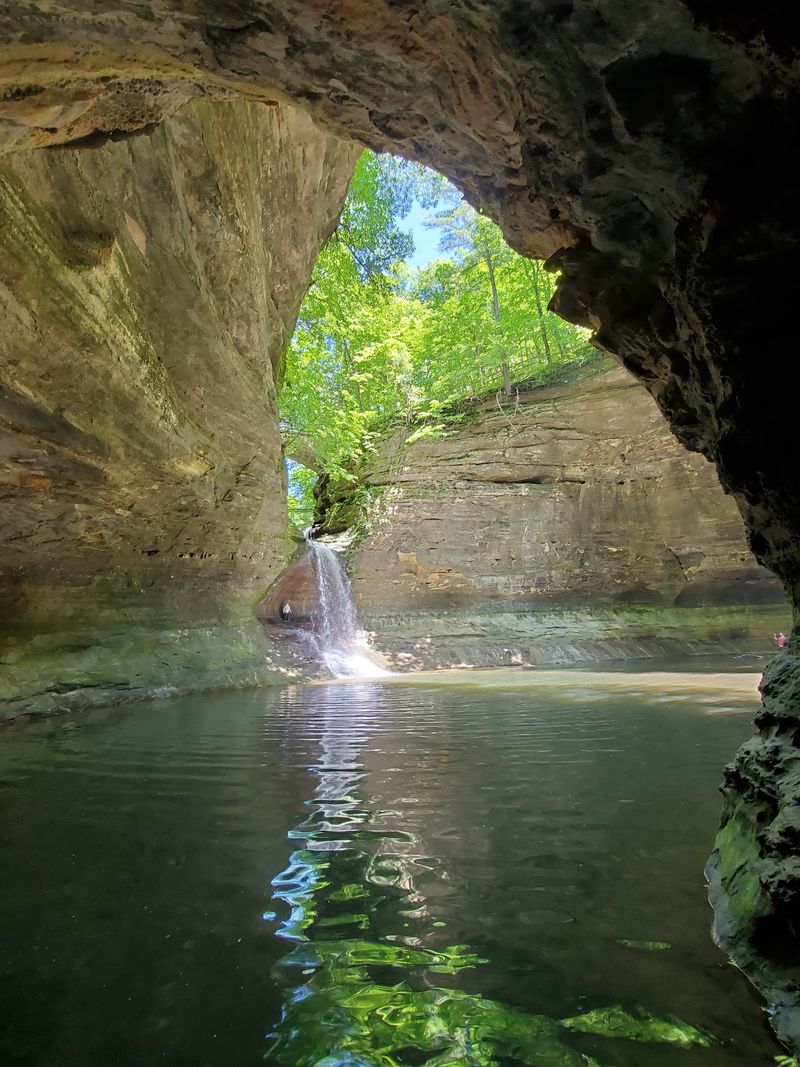
The waterfalls here may not rival the giants you see on postcards, but that is missing the point. Packed into one compact valley, they arrive one after another as you move through the canyon.
Cascade Falls and Matthiessen Falls rank among the standouts, along with a waterfall near the lake area. Along both dell routes, several more spill over rock ledges, giving you plenty of chances to stop and watch the water work.
Timing matters a great deal. After heavy rain or spring snowmelt, the falls run full and loud, while drier stretches leave them gentler and quieter.
In the lower canyon, a massive waterfall waits at the end of the main trail, and small caves nearby let you view it from different angles. Slipping through those openings is half the reward.
People who chase these falls in different seasons describe frozen curtains of ice in winter and vibrant flow in the wetter months. The park practically reinvents itself depending on when you show up.
Stepping Stones and Hidden Caves
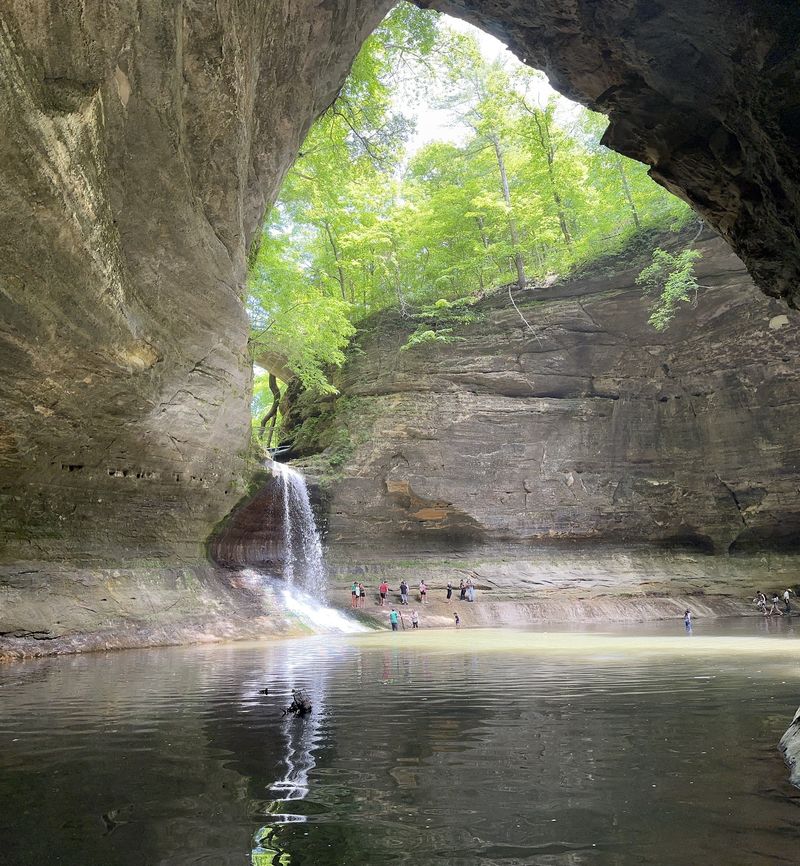
Half the charm of this canyon comes from how you get around inside it. Crossing the shallow stream often means hopping from one circular stepping stone to another, a small balancing act that turns an ordinary walk into a mini adventure.
Strategically placed stones let hikers who are comfortable navigating shallow water reach corners of the canyon others never see. For the adventurous, that opens up a surprising amount of territory.
Then there are the caves. In the lower canyon, small openings near the big waterfall let you slip behind and around the flow for views you cannot get any other way.
An arched stone bridge spans the green canyon in one spot, and you can walk both across it and beneath it. Sunlight filtering through the dense canopy makes the whole scene feel a little enchanted.
Cliff swallows dart back and forth from nests tucked into the rock walls, adding movement to the quiet gorge. Little details like these turn a short hike into a memorable one.
Upper Trails With a Softer Side
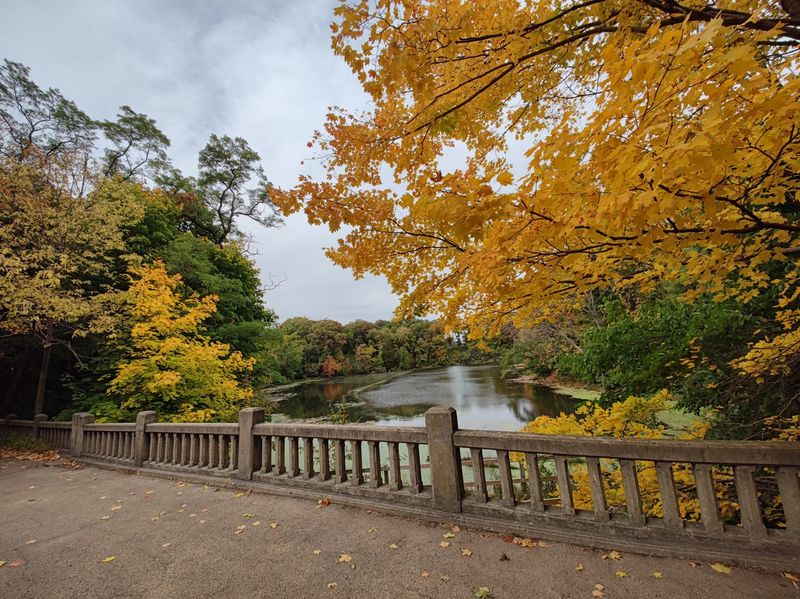
Not every path here demands wet feet and scrambling. Up top, the trails wind through forest and wrap around the river, offering a calmer route for anyone who wants scenery without the challenge.
Well-groomed and easy to walk, the upper trails suit casual strollers and photographers just as much as serious hikers. You get sweeping canyon views from above, plus a chance to look down on the waterfalls from a high vantage point.
The River Area near parking lot number eight leans into flatter prairie and savanna terrain, bordering farmland at the park’s edge. Keep in mind that access to certain sections can be restricted at times, so watch for posted signs.
Multiple overlooks let you catch the falls from very high up or, if you descend, right at their bases. That flexibility means one visit can be as gentle or as demanding as you like.
For those who prefer a peaceful outdoor walk over a rugged climb, the upper network delivers exactly that without shortchanging the views.
Wildlife, Quirks, and a Rock Named Strawberry
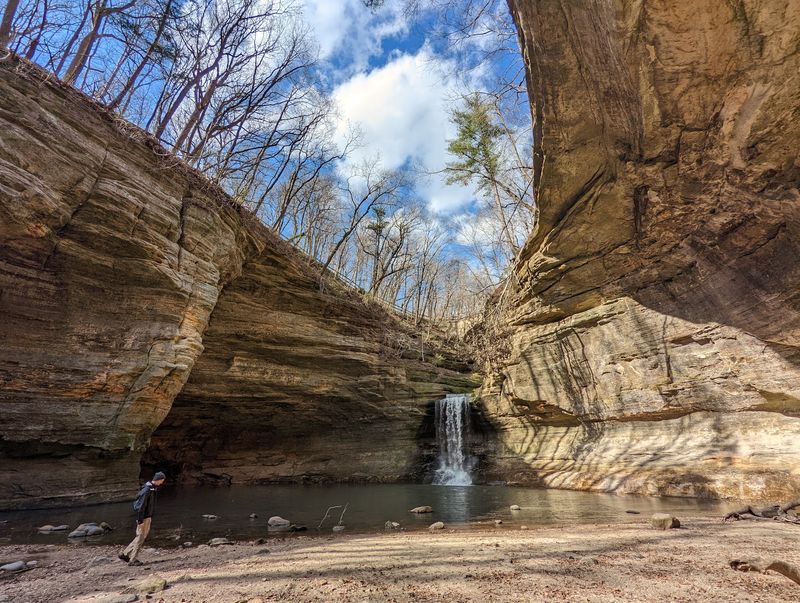
Part of the fun here is never quite knowing what you will run into. The park teems with wildlife, from the cliff swallows nesting in the canyon walls to the occasional black snake stretched across a trail like a natural roadblock.
One hiker encountered a four-foot American Racer parked right in the path and simply waited a few minutes until it moved along on its own. It is a good reminder that this is genuinely wild country, not a manicured garden.
Then there is Strawberry Rock, a large formation that reads redder than everything around it. Easy to walk right past, it rewards a second look with a mix of impressive and slightly absurd charm.
The lake area and Matthiessen Falls sit at the northern end, connected by gravel trails that eventually bump up against private property near a golf course. Turn back before the fences and you stay on the good stuff.
Wildlife, oddball landmarks, and unexpected detours give the place a personality that feels more feral than its famous neighbor. That is precisely its appeal.
A Quieter Alternative to the Famous Neighbor
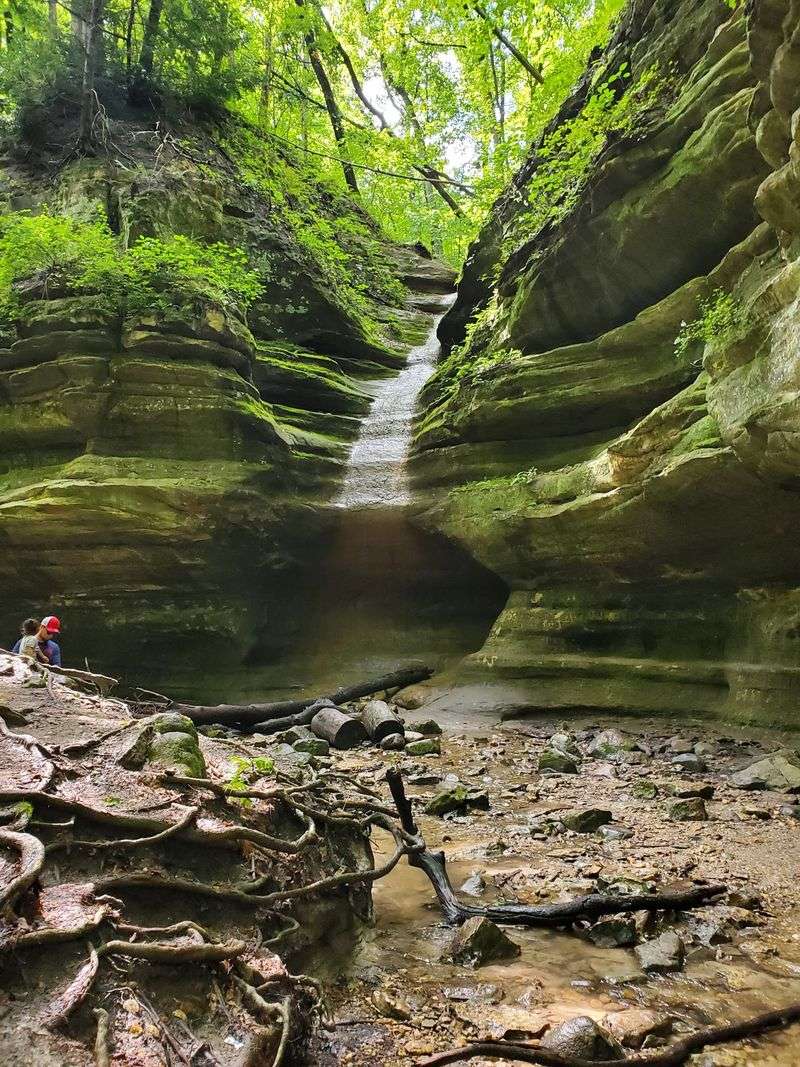
Comparisons with the well-known park down the road come up constantly, and the verdict from those in the know leans in a surprising direction. Many actually prefer this canyon, and the reason usually comes down to one word: crowds.
Foot traffic here runs lighter, so the whole experience feels more peaceful and immersive. You can wander the dells without weaving around a steady stream of other people.
The famous park has longer trails and it takes more walking to reach its waterfalls. Here, two primary routes get you to falls quickly, packing a lot of payoff into a compact space.
Regulars describe the mood as darker, deeper, and less polished, more of an exploration than a stroll. That rugged quality is exactly what wins people over.
A common tip: visit this canyon before its more famous sibling, so you can appreciate its wild charm on its own terms. See it first, and it stops feeling like anyone’s runner-up.
Best Seasons to Catch the Canyon at Its Finest
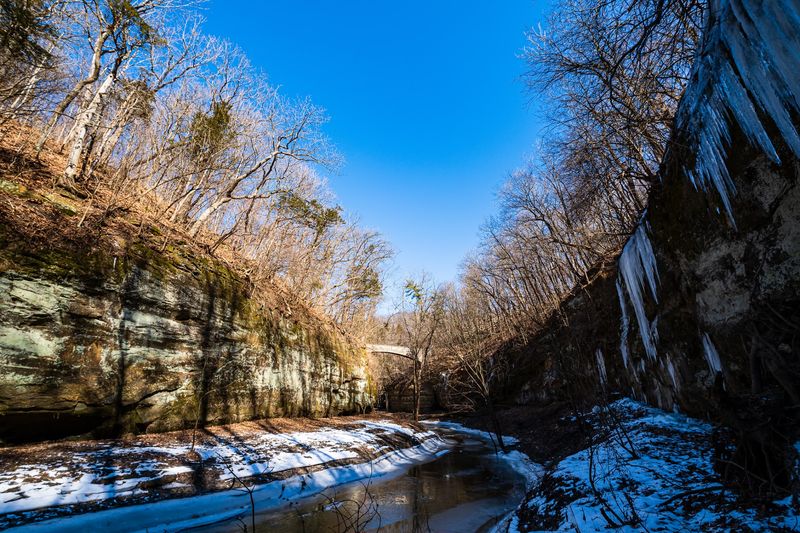
Timing can completely change what you find in this canyon, which is part of why regulars keep coming back. Each season hands the place a different mood.
Spring brings the water to life, as rain and snowmelt push the falls to full flow. Trails run wet and muddy during this stretch, but the payoff is waterfalls at their most powerful.
Summer turns the gorge into a cool, shaded retreat with vibrant green foliage lining the rock walls. It is a comfortable escape even when the upper world turns hot and humid.
Autumn draws people for the foliage, when the forest above the canyon shifts into warm color and the whole park glows. Photographers particularly favor this window.
Winter is the wild card. When temperatures drop, the waterfalls freeze into standing columns, and the adventurous even come to climb them.
Early season visits have their own charm too, with strong water flow from snowmelt before the leaves fully bloom. There is really no wrong time, only different rewards.
What to Pack Before You Go
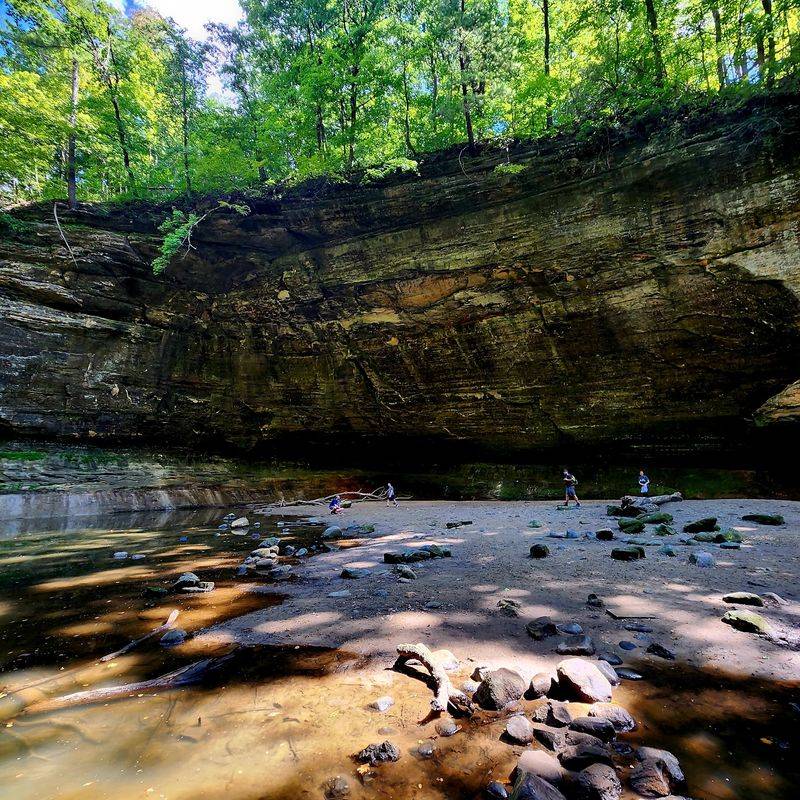
A little preparation goes a long way in this canyon, and the veterans are pretty unanimous about the essentials. Your feet will get wet, so plan for it rather than fighting it.
Waterproof or sturdy trail shoes top every list, along with an extra pair of shoes and dry socks stashed in the car for afterward. Some hikers even bring a change of clothes in case of a slip near the water.
A hiking pole helps on the uneven, rocky stretches, especially after rain when surfaces turn slick and muddy. Bring plenty of water too, since the stairs and climbs add up quickly.
Speaking of stairs, expect many of them, in both wood and old but sturdy concrete. The park is not suited for anyone who cannot walk unassisted, and it is not wheelchair or stroller friendly.
One honest heads-up: restroom buildings have been out of order at times, with portable toilets standing in near the lake. Pack accordingly and carry out whatever you bring in, since keeping this place clean is on all of us.
Why This Hidden Canyon Deserves Your Weekend
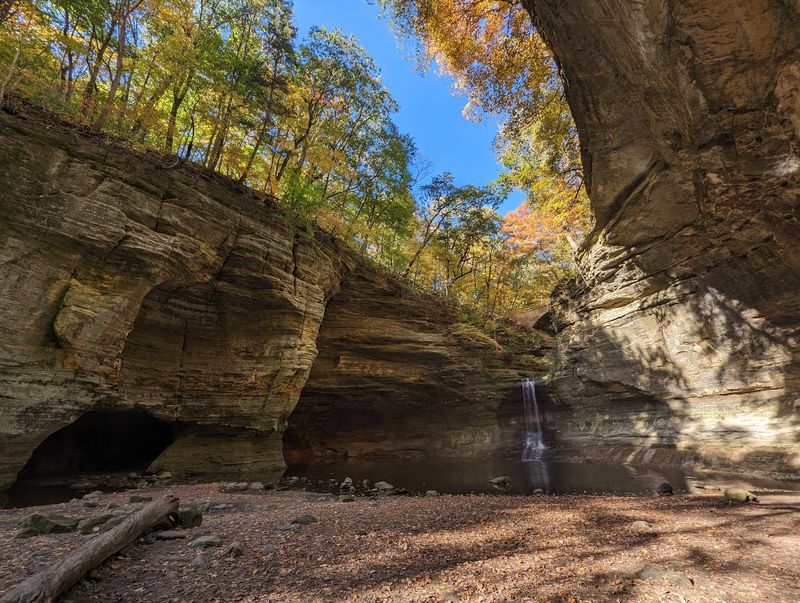
Holding a 4.8-star average across nearly 5,880 pieces of feedback, this park has quietly earned a loyal following without the fanfare of its famous neighbor. That kind of standing does not happen by accident.
People love it for the waterfalls, the well-kept trails, the caves, and the sense that they have stumbled onto something the crowds overlooked. Pet owners appreciate how welcoming it is, provided you clean up after your dog.
Reaching it is simple, since the park sits right off IL-178 in Oglesby, with limited main parking backed up by overflow lots nearby. You can learn more through the Illinois Department of Natural Resources website before you head out.
Between the history of a private estate turned public land, the stepping-stone stream, and the frozen falls of winter, there is genuine variety packed into a compact space. It rewards curiosity more than it rewards fame.
Skip the obvious stop for once and give this canyon your attention. The stairs, the mud, and the wet feet are a small price for a waterfall-filled gorge that most locals still have not bothered to visit.
Enjoyed this story?
Add Fast Food Club as a preferred source to see more of our reporting on Google.