


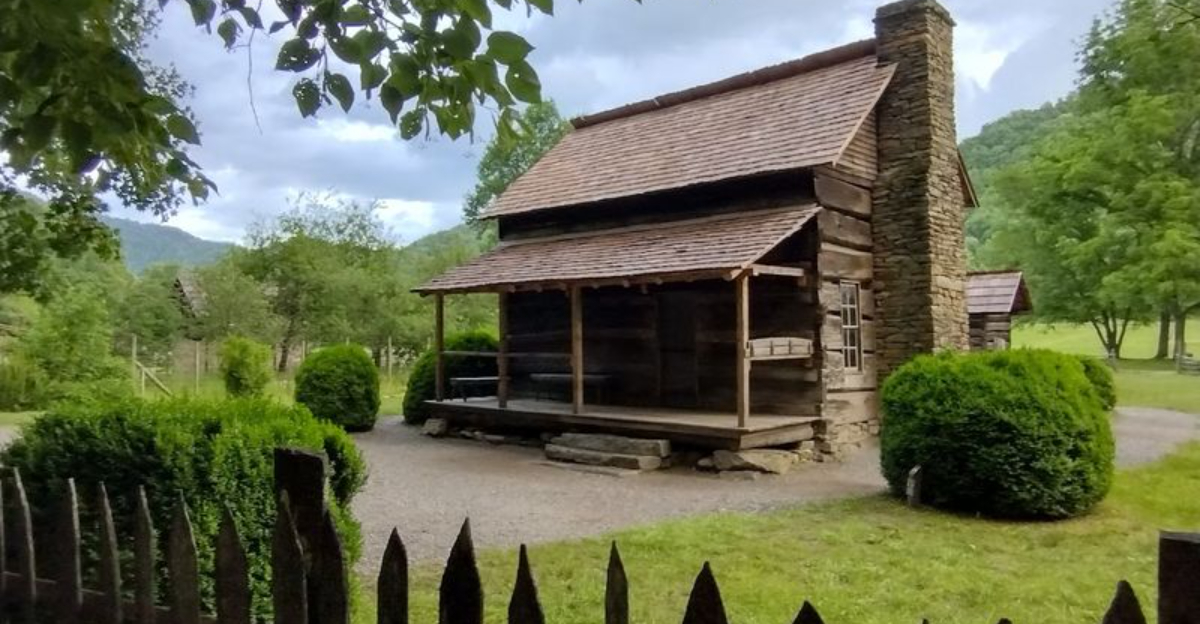
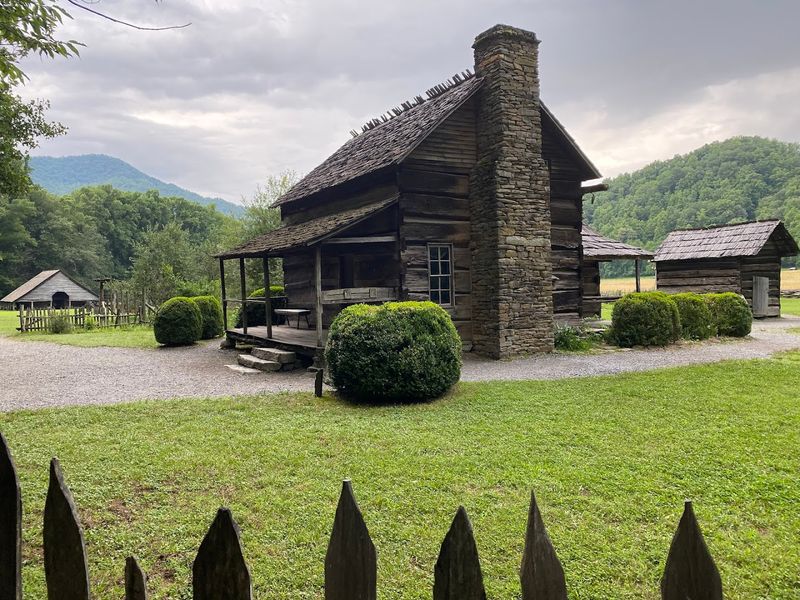
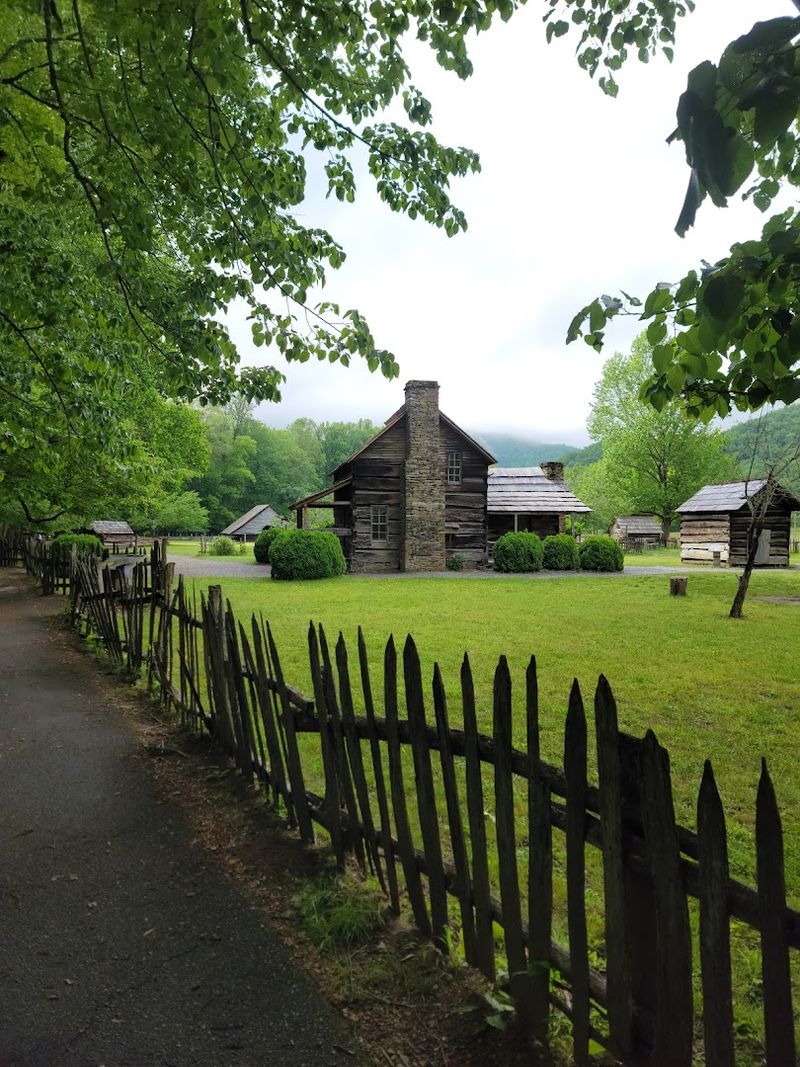
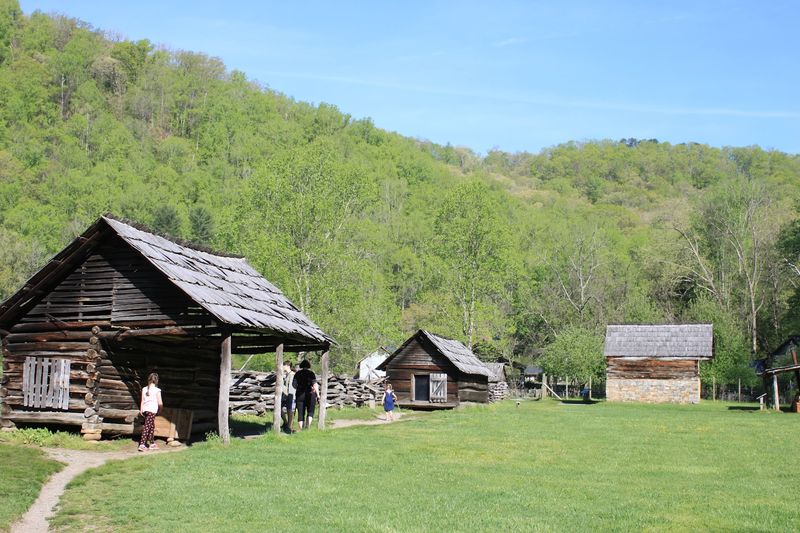
Tucked just behind the Oconaluftee Visitor Center in Cherokee, North Carolina, the Mountain Farm Museum is one of the most unique and rewarding stops in the entire Great Smoky Mountains National Park. This open-air living history museum brings together a remarkable collection of authentic 1800s log buildings, giving visitors a rare window into what everyday Appalachian farm life truly looked like.
Whether you are a history lover, a family with curious kids, or simply someone passing through on a road trip, this place has something genuinely special to offer. Best of all, admission is completely free, making it an accessible adventure for everyone.
A Living Time Capsule: What Mountain Farm Museum Actually Is
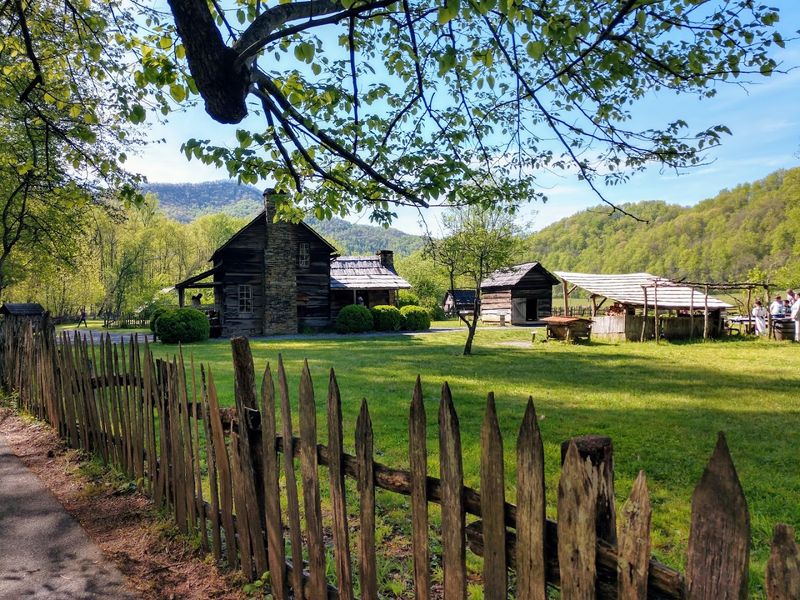
Picture walking through a real 19th-century Appalachian farm without a single velvet rope blocking your path. That is exactly what Mountain Farm Museum delivers.
Located adjacent to the Oconaluftee Visitor Center in Cherokee, NC, this open-air museum is a carefully assembled collection of authentic log structures moved to this site in the 1950s.
Each building was relocated from various spots within the surrounding mountains to preserve them for future generations. The National Park Service manages the site with obvious care and dedication.
Informational plaques are posted throughout, making it easy to follow along even without a guided tour.
Visiting feels less like a museum and more like stepping onto a working farm frozen in time. Families, solo travelers, and school groups all find something meaningful here.
It is the kind of place that quietly changes how you think about daily life.
The Historic Farmhouse: Heart of the Homestead
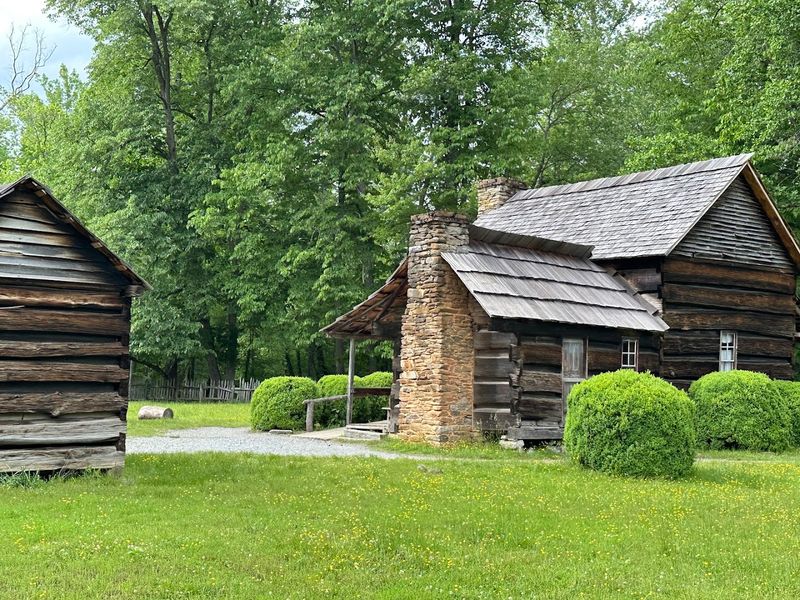
Walking through the door of the main farmhouse feels like crossing a threshold into another century. The rooms are simple, plain, and honest, filled with period furniture, hand-stitched quilts, and everyday utensils that tell the story of a family doing whatever it took to survive mountain winters.
Nothing inside is flashy or overdone. A cast-iron pot hangs over a cold hearth, wooden chairs sit around a modest table, and worn floorboards creak underfoot just as they would have 200 years ago.
Every detail was chosen to reflect authentic daily life rather than a romanticized version of it.
Visitors often linger here longer than anywhere else on the property. There is something quietly powerful about standing in a space where real people cooked, slept, argued, laughed, and raised children.
The farmhouse grounds the whole museum experience with warmth and historical honesty.
The Barn: Where the Real Farm Work Happened
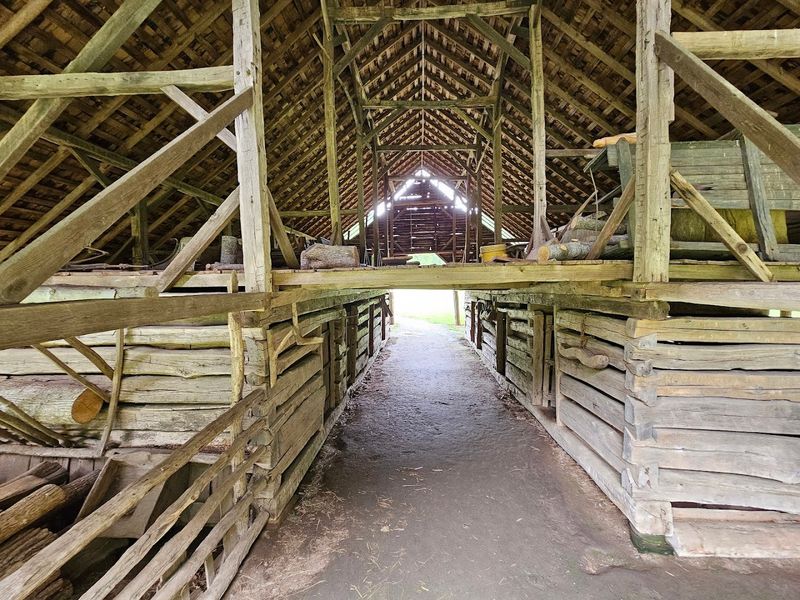
Some buildings whisper history. This barn practically shouts it.
One of the standout structures on the property, the barn is over a century old and still standing strong, its thick hand-hewn logs locked together with the same notching techniques mountain craftsmen used generations ago.
Inside, you can see the kind of tools and equipment that kept a mountain farm running through every season. Pitchforks, harnesses, wooden yokes, and storage bins all have their place, arranged just as they would have been during active use.
It gives you a real sense of how physically demanding farm life truly was.
The barn also serves as a great backdrop for photography, especially in fall when the surrounding mountains turn golden and orange. Elk have been spotted grazing in the open field right beside it, adding a completely unexpected wildlife bonus to the visit.
The Chicken House: Small Building, Big Story
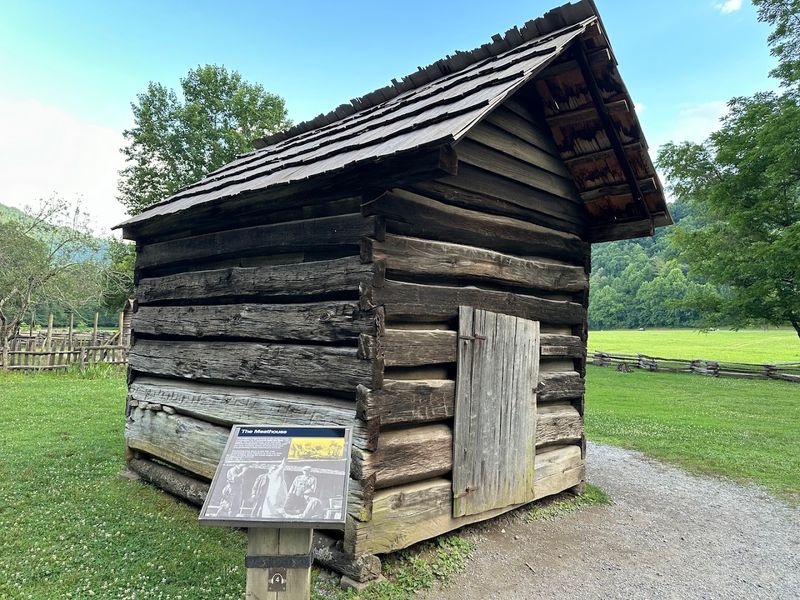
Do not let its modest size fool you. The chicken house at Mountain Farm Museum carries a surprisingly rich story about self-sufficiency and daily farm rhythm.
Poultry was absolutely essential to mountain families, providing both eggs and meat through seasons when other food sources ran thin.
The enclosed coop is simple and authentic, built exactly the way mountain farmers would have constructed one with whatever timber and materials were available nearby. Visitors with kids will find this building particularly fun since live chickens sometimes wander the grounds, making the history feel wonderfully hands-on.
Reading the posted signs around the coop gives you a fuller picture of how even the smallest farm animals played a critical role in a family’s survival. It is a humble little building that makes a surprisingly big impression, especially when you start connecting the dots between effort and everyday meals.
The Smokehouse: Mountain Food Preservation at Its Finest
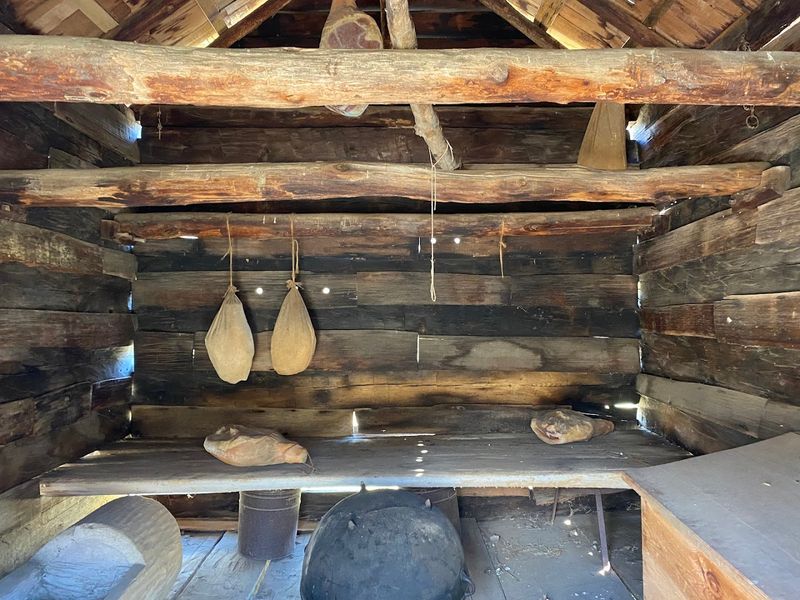
Before refrigerators existed, the smokehouse was a lifeline. This compact but critically important structure shows visitors exactly how mountain families preserved meat through smoking and salting, techniques passed down through generations and absolutely essential for surviving long Appalachian winters.
The building itself is deliberately airtight with minimal ventilation, designed to hold smoke inside and cure the meat hanging within. Standing near it, you can almost smell the history embedded in its old logs.
The craftsmanship is straightforward and practical, built for function over beauty in every way.
Learning about food preservation methods like these puts modern convenience into sharp perspective. Families who lived here could not run to a grocery store when supplies ran low.
Every smoked ham and salted cut of meat represented hours of careful, skilled labor. The smokehouse quietly reminds visitors just how resourceful and resilient Appalachian mountain people truly were.
The Blacksmith Shop: Iron, Fire, and Ingenuity
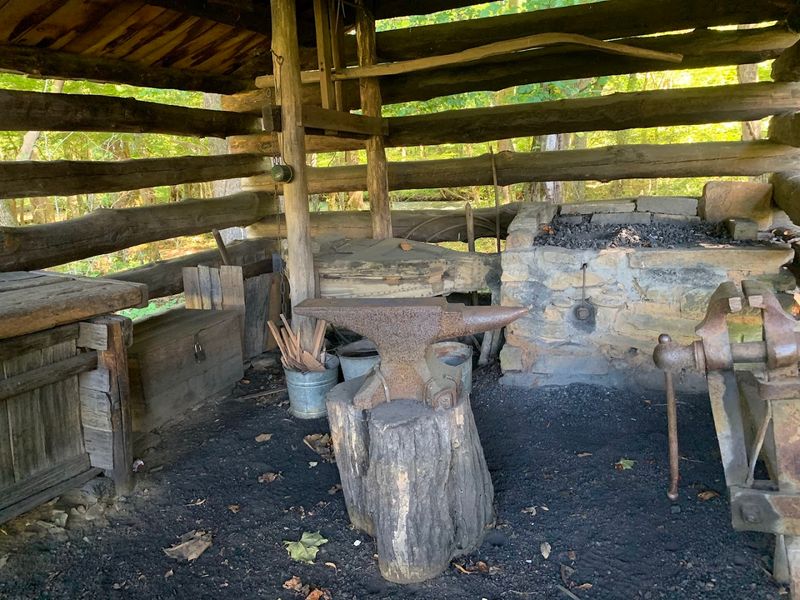
There is something almost magical about watching metal bend under heat and hammer. The blacksmith area at Mountain Farm Museum gives visitors a front-row look at one of the most essential crafts in 19th-century mountain life.
Every nail, hinge, tool, and horseshoe on the farm was made or repaired right here.
The forge setup is authentic and fascinating, packed with the kind of practical ingenuity that defined Appalachian resourcefulness. Blacksmiths were among the most valued members of any rural community because without their skills, farm equipment simply could not be maintained or replaced.
On days when living history demonstrations are held, watching a skilled interpreter work the forge is genuinely thrilling. Even without a demonstration, the tools and equipment on display tell a compelling story about craftsmanship, community dependence, and the raw physical labor that kept mountain homesteads functioning year after year.
The Apple House: Keeping the Harvest Alive
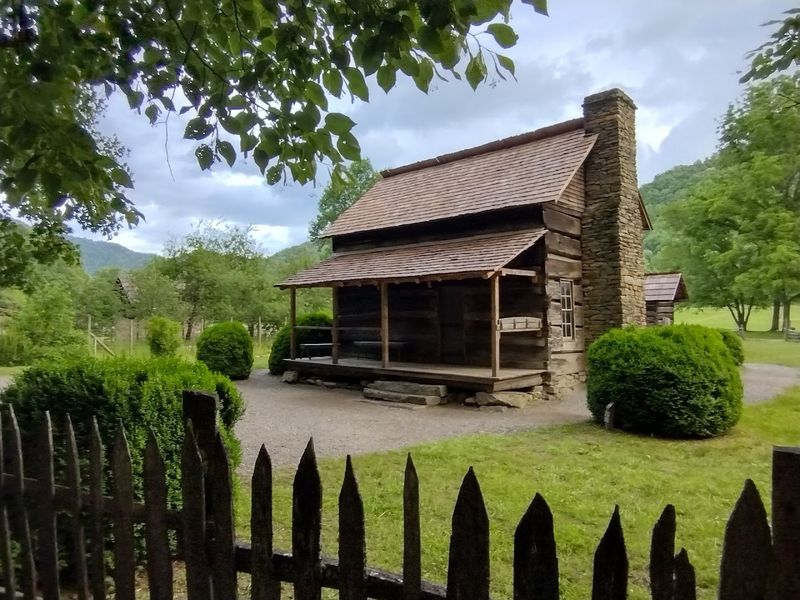
Apples were gold in the Appalachian mountains. The apple house on the property served as a climate-controlled storage solution long before modern cooling technology existed, using the natural insulation of thick log walls and strategic placement to keep harvested fruit fresh through winter months.
Mountain families depended heavily on apples for food, cider, vinegar, and even barter. Storing them properly was not just convenient, it was absolutely critical for making it through cold months with enough nutrition and variety to stay healthy.
The apple house made that possible season after season.
Visitors are often surprised by how thoughtfully designed this small structure is. There is real engineering logic built into every detail of its construction.
It serves as a perfect reminder that mountain farmers were not simply surviving by luck but by sharp observation, accumulated knowledge, and generations of hard-earned wisdom about their environment.
The Meat House and Game Processing Area: Survival Through Every Season
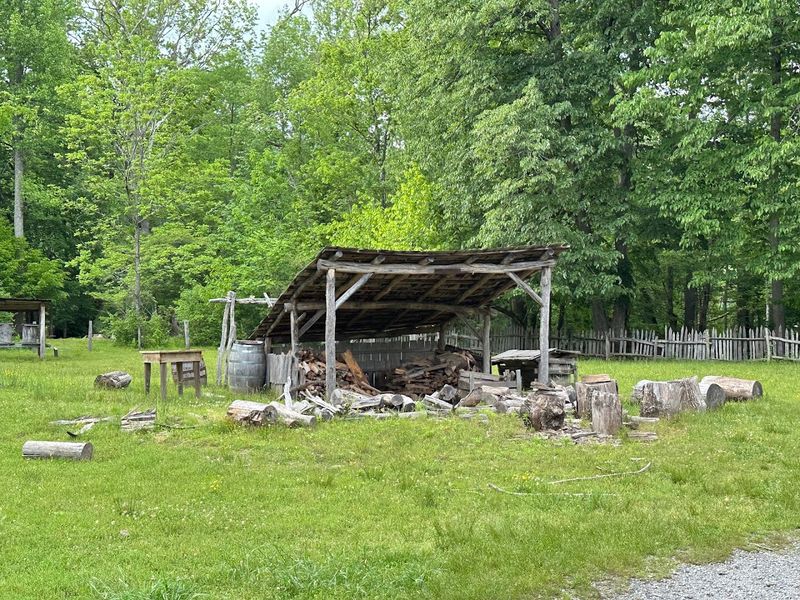
Hunting was not a hobby for Appalachian mountain families. It was survival.
The game processing area at Mountain Farm Museum offers a vivid and respectful look at how hunters and farm families prepared wild game for food, using tools and techniques refined over many generations of mountain living.
Seeing the actual implements used for butchering and processing brings an immediacy to the history that reading about it simply cannot match. These were skilled, knowledgeable people who wasted nothing and understood every part of the animals they hunted.
Their approach was practical, purposeful, and deeply connected to the land.
For visitors who have never thought much about where their food comes from, this area tends to spark real reflection. It is a bit raw and honest, which is exactly the point.
Understanding how food was obtained and prepared centuries ago adds a whole new layer of appreciation for both history and modern life.
The Springhouse: Nature’s Own Refrigerator
Running water was not piped into mountain homes in the 1800s, but clever farmers found a brilliant workaround. The springhouse was built directly over or beside a natural spring, using the consistently cold temperature of flowing water to keep dairy products, vegetables, and other perishables fresh without any mechanical refrigeration whatsoever.
It is a wonderfully simple solution that showcases just how observant and innovative mountain settlers were when working with their natural surroundings. The structure at Mountain Farm Museum is a perfect example of form following function in the most practical possible way.
Kids especially love learning about this one because the concept clicks immediately. Cold water keeps things cool, and cold things stay fresh.
No electricity, no machinery, just smart thinking and good placement. It is one of those quiet details that makes the whole farm feel like a masterclass in old-school problem-solving and environmental awareness.
Wildlife Encounters: Elk, Bears, and the Wild Side of the Visit
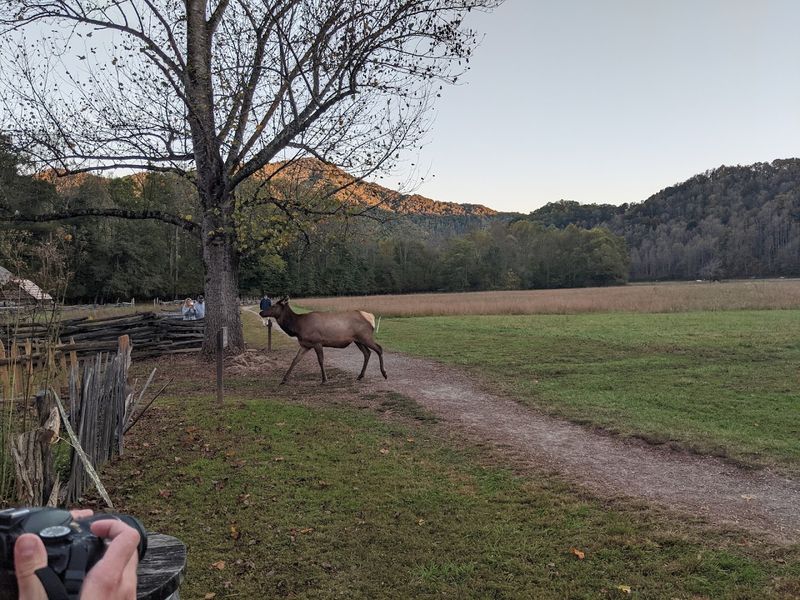
Nobody quite prepares you for the moment a massive elk strolls into view just a few feet away. Reviewers consistently mention wildlife sightings as one of the most thrilling parts of visiting Mountain Farm Museum, and the open field surrounding the property is prime habitat for the elk herd that roams this section of the national park.
Early mornings and evenings offer the best chances for spotting elk up close. Some visitors have watched entire herds cross the river right in front of them during their walk around the loop trail.
Bears have also been spotted in the surrounding fields, making this one of the more surprisingly wild museum visits you will ever take.
The wildlife element transforms the experience from purely educational to genuinely adventurous. Bring binoculars if you have them, keep a respectful distance from all animals, and have your camera ready at every turn.
The River Walk: Scenic Trails Along the Oconaluftee
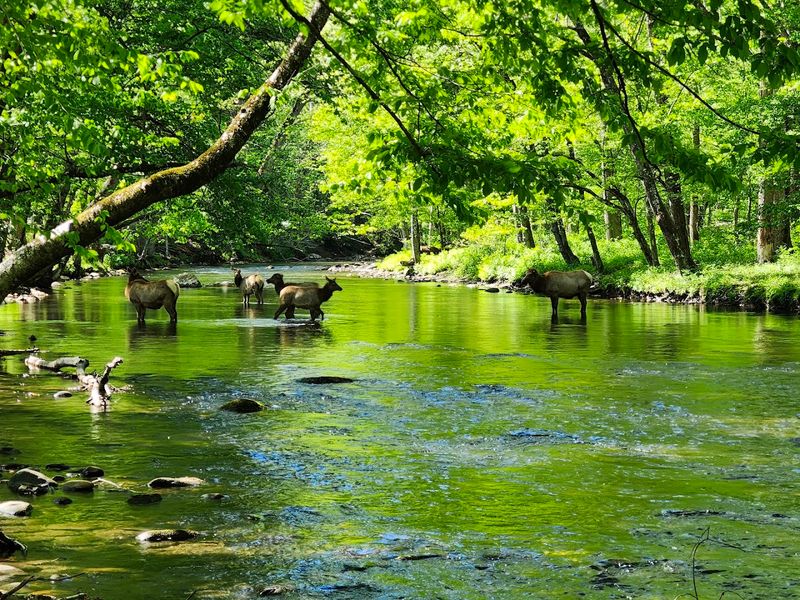
Even if history is not your thing, the river walk alone makes stopping here worth every minute. The trails along the Oconaluftee River wind through some genuinely breathtaking scenery, with mountain peaks rising on all sides and the sound of clear rushing water providing a constant, soothing soundtrack to your stroll.
The loop trail around the farm takes roughly 10 to 15 minutes at a relaxed pace, though most visitors end up lingering much longer because the setting is so peaceful and photogenic. Dogs on leashes are welcome on most of the trail, making it a fantastic outing for pet owners too.
Fall is particularly spectacular here, when the surrounding forest erupts in shades of red, orange, and gold. Combining the farm buildings, wildlife, and river scenery into a single visit gives Mountain Farm Museum an appeal that goes well beyond any typical museum experience.
Admission, Parking, and Everything Practical You Need to Know
Planning ahead makes any visit smoother, and Mountain Farm Museum is wonderfully straightforward in that regard. The museum itself is completely free to enter, which is a genuinely rare treat for a site this well-maintained and historically significant.
No tickets, no reservations, just show up and explore.
Parking requires a Smoky Mountains Parking Pass, which costs around five dollars for a day pass and covers parking throughout the national park. A handy tip from past visitors: take a photo of your license plate before you head to the kiosk, since you will need those numbers to purchase the pass.
Bathrooms at the nearby visitor center are clean and well-maintained.
The museum is open every day of the week, 24 hours a day, making it incredibly flexible for travelers on varied schedules. Mornings and evenings are ideal for wildlife sightings, while midday visits are perfect for exploring the buildings at a leisurely pace.
Nearby Attractions: Making the Most of Your Cherokee Stop
Mountain Farm Museum sits in one of the richest pockets of history and natural beauty in all of Western North Carolina, so pairing it with nearby stops makes for an absolutely full and rewarding day. Just a short drive away, Mingus Mill is a beautifully preserved 19th-century grist mill that is still operational and genuinely fascinating to tour.
Smokemont Church, another historic gem tucked into the mountains, is also worth a quick detour for anyone interested in the spiritual and community life of early Appalachian settlers. Both stops complement the farm museum experience perfectly by rounding out the picture of what mountain life looked like in all its dimensions.
The Oconaluftee Visitor Center right next door features interactive exhibits, knowledgeable park rangers, a gift shop, and a Junior Ranger program that kids absolutely love. Combining all of these stops into one trip turns a casual visit into a truly memorable mountain adventure.
Enjoyed this story?
Add Fast Food Club as a preferred source to see more of our reporting on Google.