


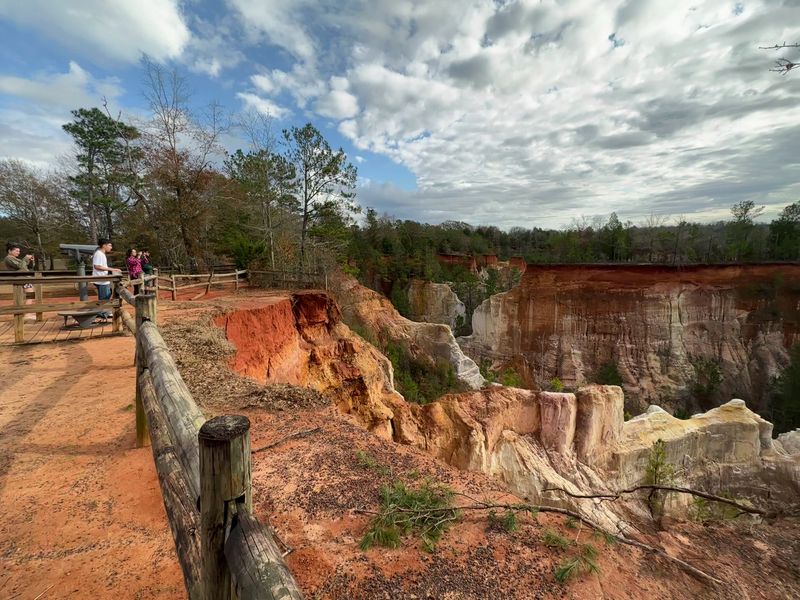
Picture canyon walls streaked with pink, orange, red, and purple, and then picture them sitting in rural southwest Georgia. That is Providence Canyon State Park, a place many people in the Southeast have never heard of.
I went to see if the nickname Little Grand Canyon holds up, and I came home with muddy boots and a camera full of color. Here is what you should know before you go.
A Colorful Gorge Outside Lumpkin
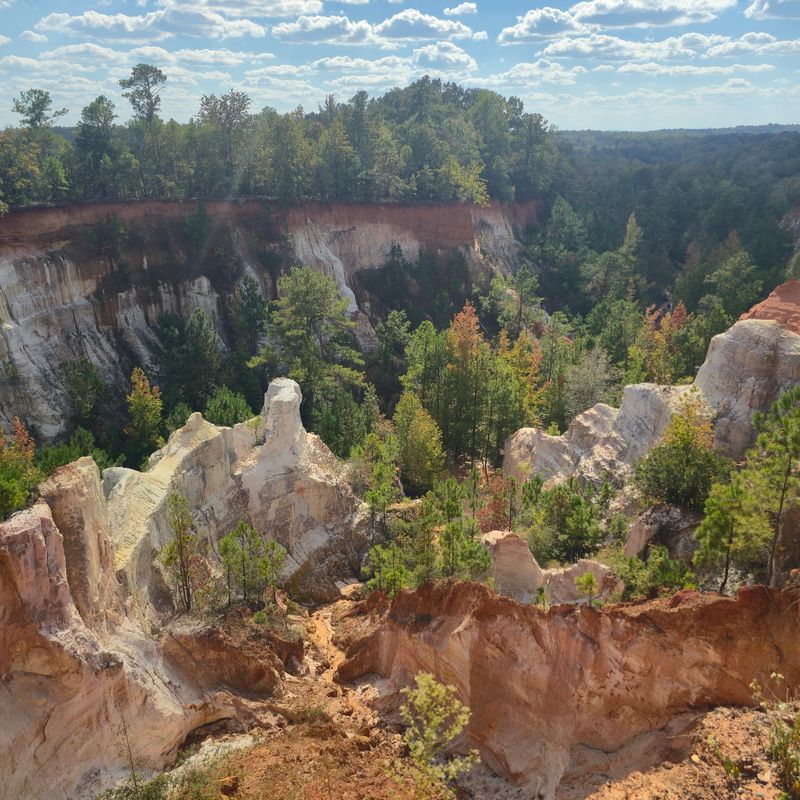
Out past the farm fields and small towns of Stewart County, the road ends at 8930 Canyon Rd in Lumpkin. Pull in, walk to the fence, and the ground suddenly drops away into deep, layered gullies.
My first thought was that I had taken a wrong turn and landed somewhere out west.
Providence Canyon State Park is a Georgia state park built around a set of multi-colored canyons. The official description sums it up simply: picnic sites, miles of trails, and campgrounds sitting right alongside those dramatic gorges.
Some of the gullies run as deep as 150 feet.
People love it, too. The park holds a 4.8-star rating from about 4,490 Google reviews, which is a remarkable score for any place.
One visitor said friends thought their photos came from Arizona.
Still, it stays fairly quiet compared to Georgia’s mountain parks up north. Several visitors say they were surprised the canyon is not better known.
That sense of discovery is part of the fun, and it is a big reason I think this spot deserves a spot on your list.
Farming Mistakes That Carved a Canyon
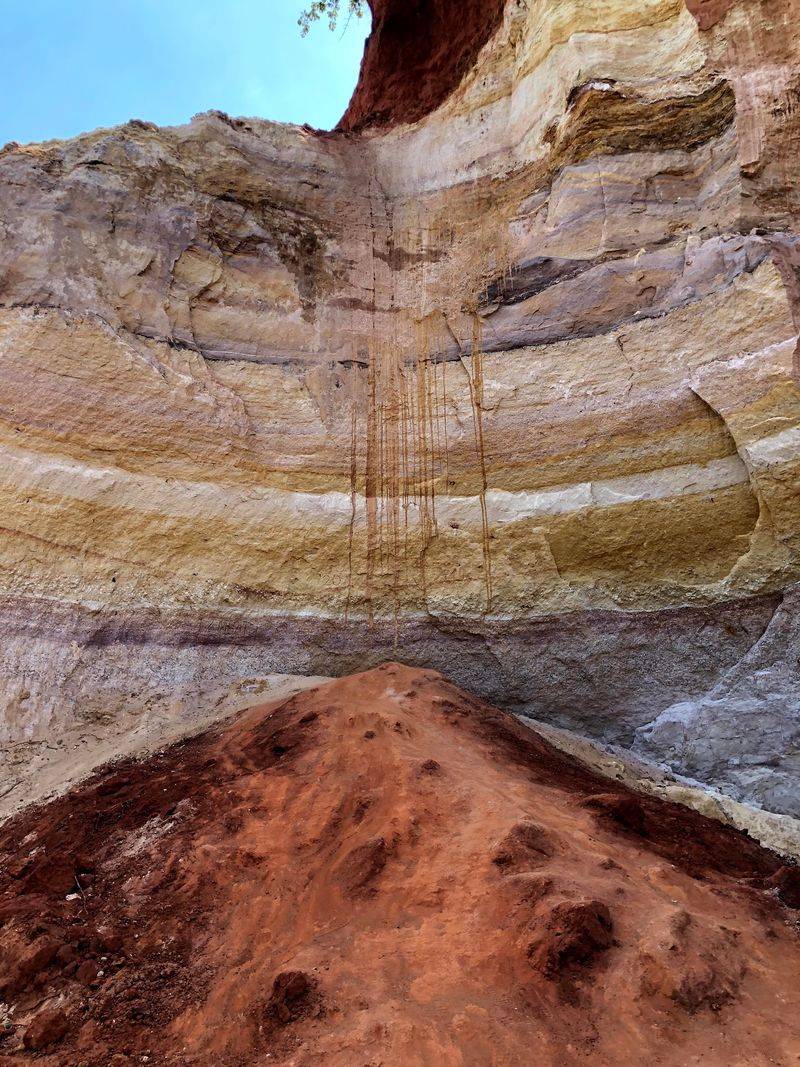
Here is the twist that surprises almost everyone: no river carved these canyons. According to the history visitors share, the gullies formed in the 1800s from heavy soil erosion caused by poor farming practices.
Rain ran off cleared fields, cut into the soft earth, and never stopped.
Knowing that changes how you look at the walls. You are seeing what happens when land loses its protective cover, written in stripes of colored soil.
One hiker described it as seeing the layers of history right in front of you.
The erosion is not just a story from the past either. A visitor who hiked on a rainy Sunday watched water rise to mid-shoe level in no time, then drop just as fast once the rain quit.
They called the canyon the perfect example of how erosion works.
Did you know? The park’s own visitor center helps tell this story, and many people say learning the history was a highlight.
It turns a pretty hike into a quick outdoor lesson your kids might actually remember.
Pink, Orange, and Purple Walls
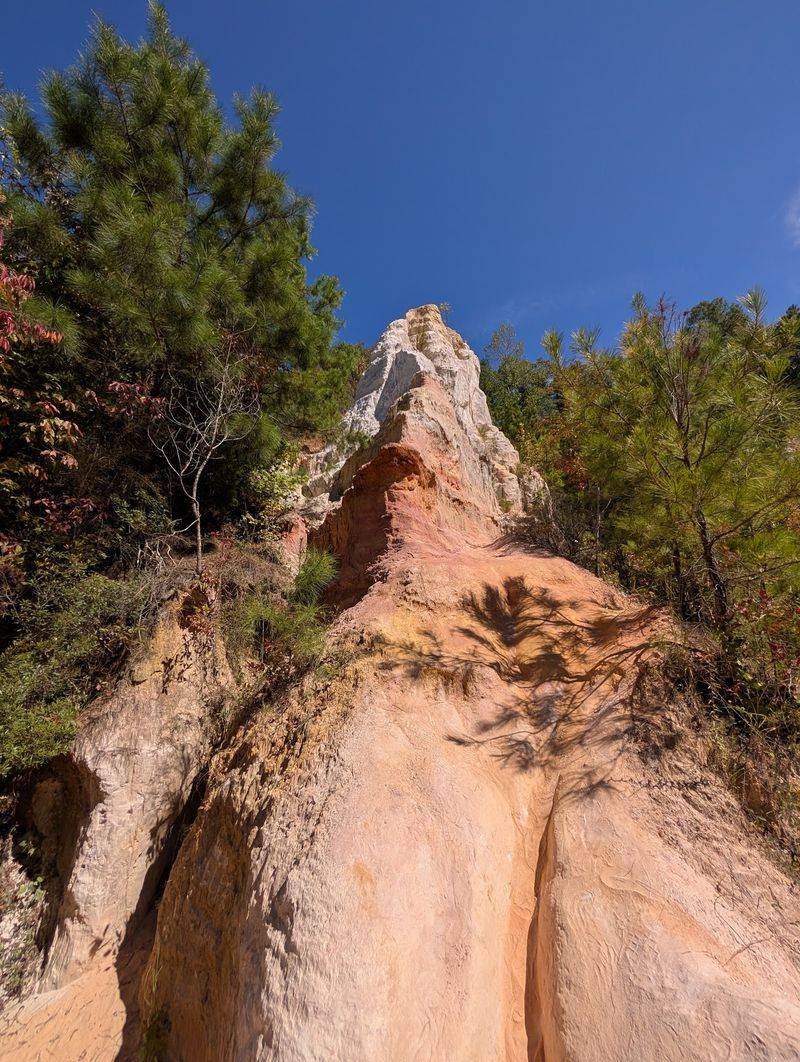
Color is the whole show here. The soil glows in shades of pink, orange, red, and purple, and the tones shift as the light moves across the day.
One of my favorite details from other visitors: after a passing rain shower, the sun came out and the wet walls looked even richer. In spring, the warm canyon colors blend against the fresh green of the surrounding trees.
It is a combination you rarely find anywhere in the Southeast.
Photographers, take note. Reviewers keep calling it a great spot for pictures, and many suggest heading out early in the morning.
That timing also helps you beat the heat, which I will talk about later.
If you want the most dramatic frames, visitors point to Canyons 4 and 5 as the absolute must-sees. Others mention Canyons 3 and 4 as the most scenic for photos, so give yourself time to wander that stretch.
Bring extra battery power, because you will keep stopping.
Rim Trail Overlooks and Hidden Viewpoints
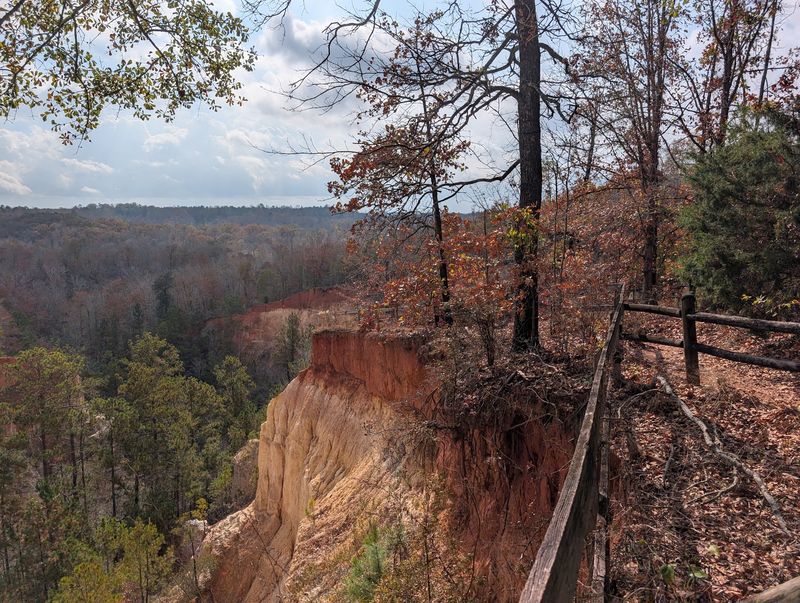
Not every great view requires a climb back uphill. The rim trail lets you peer down into the gorges from above, and one visitor who stuck to it called the views absolutely spectacular and the walk easy and scenic.
A few insider tips came up again and again. Skip the urge to hop the fence at early lookouts, because much better views wait farther along.
Another hiker noted the overlooks near the visitor center are mostly blocked by trees, while the best canyon views sit on the second half of the loop.
For a sneaky panorama, try this. Leave the main parking area, turn right, drive about a quarter mile, and park by a big grassy picnic area with restrooms.
Walk across the grass to the fence for a wide overview. Others say the best views from above are behind the children’s park.
Good news for anyone with limited mobility: some rim lookouts are more handicap friendly, according to visitors. That makes the canyon’s beauty open to more of the family.
Down on the Canyon Floor
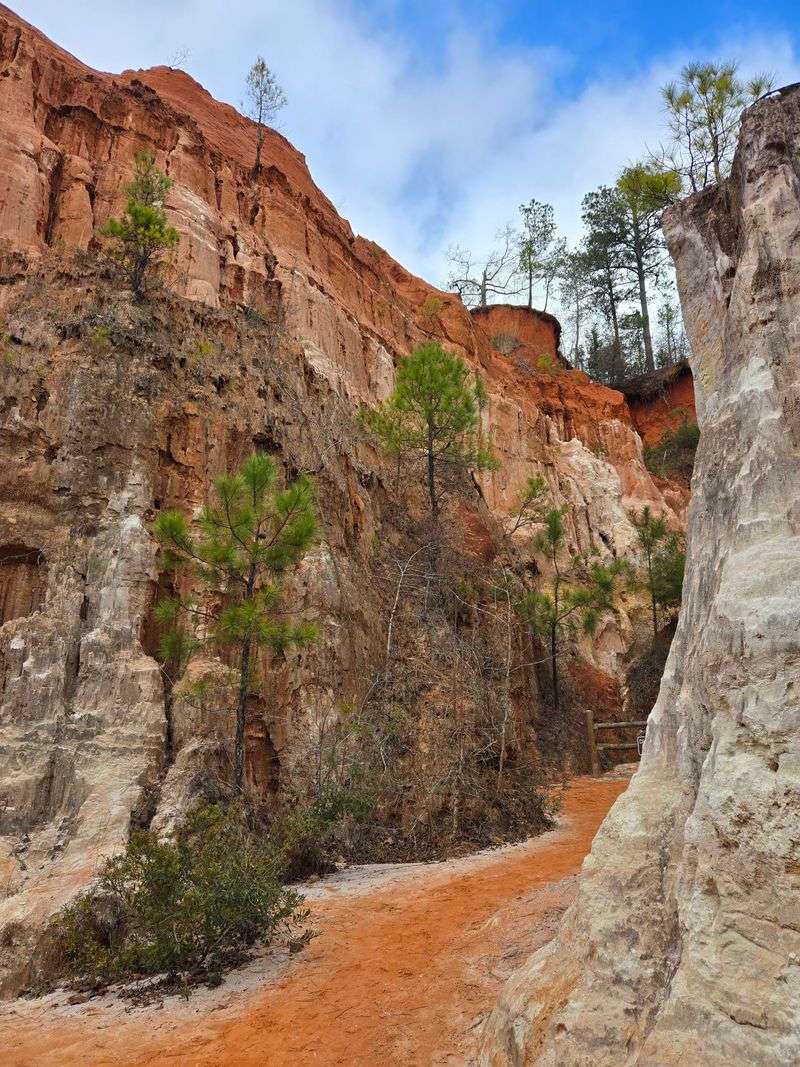
Squishy, slippery, and completely worth it. Walking the canyon floor was the favorite part for many visitors, me included in spirit.
You follow the white trail down a hill and suddenly you are standing between towering colored walls.
Narrow corridors and little side passages make it feel like exploring a maze. One reviewer compared the park to a LEGO version of the Grand Canyon, smaller in scale but full of the same kinds of shapes.
Others felt the photos make it look bigger than it is, which is fair to know going in.
Water is part of the deal. Expect wet sections, standing puddles, and mud, especially after rain.
Hikers strongly recommend boots or water-safe shoes, since sneakers get dirty and slick fast.
Not every canyon is equal, either. One visitor found Canyons 1 and 3 to be mostly muddy paths, while another was well rewarded on the floor of Canyon 3 during the azalea bloom.
Remember that the hike back out is entirely uphill, so save some energy.
Backcountry Miles and Rusted Old Cars
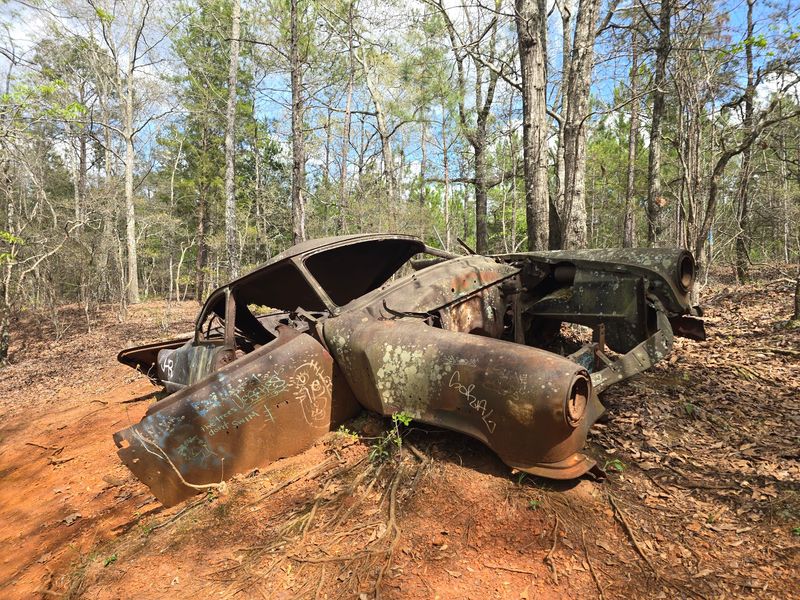
Deep in the woods, an old car sits slowly rusting into the forest. Those abandoned vehicles, left from a homestead that once stood in the area, are one of the quirkiest sights in the park.
Several hikers named them a favorite surprise.
They give the trails a strange, story-filled character. You come around a bend expecting trees and instead find a piece of the past half buried in leaves.
For bigger adventures, the backcountry trail goes farther. One group covered all the trails, roughly 8 miles, in about five hours.
They warned that some sections require walking through flowing creek water, so waterproof shoes really matter.
Others prefer a shorter outing, like the 3-mile trail above and through Canyons 4 and 5. Visitors describe the hiking as ranging from easy to more difficult, so you can pick your effort.
Signage gets mostly good marks, though a few people wished for a better map. Grabbing a printed map and using AllTrails helped one couple track the overlooks.
Starry Nights, Coyotes, and Campsites
When the sun drops, the park changes completely. One camper who stayed two nights described seeing the Milky Way whenever the clouds cleared.
They called it a fantastic place for stargazing and night photography.
Wildlife adds to the wild feeling. Visitors have spotted rabbits, seen what might have been a fox or coyote, and heard a whole group of coyotes howling in the distance.
It felt far from the noise of Atlanta, as one reviewer put it.
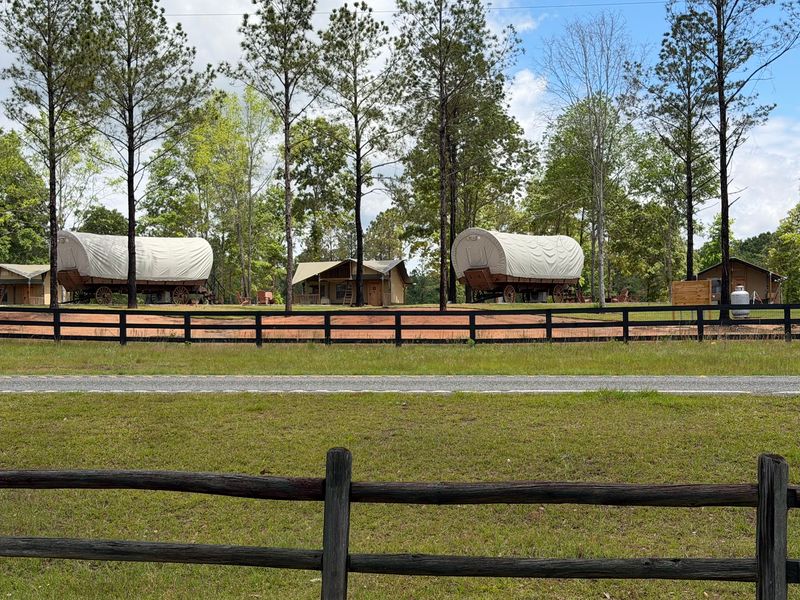
Camping options include shelters and pioneer sites. One guest found Shelter 3 usable but expected it to be a bit cleaner.
Another reserved Pioneer Site 3 right up front, loved the experience, and thought it was a little pricey.
Fun fact for the curious: one camper reported thousands of lovebugs swarming their shelter. It made for a funny, odd memory, but bug spray might be a smart addition to your bag.
Also expect to bring your own picnic, since there are nice tables for lunch.
Who Will Love It, and Heat Warnings
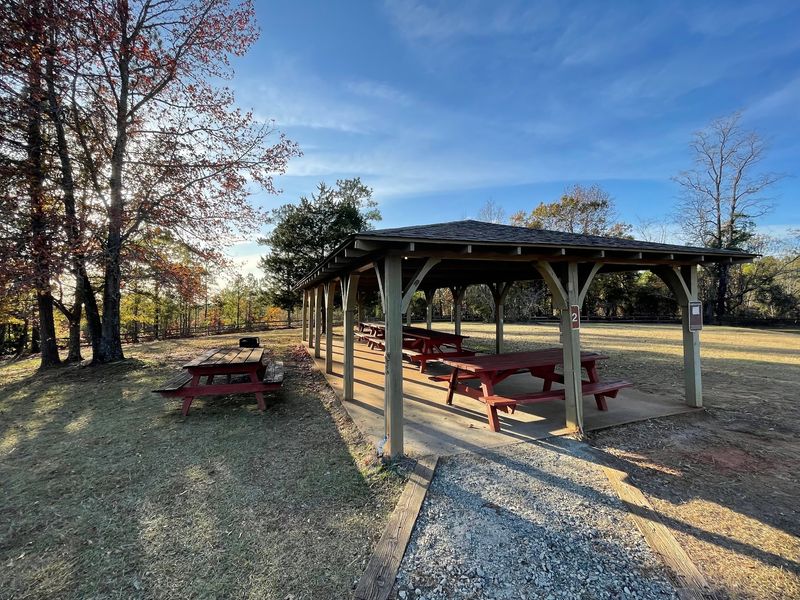
Families, casual walkers, and photographers all seem to find something here. Reviewers describe the park as clean, family friendly, and very kid-friendly.
The staff gets praise for being nice, and even the mid-trail restrooms earn compliments.
Summer is a different story. One visitor hiked the canyon floor at 8 pm and still got dizzy from the humidity.
Another arrived just after 7 am and found it uncomfortable by late morning, so they suggest early spring or fall instead.
Shade is limited, and sunburn happens. Pack plenty of water, sunscreen, a hat, snacks, and bug spray.
One couple brought just one bottle between them and regretted it.
A couple of other heads-ups: one hiker warned of aggressive bees at the bottom. Sadly, several people also noticed carvings on the canyon walls, so please leave the soft soil untouched.
Treat it gently and it will stay beautiful for the next visitor.
Hours, Fees, and My Honest Take
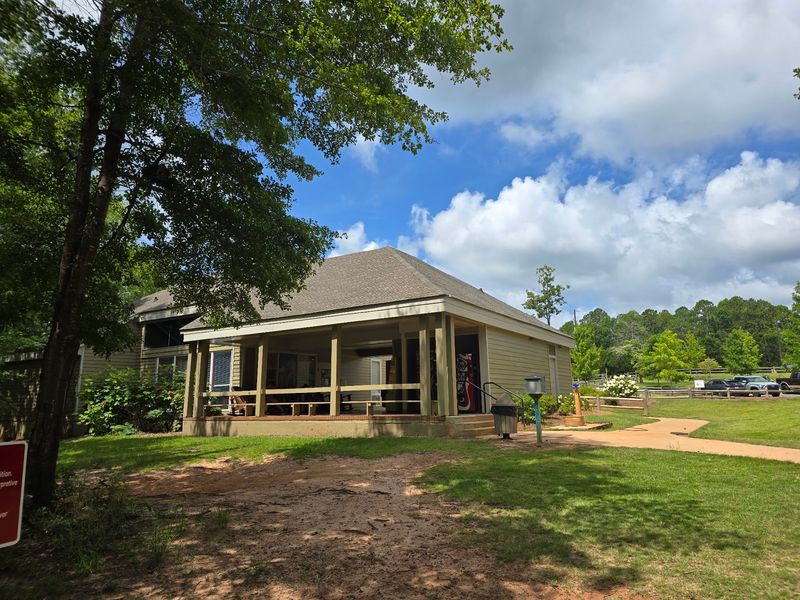
Planning is easy. The park is open every day from 7 am to 9 pm, and visitors say the day pass for parking costs 10 dollars.
A sign at the entrance has a QR code so you can pay online.
Head to the visitor center for maps, a well-loved gift shop with locally made mugs, cold drinks, snacks, and microwaveable sandwiches. One visitor noted the center opened at 8 am, though the park and bathrooms opened at 7.
There is also a shoe-rinsing station, which you will appreciate after the mud.
Parking is plentiful near the visitor center and along the rim trail. For questions, call 229-838-6202 or check gastateparks.org/ProvidenceCanyon.
So is it worth the drive? One reviewer said it is great if you are nearby, but they would not travel far out of their way.
Others felt there is no need to go out west when this sits right in the Southeast. My verdict leans toward the second camp: go once, go early, and wear shoes you do not mind ruining.
Enjoyed this story?
Add Fast Food Club as a preferred source to see more of our reporting on Google.