


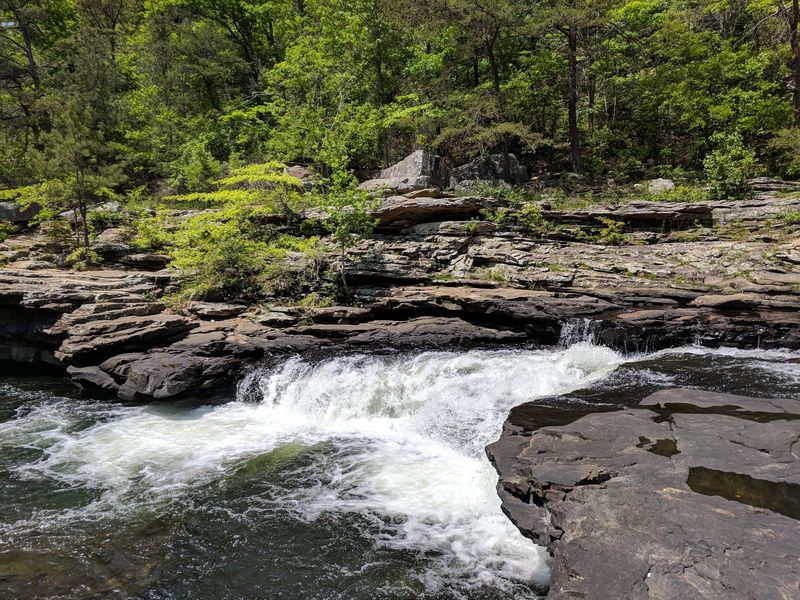
A river that runs along the top of a mountain sounds like a trick question, but it is real, and it sits in northeast Alabama. The trail to its lower falls ends with more than 130 stone steps, a rock scramble, and a pool where people swim, fish, and leap from boulders.
Getting in costs nothing at all. A scenic drive lines the canyon rim with overlooks, and a boardwalk lets almost anyone reach the big falls at the top.
Plenty of travelers stumble onto this place by accident and leave planning a return trip for the fall colors. The pages ahead cover the trails, the swimming spots, the tricky turns on the rim road, the hours, and the small mistakes worth skipping.
Lace up something sturdy, because the best part sits at the bottom.
A Canyon Hiding On Lookout Mountain
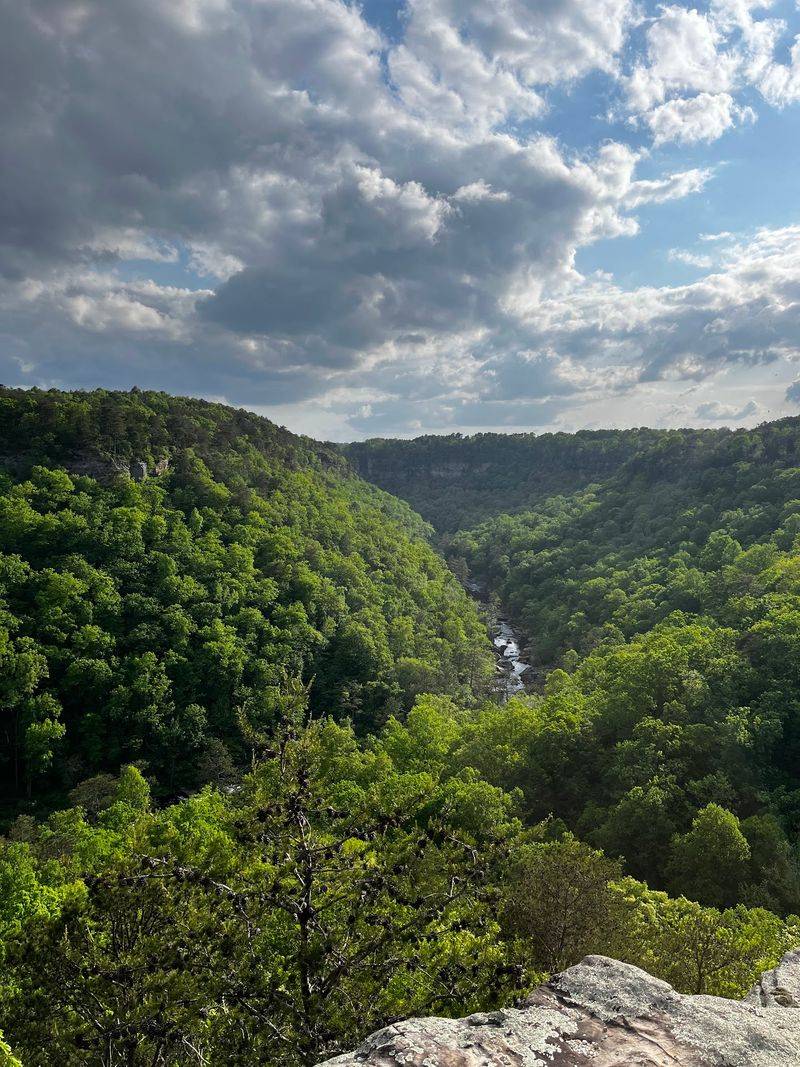
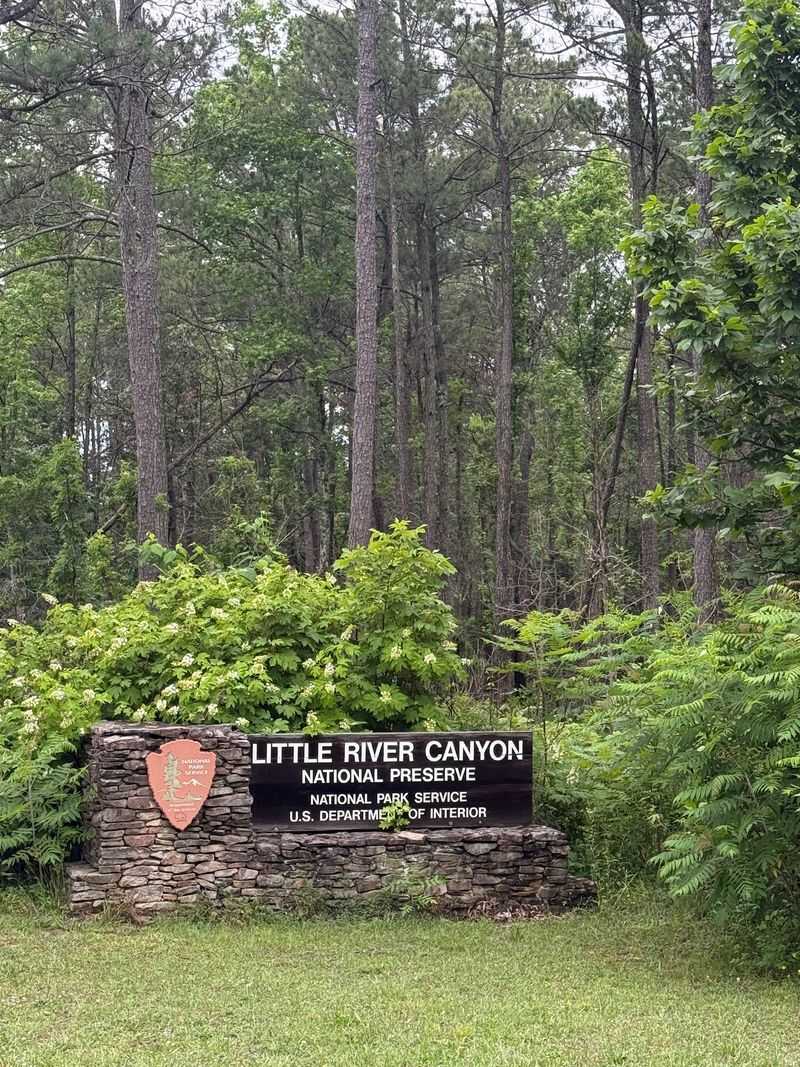
Few people expect a deep, forested canyon in this corner of the South. The name on the map is Little River Canyon National Preserve, and its address is 4322 Little River Trail #100, Fort Payne, AL 35967.
It is a protected nature preserve run by the National Park Service. The land covers forested uplands around the Little River, which flows along the top of Lookout Mountain.
That detail surprises first-timers. Most rivers sit at the bottom of mountains, yet here the water carves its path across the summit itself.
The preserve holds waterfalls, overlooks, swimming holes, hiking trails, and a scenic drive. Each piece connects to the others, so a single visit can fill a whole day.
Many travelers call it one of the most unexpected finds in all of Alabama. It rivals better-known parks in views while seeing far less traffic.
That quiet reputation is a big part of its pull. Fewer crowds mean more room on the trails and more space at the overlooks.
Families who collect National Park Service stops have added it on a whim after a ranger tip. The detour tends to turn into a highlight of the trip.
Keep that river on the mountaintop in mind, because everything else in the story flows from it.
Free Entry And A Passport Stamp
Here is a fact that makes budget travelers grin: entry to the preserve is free. No ticket booth stands between the parking lot and the falls.
That makes it an easy add-on for anyone touring the region. Huntsville sits about 90 minutes away, and many people call the drive well worth it.
Park Service fans get a bonus. The preserve offers a passport stamp, and it has even carried a commemorative 250-year stamp.
For stamp collectors, that small detail can justify the trip on its own. Add free admission, and the math gets very friendly.
Rangers here also tend to send people onward. One family heard about the canyon from a ranger at Russell Cave and changed their plans to include it.
The preserve keeps regular hours of 8 AM to 7 PM, seven days a week. That leaves plenty of daylight for both hiking and driving.
A free park can sometimes feel like an afterthought. This one feels more like a secret that someone forgot to put a price tag on.
The Big Falls From The Boardwalk
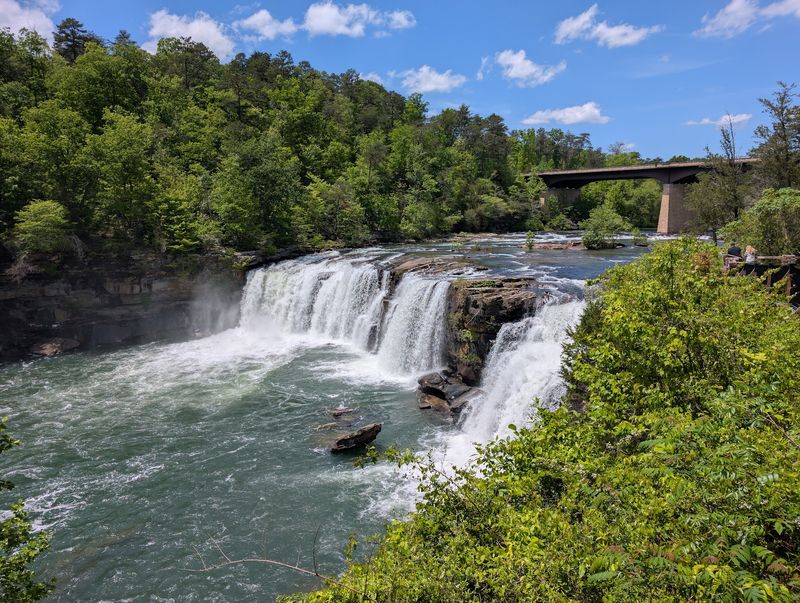
Not every waterfall asks you to earn it. At the top of Little River Falls, a well-maintained boardwalk does most of the work.
The boardwalk leads to an observation deck with solid safety railings. It is accessible for wheelchairs, which opens the big falls to people who cannot handle rocky trails.
Families appreciate that accessible ramp. Older travelers and young kids can take in the main view without a single stone step.
The falls can be seen from several viewpoints along the way. Each one frames the water a little differently, so slowing down pays off.
A short, easy hike also runs along the top of the falls. It is quick and gives nice views without much effort.
Water levels change with the weather. During dry stretches, the falls run lighter, and nobody can blame the park for a lack of rain.
Parking sits right at the falls, a detail many first-timers miss. More on that later, because it can save a lot of energy.
Red Rectangles Down To Little Falls
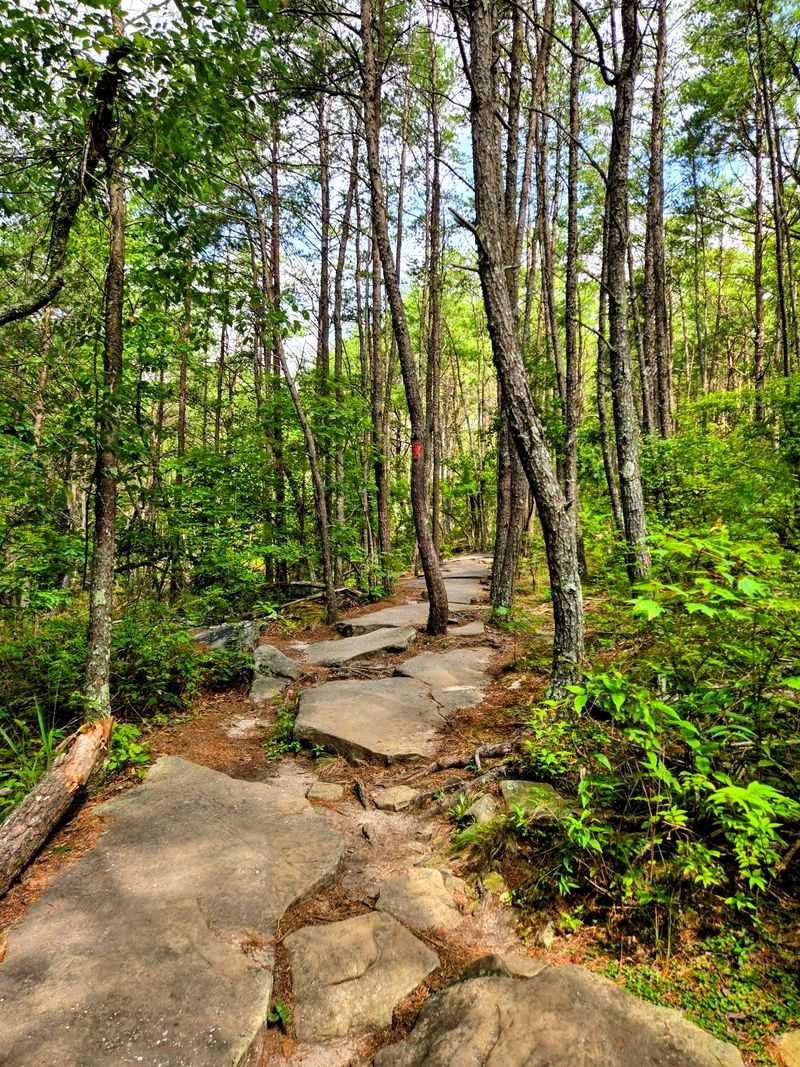
Follow the red. That is the simplest trail advice at the preserve.
The path to the lower falls is marked with red rectangles painted on the trees. Those blazes keep hikers on track the whole way.
The trip runs about three-quarters of a mile one way, or roughly 1.5 miles round trip from the parking lot and boardwalk. It is an out-and-back route.
Most of the walk is fairly flat, with tree roots and rocks to handle in spots. The ground gets rocky enough that watching your footing becomes part of the job.
Heavy tree cover shades much of the trail. Even in a light drizzle, hikers can stay mostly dry under the canopy.
Rain does make the rocks slippery, though. Shoes may stay clean, but the stones near the bottom need extra care.
Hiking poles can help on the uneven sections. The trail is not wheelchair accessible, so the boardwalk remains the better choice for those who need it.
The flat stretch fools a lot of people. The real test waits at the end.
Counting Stone Steps To The River
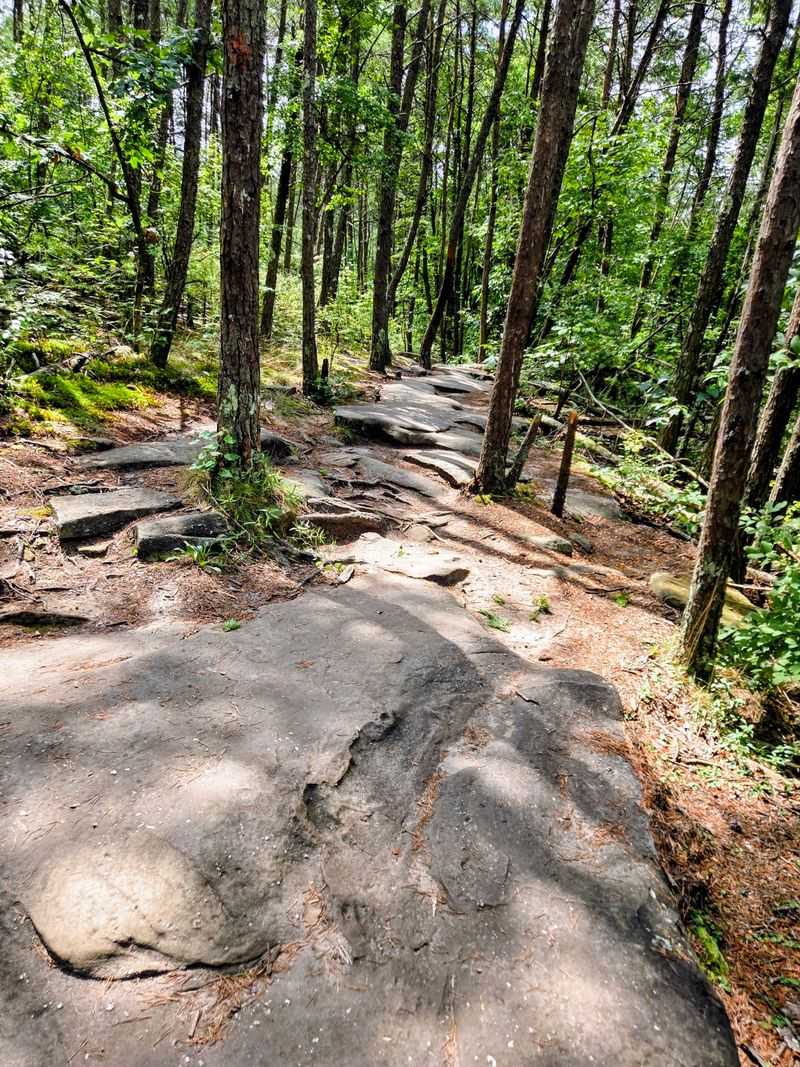
Somewhere between 130 and 136 stone steps stand between the trail and the river. Hikers rarely agree on the exact count, likely because they lose track halfway down.
The steps are built from rock and drop steeply toward the canyon floor. After them comes a short rock scramble to reach the water.
That scramble is manageable for anyone comfortable stepping down and climbing. Stumps and rocks fill the path in places.
The climb back up is the part to plan for. One older couple on the trail used up most of their energy just reaching the bottom.
Kids handle the distance well since it stays under a mile each way. The steep final section is where small legs and tired knees need patience.
Take breaks without guilt. Nobody hands out medals for speed on a staircase made of boulders.
At the bottom, the canyon opens up. Many hikers describe that moment as pure bliss after the effort.
Those who doubt their stamina can stay up top at the boardwalk. Those who go down usually call the steps a fair price.
Ankle-Deep Water And Quiet Falls
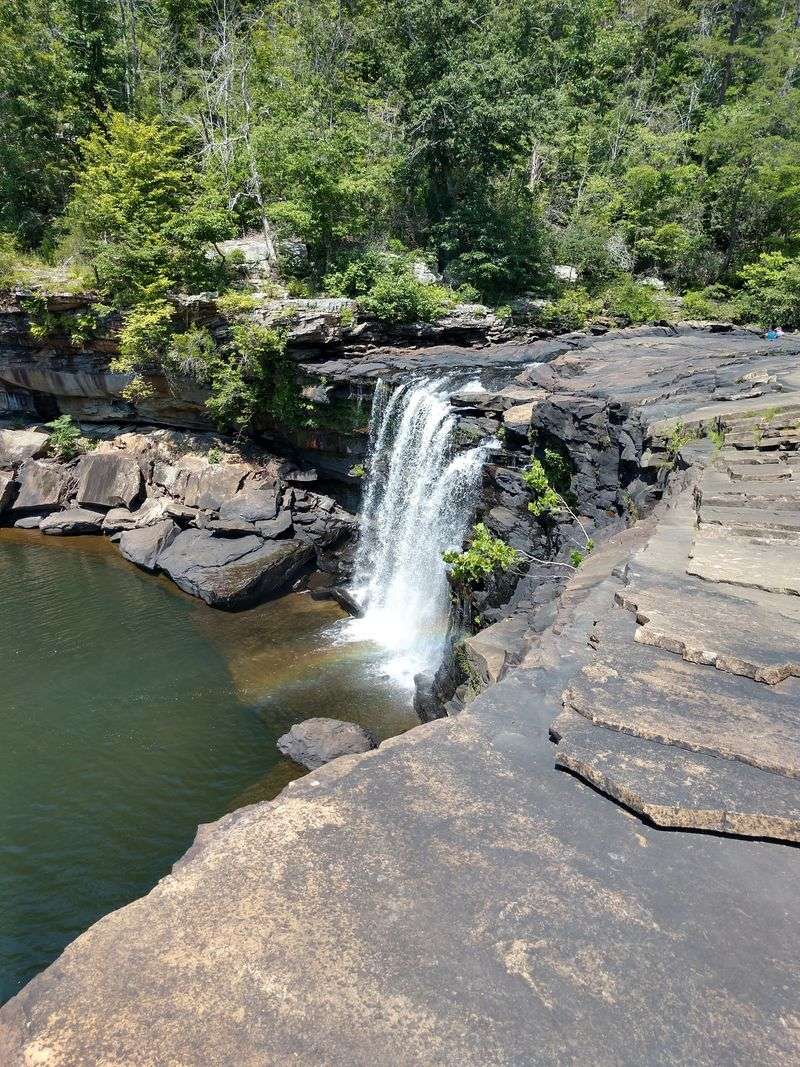
The reward at the bottom is not loud or flashy. Little Falls sits low in the canyon, and reaching the best spots often means stepping right into the shallow river.
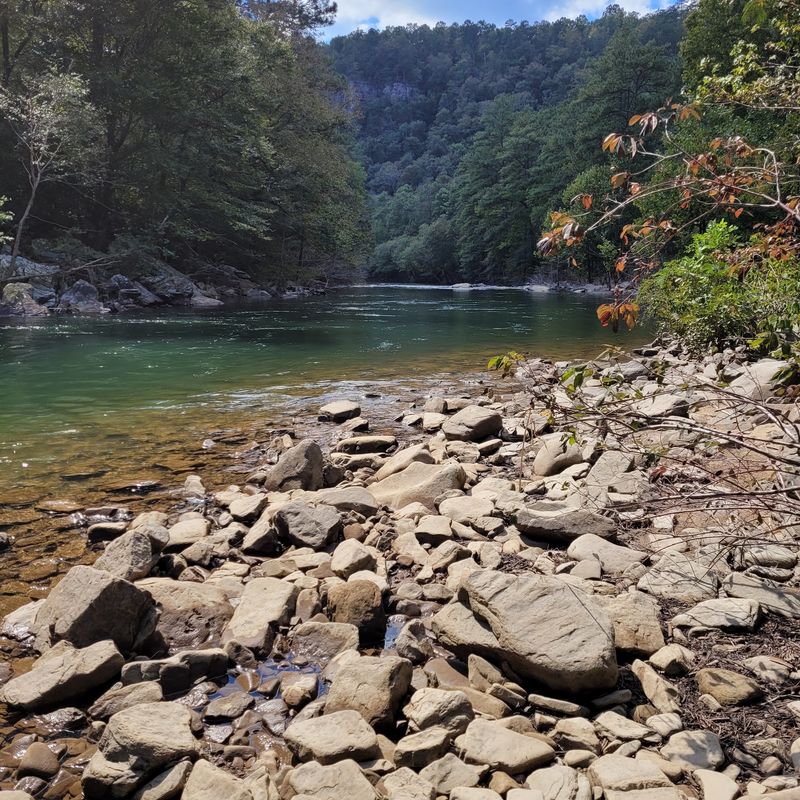
The rocks and water near the base make a natural place to pause. Many hikers wade in, sit on stones, or simply stay a while.
On a warm day, the water is hard to resist. On a drizzly one, a spare change of clothes would make all the difference.
Pack water shoes or sandals with grip. Wet rocks can be slick, and a careful step beats an unplanned swim.
The area below the falls feels calm compared with the busier deck above. Fewer people make the trek, so the space stays peaceful.
Bring a small towel and a dry bag for phones. Those two items turn a quick stop into a relaxed afternoon.
Time moves differently down here. Plenty of people plan an hour and stay three.
Swimming Holes And Rock Jumpers
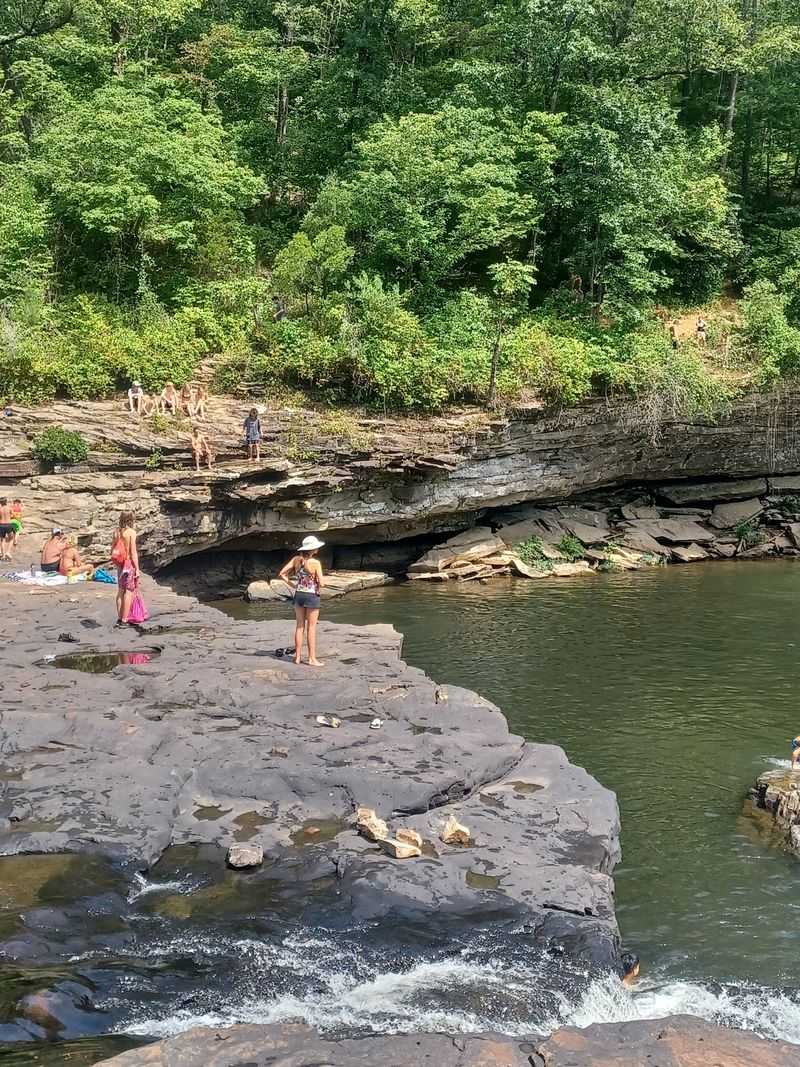
Bring a swimsuit. The Little River is one of the few preserve spots where swimming is part of the plan.
Past Little Falls, a swimming area opens up along the river. One popular spot, known as the Hippie Hole, gets over 20 feet deep in places.
Rocks around it serve as launch points, and cliff jumpers are a common sight. Several areas allow jumps into the water.
A much easier swimming area sits closer to the main bridge by the parking lot. It skips the stone steps entirely.
Another trail to the right of the main viewing area reaches the river above the falls. That stretch needs real caution, since the water flows toward the drop.
No lifeguard is on duty anywhere. Parents should keep children close, as safety features for kids are limited.
Strong swimmers will enjoy it most. Cautious ones can still wade, float near the edges, and cheer from the rocks.
Choose your spot by skill level, and the river becomes a fine place to cool off.
Canyon Rim Parkway Overlooks
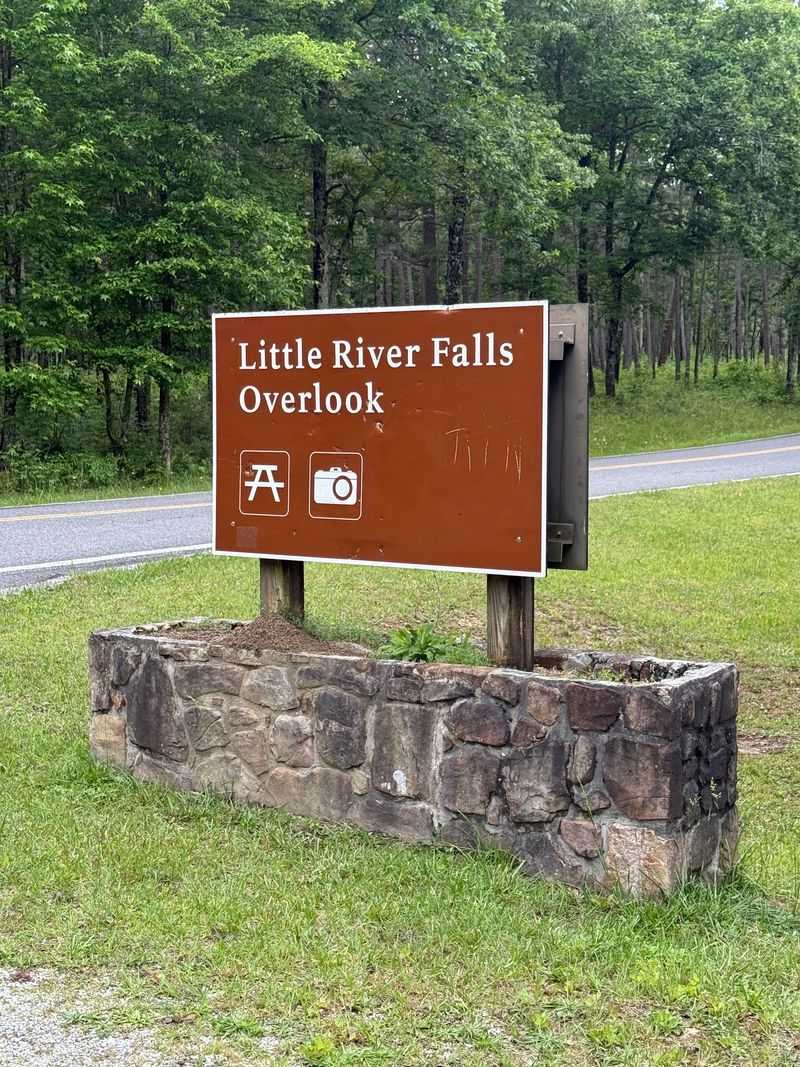
Roughly 8 miles of road hug the canyon rim, dotted with overlooks. The Canyon Rim Parkway turns a car into an observation platform.
Each pull-off offers a different angle on the canyon below. Some have short trails leading out from the lookout.
Sunset is a favorite time to drive it. The canyon walls take on a special look as the day winds down.
Rock formations line the route, and wildlife sightings are common. Many people stop at almost every overlook.
One travel crew followed the road without knowing what waited ahead. They left wishing they had allowed time for the whole loop.
Some pull-offs are not well maintained. A four-wheel-drive SUV or truck can make the trip easier.
Leave a full day if possible. Rushing the rim means missing the views that make the drive famous.
Tricky Turns On The Rim Road
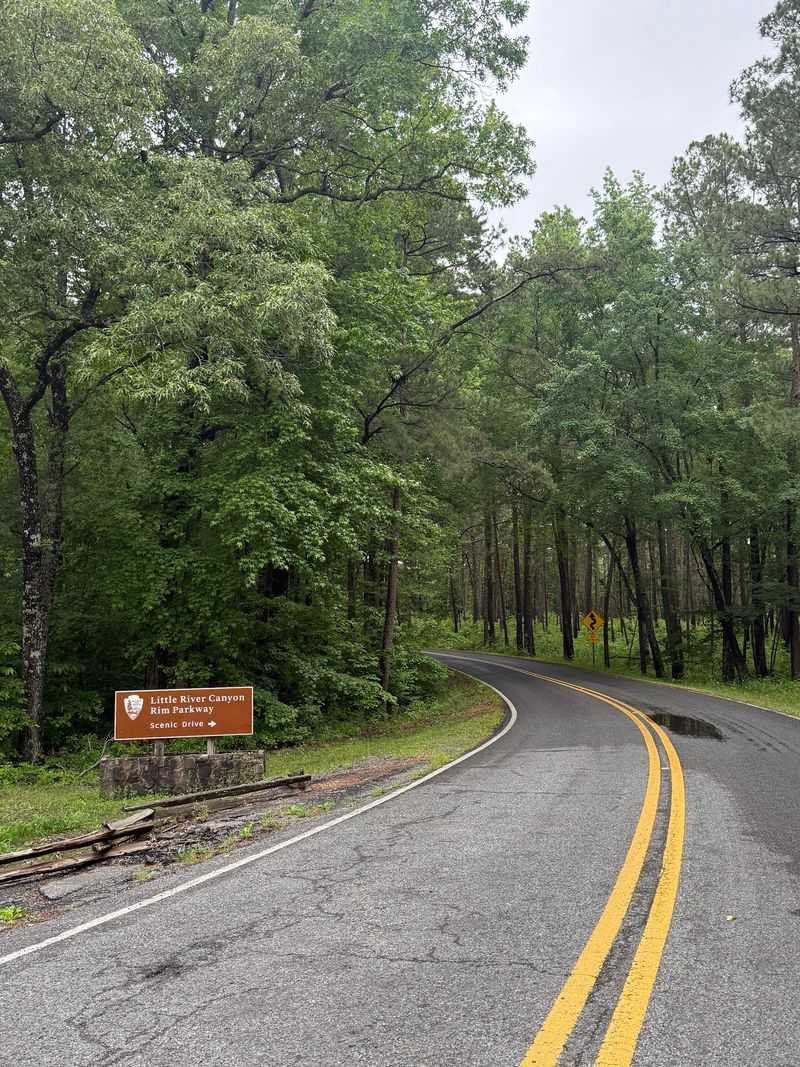
Getting lost on a road with one job sounds silly, but it happens here. Side roads branch off at curves and look like the right way.
They are not. Several drivers have doubled back more than once.
A simple trick helps. Follow the road with the most faded center line and keep left to stay along the canyon.
Steep slopes rise and fall along the route. Some drivers find them fun, while others grip the wheel a bit tighter.
Drive only if you feel confident on hills and curves. Take your time, since there is no prize for speed.
Navigation apps can also confuse the entrance. Google Maps may send you to the first entrance, which is now an exit.
Keep going past it. A big sign appears soon after and confirms you are in the right spot.
A little patience turns these wrong turns into stories, not headaches.
Inside The Visitor Center
Rangers here have a habit of saying the best season has not even arrived yet. That kind of insider talk is a good reason to stop in.
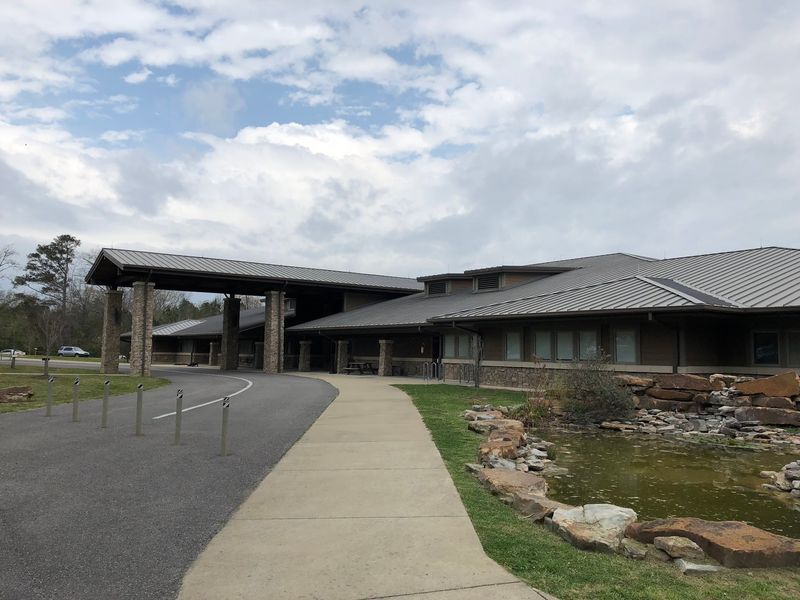
The visitor center offers park information, a video about the canyon, and a gift shop. Staff are known as kind and helpful.
The building is new, clean, and well run. It also has an event center, a walking path, and restrooms.
Air-conditioned flush bathrooms are a welcome bonus. A playground and picnic tables give kids a break too.
A trail from the back of the building leads to the falls in less than a mile. Families like it for younger hikers.
Keep in mind the visitor center sits on a university campus, not on the scenic drive. Plan for a short trip between them.
Hours for the center have been limited, and it has been closed on Mondays. Check the NPS website before driving over.
A quick stop here can shape the whole day.
Fishing, Picnics, And Lazy Afternoons
Not every trip needs a summit or a jump. Some of the best hours here involve a picnic table and a fishing line.
Fishing is allowed along the river. Even an empty hook can lead to a good day.
Plenty of paths reach the water from different points. That makes it easy to find a quiet spot.
Picnic tables are spread around for lunch breaks. Packing a meal saves a drive back to town.
Small kids can burn energy at the playground. Adults can rest nearby without feeling rushed.
The preserve feels peaceful and refreshing. People often say it is a fine place to relax and get away for a while.
Bring a chair, a book, and maybe some patience for the fish.
Seasons Worth Planning Around
Ask anyone who has been once, and they will likely name the season they want next. Spring and October top the list.
Rangers point to spring as the time when the park comes alive. Waterfalls tend to run stronger then.
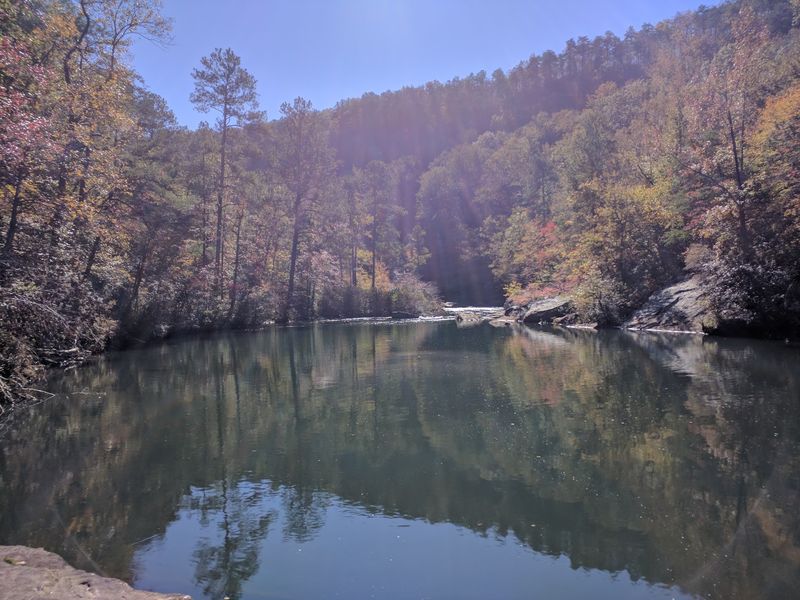
Fall colors are another big draw. Many first-time guests in winter vow to come back when the leaves change.
Winter still has its charm. A mid-December trip left one group unable to stop thinking about the canyon.
Summer brings the swimming crowd. Warm days fill the river spots with jumpers and waders.
Sunrise and late afternoon are suggested times for good light. The falls and overlooks shine at those hours.
Dry spells lower the falls. Rainy stretches raise them but make rocks slick.
No season is wrong here. Each just tells a slightly different story.
Smart Moves Before You Go
A few small choices make this trip much smoother. Start with where you park.
You can park right at the falls instead of hiking from the visitor center. That option helps anyone with limited energy.
The preserve is open daily from 8 AM to 7 PM. Entry is free.
Wear shoes with grip and consider hiking poles. A change of clothes is smart if swimming is likely.
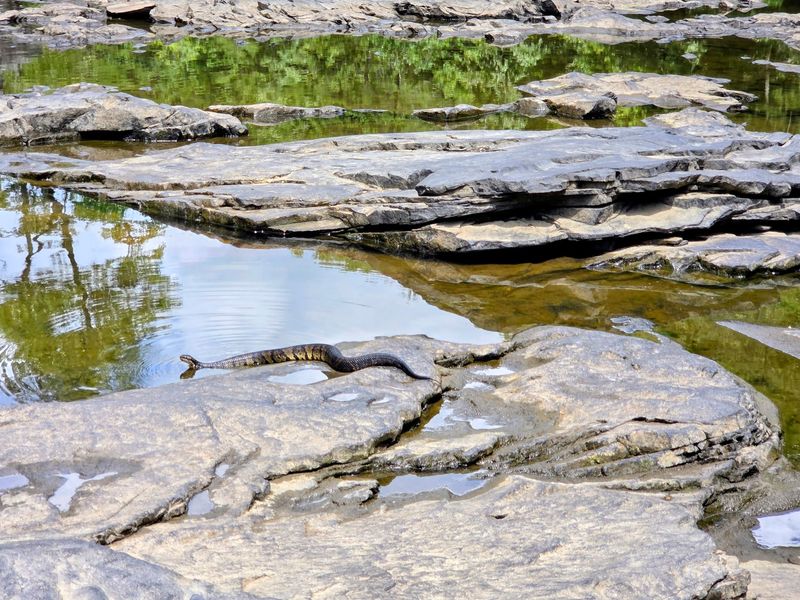
Snakes, including venomous ones, live here. Watch where you step and give wildlife space.
Remember the faded center line on the rim road. Keep left to follow the canyon.
For details, the NPS site at nps.gov/liri has updates. Then go see why so many people leave already planning a return.
The canyon on the mountaintop is waiting, and the river at the bottom is worth every step.
Enjoyed this story?
Add Fast Food Club as a preferred source to see more of our reporting on Google.