


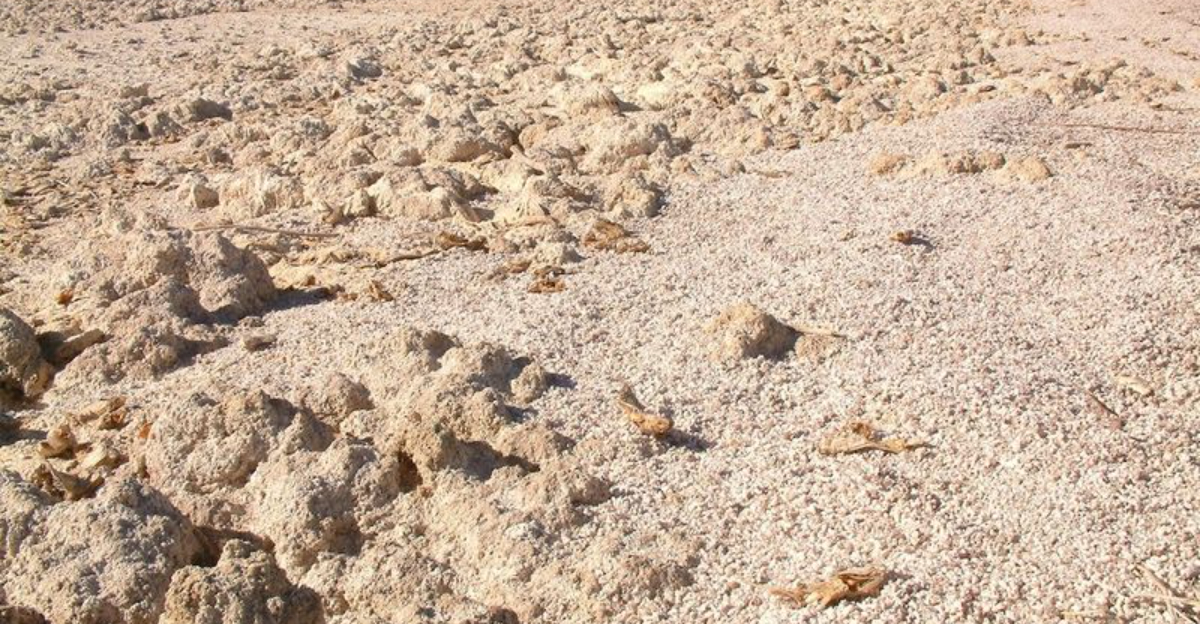
Hidden in the desert of Southern California lies one of the strangest beaches you’ll ever walk on. Instead of soft sand, the shoreline of the Salton Sea is blanketed in millions of tiny fish bones and barnacle shells that crunch beneath your feet with every step.
This eerie, haunting place has a wild history and an atmosphere unlike anywhere else in the country. Whether you’re a curious traveler, a photographer, or just someone who loves offbeat adventures, the Salton Sea will leave a lasting impression you won’t soon forget.
A Beach Unlike Any Other in California
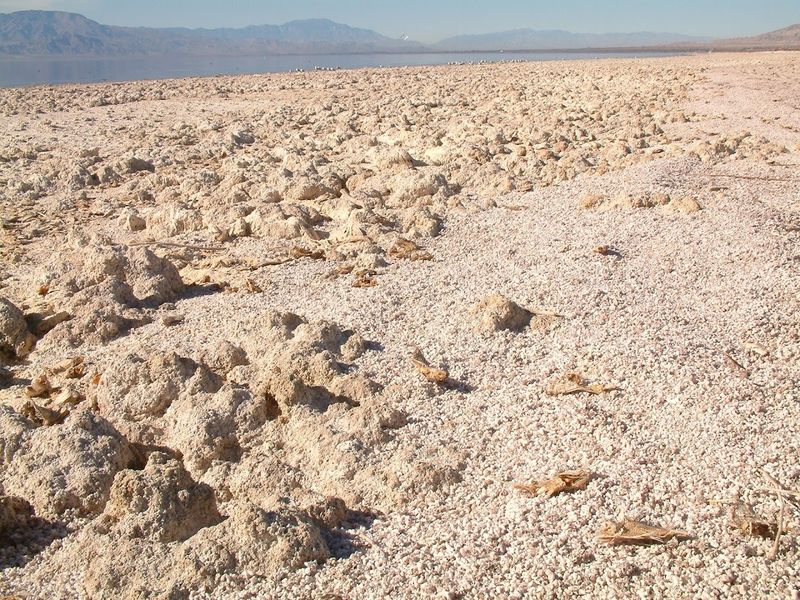
Most people picture golden sand and crashing waves when they think of a California beach. The Salton Sea flips that image completely on its head.
Step onto its shore and you’ll feel the unmistakable crunch of fish bones, barnacle shells, and dried skeletal remains beneath your feet.
The entire shoreline looks almost white from a distance, bleached by the intense desert sun. Up close, the scale of it is truly mind-blowing.
Millions of tilapia bones stretch as far as the eye can see, creating a landscape that feels more like a science fiction movie set than a real place.
Photographers, adventurers, and curious travelers have been making the trek out here for years just to witness it firsthand. Once you see it, you’ll understand why this unusual beach has earned such a legendary reputation across California and beyond.
How the Salton Sea Was Actually Created
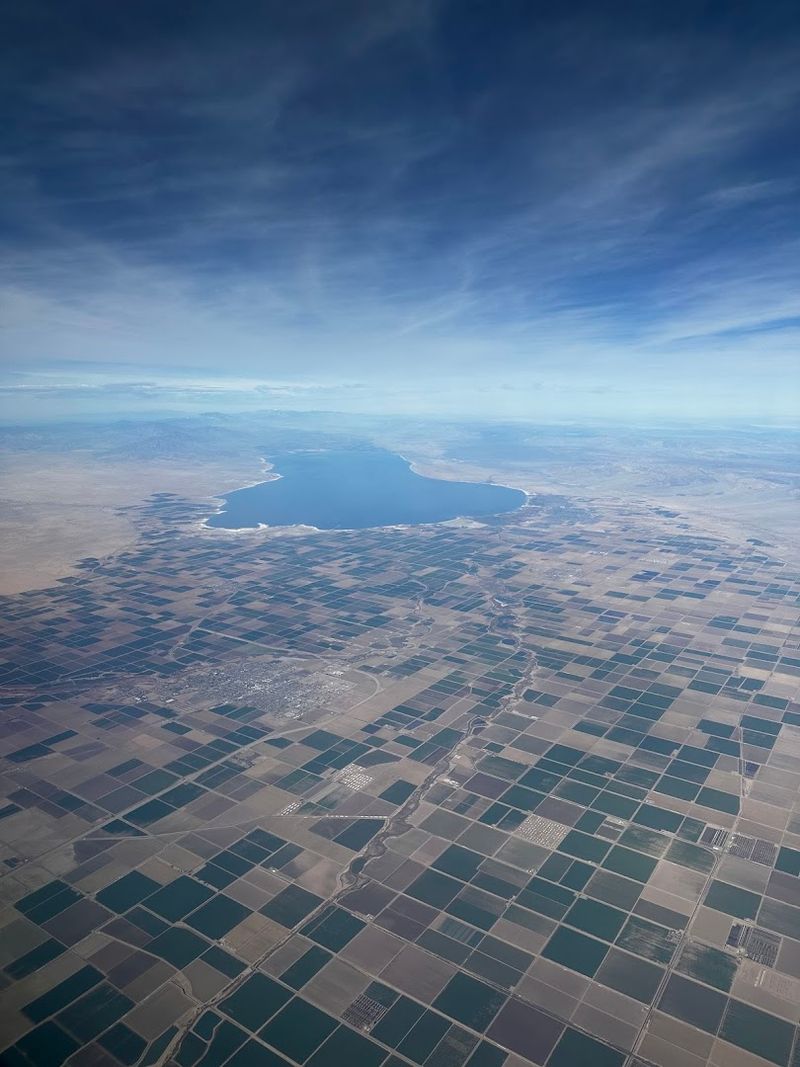
Believe it or not, the Salton Sea was not supposed to exist. Back in 1905, an engineering accident caused the Colorado River to break through irrigation canals and flood the Salton Basin for nearly two straight years.
The result was a massive inland lake sitting in the middle of the California desert.
Before that flood, the area was a dry, dusty depression sitting well below sea level. Engineers tried desperately to stop the flow but failed repeatedly.
By the time the breach was sealed in 1907, the Salton Sea had already become a permanent fixture on the map.
What started as a catastrophic mistake eventually became a booming tourist destination in the 1950s and 1960s. Celebrities and families flocked here to boat, swim, and relax.
Understanding its accidental origin makes the current state of the lake feel even more poignant and fascinating to explore.
Why the Water Is So Salty and Toxic
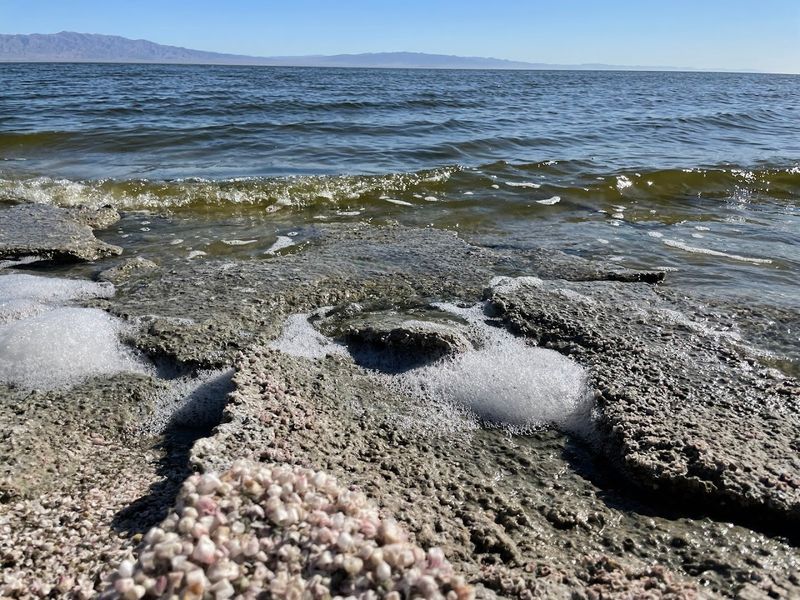
Here’s a wild fact: the Salton Sea is saltier than the Pacific Ocean. Over decades, agricultural runoff carrying fertilizers, pesticides, and salts has drained into the lake with no natural outlet to carry those minerals away.
The water just keeps getting saltier and more concentrated every single year.
On top of the salt problem, the lake also contains dangerously elevated levels of arsenic and other toxic chemicals. Visitors are strongly warned not to touch the water or let children or pets anywhere near it.
The smell alone is enough to remind you that this is not your typical swimming hole.
Despite all of that, the lake continues to draw visitors who are fascinated by its strange beauty. The toxic chemistry of the water is also a big reason why fish die in massive numbers here, contributing directly to that bone-covered shoreline that makes this place so unforgettable.
The Mass Fish Die-Offs That Built the Bone Beach
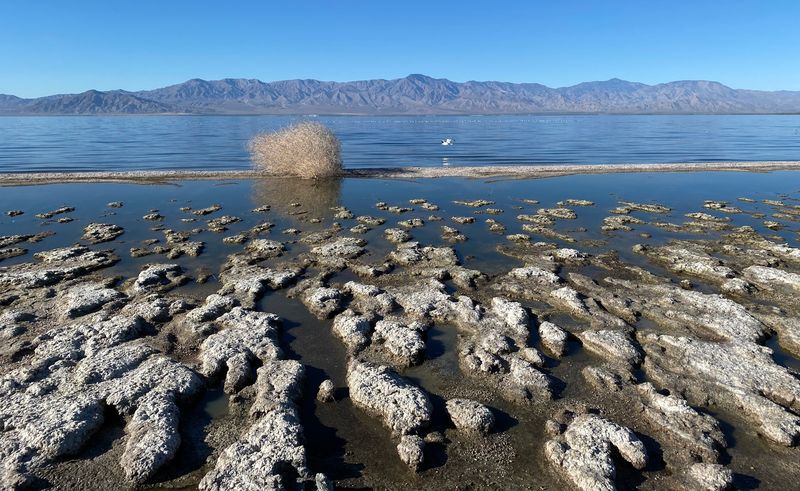
Those fish bones crunching under your sneakers did not appear overnight. The Salton Sea has experienced massive fish die-offs for decades, primarily involving tilapia, which were introduced to the lake in the 1960s to help control algae growth.
As the water grew saltier and oxygen levels dropped, fish began dying in enormous numbers.
During the worst events, billions of fish would wash ashore in a matter of days. The stench during these episodes was reportedly overwhelming, detectable from miles away.
Over time, the decomposed remains left behind a thick, crunchy layer of bones and scales that now defines the shoreline.
Walking across this bone beach gives you a strange mix of awe and sadness. You’re literally stepping on the evidence of an environmental collapse that unfolded over generations.
It’s a powerful reminder of how human activity can permanently transform an entire ecosystem in ways that are difficult to reverse.
The Ghost Towns Surrounding the Shoreline
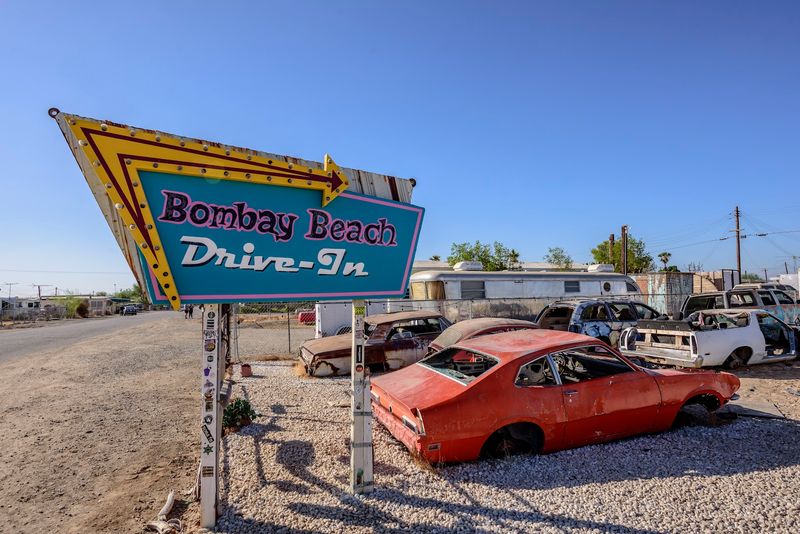
Ringing the Salton Sea like a haunted necklace are several ghost towns that once buzzed with life. Places like Bombay Beach and Salton City were developed in the 1950s and 1960s as resort communities, complete with yacht clubs, marinas, and vacation homes.
Developers marketed them aggressively as the next Palm Springs.
By the 1980s, environmental problems, flooding, and the rising salinity of the lake had driven most residents away. Today, abandoned motels, crumbling streets, and rusted-out trailers sit frozen in time along the water’s edge.
The ghost-town atmosphere is genuinely eerie, like someone pressed pause on an entire community decades ago.
Many visitors say the abandoned buildings are just as compelling as the fish bone beach itself. Artists and photographers have turned these decaying neighborhoods into outdoor galleries, adding murals and sculptures to the wreckage.
The result is a surreal blend of decay and creativity that you simply cannot find anywhere else.
Bombay Beach: The Most Famous Spot Along the Sea
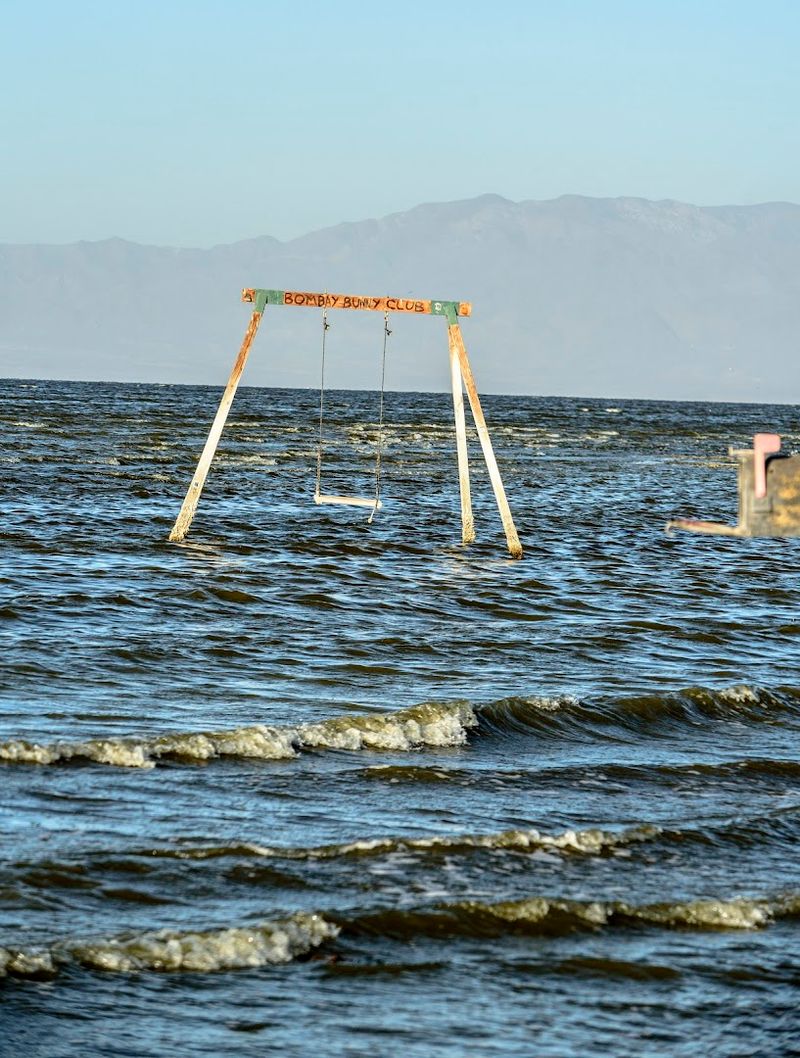
Out of all the communities along the Salton Sea, Bombay Beach is easily the most talked-about. This tiny, ramshackle town on the eastern shore has become a cult destination for artists, photographers, and adventurous road-trippers who appreciate places that exist completely outside the mainstream.
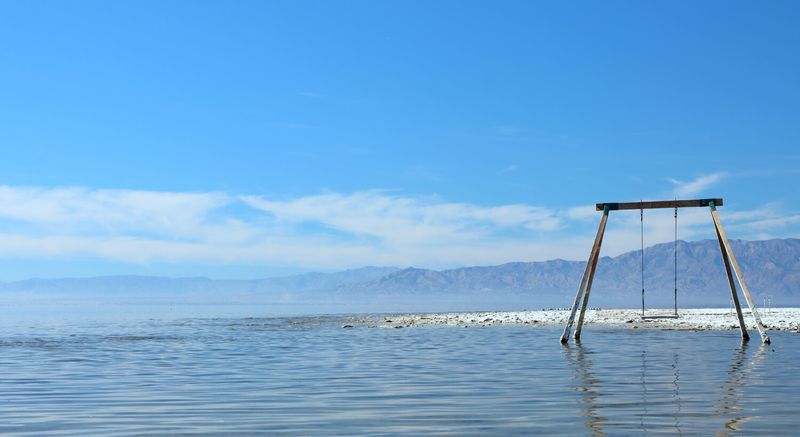
The Ski Inn bar in Bombay Beach is legendary, plastered floor-to-ceiling with dollar bills left by visitors from around the world. Outside town, you can find a playground half-submerged in the water, rusted swing sets standing eerily in the shallows.
The whole place has a haunting, cinematic quality that’s hard to describe until you’ve experienced it yourself.
Every year, the Bombay Beach Biennale brings artists together to install new works throughout the town, turning the decay into something unexpectedly beautiful. If you visit only one stop along the Salton Sea, Bombay Beach is the one that will stay with you the longest after you leave.
The Incredible Birdlife That Still Thrives Here
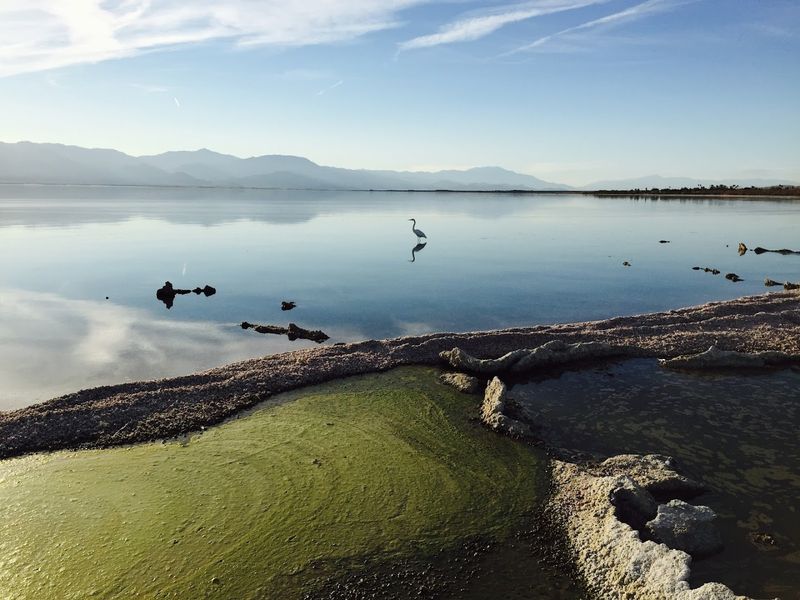
Despite everything working against it, the Salton Sea remains one of the most important bird habitats in all of North America. Hundreds of species of migratory birds stop here along the Pacific Flyway each year, using the lake as a critical resting and feeding ground during long migrations between Canada and Mexico.
Pelicans, herons, egrets, and sandpipers gather in huge numbers along the shores, seemingly unbothered by the toxic conditions that have driven away so much other life. The Sonny Bono Salton Sea National Wildlife Refuge, named after the famous entertainer and congressman who championed the lake’s preservation, protects key nesting and feeding areas around the southern end.
Birdwatchers from across the country make special trips just to spot rare species here. Even if the fish bones and toxic water aren’t your thing, bringing a pair of binoculars to the Salton Sea could reward you with some truly spectacular wildlife sightings that you’ll talk about for years.
Slab City: The Last Free Place in America
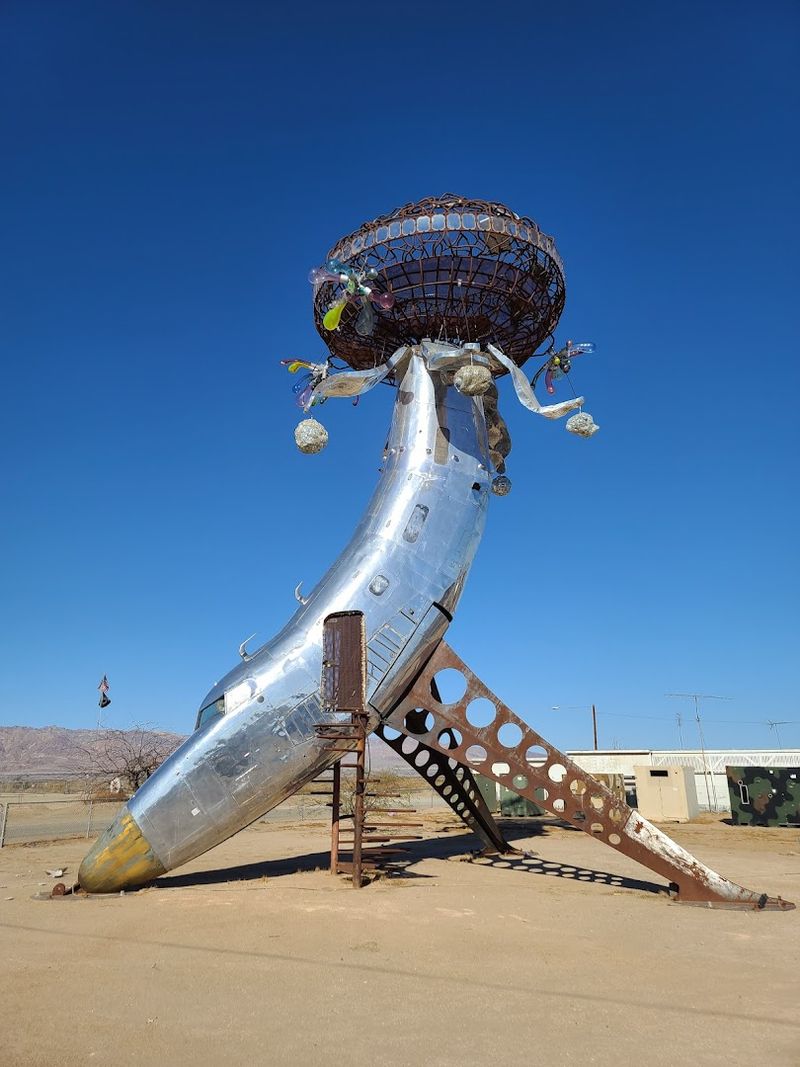
Just a short drive from the Salton Sea sits one of the most unusual communities in the entire United States. Slab City is a self-governing, off-grid settlement built on the concrete slabs of a decommissioned World War II military base.
Nobody owns the land officially, and residents pay no rent, taxes, or utilities.
The community attracts an eclectic mix of snowbirds, artists, drifters, and people who simply prefer to live outside society’s usual rules. Salvation Mountain, a brightly painted folk-art landmark on the edge of Slab City, has become one of the most photographed spots in all of Southern California.
Its creator, Leonard Knight, spent decades covering a hillside in vivid paint and religious messages.
Visiting Slab City feels like stepping into a parallel universe. The people there are generally welcoming to curious visitors, and the creativity on display is genuinely impressive.
Pair it with a walk along the fish bone beach and you’ve got a day unlike anything else in California.
The Smell: What Visitors Always Warn You About
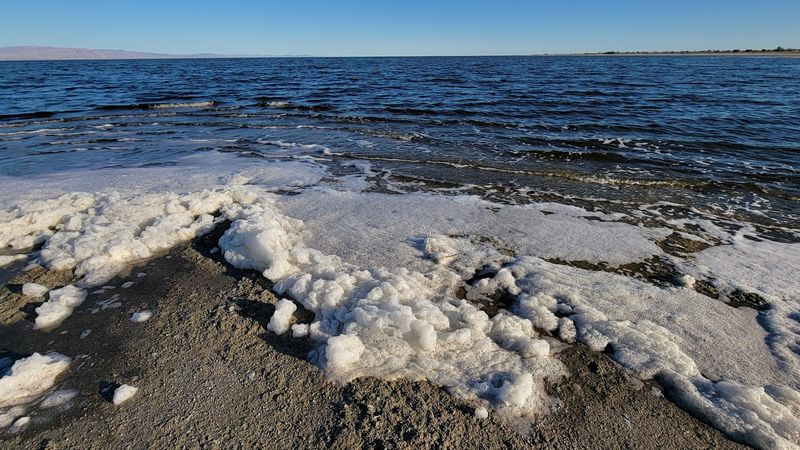
Let’s be honest: the smell is the first thing almost every visitor mentions. The combination of algae blooms, decomposing fish, agricultural runoff, and high mineral content creates an odor that hits you well before you even see the water.
Some reviewers have compared it to the Tijuana River on a hot day, which gives you a pretty vivid mental picture.
The smell tends to be strongest on warm, calm days when there’s no breeze to carry it away. During cooler months or when a wind is blowing, it’s considerably more manageable.
Seasoned visitors recommend keeping your car windows up as you approach and not lingering near the waterline for extended periods.
As off-putting as it sounds, most people who make the trip say the experience is still completely worth it. The weirdness and the beauty of the place outweigh the unpleasant odor for anyone with an adventurous spirit and a sense of humor about the whole thing.
Photography Opportunities That Are Truly One of a Kind
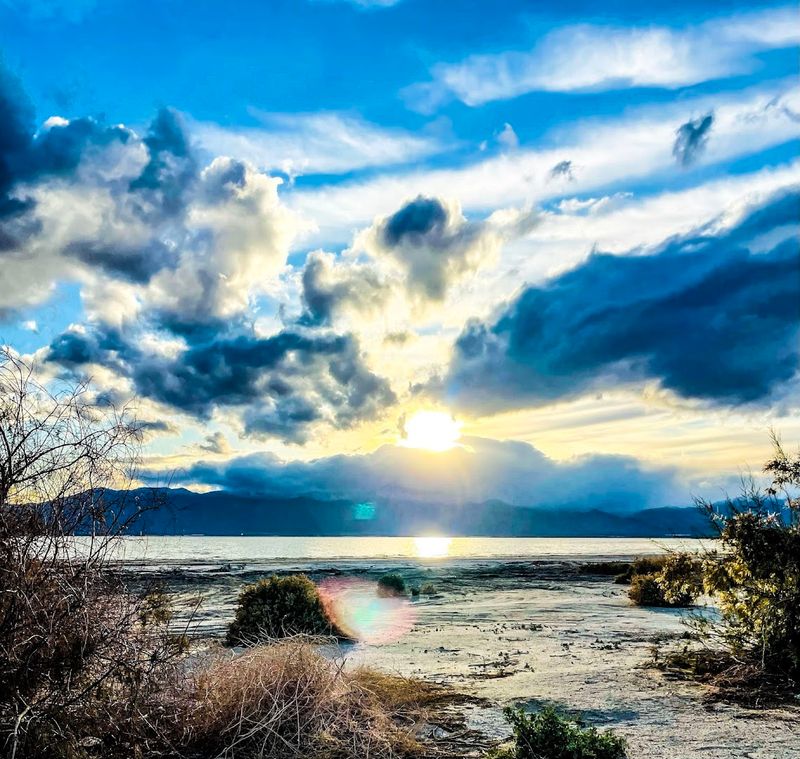
For photographers, the Salton Sea is basically a dream location. The combination of dramatic desert skies, the vast expanse of still water, the bleached bone shoreline, and the crumbling ghost town architecture creates visual opportunities that simply don’t exist anywhere else in California or possibly the entire country.
Sunrise and sunset are peak shooting times, when the sky turns brilliant shades of orange, pink, and purple that reflect perfectly off the glassy surface of the lake. The contrast between those vivid colors and the ghostly white bones on the shore produces images that look almost too surreal to be real.
Street photographers love documenting the murals, abandoned buildings, and quirky residents of communities like Bombay Beach and Slab City. Wildlife photographers find endless subjects in the enormous flocks of birds that gather along the shoreline.
No matter your photographic style, the Salton Sea will challenge and inspire you in equal measure.
The Environmental Crisis Behind the Decay
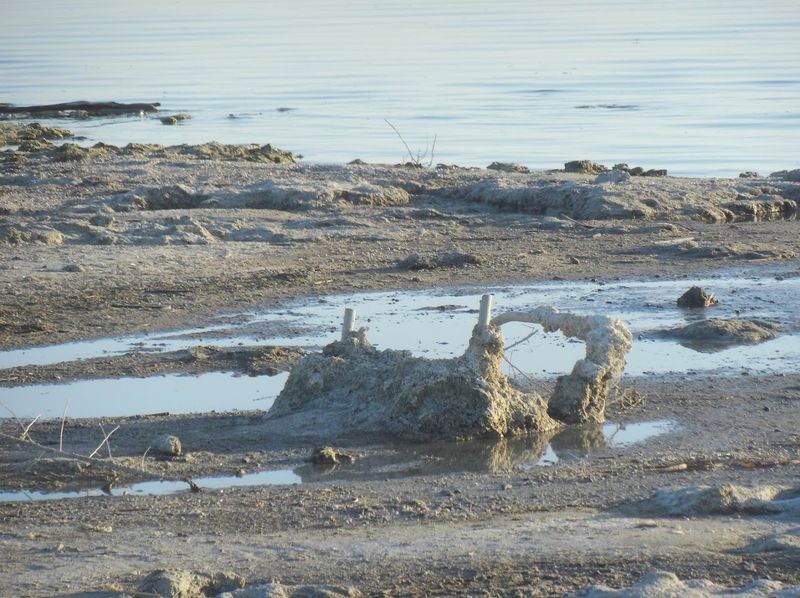
The Salton Sea’s current condition is not just an accident of nature. It’s the result of decades of competing water rights, agricultural policies, and political inaction that have left the lake slowly shrinking and dying.
As water allocations to the Colorado River have been reduced, less agricultural runoff flows into the sea, causing water levels to drop steadily year after year.
As the lake recedes, it exposes dry lakebed that contains decades of accumulated dust, pesticides, and toxic sediment. When the desert wind picks up, that dust blows into nearby communities, contributing to serious respiratory health problems among residents of the Coachella and Imperial Valleys.
The environmental and public health stakes here are enormous.
Scientists, activists, and government agencies have debated restoration plans for years without reaching a lasting solution. Visiting the Salton Sea today means witnessing an environmental crisis in slow motion, a sobering reminder that ecosystems lost to neglect are extraordinarily difficult and expensive to reclaim.
Tips for Visiting the Salton Sea Safely
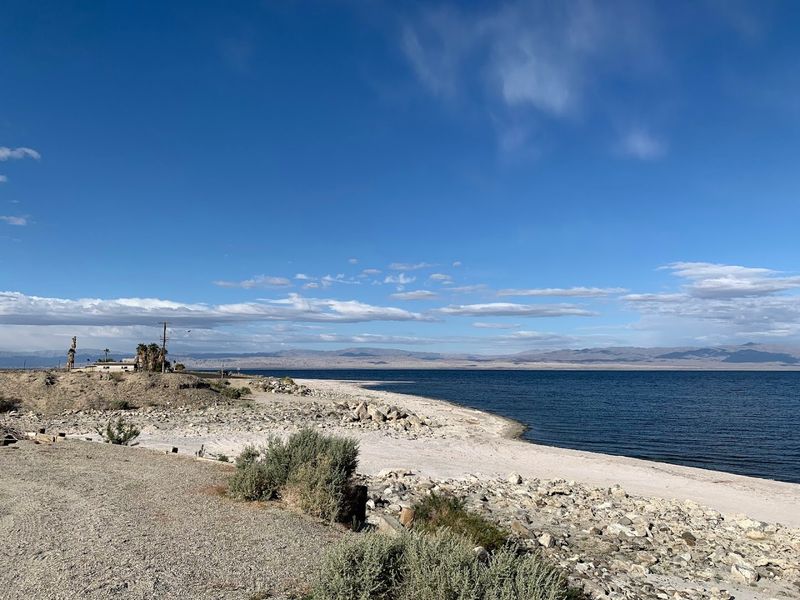
Planning a trip to the Salton Sea requires a little more preparation than your average California road trip. First and most importantly, do not touch the water under any circumstances.
The arsenic and toxin levels are dangerously high, and even brief skin contact is strongly discouraged by health authorities. Keep children and pets well away from the waterline.
Wear sturdy closed-toe shoes when walking the shoreline, because those fish bones are sharp and can easily poke through thin soles. Bring plenty of water, sunscreen, and a hat, since the desert sun is relentless and shade is essentially nonexistent along the shore.
A bandana or face covering can help with both the smell and the occasional dust.
The visitor center near the southern end of the sea is a great first stop and offers helpful information about the lake’s history and ecology. Rangers there are known for being friendly and knowledgeable, making it a worthwhile visit before you start exploring on your own.
Why the Salton Sea Stays Unforgettable Long After You Leave
There are places you visit and forget about a week later, and then there’s the Salton Sea. Almost everyone who makes the trip describes it as one of the most haunting, thought-provoking places they’ve ever experienced.
The combination of strange beauty, environmental tragedy, and offbeat human creativity leaves a mark that’s hard to shake.
Part of what makes it so memorable is the sheer contrast of everything happening at once. Gorgeous desert light playing across toxic water.
Vibrant bird colonies thriving next to fields of fish bones. Crumbling vacation homes sitting beside colorful street art.
The Salton Sea refuses to be just one thing, and that complexity is exactly what keeps people coming back.
Visitors often leave feeling a mix of wonder, sadness, and inspiration, which is a pretty rare combination for any travel destination. If you’re the kind of person who seeks out places with real stories to tell, the Salton Sea belongs on your California bucket list without question.
Enjoyed this story?
Add Fast Food Club as a preferred source to see more of our reporting on Google.