


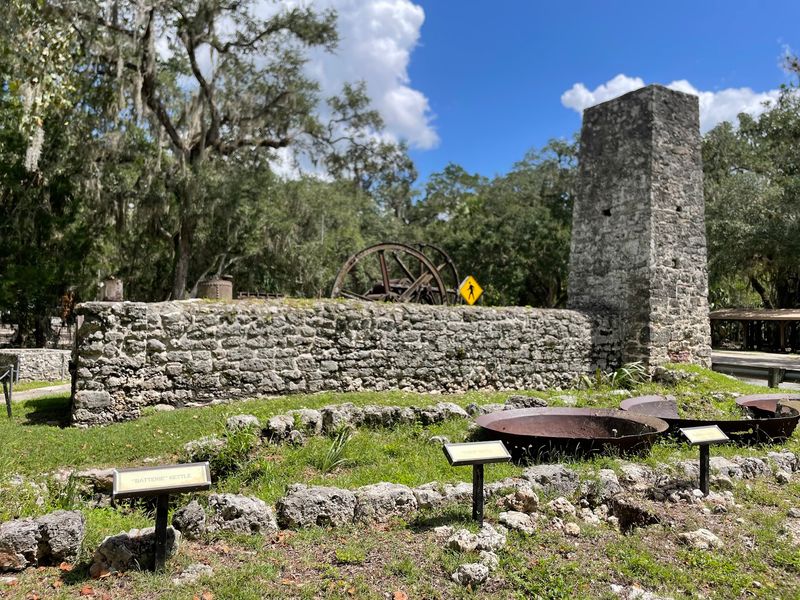
Most people driving through Homosassa never guess that a piece of the 1800s sits right beside the road. Iron gears, a cane press, and old kettles still rest where workers once turned sugarcane into syrup and sugar.
The stop takes only a few minutes, yet it opens a window into a very different Florida. Read on to learn the story behind the mill, the best way to see it, and a few smart tips that make the visit easy.
A Roadside Stop With a Big Backstory
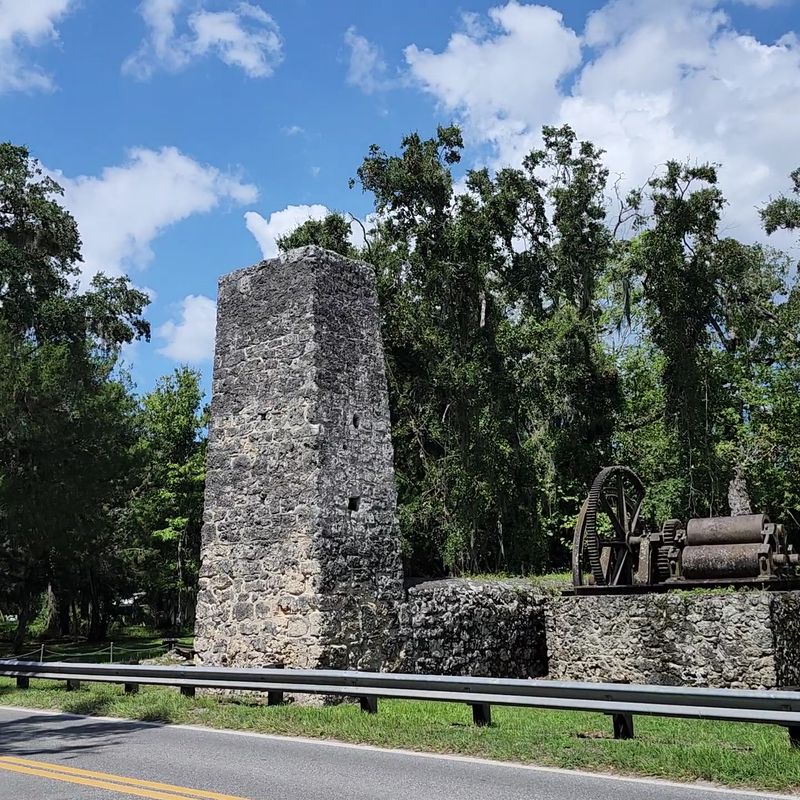
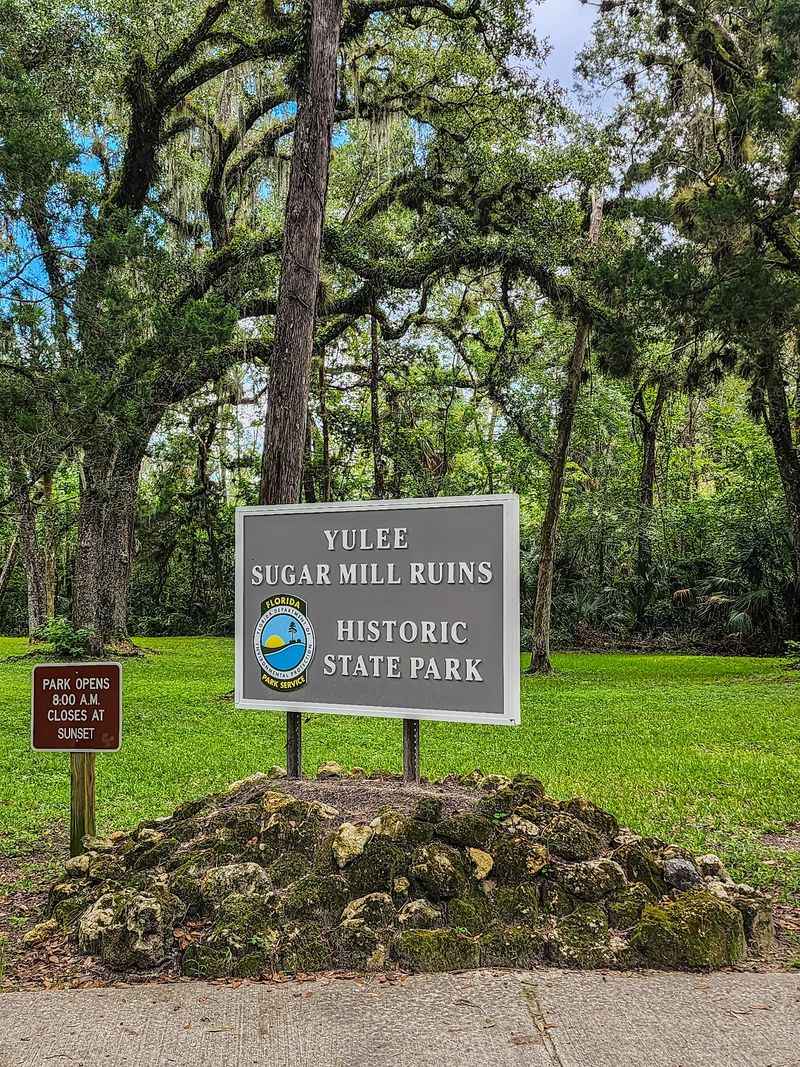
Some history hides in museums, and some sits right next to a county road. Yulee Sugar Mill Ruins Historic State Park is found at Co Rd 490, Homosassa, FL 34448, in Citrus County on Florida’s Gulf Coast.
The park protects the remains of a 19th-century, steam-powered sugar mill. It is part of the Florida State Parks system, so it is a public site anyone can explore.
Getting there is simple once the sign comes into view. The ruins sit on one side of the road, and the parking area and small picnic park sit on the other.
That layout surprises many first-timers. Some expect a long driveway leading back into the woods, but the mill is right there on the roadside.
The site is small and easy to reach. It works well as a quick history lesson tucked into a larger day around Homosassa.
Small does not mean dull, though. The story behind these old stones stretches back more than 170 years, and it is a bigger tale than the footprint suggests.
The Senator Behind the Sugar
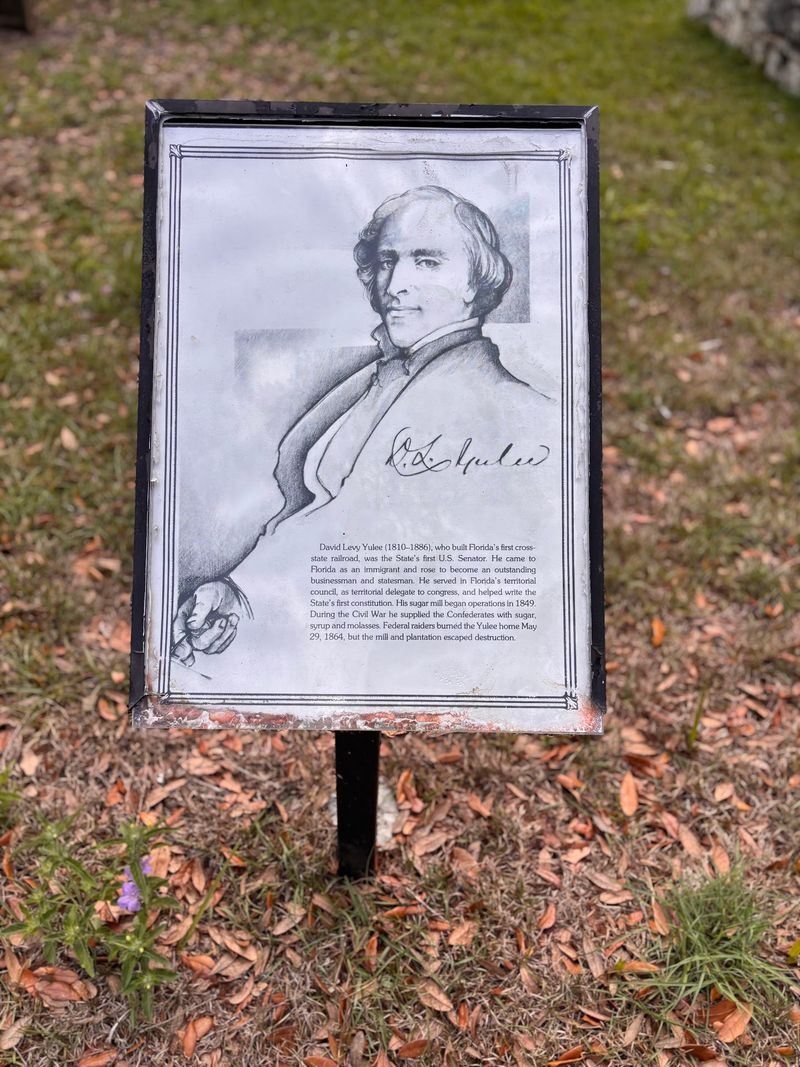
Florida’s very first U.S. senator once owned this land. David Levy Yulee ran a large sugar plantation here, and the mill was the working heart of it.
The plantation once covered about 5,100 acres. That is a huge piece of land, and the mill was built to process sugarcane grown across it.
The steam-driven mill operated from 1851 to 1864. During the Civil War, it served as a supplier of sugar products for Southern troops.
The work here also depended on enslaved people who labored on the plantation. That part of the story is a key reason the site matters for understanding early Florida history.
Today, the park keeps this chapter visible instead of letting it fade away. The signs help connect the stones to the people and events tied to them.
Learning the name behind the mill changes how the ruins look. Suddenly, the old machinery feels less like a curiosity and more like a page from a textbook come to life.
Gears, Kettles, and a Cane Press
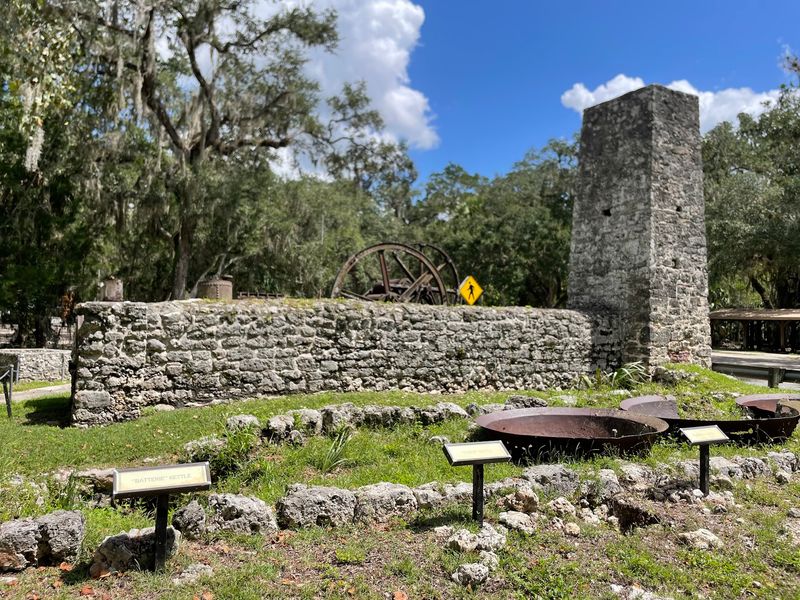
Machinery is the star of the show here. The park holds iron gears, a cane press, and the large kettles once used in the sugar-making process.
The process went step by step. Workers pressed sugarcane, caught the liquid, and boiled it down to make syrup and other goods.
Seeing the pieces in person helps that process click. The leftover equipment and stone structures make the history more real than words on a page.
The mill is also fairly intact compared to other sugar mill ruins in the region. That makes it easier to understand how each part fit together.
Limestone masonry forms much of the structure. For years, a 40-foot limestone chimney stood tall over the site and served as its signature feature.
Take time to look at the small details. The gears and cauldrons reward a slower pace, and the closer the look, the more the old system starts to make sense.
A New Roof Over Old Stones
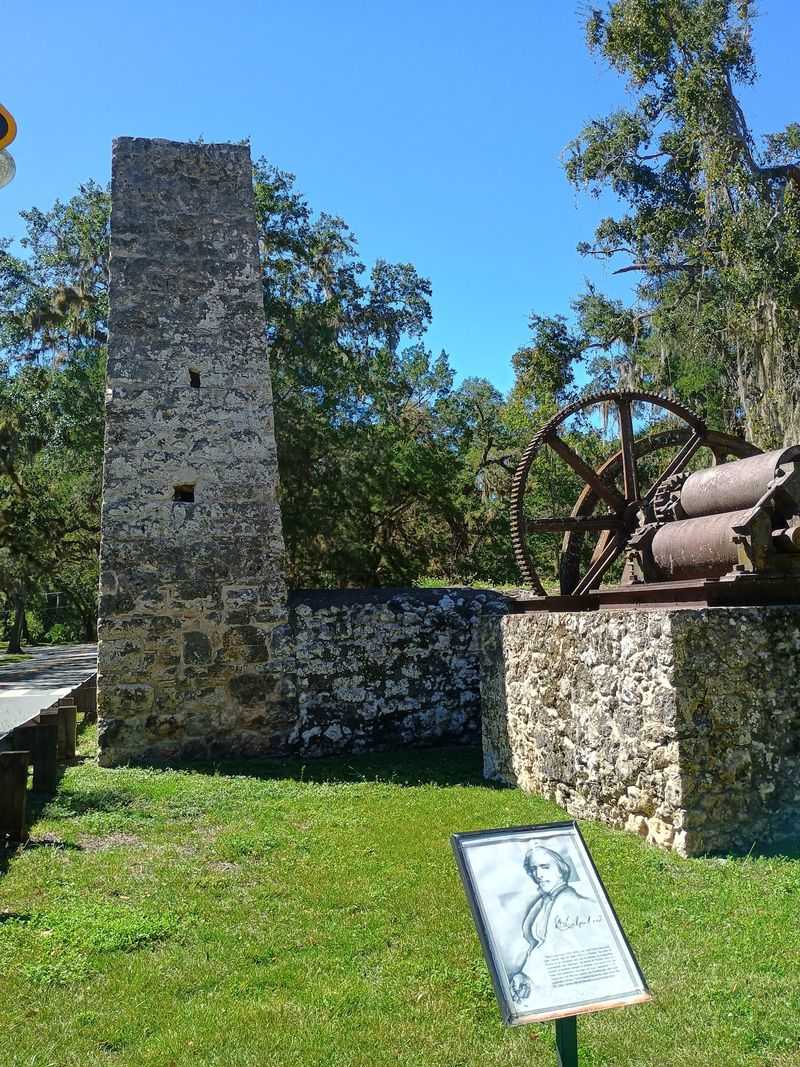
Recent changes have given the ruins a new look. A shelter-type structure now covers the mill, protecting what remains.
The famous tall chimney is no longer standing. Hurricanes in recent years caused damage to the site, and repair work followed.
The good news is that the ruins are still open to explore. The path leads right inside the shelter, so a close view of the machinery is still possible.
Anyone who has seen older photos may notice the difference right away. Expectations shaped by pictures of the chimney should be adjusted before arriving.
Changes like these are part of caring for a site that has stood since the 1850s. Weather on the Gulf Coast can be tough on old masonry.
Think of the shelter as a guardian rather than a barrier. It keeps this piece of the past around for future trips, and that is a fair trade for a slightly different skyline.
Signs That Do the Talking
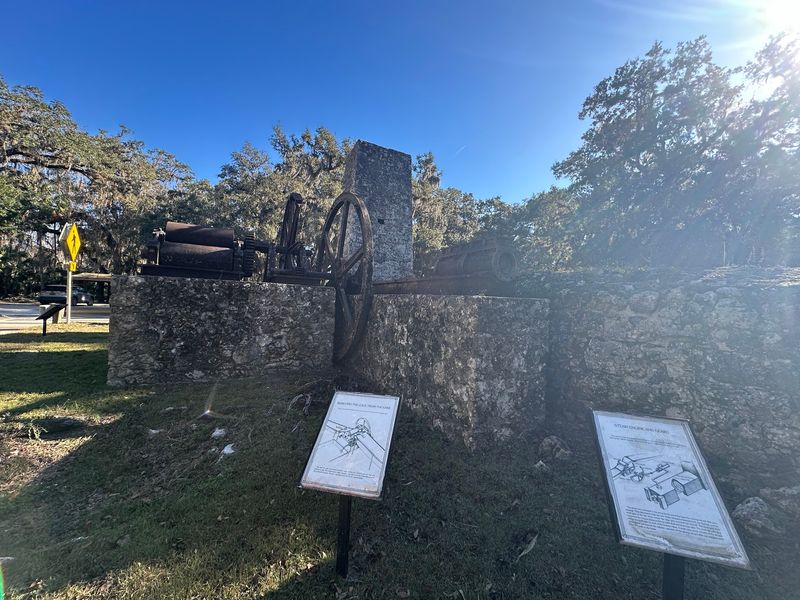
No tour guide is needed at this stop. Interpretive signs and historic plaques line the route and explain how the mill worked.
The signs cover the history of the plantation, the sugar process, and the role of the site in Florida’s past. Many questions get answered just by reading along the way.
A historical marker also helps frame the story. It is a handy starting point before heading toward the machinery.
At times, a few placards have been missing. That can leave small gaps, so a little reading on the state park website beforehand can help.
Families with kids will find the signs useful. They break a big topic into short chunks that are easy to follow.
Reading every panel takes only a few extra minutes. Those minutes turn a quick photo stop into a real lesson, and it is the easiest homework anyone will ever do.
Five Hundred Feet of Easy Walking
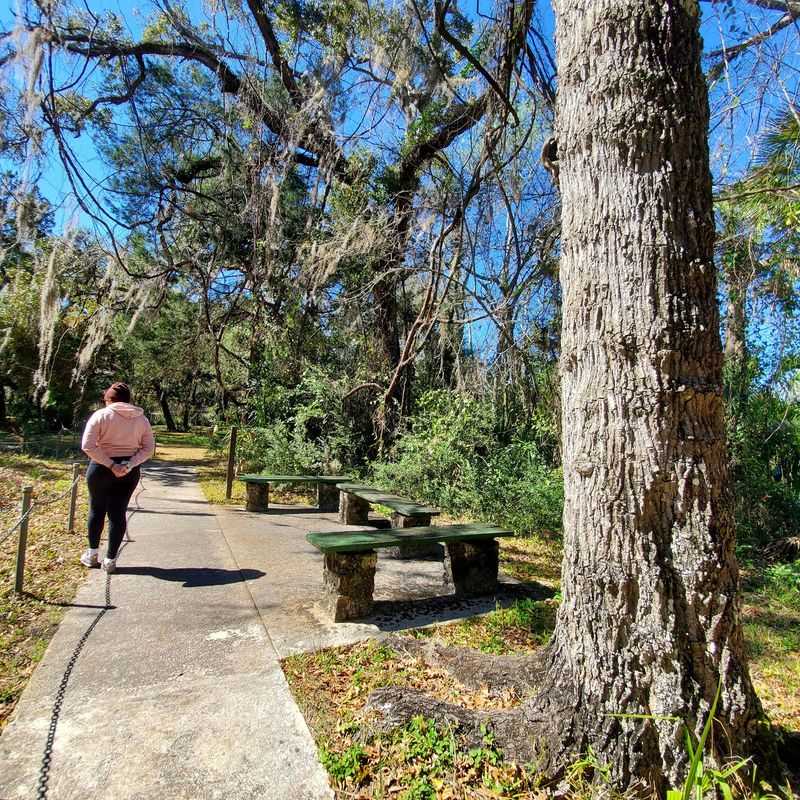
Short and sweet sums up the trail. The paved walking path around the ruins runs roughly 500 feet.
The path is hard-surfaced and easy to navigate. That makes it a comfortable option for most ages and fitness levels.
Most people finish in about 10 to 15 minutes. That includes reading the plaques and looking at the gears and kettles.
Leashed pets are welcome, which is great news for road-trippers traveling with dogs. It is a handy spot for everyone to stretch their legs.
The park is usually quiet and rarely crowded. That means plenty of space to move at a relaxed pace.
Because the walk is so brief, it fits nicely between other plans. A stop here costs very little time, and the payoff in history is surprisingly generous for such a tiny loop.
Picnic Pavilion Across the Road
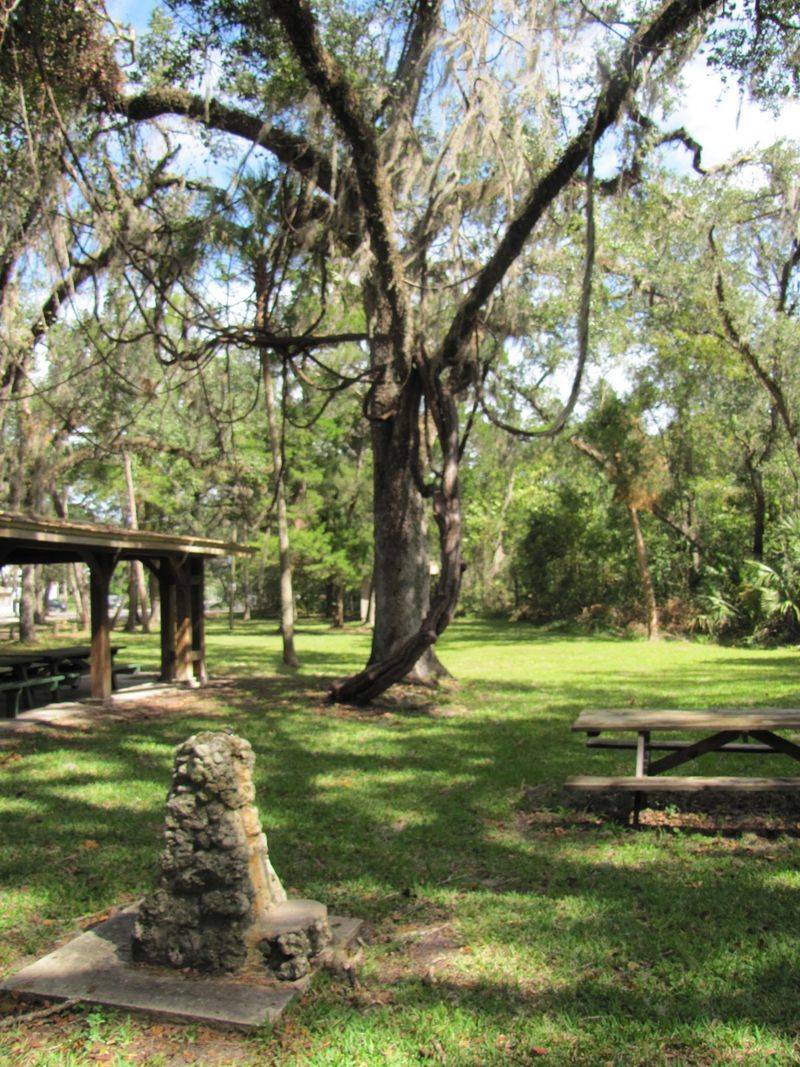
Lunch with a view of history is on the menu here. Across the road from the ruins, a small woodland park offers a picnic pavilion, tables, and grills.
Some tables sit under the pavilion roof for shade. Others are spread out in the open park area.
Oak and cypress trees fill the grounds. Twisting wild grapevines wrap around many of them, and one vine near the parking area is so large it is easy to mistake for a tree.
The park makes a peaceful place to rest after the walk. Many people pack a snack or a simple meal and enjoy it overlooking the mill site.
A comfort station is also on the grounds. Restrooms have been closed at times, so plan ahead just in case.
Bring a cooler and some patience for the shade. This little grove turns a 10-minute stop into a relaxed hour, and that grapevine alone is worth a second look.
Crossing County Road 490 Safely
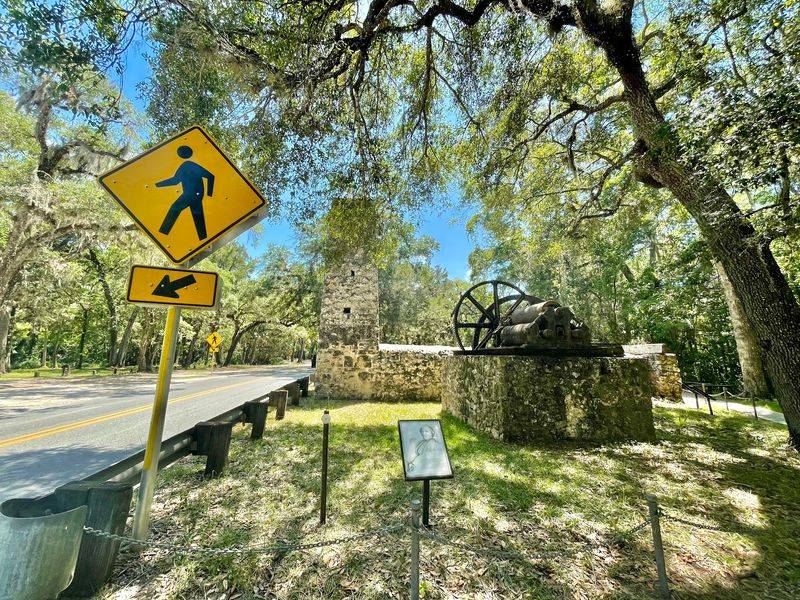
Here is the one tip almost everyone mentions. The parking lot and the ruins are on opposite sides of a busy road.
Traffic on County Road 490 can be steady. Cars move along at a good pace, so crossing calls for real care.
Look both ways and take your time. Keep kids close and pets on a short leash while crossing.
Parking itself is easy. The lot usually has enough room, and the park is seldom packed.
The parking area is shared with a neighboring restaurant, the Old Mill Tavern. That can make the lot a bit busier around mealtimes.
Once across, the rest of the visit is calm and simple. A careful crossing is a small price for a close look at the past, so slow down, stay alert, and the rest takes care of itself.
Hours, Fees, and Timing Tips
Good news for budget travelers comes first. There is no entrance fee to explore the ruins.
The site is listed as open 24 hours, every day of the week. Still, daylight is the best time to read the signs and see the machinery clearly.
For the latest updates, check the official Florida State Parks website or call the park office. Repairs and changes have happened in recent years, so current details matter.
Plan for a short stay. Fifteen minutes covers the ruins, and extra time works well for a picnic.
Pairing the stop with other outings is smart. Nearby, the Salt Marsh area farther down the road offers trails, an overlook, and a rough kayak launch.
A visit here rarely takes up a whole day. Tuck it into a Homosassa sightseeing loop, and it becomes the history chapter of a well-rounded trip.
Worth the Detour
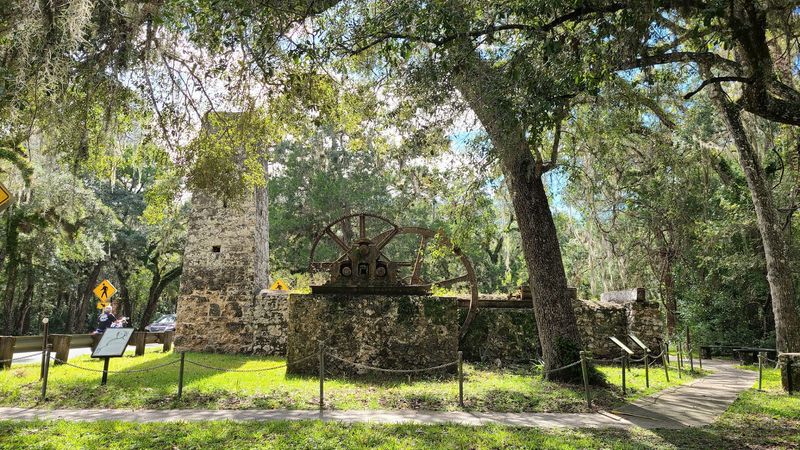
Small places can leave big impressions. This roadside park proves that point with stone, iron, and a story that reaches back to Florida’s early statehood.
It will not fill an afternoon on its own. The ruins are compact, and some people find them less grand than expected.
Yet the site earns a solid 4.3-star average from hundreds of people. Many call it a neat, easy stop that brings early Florida history into focus.
History fans will enjoy the machinery and the signs. Families, pet owners, and road-trippers will appreciate the short path and the shady picnic park.
Free entry and a quick visit make it low risk. A busy road crossing is the main thing to keep in mind.
So next time County Road 490 comes up on the map, pull over. Those weathered stones have been waiting since 1851, and they still have plenty to say.
Enjoyed this story?
Add Fast Food Club as a preferred source to see more of our reporting on Google.