


Some towns spread out across flat land. This one climbs.
In a narrow river valley in central Maryland, a single old street starts at the water and heads straight uphill, lined with granite storefronts that seem to sit on each other’s shoulders. Inside many of them, you will find vintage furniture, old books, forgotten tools, and odd little treasures waiting for a new home.
The town began as a mill settlement in the 1700s, and it still holds one of the oldest surviving railroad stations in the country. It has faced serious floods, rebuilt more than once, and kept its shops open through it all.
Keep reading to learn where this place is, how it began, why its buildings sit the way they do, and how to plan a smart, comfortable day of browsing on its steep and storied Main Street.
A River Town That Doubles as a County Seat
Here is a fun bit of trivia to start the walk. The place in question is Ellicott City, and its historic heart runs along Main Street in Ellicott City, Maryland, USA.
Ellicott City is an unincorporated community and census-designated place. It also serves as the county seat of Howard County, which is a slightly unusual combination.
Most county seats are official cities or towns with their own mayors. Ellicott City has no city government at all, yet it still holds the county seat title.
The 2020 census counted 75,947 residents here. That number makes it the most populous unincorporated county seat in the United States.
The community sits within the Baltimore metropolitan area, west of Baltimore itself. Much of that population lives in newer neighborhoods spread across the rolling land beyond the old core.
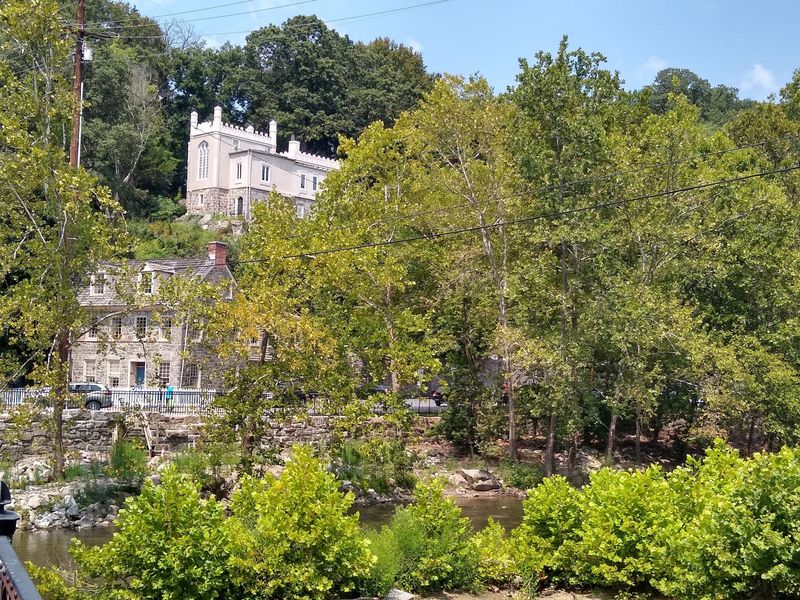
The historic district is the part most people come to see. It sits low, tucked into the valley where the Patapsco River forms the border with Baltimore County.
From the river, Main Street heads uphill, and the old buildings follow it. The result is a compact, walkable district that feels far older and smaller than the census numbers suggest.
So the big number and the small street tell two very different stories. The next chapter explains how the small street came first.
Three Brothers and a Flour Mill
Long before anyone came here to shop, people came here to grind wheat. The town traces its roots to 1772, when the Ellicott brothers arrived in the Patapsco valley.
John, Andrew, and Joseph Ellicott were Quakers from Pennsylvania. They saw the fast-moving river as a power source and built a flour mill along its banks.
The settlement that grew around their work took the name Ellicott’s Mills. Only later did it become Ellicott City.
Milling shaped nearly everything about the early town. Workers needed homes, merchants needed storefronts, and wagons needed a road to carry flour toward Baltimore.
That road helped fix the layout that still exists. Main Street follows the old route up and out of the valley, which explains why the district stretches in a line instead of a grid.
The Ellicotts also encouraged local farmers to grow wheat instead of tobacco. That shift helped the mills stay busy and kept the valley economy humming for decades.
Quick history bite: the family name survives not only in the town but across the region’s historical markers and landmarks.
Today, the flour trade is long gone from the storefronts. The buildings it inspired, however, are still very much in business.
Granite Storefronts on a Steep Grade
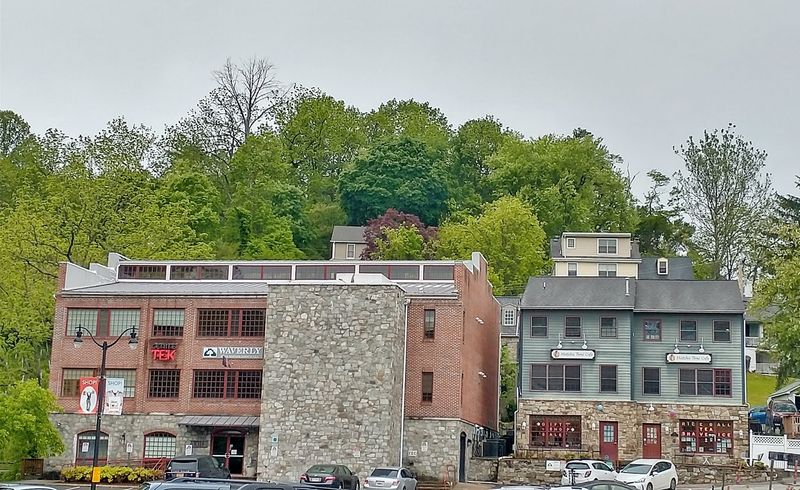
Gravity did a lot of the town planning here. Main Street rises sharply from the river, and the buildings step up the slope one after another.
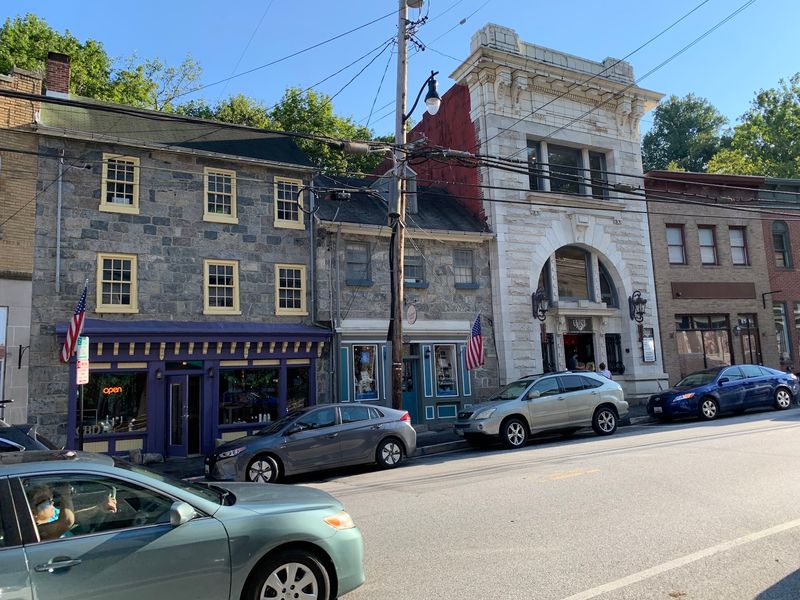
Many of the oldest structures are built from granite quarried in the surrounding hills. That local stone gives the district its sturdy, old-world look.
Because the valley is so narrow, the buildings press close together. Some sit right against rocky hillsides, while others perch above the streams that run behind and beneath them.
That tight setting is exactly why the shops appear stacked. A storefront at street level might have another shop above it, and the next building up the hill starts a little higher still.
Side streets and stone staircases branch off here and there. They lead to churches, homes, and overlooks tucked into the slopes above the commercial strip.
The Howard County courthouse also sits on a hill above the district. Its position reflects the town’s role as county seat, a job it still performs.
For architecture fans, the charm lies in the mix of styles. Old stone, painted brick, and wood trim share the same block without any sense of a single master plan.
Every few steps, the view shifts a little. Keep your eyes up as well as ahead.
Antiques by the Floor, Treasures by the Block
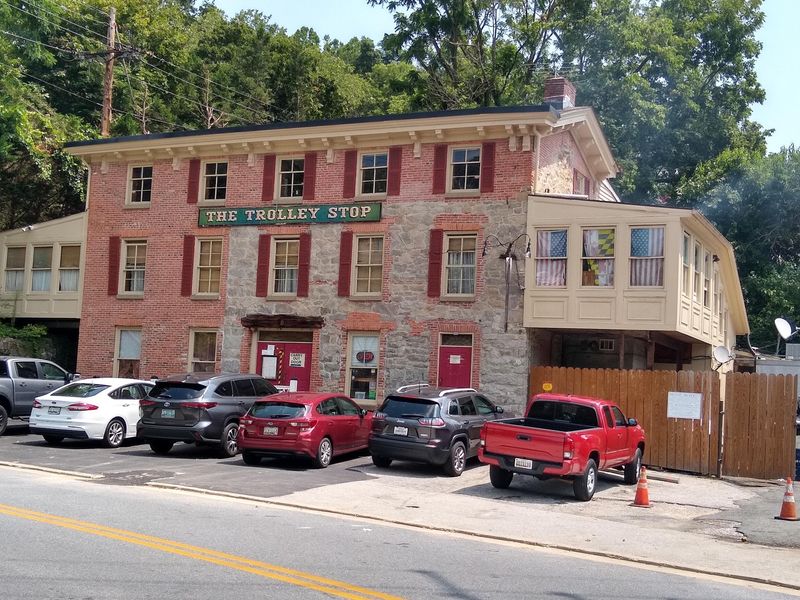
Browsing here is less of a stroll and more of a treasure hunt with a built-in workout. Antique and vintage shops are a signature part of the Main Street experience.
Many shops occupy old buildings with multiple levels. Stairways lead from one room to the next, and each level can hold a totally different collection.
Expect a broad range of goods rather than one theme. Furniture, glassware, jewelry, prints, books, and collectibles often share space inside the same building.
Some stores work with several dealers, each managing a booth or corner. That setup means the stock changes regularly, so a repeat trip rarely looks the same as the last.
Beyond antiques, the street also holds gift shops, boutiques, and independent businesses. Local owners give the district much of its personality.
A smart approach is to start at the bottom of the hill and work your way up. Save your energy for the upper blocks, since the climb gets steeper as you go.
Bring a flexible budget and a little patience. Price tags vary widely, and the best finds often hide on a lower shelf or in a back room.
Measure your car trunk before buying that dresser. The hill will not carry it for you.
America’s Veteran Railroad Station
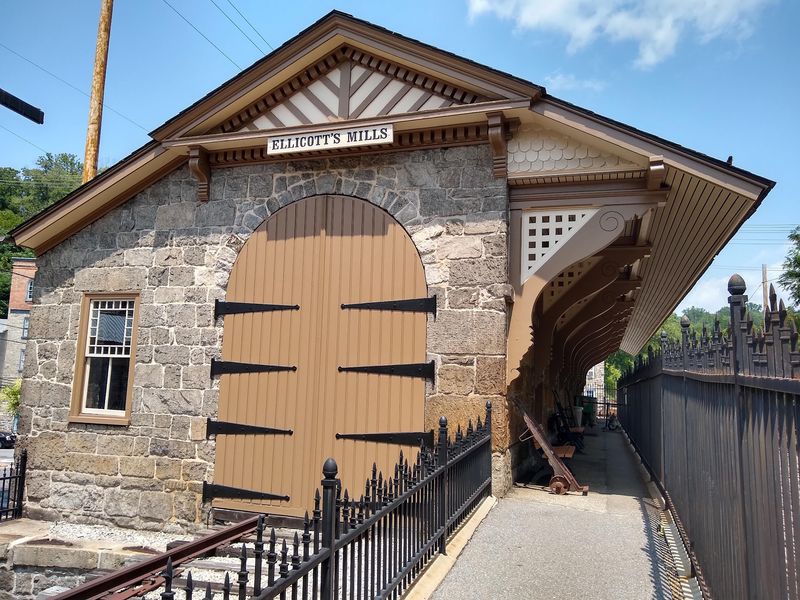
At the foot of Main Street stands a stone building with a big claim to fame. The B&O Railroad Ellicott City Station is widely recognized as the oldest surviving railroad station in the United States.
The Baltimore and Ohio Railroad reached Ellicott’s Mills around 1830. The line connected the mill town to Baltimore and made it an early stop on one of the country’s first railroads.
The granite station building dates to that early era. It later became a museum focused on railroad history and the town’s link to the tracks.
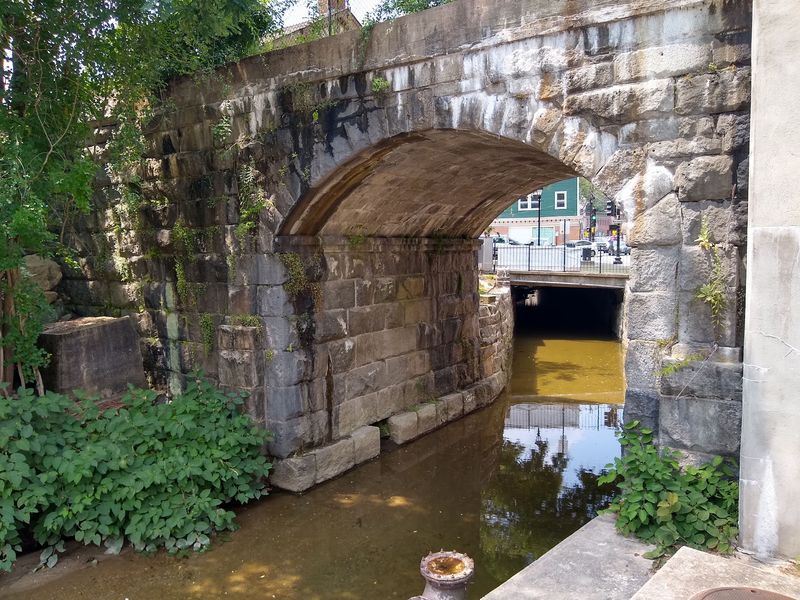
Trains still pass nearby, since freight service continues on the line. A railroad bridge crosses Main Street near the river, framing the entrance to the historic district.
The station makes an easy first stop before heading uphill. It gives helpful background on why this small valley town mattered so much in the 1800s.
Museum schedules can change by season, so checking ahead before your trip is wise. That quick step saves disappointment at the door.
History buffs and young train fans tend to enjoy this corner equally. It is proof that a town can be small and still own a national first.
Rivers Below, Resilience Above
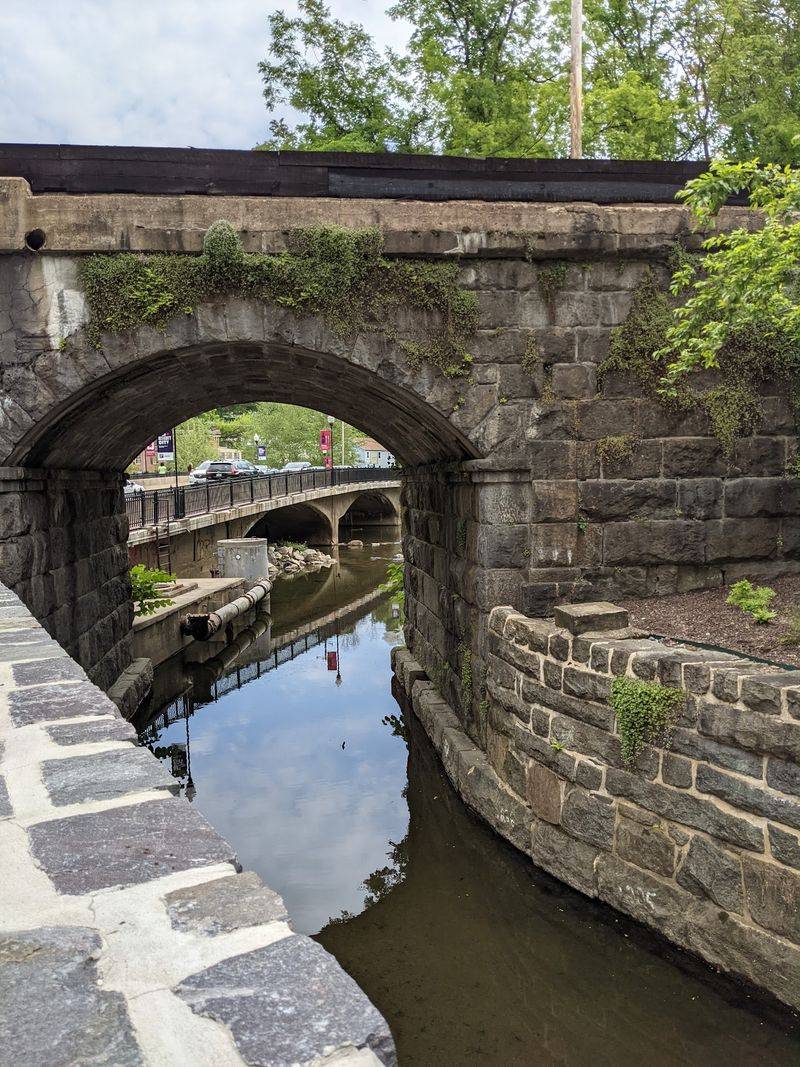
Water built this town, and water has also tested it. The Patapsco River runs along the lower edge of the historic district, and smaller streams wind through the valley toward it.
Those streams, including the Tiber and Hudson branches, flow close to and even beneath parts of Main Street. The same geography that powered the mills also funnels heavy rain straight downhill.
Ellicott City has experienced major floods throughout its history. Serious flash floods in 2016 and 2018 caused heavy damage to the historic district.
After each event, business owners and residents worked to reopen. Many shops returned, and the street regained its steady flow of browsers.
Howard County has since pursued flood mitigation projects aimed at moving water more safely through the valley. The work reflects a long-term effort to protect the historic core.
For a day trip, the practical takeaway is simple. Keep an eye on the weather forecast, especially during stormy seasons, and follow any local alerts.
Knowing this backstory adds meaning to every open door on the street. Each storefront represents a choice to stay, rebuild, and keep the old town going.
Green Trails Beyond the Last Storefront
Shopping bags full? The valley offers another way to spend an afternoon.
Patapsco Valley State Park stretches along the river near Ellicott City. It is one of Maryland’s well-known state parks, with trails that follow the Patapsco through wooded terrain.
The park covers a long section of the river valley and has several separate areas. Hikers, cyclists, and picnickers all find room to spread out.
Pairing the park with Main Street makes for a balanced day. A morning on the trails followed by an afternoon of browsing gives both legs and wallets a turn.
Across the river sits Oella, a historic mill village in Baltimore County. Its history ties into the same milling story that shaped Ellicott City.
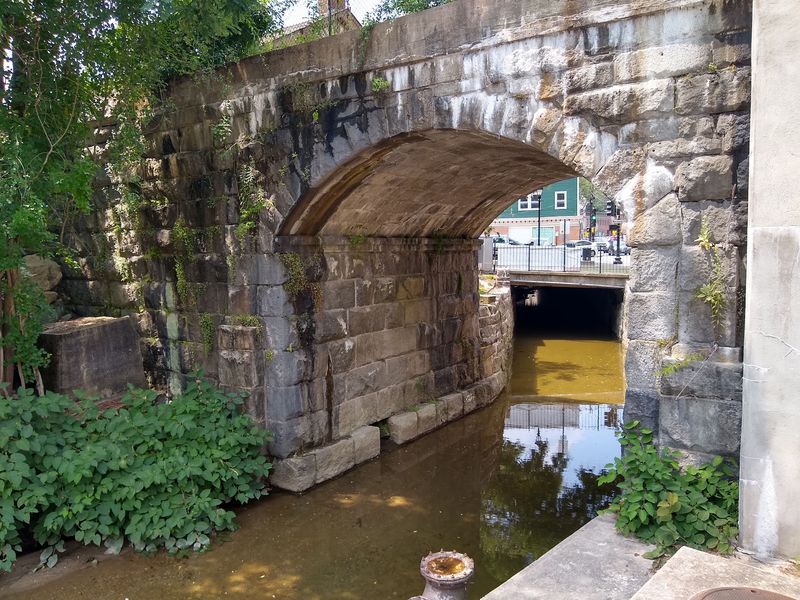
The river corridor also served the early railroad, and traces of that history appear throughout the valley. Old stone walls and bridges hint at how busy this landscape once was.
Park areas may charge entry fees and keep set hours. Checking the Maryland state parks information before heading out helps avoid surprises.
Wear sturdy shoes if you plan to do both. The hills do not take a break just because the sidewalks end.
Old-Town Mood With Suburban Neighbors
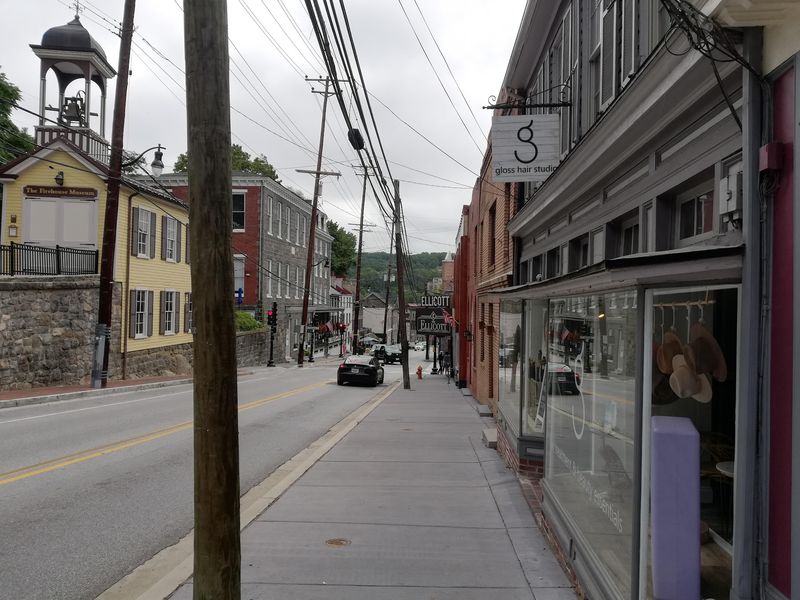
Two very different worlds share the same zip code here. The historic district keeps its small-town, walk-everywhere character, while the wider community spreads across modern neighborhoods.
That contrast gives the old street a steady local following. Residents from across Howard County come down the hill for errands, gifts, and weekend outings.
The district suits several kinds of travelers. Antique collectors, history fans, casual window shoppers, and couples looking for a relaxed day trip all fit right in.
Families can make it work with some planning. The steep sidewalks and narrow spaces call for a slower pace, especially with strollers or little ones.
Photographers tend to appreciate the layered storefronts and the stone railroad bridge. The hillside setting gives plenty of interesting angles without much effort.
Special events and seasonal celebrations take place in the historic district throughout the year. Local calendars list what is happening on any given weekend.
Weekends usually bring bigger crowds, while weekdays feel more laid-back. Either way, the street rewards people who wander without a strict schedule.
Expect friendly shop owners who know their inventory well. A simple question about an odd object can turn into a quick local history lesson.
Parking, Timing, and Comfortable Shoes
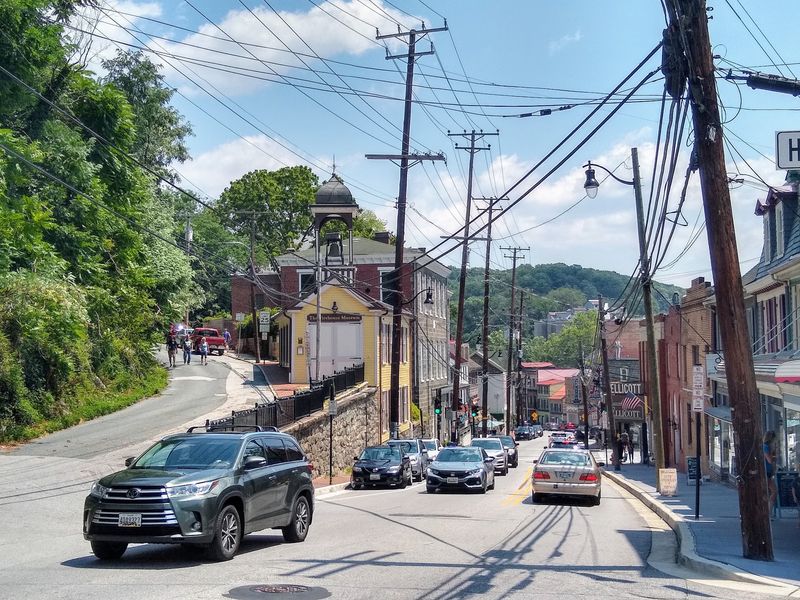
A little prep goes a long way on a hill this steep. Start with footwear, since the sidewalks climb steadily and some shops add stairs inside.
Getting there usually means driving. The historic district sits a short distance west of Baltimore, and major roads in Howard County connect to it.
Parking is available in public lots and along streets in and around the district. Many spaces are metered or paid, so bringing a card or a parking app is helpful.
Weekend afternoons tend to fill lots quickly. Arriving earlier in the day improves your chances of finding a spot close to Main Street.
Shop hours vary because most businesses are independently owned. Some open later in the morning, and a few close on certain weekdays.
Checking individual shop websites or social pages before your visit is the safest approach. Hours can shift with the seasons and holidays.
Plan for at least a few hours to browse properly. Multi-level antique stores can easily swallow an hour each if you enjoy digging.
Keep an eye on the weather, too. Rain and storms are worth watching in this river valley, so a quick forecast check belongs on your pre-trip list.
Worth Every Uphill Step
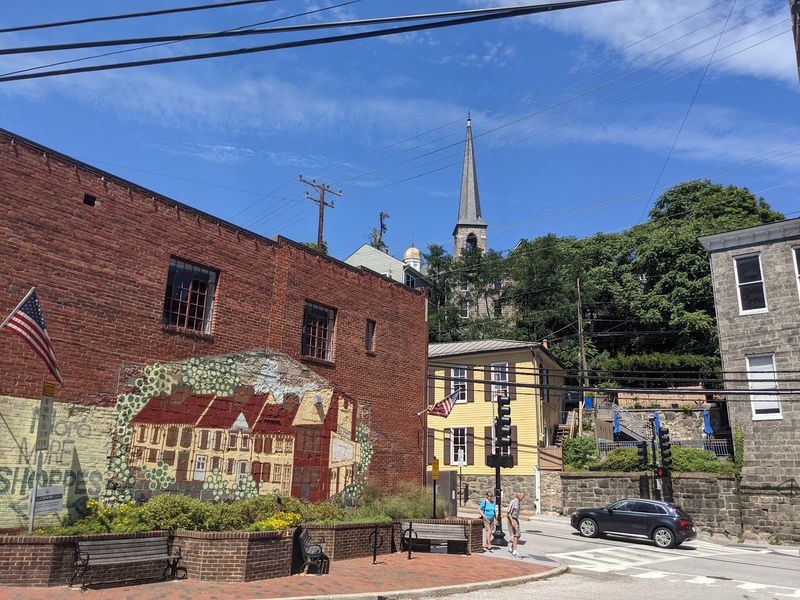
Few streets pack this much history into such a short climb. Ellicott City’s Main Street connects a 1770s mill story, an early American railroad, and a stubborn spirit of rebuilding in one walkable stretch.
The antique shops are the headline act. Their stacked storefronts and multi-level rooms make browsing feel like exploring a layered museum where everything happens to be for sale.
The supporting cast is strong, too. The B&O station at the bottom, the granite buildings along the grade, and the state park trails nearby round out a full day.
This is not a place for rushing. It works best for people who enjoy poking around, asking questions, and leaving room for surprises.
The town’s population may place it among the largest communities of its type in the country. Its historic core, however, still runs at the pace of a small river settlement.
That mix of big numbers and old-town scale is part of the appeal. Few places offer both a modern suburb and a centuries-old shopping street under one name.
So pack sensible shoes, a flexible budget, and a bit of curiosity. The hill asks for effort, and the finds at the top tend to pay it back.
Enjoyed this story?
Add Fast Food Club as a preferred source to see more of our reporting on Google.