


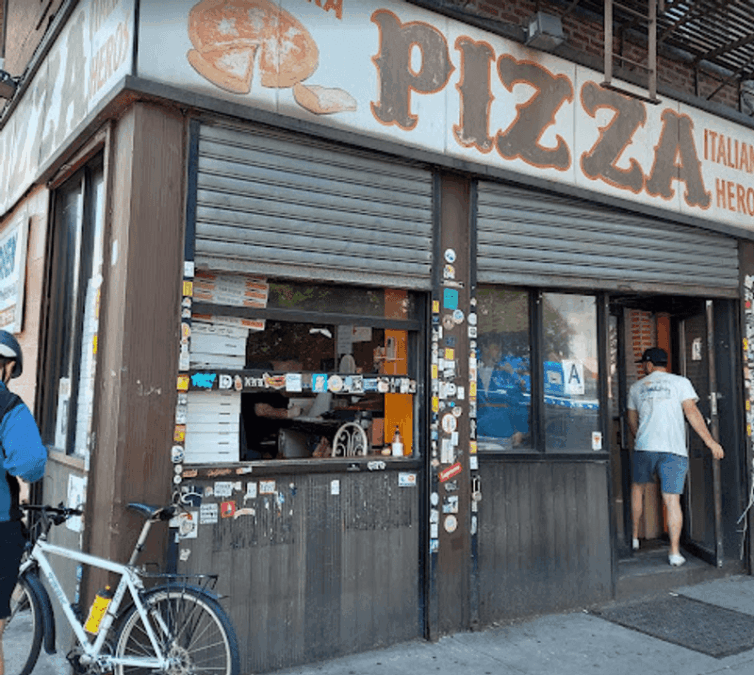
Some people in Brooklyn will stand in line for an hour just to eat one slice of pizza. They do it on Saturdays, they do it on weekdays, and many of them ride a train deep into the borough to get there.
That sounds a little wild for a food you can find on almost every corner in New York City. Yet one small shop in Midwood has been drawing these lines for decades, and the crowds keep coming back.
The place has no fancy dining room, very few seats, and plenty of fluorescent light. So what makes the wait worth it?
The answer involves a family legacy that began in the 1960s, a pair of scissors, a bunch of fresh basil, and a slice style that fans say they cannot find anywhere else. Here is the full story, plus the practical tips you need before you join the line.
A Storefront on Avenue J
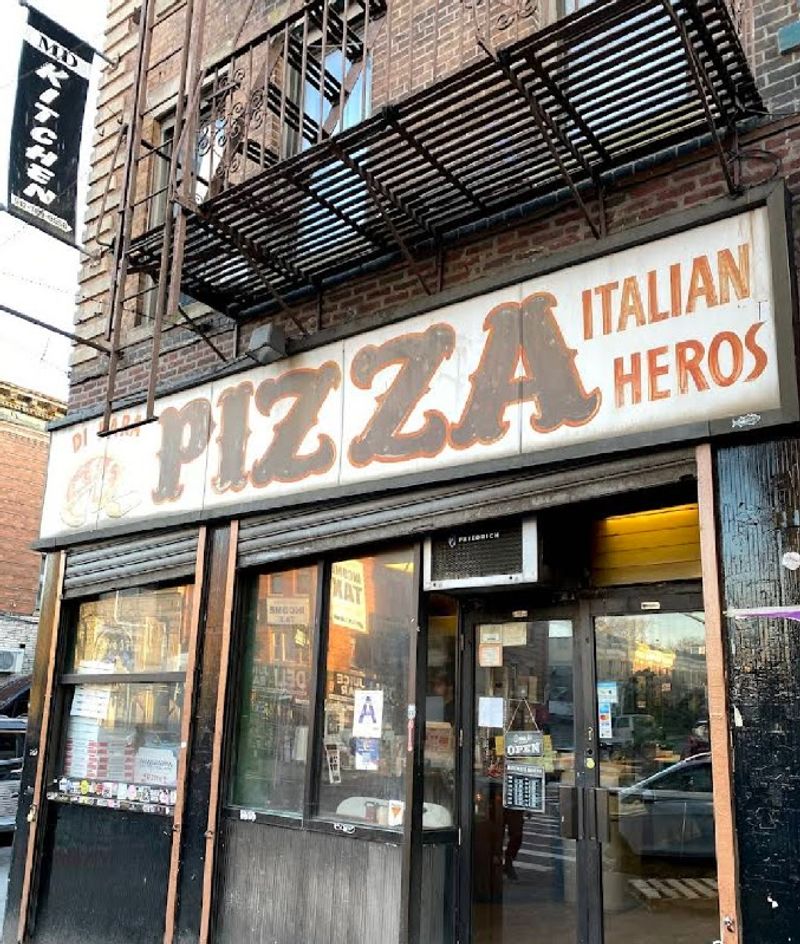
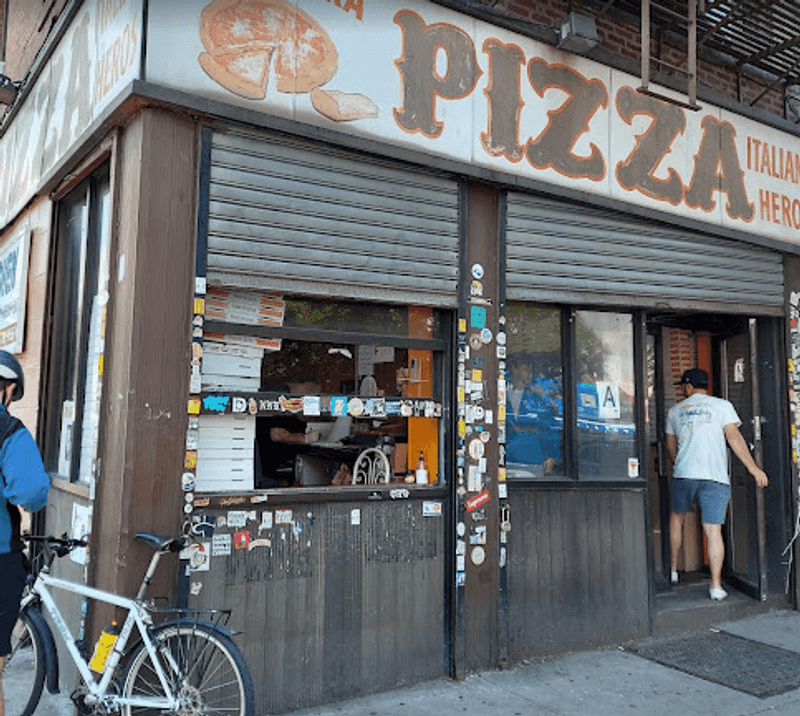
Every legend needs a home base, and this one sits on a busy stretch of Midwood. Di Fara Pizza is found at 1424 Avenue J, Brooklyn, NY 11230, in New York, United States.
The shop is a pizza restaurant in the plainest sense of the word. It is a small storefront with a counter, a few seats, and a reputation far larger than its square footage.
Midwood is not a neighborhood that most tourists stumble into by accident. It sits deep in southern Brooklyn, away from the bridges and skyline views that fill travel brochures.
That location is part of the appeal. People who show up here usually planned the trip on purpose, and many arrive with a list of what to order already in mind.
The shop has been described as a revered pizzeria dating back to around 1964. Pizza fans trek to this storefront and queue up for its storied slices.
Over the years, it has appeared on television many times and often lands near the top of lists of the best slices in the New York metro area. Thousands of people have shared their opinions online, and the place holds a 4.2 out of 5 average across more than 4,700 of them.
Not bad for a corner spot that never bothered to dress up.
The Man Behind the Oven
Long before the lines, there was one man and his oven. Domenico DeMarco, known to everyone as Dom, built this pizzeria in the mid-1960s.
For decades, he made the pies himself. That hands-on habit turned him into a true New York City pizza legend and helped put a quiet Midwood block on the national map.
His name still comes up constantly when people talk about the shop. Many longtime fans connect their love of the place to the memory of watching him work behind the counter.
Dom has since passed on, and his absence was felt deeply in the neighborhood and among pizza lovers around the world. Some people even stopped visiting, convinced the pizza could never be the same.
Those who returned often tell a different story. Regulars who have been coming since the early 2000s say the slices still hold up and that newcomers may be surprised.
History matters here in a way it rarely does at a regular slice joint. When customers wait in line, they are partly waiting to taste a piece of Brooklyn lore.
The oven may have changed hands, but the story it tells has not changed its script.
Keeping It in the Family
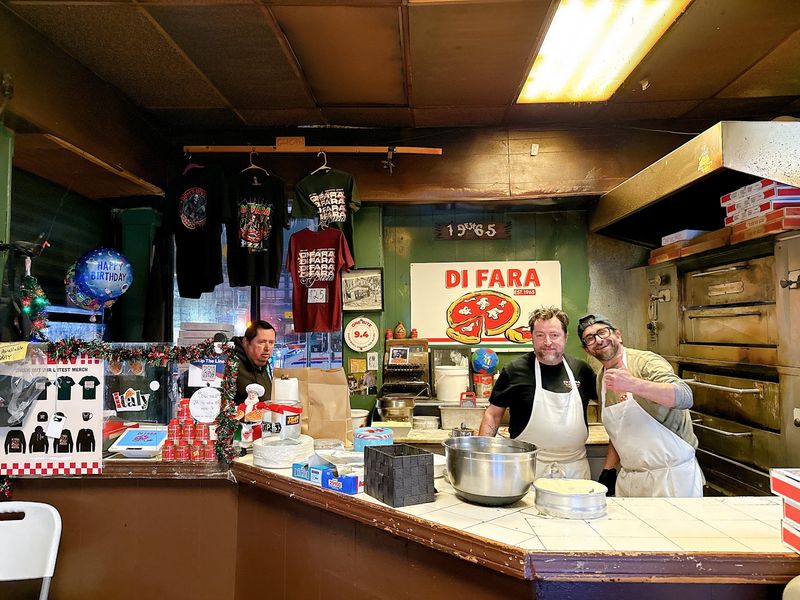
Recipes can be written down, but character is harder to pass along. Dom’s children now run the pizzeria, and they have taken on both jobs.
The family has shared publicly that they hope to keep the same integrity their dad had, in both the recipe and the way he treated people. That goal shows up in how closely they guard the original style.
Longtime customers notice the effort. Several say the square pie remains excellent, even if they cannot swear it is made exactly the way Dom did it years ago.
The staff also gets warm marks for attitude. The crew behind the counter is often described as friendly and happy to chat, and employees seem close to one another.
That sense of a tight group caring about the store comes through again and again. It feels less like a chain operation and more like a family kitchen that happens to have a line out front.
The owners even reply to many online comments with short notes of thanks. It is a small gesture, but it fits the personality of the place.
Legacy, it turns out, is best served by people who treat it like family property.
The Famous Line Explained
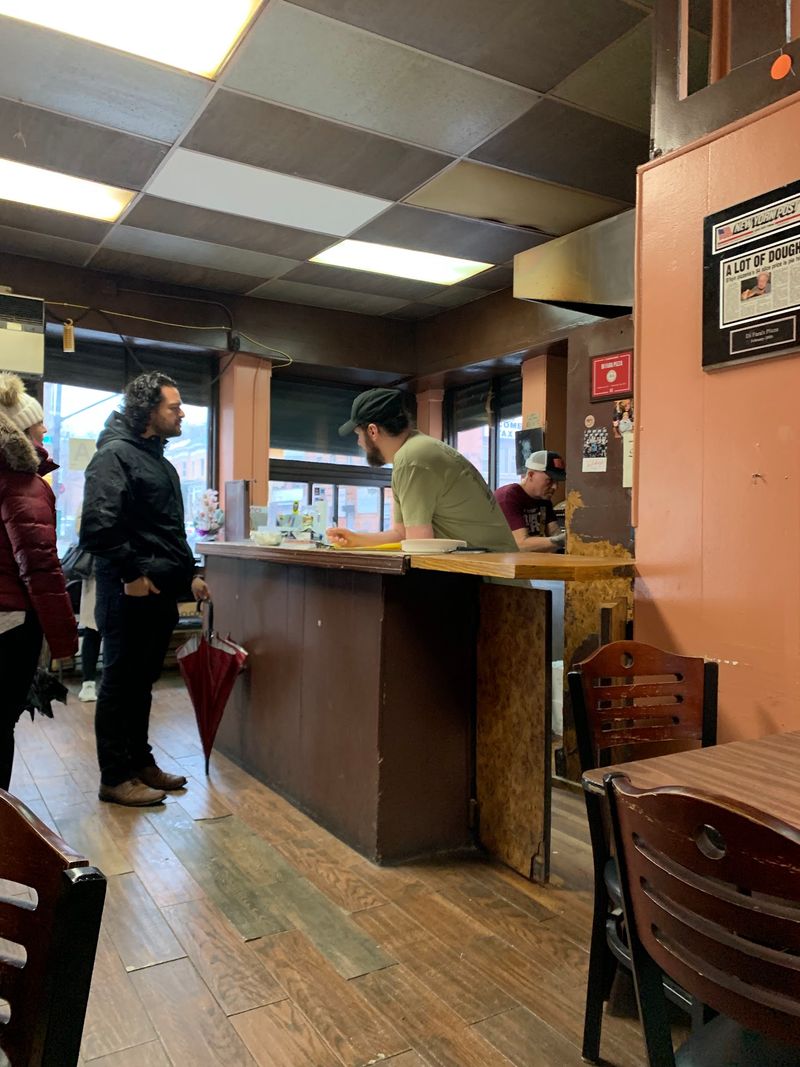
Ask almost anyone about this pizzeria and the first topic is not the cheese. It is the wait.
Wait time is the single most discussed subject connected to the shop, coming up in more than 230 online comments. That says a lot about how central the line has become to the experience.
On a Saturday, the line can stretch back toward the door, and an hour of standing is not unusual. Some people admit the wait feels longer than reasonable for pizza, then stay put anyway.
Why? Part of it is trust.
Many people join the line because friends, family, and pizza fans they respect told them to.
The anticipation also builds as the minutes pass. By the time an order number gets called, many guests are more than ready to eat.
Whole pies take time because they are made fresh. One white pie ordered around 7 PM took about 30 minutes, while other groups waited closer to 15 or 20 minutes for a full pizza.
The line, in other words, is not a bug in the system. For many people, it is the opening act of the meal.
Scissors, Basil, and a Finishing Ritual
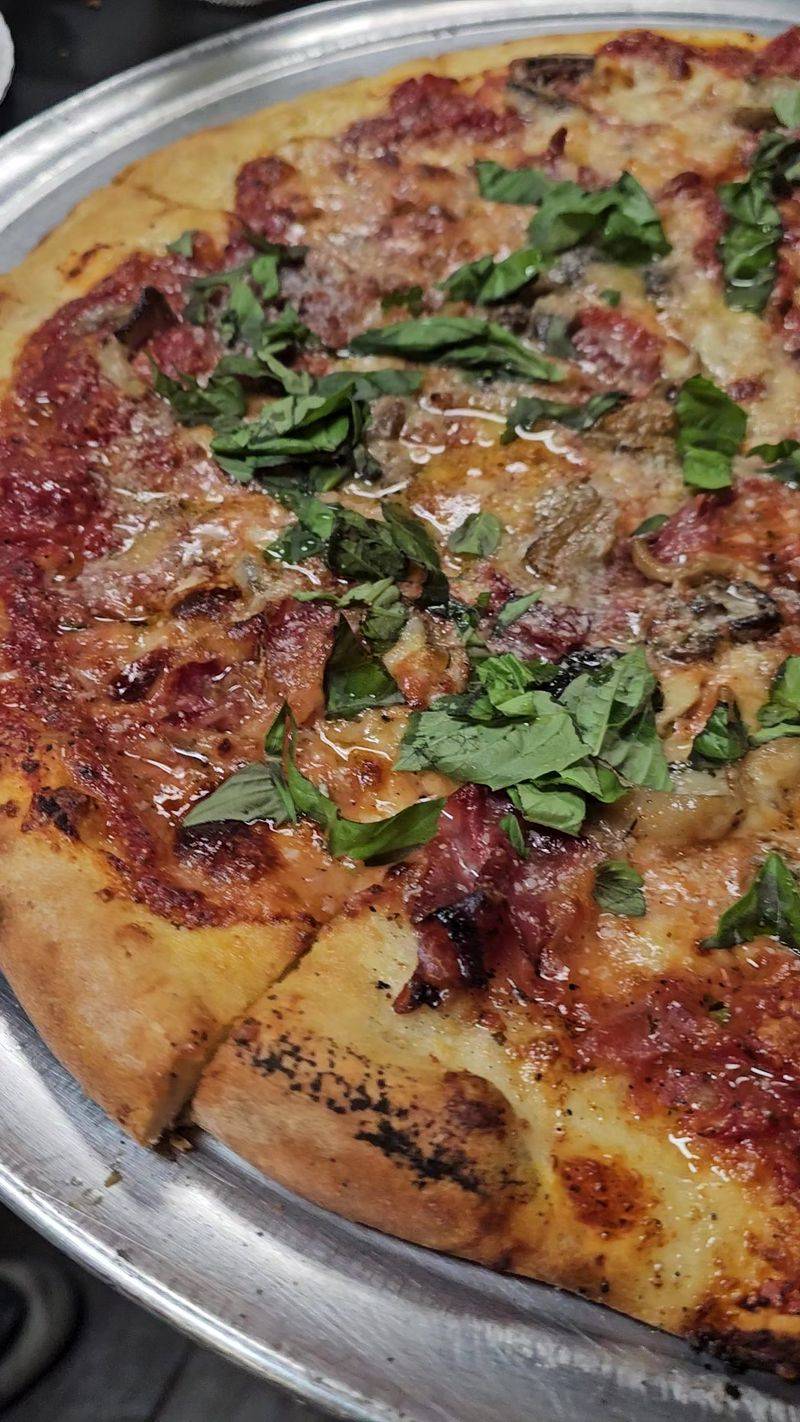
Few pizza shops in New York finish a pie with kitchen scissors. Here, it is a signature move.
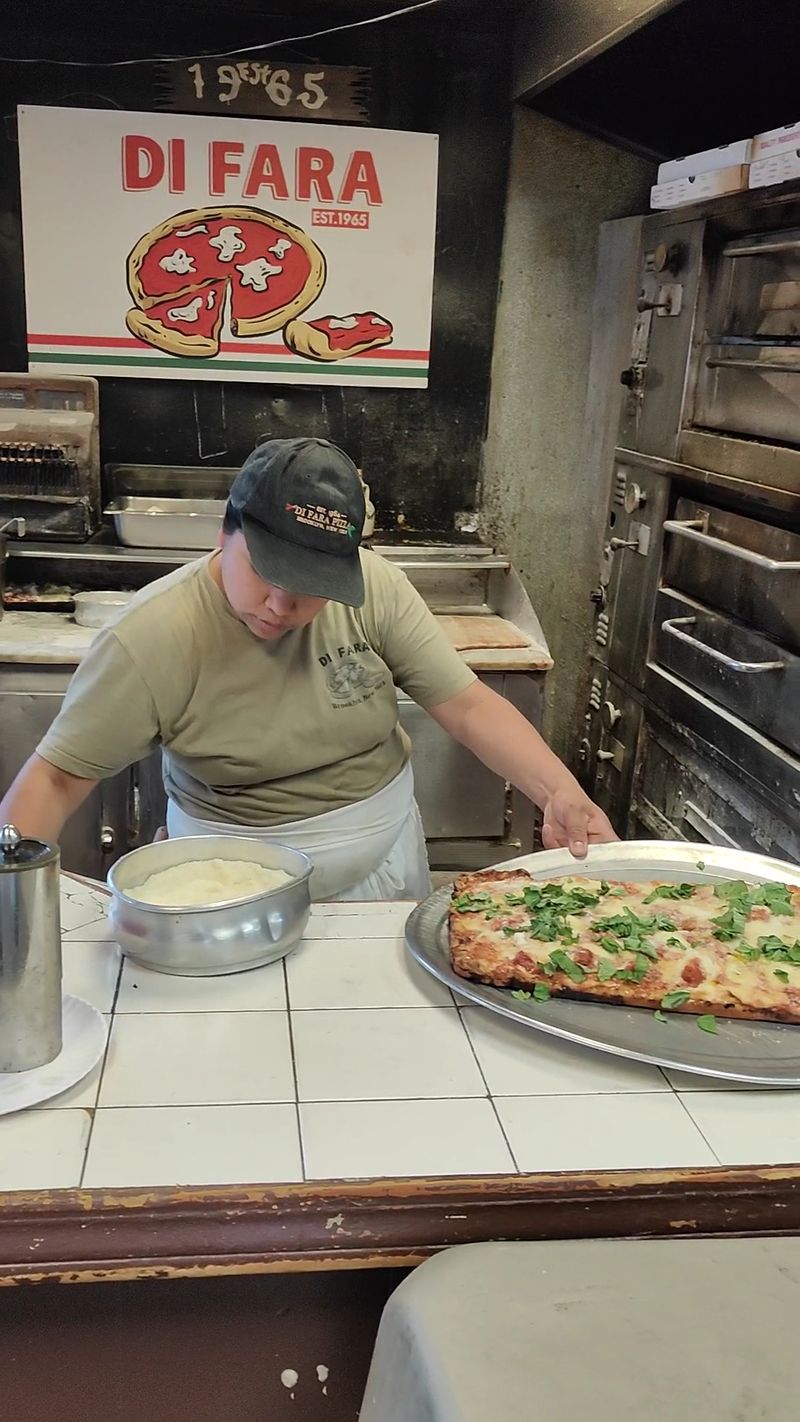
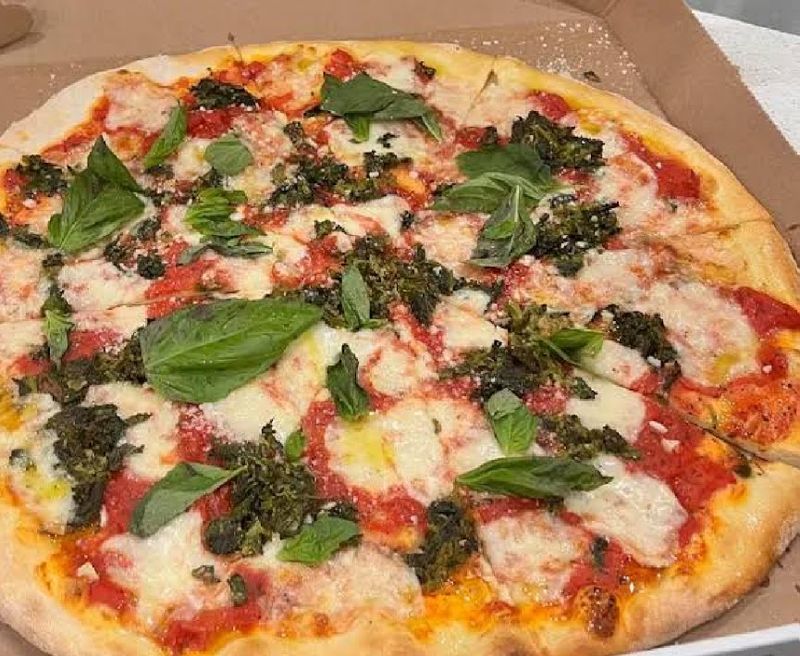
Fresh basil gets cut over the pizza right before it goes out. The basil is clipped by hand with scissors, a small step that many guests remember long after they leave.
It is no surprise that fresh basil ranks among the most mentioned details tied to the shop. Nearly 50 online comments bring it up.
The basil is part of a larger finishing routine. The regular slice is often topped with parmesan along with the basil, and a drizzle of oil goes on top.
Even people who usually skip oily pizza say the oil works well here. It adds to the overall balance rather than taking over.
Watching the final touches happen is part of the fun. It turns a quick counter order into a bit of a show, and the people in line tend to pay attention.
Small ritual, big reputation.
The Regular Slice Everyone Talks About
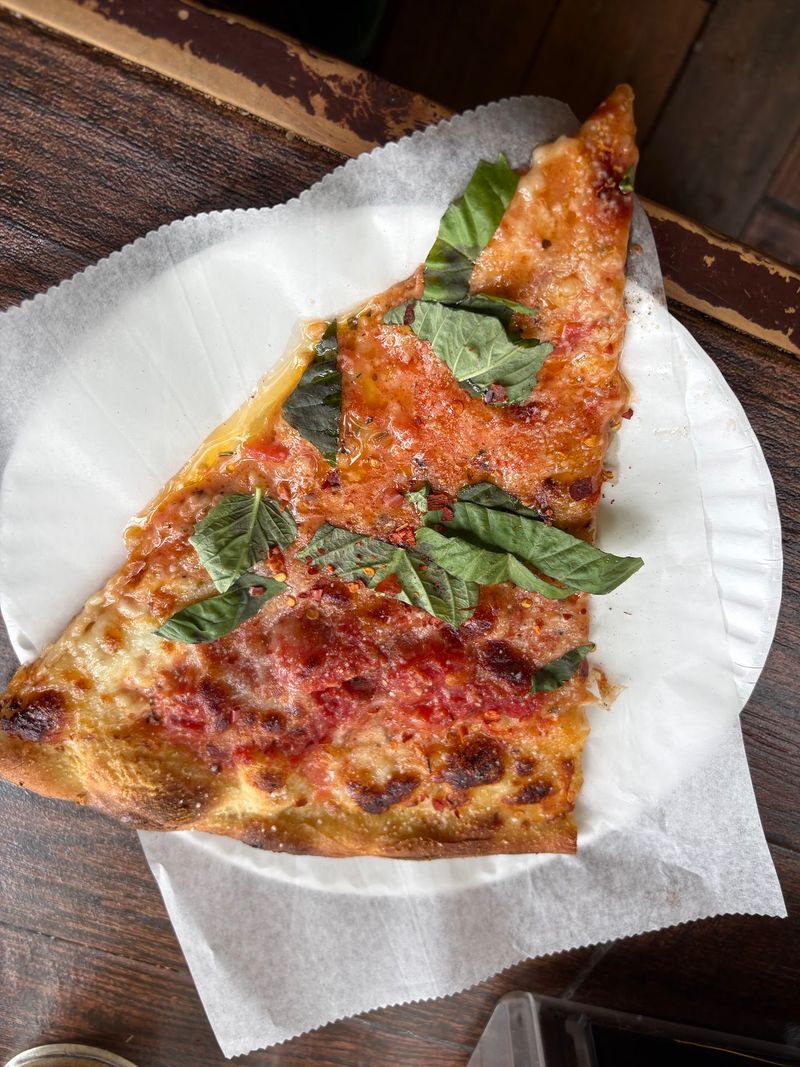
Start with the plain slice. That advice comes up so often that it might as well be printed on the door.
The regular slice is basically a margherita style slice with parmesan and fresh basil. Its sauce is a crushed, slightly chunky tomato sauce spread alongside the cheese rather than fully underneath it.
That uneven layout means every bite is a little different. In some spots the cheese meets the dough directly, and in others the sauce takes the lead.
The sauce gets particular praise for being bright and direct, without leaning sweet. Some fans call it the best sauce they have ever had.
The crust is a bit thicker than some people expect, with a little flop. Others describe it as crispy and chewy at the same time, with some charring around the edges.
Opinions are not unanimous. A few people find it overhyped, floppy, or overcooked, and burnt pizza comes up in around 20 comments.
Still, more than 100 comments focus on pizza quality, and plenty of guests rank this slice among the best of their lives. The only way to settle the debate is to grab one and decide for yourself.
Squares Worth Squaring Up For
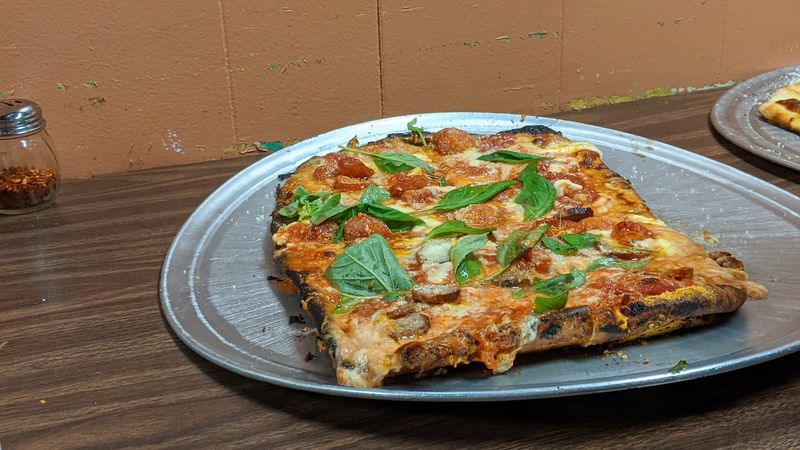
Round slices get the headlines, but the square slice quietly steals plenty of attention. It is the most mentioned menu item tied to the shop, with more than 70 comments pointing to it.
The square is the Sicilian style option. It is thicker and richer than the regular slice, with a crisp bottom sturdy enough to support everything piled on top.
Some guests who usually avoid Sicilian pizza make an exception here. One longtime regular calls the squares a personal favorite despite generally skipping that style.
Fair warning, though. The square is heavier and not the easiest thing to eat standing up, so a seat or a sturdy plate helps.
It also costs a little more than a regular slice. Those who order it fresh say it is very good, and some prefer it over the round version.
A smart move for first timers is to get one of each. That way, nobody in the group has to argue about which style wins.
Squares, it seems, are anything but square in this neighborhood.
Beyond the Plain: Pepperoni and the White Pie
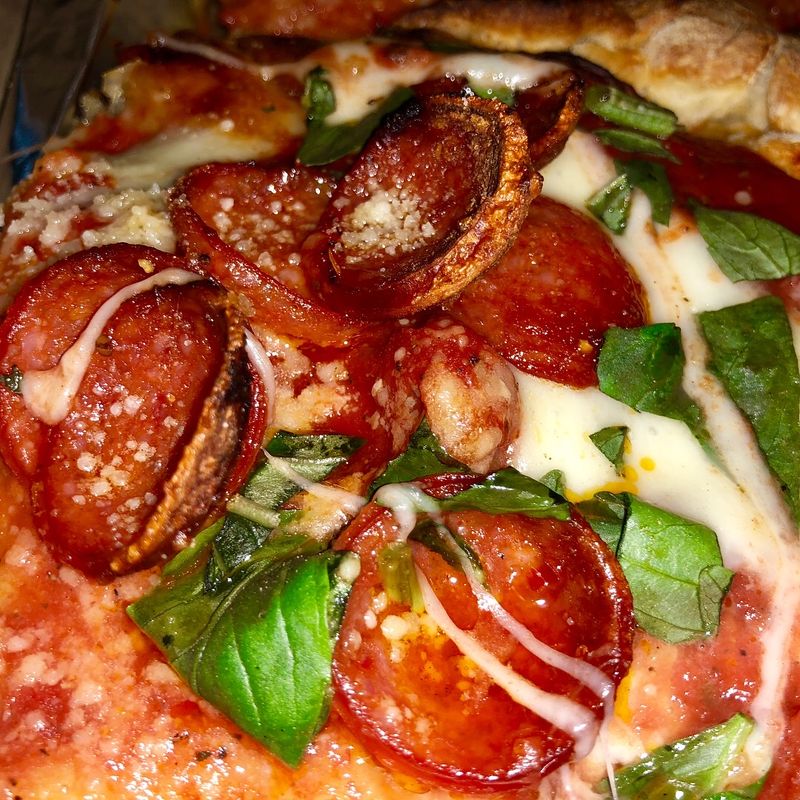
Once the classic slice is checked off, the menu has a couple of lesser-known paths worth exploring. Pepperoni is the first detour many people take.
The pepperoni cups and curls at the edges as it bakes, crisping slightly in the oven. Fans pair it with the tangy sauce and fresh basil and call it hard to beat.
Then there is the white pie, which the family itself calls a bit of a hidden secret. It skips the tomato sauce entirely.
Instead, it is built with mozzarella, ricotta, parmesan, olive oil, and fresh basil on a thin crust. The owners note that the ricotta they use is not the average kind.
Even people who normally avoid ricotta on pizza have come away impressed. One guest who found the regular slice only average said the white pie was much better.
Whole pies are made fresh from scratch, so expect to wait a bit longer for one. Ordering a slice to enjoy while the pie bakes is a common strategy.
The secret menu is not really secret, but it is easy to miss if you never look past the plain slice.
Fluorescent Lights and Old Brooklyn Charm
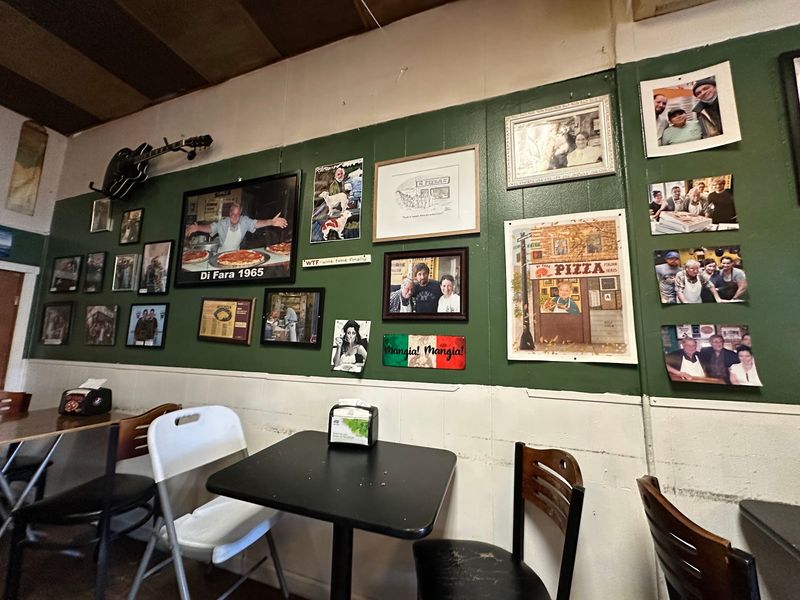
Nobody comes here for the decor, and that is exactly the point. The space is tight, simple, and makes no attempt to be anything fancier than a working pizzeria.
Inside, there are fluorescent lights, a counter, and the line. The interior is often called dated and unassuming for such a famous name.
Many guests love that. The look feels honest and full of nostalgia, the kind of room that has not changed much while the city outside kept shifting.
One wall detail gets frequent shout-outs, a painting of Tony Soprano. It fits right in with the old-school New York mood.
The crowd adds to the character too. Groups of longtime Italian-American New Yorkers drop in alongside first-time pizza tourists, and the mix feels genuinely local.
The overall vibe is old New York energy and tradition. People leave feeling they went somewhere specific and intentional, not just somewhere convenient.
In a city full of polished new pizzerias, plain can be its own kind of statement.
Where to Sit, If You Can
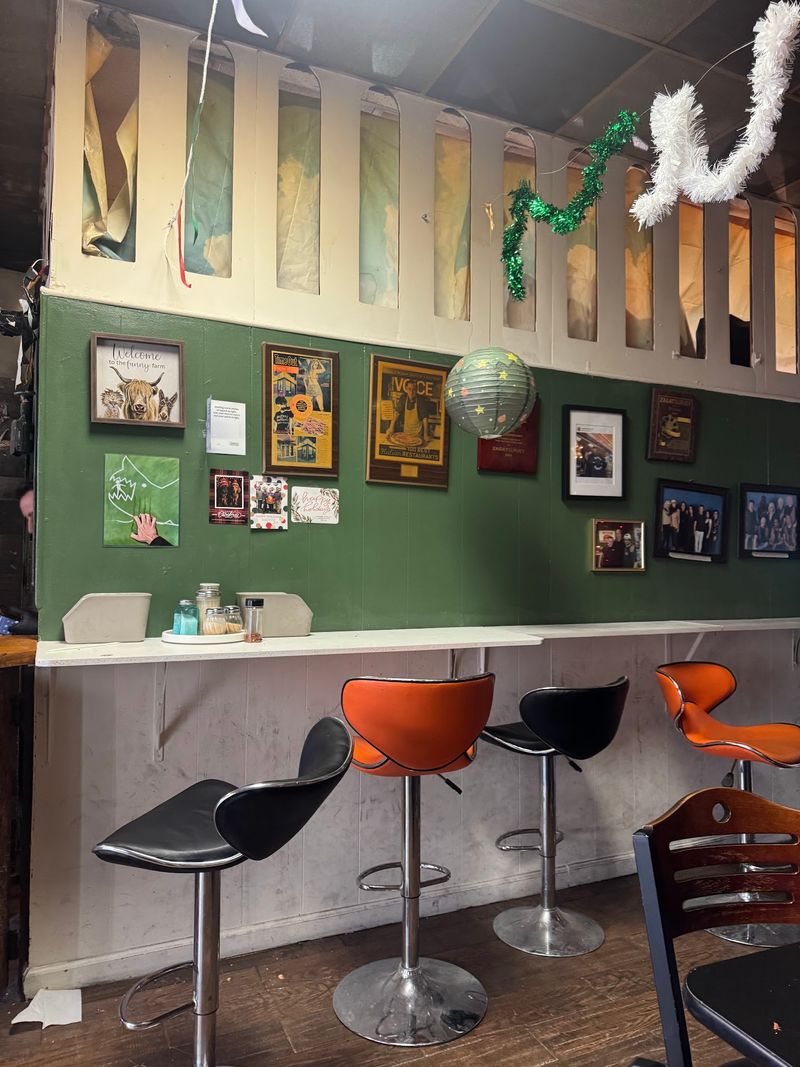
Seats here are a hot commodity, sometimes more competitive than a spot in line. Limited seating comes up again and again.
The interior has very little room for sitting. A lucky few grab a spot by the window, and those who do tend to mention it like they won a small prize.
Outside, there is a three-person bench and a table. On a nice day, it is pleasant to wait out there and snag the table when it opens up.
The outdoor setup is basic, with tables and chairs that do the job. Nobody expects patio luxury, and nobody seems to mind.
There is also a window out front where staff can hand orders straight to customers. It helps keep things moving when the inside gets crowded.
Groups should plan to be flexible. Eating standing up, sitting outside, or taking pizza to go are all realistic options.
Think of seating as a bonus round rather than a guarantee.
Cash, Costs, and a Few Surprises
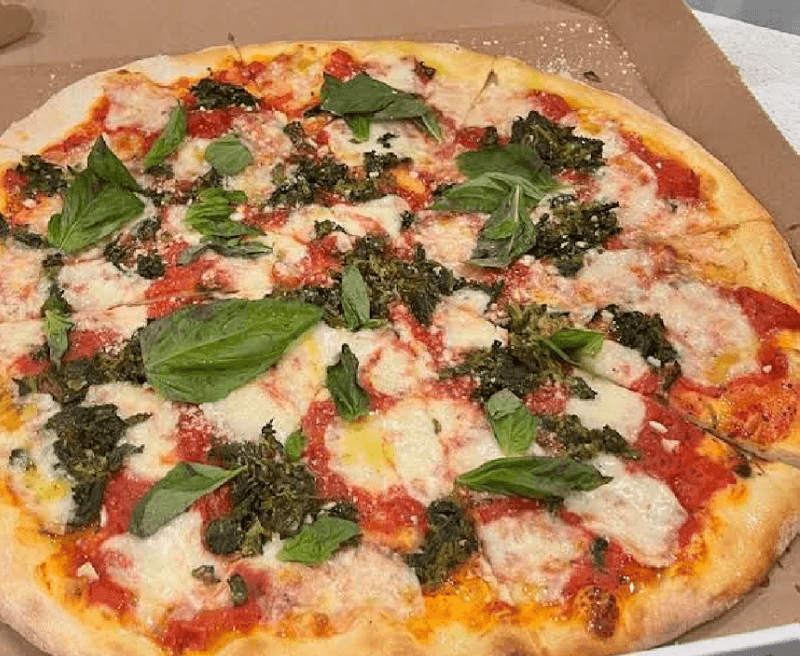
Bring cash. The shop is known as a cash-only operation, so a quick ATM stop before arriving can save some stress.
A regular slice has been listed at around five dollars, with some guests reporting six dollars. Prices may vary, and the squares cost a little more.
Opinions on value are split. Some call it expensive for a slice, while others say it is fair compared with ordinary pizzerias charging similar money for far less character.
Many simply shrug and point to New York prices. For a slice that people say they cannot find anywhere else, plenty of fans feel the cost is reasonable.
Frozen pizzas carrying the name are also out there. At least one buyer was very unhappy with the frozen version, so the fresh experience at the shop seems to be the safer bet.
Whole pies are an option for groups, and sharing one can make the visit easier on the wallet per person. Ask about current prices at the counter, since they can change.
A little planning keeps the wallet as happy as the stomach.
Hours, Timing, and the Q Train Route
Timing can shave real minutes off the wait. The shop typically opens at noon every day.
Closing time is usually 8 PM Tuesday through Sunday. Mondays tend to wrap up earlier, at 6 PM, and hours may vary, so checking the official website before heading out is wise.
The best trick for a shorter line is arriving right at opening. One group that showed up at noon waited only about 20 minutes for a whole pie.
Weekends, especially Saturdays, draw the biggest crowds. A weekday lunch is usually a calmer bet.
Getting there by subway is straightforward. The Q train runs to Avenue J, which puts riders close to the shop.
Just know this is not near the usual tourist stops. The trip itself is a commitment, and many people pair it with a larger Brooklyn pizza tour.
Some groups even make this the first stop on a day of slice hopping. Leave room, because the next spots have a tough act to follow.
So, Is the Wait Worth It
After all the standing, ordering, and debating, the big question remains. Does one slice justify an hour in line?
For many people, the answer is yes. Some call it the best pizza of their lives, and others who have been coming since childhood say it is still as good as they remember.
Not everyone agrees, and that is fine. A handful of guests find it overhyped or prefer newer pizzerias around the city.
Even some skeptics admit the place is worth trying if you are in the area. Its history, family story, and one-of-a-kind slice make it more than just a meal.
The shop suits pizza fans who enjoy tradition, people curious about Brooklyn history, and groups touring the borough one slice at a time. It may not suit anyone in a hurry or looking for a comfy dining room.
The smart plan is simple. Arrive early, bring cash, order a plain slice and a square, and let the line be part of the adventure.
In the end, Midwood answers the big question with a slice, a pair of scissors, and decades of stubborn tradition.
Enjoyed this story?
Add Fast Food Club as a preferred source to see more of our reporting on Google.