


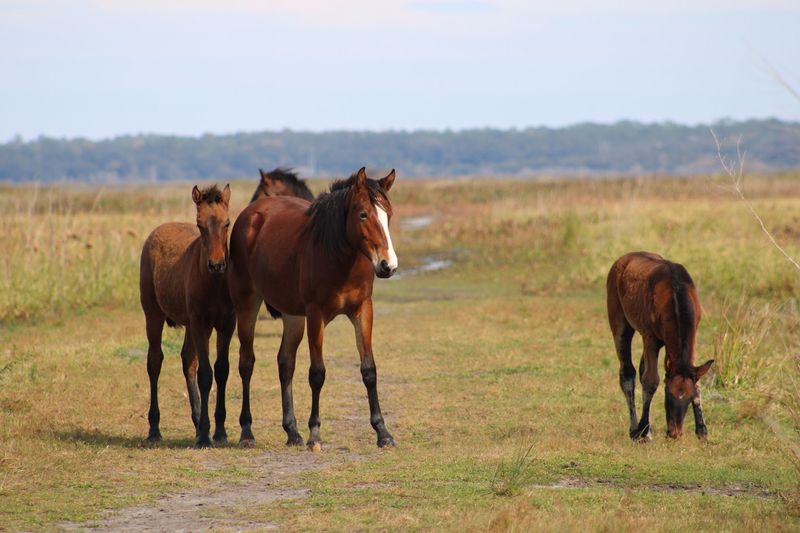
A herd of wild horses, a colt tucked among them, can wander across a trail in North Central Florida while the path ahead sits nearly empty. That scene is not a movie set or a ranch tour.
It plays out on a sprawling public preserve just south of Gainesville, where bison roam too and dozens of alligators gather near a single boardwalk. Most people speed past on I-75 without knowing any of it exists.
The few who pull off find a wide-open prairie, an observation tower, a busy visitor center, and trails that stretch for miles. This guide covers where the horses tend to show up, which trail leads to the gator crowd, how much it costs to get in, and why a good pair of binoculars might be the smartest thing to pack.
Keep reading, because the prairie holds more surprises than first glance suggests.
A Prairie Hiding in Plain Sight
Few state parks sit this close to a major interstate and still manage to feel so far from everything. Paynes Prairie Preserve State Park is located at 100 Savannah Blvd, Micanopy, FL 32667, in the United States, with Gainesville on one side and the small town of Micanopy on the other.
The park is officially described as a nature preserve and a national landmark. It covers roughly 22,000 acres of wildlife habitat, with trails built for hiking, horseback riding, and bicycling.
That size matters. The preserve is so large that it is split into several sections, each with its own entry point, parking, and personality.
Travelers heading to Georgia or back toward Southwest Florida often use it as a reliable stop, since it sits not too far from I-75. Some people pull in just to stretch their legs and end up staying for hours.
The appeal is easy to explain. In one park, a person can spot wild horses, bison, alligators, deer, and a long list of birds, all without leaving Alachua County.
So what makes a herd of horses choose this particular patch of Florida as home? The answer starts with the land itself.
Florida the Way It Used to Look
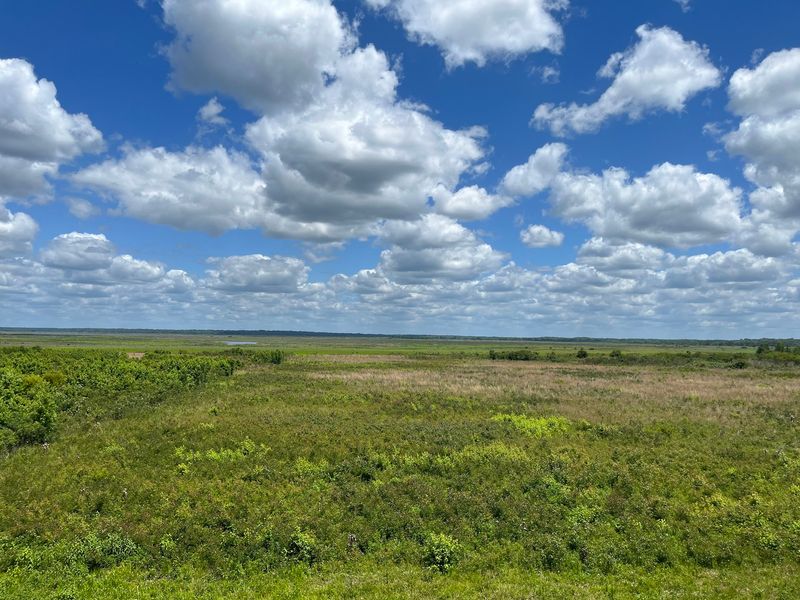
Forget the theme parks and the beach towels for a moment. This corner of Florida offers something rarer: a landscape that feels wide open and largely untouched.
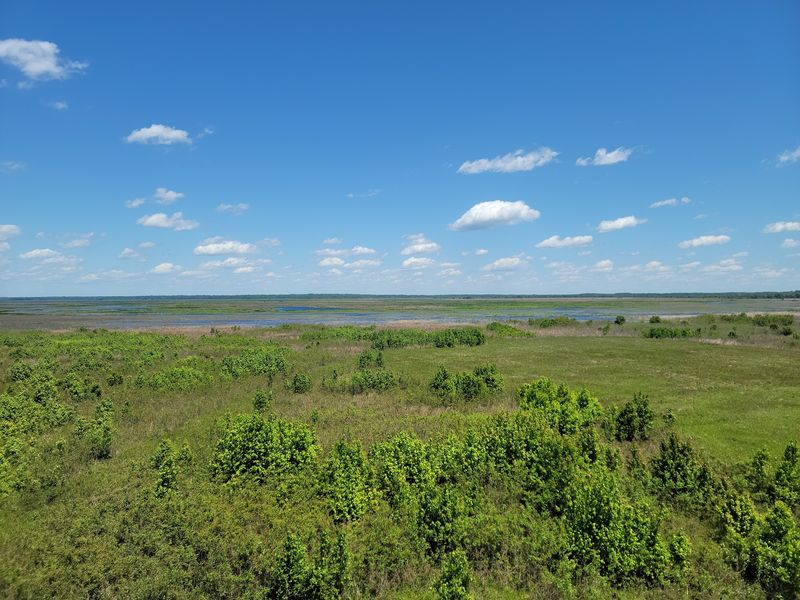
The prairie itself behaves a bit like a marsh, and it has been called a huge aquarium for Alachua County. Water levels rise and fall with the seasons, which changes how the whole place looks and functions.
During the dry season, wildlife sightings can be thinner. When the rainy season returns, the prairie comes back to life and the animals tend to follow.
Low water has its own perks, though. When levels drop, alligators often crowd into tighter spots, which can make them easier to find.
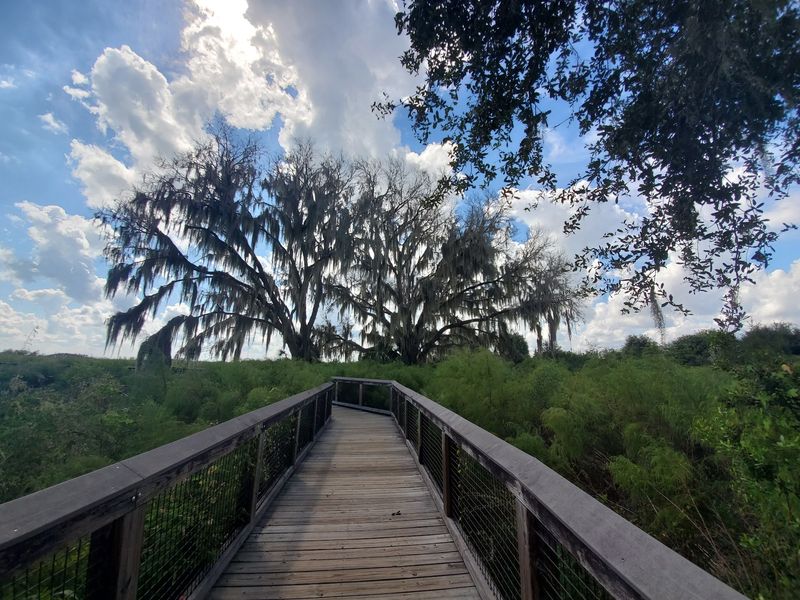
The terrain counts among the most unusual habitats in the state. Woods give way to clearings, and clearings open onto a flat expanse that runs to the horizon.
There is one modern intrusion worth knowing about. From certain viewpoints, the interstate and a few buildings show up in the distance, a reminder that civilization is never far away.
Still, the overall effect is a trip back in time in the heart of Florida, with plenty of room for the residents to roam.
The Spanish Horses of the Prairie
Horses are the headline act here, and they know how to keep an audience waiting. Wild horses come up more than almost any other topic when people talk about this park.
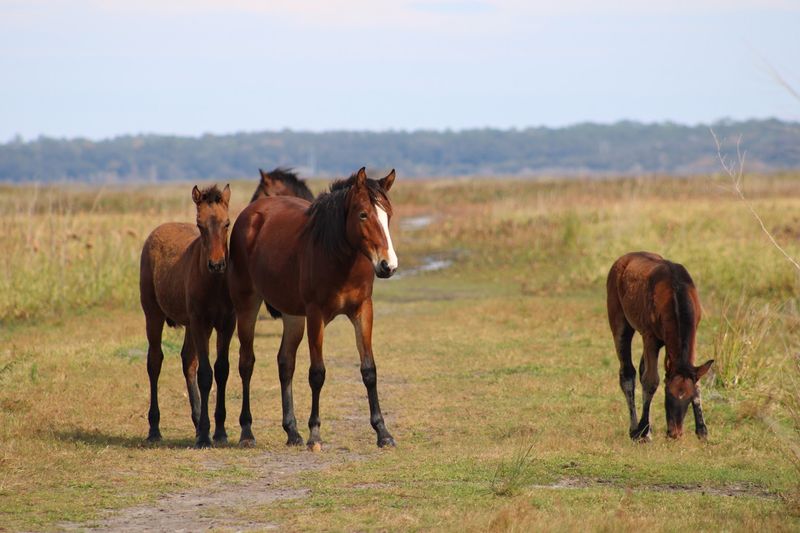
The herd is often described as wild Spanish ponies or Spanish horses. They graze, wander, and drink across the open prairie as if the trails were built for their convenience rather than ours.
Sightings vary a lot. Some people count around a dozen over a three-day stay, while others spot at least 15 horses gathered for a drink near the road.
Young ones appear too. A colt traveling with a spread-out herd is the kind of moment that turns a casual walk into the story of the trip.
Distance is the usual setup. Many sightings happen far across the prairie, which is why binoculars are strongly recommended.
Occasionally, luck swings the other way and the horses end up close by, sometimes right along the trail. One camper even walked through a herd on a previous visit.
Patience is the price of admission for this part of the show. The horses keep their own schedule, and nobody has managed to hand them a timetable yet.
Bolen Bluff and Its Quiet Encounters
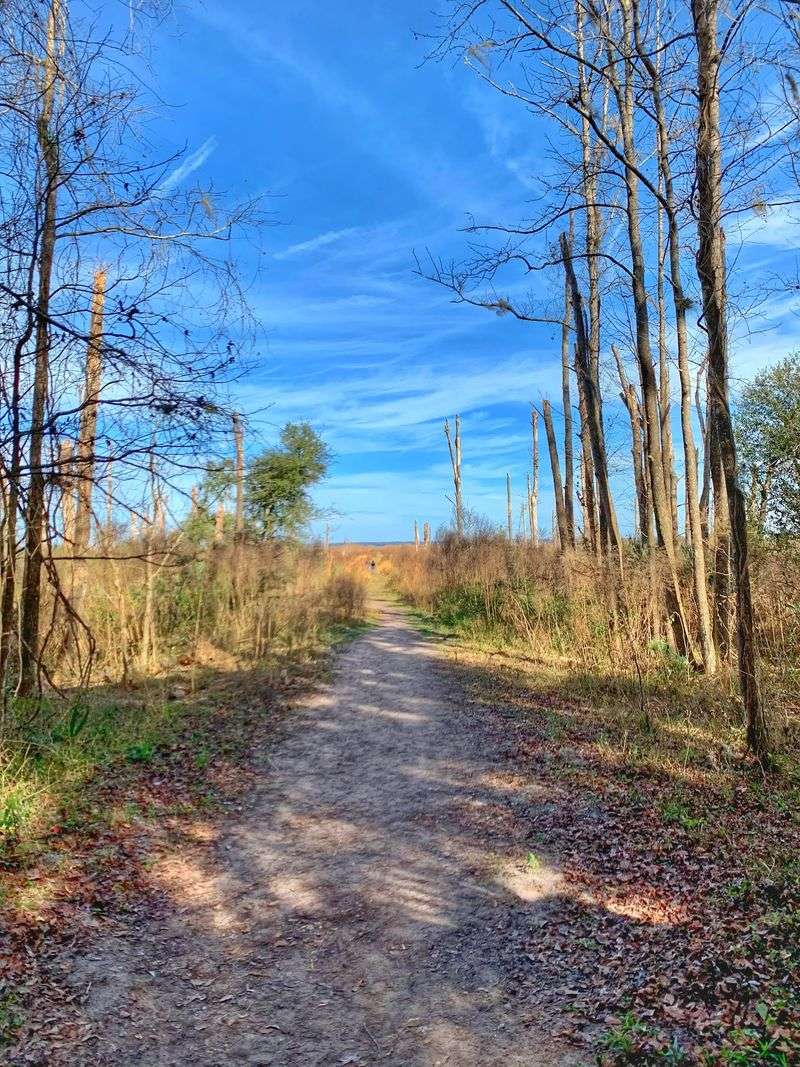
Some trails earn a reputation for views. The Bolen Trail has earned one for company of the four-legged kind.
Herds of wild horses have been spotted spread out along this route, colt included. For many, it ranks as the most memorable place to see the animals living in their actual habitat.
The trail also connects easily to the campground experience. Campers often head out for hikes inside the park and then step outside to explore Bolen as well.
Part of the charm is the calm. On a quiet day, the path can feel almost private, which makes a sudden horse sighting feel even more personal.
Walking out onto the open prairie, right where horses were roaming minutes earlier, adds another layer to the experience. The line between trail and habitat gets pleasantly blurry.
A few ground rules help. Give the animals plenty of room, keep voices low, and let them decide how close the encounter gets.
Nothing about this trail is guaranteed, and that uncertainty is exactly what keeps people coming back with a little more hope each time.
Bison on the Horizon
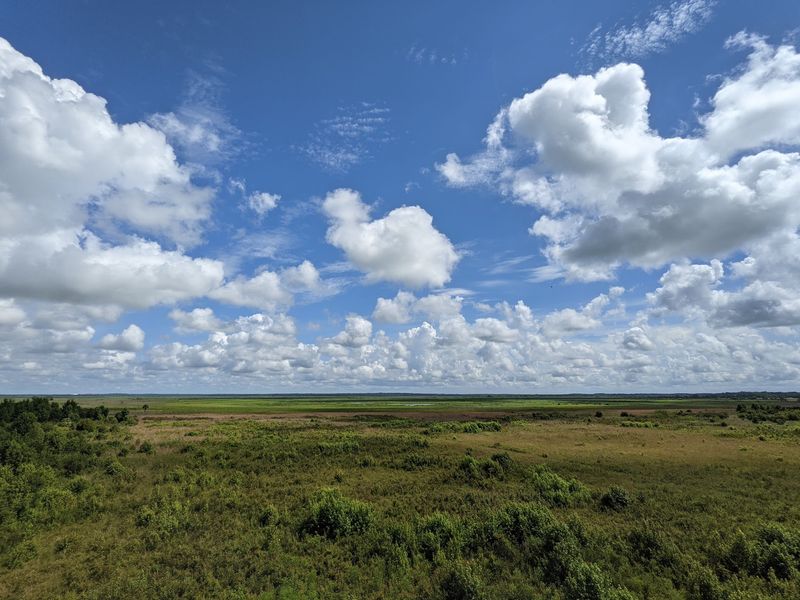
Bison in Florida sounds like a trivia question with a trick answer. At this preserve, it is simply true.
The bison herd draws the most mentions of any topic tied to the park. That popularity comes with a catch, since the herd can be famously hard to locate.
Plenty of people leave having seen horses but no bison. Others make several visits and are still hoping for that first glimpse of the buffalo.
When the herd does appear, it is often from afar. Some lucky spotters have only managed to see them clearly through a phone camera zoom.
One location keeps coming up as a strong bet. The Ecopassage Observation Boardwalk, right off US Highway 441, is considered among the best places to spot them.
The prairie platform at the end of the longer trails offers another chance. Horses and bison have both been seen from there on the same outing.
Bring patience, a decent pair of binoculars, and modest expectations. If the herd shows, consider it a bonus round worth bragging about.
Gator Gazing Along La Chua
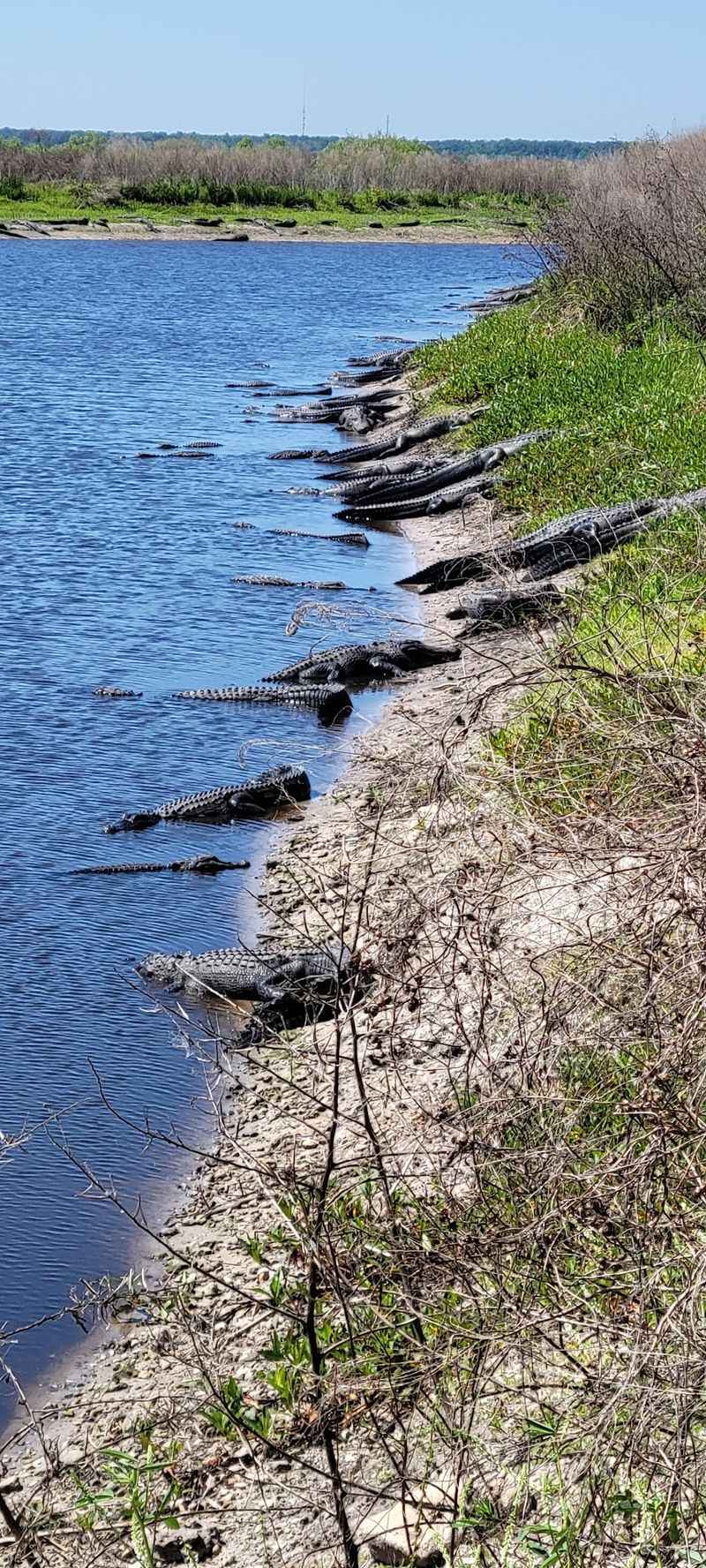
Over 50 alligators in one spot. That headcount has been reported more than once along the boardwalk on the north side of the park.
The La Chua Trail leads to a large mud and water hole where gators gather in impressive numbers. An elevated boardwalk keeps everyone at a comfortable and safe viewing height.
Low water tends to concentrate the reptiles near the platform. That makes the dry stretches of the year surprisingly good for gator watching.
The action is not always sleepy, either. Disputes between gators have broken out right in view of the crowd.
The walk does not stop at the boardwalk. A short path beyond its end has proven rewarding for bird photography, and some striking trees line the way.
Given the local university’s famous mascot, the scene has a fitting quality. Gainesville’s team name suddenly makes a lot of sense.
Stay on the boardwalk, keep a respectful distance, and let the gators handle the drama.
Up the Observation Tower
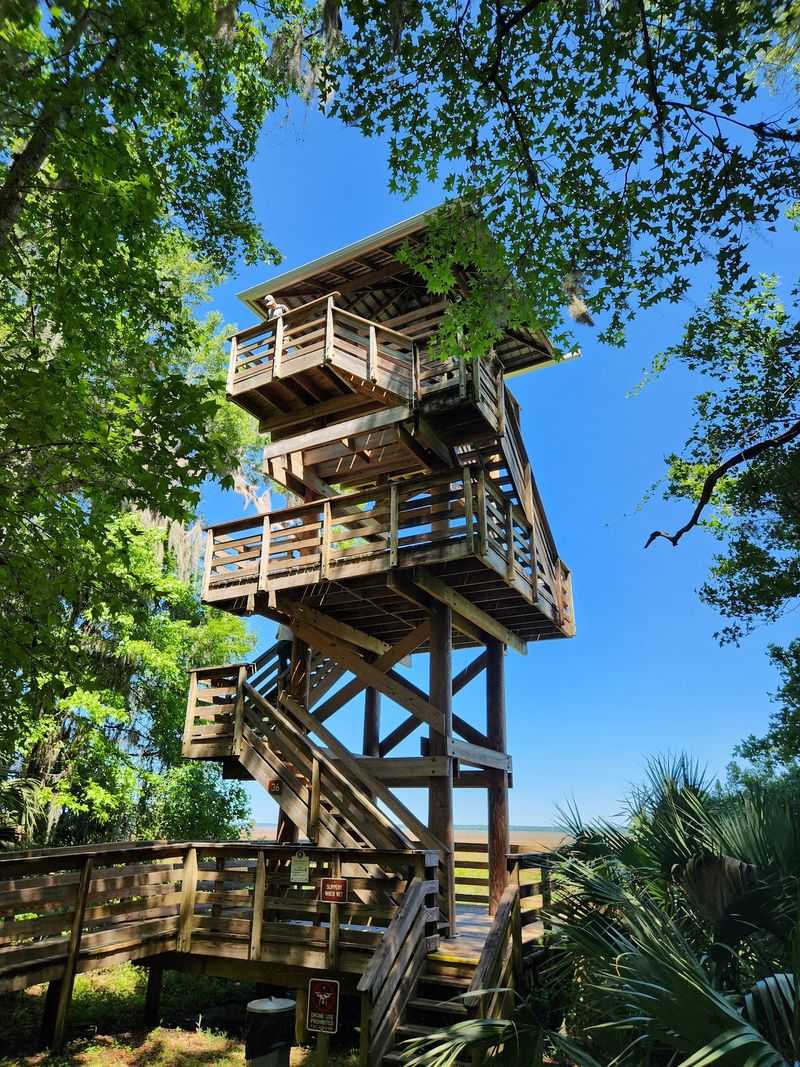
Height changes everything on a prairie this flat. The observation tower gives the clearest sense of just how big the preserve really is.
The structure is well built and overlooks the expansive prairie below. From the top, horses have been spotted grazing in the distance shortly after the climb.
It works well as an early stop. Scanning the land from above helps reveal where animals are gathering before heading down to the trails.
The tower is part of Trail 1, which forms a small loop from the visitor center out to the tower and back around. It is a manageable walk for most groups.
Getting there is half the fun. The drive in passes under tree branches arching across both sides of the road.
Keep an eye out on the approach, too. A huge eagle’s nest is visible along the way to the visitor center.
Binoculars matter even more up here, since most of the interesting movement happens far out across the grass. A clear morning paired with steady hands can turn a quick climb into the highlight of the day.
Trails Numbered for Explorers
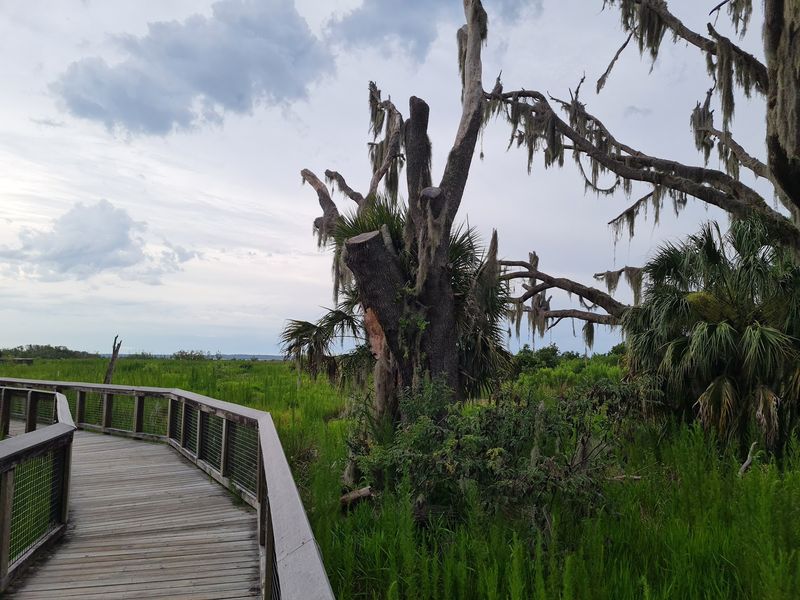
A park map turns into a treasure map here. Trails are numbered, and each one offers a slightly different reward.
Trail 5 has produced sightings of sandhill cranes and wild Spanish ponies. It is a strong pick for anyone chasing both birds and horses on one route.
Trail 7 is the long haul. It begins in the woods and stretches out into the prairie to a viewing platform rather than a tower.
Expect about 40 minutes each way. The first half winds through forest on a visible path, so watch for tree roots and animal droppings.
The second half opens into a clearing with the platform in sight. Along the edges, damage from wild hogs rooting through the ground is easy to spot.
Most trails are exposed to full sun, which makes cool or windy days ideal for longer hikes. Mornings, before the heat builds, tend to bring more wildlife activity.
Bring water, dress for the season, and pack sunscreen in summer. The prairie rewards those who come prepared and leaves the unprepared counting steps back to the car.
Beyond the Big Names
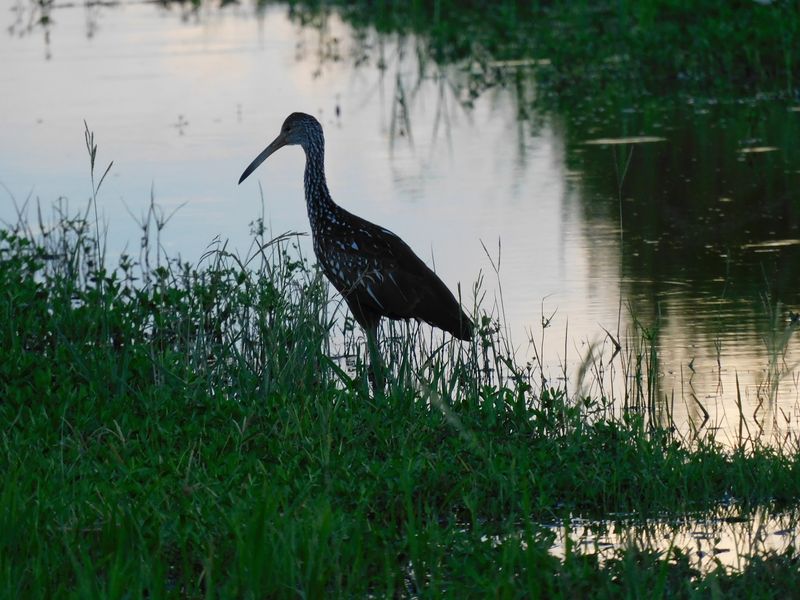
Horses, bison, and gators get the spotlight, but the supporting cast is huge. Deer show up in numbers too large to count over a few days.
Wild turkeys, armadillos, and snakes have all made appearances. Wild pigs root around in parts of the prairie, while eagles and sandhill cranes cover the skies.
Armadillos are especially active after dark. Campers hearing heavy rustling at night are likely listening to one of these busy diggers on patrol.
Birdwatchers have plenty to work with. The prairie supports a wide variety of species, and the edges of the boardwalks are productive photo spots.
Even quiet walks can deliver. A loop with nothing more than a single snake sighting still leaves many people satisfied with the scenery.
The mix of wetland, woods, and open grass is the reason for this variety. Each habitat supports its own residents, so moving between sections often means meeting new ones.
Keeping a running tally becomes a game for many groups. By the end of a long day, the list usually runs longer than expected.
Camping, Picnics, and Family Days
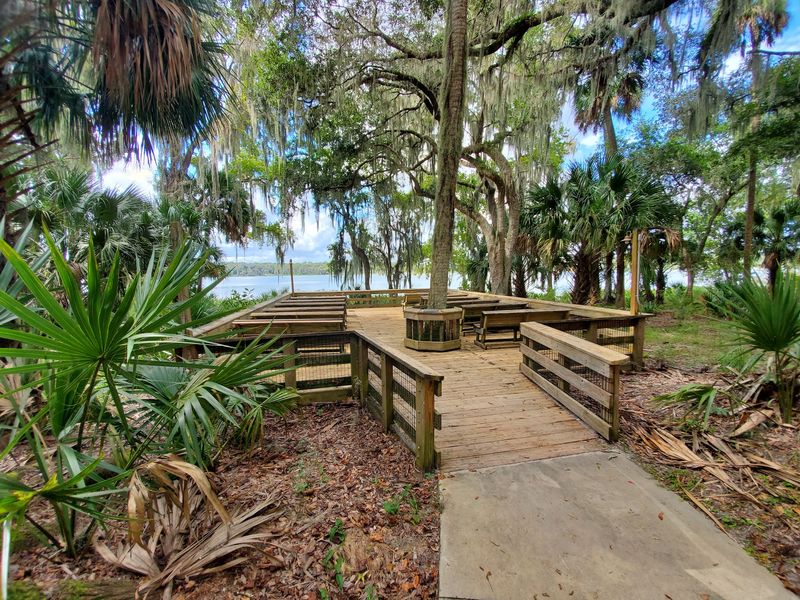
Not every trip needs a hiking goal. Some of the best days here involve a cookout, a playground, and room to spread out.
Families and friend groups gather for barbecues and relaxed afternoons in the open space. The setting suits outings where quality time matters more than mileage.
Amenities help. The park includes a playground, an amphitheater, and clean restrooms.
The campground earns strong marks for being clean and well run. It is also pet-friendly, which makes it easier for travelers bringing a furry companion.
Multi-day stays open up more of the park. Campers can hit different trails each day and stack up wildlife sightings over time.
The location also works as a base for nearby adventures. Silver Springs, known for kayaking, is one popular side trip mentioned by campers.
Staff add to the experience with a welcoming attitude and helpful knowledge. For a relaxed escape from city life, few spots in the region deliver this much variety in one stop.
Fees, Hours, and Smart Planning
Good news for budget travelers: entry is affordable. Admission has been $6 per car load at the main entrance.
The park is open every day of the week from 8 AM to 8:45 PM. That schedule leaves room for early wildlife walks and evening outings alike.
Start at the main entrance and Ranger Station, pay the fee, and grab the map. Other entry points generally should not require a second payment once the main fee is covered.
Certain holidays may bring free admission. On Washington’s Birthday, one traveler entered with no charge at all.
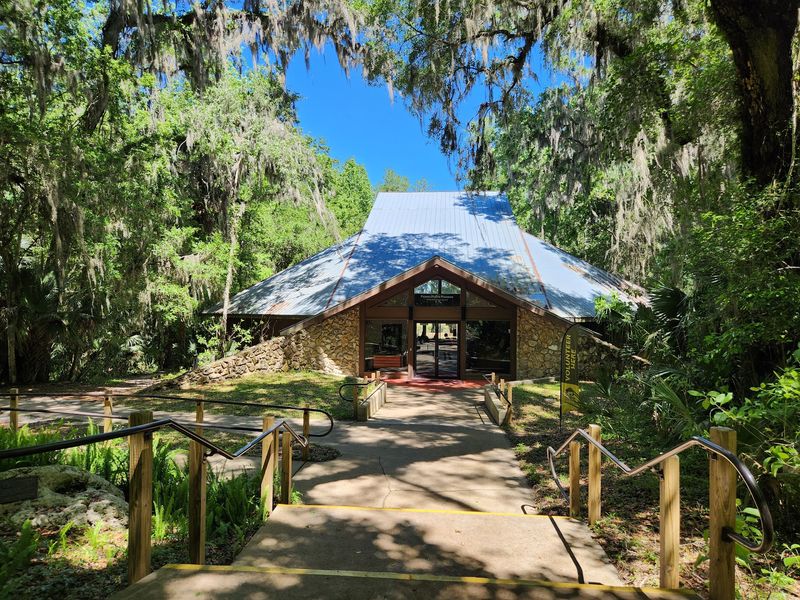
The visitor center is worth a stop. It features nature displays, an observation deck, and a staff full of information, plus stickers for RV collectors.
Plan to visit sections separately, since the park is too large to see from a single spot. The lookout area on US 441 and the Ecopassage boardwalk make useful roadside additions.
For contact details and updates, the official Florida State Parks website lists current information. Checking before leaving saves surprises at the gate.
A Prairie Worth the Detour
Some places reveal everything on the first visit. This preserve prefers to hand out its secrets a little at a time.
One trip might deliver a dozen horses and no bison. The next could bring a crowded gator hole, a soaring eagle, and an empty trail that feels like a private discovery.
That unpredictability is part of the appeal. With 22,000 acres and multiple sections, there is always another entry point waiting to be explored.
The park suits a wide range of people. Hikers, cyclists, birdwatchers, families, campers, and road-trippers needing a break all find something worth their time.
Practical preparation goes a long way. Binoculars, water, sun protection, and a cool morning make the experience far more rewarding.
For those curious about natural Florida history, plants, and animals, it stands as a strong must-visit. The landscape offers a rare look at the state before strip malls took over the horizon.
Next time I-75 passes Gainesville, consider taking the exit. The horses may be grazing just beyond the trees, and the trail might be all yours.
Enjoyed this story?
Add Fast Food Club as a preferred source to see more of our reporting on Google.