


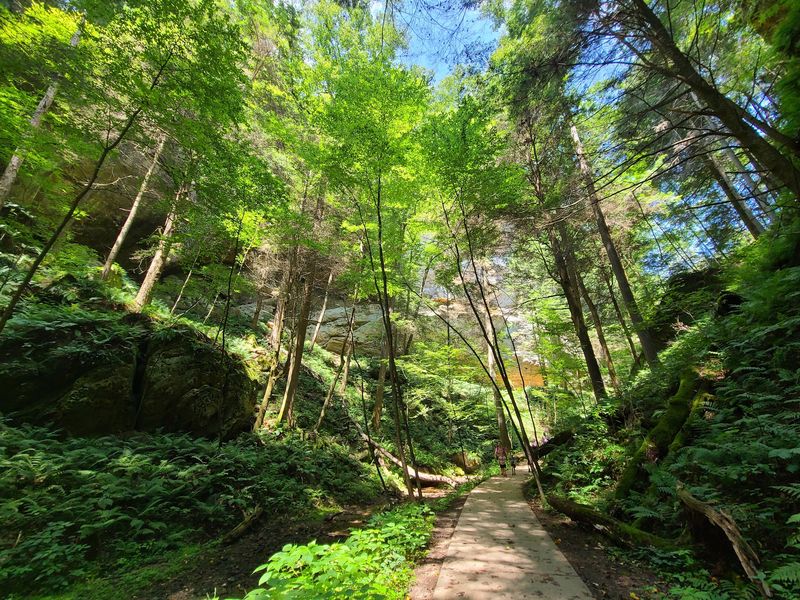
Some hikes ask for a whole day, and some only ask for half an hour and a good pair of boots. Tucked into the Hocking Hills region of southern Ohio sits a narrow gorge where sandstone cliffs rise high above a paved path and a small creek.
In summer and fall, the crowds can be thick enough to make the trail feel like a parade. Winter changes the deal.
Fewer people show up, the bare trees open up the views, and the whole place turns calm and still. There are two trails here, one gentle and one that will test your nerves near the cliff edge.
Keep reading to learn which trail suits you, what makes this preserve stand out from its famous neighbors, and the practical details that will help you plan a quiet winter visit.
A Narrow Gorge Off Big Pine Road
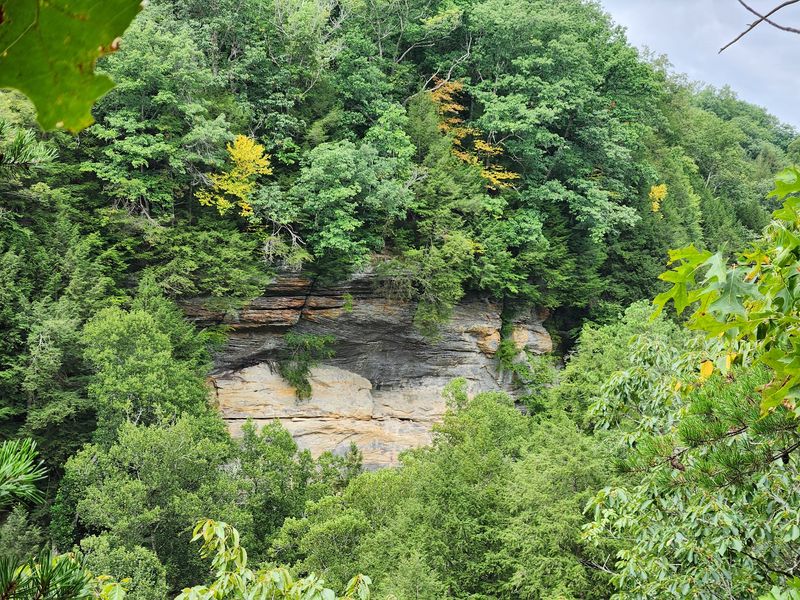
The destination is Conkles Hollow State Nature Preserve, found at 24858 Big Pine Rd, Rockbridge, OH 43149, in the Hocking Hills region of Ohio. It is a protected nature preserve rather than a typical park, and that difference shapes the whole experience.
The land holds ridge and canyon walks surrounded by dense forest. Hiking trails follow the sandstone cliffs from above or run along the foot of a gorge dotted with waterfalls.
Many people lump it in with Hocking Hills State Park, and it sits close enough to make that easy. Technically, though, the preserve lies just outside the park boundaries.
That small detail matters more than it sounds. The preserve feels different from the other trails in the area, with its own personality and its own set of rules.
It is also well loved, holding a 4.9 star standing across nearly 3,000 opinions shared online. Numbers like that rarely happen by accident.
For a winter outing, the location works nicely as a standalone trip or as part of a larger Hocking Hills loop. The gorge is short enough to fit into a busy day, yet striking enough to become the main event.
Why Winter Wins Here
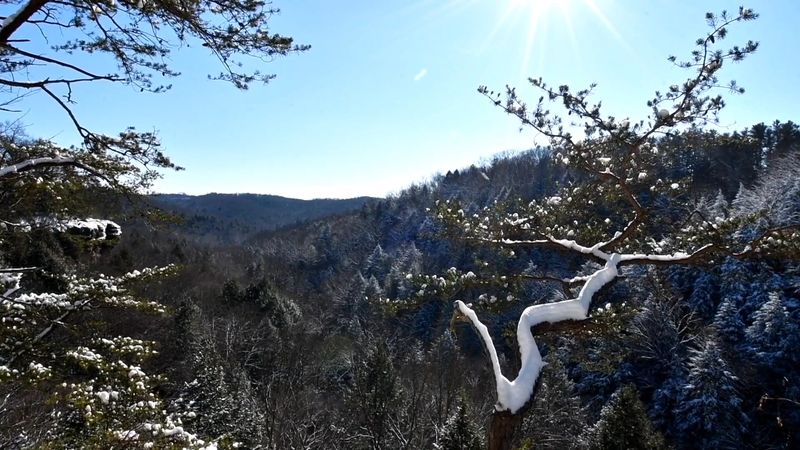
Crowds are the one complaint that keeps coming up at this preserve. The gorge trail gets busy, parking fills up, and patience is often required during the warmer months.
Winter quietly solves that problem. Cold weather thins out the foot traffic, which means more room on the path and fewer people stepping into your photos.
The bare trees also change the view. Without summer leaves, the shape of the gorge and the height of the cliffs become easier to take in.
Hikers who arrive early in any season tend to beat the rush, and that advice works even better when the temperature drops. An early winter start can mean having long stretches of trail nearly to yourself.
The preserve still draws people on New Year’s Day, which shows how much locals love it year round. Still, a weekday winter visit is about as calm as this place gets.
Seasonal changes affect the falls too. The waterfall is noted as strongest in spring, so winter is more about stillness and scale than rushing water.
Call it the off-season advantage: the cliffs stay just as tall, and the crowd gets a lot shorter.
The Half-Mile Gorge Trail
Half a mile does not sound like much. In this gorge, it packs in more scenery than many trails three times longer.
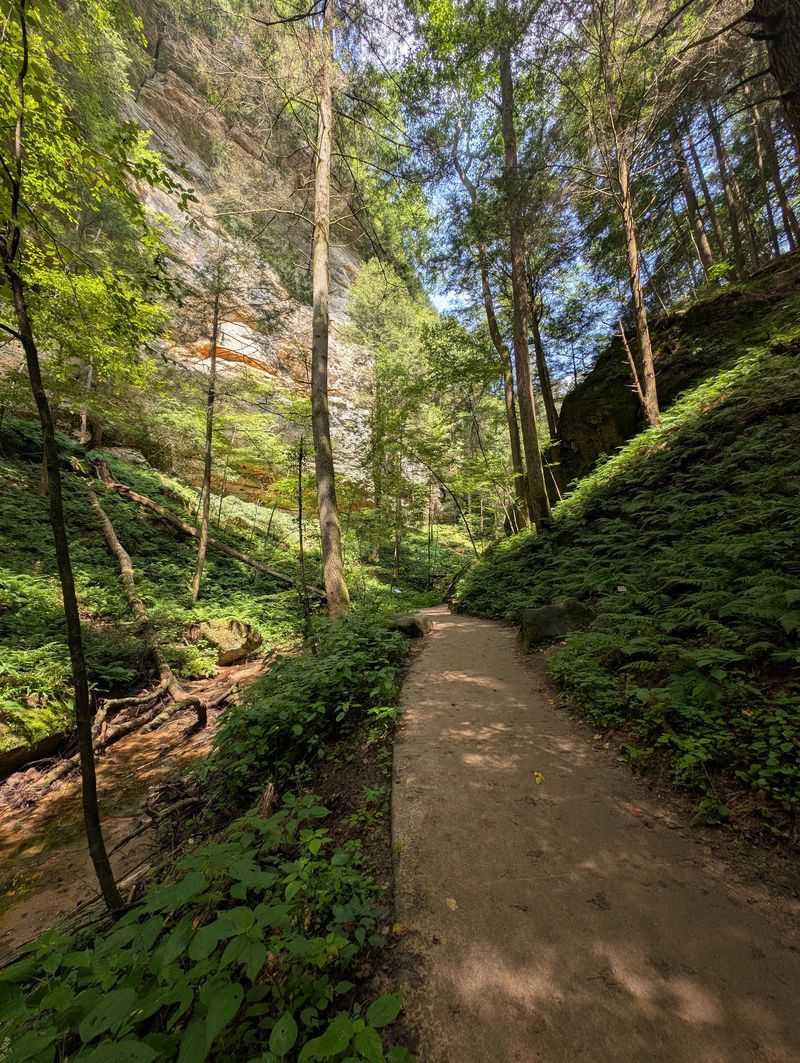
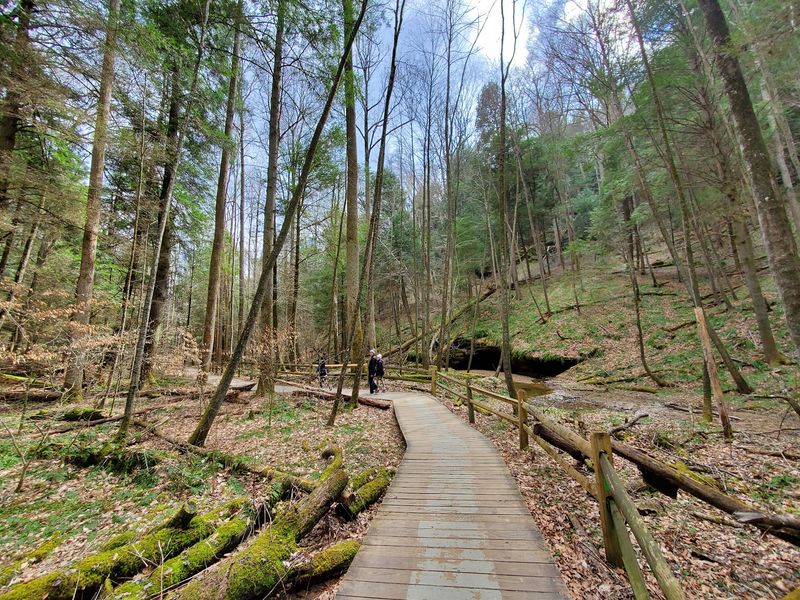
The gorge trail is an out-and-back route running down the middle of the hollow. Most of it is paved, often described as sidewalk-smooth, and it is not technically challenging.
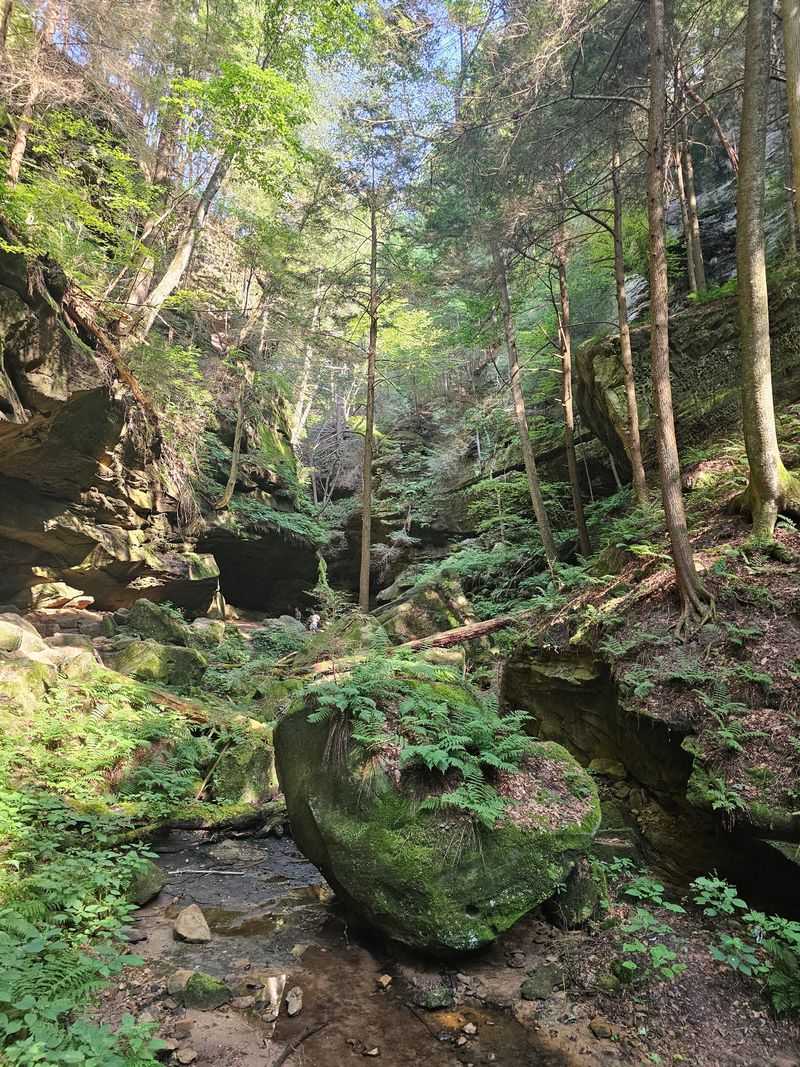
Along the way, the path passes trees, moss, lichen, and rock formations. A small creek runs right next to the trail, keeping company with hikers for much of the walk.
Large boulders that fell from the cliffs long ago rest along the route. They are interesting to study and make for natural photo stops.
There is even a cave along the way, which adds a little extra discovery to an easy stroll.
Plenty of spots let people step off the path to rest or take pictures without blocking others. That makes it friendly for beginners, children, and older hikers alike.
Some say the hollow feels like stepping back into prehistoric times. Short distance, big payoff, and very little sweat required.
Rolling In On Wheels
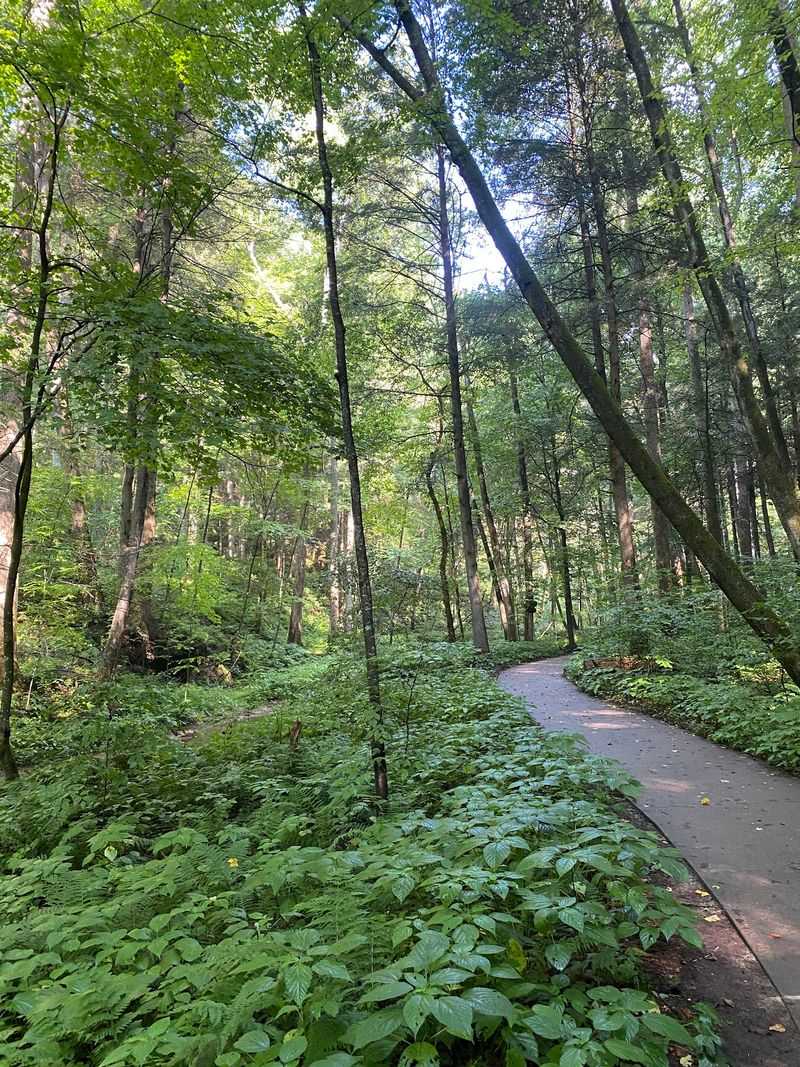
Few dramatic gorges in Ohio welcome wheelchairs. This one does, and that is a big reason it earns so much affection.
The gorge trail is paved and level for most of its length, making it handicap accessible for roughly 80 to 95 percent of the way. Powerchair users have praised how smooth the path is.
The pavement does end before the waterfall. The last stretch turns rocky, so some people may need to stop short of the falls.
Even so, the accessible portion delivers the cliffs, the creek, the boulders, and often a deer or two. There is plenty to see without reaching the very end.
Handicapped parking has also been improved. That upgrade makes arrival smoother for people with mobility needs.
Restroom facilities were in transition as of New Year’s Day 2026, with new public restrooms not yet open and portable toilets available instead. Winter visitors may want to keep that in mind.
For families with mixed abilities, the setup is a rare win. Everyone can share most of the hike, and nobody has to sit in the car.
The Waterfall At The End
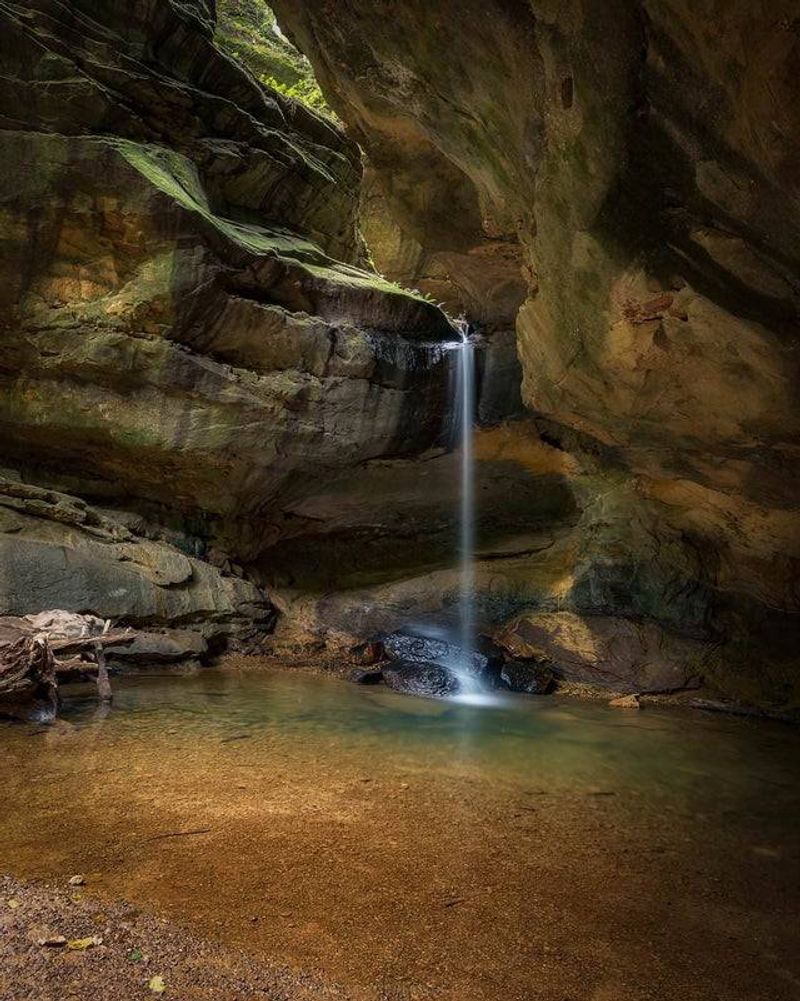
Every good trail needs a finale. Here, it comes in the form of a waterfall tucked at the back of the gorge.
Getting there means leaving the pavement behind. The final section turns rocky, and hikers may need to climb over stones that can be slippery.
Some describe that last stretch as an easy, very short hike. Others warn that the rocks are tough to climb and that you might get wet near the pond below the falls.
Both views can be true depending on conditions. In winter, wet rocks deserve extra caution, so sturdy footwear is a smart choice.
Kids often find this last part the most thrilling section of the whole walk. It feels like a small adventure after the easy pavement.
The falls run strongest in spring, and in dry spells the flow can be very light. In June, the waterfall has been called virtually nonexistent.
Winter flow will vary with recent weather. Treat the falls as a bonus rather than a guarantee, and the gorge itself will still make the trip worthwhile.
Life On The Rim Trail
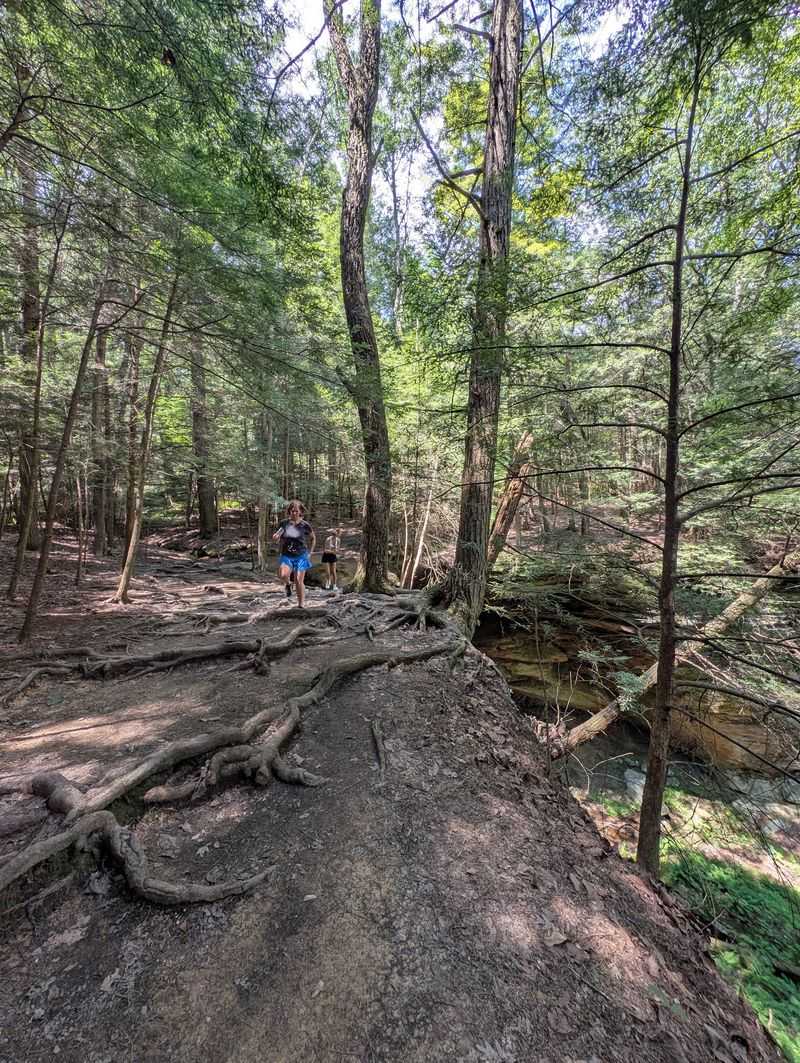
Now for the trail that separates the casual walkers from the cliff lovers. The rim trail circles the gorge from above in a 2.5 mile loop.
Much of the route runs along cliff edges and rock overhangs, more than 80 percent of it by some estimates. At one spot, the ledge narrows to less than a foot wide.
The payoff is huge. Hikers stand higher than most of the treetops, with views straight into the gorge and out across the Hocking Valley.
Terrain gets rough in places, with roots to step over and muddy patches after rain. Many call it moderate, while others find it strenuous and technical.
It is not recommended for younger children, people uneasy with heights, or anyone with balance or health concerns. Some hikers have even called it one of the scariest trails they have done.
Wildlife sightings add some fun along the rim. Bucks, squirrels, and plenty of chipmunks have all made appearances.
A full loop takes about two hours. Those who enjoy heights tend to finish with a big grin and a solid sense of accomplishment.
Counting The Stairs
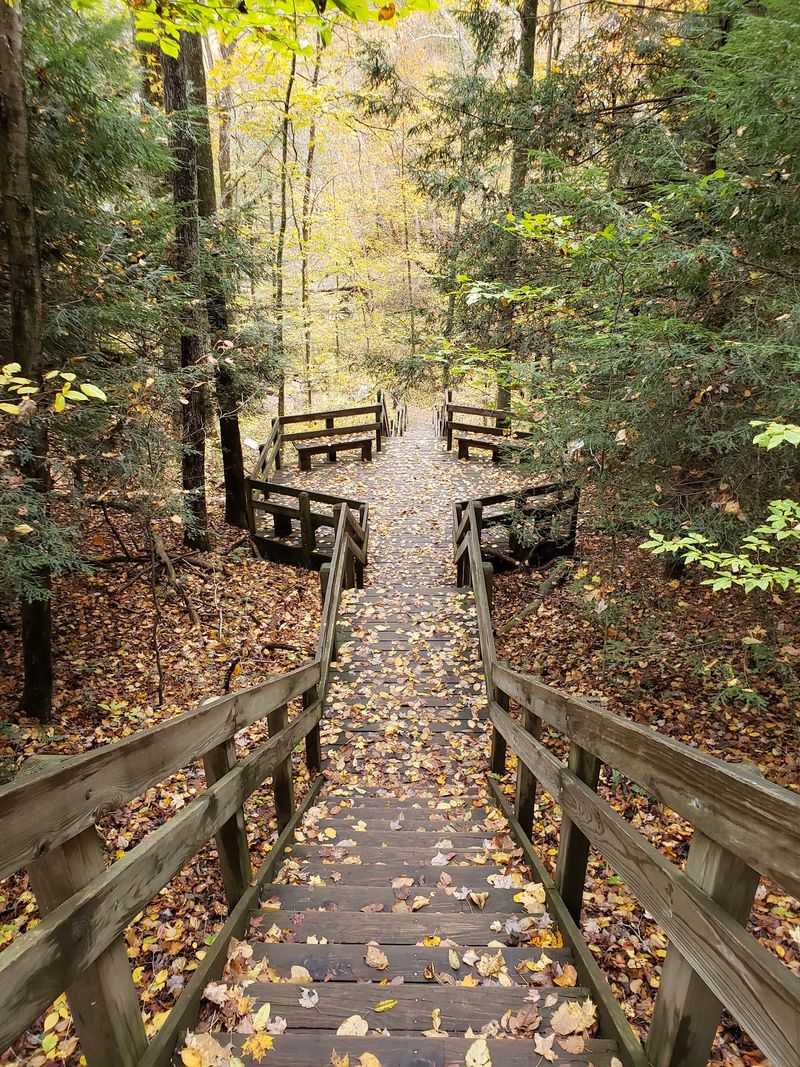
One hiker actually counted: 155 steps on the way down. That number gives a good sense of what the rim trail asks of your legs.
The loop starts with a steep climb, with several stairs heading straight up. A couple of landings offer spots to catch your breath.
The finish brings more demanding staircases, with some estimates topping 200 steps in total. Climbing in the other direction may involve fewer steps, around 80 by one count.
Elevation change along the route is significant. Pacing yourself early helps save energy for the later stretches.
In winter, stairs can hold mud, leaves, or ice. Taking them slowly is simply good sense.
The effort is part of the story here. Those staircases are the toll you pay for some of the best views in the region.
Bring water, wear boots with grip, and plan rest breaks. The steps are hard work, but the scenery at the top makes every one of them count.
A Cabin From The CCC Era
History hides along the rim. A little over halfway through the loop, hikers reach an old cabin linked to the Civilian Conservation Corps.
The CCC was a 1930s program that put young workers to work on public lands across the country. Its fingerprints show up in many parks in this region.
Several displays nearby explain the history of the Corps in the Hocking Hills area. They make a natural rest stop that teaches something along the way.
It is a welcome change of pace on a trail mostly focused on cliffs and views. A few minutes of reading breaks up the climb nicely.
Families with older kids can turn the stop into a quick history lesson. It adds context to the trails and staircases people walk today.
Winter is a fine time to linger here, since cooler weather makes resting more comfortable than in summer heat.
Ask most people what they expect on a cliff hike, and an old cabin is not on the list. That surprise is part of the charm.
Deer, Birds And Little Neighbors
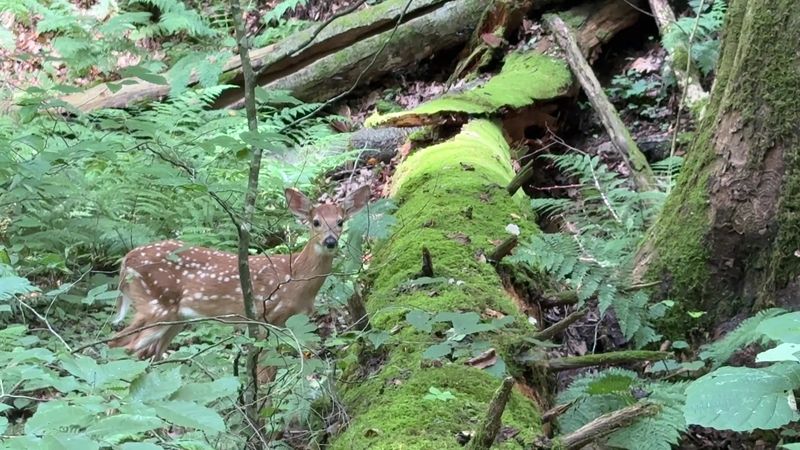
Deer seem to like this hollow as much as hikers do. Regulars report spotting them several times along the gorge trail.
A buck has been seen along the rim trail too. Squirrels and chipmunks are frequent company on both routes.
Birds are another highlight, with many species noted by those who keep an eye on the treetops. Bring binoculars if you enjoy birdwatching.
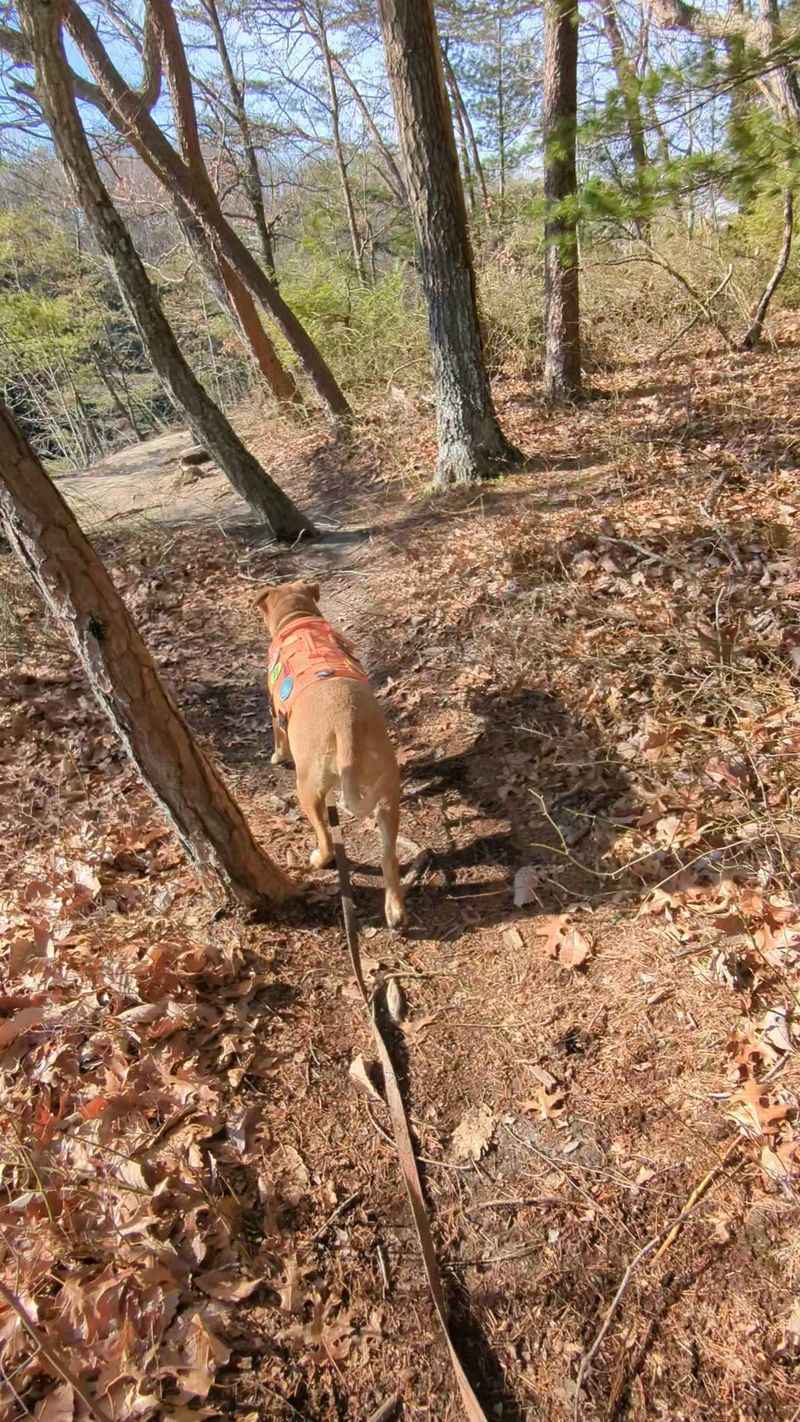
Because this is a nature preserve, the rules lean toward protecting the land and its wildlife. Pets and bikes are not allowed on the trails.
That policy disappoints some dog owners, but it helps keep the preserve in good shape. The effort shows in how well maintained the trails are.
Winter can make wildlife easier to spot. Bare branches leave fewer places for animals to hide.
Move quietly, keep a respectful distance, and the hollow may share a few residents with you. A peaceful gorge tends to reward peaceful guests.
Practical Notes Before You Go
A little planning goes a long way at this small preserve. Parking can get busy, especially on weekends and during peak seasons.
Arriving early is the most common advice. It improves your chances of a spot and a quieter walk.
The preserve is run by the Ohio Department of Natural Resources. Its official page on the ODNR website is the best place to check current conditions before you head out.
Two trails await: the half-mile gorge trail and the 2.5 mile rim trail. Many people recommend doing both if time and fitness allow.
Remember that pets and bikes are not allowed. Leave the dog at home or with a sitter for this one.
Restroom upgrades were still underway as of early 2026, with portable toilets serving in the meantime.
For winter, pack layers, water, and boots with good traction. Muddy and uneven spots on the rim can become slick in cold weather.
Check the forecast too. Clear days make the rim views shine, while wet days call for extra care on the rocks near the falls.
A Quiet Verdict On A Loud Favorite
Popular places do not always deserve their fame. This one does, and winter may be its best-kept secret.
The gorge trail offers an easy, accessible walk between towering cliffs. It suits kids, grandparents, beginners, and wheelchair users with very few barriers.
The rim trail delivers a real challenge for those who like heights. Its views over the gorge and the Hocking Valley are tough to beat anywhere in the region.
Between the two, nearly every type of hiker finds a fit. Few places manage that balance so well.
Winter takes away much of the crowding that can test patience in warmer months. What remains is space, stillness, and a clear look at the shape of the land.
Plan for a short trip or a half day, depending on which trail you choose. Either way, the hollow leaves a lasting impression.
Bundle up, start early, and let the cliffs do the talking. Some of the best walks in Ohio are also the quietest ones.
Enjoyed this story?
Add Fast Food Club as a preferred source to see more of our reporting on Google.