


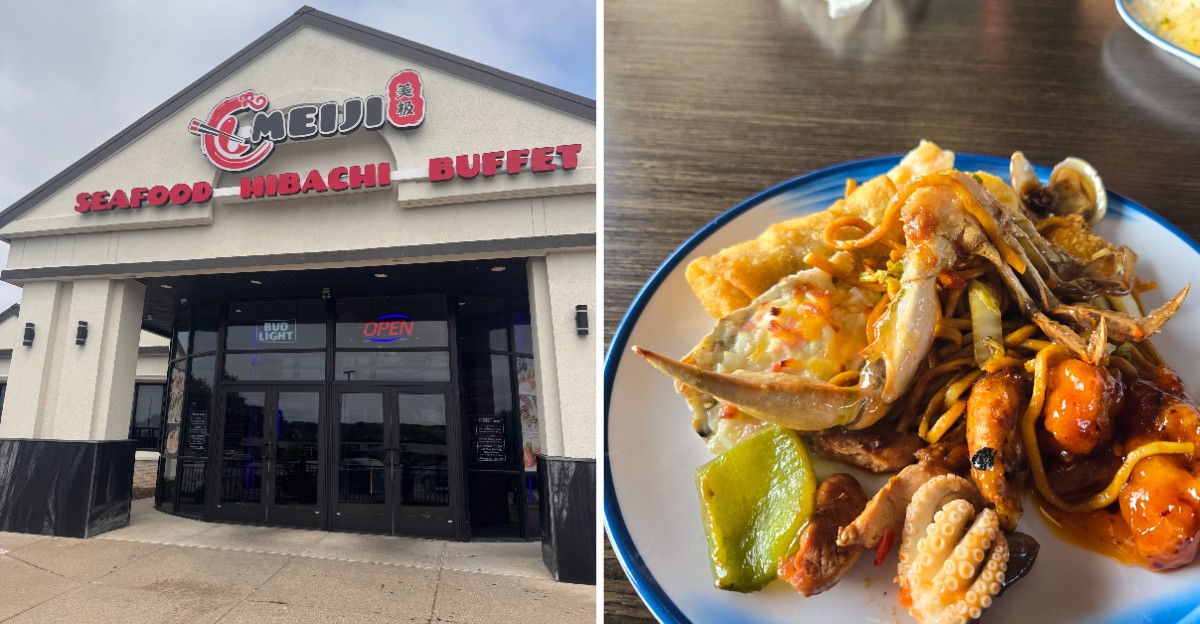
Wisconsin sits a long way from any ocean, yet one dining room near Milwaukee keeps sending crab legs out of the kitchen by the tray. Families plan whole road trips around it.
Some make the drive from Madison, about an hour each way, and call the miles well spent. The draw is simple: an all-you-can-eat spread built around seafood, a sushi section long enough to need its own map, and a hibachi station for anyone who wants a plate cooked to order.
There are rules too, including one about unfinished plates that every first-timer should know before grabbing a tray. Keep reading for the address, the daily hours, the lunch and dinner price split, and the smartest way to tackle a buffet this size without tapping out after round two.
A Greenfield Address Worth the Drive
Seafood cravings in the Badger State usually end at a Friday fish fry. One buffet in the Milwaukee suburbs has rewritten that script.
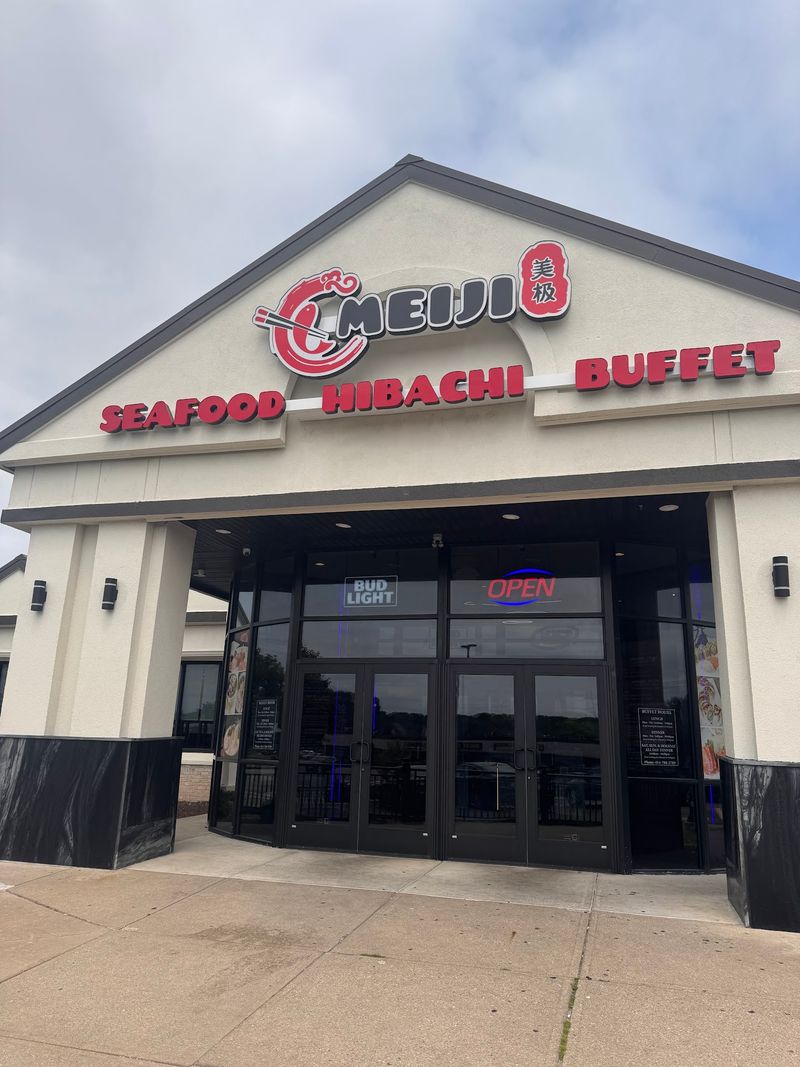
Meiji Seafood Hibachi Buffet sits at 3740 S 108th St, Greenfield, WI 53228, in the United States. It is a buffet restaurant with a seafood-first identity, and the name spells out the big draws before you even park.
Greenfield lies on the southwest side of the Milwaukee area. That puts the restaurant within easy reach of a large slice of southeastern Wisconsin.
Madison is roughly an hour away by car. That distance has not stopped families from the capital city from loading up and heading east for a crab leg mission.
Some make an even longer trek. One family from Baraboo logged about an hour and forty minutes each way, picked up a son in Madison along the route, and still called the trip worth every mile.
The doors open at 11 AM every day of the week and stay open until 10 PM. There is no closed day to trip you up, only calmer and busier times to show up.
So what pulls people across the state for a plate of crab? The answer starts with a building that used to serve something completely different.
From Greek Diner to Seafood Showroom
Longtime Greenfield locals may recognize the address before they recognize the menu.
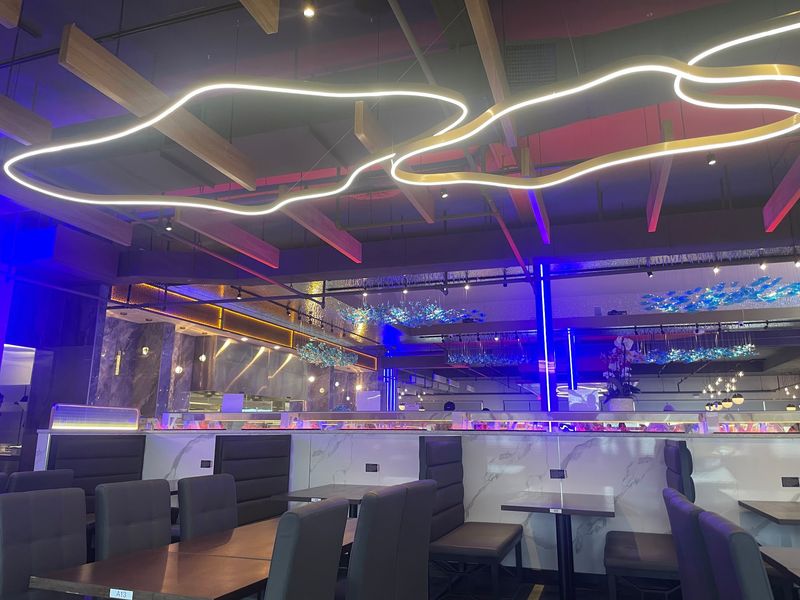
The building once housed a Greek family restaurant. That history is almost impossible to spot today, because the remodel wiped away the old layout and decor and replaced it with a modern, updated look.
The makeover matters more than it might seem. Older buffet spaces often carry a tired cafeteria style, and this one sidesteps that problem entirely.
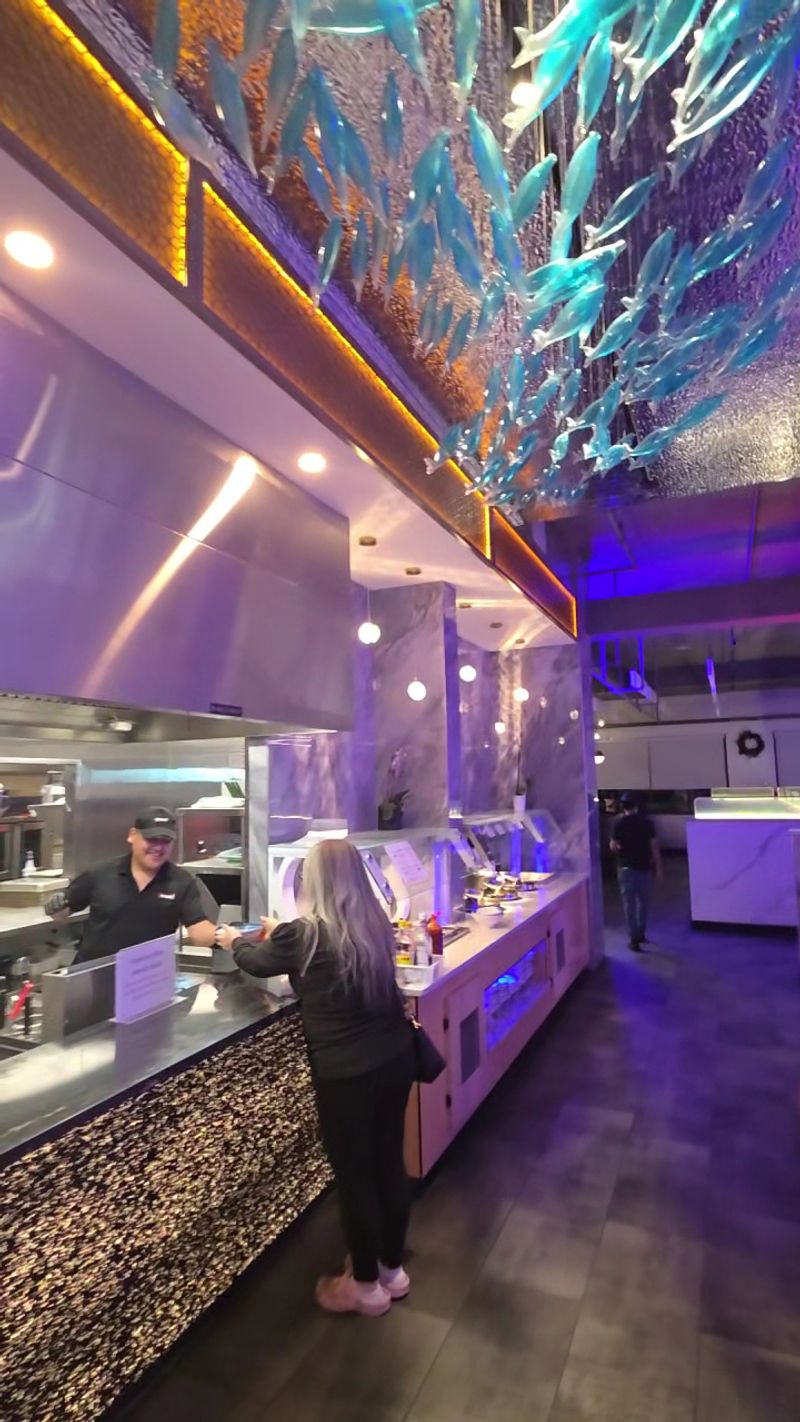
The result comes across less like a typical buffet and more like a contemporary sit-down restaurant that happens to let you serve yourself. Many diners point out that it simply does not feel like a buffet at all.
The restaurant is still fairly new. Its opening brought big crowds, long waits and a few growing pains while the staff found a rhythm.
Those rough edges have smoothed out with time. The team behind it also runs a separate non-buffet location, so this is not their first rodeo, and that experience shows in how the operation runs.
After early confusion about costs, signs went up near the front listing the prices. It was a small fix, but diners now know the numbers before they sit down.
A fresh coat of style is one thing. How the room is actually laid out is another story, and it explains why so many people linger.
Big Room, Private Corners
Big buffet, small-table energy. That is the neat trick this dining room pulls off.
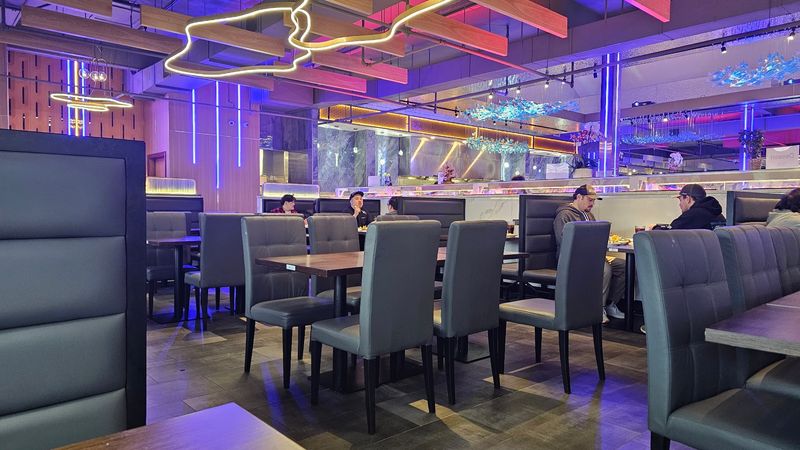
The space is large, with plenty of seating spread across several areas. Tall dividers split it into sections, so each group gets a more private corner even when the place is packed.
Booths are a highlight. They are roomy and comfortable, with enough table space to hold the stack of plates that inevitably builds during a long seafood session.
The overall style leans modern and polished. Updated decor gives the room a fun, contemporary vibe that stands apart from most buffets in the Milwaukee area.
There is one trade-off. Aisles between tables can get tight when the restaurant is busy, so expect a little polite shuffling on the way to and from the stations during peak hours.
The dining area itself stays notably tidy for a buffet. Tables get cleared quickly, and the room rarely looks cluttered even during a rush.
Restrooms have been more of a mixed bag. They are clean at many times of day but can use extra attention during the busiest stretches, so plan a quick stop before the crowd peaks.
Once seated, most people head straight for one particular station. Here is a hint: it involves claws and a cracker.
Crab Legs on Constant Rotation
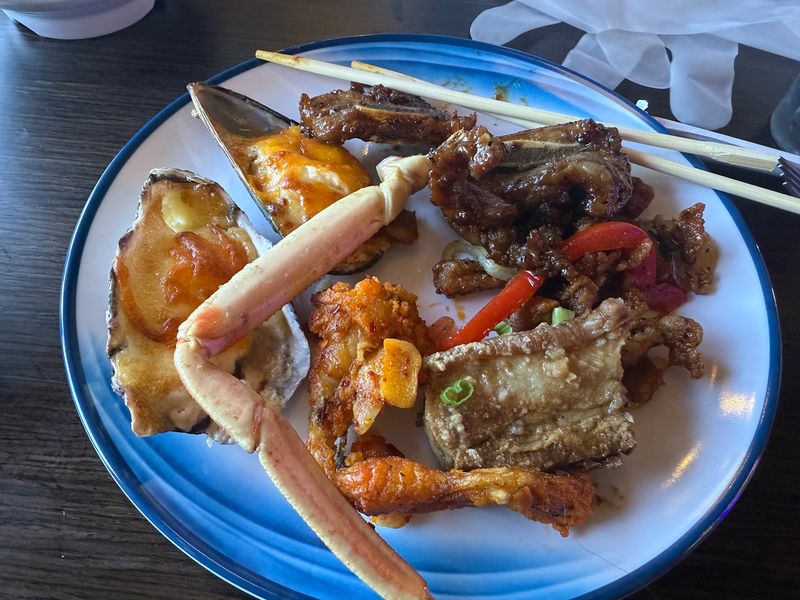
Every buffet needs a headliner, and at this one the crab legs get top billing.
Staff carry large trays of crab legs out from the kitchen on a regular basis, often while diners are still deciding what to grab next. It is one of the most talked-about parts of the whole spread and the main reason many Wisconsin seafood fans make the trip.
Keep size expectations realistic. The crab legs are not giant, but they are plentiful, and the all-you-can-eat format lets quantity pick up the slack.
Snow crab is part of the lineup. Refills on the premium seafood can take a while, sometimes around half an hour between batches, so hitting the station right after a new tray lands is a clever move.
The smaller crabs require some patience. Meat in the claws and legs can dry out if a batch sits too long, while the body meat tends to hold up better.
Cracking crab is messy business. The staff seem to know it well, and seats and tables get wiped down quickly after a particularly enthusiastic session.
A pro tip: take a modest pile, finish it, then return for a fresh round. The house rules reward that strategy, as a later section explains.
Crab may be the star, yet it faces serious competition a few steps away. The sushi counter has a fan club of its own.
The Sushi Stretch
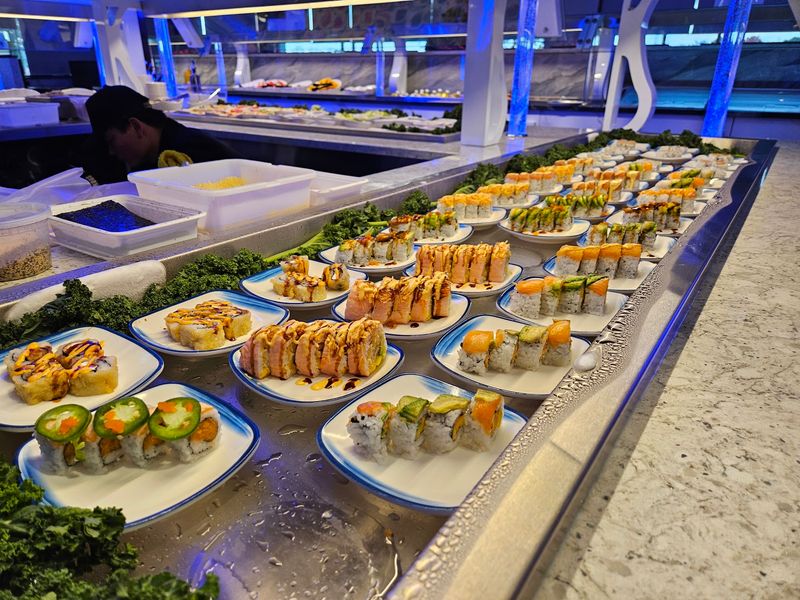
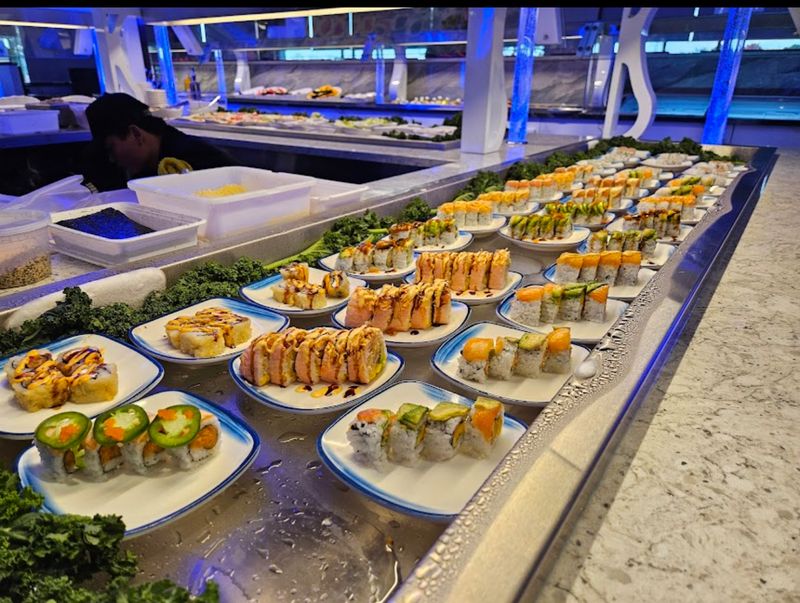
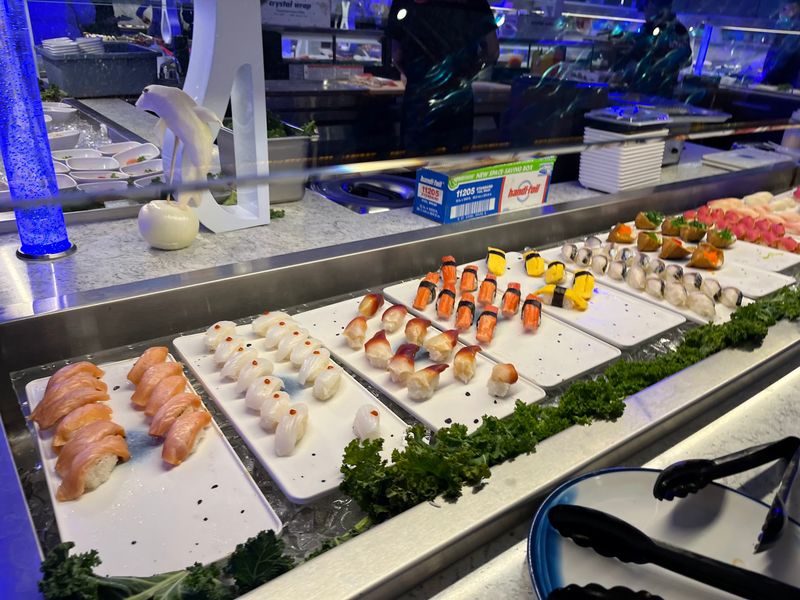
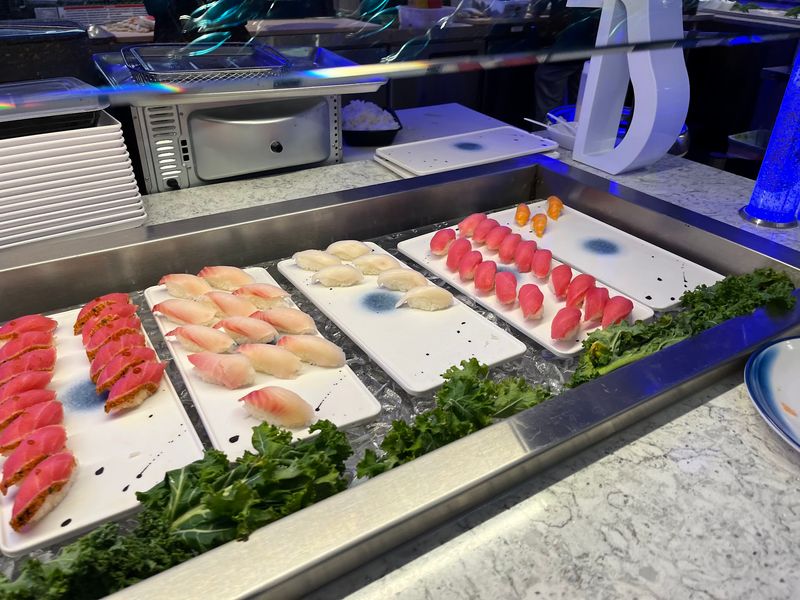
Sushi fans, clear some room on that plate. The sushi area is one of the largest sections of the entire buffet.
The station runs long, with a wide variety of rolls laid out for self-serve grazing. The bite-sized pieces make it easy to sample many kinds in a single sitting, which is exactly the point of an all-you-can-eat format.
Sashimi is on offer too. Opinions split on that corner, with some diners calling it a weak spot while the rolls tend to earn more fans.
Many people rank the sushi among the true highlights of the meal. Others see it as closer to standard buffet quality, so it helps to set expectations somewhere between a dedicated sushi bar and a supermarket case.
A smart approach is to start small. Take a piece or two of anything new, figure out your favorites, and circle back for more of those.
The sushi line pairs nicely with the crab station. Plenty of diners alternate between the two, building plates that mix a few rolls with a pile of cracked crab legs.
Word to the wise for anyone with seafood or fish allergies: a buffet this seafood-heavy leaves room for cross-contact. Ask staff before loading up.
Diners who like their meal made to order, however, have a livelier station waiting across the room.
Hibachi and a Deep Seafood Bench
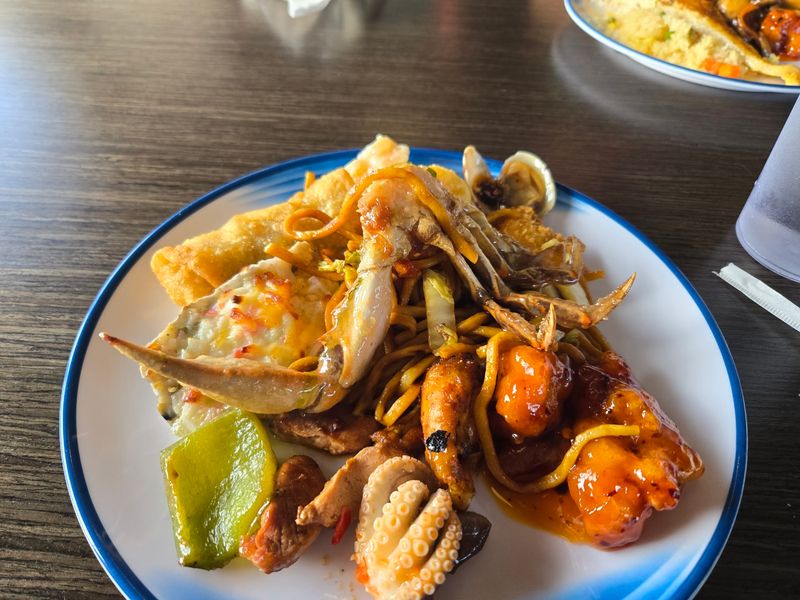
Hibachi sits right there in the name, and the station earns its spot on the sign.
The hibachi area lets diners step away from pure self-serve and get a plate cooked to order. It is one of the most popular stops in the building, especially for groups who want a little variety between seafood rounds.
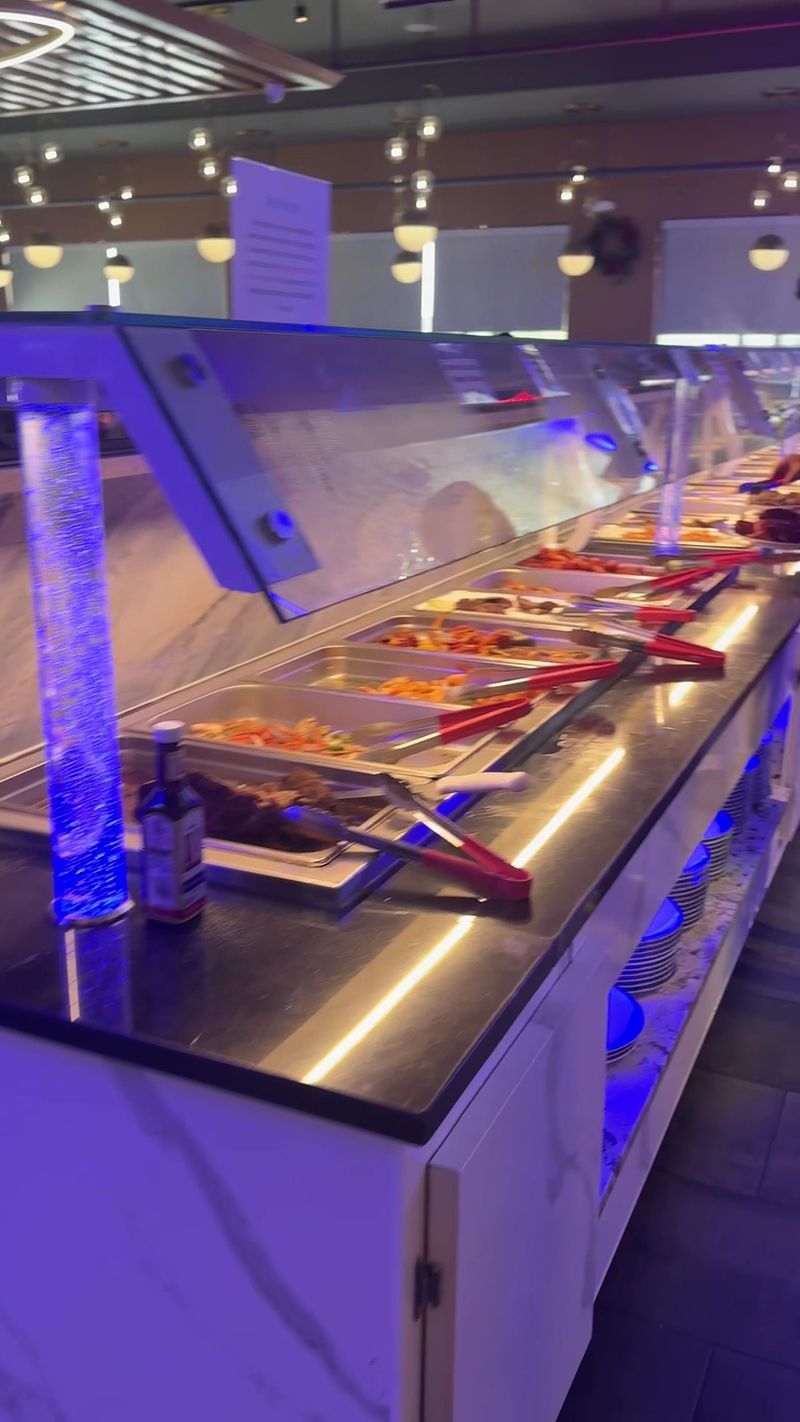
Beyond the crab and sushi, the seafood bench runs deep. Shellfish, grilled seafood and a seafood boil all share space along the lines, alongside plenty of chicken, beef and vegetable dishes.
Variety is the real selling point here. Many of the dishes are hard to find at any other buffet in Milwaukee or the surrounding towns, which helps explain why people drive in from farther away.
Seasoning can vary from dish to dish. Some items pack more spice than expected, so it pays to take small portions of anything unfamiliar.
Picky eaters are not left out. A handful of familiar, American-style options sit on the buffet for kids and cautious adults who would rather skip the shellfish entirely.
Fruit and desserts round out the spread for anyone who saves room. Sharing a dessert plate at the end has become a small tradition for many tables.
All of that food needs a lot of hands behind it. The team working the floor deserves its own spotlight.
A Crew That Clears Plates Before You Blink
Return from the buffet line and something small but satisfying happens: the empty plates are already gone.
No server takes a food order here, since everyone serves themselves. Drinks are handled at the table, though, and servers keep glasses refilled throughout the meal.
Bussers move steadily through the dining areas. They check on each table, clear used dishes quickly and stay close by in case someone waves them over.
Even staff not assigned to a particular section tend to stop and ask if everything is alright. That extra layer of attention comes up again and again when diners talk about this place.
A separate crew watches the buffet stations. They clean up spills, swap out empty trays and check that food is holding up properly.
Nobody gets rushed out the door either. The check typically arrives once a table is clearly winding down, not while plates are still in play.
Here is a detail many first-timers miss. Tips go into a shared pool split among servers, hosts, bussers and the staff who carry food from the kitchen, so tipping at a buffet still supports the whole team.
Friendly greetings at the door and a warm send-off on the way out complete the picture.
That kind of attention makes the restaurant a natural fit for one type of outing in particular.
Birthday Songs and Big Family Tables
Birthdays hit differently when the whole staff joins in.
The restaurant plays special music for birthday guests and gathers employees to sing. It is a fun touch that has turned the place into a go-to spot for celebrations across the region.
Families mark all sorts of milestones here. Birthdays, holiday gifts and even an adoption Gotcha Day have been celebrated at these tables.
Large groups are welcome. The team has handled parties of around 20 people with several kids, spreading them across neighboring tables in the same section.
A little planning helps with a crowd that size. When groups split across several tables and people pay for different family members, billing can get confusing, so sorting out who covers whom before the check arrives saves time at the register.
The lively atmosphere suits a party mood. It is welcoming and upbeat without tipping into chaos.
Plenty of diners describe the restaurant as a special-occasion destination rather than a weekly habit. The spread and the setting make it feel like an event, which is exactly what a celebration calls for.
Kids generally find something to enjoy, even the picky ones. That alone takes a lot of stress off parents planning a family outing.
Before booking the party, though, there are a few house rules worth learning.
House Rules for First-Timers
All-you-can-eat does not mean all-you-can-leave-behind.
Stickers on the tables explain that excessive food waste can lead to an extra charge. With so many choices on the lines, the easiest move is to make several trips with small portions instead of one towering plate.
That policy actually works in your favor. Smaller plates mean more rounds, more variety and fewer regrets about a heap of crab you cannot finish.
Utensils come with a quirk. Forks arrive at the table, while the buffet area offers only chopsticks and soup spoons, so hang on to that fork or ask staff for a new one if needed.
Drinks follow their own schedule. At dinner, a few Asian-style drinks are included, while the same drinks run about $2 each at lunch, and soft drinks add to the bill.
Allergies deserve a mention again. Cross-contact is possible across a seafood-heavy buffet, so diners with shellfish or fish allergies should ask questions before filling a plate.
A quick glance at bowls and dishes before using them is a sensible habit at any busy buffet, and this one is no exception.
Nothing on this list is complicated. Knowing it ahead of time simply makes the meal smoother.
The next question most people have is simple: when to go, and what it costs.
Hours, Price Tiers and Parking Tips
Timing is everything at a buffet, and this one rewards a little planning.
The restaurant is open daily from 11 AM to 10 PM. Doors open at the same time seven days a week, which keeps things simple.
Lunch is the budget-friendly play. Weekday lunch has run roughly $20.99 to $22.99 per person, while dinner and weekend pricing lands around $35 to $37.
Overall spending usually falls in the $30 to $40 range per person. A couple at dinner can expect to spend about $95 to $100 once drinks and a 20 percent tip are added.
Kids are charged too, typically around $14 regardless of age, with exceptions for the very youngest. Families should factor that in before arriving.
Crowds build fast. Arriving shortly after the 11 AM opening on a weekday often means an easy seat, and the room fills up as lunch goes on.
Weekend evenings are another matter. A waitlist kicks in when things get busy, and Sunday dinner waits have stretched to about 40 minutes.
Parking is a relief. The lot is ample, with an easy entrance and exit from the road.
Madison drivers heading east should plan around those peak hours. An early weekday lunch pairs the lowest price with the shortest wait.
With the logistics settled, one question remains.
The Case for Making the Trip
Not every buffet inspires a road trip. This one has pulled diners from Madison, Baraboo and all over the Milwaukee area.
The strengths are clear. A large, modern dining room, crab legs coming out by the tray, a long sushi section and a staff that keeps tables clear all add up to something different from the usual buffet routine.
It is not perfect. Seasoning can be uneven, the sashimi draws mixed opinions and dinner prices sit on the higher end for a buffet.
Many thrifty Wisconsinites balked at the price at first. Plenty of them walked out convinced they got their money’s worth, especially given the variety that nearby buffets simply do not offer.
The best fit is a seafood lover with an appetite and a bit of patience. Birthday crews, big families and anyone craving crab legs without a coastal flight will feel right at home.
Budget-minded diners can aim for weekday lunch. Special-occasion planners can go all in at dinner and let the staff handle the singing.
Go hungry, take small plates and pace yourself. The crab will keep coming.
For a state that measures seafood in fish fries, Meiji makes a surprisingly strong argument that the ocean can reach Greenfield after all.
Enjoyed this story?
Add Fast Food Club as a preferred source to see more of our reporting on Google.