


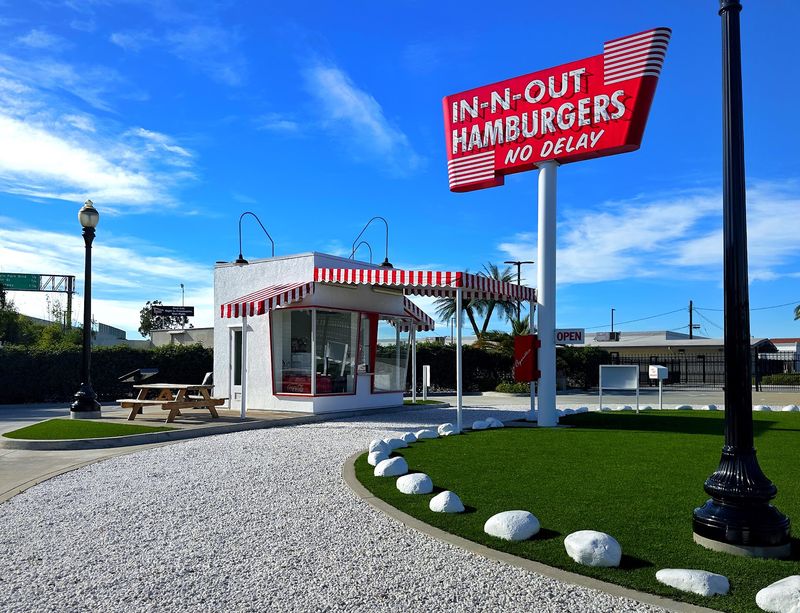
Long before the palm-tree logo showed up on highways across the West, a burger empire began inside a shed no bigger than a backyard tool room. A small California city holds the exact story of how two people turned 25-cent burgers and a homemade speaker box into one of the most beloved names in fast food.
There is a tiny replica building, an employee who greets guests with real stories, and a merchandise shop just down the sidewalk. Best of all, you do not need tickets to see where it all started.
The hours are short and the space is small, but the history packed inside is anything but. Keep reading to learn where this landmark sits and why fans keep planning trips around a four-hour window.
The Little Landmark On Francisquito Avenue
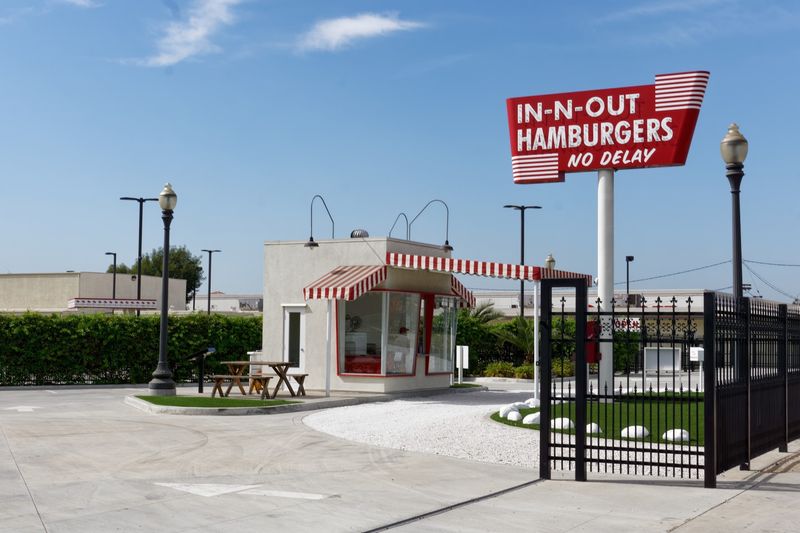
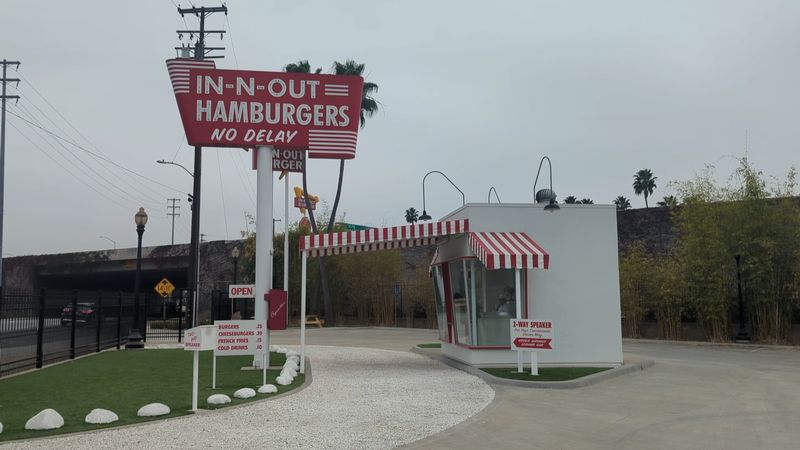
Tucked at 13766 Francisquito Ave in Baldwin Park, California, sits a building that looks almost too small to matter. It is a faithful replica of the very first In-N-Out drive-thru, and it marks the spot where the whole story took off.
The original stand once stood diagonally across the street, roughly where the freeway pass now runs. When the Interstate 10 project claimed that corner, the company rebuilt the tiny structure nearby so the history would not fade away.
Fans of the chain treat this as a pilgrimage stop. It is officially known as The Original In-N-Out Burger Museum, and it earns a strong 4.8-star average across more than 300 write-ups.
The building itself is fenced in, so part of the visit involves peeking at a well-preserved slice of the past. Even from behind the fence, the shape and signage tell the story clearly.
Regulars call it a quick but meaningful stop when passing through the Los Angeles area, and it sets the stage for everything else this little corner offers.
Where Two People Started A Burger Legend
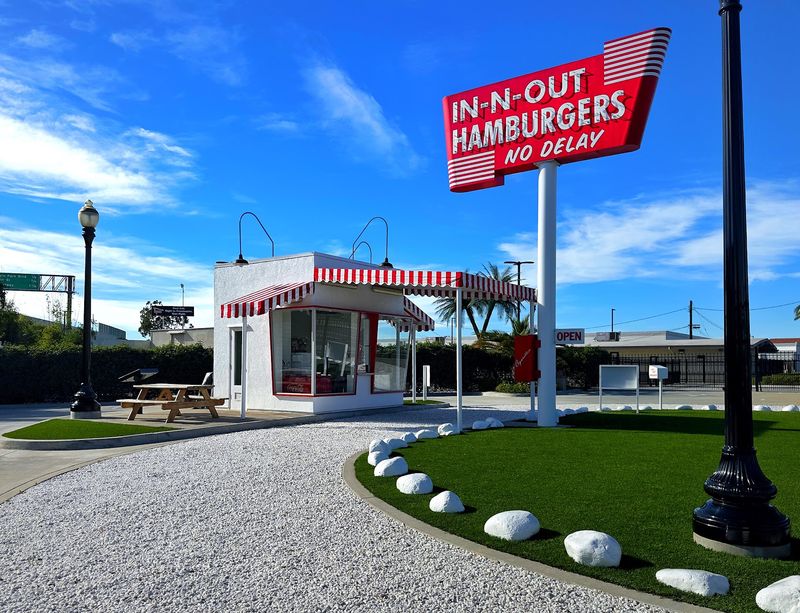
The date on the calendar was October 22, 1948, when Harry and Esther Snyder opened their tiny burger stand. That single decision launched what became California’s first drive-thru.
Harry handled the food side, personally sourcing fresh ingredients each day. Esther kept the books and made sure the young business stayed steady, a partnership that shaped the company’s early culture.
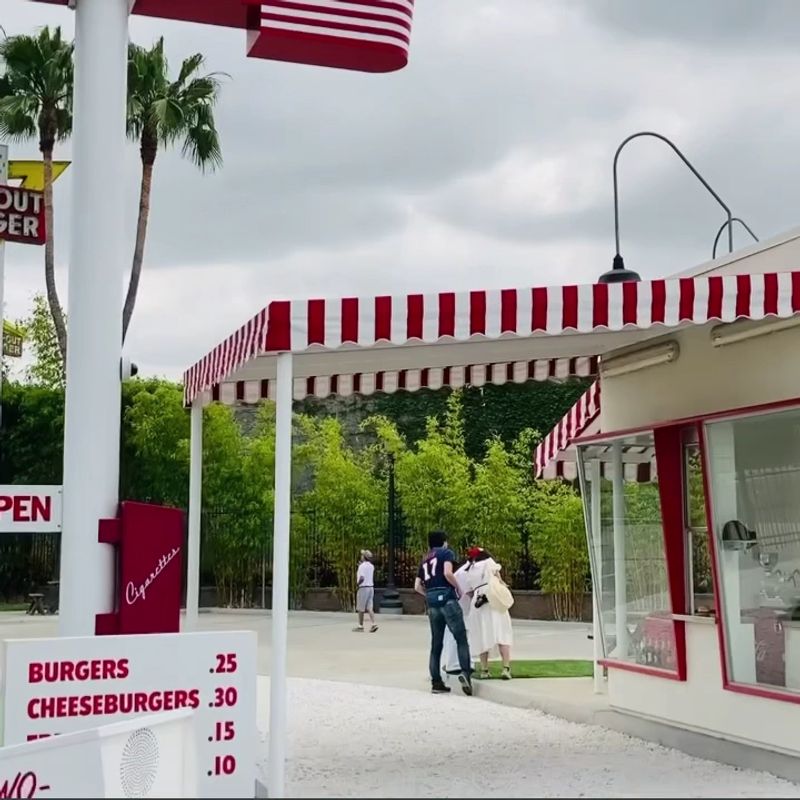
The menu back then was short and simple, with burgers priced between 25 and 30 cents. Nobody was counting calories, and the focus stayed squarely on doing a few things well.
The museum captures this founding chapter through photos, signage, and stories passed along by the on-site staff. It is easy to picture how a modest operation with two workers grew into a name recognized far beyond state lines.
What makes the tale stick is how ordinary the beginning felt. There were no grand plans for an empire, just a couple of hardworking people trying to serve a good meal.
Standing at the replica, that humble start feels remarkably real, and it reminds guests that big things often begin in small spaces.
A 10-Foot Square That Changed Fast Food
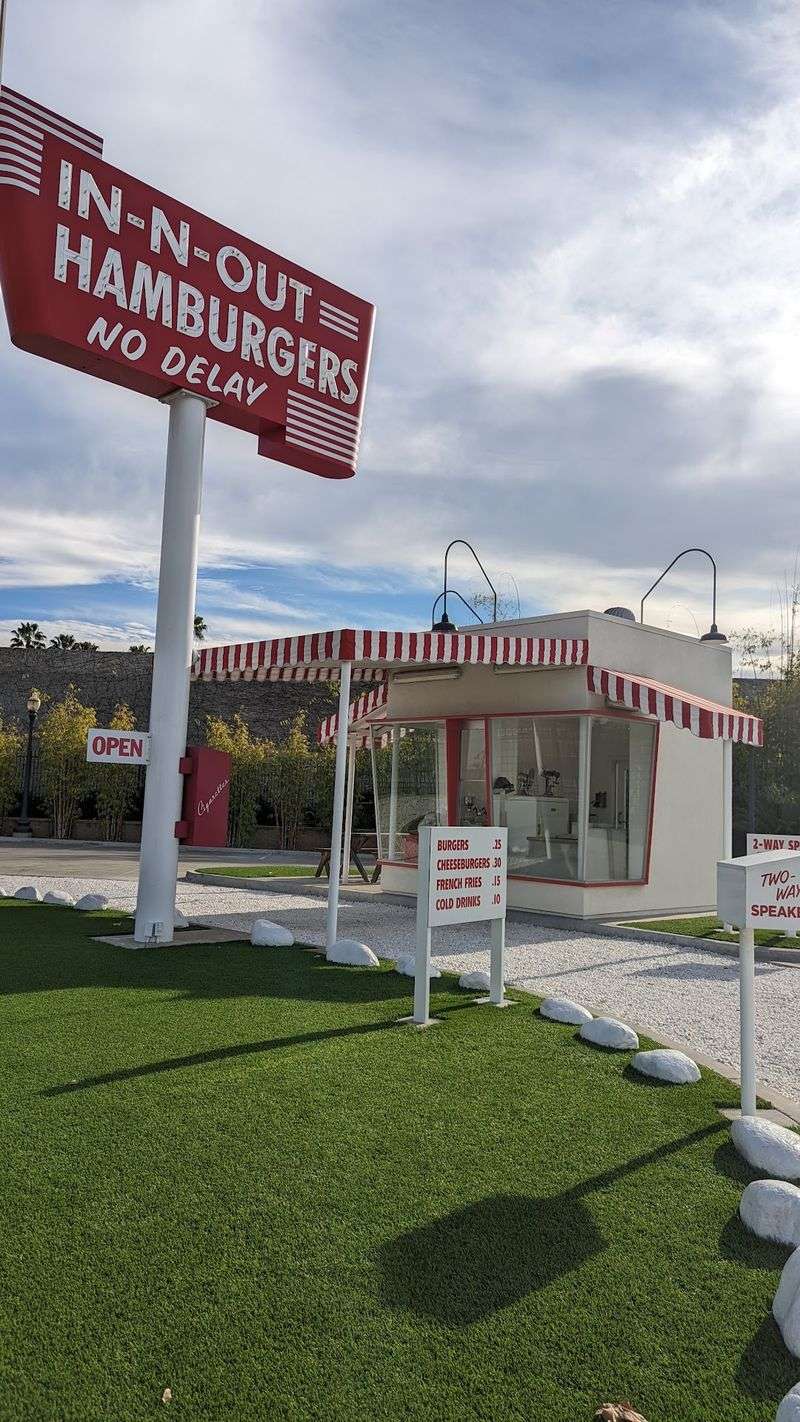
Hard to believe, but the original stand measured only about 10 feet square. The whole operation fit into a footprint smaller than many home kitchens.
Inside that cramped space, just two staff members handled everything. There was even a mini bathroom squeezed in, which says a lot about how every inch was used.
What set the place apart was Harry’s clever two-way speaker system. Customers could order without leaving their cars, a genuine novelty at the time that pushed the entire fast-food industry forward.
The museum highlights this innovation because it explains why the location deserves its landmark status. It was not just another burger joint.
It was the spot where the drive-thru concept found real footing in California.
People often expect a museum to be sprawling, but the charm here comes from the opposite. The smallness is the point.
Seeing how little room the pioneers needed makes the scale of the modern chain feel even more surprising, and it turns a quick photo stop into a lesson about big ideas born in tight quarters.
Original Equipment From The Late 1940s
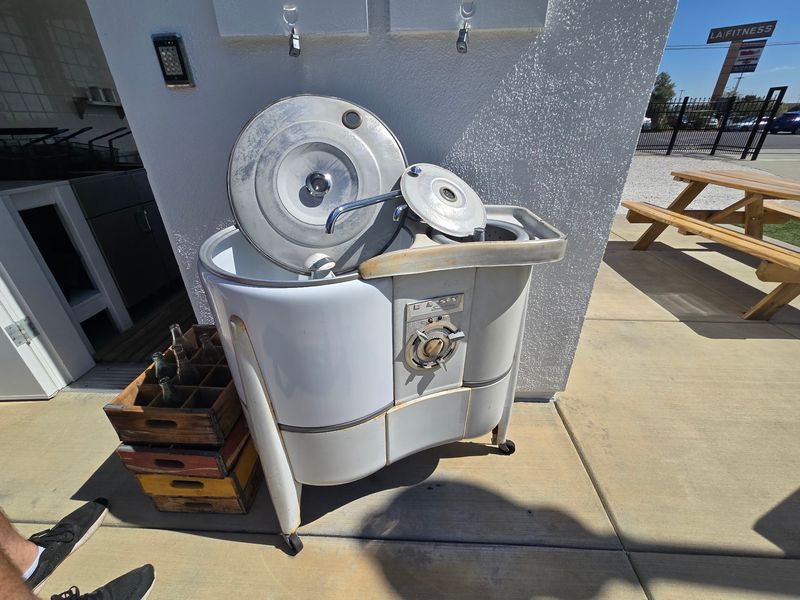
Step-back moments come easy here thanks to the preserved gear from the late 1940s. The museum keeps original equipment on display, giving the space an authentic, time-capsule feel.
One quirky detail sits opposite the drive-through window, a piece of machinery that speaks to a very different era of daily life. It surprises people who assumed the stand only ever sold food.
Out on the back porch, there is a washing machine that once handled potato washing and drying. Fry lovers get a kick out of seeing where that part of the process began.
There is also a story about a cutting board that doubled as a bookkeeping surface in the mini bathroom. Guests are encouraged to ask staff about these odd little artifacts, and the answers tend to be the best part.
These objects turn abstract history into something you can actually look at. Instead of reading dates on a wall, you see the tools that made those early burgers and fries possible.
For anyone curious about how the sausage, or in this case the fry, really got made, the collection delivers plenty of small surprises.
The Friendly Face Who Runs The Room
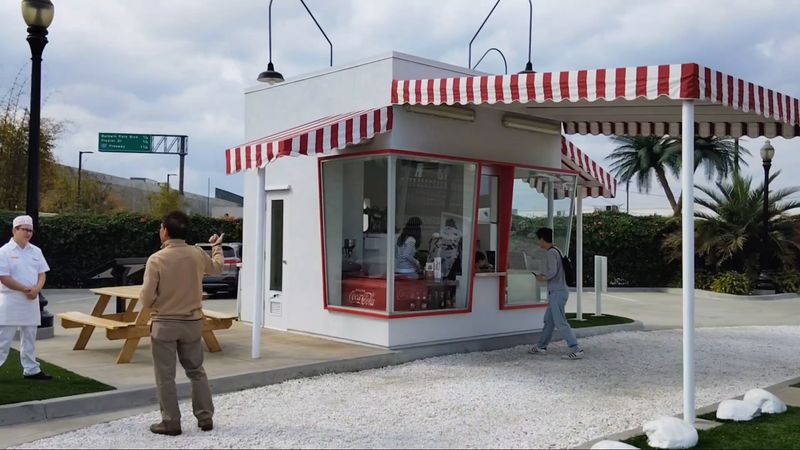
A single employee keeps the whole place spotless and welcoming. That one person often makes the visit far more memorable than the small building alone might suggest.
Guests are greeted warmly and offered a brief history of where it all started. The staff members are described as polite, knowledgeable, and genuinely happy to answer questions.
Some visitors have received short guided tours that dig into the early days of the company. Others mention friendly gestures like helping with family photos or handing out stickers.
The personal touch matters because the space is so compact. Without someone to share the stories, the artifacts might read as random objects.
With a guide present, they connect into a real narrative.
That human element keeps the atmosphere relaxed rather than rushed. People show up expecting a quick look and often stay longer once the conversation starts.
It is the kind of hospitality that turns a roadside curiosity into a stop worth recommending to fellow fans, and it fits perfectly with a brand known for treating customers well.
A Photo Stop Worth Pulling Over For
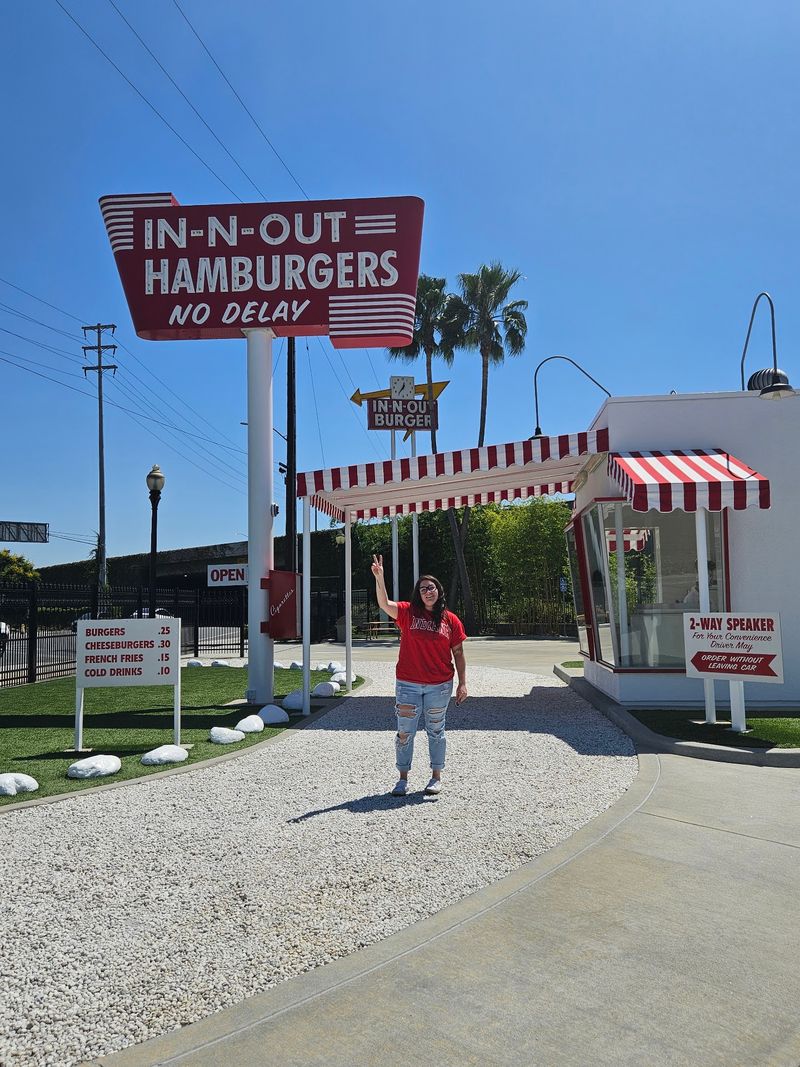
Cameras come out fast at this location. The replica makes a genuinely fun backdrop, and photo opportunities rank among the most mentioned reasons to visit.
Because the building is fenced in, many of the best shots happen from the sidewalk or just outside the barrier. That setup still works well for framing the classic stand and its signage.
Families passing through Los Angeles often treat it as a quick detour that pays off. Kids who arrive unsure sometimes end up grinning and asking for extra pictures once they see the tiny stand up close.
The nostalgic look of the place gives every photo a vintage flavor without any editing tricks. Longtime fans especially love capturing themselves at the birthplace of a burger they grew up loving.
Plan for a short but satisfying stop. Ten or fifteen minutes is enough to grab great shots and soak in the history.
For road-trippers hunting memorable pit stops between city sights, this little corner delivers a photo that instantly explains itself to anyone back home.
The Merch Shop Just Down The Sidewalk
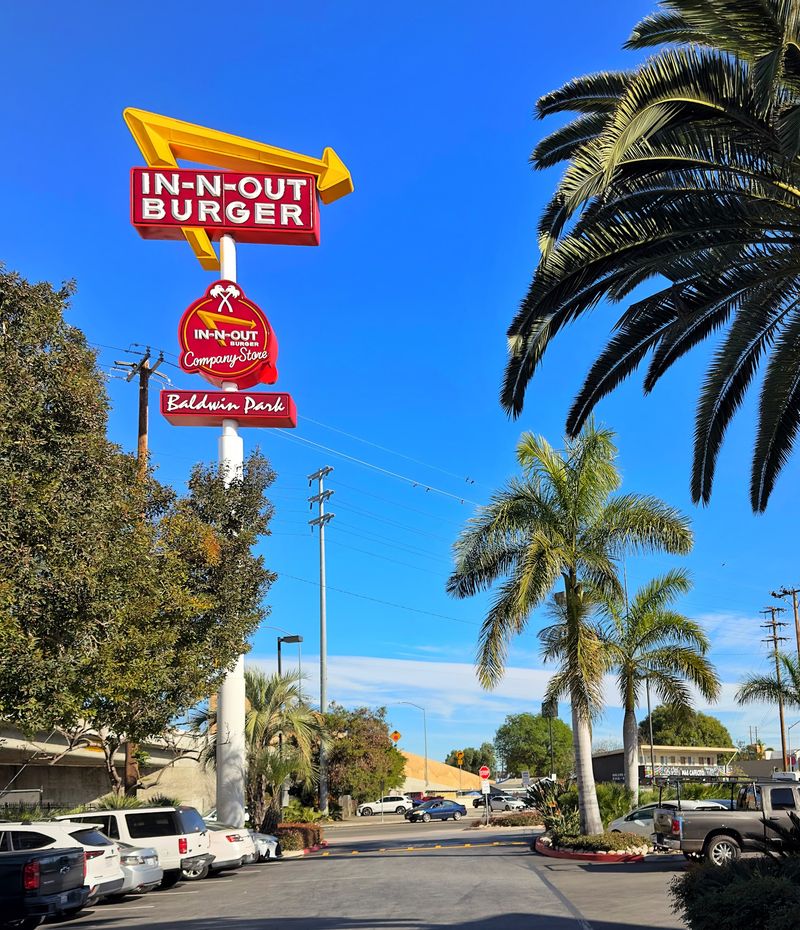
Right across from the museum sits the In-N-Out University building, and near it is a company store loaded with merchandise. Many guests pair the two into one easy outing.
The shop stocks all kinds of gear, from T-shirts to souvenirs that fans happily carry home. People have picked up items to bring back to states as far away as Michigan.
Getting there is simple. The common tip is to park by the gift shop, then walk down the sidewalk and under the bridge to reach the replica, a stroll that takes only a few minutes.
Combining the museum and the store makes the trip feel complete. You get the history first, then a chance to grab something tangible to remember it by.
The souvenirs also make the visit kid-friendly, since younger fans love leaving with a shirt or sticker. It rounds out the experience nicely, giving the whole stop a beginning, middle, and a satisfying little finish before you head off to find lunch.
Free Parking And An Easy Approach
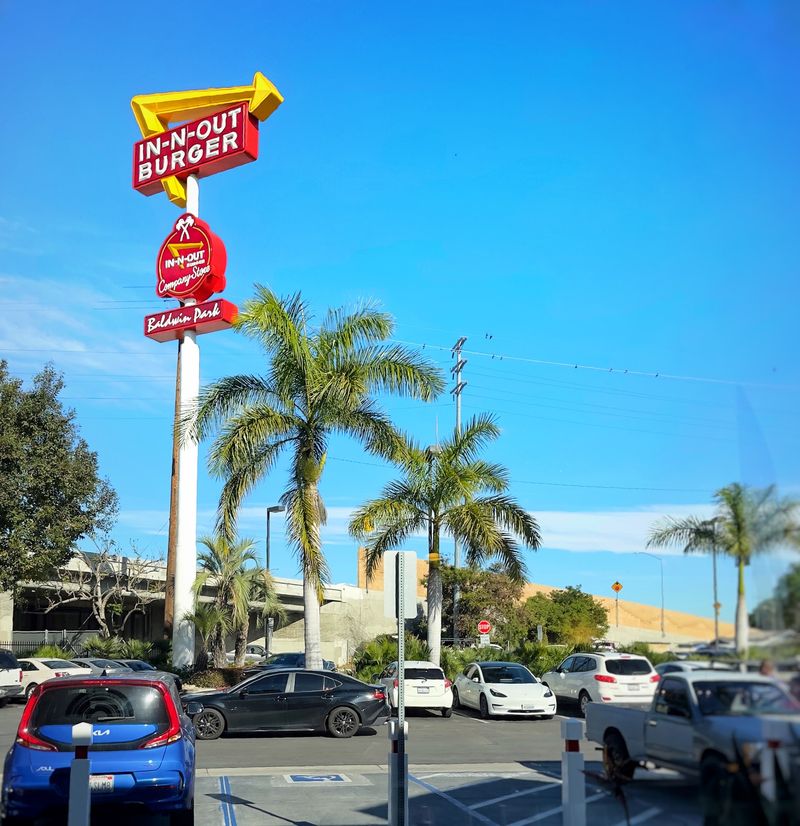
Good news for anyone worried about the hassle of city stops: parking here is easy and free. That alone removes a big barrier for spontaneous visitors.
Most people park near the gift shop and company store, then make the short walk under the bridge to reach the replica. The path is quick and clearly doable on foot.
The location sits conveniently for travelers moving in or out of the Los Angeles area. A brief exit off the route is all it takes to add a piece of burger history to the day.
There are no tickets required and no complicated entry process. You show up during open hours, look around, and enjoy the stories at your own pace.
Simplicity is really the theme of getting here. Between the free lot, the short walk, and the open-access setup, the logistics stay refreshingly low-stress.
For a museum devoted to a chain famous for smooth drive-thru service, that ease of access feels exactly right and keeps the visit relaxed from start to finish.
Short Hours That Demand A Little Planning
Timing is the one thing you cannot wing here. The museum opens only Thursday through Sunday, from 11 AM to 2 PM, and stays closed Monday through Wednesday.
That narrow four-hour window trips up plenty of hopeful guests. Some arrive on a closed day and end up viewing the stand only from the fence line.
The advice repeated most often is simple: check the hours before you go. A quick confirmation saves you from a wasted detour and a locked gate.
Because the schedule is tight, it helps to build your day around it. Aim to arrive early in the window so you have time for the museum, the walk, and the store.
The limited hours actually add to the sense of occasion. Getting inside during that short stretch feels a bit like catching a special showing.
Plan ahead, land within the window, and you will have earned a proper look at the birthplace of a burger legend, freeway noise and all.
Why Fans Keep Coming Back
Something about this modest corner keeps drawing people back. Families return with kids in tow, eager to show a new generation where the story began.
The overall sentiment leans overwhelmingly positive, reflected in that 4.8-star standing. A few honest notes point out that the space is tiny and there is not a ton to see, which is fair given the size.
Still, the mix of history, friendly staff, easy access, and a nearby store adds up to a stop that punches above its footprint. Baldwin Park clearly takes pride in hosting this piece of the company’s roots.
Pairing the museum with a meal at the working location down the street rounds out the day. History first, burger second, memories all around.
For fans of the chain, this is the kind of detour that feels almost required at least once. It is small, it is short on hours, and it is completely worth the effort.
Line up your timing, take the little walk, and pay a visit to the humble spot where a California favorite first opened its window.
Enjoyed this story?
Add Fast Food Club as a preferred source to see more of our reporting on Google.