


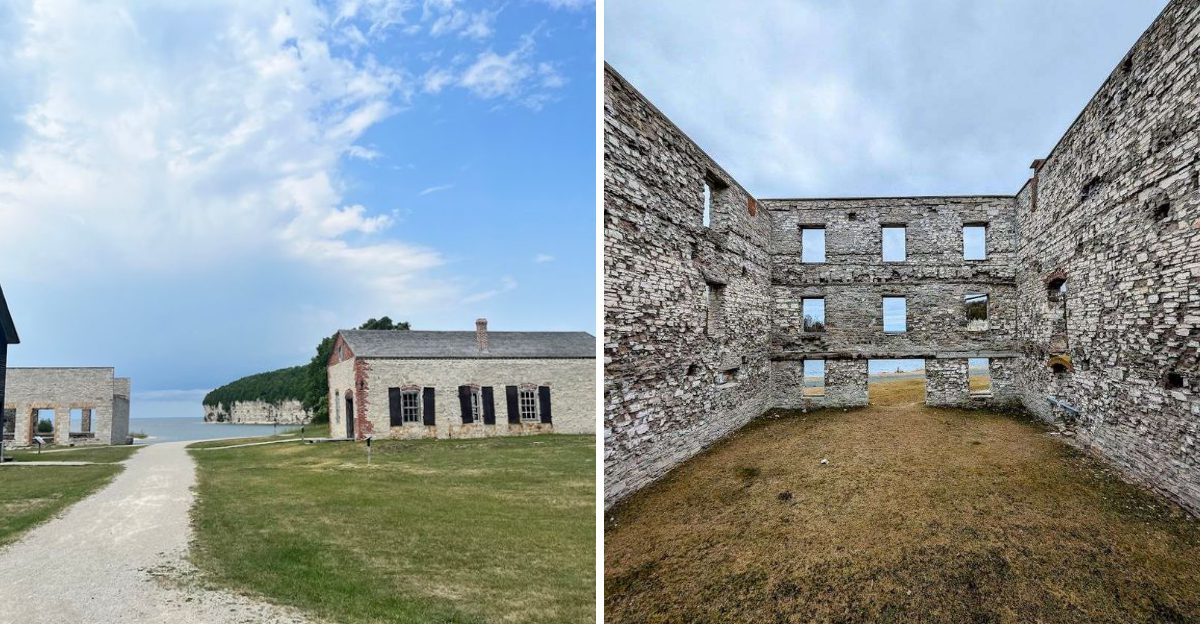
Tucked away on the shores of Big Bay de Noc in Michigan’s Upper Peninsula, Fayette Historic State Park holds one of the most fascinating ghost towns in the entire Midwest. A short 1-mile trail winds through the preserved ruins of a once-booming iron smelting town from the 1800s, where hundreds of workers once lived and labored.
Today, the crumbling stone buildings and silent streets feel frozen in time, offering visitors a rare and eerie glimpse into a world long gone. Whether you love history, hiking, or just a good mystery, this hidden gem is absolutely worth the trip.
The Ghost Town of Fayette: A Snapshot of the Past
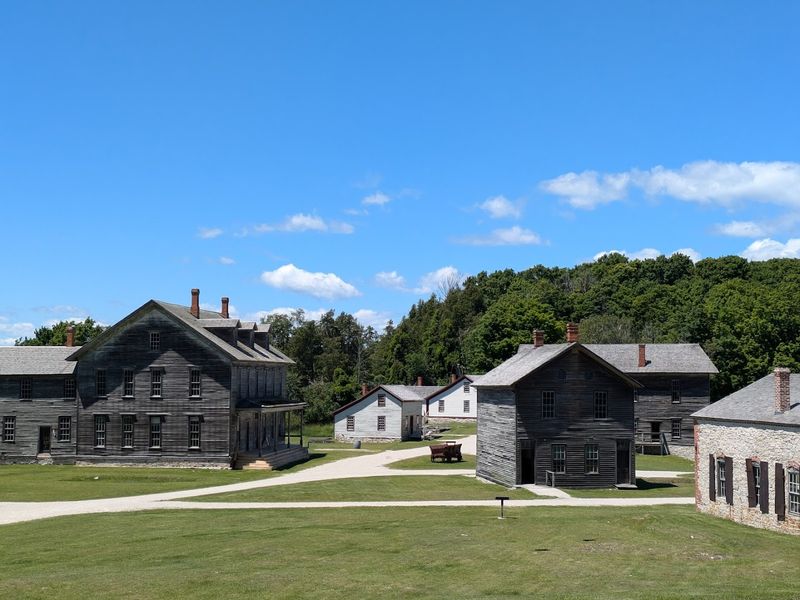
Back in 1867, the town of Fayette was a roaring industrial hub built by the Jackson Iron Company to smelt iron ore from nearby mines. At its peak, over 500 people called this small peninsula home, working long, grueling hours to fuel America’s growing demand for iron.
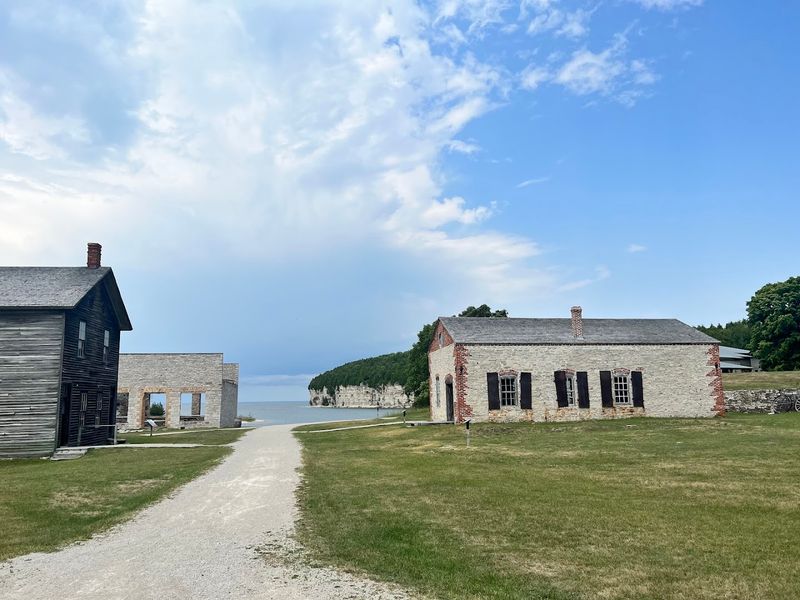
Today, walking through Fayette feels like stepping into a time capsule. The stone furnaces, workers’ cottages, and company offices still stand, preserved with remarkable care by Michigan’s DNR.
Interpretive signs posted throughout the site explain exactly what each building was used for, so you never feel lost.
Visitors consistently rave about how interactive and real the experience feels. One reviewer noted that “pictures don’t do it justice” — and that’s the honest truth.
Fayette isn’t just a collection of old buildings; it’s a story etched in limestone, waiting for curious visitors to read it.
Starting the 1-Mile Trail: What to Expect at the Trailhead
Before you even take your first step on the trail, the visitors center at Fayette Historic State Park deserves a few minutes of your time. Inside, you’ll find a detailed scale model of what the bustling town looked like during its heyday in the late 1800s — it’s genuinely jaw-dropping to compare that thriving scene to the quiet ruins outside.
The trail itself is mostly flat and easy to walk, making it accessible for families with kids, older adults, and casual hikers. A few sections have a slight incline, so comfortable shoes are a good idea.
The path is well-marked, and there are clean restrooms and water stations along the way.
Park hours run from 9 AM to 9 PM every day of the week. You’ll need a Michigan Recreation Passport to enter — a day pass costs $11, and an annual pass runs about $40.
Limestone Bluffs Along the Shoreline: Nature’s Own Spectacle
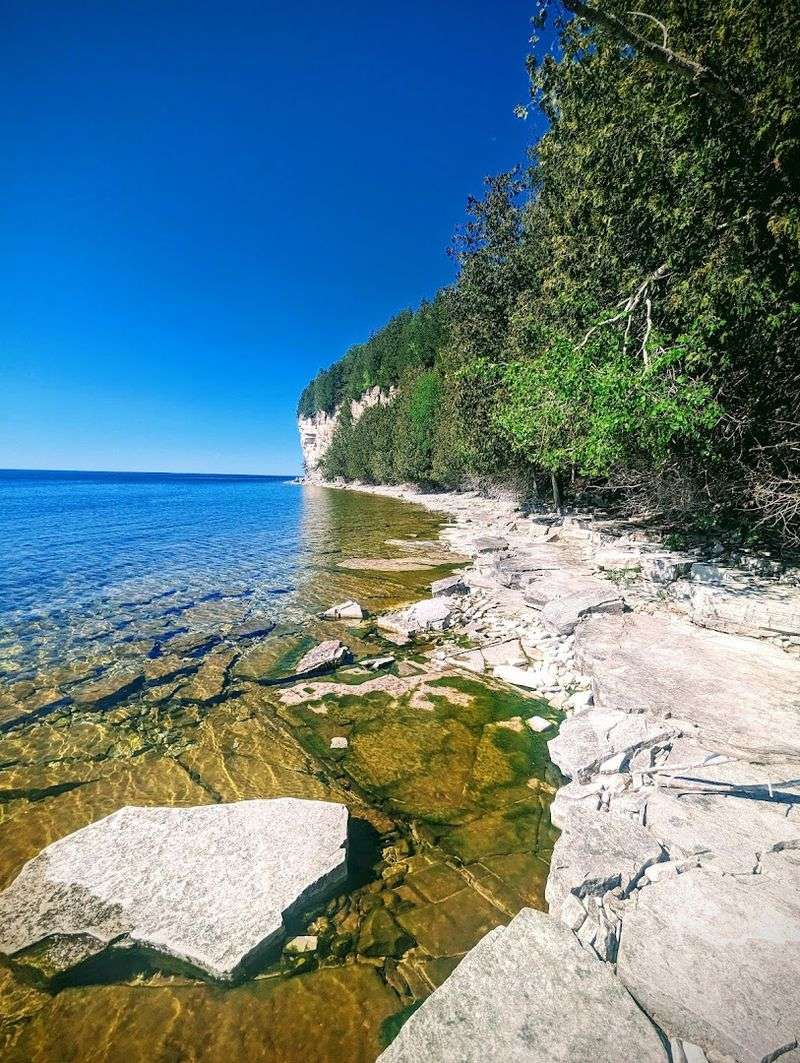
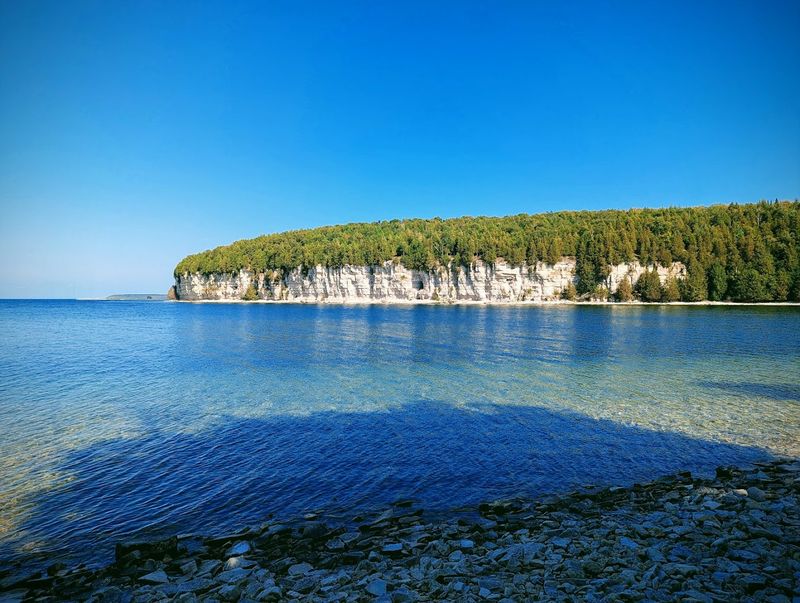
One of the most unexpected surprises at Fayette is the stunning natural scenery that frames the historic town. The park sits on the Niagara Escarpment, a geological formation that stretches all the way from New York to Wisconsin, and the exposed limestone bluffs here are nothing short of breathtaking.
Visitors who kayak along the shoreline get an especially dramatic view of these cliffs rising straight up from the crystal-clear water of Big Bay de Noc. Kayak rentals are available right at the park entrance for around $30 each for 24 hours — a fantastic deal for the views you get.
Even from the trail, the bluffs create a gorgeous backdrop that makes every photo look like a professional shot. One reviewer put it perfectly: “There isn’t a bad angle here.” Whether you’re a nature lover or a photography enthusiast, the limestone shoreline alone makes the visit worthwhile.
The Iron Furnaces: Engineering Marvels of the 1800s
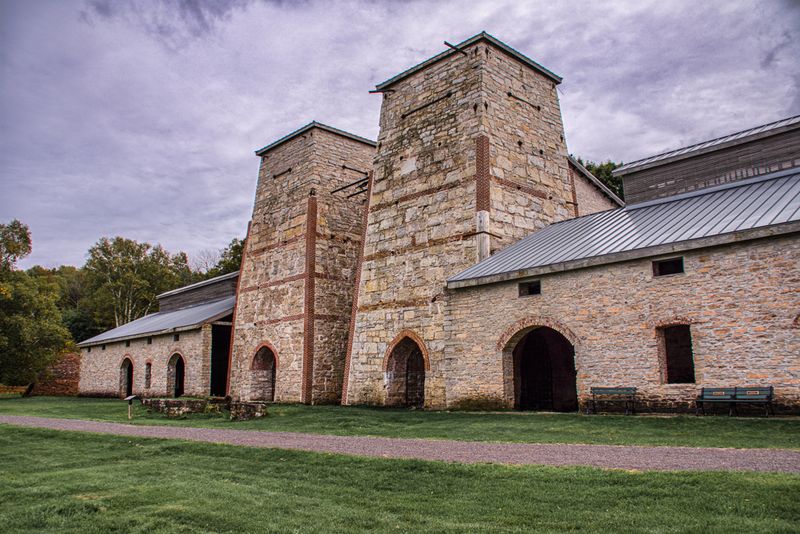
Standing in front of Fayette’s towering iron furnaces, it’s hard not to feel a little humbled. These massive stone structures were the beating heart of the entire operation, capable of producing up to 15 tons of pig iron every single day during peak production years.
The furnaces were fueled by charcoal made from the surrounding hardwood forests, which is why the town was built in this remote corner of Michigan’s Upper Peninsula — the trees were the fuel source. Workers fed ore into the top of the furnace while molten iron poured out from the bottom, a process that ran 24 hours a day, seven days a week.
Today, the furnaces are remarkably well preserved, and you can walk right up to them to get a real sense of their enormous scale. The DNR has done an outstanding job maintaining these structures without making them feel manufactured or overly polished.
Workers’ Cottages and Company Housing: Life Behind the Labor
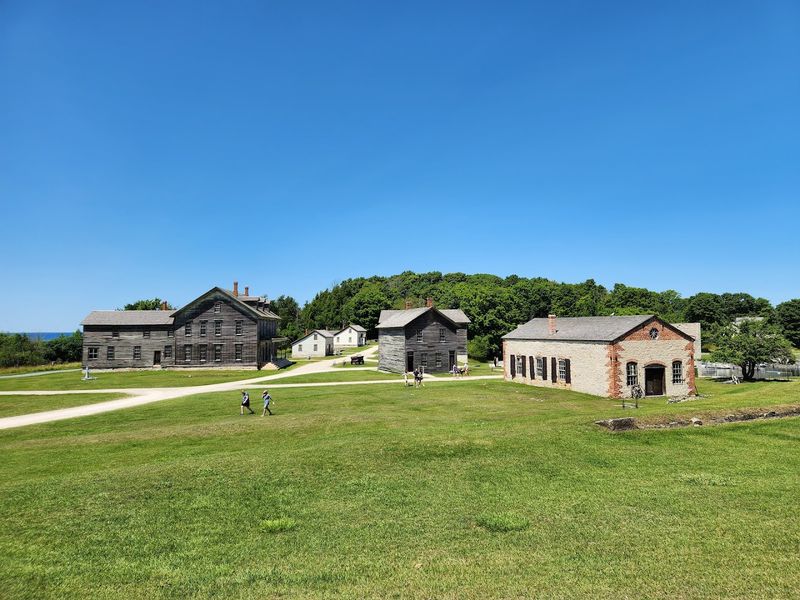
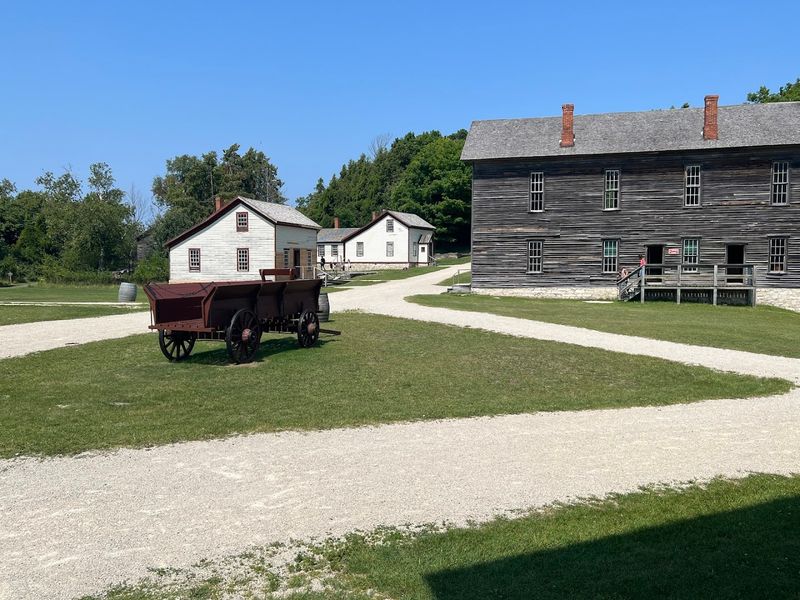
Not everything at Fayette was about industrial output. Behind the furnaces and machine shops stood rows of modest workers’ cottages where families built their lives in this isolated community.
Stepping inside these small stone homes gives you a quietly moving sense of the human side of the industrial era.
The cottages ranged from cramped single-room dwellings for laborers to slightly more comfortable homes for supervisors and skilled workers. The social hierarchy of the 1800s was literally built into the architecture here, and the interpretive signs make that history easy to understand and appreciate.
Families visiting with kids often find this part of the trail especially engaging. Children can compare the tiny living spaces to their own bedrooms at home, which sparks some genuinely fun conversations about history and daily life.
One family reviewer said their kids “made sure they saw every placard” — a rare win for any history site.
The Hotel and Town Hall: When Fayette Was Thriving
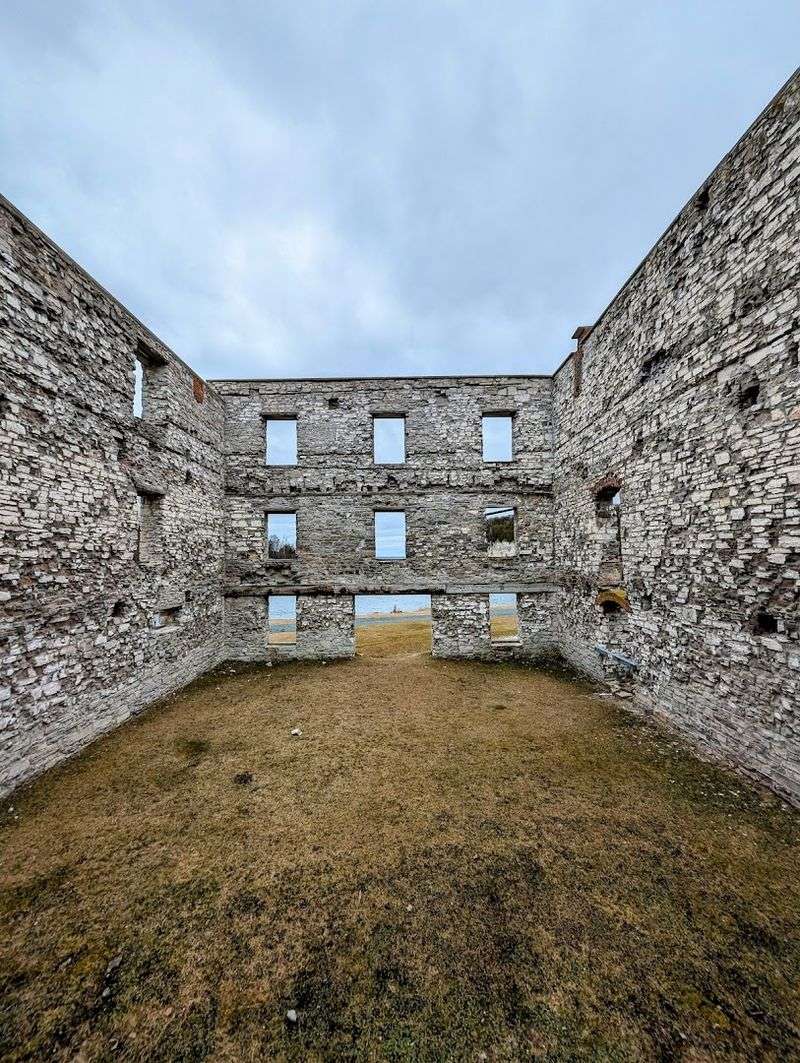
Hard as it is to imagine now, Fayette was once a fully functioning community with a hotel, town hall, and all the social trappings of a proper 19th-century village. The hotel catered to traveling businessmen and company officials, while the town hall served as the civic center for a population of over 500 residents.
Walking through the roofless stone walls of these buildings today carries a quietly haunting quality that photographs simply cannot capture. The empty window frames look out over the same bay the original residents once admired, creating a strange and moving connection across more than a century of time.
Many visitors report spending far longer at this section of the trail than they expected, simply soaking in the atmosphere. Plan to budget at least two to three hours for your full visit to Fayette — rushing through it means missing the details that make this place genuinely special.
Wildlife Encounters on the Trail: Deer, Pigeons, and More
Fayette Historic State Park isn’t just a history lesson — it’s also a surprisingly rich spot for wildlife watching. White-tailed deer are a common sight along the trail, often grazing calmly near the old stone buildings as if they’ve completely claimed the place as their own.
One winter visitor shared a particularly magical experience: watching a flock of pigeons swooping into the ruins of the main building to roost for the night. “I had never before heard so distinctly the woosh of a flock flying around,” they wrote — a reminder that nature has quietly moved into the spaces humans left behind.
Dogs are welcome at Fayette on a leash, which makes the park a great outing for pet owners too. Multiple reviewers mentioned their dogs absolutely loved exploring the grounds.
Keep your eyes open and your camera ready — wildlife sightings here tend to happen when you least expect them.
Sunset Views Over Lake Michigan: Worth Every Step
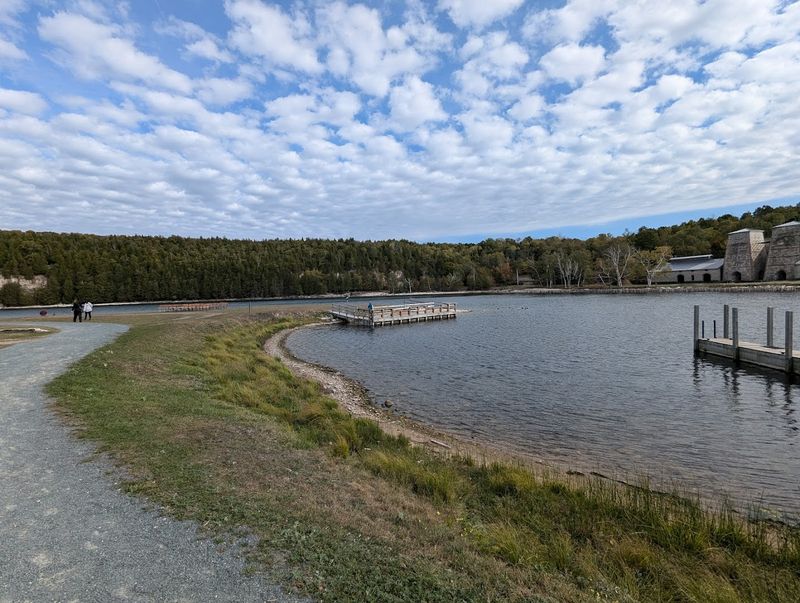
Timing your visit to Fayette around sunset might be the single best decision you make all trip. The park’s position on the shores of Big Bay de Noc — an arm of Lake Michigan — means that evening skies here can be absolutely spectacular, painting the water in shades of orange, pink, and deep purple.
One camper who accidentally booked the park for a single night ended up staying two nights, partly because of the sunsets. “We saw one of the greatest sunsets ever,” they wrote, and that kind of spontaneous magic is exactly what makes Fayette so memorable for first-time visitors.
The remote location also means almost zero light pollution after dark, making it an excellent spot for stargazing once the sun goes down. Bring a blanket, find a spot along the shoreline, and let the Upper Peninsula sky do the rest.
You won’t be checking your phone much.
Winter Visits to Fayette: A Completely Different Kind of Magic
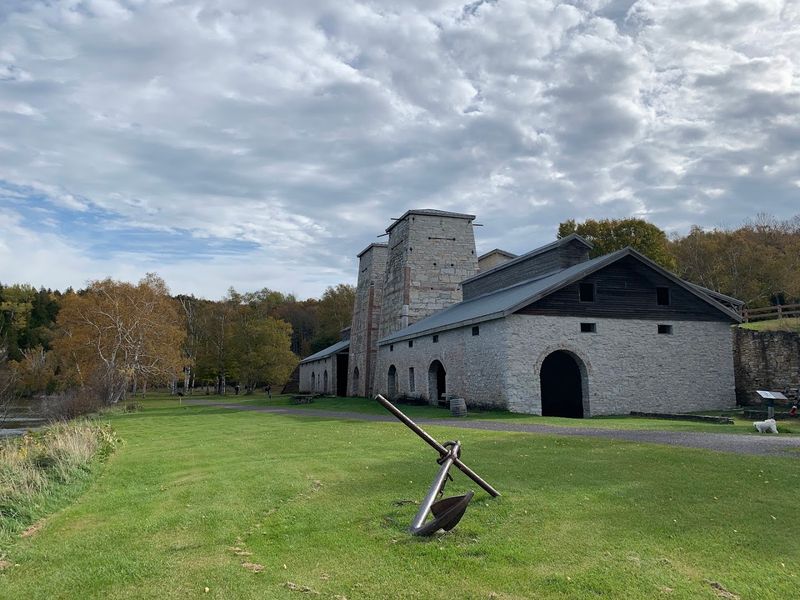
Most people visit Fayette in the summer, but those who brave the Upper Peninsula winter to make the trip discover a completely transformed experience. Snow settles softly over the stone ruins, the trails grow hushed and still, and the usual crowds of tourists vanish entirely — leaving you almost alone with history.
Snowshoes are strongly recommended for a winter visit, as the trails can accumulate significant snow. But the payoff is extraordinary: the exposed limestone bluffs of the Niagara Escarpment are especially dramatic against a winter sky, and the quiet is the kind that feels genuinely restorative.
One winter visitor described Fayette in the cold months as an “unexpected gem” — and that’s a fair assessment. The park stays open year-round, though services are limited in winter.
If you’re an adventurous traveler who loves solitude and dramatic scenery, a winter trip to Fayette belongs on your bucket list.
Kayaking the Bay: Exploring Fayette From the Water
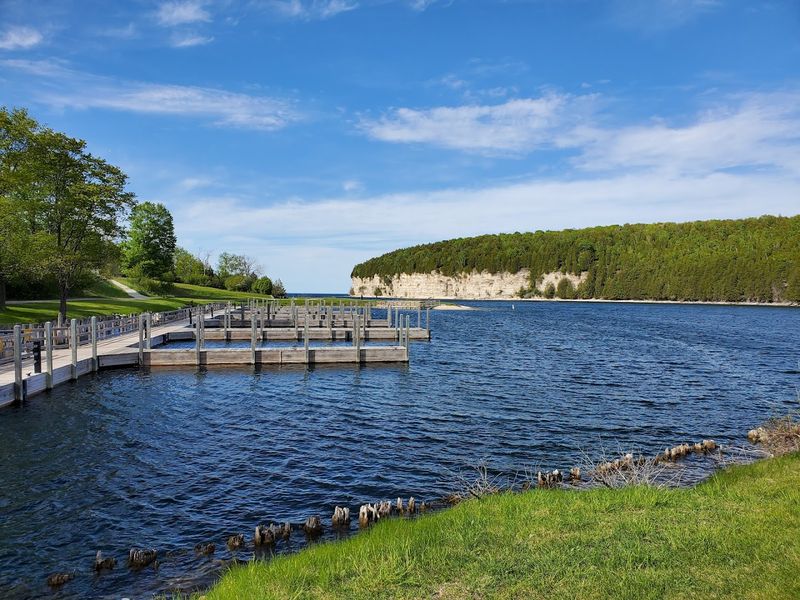
Seeing Fayette from the water is a completely different experience from walking the trail — and honestly, it might be even more impressive. Paddling along the base of the limestone bluffs gives you a sense of their true scale, and the view of the historic town from the bay is unlike anything you’ll find on land.
Kayak rentals are available right at the park entrance for around $30 each for a 24-hour period, which is a genuinely reasonable price given the access it provides. No previous kayaking experience is required for the calm, sheltered waters of Big Bay de Noc, making it a great option for beginners and families.
Early morning paddles are especially rewarding — the water is usually glassy calm, wildlife activity peaks near the shoreline, and the low-angle light makes the limestone cliffs glow in a way that photographers absolutely love. Rent early and stay out as long as you like.
The Visitors Center and Gift Shop: Don’t Skip This Stop
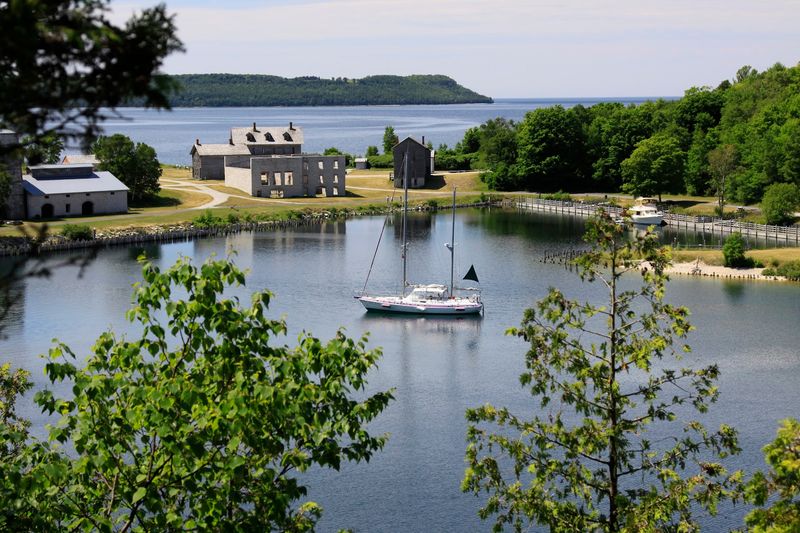
A lot of state park visitors centers feel like afterthoughts, but the one at Fayette is genuinely worth your time. Recent improvements have upgraded the displays significantly, and the centerpiece — a detailed scale model of the town as it looked during its industrial peak — is the kind of exhibit that makes you stop and stare for a good five minutes.
The gift shop stocks a solid selection of books, souvenirs, and local snacks. Ice cream is available too, and multiple reviewers called it surprisingly good and well-priced — a small but welcome reward after walking the trail in summer heat.
Clean restrooms are located here as well.
Park staff at Fayette earn consistent praise from visitors for being friendly, knowledgeable, and genuinely enthusiastic about the site’s history. If you have questions about specific buildings or the town’s history, don’t hesitate to ask — the staff here really know their stuff.
Hiking the Ridge Trails: Beyond the Ghost Town
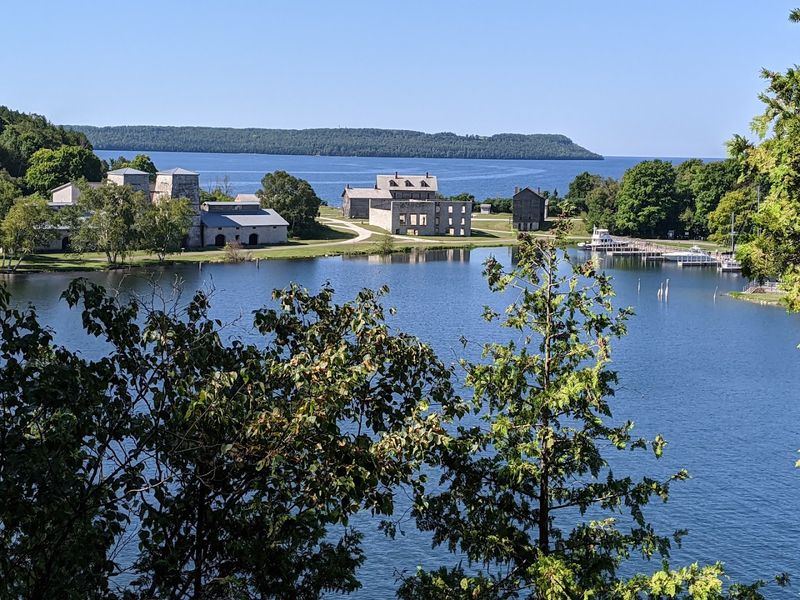
Once you’ve explored the ghost town itself, the park offers additional hiking trails that climb up onto the ridge above the historic site, rewarding hikers with sweeping views over the bay and the surrounding Upper Peninsula forest. These trails add a satisfying physical challenge to what is otherwise a fairly easy walk.
The ridge trails range from moderate to somewhat strenuous, with elevation changes that make them a step up from the flat town loop. Good hiking footwear is recommended, and bringing water is a smart move since the trails venture away from the main facilities for stretches at a time.
Several reviewers specifically mentioned the ridge hikes as a highlight of their visit, describing the views as “quite spectacular.” If you’re visiting with older kids or adults who enjoy a bit more of a workout, tacking on one of the ridge trails turns a two-hour visit into a genuinely full and satisfying outdoor adventure.
Planning Your Trip to Fayette: Tips for the Best Visit
Getting to Fayette takes a little commitment — the park sits about 15 miles off US-2 on the Garden Peninsula, making it genuinely remote by most standards. But that remoteness is part of the charm, and the drive through the quiet Upper Peninsula countryside is scenic in its own right.
Pack a lunch and plan to picnic, because the park has beautiful spots right along the shoreline. Most visitors say two to three hours is the sweet spot for a comfortable visit, though it’s easy to linger longer if the mood strikes.
Arriving early is smart, especially in summer when parking can fill up.
The park is open daily from 9 AM to 9 PM and requires a Michigan Recreation Passport for entry. For more information or to plan ahead, visit the official DNR page at dnr.state.mi.us or call the park directly at +1 906-644-2603.
The address is 4785 II Rd, Garden, MI 49835.
Enjoyed this story?
Add Fast Food Club as a preferred source to see more of our reporting on Google.