


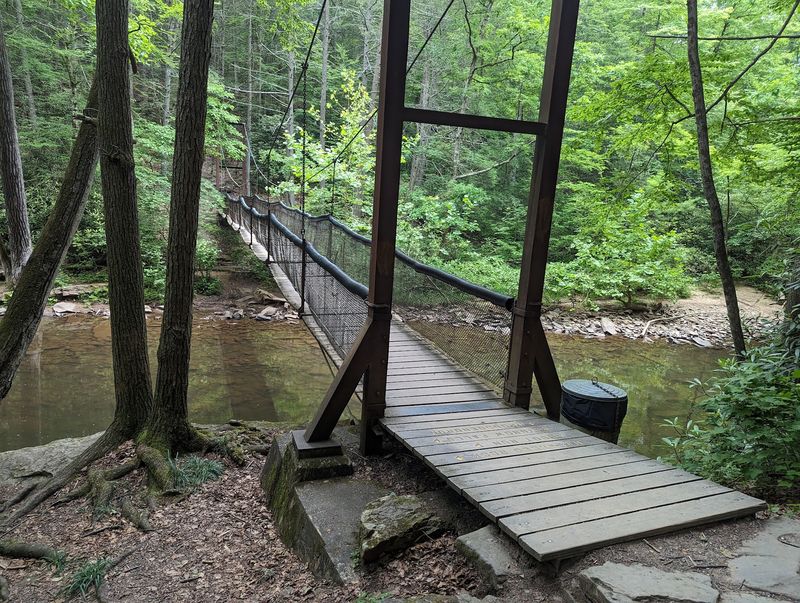
A waterfall sits just five minutes from the parking area, reached by crossing a swaying cable bridge over a rushing creek. Nearby, a giant boulder balances at the very edge of a cliff, looking ready to tumble at any second.
Add an old iron furnace from the 1800s, a cellar that fills with ice, and miles of trails looping through hemlock woods, and you have a compact park that packs in far more than its size suggests. Central Pennsylvania hides plenty of quiet corners, but few pile up this many curiosities within a short walk of each other.
The catch is there is no cell service for miles, so a little planning goes a long way. Keep reading to find out where all of this lives and how to make the most of a day here.
A Compact Park With Big Surprises Near James Creek
Tucked into the mountains of central Pennsylvania, Trough Creek State Park sits at 16362 Little Valley Rd, James Creek, PA 16657, close to the shores of Raystown Lake.
The park earns high marks, holding a 4.8-star average across more than 950 reviews. That kind of standing is rare for a place many describe as one of the smaller state parks around.
Regulars are quick to point out that small does not mean short on things to do. One main road runs through the park, which makes navigation simple, and it connects most of the highlights without much fuss.
Folks appreciate that you can drive right up to many of the attractions if you do not feel like hiking far. That flexibility makes it welcoming for families, casual walkers, and anyone who wants big scenery without a full-day trek.
The setting is peaceful and nicely wooded, with a creek cutting through the heart of it all. Come once and you may find that a single visit barely scratches the surface of what this quiet park holds.
Rainbow Falls, an Easy Five-Minute Walk From the Lot
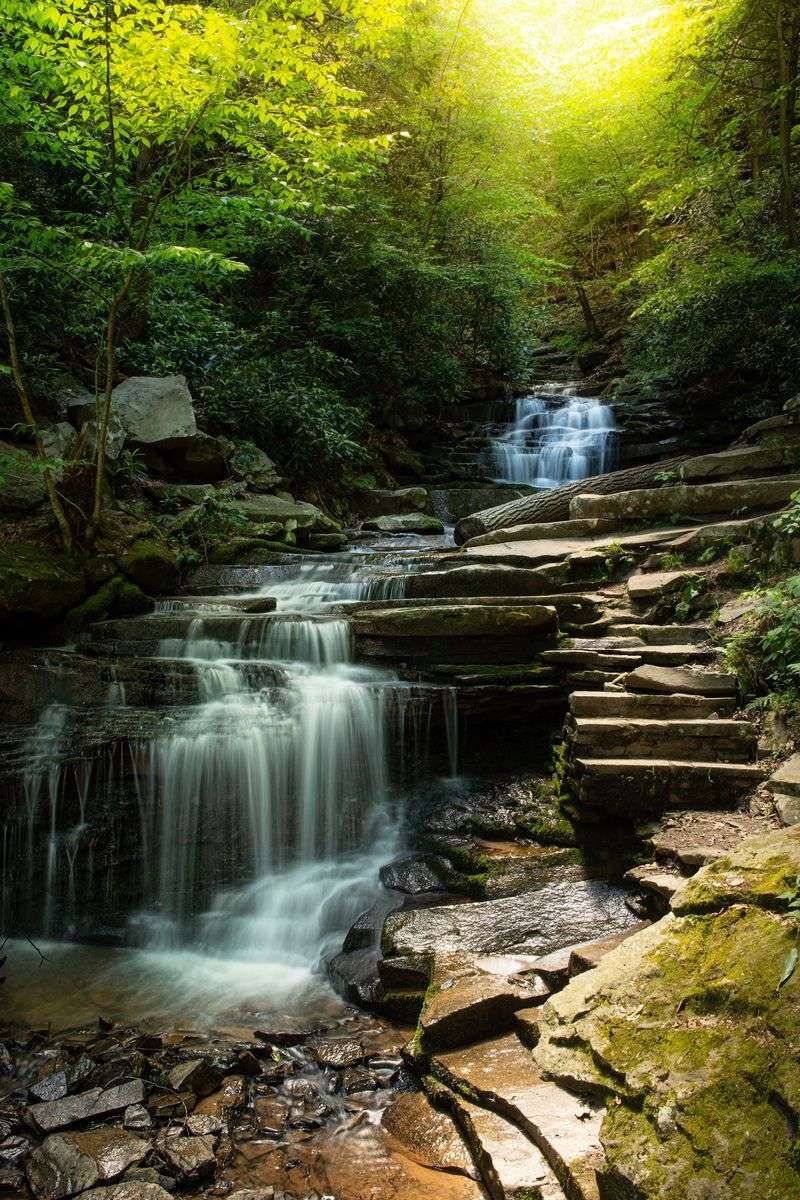
The star of the show waits at the end of a short, easy trail that takes only about five minutes from the parking area.
Rainbow Falls draws the most attention of any feature here, and for good reason. The water spills over rock into the gorge below, and the area around the falls is often called one of the prettiest spots in the whole park.
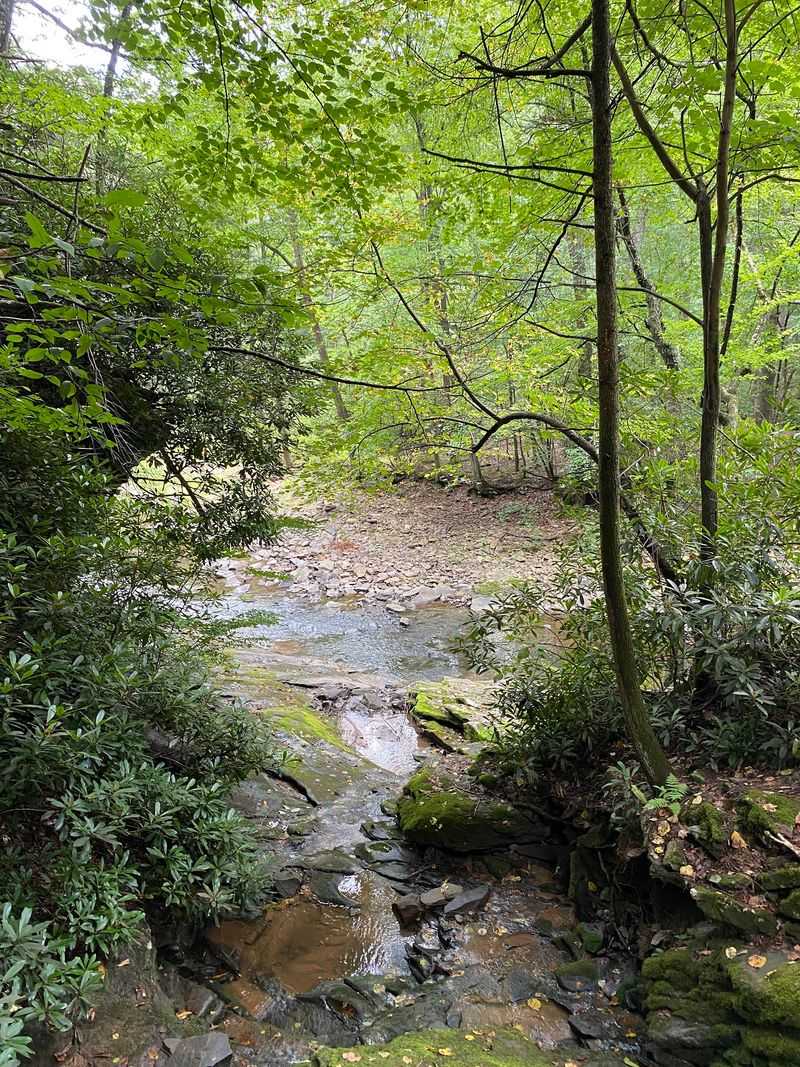
Early spring is a favorite window, when the flow runs strong and the surrounding woods start to green up. After recent rain or melting snow, the creek fills and rushes, giving the falls plenty of energy.
Timing matters, though. During dry stretches or drought, the water can slow to a trickle, so a wetter season delivers the fuller display.
Steep stone steps and trails run alongside the falls, and some of those steps can feel loose underfoot, so careful footing pays off. The reward is a relaxing scene where the sound of moving water does most of the talking.
The Swinging Suspension Bridge Everyone Talks About
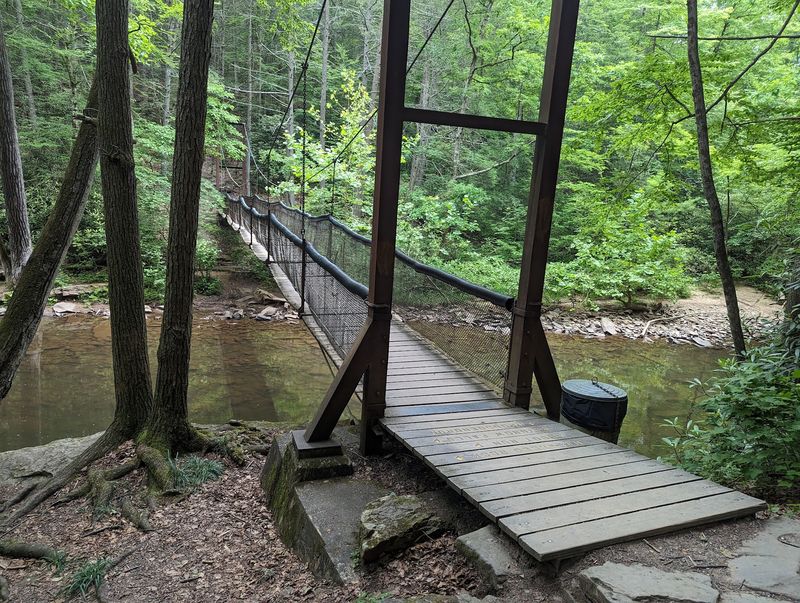
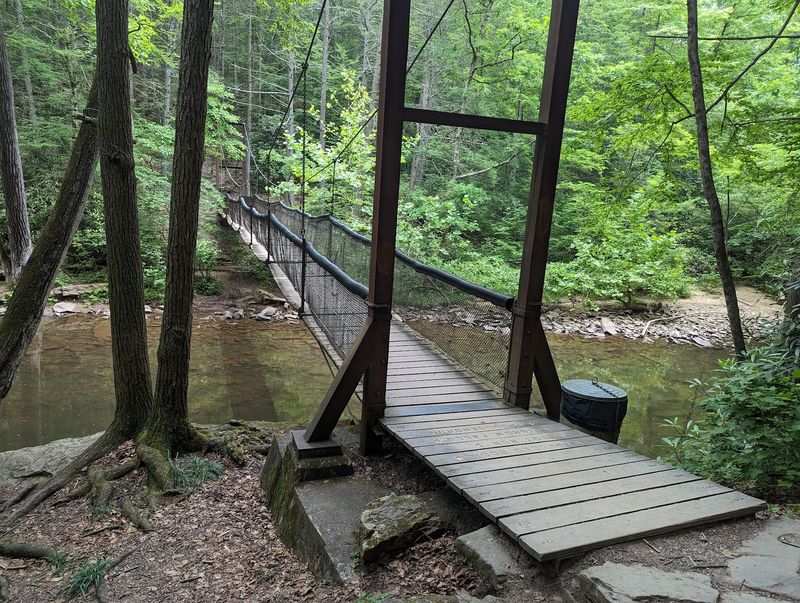
Crossing the creek to reach the falls means stepping onto a cable suspension bridge that sways gently as you walk.
The bridge earns its own fan club, mentioned again and again as one of the coolest parts of a visit. It offers a fun little experience and sits just an easy walk from the parking spot.
Some folks have noticed a few boards missing here and there, meaning you occasionally step over a gap as you cross. It adds a touch of adventure to what is otherwise a quick, simple stroll.
The bridge does more than get you across water. From nearby, you also get a good look at the famous balancing rock, so the crossing doubles as a scenic vantage point.
For anyone unsteady on their feet, a bit of caution helps, since the bridge moves and the terrain around it is rugged. Still, the short walk over the swaying span is one of those small thrills that sticks with you long after the visit ends.
Balanced Rock, Perched Right on the Cliff’s Edge
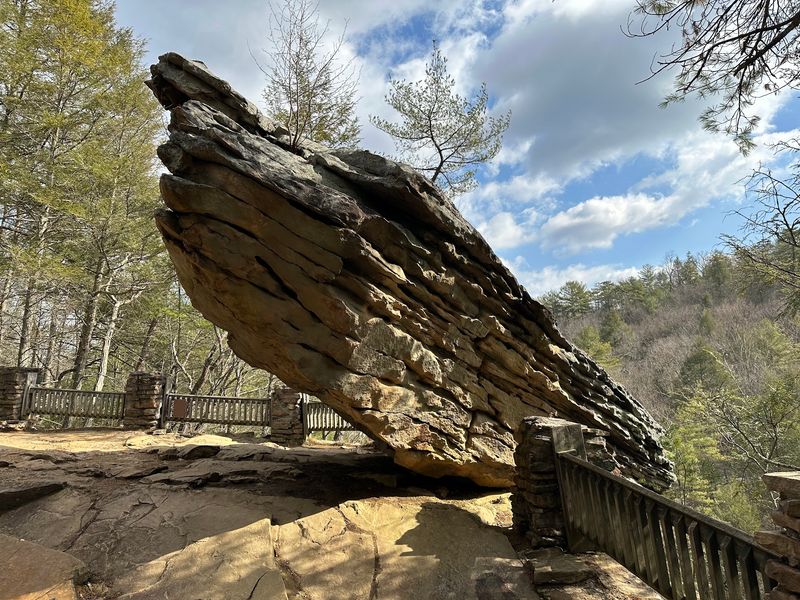
High above the gorge, a massive boulder rests at the lip of a cliff, looking as if a strong nudge could send it over.
Balanced Rock counts as one of the most talked-about sights in the park, and seeing it in person tends to leave people impressed. Photos hardly do justice to how it perches at the edge.
Reaching it involves climbing a rock staircase to the top, where a nice commemorative bench sits about halfway up for a breather. The climb is short but includes some steps, so it is not the easiest for every ability level.
Once at the top, the boulder becomes a fascinating reward for the effort. Many linger there to take in the rock and the surrounding view of the woods and cliffs.
Small children can manage the walk with supervision, since part of the path runs along a cliff edge. The mix of a manageable climb and a genuinely surprising payoff makes Balanced Rock a highlight nobody skips.
The Ice Mine and Old Furnace That Tell the Park’s Story
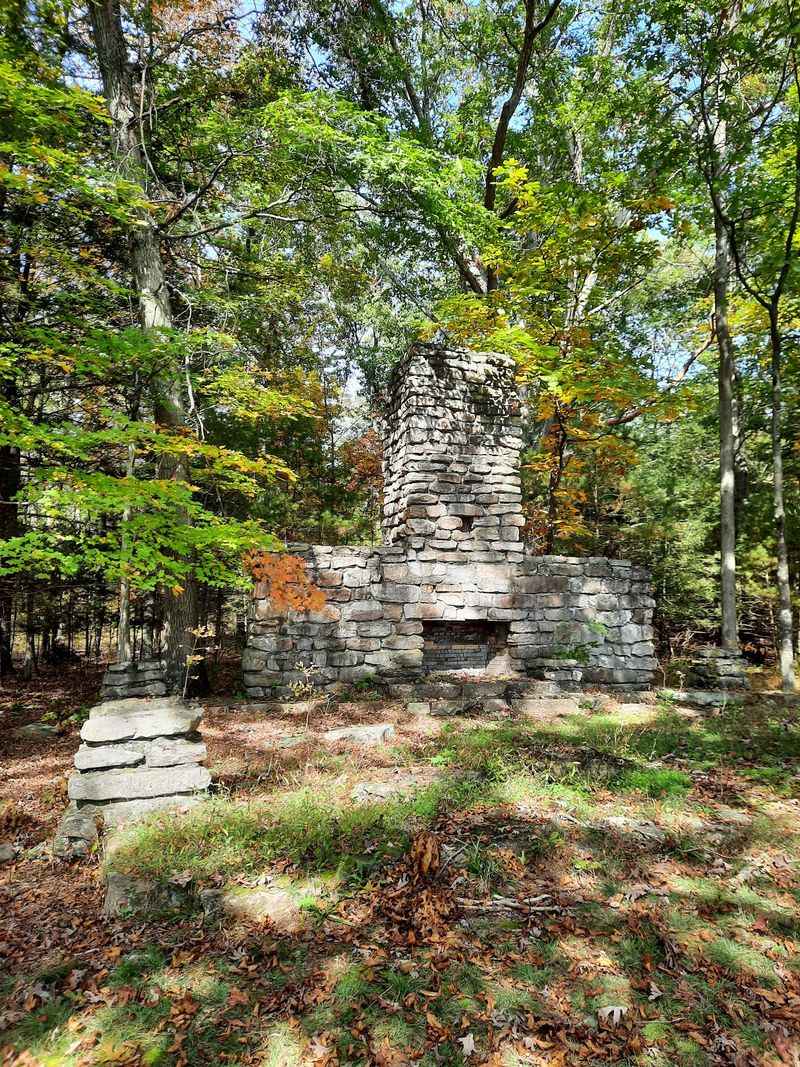
History runs deep in these woods, and two features carry the story of the people who once worked here.
The old steel furnace dates back to the 1800s, a leftover from the mill days when workers lived up in these mountains. Standing beside it gives a real sense of the industry that once filled this quiet valley.
Not far off, the so-called ice mine adds another curious layer. It appears to have served as a very old cold storage cellar from the mill era, and it only fills with ice during the winter months.
Descending into it feels genuinely cold, and folks say reading up on its history first makes the stop far more interesting. It is the kind of oddity that turns a simple walk into a mini history lesson.
An old cemetery from the same century sits nearby too, likely holding many of the mill workers, right beside where they labored. Together, these markers of the past give the park a depth that goes well beyond its natural beauty.
Trails for Every Kind of Walker
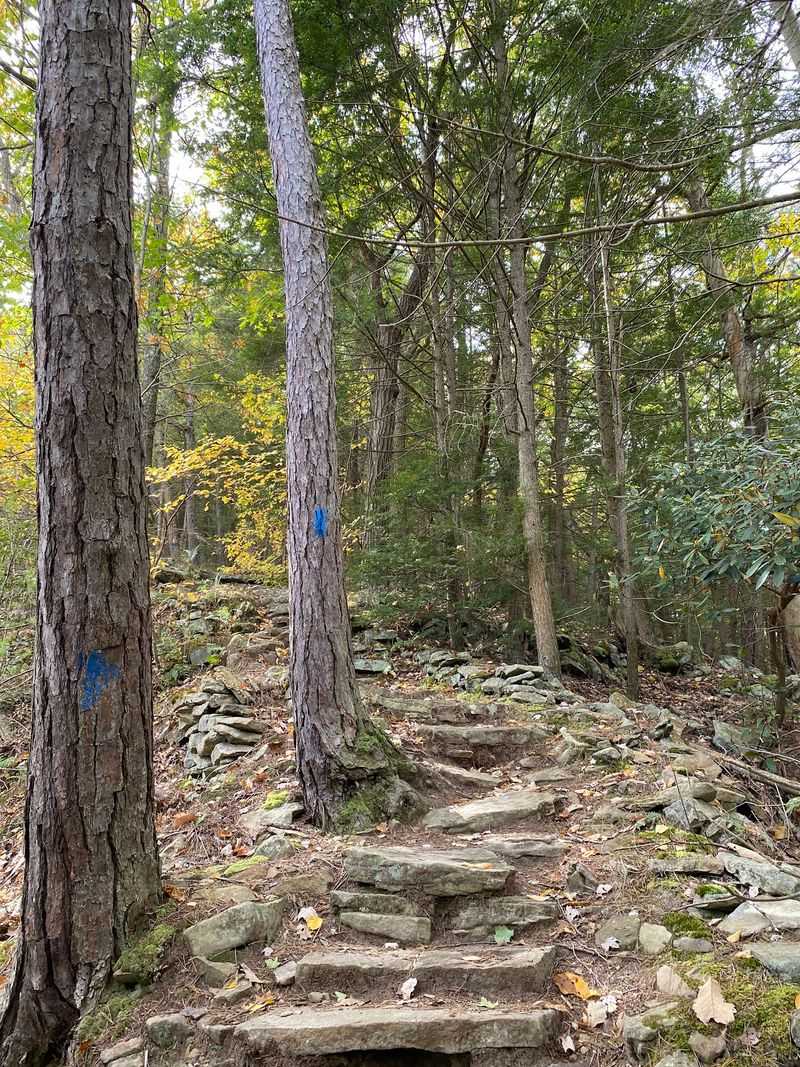
With trails as the most mentioned feature of all, the park clearly gives hikers plenty of ground to cover.
Routes range from easy, scenic paths to steeper, longer trails that loop and spur out across the park. Some short walks to the main sights stay simple, while others climb and challenge.
The Boulder Trail, running from the ice mine to the Balanced Rock overlook, is marked as more difficult and rewards effort with gorgeous boulders along the way. It climbs uphill early and can run longer than its posted distance, so a park map helps a lot.
Trail markings sometimes fade in spots, which is another reason to carry that map. Many people finish a solid loop of the park in about three hours of walking.
Eastern hemlocks stand tall and thriving throughout, giving the trails a shaded, woodland feel. From gentle strolls to grades that test your legs, there is a path here to match nearly any mood or energy level.
Picnics, Camping, and Family-Friendly Comforts
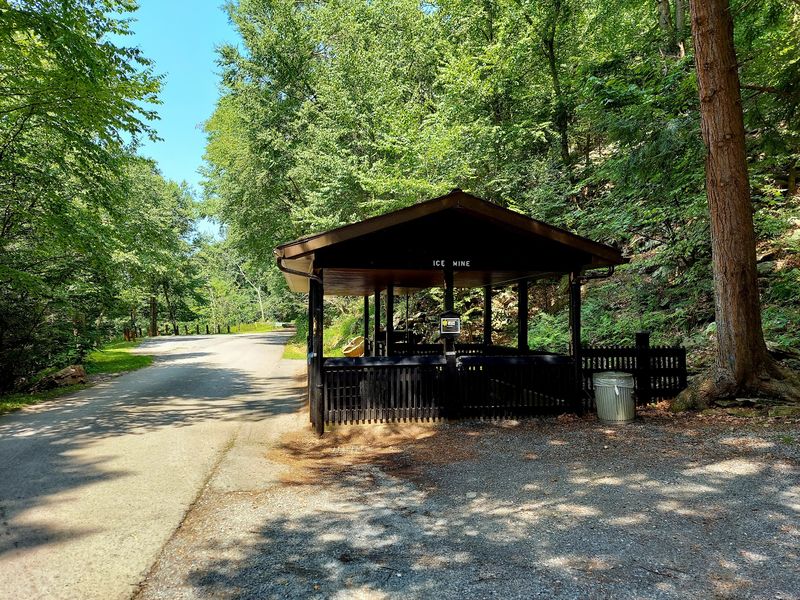
Families find a lot to love here beyond the headline attractions.
The park is genuinely family friendly, complete with a playground over in the campsite area. Little ones have room to roam, though a hand may be needed on some of the steeper trail sections.
Plenty of picnic areas dot the grounds, along with pavilions and rest areas, so packing a meal is a smart move. Folks encourage taking full advantage of these spots for a relaxed midday break.
Overnight options include camping and a secluded cabin, the latter sitting in the opposite direction of the main campsites. The cabin comes with air conditioning and a private setting, while campers appreciate that chopped wood is available right at the sites.
Trash cans line the paths and the park stays clean, with ongoing effort to keep it that way. Add in trout fishing and even snowmobile trails for winter riders, and the range of activities stretches across every season and age group.
Planning Your Visit: Hours, Access, and Smart Prep
A little groundwork makes a big difference at a park this remote.
Gates are open daily from 7 AM to 5 PM, seven days a week, giving a full daytime window to explore. Parking sits near the trails, though handicap spaces are limited and the terrain is not wheelchair accessible due to steps.
The single most important tip is to come prepared for zero cell service, which stretches for about 30 minutes around the park. Carry a satellite GPS or a paper map, and grab the park map for navigating fainter trail markings.
No stores sit within roughly 35 minutes, so arrive well stocked with food, water, and anything else you might need. Roads through the park run narrow in places, so drive slowly and stay alert.
Restrooms are limited and some are pit toilets, so set expectations accordingly. For the fullest waterfall flow, plan around wetter seasons like early spring, and remember the ice mine only holds ice in winter.
Enjoyed this story?
Add Fast Food Club as a preferred source to see more of our reporting on Google.