


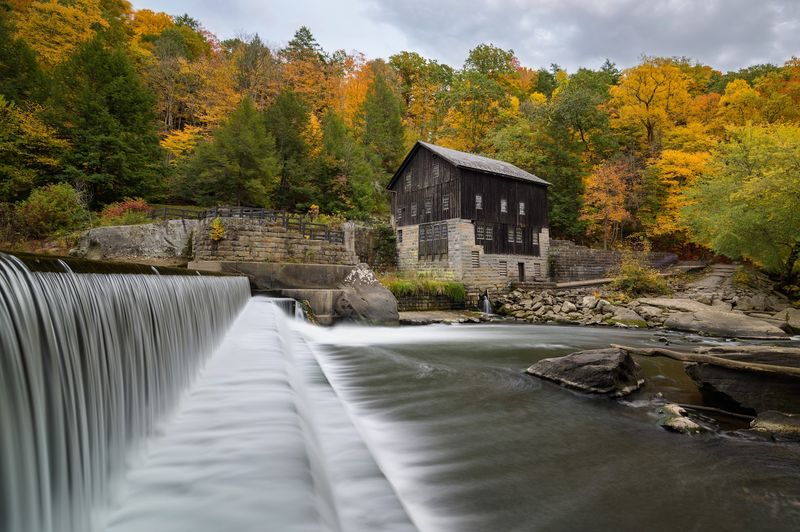
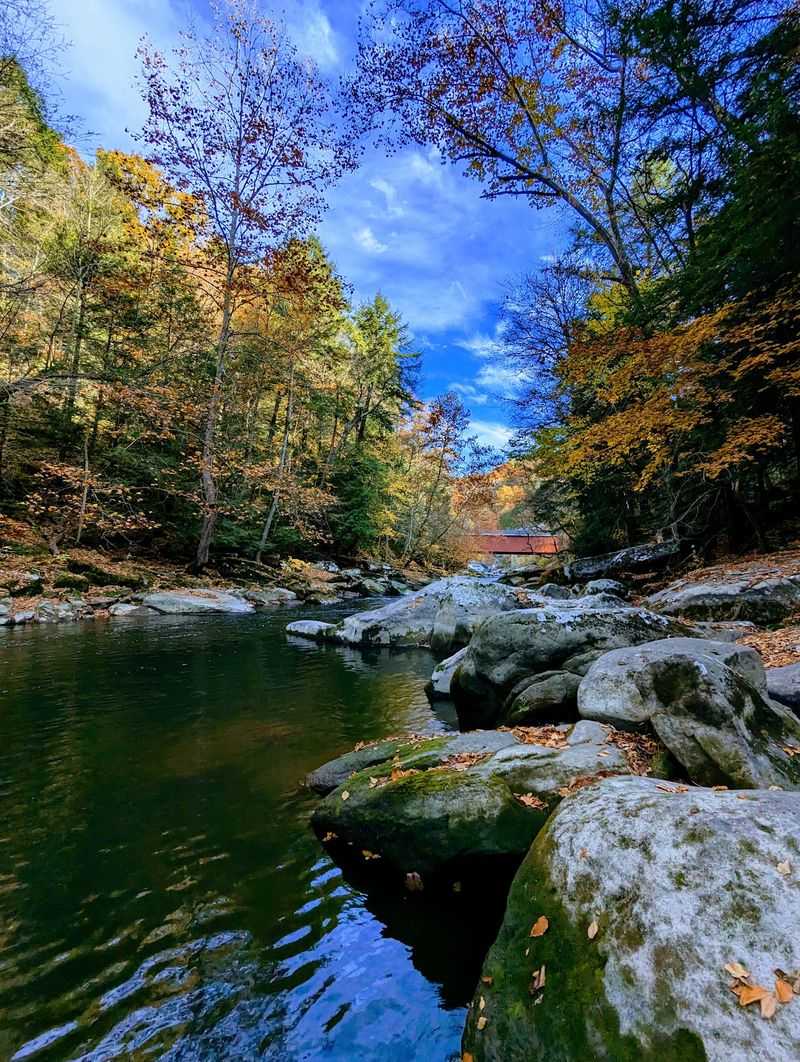
About 40 minutes north of Pittsburgh, a creek has spent a very long time carving a path through giant boulders, and people have been following it ever since. There is an old mill here that still keeps its grinding gear, a covered bridge that cars roll right through, and a waterfall parked beside it all like it owns the place.
The trails climb, drop, twist, and then climb again, so a pair of hiking sticks may become your new best friends. Families come for picnics, climbers come for the rock, and paddlers come for the whitewater.
Some people arrive for one quick hike and leave with a new favorite park. Keep reading to learn which trail to tackle first, where to park when the small lot fills up, and which month turns the whole gorge into a postcard.
A Rocky Gorge Hiding Near Portersville
Some parks announce themselves with giant signs and wide highways, but this one prefers a little mystery. The entrance can be a bit tricky to find at first, and that only adds to the feeling of discovering something special.
McConnells Mill State Park sits at 1761 McConnells Mill Rd, Portersville, PA 16051, in western Pennsylvania, United States. It is roughly 40 minutes north of Pittsburgh, reached off the Portersville exit.
So what exactly is waiting down that road? The park is a natural landmark built around a whitewater creek that runs through a gorge packed with giant boulders.
There are about 9 miles of hiking trails, several waterfalls, a restored grist mill, and a covered bridge. Fishing, rock climbing, and whitewater kayaking all have a place here too.
The park keeps steady hours, opening at 8 AM and closing at 8 PM every day of the week. That schedule makes it easy to plan a morning hike, an afternoon picnic, or a full day of both.
Hiking is the big draw, and it is easy to see why so many people call it one of their favorite parks after just one trip. The mix of history and rugged scenery is hard to find anywhere else in the region.
First, though, the star of the show deserves a proper introduction, and it has been standing by the creek for generations.
The Old Mill and Its Grinding Past
Plenty of old buildings are pretty to look at from the outside. The mill here goes a step further and invites people right through the door.
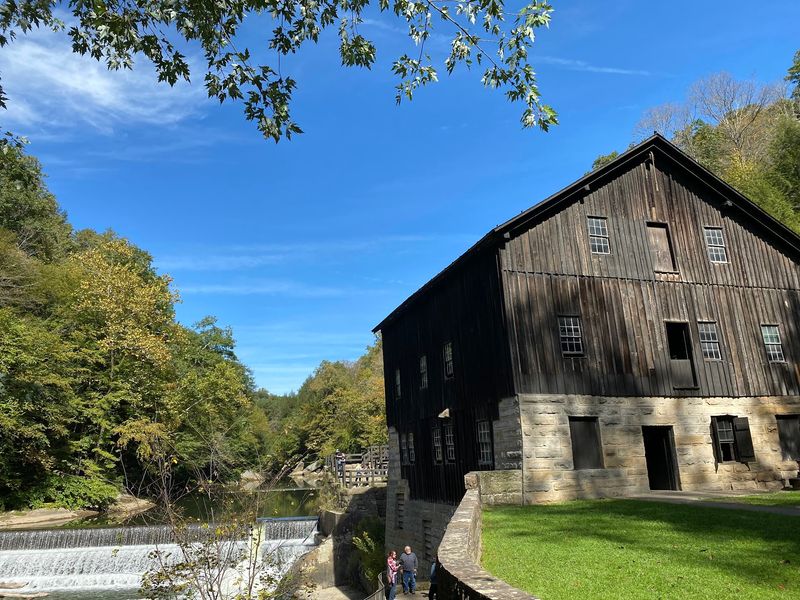
The restored grist mill is the heart of the park, and its name gives the whole place its identity. Inside, signs share history facts that explain how the building worked and why it mattered.
The equipment is what really grabs attention. Wheat storage and grinding facilities from around the early 1900s remain in place for people to see up close.
There is also a water turbine that was used in earlier days to power the operation. It offers a clear look at how the creek outside once did the heavy lifting.
Many people describe the mill as vastly interesting and well preserved. It is the kind of stop that makes history feel less like a textbook chapter and more like a real place where real work happened.
One note for planning purposes is that the mill is not always open. Some people arrive to find the doors closed, though the surroundings still make the trip worthwhile.
For anyone keen to learn more, there is good news. The building has a secret weapon that turns a quick peek into a full lesson, and it walks on two feet.
Free Tours With Volunteer Know-How
Not every expert wears a uniform. At the mill, some of the most knowledgeable guides are volunteers who simply love the story of this building.
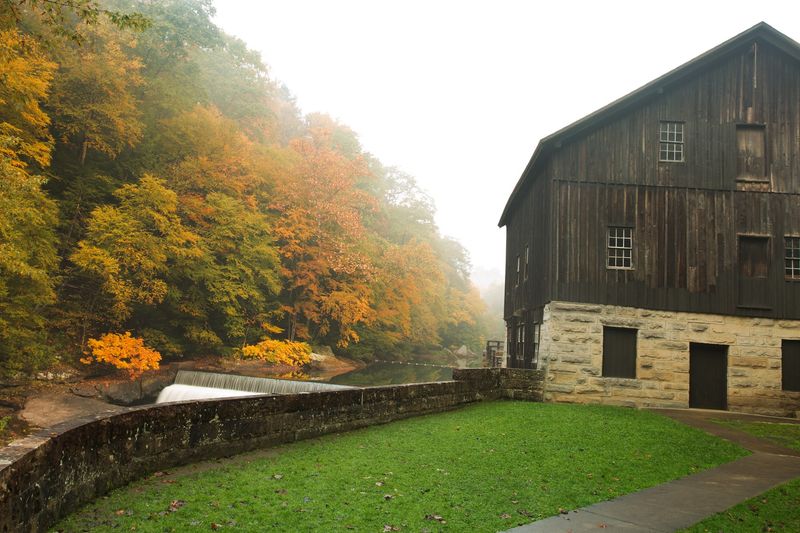
Free tours of the mill are offered, and they tend to draw a crowd. The volunteer guides earn strong praise for knowing their material as well as, or better than, paid staff.
A tour fills in the gaps that signs alone cannot cover. Guides explain the grinding process, the storage areas, and how the turbine fit into the bigger picture.
The tours are popular enough that the mill can feel busy inside. People of all ages crowd around to listen, which speaks to how interesting the subject turns out to be.
Many people call the mill tour awesome and packed with history. It is a strong pick for families who want kids to learn something between trail adventures.
Park staff also get credit for being friendly and kind. On some days, seasonal help may not have every trail answer ready, so it helps to study a map ahead of time.
Once the tour wraps up, the next attraction is literally right outside the door. Few mills can claim a neighbor quite this photogenic.
A Waterfall With a Front Row Seat
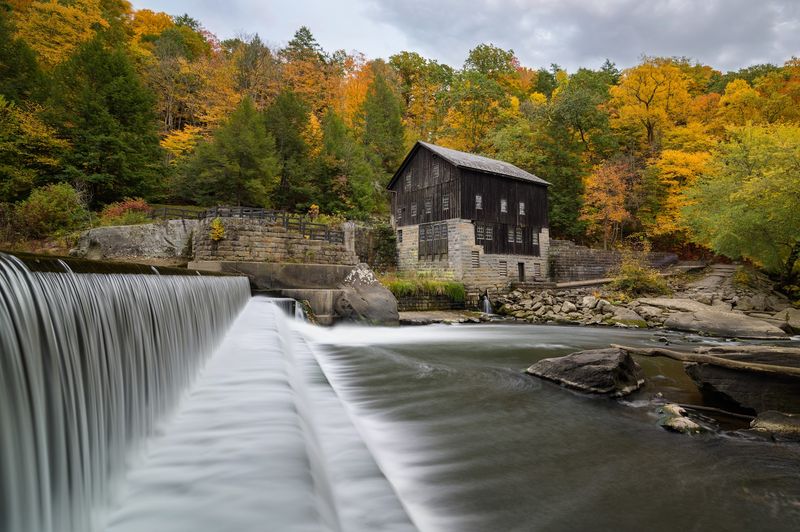
Waterfalls usually make hikers earn them. The one beside the mill hands out its views almost for free.
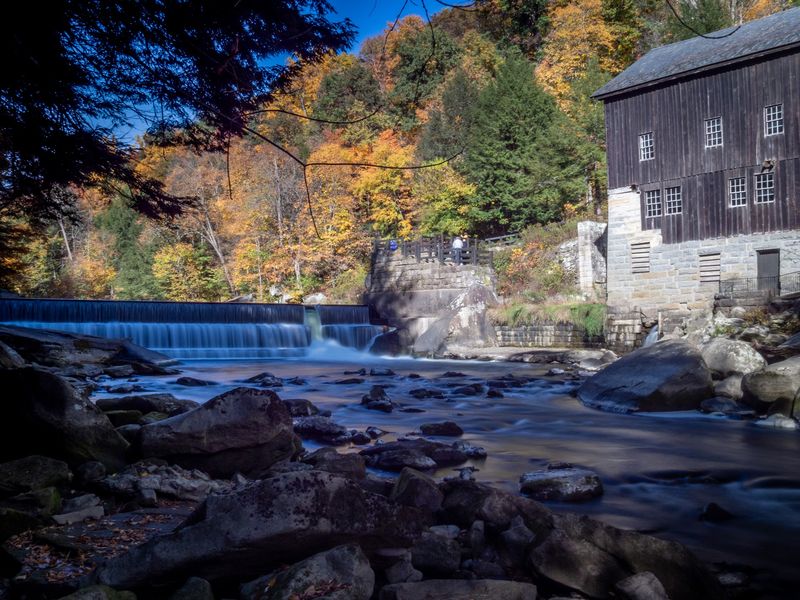
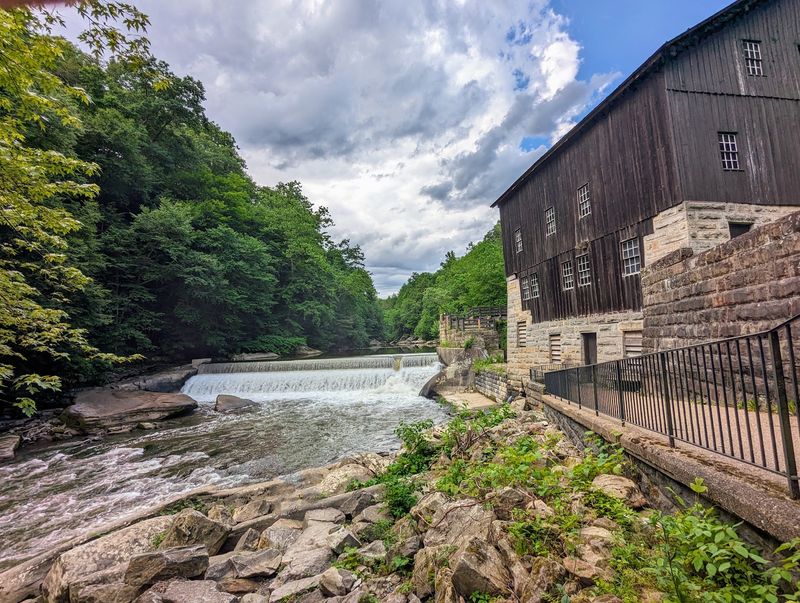
The waterfall sits right next to the historic mill, and it is one of the most talked about features in the park. Even on days when the mill is closed, this spot alone is considered worth the trip.
Here is the best part for many families. The falls area is wheelchair and stroller accessible, so nobody has to miss out on the main attraction.
That accessibility matters because much of the park involves rocky terrain. Having one major highlight that everyone can reach makes the park far more welcoming.
This is not the only waterfall, either. Several falls, small and large, appear along the trails that follow the creek.
The mill waterfall still gets the most attention, and it is easy to understand why. The combination of old stonework, moving water, and forest makes it a favorite photo backdrop.
Couples have even been spotted posing for engagement photos in the area. It is hard to find a better setting for a picture that needs to last a lifetime.
Just a few steps away, another classic structure waits to be crossed, and it welcomes both feet and tires.
Covered Bridge Crossings by Car or Foot
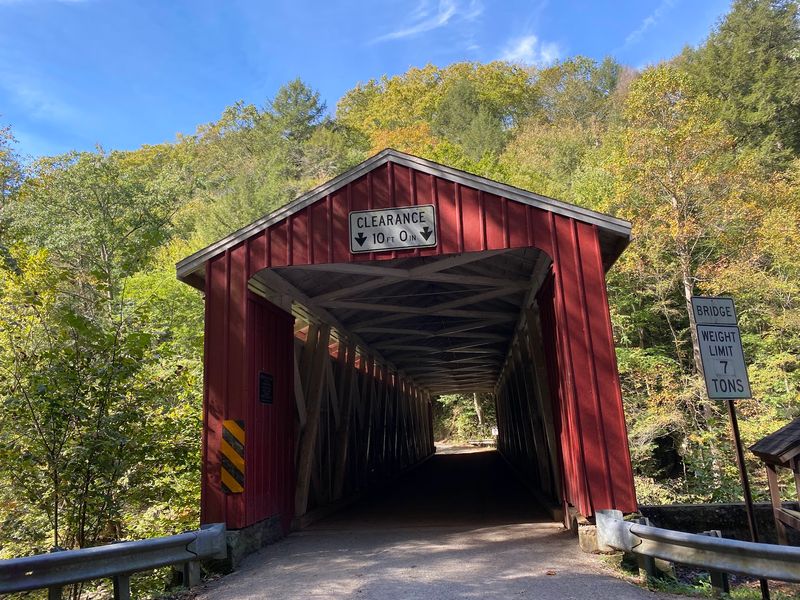
Covered bridges often end up as museum pieces with ropes and signs that say keep off. This one still does its original job.
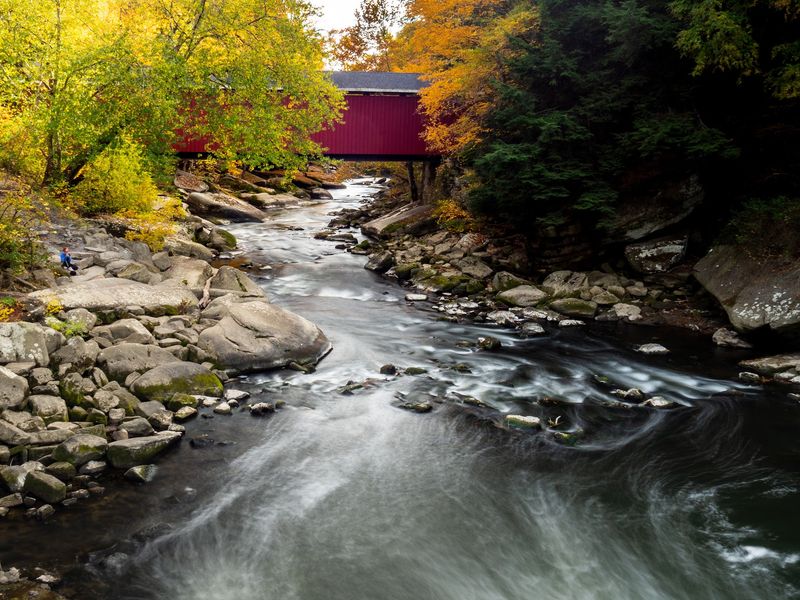
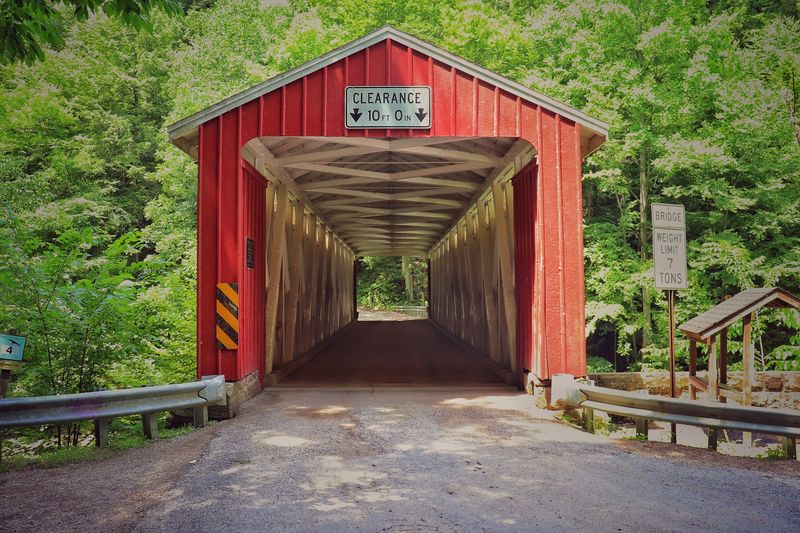
The charming covered bridge near the mill is one that cars can actually drive through. That small detail makes it a highlight for road trippers who enjoy a bit of old-fashioned fun behind the wheel.
There is parking over the bridge for anyone who simply wants to enjoy the view of the flowing water. It is a good option for people who are not planning a long hike.
The bridge is more than a scenic stop. It also serves as a key starting point for one of the most recommended hiking strategies in the park.
Many hikers suggest crossing the covered bridge and heading downstream on the side opposite the mill. That route gets the harder section out of the way first.
The return trip then heads back upstream on the same side as the mill. That half keeps hikers closer to the water and brings them up close to the waterfalls.
Drivers should take it slow around here. Lots of people walk along the roads and cross near the rocks, so patience goes a long way.
With the bridge crossed, the trails are calling, and the most famous one hugs the creek the whole way.
Kildoo Trail and Its Creekside Loop
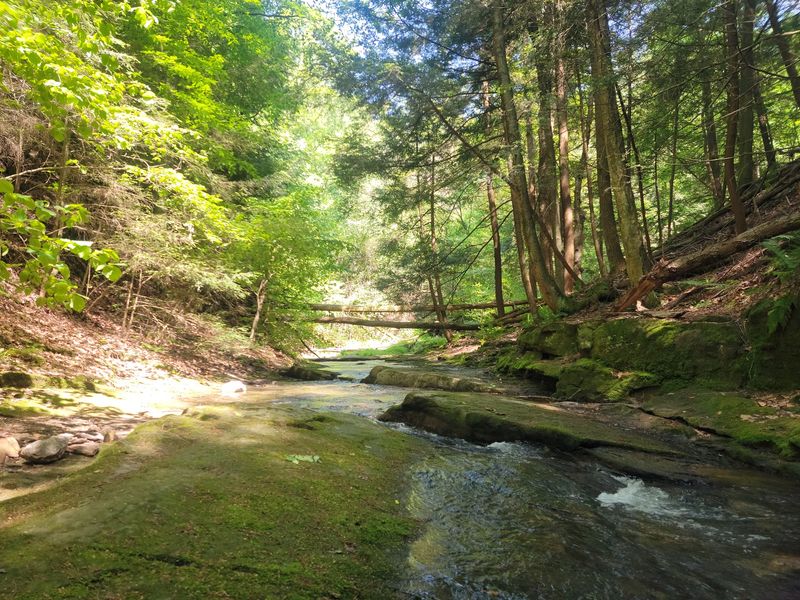
Some trails wander far from the action. Kildoo Trail keeps the creek in view for a big part of the journey.
Kildoo is one of the best known trails in the park, and it runs along Slippery Rock Creek. It offers great views of the mill and the whitewater below.
A two-mile loop in this area is mostly shaded. Even so, it delivers a good workout in hot weather thanks to its ups and downs.
The trail is rocky in parts, though many hikers describe it as nothing too difficult. Trails in general are considered well marked and nicely maintained.
There is one catch worth knowing. Some people find the start of Kildoo Trail confusing and wish for clearer markings near the Kildoo parking lot.
A quick look at a park map before setting out can save some head scratching. Restrooms and safety signs are available near the start.
Hiking sticks are a smart addition here. Rocks and roots show up often, and a little extra balance helps on uneven ground.
The trail is also not a great match for strollers. A large set of stairs sits at one of the main trail entrances, so carriers work better for little ones.
Hikers craving a bigger challenge have other options, and one of them comes with boulders the size of small houses.
Boulders, Alpha Pass, and the Gorge Trail
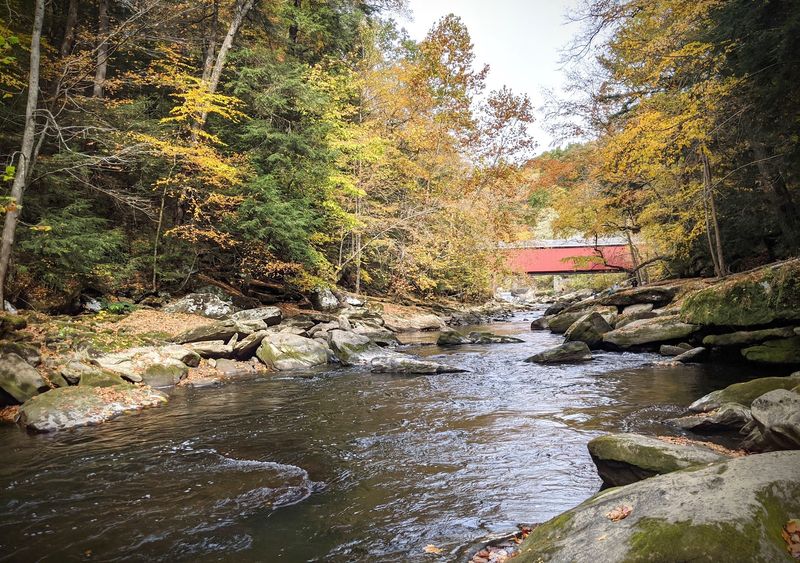
Forest, boulders, and moving water make a winning combination for plenty of hikers. Alpha Pass Trail serves up all three in one outing.
Alpha Pass is a favorite for people who want rugged terrain without a full day commitment. Its mix of woods and big rocks feels like a classic gorge adventure.
For longer outings, the Slippery Rock Gorge Trail is another name that comes up often. It appeals to hikers ready for more miles and more elevation changes.
The giant boulders and rock formations scattered across the park are a major reason people keep coming back. They line the creek and trails, giving the whole area its dramatic character.
Expect narrow paths and plenty of up and down along the way. Many hikers describe the difficulty as moderate and not at all easy on certain routes.
Trails range from easy to challenging across the park, so there is something for most skill levels. Picking a route ahead of time keeps the day enjoyable.
One more tip applies here. On a hot day, some people like to relax on the flat rocks by the creek after a long hike.
Those rocks are not just for resting, though. For a certain group of adventurers, they are the whole reason to visit.
Climbing Walls and Whitewater Runs
Hiking gets most of the attention, but the park has plenty to offer people who prefer ropes or paddles.
Rock climbing is one of the most popular activities after hiking. The rock formations and cliffs throughout the gorge give climbers a variety of surfaces to explore.
Climbers should arrive prepared with proper gear and experience. The terrain is rugged, and safety always comes first in a gorge like this.
Whitewater kayaking is another draw for experienced paddlers. The creek that makes the park so scenic also delivers the kind of rapids kayakers seek out.
That same whitewater is a reminder to respect the creek. Its flow can be powerful, and conditions deserve careful attention before anyone gets close.
Fishing is also part of the mix. Anglers can find a quieter way to spend time by the water while the more energetic crowd tackles rocks and rapids.
These activities give the park a lively, adventurous feel on busy days. Climbers, paddlers, anglers, and hikers all share the same stretch of scenery in their own way.
The best time to enjoy any of these activities depends a lot on the calendar, and one season in particular steals the show.
October Colors and Shorter Winter Days
Timing a trip can change everything. Here, the calendar decides just how much ground a hiker can cover.
October is the month many people circle in advance. The fall colors across the gorge are considered absolutely gorgeous, and plenty of summer hikers promise to return for them.
Summer has its own appeal. The shaded trails make hot days more manageable, and the creek area becomes a popular place to cool off and relax on the rocks.
The park is considered stunning in both summer and fall. That makes it a good candidate for a repeat trip in a different season.
Winter brings a practical challenge. Daylight fades early, sometimes around 5 PM, which cuts hiking time short.
Planning an early start during colder months helps. Arriving close to the 8 AM opening gives hikers the most daylight to work with.
Holiday weekends can surprise people, too. Some find the park less crowded than expected, while other days bring lots of people without feeling overcrowded.
Whatever the season, the park is not only for serious hikers. Families with little explorers have plenty to enjoy away from the steep trails.
Picnic Tables, Playgrounds, and Little Explorers
Kids who spot a playground after a hike tend to find a second wind instantly. The park plans for that.
There are lots of picnic areas along with a playground where children can run freely. A large lot near the picnic area makes it easy to haul supplies in and out.
A short hike from the Point parking lot down to the mill and back works well for young legs. Families often pair that loop with lunch and playground time.
Nature lessons happen naturally here. Hemlock and oak trees are easy to identify, and acorns turn up around the playground.
Wildlife sightings add to the fun. A red-headed woodpecker has been spotted in a log, and a family of baby raccoons has been seen tucked into the trees.
Special events sometimes pop up as well. A community festival has featured local stalls with antiques, pottery, handmade tools, paintings for purchase, and petting animals.
The park draws old and young alike, from couples to multi-generation families. It is also known for being very clean, which parents tend to appreciate.
All that fun requires a little logistics, so the next stop covers parking, hours, and the smartest way to arrive.
Parking Lots, Hours, and Arrival Tips
A great day at the park starts with a stress-free arrival. A few simple tips make that happen.
The park is open daily from 8 AM to 8 PM. That schedule stays the same every day of the week, which keeps planning simple.
Getting there is straightforward from the city. The park sits about 40 minutes north of Pittsburgh, off the Portersville exit.
The entrance can be tricky the first time. Once people figure it out, the rest of the trip tends to go smoothly.
Parking near the mill is tight and fills up quickly. The good news is that other options exist.
There is decent parking near the entrance and a large lot by the picnic area. The Point and Kildoo parking lots also serve as handy trail access points.
Some hikers skip the mill lot entirely. They walk down the road and return through the trail, turning the approach into part of the adventure.
Restrooms are available, though some people feel they could use an upgrade. Packing hand sanitizer is a simple fix.
Good shoes and hiking sticks round out the essentials. With the practical details handled, only one question remains about whether this park deserves a spot on the list.
A Park Worth the Detour
Few places manage to pack history, adventure, and scenery into one compact gorge. This park pulls it off without breaking a sweat, even if hikers certainly will.
The restored mill offers a real look at the past, complete with grinding equipment and a water turbine. Free tours led by knowledgeable volunteers bring the story to life.
Outside, the waterfall next to the mill and the drive-through covered bridge create a classic scene. Several more waterfalls wait along the creekside trails.
Hikers can choose from 9 miles of trails, from easy loops to challenging routes like Alpha Pass and the Slippery Rock Gorge Trail. Climbers, kayakers, and anglers find their own corners of the gorge.
Families benefit from picnic areas, a playground, and an accessible path to the main falls. The park suits a quick afternoon stop or a full day of exploring.
A few small hurdles exist, such as limited mill parking and a slightly confusing trail start. None of them seem to stop people from planning a return trip.
For anyone near Pittsburgh looking for a day outdoors, the case is strong. Bring sturdy shoes, arrive early, and save some energy for the climb back up, because this gorge has a way of making one visit turn into many.
Enjoyed this story?
Add Fast Food Club as a preferred source to see more of our reporting on Google.